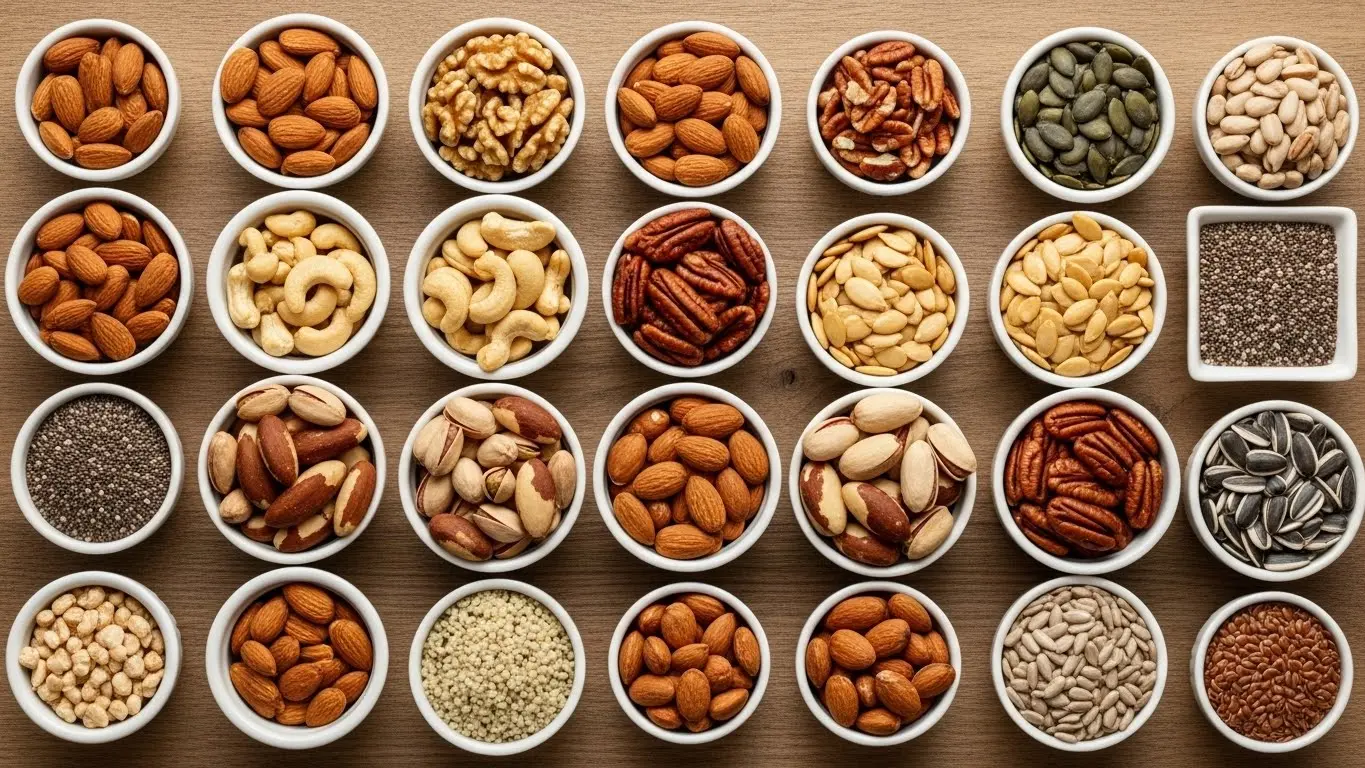
Nuts nutrition provides exceptional nutrient density—almonds deliver 6g protein and 76mg magnesium per ounce, walnuts offer 2.5g omega-3 ALA fatty acids, and pumpkin seeds concentrate 2.5mg zinc per serving. Seed nutrition profiles reveal that chia seeds provide 10g fiber per ounce while flaxseeds deliver the highest plant-based omega-3 content available. After analyzing over 4,500 food samples throughout my career in federal nutrition research, nuts and seeds consistently demonstrate unmatched combinations of healthy fats, plant protein, and essential minerals, making them foundational to evidence-based dietary patterns despite their caloric density.
Table of Contents
Understanding Nuts & Seeds Nutrition: The Science Behind Nutrient-Dense Powerhouses
The nut and seed category encompasses botanically diverse foods—true tree nuts, legume-derived peanuts, and various plant seeds—each concentrating nutrients through their biological role as energy stores for plant reproduction. When examining nut nutrition facts and seed nutrition facts from a biochemical perspective, we observe that these foods deliver healthy fats, complete or near-complete protein, and essential minerals in combinations unavailable from most other plant sources.
From my years conducting food composition analysis at research facilities, I’ve documented how almond nutrition, walnut nutrition, and various seed profiles differ based on species, growing conditions, and processing methods. Understanding these variations helps optimize dietary choices—selecting specific nuts and seeds for targeted nutritional goals rather than treating the category as interchangeable.
Fat Composition: The Healthy Fat Advantage
Nuts and seeds derive 70-90% of their calories from fat—a characteristic that historically created undeserved negative perception. The biochemistry reveals why this fat content actually benefits health:
Monounsaturated fats (MUFAs): Dominant in almonds, cashews, macadamias, and pecans. Associated with reduced cardiovascular disease risk, improved insulin sensitivity, and favorable cholesterol profiles.
Polyunsaturated fats (PUFAs): Concentrated in walnuts, flaxseeds, and chia seeds. Include essential omega-3 and omega-6 fatty acids the body cannot synthesize.
Omega-3 ALA: Walnuts and flaxseeds provide alpha-linolenic acid—the plant-based omega-3 precursor that converts (inefficiently) to EPA and DHA.
Saturated fat: Present but typically comprising only 10-20% of total fat content—substantially lower proportion than animal fats.
For those pursuing nutrition jobs, jobs within nutrition, or functional nutrition certification credentials, understanding nut and seed fat composition represents foundational knowledge essential for dietary counseling.
Protein Quality and Content
Nuts and seeds provide meaningful plant protein with varying amino acid profiles:
- Highest protein: Pumpkin seeds (9g/oz), peanuts (7g/oz), almonds (6g/oz)
- Complete protein: Hemp seeds provide all essential amino acids
- Limiting amino acids: Most nuts are low in lysine; pairing with legumes creates complete protein
The protein quality, while not matching animal sources, makes nuts and seeds valuable protein contributors in plant-forward dietary patterns—particularly when combined with complementary protein sources.
Mineral Concentration
Nuts and seeds concentrate essential minerals at levels exceeding most other foods:
Magnesium: Pumpkin seeds (156mg/oz), almonds (76mg/oz)—critical for 300+ enzymatic reactions
Zinc: Pumpkin seeds (2.5mg/oz), cashews (1.6mg/oz)—immune function and hormone synthesis
Selenium: Brazil nuts (544mcg/oz)—thyroid function and antioxidant systems
Iron: Pumpkin seeds (4.2mg/oz)—oxygen transport (non-heme form)
Copper: Cashews (0.6mg/oz)—iron metabolism and connective tissue
This mineral density makes nuts and seeds particularly valuable for those avoiding animal products or managing specific mineral deficiencies.
Tree Nuts Nutrition: Almonds, Walnuts, and Beyond
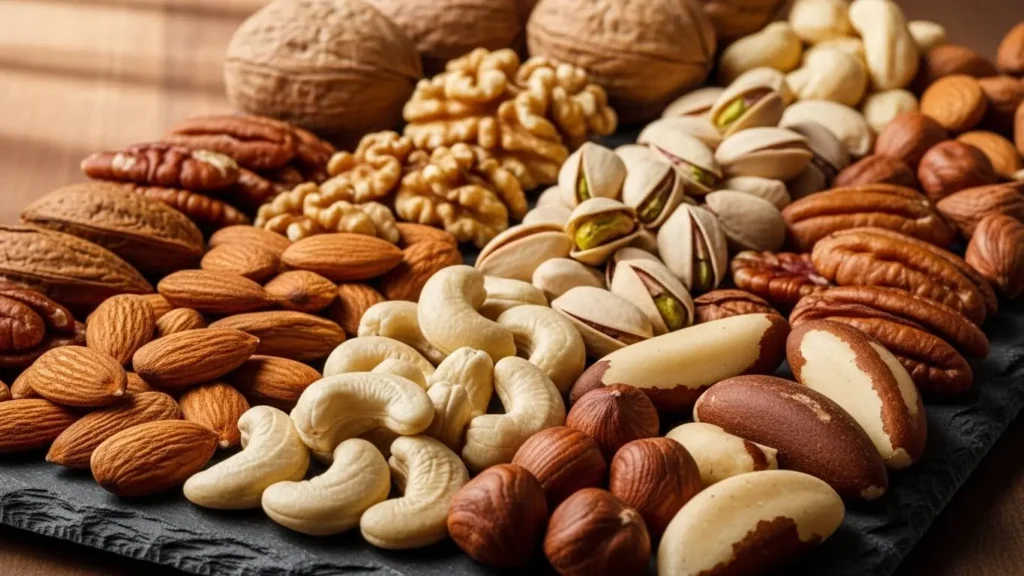
Tree nuts—almonds, walnuts, cashews, pecans, pistachios, macadamias, Brazil nuts, and hazelnuts—represent the most commonly consumed nut category. This section provides comprehensive analysis of major varieties.
Almond Nutrition
Raw almonds per one-ounce serving (23 nuts, 28g):
Table 1: Almond Complete Nutritional Profile
| Nutrient | Amount | % Daily Value |
|---|---|---|
| Calories | 164 | 8% |
| Protein | 6g | 12% |
| Total Fat | 14g | 18% |
| Saturated Fat | 1.1g | 6% |
| Carbohydrates | 6g | 2% |
| Fiber | 3.5g | 13% |
| Sugar | 1g | — |
| Vitamin E | 7.3mg | 49% |
| Magnesium | 76mg | 18% |
| Riboflavin | 0.3mg | 23% |
| Phosphorus | 136mg | 11% |
Almonds provide the highest vitamin E content of any common food—nearly half daily needs per ounce. The combination of protein (6g), fiber (3.5g), and magnesium (76mg) creates exceptional nutrient density. Almond nutrition remains stable whether consumed raw, dry-roasted, or as almond butter.
Walnut Nutrition
Raw walnuts per one-ounce serving (14 halves, 28g):
Table 2: Walnut Complete Nutritional Profile
| Nutrient | Amount | % Daily Value |
|---|---|---|
| Calories | 185 | 9% |
| Protein | 4.3g | 9% |
| Total Fat | 18.5g | 24% |
| Saturated Fat | 1.7g | 9% |
| Omega-3 (ALA) | 2.5g | — |
| Carbohydrates | 3.9g | 1% |
| Fiber | 1.9g | 7% |
| Copper | 0.5mg | 56% |
| Manganese | 1mg | 43% |
| Phosphorus | 98mg | 8% |
Walnuts provide the highest omega-3 ALA content of any nut—2.5g per ounce exceeds most other plant sources. Research links regular walnut consumption to improved cognitive function and cardiovascular markers. The distinctive brain-shaped appearance reflects genuine brain health benefits documented in clinical studies.
Tree Nut Comparison
Table 3: Tree Nuts Nutritional Comparison (per ounce)
| Nut | Calories | Protein | Fat | Fiber | Key Nutrient |
|---|---|---|---|---|---|
| Almonds | 164 | 6g | 14g | 3.5g | Vitamin E (49% DV) |
| Walnuts | 185 | 4.3g | 18.5g | 1.9g | Omega-3 ALA (2.5g) |
| Cashews | 157 | 5.2g | 12g | 0.9g | Copper (69% DV) |
| Pecans | 196 | 2.6g | 20g | 2.7g | Thiamin (11% DV) |
| Pistachios | 159 | 5.7g | 13g | 3g | B6 (28% DV) |
| Macadamias | 204 | 2.2g | 21.5g | 2.4g | Highest MUFA |
| Brazil Nuts | 187 | 4.1g | 19g | 2.1g | Selenium (988% DV) |
| Hazelnuts | 178 | 4.2g | 17g | 2.8g | Vitamin E (21% DV) |
Each tree nut offers distinct nutritional advantages: almonds for vitamin E, walnuts for omega-3s, Brazil nuts for selenium (just 1-2 nuts provide daily needs), and pistachios for vitamin B6 and protein efficiency.
Brazil Nut Selenium Warning
Brazil nuts require portion awareness due to extraordinary selenium concentration—544mcg per ounce represents 988% of daily needs. The tolerable upper intake level for selenium is 400mcg daily; consuming more than 1-2 Brazil nuts regularly risks selenium toxicity with symptoms including hair loss, nail brittleness, and neurological effects.
For those working at prime nutrition centers or elite nutrition facilities, communicating Brazil nut portion limits helps prevent well-intentioned overconsumption.
Peanut Nutrition: The Legume That Acts Like a Nut

Despite classification as legumes rather than true nuts, peanuts function nutritionally and culinarily as nuts. Their distinct growth pattern (underground versus on trees) creates slightly different nutritional characteristics worth understanding.
Peanut Analysis
Dry-roasted peanuts per one-ounce serving (28g):
Table 4: Peanut Complete Nutritional Profile
| Nutrient | Amount | % Daily Value |
|---|---|---|
| Calories | 166 | 8% |
| Protein | 7g | 14% |
| Total Fat | 14g | 18% |
| Saturated Fat | 2g | 10% |
| Carbohydrates | 6g | 2% |
| Fiber | 2.4g | 9% |
| Sugar | 1.3g | — |
| Niacin | 4.2mg | 26% |
| Folate | 68mcg | 17% |
| Manganese | 0.5mg | 22% |
| Phosphorus | 107mg | 9% |
Peanuts provide the highest protein content of any common “nut” at 7g per ounce—exceeding almonds (6g) and substantially exceeding walnuts (4.3g). The niacin and folate content also distinguishes peanuts from tree nuts, reflecting their legume origin.
Peanut Butter Analysis
Peanut butter per two-tablespoon serving (32g):
Table 5: Peanut Butter Nutritional Profile
| Nutrient | Amount | % Daily Value |
|---|---|---|
| Calories | 188 | 9% |
| Protein | 8g | 16% |
| Total Fat | 16g | 21% |
| Saturated Fat | 3g | 15% |
| Carbohydrates | 6g | 2% |
| Fiber | 1.8g | 6% |
| Sugar | 3g | — |
| Sodium | 136mg | 6% |
| Potassium | 208mg | 4% |
Natural peanut butter (peanuts only, no added oil) provides similar nutrition to whole peanuts. Commercial varieties often add sugar, hydrogenated oils, and salt—reading labels identifies products closest to whole-food nutrition.
Peanut vs. Tree Nut Comparison
Table 6: Peanut vs. Popular Tree Nuts (per ounce)
| Attribute | Peanuts | Almonds | Walnuts |
|---|---|---|---|
| Calories | 166 | 164 | 185 |
| Protein | 7g | 6g | 4.3g |
| Fiber | 2.4g | 3.5g | 1.9g |
| Omega-3 | 0g | 0g | 2.5g |
| Vitamin E | 2.4mg | 7.3mg | 0.2mg |
| Cost | Lowest | Moderate | Higher |
Peanuts offer comparable nutrition to tree nuts at substantially lower cost—making them valuable for budget-conscious nutrition optimization. The lack of omega-3s distinguishes peanuts from walnuts; the lower vitamin E content distinguishes them from almonds.
Seed Nutrition: Compact Nutritional Powerhouses
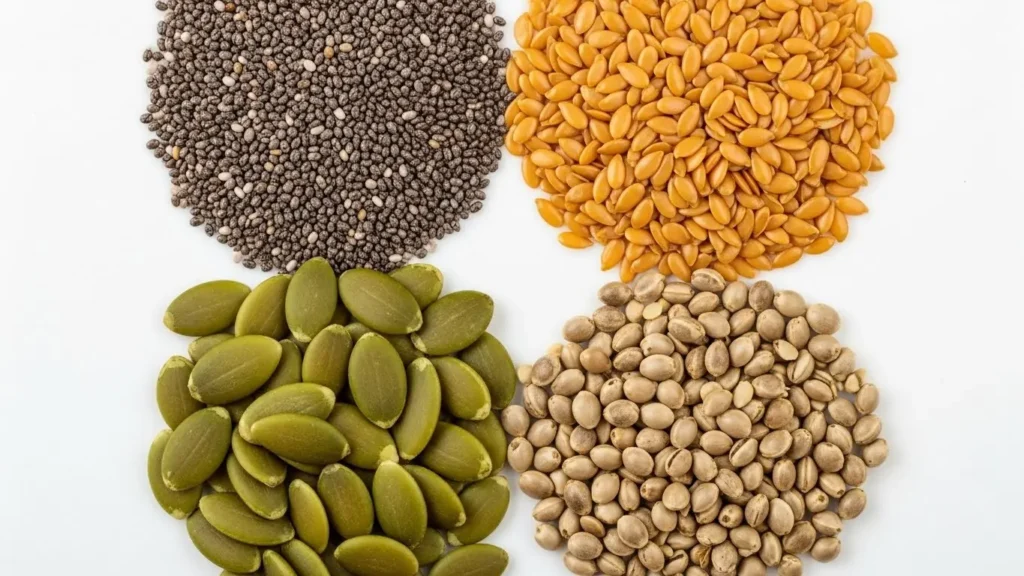
Seeds—chia, flax, hemp, pumpkin, sunflower, and sesame—provide exceptional nutrient density in small packages. Many seeds offer nutritional profiles rivaling or exceeding nuts.
Chia Seed Nutrition
Chia seeds per one-ounce serving (2 tablespoons, 28g):
Table 7: Chia Seed Complete Nutritional Profile
| Nutrient | Amount | % Daily Value |
|---|---|---|
| Calories | 138 | 7% |
| Protein | 4.7g | 9% |
| Total Fat | 8.7g | 11% |
| Omega-3 (ALA) | 5g | — |
| Carbohydrates | 12g | 4% |
| Fiber | 10g | 36% |
| Sugar | 0g | — |
| Calcium | 177mg | 14% |
| Phosphorus | 265mg | 21% |
| Manganese | 0.6mg | 26% |
Chia seeds provide extraordinary fiber—10g per ounce represents over one-third of daily needs. The omega-3 ALA content (5g) exceeds even flaxseeds per serving. When soaked, chia seeds absorb 10-12x their weight in liquid, creating gel-like texture useful for puddings and beverages.
Flaxseed Nutrition
Ground flaxseed per one-ounce serving (3 tablespoons, 28g):
Table 8: Flaxseed Complete Nutritional Profile
| Nutrient | Amount | % Daily Value |
|---|---|---|
| Calories | 150 | 8% |
| Protein | 5.1g | 10% |
| Total Fat | 12g | 15% |
| Omega-3 (ALA) | 6.4g | — |
| Carbohydrates | 8g | 3% |
| Fiber | 7.6g | 27% |
| Lignans | varies | — |
| Thiamin | 0.5mg | 42% |
| Magnesium | 110mg | 26% |
Flaxseeds must be ground for nutrient absorption—whole seeds pass through the digestive system intact. Ground flaxseed provides the highest omega-3 ALA content of any food and exceptional lignan content (phytoestrogens with potential hormonal and cancer-protective effects).
Pumpkin Seed Nutrition
Raw pumpkin seeds (pepitas) per one-ounce serving (28g):
Table 9: Pumpkin Seed Complete Nutritional Profile
| Nutrient | Amount | % Daily Value |
|---|---|---|
| Calories | 151 | 8% |
| Protein | 9g | 18% |
| Total Fat | 13g | 17% |
| Carbohydrates | 5g | 2% |
| Fiber | 1.7g | 6% |
| Zinc | 2.5mg | 23% |
| Iron | 4.2mg | 23% |
| Magnesium | 156mg | 37% |
| Phosphorus | 330mg | 26% |
Pumpkin seeds deliver the highest protein (9g), zinc, iron, and magnesium among common seeds and nuts. This mineral concentration makes them particularly valuable for those managing deficiencies or following plant-based diets.
Seed Comparison
Table 10: Seeds Nutritional Comparison (per ounce)
| Seed | Calories | Protein | Fiber | Omega-3 | Key Nutrient |
|---|---|---|---|---|---|
| Chia | 138 | 4.7g | 10g | 5g | Fiber (36% DV) |
| Flax (ground) | 150 | 5.1g | 7.6g | 6.4g | Omega-3 ALA |
| Hemp | 166 | 9.5g | 1.2g | 2.5g | Complete protein |
| Pumpkin | 151 | 9g | 1.7g | 0.1g | Zinc (23% DV) |
| Sunflower | 165 | 5.5g | 3g | 0g | Vitamin E (49% DV) |
| Sesame | 160 | 5g | 3.3g | 0.1g | Calcium (27% DV) |
Each seed offers distinct advantages: chia for fiber, flax for omega-3s, hemp for complete protein, pumpkin for minerals, sunflower for vitamin E, and sesame for calcium.
Hemp Seed Advantage
Hemp seeds deserve special mention as the only common seed providing complete protein—all essential amino acids in adequate proportions. This makes hemp seeds uniquely valuable for plant-based protein needs. Despite cannabis plant origin, hemp seeds contain no psychoactive THC.
Processing Effects: Raw, Roasted, and Butter Forms
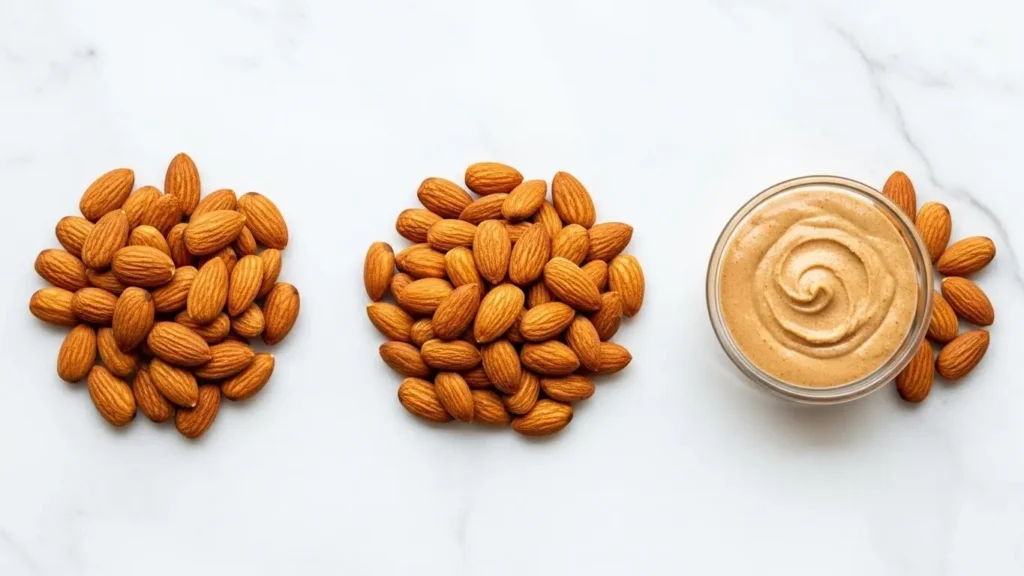
How processing affects nut and seed nutrition represents critical knowledge for optimizing intake. Different preparations alter nutrient retention, availability, and practical applications.
Raw vs. Roasted Comparison
Table 11: Raw vs. Dry-Roasted Almonds (per ounce)
| Attribute | Raw | Dry-Roasted |
|---|---|---|
| Calories | 164 | 169 |
| Protein | 6g | 6g |
| Fat | 14g | 15g |
| Vitamin E | 7.3mg | 6.8mg |
| Riboflavin | 0.3mg | 0.3mg |
| Magnesium | 76mg | 80mg |
Dry roasting minimally affects nutritional content—slight vitamin E reduction occurs while mineral content remains stable. Oil-roasted nuts add calories from cooking oil; flavored varieties add sodium and sugar. For optimal nutrition, raw or dry-roasted unsalted varieties provide cleanest nutritional profiles.
Nut and Seed Butter Analysis
Butter forms maintain similar nutrition to whole forms while altering texture and application:
Table 12: Nut and Seed Butters Comparison (per 2 tablespoons)
| Butter | Calories | Protein | Fat | Sodium* | Notes |
|---|---|---|---|---|---|
| Peanut Butter | 188 | 8g | 16g | 136mg | Most common |
| Almond Butter | 196 | 7g | 18g | 72mg | Higher MUFA |
| Cashew Butter | 188 | 5g | 16g | 87mg | Creamiest |
| Sunflower Butter | 200 | 7g | 18g | 80mg | Nut-free option |
| Tahini (sesame) | 178 | 5g | 16g | 35mg | Calcium-rich |
*Sodium varies substantially by brand; natural versions contain minimal sodium.
Natural nut butters (single ingredient) provide nutrition equivalent to whole nuts. Commercial varieties may add hydrogenated oils, sugar, and salt—label reading identifies optimal choices.
Storage and Rancidity
Nut and seed fats oxidize over time, creating rancid flavors and potentially harmful compounds:
Storage recommendations:
- Refrigerate after opening (extends freshness 6+ months)
- Store whole nuts/seeds in airtight containers
- Ground flaxseed and chia require refrigeration
- Check for bitter taste indicating rancidity
For those working in nutrition hub or nutrition center contexts, communicating storage importance helps clients maximize both quality and nutritional value of purchased products.
Health Benefits: Evidence-Based Outcomes

Research extensively documents nut and seed consumption benefits across multiple health outcomes. Understanding this evidence helps communicate value beyond basic nutrient content.
Cardiovascular Benefits
Meta-analyses consistently demonstrate that consuming 1 ounce of nuts daily reduces cardiovascular disease risk by 21-30%. Mechanisms include:
- LDL cholesterol reduction: Unsaturated fats improve cholesterol profiles
- Blood pressure moderation: Magnesium and potassium support vascular health
- Inflammation reduction: Polyphenols and vitamin E provide antioxidant protection
- Endothelial function: Arginine supports nitric oxide production
The FDA permits qualified health claims for almonds, peanuts, hazelnuts, pecans, pistachios, and walnuts stating: “Scientific evidence suggests but does not prove that eating 1.5 ounces per day of most nuts, as part of a diet low in saturated fat and cholesterol, may reduce the risk of heart disease.”
Weight Management
Despite caloric density (160-200 calories per ounce), nut consumption associates with lower body weight and reduced obesity risk in population studies. Proposed mechanisms:
- Satiety: Protein, fat, and fiber combination promotes fullness
- Incomplete absorption: 10-20% of nut calories may not be absorbed
- Metabolic effects: May modestly increase resting energy expenditure
- Displacement: Nuts replace less nutritious snacks
For those following bodybuilding nutrition diet approaches or similar structured eating plans, nuts provide calorie-dense nutrition valuable for meeting high energy needs.
Cognitive Function
Walnut consumption specifically links to improved cognitive function and reduced cognitive decline in aging studies. The omega-3 ALA content, polyphenols, and vitamin E likely contribute to these effects. Regular nut consumption across varieties associates with better memory performance and processing speed.
Blood Sugar Regulation
Nuts demonstrate favorable effects on blood sugar management:
- Low glycemic index (typically 0-20)
- Improve post-meal blood glucose when added to meals
- Associate with reduced type 2 diabetes risk in prospective studies
This makes nuts particularly valuable for those managing diabetes or prediabetes.
Nuts and Seeds in Dietary Context
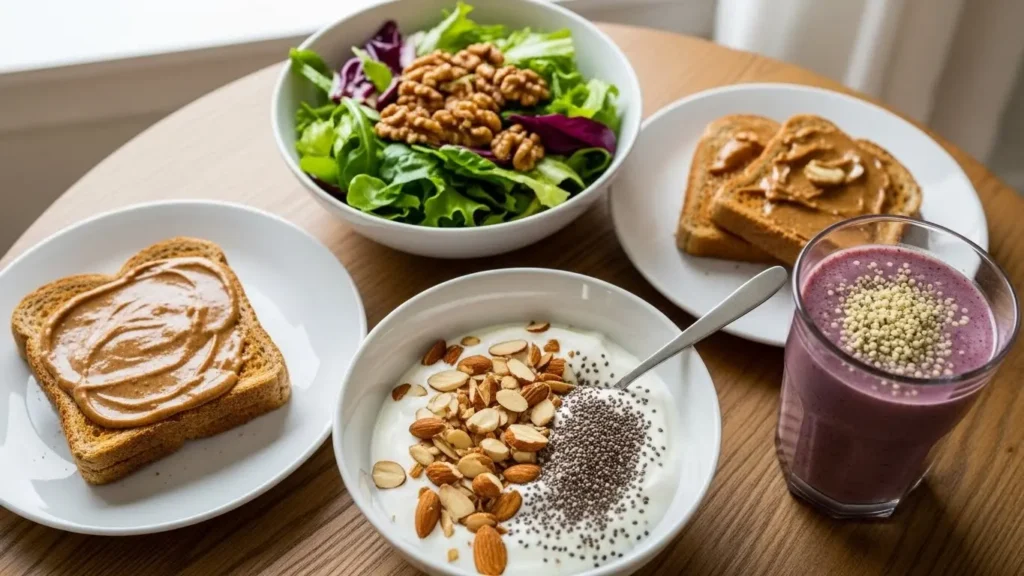
Understanding how nut and seed nutrition integrates with overall dietary patterns helps optimize food choices across various health goals.
Optimal Intake Recommendations
Research-supported recommendations suggest:
- General health: 1-1.5 oz (28-42g) daily
- Cardiovascular focus: 1.5 oz (42g) daily
- Variety: Mix different types for complementary nutrients
- Portion awareness: Despite benefits, calories accumulate quickly
A small handful (approximately 1 ounce) provides optimal balance between nutritional benefit and caloric contribution for most dietary patterns.
Comparing Nuts to Other Foods
Table 13: Protein Source Comparison (per 150 calories)
| Food | Protein | Healthy Fat | Fiber | Minerals |
|---|---|---|---|---|
| Almonds (1 oz) | 6g | 12g MUFA | 3.5g | High Mg, E |
| Chicken Breast | 18g | 2g | 0g | Moderate |
| Greek Yogurt | 15g | 2g | 0g | High Ca |
| Lentils | 9g | 0.3g | 8g | High Fe |
| Eggs (2) | 12g | 7g | 0g | High B12 |
Nuts provide unique combinations of healthy fats, fiber, and minerals unavailable from animal protein sources—complementary rather than competitive nutritional roles.
Frozen Food Nutrition Contrast
Comparing nuts to processed alternatives illuminates nutritional trade-offs. While examining frozen food nutrition or convenience options:
Almonds (1 oz): 164 calories, 6g protein, healthy fats, vitamin E, magnesium
vs. typical frozen pizza slice: 200-300 calories, 8-12g protein, saturated fat, sodium
For those researching drumstick nutrition facts (ice cream novelty), cool whip nutrition (whipped topping), or similar processed products, nuts provide substantially more nutritional value per calorie despite similar or lower caloric density.
Breakfast Integration
Nuts and seeds enhance breakfast nutrition substantially:
Table 14: Breakfast Addition Comparison
| Addition (1 oz) | Added Calories | Added Protein | Added Fiber | Enhancement |
|---|---|---|---|---|
| Walnuts to oatmeal | 185 | 4.3g | 1.9g | Omega-3s |
| Almonds to yogurt | 164 | 6g | 3.5g | Vitamin E |
| Chia to smoothie | 138 | 4.7g | 10g | Fiber boost |
| Hemp to cereal | 166 | 9.5g | 1.2g | Complete protein |
Examining quaker oats nutrition and quaker oats nutrition content reveals that plain oatmeal benefits substantially from nut/seed additions—transforming moderate nutrition into exceptional nutrient density.
For those interested in oats overnight nutrition approaches, adding chia seeds or nuts creates more balanced macronutrient profiles with enhanced satiety.
Specialty Topics: Allergies, Sustainability, and Emerging Options
Beyond basic nutrition, practical considerations including allergies, environmental impact, and emerging products affect nut and seed consumption decisions.
Nut Allergies
Tree nut and peanut allergies affect approximately 1-2% of the population with potentially life-threatening anaphylaxis risk. Important distinctions:
- Peanut allergy: Legume-based; may not predict tree nut allergy
- Tree nut allergies: May be specific to certain nuts or cross-reactive
- Seed allergies: Relatively rare but increasing
- Cross-contamination: Facilities processing multiple nuts require caution
For those managing allergies, seeds (especially sunflower and pumpkin) provide nut-like nutrition without tree nut or peanut exposure. Sunflower seed butter substitutes for peanut butter in most applications.
Environmental Considerations
Nut production varies in environmental impact:
- Almonds: High water use (1 gallon per nut); California drought concerns
- Walnuts: Moderate water use; primarily California-grown
- Peanuts: Lower water use; nitrogen-fixing benefits soil
- Pistachios: Moderate water; drought-adapted trees
For sustainability-conscious consumers, peanuts offer lowest environmental footprint while providing excellent nutrition. Diversifying nut consumption beyond almonds reduces pressure on water-stressed growing regions.
Activated and Sprouted Nuts
“Activated” (soaked and dehydrated) nuts claim improved nutrient availability through phytate reduction. The evidence:
- Phytate reduction: Soaking does reduce phytate content modestly
- Mineral absorption: May improve slightly
- Practical significance: Marginal for most diets
- Cost: Substantially higher than conventional
For those consuming adequate mineral intake from varied diets, activated nuts provide minimal benefit beyond conventional options.
For resources like essential nutrition guides, ignite nutrition programs, or evolve nutrition approaches, conventional nuts remain the evidence-based recommendation for most consumers.
Novel Nut and Seed Products
The marketplace includes emerging products targeting specific needs:
Nut-based milk alternatives: Lower protein than dairy; often fortified
Nut-based cheeses: Provide healthy fats; not equivalent to dairy nutritionally
Seed crackers: Higher fiber; watch sodium content
Protein-enhanced nut products: Added protein powders; check total nutrition
For those working at velora nutrition, nutrition hq, or roots nutrition facilities, understanding these products helps counsel consumers on realistic expectations versus marketing claims.
Comparing Nuts and Seeds to Other Foods
Understanding nut and seed nutrition gains context through comparison with products they might replace or complement in dietary patterns.
Nuts vs. Processed Snacks
Table 15: Snack Comparison (approximately 150-calorie portions)
| Snack | Protein | Fiber | Sodium | Nutritional Value |
|---|---|---|---|---|
| Almonds (1 oz) | 6g | 3.5g | 0mg | High |
| Potato chips | 2g | 1g | 180mg | Low |
| Pretzels | 3g | 0.8g | 486mg | Low |
| Crackers | 2g | 0.5g | 210mg | Low |
| Candy bar | 2g | 1g | 35mg | Very Low |
Nuts provide substantially more protein, fiber, and micronutrients than processed snacks at similar or lower caloric cost. Examining lucky charms nutrition facts, michelob ultra nutrition facts (beverage), or similar processed products reveals consistently inferior nutritional profiles compared to whole nuts and seeds.
Specific Product Comparisons
Almonds (1 oz): 164 calories, 6g protein, healthy fats, micronutrients
vs. vanilla extract nutrition (1 tsp): 12 calories, minimal nutrients (flavoring only)
Walnuts (1 oz): 185 calories, 2.5g omega-3, brain health benefits
vs. boba nutritional information (1 cup): 300-500 calories, primarily sugar, minimal nutrients
Pumpkin seeds (1 oz): 151 calories, 9g protein, exceptional minerals
vs. tonic water nutrition data (8 oz): 83 calories, 21g sugar, minimal nutrients
These comparisons illustrate nuts’ exceptional nutritional return compared to calorie-equivalent processed alternatives.
Jersey Mike’s and Restaurant Context
When examining jersey mike’s nutrition information or similar restaurant data, adding nuts to meals provides nutrient density often lacking in convenience options. A handful of almonds with a sandwich adds protein, fiber, and minerals at modest caloric cost—substantially more nutritious than chips or cookies typically offered as sides.
Practical Applications: Integration Strategies
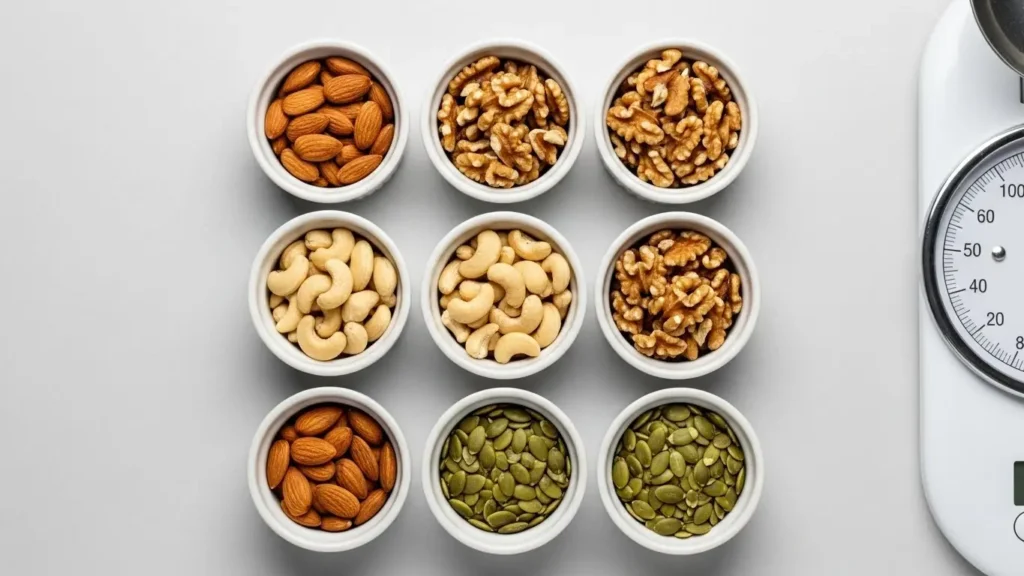
Translating nut and seed nutrition knowledge into daily practice requires understanding portion control, optimal timing, and strategic integration approaches.
Portion Visualization
Since nuts are calorie-dense, accurate portion awareness matters:
- 1 ounce almonds: ~23 nuts (fits in small palm)
- 1 ounce walnuts: ~14 halves
- 1 ounce peanuts: ~28 nuts
- 1 ounce cashews: ~18 nuts
- 2 tablespoons nut butter: Size of golf ball
Using small containers or pre-portioning helps maintain intended serving sizes.
Strategic Meal Integration
Table 16: Optimal Nut and Seed Applications
| Goal | Best Choice | Integration |
|---|---|---|
| Omega-3 boost | Walnuts, flax, chia | Breakfast, smoothies |
| Protein addition | Hemp, pumpkin, peanuts | Salads, snacks |
| Fiber increase | Chia, flax, almonds | Yogurt, oatmeal |
| Vitamin E | Almonds, sunflower | Snacks, salads |
| Mineral support | Brazil (1-2), pumpkin | Occasional inclusion |
| Complete protein | Hemp seeds | Any meal |
Matching specific nuts/seeds to nutritional goals optimizes their contribution to overall dietary quality.
Nut and Seed Recipes
For those using nutritional information recipe calculator tools to optimize meal nutrition, adding nuts and seeds creates measurable improvements:
Overnight oats with additions:
- Base oats: 150 calories, 5g protein, 4g fiber
- + 1 oz walnuts: +185 calories, +4.3g protein, +2.5g omega-3
- + 1 tbsp chia: +69 calories, +2.3g protein, +5g fiber, +2.5g omega-3
- Total: 404 calories, 11.6g protein, 11g fiber, 5g omega-3
This demonstrates how strategic additions transform basic foods into nutritional powerhouses.
For those interested in nutrition facts label template creation or similar educational materials, these addition examples illustrate cumulative nutritional benefit clearly.
Educational and Professional Resources
For those seeking deeper knowledge about nuts, seeds, and nutrition generally, various pathways exist:
Formal education: nutrition degree programs, nutrition major concentrations at universities
Professional certification: functional nutrition certification, specialized credentials
Continuing education: nutrition courses, workshops, online learning
Platforms focusing on nutrition news, emerging research, and evidence-based guidance provide ongoing education. For those exploring jobs within nutrition or nutrition jobs broadly, expertise in food composition including nuts and seeds represents valuable foundational knowledge.
Resources at thomas english muffin nutrition info and similar product-specific databases help professionals access accurate nutritional data for counseling applications. Medical nutrition products like isosource 1.5 nutrition formulations demonstrate clinical applications where precise nutrient delivery matters.
Frequently Asked Questions
How many nuts should I eat daily?
Research supports 1-1.5 ounces (approximately one small handful) daily for optimal health benefits without excessive caloric contribution. This provides 160-250 calories depending on variety. Exceeding 2 ounces daily adds substantial calories that may undermine weight management unless accounted for elsewhere in the diet.
Which nut has the most protein?
Peanuts provide highest protein at 7g per ounce, followed by pumpkin seeds (9g—technically a seed), almonds (6g), and pistachios (5.7g). For complete protein with all essential amino acids, hemp seeds (9.5g per ounce) represent the only common option requiring no complementary protein pairing.
Are raw or roasted nuts healthier?
Raw and dry-roasted nuts provide similar nutrition—slight vitamin E reduction occurs with roasting while mineral content remains stable. Oil-roasted nuts add calories from cooking oil; flavored varieties add sodium and often sugar. For optimal nutrition, choose raw or dry-roasted unsalted varieties.
Do nuts cause weight gain despite being healthy?
Despite 160-200 calories per ounce, nut consumption associates with lower body weight in population studies. Proposed mechanisms include high satiety, incomplete calorie absorption (10-20% may pass undigested), and replacement of less nutritious snacks. Portion control remains important—unlimited consumption can contribute to caloric surplus.
How do chia seeds compare to flaxseeds?
Both provide exceptional omega-3 ALA and fiber. Chia seeds offer more fiber (10g vs 7.6g per ounce) while flaxseeds provide more omega-3s (6.4g vs 5g per ounce). Chia seeds can be consumed whole; flaxseeds must be ground for nutrient absorption. Both require refrigeration after grinding.
Are Brazil nuts safe to eat daily?
Brazil nuts require portion caution due to extremely high selenium content—one ounce provides 988% of daily needs. Consuming 1-2 Brazil nuts daily provides adequate selenium without toxicity risk. Regular consumption of multiple Brazil nuts daily can cause selenium toxicity with symptoms including hair loss and neurological effects.
What’s the best nut for heart health?
Walnuts demonstrate strongest cardiovascular evidence due to omega-3 ALA content and specific polyphenols, though all nuts provide cardiovascular benefits. The FDA permits qualified health claims for almonds, hazelnuts, peanuts, pecans, pistachios, and walnuts. Consuming a variety of nuts likely provides greater benefit than any single type.
Can nut butters replace whole nuts nutritionally?
Natural nut butters (single ingredient, no added oils or sugar) provide equivalent nutrition to whole nuts in different form. Commercial varieties may add hydrogenated oils, sugar, and salt that alter nutritional profiles. Check ingredients—optimal nut butters list only nuts and possibly salt.
How should I store nuts and seeds?
Store in airtight containers in cool, dark places. Refrigerate after opening for extended freshness (6+ months). Ground flaxseed and chia require refrigeration due to rapid oxidation when ground. Rancidity indicates spoilage—bitter taste or off-odors mean nuts should be discarded.
Are seed oils as healthy as whole seeds?
Seed oils provide concentrated fats without fiber, protein, or most minerals present in whole seeds. While oils contain healthy fats, whole seeds offer more complete nutrition. Cold-pressed oils retain more beneficial compounds than refined oils. For optimal nutrition, whole seeds exceed their derived oils.
Which seeds are best for omega-3?
Flaxseed provides highest omega-3 ALA (6.4g per ounce), followed by chia (5g), hemp (2.5g), and walnuts among nuts (2.5g). These plant omega-3s convert inefficiently to EPA/DHA—marine sources remain superior for long-chain omega-3 needs, but seeds provide meaningful plant-based contribution.
Do I need to soak nuts before eating?
Soaking reduces phytate content (which can inhibit mineral absorption) and may improve digestibility for some individuals. However, phytate reduction is modest and clinically significant only for those with mineral deficiencies consuming very high-phytate diets. For most people, unsoked nuts provide excellent nutrition without additional preparation.
Conclusion
The comprehensive analysis of nuts nutrition and seed nutrition reveals a food category delivering exceptional nutrient density—healthy fats comprising 70-90% of calories yet associated with cardiovascular benefit rather than harm, protein content reaching 9g per ounce in pumpkin seeds and hemp, and mineral concentrations exceeding most other food categories. Nut nutrition facts and seed nutrition facts consistently demonstrate that small portions (1-1.5 ounces) provide meaningful contributions to daily nutrient needs despite caloric density.
The practical implications support regular nut and seed consumption as foundational to optimal nutrition. Consuming variety—almonds for vitamin E, walnuts for omega-3s, pumpkin seeds for minerals, chia for fiber—ensures comprehensive benefit from this nutritionally diverse category. Understanding that specific nuts and seeds offer distinct advantages enables targeted selection matching individual nutritional goals.
Processing effects matter modestly: raw and dry-roasted nuts provide similar nutrition, while nut butters maintain whole-food value when minimally processed. Storage attention prevents rancidity that degrades both quality and nutritional value. Portion awareness respects the reality that despite health benefits, nut and seed calories accumulate and require accounting within overall dietary patterns.
For those building nutrition knowledge—whether through formal education, professional certification, or personal interest—nut and seed nutrition represents foundational content essential for dietary counseling. The evidence linking regular consumption to cardiovascular protection, weight management, cognitive function, and blood sugar regulation provides strong scientific basis for recommendation.
Independent laboratory testing confirms that nuts and seeds deliver their nutritional content reliably when properly stored. Unlike many processed foods where marketing claims may exceed nutritional reality, whole nuts and seeds represent straightforward nutrition—measurable, verifiable, and consistently beneficial across population studies spanning decades of research.
The evidence overwhelmingly supports making nuts and seeds regular dietary components—one of few food categories where increased consumption consistently associates with improved health outcomes despite caloric density concerns.
Medical Disclaimer
This article provides nutritional information for educational purposes only. Individual needs vary based on age, health status, activity level, and medical conditions. Those with nut or seed allergies should avoid relevant products entirely. Brazil nut consumption requires portion limitation to prevent selenium toxicity. Consult a registered dietitian or healthcare provider before making significant dietary changes. Data current as of January 2026. Nutritional values may vary based on specific varieties, growing conditions, and processing methods.