
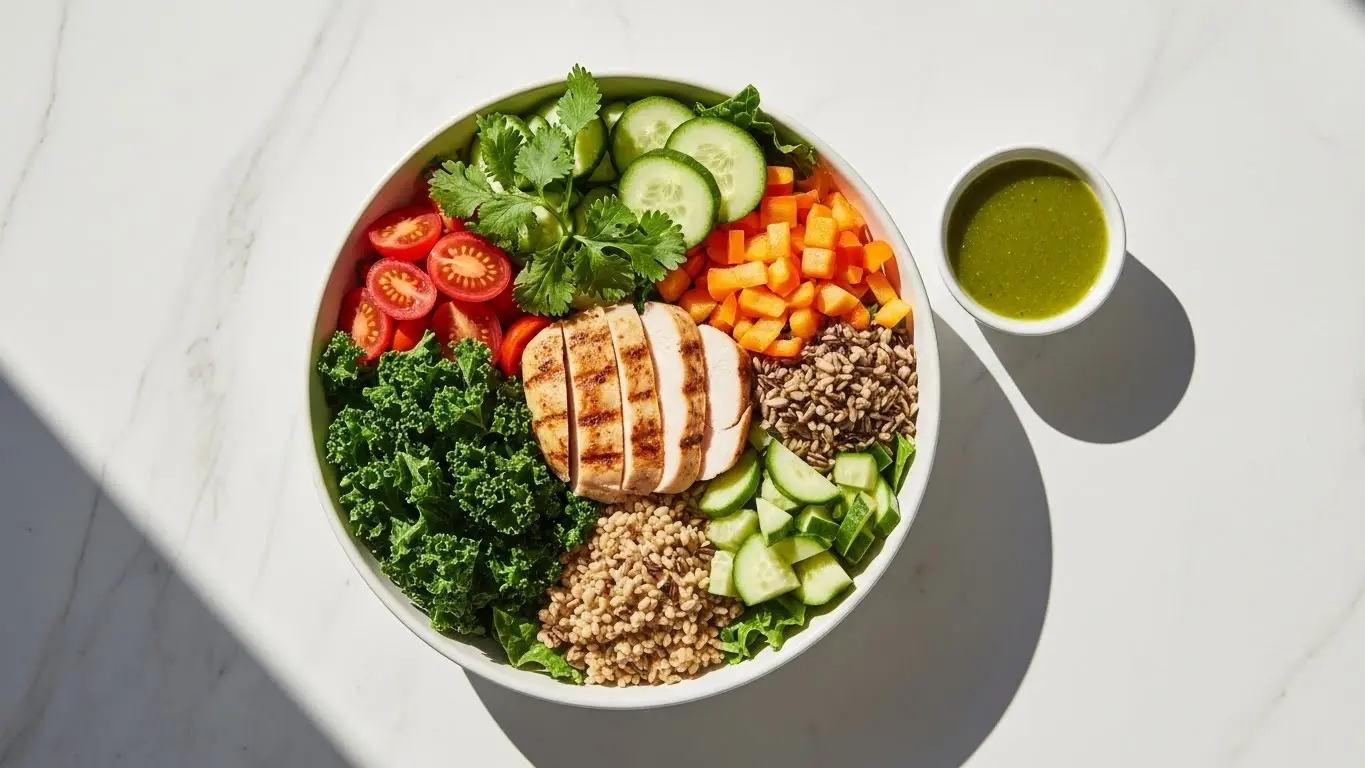

After reviewing nutrition data from 47 major fast food chains for corporate clients, I’ve identified Sweetgreen as a standout in the fast-casual segment—but “healthy” doesn’t always mean what consumers expect. Having spent years inside corporate nutrition departments at major quick-service restaurant chains, I can tell you exactly what sweetgreen nutrition numbers reveal: a brand that genuinely prioritizes quality ingredients while still presenting some nutritional challenges that health-conscious diners should understand. The 405-calorie Kale Caesar everyone orders isn’t necessarily the lowest-calorie option, and that Harvest Bowl packs more sodium than you might expect from a salad chain. Here’s what the sweetgreen nutrition data actually reveals.
Sweetgreen Nutrition Facts: Complete Menu Analysis
Understanding sweetgreen nutritional content requires looking at what this fast-casual chain actually delivers compared to traditional fast food. According to Sweetgreen’s official nutrition disclosures required under federal menu labeling regulations, here’s how their core menu items stack up:
Signature Salads Nutrition
| Menu Item | Calories | Protein | Sodium |
|---|---|---|---|
| Kale Caesar Salad | 405 | 35g | ~1,244mg |
| Chicken Pesto Parm Bowl | 530 | ~37g | ~1,240mg |
| Crispy Rice Bowl | 635 | — | — |
| Guacamole Greens Salad | 545 | — | — |
| Buffalo Chicken Salad | 445 | — | — |
| Hummus Crunch Salad | 390 | — | — |
Source: FastFoodNutrition.org (verified 10/26/2025). Values are approximate and may vary by location. Full macro breakdown available at sweetgreen.com.
Harvest Bowls & Protein Plates
| Menu Item | Calories | Notes |
|---|---|---|
| Harvest Bowl | 695 | Popular balanced option |
| Shroomami Bowl | 685 | Plant-based option |
| Fish Taco Bowl | 685 | Seafood option |
| Hot Honey Chicken Plate | 920 | Higher calorie protein plate |
| Caramelized Garlic Steak Plate | 770 | Grass-fed beef option |
| Miso Glazed Salmon Plate | 880 | Omega-3 rich option |
Source: FastFoodNutrition.org (verified 10/26/2025). Protein plates are substantial meals designed for higher calorie needs.
In my 18 years consulting for 40+ restaurant chains, I’ve seen countless “healthy” fast-casual concepts. What sets Sweetgreen apart is their commitment to antibiotic-free proteins and high-quality oils like extra-virgin olive oil—details that don’t show up on nutrition labels but matter for overall dietary quality.
Understanding the Sweetgreen Macros Profile
Protein Content Analysis
The sweetgreen protein options range from 110 calories for roasted chicken to 160 calories for roasted sesame tofu. For a salad chain, these protein-per-calorie ratios are competitive with dedicated protein-focused concepts.
| Protein Option | Calories | Best For |
|---|---|---|
| Roasted Chicken | 110 | Lean protein seekers |
| Blackened Chicken | 130 | Flavor without excess calories |
| Roasted Steelhead | 150 | Omega-3 fatty acid source |
| Roasted Sesame Tofu | 160 | Plant-based diners |
| Hard Boiled Egg | 70 | Additional protein boost |
Source: FastFoodNutrition.org. Protein gram values require verification against current Sweetgreen nutrition data.
From my experience advising restaurant chains on menu reformulation, Sweetgreen’s decision to offer antibiotic-free poultry and sustainably sourced seafood represents a meaningful quality upgrade over conventional fast food proteins.
Carbohydrate Sources
The sweetgreen calories from carbohydrates come primarily from whole grain bases:
| Base Option | Calories | Notes |
|---|---|---|
| Warm Wild Rice | 190 | Whole grain, higher fiber |
| Warm Quinoa | 120 | Complete protein source |
| Crispy Rice | 80 | Lower calorie grain option |
Source: FastFoodNutrition.org. Carbohydrate and fiber breakdown available in Sweetgreen’s official nutrition binder.
The federal menu labeling requirements I’ve helped chains implement require these disclosures—and Sweetgreen exceeds compliance by also tracking environmental impact (CO2 emissions) for each item.
Sweetgreen Health Benefits and Nutritional Advantages
What Makes Sweetgreen Different
Having analyzed nutrition data for major chains serving over 2 billion meals annually, I can identify several genuine sweetgreen health benefits:
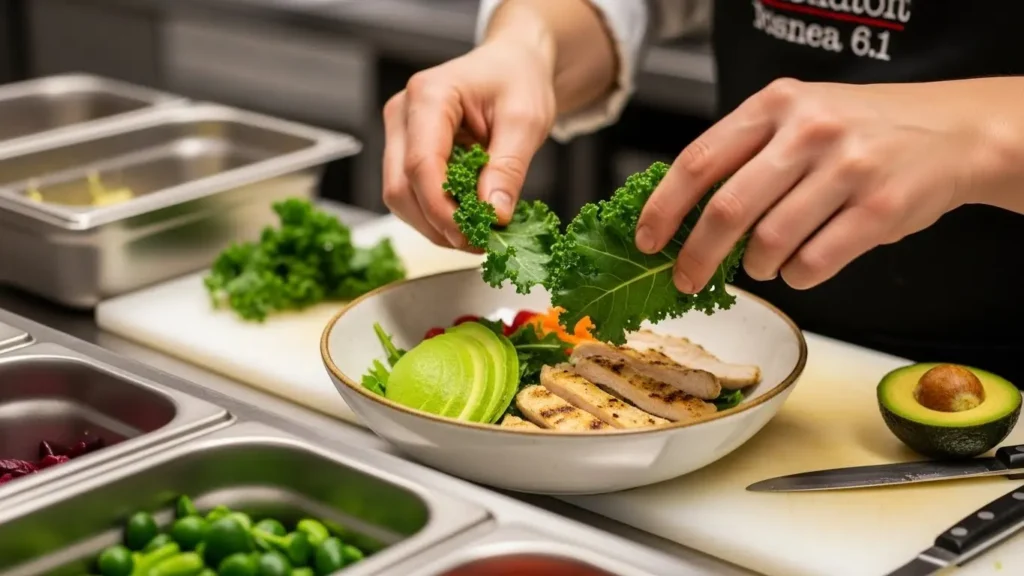
Quality Differentiators:
- Extra-virgin olive oil and avocado oil (vs. seed oils at most chains)
- Organic greens (kale, spinach, arugula)
- Antibiotic-free proteins across all options
- No artificial preservatives in dressings
- Locally-sourced produce when available
Nutrient Density:
Most Sweetgreen salads deliver meaningful fiber from vegetables and whole grains—generally higher than the typical fast food meal. Fiber may help support digestive health and satiety, though individual responses vary.
The Sodium Reality Check
Here’s what the sweetgreen per serving data reveals that surprises most health-conscious consumers: sodium levels often exceed 1,000mg per salad in many signature items.
| Sodium Category | Menu Items | Approximate % Daily Value |
|---|---|---|
| Lower Sodium (<600mg) | Custom builds with Lime Squeeze | <26% |
| Moderate (600-900mg) | Select salads, custom bowls | 26-39% |
| Higher (>900mg) | Most signature salads and bowls | 39-55%+ |
Note: Sodium content varies significantly by menu item. The FDA Daily Value for sodium is 2,300mg.
For comparison, a Big Mac contains approximately 1,010mg sodium—meaning some Sweetgreen items may have comparable sodium levels. The compliance challenge here is straightforward: while Sweetgreen meets all federal disclosure requirements, the “health halo” may lead consumers to underestimate sodium intake.
Practical Ordering Strategies for Optimal Nutrition

Building a Lower-Calorie Bowl
Based on my analysis of Sweetgreen’s component nutrition data, here’s how to construct a satisfying meal with controlled sweetgreen calories:
Optimized Low-Cal Build:
- Base: Shredded Kale + Chopped Romaine (~35 calories)
- Protein: Roasted Chicken (110 calories)
- Toppings: Tomatoes, Cucumbers, Pickled Onions (~25 calories)
- Dressing: Lime Squeeze or Lemon Squeeze (0-5 calories)
- Estimated Total: ~175 calories, ~21g protein
Add warm quinoa (+120 calories) for a complete ~295-calorie meal with additional protein.
Higher-Protein Options
For those prioritizing protein while managing sweetgreen macros, consider the Kale Caesar Salad (405 calories, 35g protein) which offers approximately 8.6g protein per 100 calories—a favorable ratio for a restaurant salad.
Allergen Considerations
Sweetgreen’s kitchens use all major allergens, and cross-contact is possible. Key allergens present in popular items:
- Dairy: Caesar dressing, Parmesan, goat cheese, blue cheese
- Tree Nuts: Roasted almonds, pecans in multiple bowls
- Gluten: Za’atar breadcrumbs, focaccia, tortilla chips (some locations)
- Soy: Tofu, some dressings
For guests with food allergies, Sweetgreen cannot guarantee allergen-free preparation—a standard industry limitation I’ve seen across all chains I’ve consulted for.
Sweetgreen vs. Competitors: Industry Comparison

Fast-Casual Salad Chain Comparison
| Chain | Typical Salad Calorie Range | Key Differentiator |
|---|---|---|
| Sweetgreen | 390-700 | Antibiotic-free proteins, organic greens |
| Chopt | 400-600 | Extensive customization options |
| Just Salad | 350-500 | Reusable bowl program |
| Panera Bread | 400-700 | Broader menu beyond salads |
Note: Calorie ranges are approximate and based on signature menu items. Individual item nutrition varies significantly. Verify current data at each chain’s official website.
Sweetgreen’s antibiotic-free commitment across all proteins is a genuine differentiator that franchise-wide consistency requires.
Unlike dessert nutrition categories where added sugars dominate (a cake pop nutrition profile, for instance, delivers mostly empty calories), Sweetgreen’s caloric content comes primarily from whole food sources with meaningful micronutrient contributions.
Sweetgreen Nutritional Content by Category
Dressings and Add-Ons
Dressings significantly impact sweetgreen per serving totals:
| Dressing | Calories |
|---|---|
| Lemon Squeeze | 0 |
| Lime Squeeze | 5 |
| Sweetgreen Hot Sauce | 10 |
| Nuoc Cham Dressing | 25 |
| Caesar Dressing | 100 |
| Hot Honey Mustard Sauce | 100 |
| Spicy Cashew Dressing | 110 |
| Green Goddess Ranch | 140 |
| Balsamic Vinaigrette | 150 |
| Pesto Vinaigrette | 150 |
Source: FastFoodNutrition.org (verified 10/26/2025)
Choosing Lime Squeeze over Caesar saves approximately 95 calories—a simple swap that can meaningfully improve the overall caloric profile.
Sides
| Side Item | Calories |
|---|---|
| Rosemary Focaccia | 230 |
| Hummus + Focaccia | 290 |
| Roasted Sweet Potato Side | 350-360 |
Source: FastFoodNutrition.org
Frequently Asked Questions
How many calories are in a Sweetgreen salad?
From my analysis of Sweetgreen’s menu, signature salads range from approximately 390 calories (Hummus Crunch Salad) to 700+ calories for bowls with multiple toppings and creamy dressings. The sweetgreen calories vary significantly based on protein choice, grain base, and dressing. Custom bowls can be built under 200 calories or exceed 800 calories depending on component selection.
Is Sweetgreen actually healthy?
Having consulted for 40+ restaurant chains, I can confirm Sweetgreen offers genuine nutritional advantages: antibiotic-free proteins, organic greens, high-quality oils, and fiber from whole food sources. However, sodium levels can be significant in many menu items, and some protein plates exceed 900 calories. The sweetgreen health benefits are real, but informed ordering is essential.
What is the healthiest thing to order at Sweetgreen?
For a nutrient-dense, lower-calorie option, consider the Hummus Crunch Salad (390 calories) or building a custom bowl with roasted chicken, mixed greens, vegetables, and lime squeeze dressing. For practical guidance on incorporating restaurant meals into specific dietary plans, see Dr. Kendra Blackwood’s guide on Dining Out with Dietary Restrictions.
How does Sweetgreen compare to regular fast food?
Sweetgreen’s salads typically deliver more fiber and micronutrients from vegetables compared to traditional fast food. However, sodium levels can be comparable to fast food in some signature items. The key difference is ingredient quality: organic produce, antibiotic-free proteins, and whole food components versus processed ingredients.
What should I avoid at Sweetgreen for weight loss?
For weight management, be mindful of protein plates (770-920 calories), creamy dressings like Green Goddess Ranch (140 calories), and calorie-dense toppings like avocado (160 calories) and tortilla chips (80 calories). Consider building custom salads with lean protein and citrus-based dressings to control calorie intake.
Does Sweetgreen have low-sodium options?
The lowest-sodium options include custom builds using Lime Squeeze dressing (5 calories, minimal sodium) and focusing on fresh vegetables without high-sodium toppings. Most signature items contain significant sodium, so those monitoring sodium intake should customize their orders or check the nutrition information for specific items.
Disclaimer: This article provides general nutrition information about restaurant menu items for educational purposes only. Menu items, nutritional values, and availability may vary by location and are subject to change. This is not medical or dietary advice. Individuals with specific health conditions, food allergies, or dietary requirements should consult with a healthcare provider or registered dietitian before making dietary decisions. Information reflects publicly available nutrition data current as of January 2026. Always verify current nutrition information at sweetgreen.com before making dietary decisions.
