
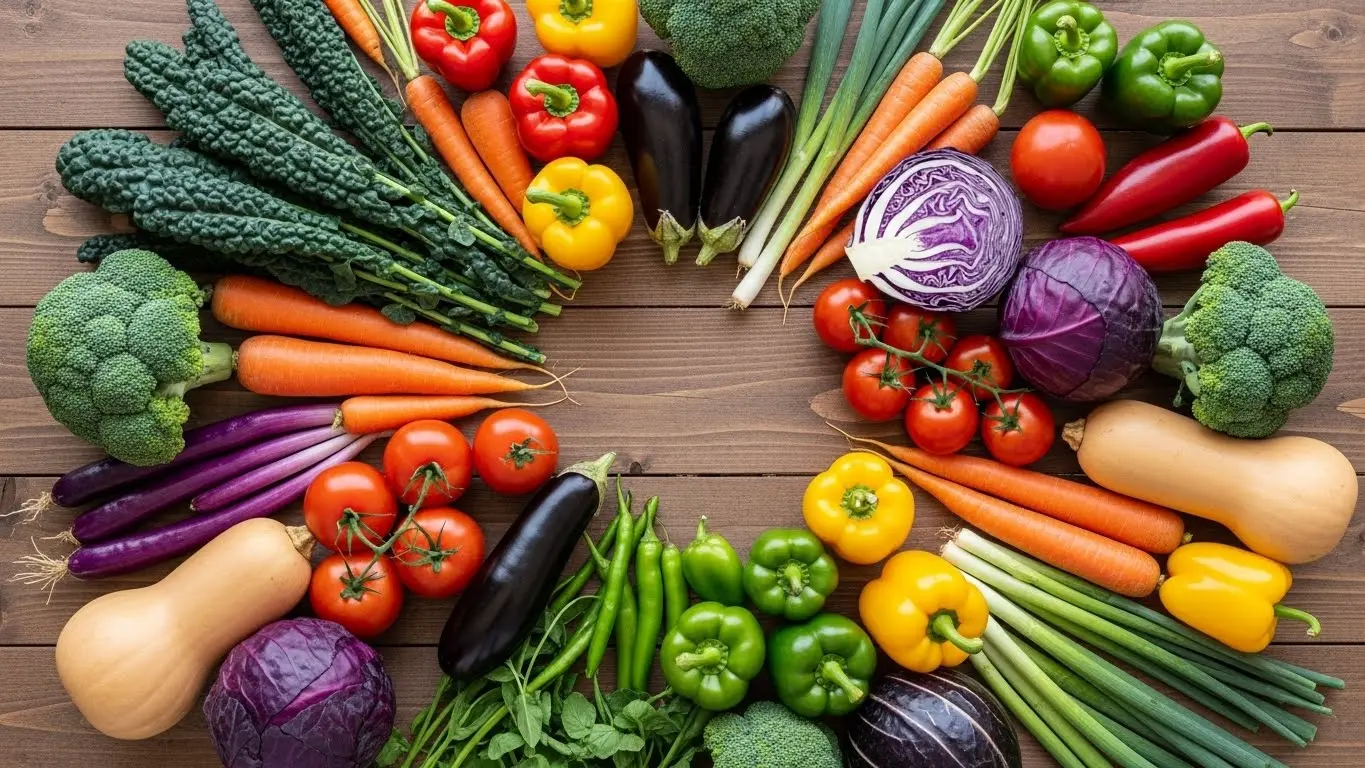
Vegetable nutrition provides essential vitamins, minerals, and fiber that no other food category can replicate—leafy greens deliver 100-500% daily vitamin K per cup, cruciferous vegetables concentrate cancer-protective glucosinolates, and root vegetables offer sustained energy through complex carbohydrates. Fresh vegetable nutrition profiles reveal that one cup of raw spinach provides 181% daily vitamin K, 56% vitamin A, and just 7 calories, while a medium sweet potato delivers 438% vitamin A with 4g fiber. After analyzing over 4,500 food samples throughout my career in federal nutrition research, vegetables consistently demonstrate the highest nutrient density per calorie of any food category, making them foundational to evidence-based dietary optimization.
Table of Contents
Understanding Vegetable Nutrition: The Science Behind Plant-Based Nutrients
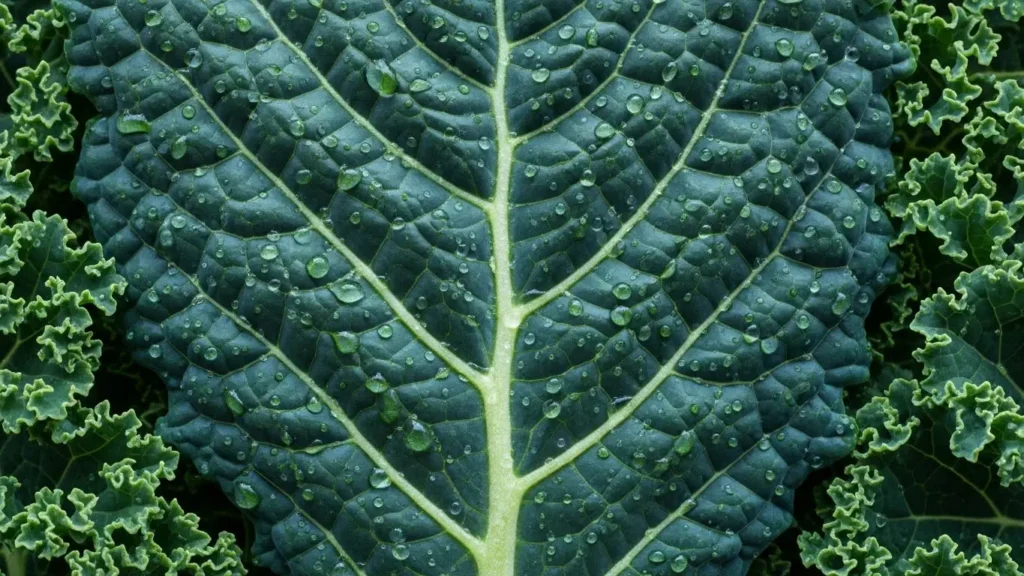
The vegetable category encompasses an extraordinary diversity of plant structures—leaves, roots, stems, flowers, and fruits (botanically speaking)—each concentrating different nutrients based on their biological functions. When examining vegetable nutrition facts from a biochemical perspective, we observe that these foods deliver vitamins, minerals, fiber, and phytochemicals in combinations unavailable from any other dietary source.
From my years conducting food composition analysis at research facilities, I’ve documented how veggie nutrition varies dramatically based on plant part, growing conditions, harvesting time, and preparation methods. The plant nutrition principles that govern how vegetables concentrate nutrients explain why leafy greens excel in vitamin K while orange vegetables dominate vitamin A delivery—each plant structure serves specific biological functions requiring particular nutrient concentrations.
Macronutrient Characteristics of Vegetables
Unlike grains, legumes, or animal products, vegetables provide minimal macronutrient density—most deliver under 50 calories per cup with negligible protein and fat. This characteristic makes vegetables uniquely valuable: they provide micronutrient density without caloric burden, allowing substantial consumption without exceeding energy needs.
Carbohydrate content in vegetables ranges from 1g per cup (leafy greens) to 25g per cup (starchy vegetables like potatoes). Non-starchy vegetables—the majority of the category—contribute primarily fiber and water, creating volume and satiety without significant caloric impact. This property explains why vegetable-rich diets consistently associate with healthy weight management in population studies.
Fiber content represents vegetables’ most significant macronutrient contribution. A cup of cooked broccoli delivers 5g fiber; a medium artichoke provides 10g. Both soluble fiber (supporting cardiovascular health) and insoluble fiber (promoting digestive regularity) appear across vegetable categories, though proportions vary by vegetable type.
Micronutrient Density: The Vegetable Advantage
Vegetables concentrate vitamins and minerals at levels unmatched by other food categories when measured per calorie. This nutrient density—the ratio of micronutrients to calories—makes vegetables essential for meeting vitamin and mineral needs without excessive energy intake.
Vitamin concentration patterns:
- Vitamin A (as beta-carotene): Orange and dark green vegetables
- Vitamin C: Peppers, broccoli, Brussels sprouts
- Vitamin K: Dark leafy greens (kale, spinach, collards)
- Folate: Leafy greens, asparagus, Brussels sprouts
- B vitamins: Varied across categories
Mineral concentration patterns:
- Potassium: Potatoes, spinach, Swiss chard
- Magnesium: Leafy greens, squash
- Iron: Spinach, Swiss chard (non-heme form)
- Calcium: Kale, bok choy, broccoli
For those pursuing education in nutrition—whether through a bachelor’s degree in nutrition, working as a nutrition coach, or becoming a certified nutrition coach—understanding vegetable micronutrient patterns represents foundational knowledge essential for dietary counseling.
Phytochemical Complexity
Beyond standard nutrients, vegetables contain thousands of bioactive compounds—carotenoids, flavonoids, glucosinolates, and other phytochemicals—with documented health-promoting properties. These compounds evolved as plant defense mechanisms but demonstrate beneficial effects in human physiology.
The research on vegetable phytochemicals continues expanding, with functional nutrition approaches increasingly recognizing these compounds’ importance beyond classical vitamin and mineral nutrition. Understanding that vegetable benefits extend past label-listed nutrients helps explain why whole vegetable consumption produces health outcomes that isolated supplements cannot replicate.
Leafy Greens Nutrition: The Nutrient Density Champions
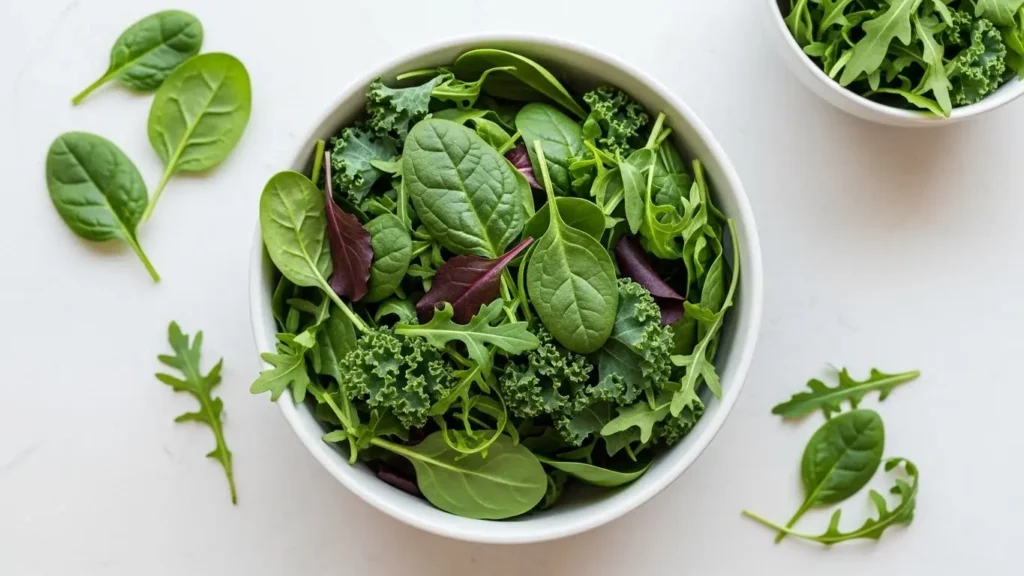
Leafy greens deliver the highest nutrient density of any vegetable category—extraordinary vitamin and mineral content with minimal calories. This section provides comprehensive analysis of major leafy green varieties.
Spinach Nutrition
Raw spinach per one cup (30g) provides exceptional nutrient density:
Table 1: Spinach Complete Nutritional Profile
| Nutrient | Amount | % Daily Value |
|---|---|---|
| Calories | 7 | 0% |
| Protein | 0.9g | 2% |
| Carbohydrates | 1.1g | 0% |
| Fiber | 0.7g | 3% |
| Vitamin A | 2,813 IU | 56% |
| Vitamin C | 8.4mg | 9% |
| Vitamin K | 145mcg | 121% |
| Folate | 58mcg | 15% |
| Iron | 0.8mg | 4% |
| Magnesium | 24mg | 6% |
| Potassium | 167mg | 4% |
Spinach demonstrates the leafy green advantage: 7 calories deliver over 100% daily vitamin K alongside substantial vitamin A, folate, and minerals. The iron content, while present, exists as non-heme iron with lower bioavailability than animal sources—consuming spinach with vitamin C enhances absorption significantly.
Kale Nutrition
Kale per one cup raw (67g) offers distinct nutritional advantages:
Table 2: Kale Complete Nutritional Profile
| Nutrient | Amount | % Daily Value |
|---|---|---|
| Calories | 33 | 2% |
| Protein | 2.9g | 6% |
| Carbohydrates | 6g | 2% |
| Fiber | 2.6g | 9% |
| Vitamin A | 10,302 IU | 206% |
| Vitamin C | 80mg | 89% |
| Vitamin K | 547mcg | 456% |
| Calcium | 90mg | 7% |
| Manganese | 0.5mg | 22% |
| Potassium | 299mg | 6% |
Kale provides the highest vitamin K concentration of any common food—a single cup delivers over 450% of daily needs. The calcium content is notably bioavailable compared to spinach, whose oxalate content inhibits calcium absorption.
Leafy Greens Comparison
Table 3: Leafy Greens Nutritional Comparison (per cup raw)
| Green | Calories | Vit A (% DV) | Vit C (% DV) | Vit K (% DV) | Calcium |
|---|---|---|---|---|---|
| Kale | 33 | 206% | 89% | 456% | 90mg |
| Spinach | 7 | 56% | 9% | 121% | 30mg |
| Swiss Chard | 7 | 44% | 18% | 374% | 18mg |
| Collard Greens | 11 | 48% | 21% | 184% | 52mg |
| Romaine | 8 | 81% | 4% | 48% | 16mg |
| Arugula | 5 | 9% | 5% | 22% | 32mg |
The variation across leafy greens suggests consuming variety rather than relying on single sources. Kale excels in vitamins A, C, and K; spinach provides exceptional nutrient density per calorie; romaine offers accessibility with meaningful vitamin A contribution.
Cruciferous Vegetables: Cancer-Protective Compounds
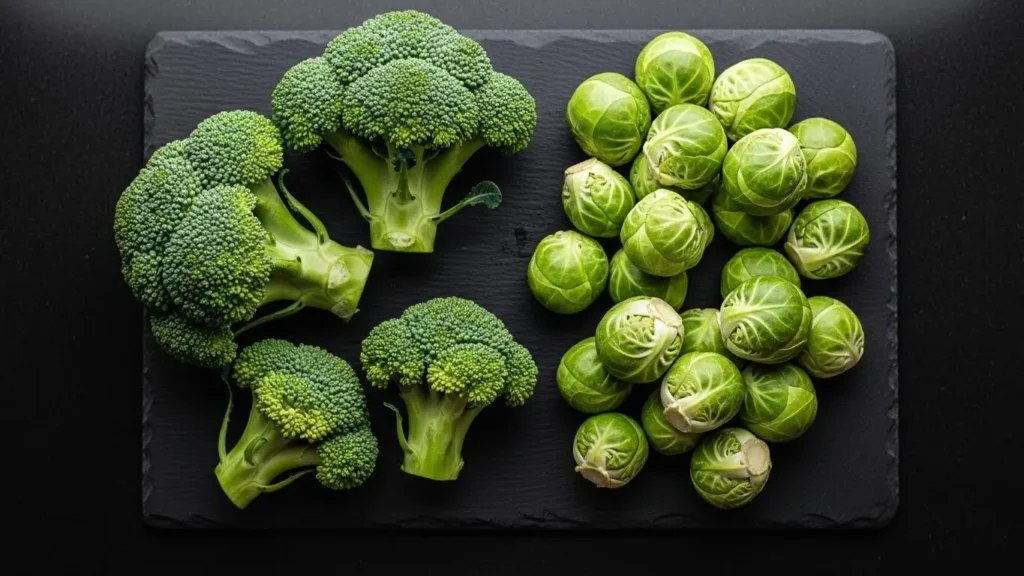
Cruciferous vegetables—broccoli, cauliflower, Brussels sprouts, cabbage—contain glucosinolates that convert to isothiocyanates, compounds with documented cancer-protective properties in laboratory and population studies.
Broccoli Nutrition
Cooked broccoli per one cup (156g) provides:
Table 4: Broccoli Complete Nutritional Profile
| Nutrient | Amount | % Daily Value |
|---|---|---|
| Calories | 55 | 3% |
| Protein | 3.7g | 7% |
| Carbohydrates | 11g | 4% |
| Fiber | 5.1g | 18% |
| Vitamin A | 2,415 IU | 48% |
| Vitamin C | 101mg | 112% |
| Vitamin K | 220mcg | 183% |
| Folate | 168mcg | 42% |
| Potassium | 457mg | 10% |
| Sulforaphane | varies | — |
Broccoli provides exceptional vitamin C—over 100% daily needs per cup—alongside substantial fiber, folate, and vitamin K. The sulforaphane content, while not quantified on labels, represents a significant bioactive compound with demonstrated cellular protective effects.
Brussels Sprouts Nutrition
Cooked Brussels sprouts per one cup (156g):
Table 5: Brussels Sprouts Complete Nutritional Profile
| Nutrient | Amount | % Daily Value |
|---|---|---|
| Calories | 56 | 3% |
| Protein | 4g | 8% |
| Carbohydrates | 11g | 4% |
| Fiber | 4.1g | 15% |
| Vitamin A | 1,122 IU | 22% |
| Vitamin C | 97mg | 107% |
| Vitamin K | 219mcg | 182% |
| Folate | 94mcg | 24% |
| Manganese | 0.4mg | 17% |
Brussels sprouts match broccoli’s vitamin C and K delivery while providing higher protein content than most vegetables—4g per cup contributes meaningfully to daily protein intake when consumed in quantity.
Cruciferous Vegetables Comparison
Table 6: Cruciferous Vegetables Comparison (per cup cooked)
| Vegetable | Calories | Fiber | Vit C (% DV) | Vit K (% DV) | Glucosinolates |
|---|---|---|---|---|---|
| Broccoli | 55 | 5.1g | 112% | 183% | High |
| Brussels Sprouts | 56 | 4.1g | 107% | 182% | Very High |
| Cauliflower | 29 | 2.1g | 73% | 19% | Moderate |
| Cabbage | 34 | 2.8g | 54% | 85% | Moderate |
| Bok Choy | 20 | 1.7g | 74% | 64% | Moderate |
Glucosinolate concentrations vary across cruciferous vegetables, with Brussels sprouts demonstrating highest levels. These compounds require myrosinase enzyme activation through chewing or light cooking—overcooking destroys both glucosinolates and the enzyme, reducing bioactive compound delivery.
Root Vegetables: Complex Carbohydrates and Sustained Energy
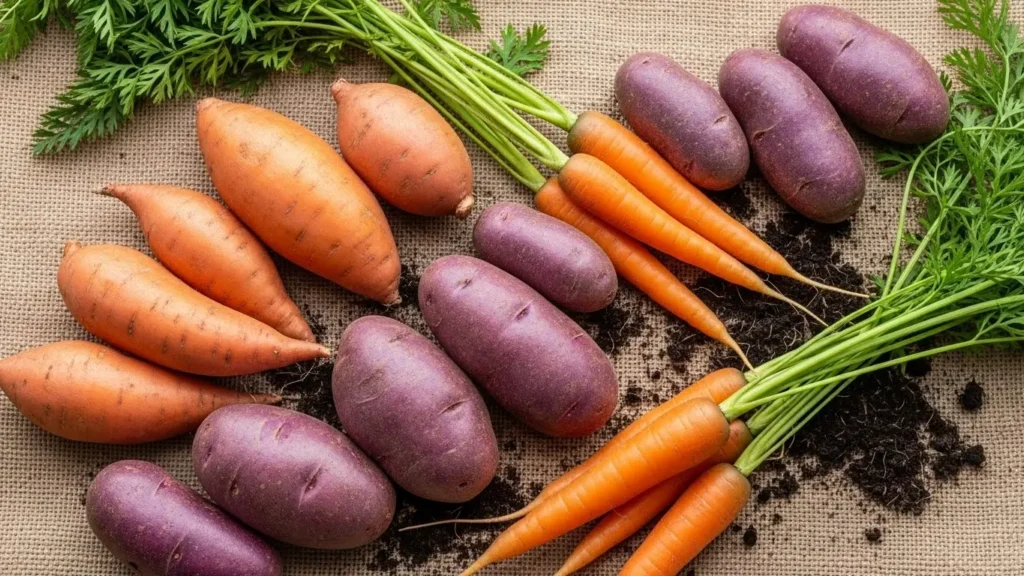
Root vegetables—potatoes, sweet potatoes, carrots, beets—store energy as complex carbohydrates, providing sustained fuel alongside substantial vitamin and mineral content. These vegetables demonstrate higher caloric density than leafy or cruciferous varieties while delivering distinct nutritional advantages.
Sweet Potato Nutrition
One medium sweet potato (114g, baked with skin) provides:
Table 7: Sweet Potato Complete Nutritional Profile
| Nutrient | Amount | % Daily Value |
|---|---|---|
| Calories | 103 | 5% |
| Protein | 2.3g | 5% |
| Carbohydrates | 24g | 9% |
| Fiber | 3.8g | 14% |
| Sugar | 7g | — |
| Vitamin A | 21,909 IU | 438% |
| Vitamin C | 22mg | 24% |
| Vitamin B6 | 0.3mg | 18% |
| Potassium | 542mg | 12% |
| Manganese | 0.5mg | 22% |
Sweet potatoes deliver the highest vitamin A concentration of any common vegetable—over 400% daily needs in a single medium potato. The orange flesh indicates beta-carotene content, which converts to vitamin A as needed, avoiding toxicity risk associated with preformed vitamin A from animal sources.
White Potato Nutrition
One medium white potato (173g, baked with skin):
Table 8: White Potato Complete Nutritional Profile
| Nutrient | Amount | % Daily Value |
|---|---|---|
| Calories | 161 | 8% |
| Protein | 4.3g | 9% |
| Carbohydrates | 37g | 13% |
| Fiber | 3.8g | 14% |
| Vitamin C | 28mg | 31% |
| Vitamin B6 | 0.5mg | 29% |
| Potassium | 926mg | 20% |
| Magnesium | 48mg | 11% |
| Iron | 1.9mg | 11% |
White potatoes provide exceptional potassium—926mg per medium potato exceeds a banana’s 422mg. Despite negative perception from low-carb diet messaging, potatoes offer substantial nutrient density when consumed with skin intact and prepared without excessive added fat.
Carrot Nutrition
One cup of raw carrots (128g):
Table 9: Carrots Complete Nutritional Profile
| Nutrient | Amount | % Daily Value |
|---|---|---|
| Calories | 52 | 3% |
| Protein | 1.2g | 2% |
| Carbohydrates | 12g | 4% |
| Fiber | 3.6g | 13% |
| Vitamin A | 21,384 IU | 428% |
| Vitamin C | 7.6mg | 8% |
| Vitamin K | 16.9mcg | 14% |
| Potassium | 410mg | 9% |
| Beta-carotene | 10,605mcg | — |
Carrots rival sweet potatoes for vitamin A delivery through beta-carotene. Cooking carrots actually increases beta-carotene bioavailability by breaking down cell walls—one of few vegetables where cooking enhances rather than reduces nutrient absorption.
Root Vegetables Comparison
Table 10: Root Vegetables Comparison (per cup or medium serving)
| Vegetable | Calories | Fiber | Vit A (% DV) | Potassium | Key Nutrients |
|---|---|---|---|---|---|
| Sweet Potato | 103 | 3.8g | 438% | 542mg | Beta-carotene |
| White Potato | 161 | 3.8g | 0% | 926mg | Potassium, B6 |
| Carrots | 52 | 3.6g | 428% | 410mg | Beta-carotene |
| Beets | 58 | 3.8g | 1% | 442mg | Nitrates, folate |
| Parsnips | 100 | 5.6g | 0% | 499mg | Fiber, folate |
| Turnips | 34 | 2.3g | 0% | 248mg | Low calorie |
The comparison reveals complementary nutritional profiles: sweet potatoes and carrots excel in vitamin A, white potatoes provide superior potassium, and beets offer unique nitrate compounds associated with cardiovascular benefits and athletic performance.
Allium Vegetables: Sulfur Compounds and Heart Health
Allium vegetables—onions, garlic, leeks, shallots—contain organosulfur compounds with documented cardiovascular and antimicrobial properties. While typically used in smaller quantities than other vegetables, their concentrated bioactive compounds provide meaningful health contributions.
Garlic Nutrition
One clove of garlic (3g) provides:
| Nutrient | Amount | % Daily Value |
|---|---|---|
| Calories | 4 | 0% |
| Carbohydrates | 1g | 0% |
| Manganese | 0.1mg | 2% |
| Vitamin C | 0.9mg | 1% |
| Allicin | varies | — |
Garlic’s primary value lies in allicin and related sulfur compounds rather than traditional nutrients. These compounds demonstrate blood pressure-lowering and antimicrobial effects in controlled studies. Crushing garlic and allowing it to sit for 10 minutes before cooking maximizes allicin formation.
Onion Nutrition
One cup of chopped raw onion (160g):
Table 11: Onion Complete Nutritional Profile
| Nutrient | Amount | % Daily Value |
|---|---|---|
| Calories | 64 | 3% |
| Protein | 1.8g | 4% |
| Carbohydrates | 15g | 5% |
| Fiber | 2.7g | 10% |
| Vitamin C | 11.8mg | 13% |
| Vitamin B6 | 0.2mg | 10% |
| Folate | 30mcg | 8% |
| Potassium | 234mg | 5% |
| Quercetin | varies | — |
Onions provide quercetin, a flavonoid antioxidant concentrated in the outer layers. Red onions contain higher quercetin levels than white or yellow varieties. Cooking reduces quercetin content, making raw onion consumption optimal for this compound’s benefits.
Nightshade Vegetables: Tomatoes, Peppers, and Eggplant
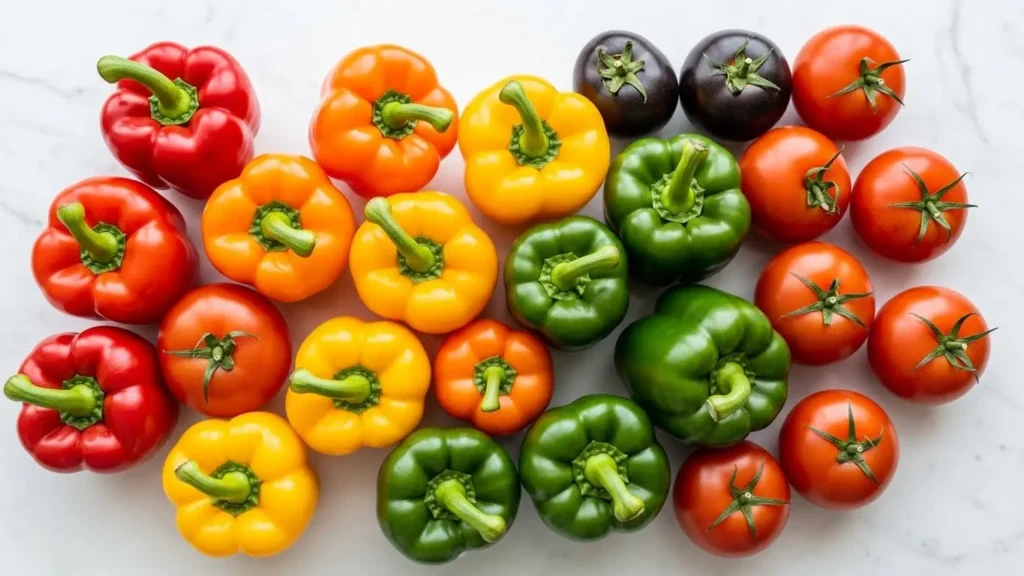
Nightshade vegetables provide distinct nutritional profiles with notable vitamin C content (peppers) and lycopene (tomatoes). Despite unfounded concerns about nightshade consumption, these vegetables offer substantial nutritional value for most individuals.
Bell Pepper Nutrition
One cup of raw red bell pepper (149g):
Table 12: Red Bell Pepper Complete Nutritional Profile
| Nutrient | Amount | % Daily Value |
|---|---|---|
| Calories | 46 | 2% |
| Protein | 1.5g | 3% |
| Carbohydrates | 9g | 3% |
| Fiber | 3.1g | 11% |
| Vitamin A | 4,665 IU | 93% |
| Vitamin C | 190mg | 211% |
| Vitamin B6 | 0.4mg | 24% |
| Folate | 68mcg | 17% |
| Vitamin E | 2.4mg | 16% |
Red bell peppers provide the highest vitamin C concentration of any common vegetable—211% daily needs per cup exceeds citrus fruit nutrition substantially. The ripening process from green to red increases both vitamin C and vitamin A content significantly.
Tomato Nutrition
One cup of chopped raw tomatoes (180g):
Table 13: Tomato Complete Nutritional Profile
| Nutrient | Amount | % Daily Value |
|---|---|---|
| Calories | 32 | 2% |
| Protein | 1.6g | 3% |
| Carbohydrates | 7g | 3% |
| Fiber | 2.2g | 8% |
| Vitamin A | 1,499 IU | 30% |
| Vitamin C | 24.7mg | 27% |
| Vitamin K | 14.2mcg | 12% |
| Potassium | 427mg | 9% |
| Lycopene | 4,631mcg | — |
Tomatoes deliver lycopene, a carotenoid antioxidant with documented cardiovascular and prostate health benefits. Unlike most nutrients, lycopene bioavailability increases with cooking and fat addition—tomato sauce with olive oil delivers more absorbable lycopene than raw tomatoes.
Nightshade Vegetables Comparison
Table 14: Nightshade Vegetables Comparison (per cup raw)
| Vegetable | Calories | Vit C (% DV) | Vit A (% DV) | Key Compound |
|---|---|---|---|---|
| Red Bell Pepper | 46 | 211% | 93% | Capsanthin |
| Green Bell Pepper | 30 | 134% | 11% | Chlorophyll |
| Tomato | 32 | 27% | 30% | Lycopene |
| Eggplant | 20 | 3% | 1% | Nasunin |
Pepper color indicates ripeness and nutrient concentration: green peppers are unripe, red peppers are fully ripe with maximum nutrient development. This progression explains the substantial vitamin differences between green and red varieties.
Squash and Gourd Vegetables: Winter and Summer Varieties
Squash varieties divide into summer squash (zucchini, yellow squash) and winter squash (butternut, acorn, pumpkin), with significant nutritional differences between categories reflecting their different growing and harvesting conditions.
Butternut Squash Nutrition
One cup of cooked butternut squash (205g):
Table 15: Butternut Squash Complete Nutritional Profile
| Nutrient | Amount | % Daily Value |
|---|---|---|
| Calories | 82 | 4% |
| Protein | 1.8g | 4% |
| Carbohydrates | 22g | 8% |
| Fiber | 6.6g | 24% |
| Vitamin A | 22,868 IU | 457% |
| Vitamin C | 31mg | 34% |
| Vitamin E | 2.6mg | 17% |
| Magnesium | 59mg | 14% |
| Potassium | 582mg | 12% |
Butternut squash rivals sweet potato for vitamin A delivery while providing exceptional fiber content—6.6g per cup represents nearly a quarter of daily needs. Winter squash stores well, making it available year-round despite seasonal harvesting.
Zucchini Nutrition
One cup of raw zucchini (124g):
| Nutrient | Amount | % Daily Value |
|---|---|---|
| Calories | 21 | 1% |
| Protein | 1.5g | 3% |
| Carbohydrates | 3.9g | 1% |
| Fiber | 1.2g | 4% |
| Vitamin C | 22mg | 24% |
| Vitamin B6 | 0.2mg | 12% |
| Potassium | 325mg | 7% |
| Manganese | 0.2mg | 9% |
Summer squash like zucchini provides lower nutrient density than winter varieties but offers very low caloric content, making it valuable for adding vegetable volume to meals without significant caloric contribution.
Vegetable Processing Effects: Fresh, Frozen, Canned, and Cooked

How processing affects vegetable nutrition represents a critical knowledge area. Different preparation methods alter nutrient availability, retention, and practical utility in ways that significantly impact dietary outcomes.
Fresh vs. Frozen Vegetables
Independent laboratory testing reveals that frozen vegetables often retain nutrients equal to or exceeding “fresh” supermarket produce. The explanation involves harvest timing: frozen vegetables are processed within hours of harvest at peak ripeness, while “fresh” produce may spend days or weeks in transit and storage, losing nutrients continuously.
Table 16: Fresh vs. Frozen Nutrient Retention
| Nutrient | Fresh (7 days stored) | Frozen | Winner |
|---|---|---|---|
| Vitamin C | 75-80% | 90-95% | Frozen |
| Beta-carotene | 85-90% | 95-100% | Frozen |
| Folate | 70-75% | 80-85% | Frozen |
| Fiber | 100% | 100% | Tie |
| Glucosinolates | 80-90% | 70-80% | Fresh |
For most nutrients, frozen vegetables equal or exceed stored fresh produce. The exception involves heat-sensitive compounds like glucosinolates, which blanching (required before freezing) partially destroys. Truly fresh, locally-harvested vegetables remain optimal when available.
Cooking Method Effects
Different cooking methods affect vegetable nutrition distinctly:
Boiling: Leaches water-soluble vitamins (C, B vitamins) into cooking water. Nutrient losses of 25-50% are common. Using minimal water and consuming cooking liquid reduces losses.
Steaming: Preserves nutrients better than boiling by avoiding direct water contact. Vitamin C retention typically reaches 80-90% with proper steaming technique.
Microwaving: Often preserves nutrients best due to short cooking time and minimal water. Despite misconceptions, microwave cooking does not uniquely destroy nutrients.
Roasting: High heat caramelizes sugars and develops flavor while causing moderate vitamin C loss. Beta-carotene and other fat-soluble nutrients remain stable.
Raw: Maximum vitamin retention but reduced bioavailability for some compounds. Cooking breaks down cell walls, releasing nutrients for absorption—the trade-off varies by vegetable and nutrient.
Canned Vegetable Considerations
Canned vegetables provide convenience with nutritional trade-offs:
- Sodium addition (typically 300-500mg per serving)
- Heat processing reduces vitamin C significantly
- Fiber, minerals, and fat-soluble vitamins remain stable
- Extended shelf life enables year-round availability
Rinsing canned vegetables removes approximately 40% of added sodium while retaining nutrients. For those comparing processed foods—whether examining spam nutrition facts, maruchan ramen nutrition facts, or hot pockets nutrition info—canned vegetables represent a substantially more nutritious processed option despite their limitations.
Vegetable Nutrition in Dietary Context

Understanding how vegetable nutrition integrates with overall dietary patterns helps optimize food choices across various health goals and lifestyle contexts.
Vegetables vs. Other Food Categories
Comparing vegetable nutrition to other food categories illuminates their unique dietary role:
Table 17: Nutrient Density Comparison (per 100 calories)
| Food Category | Fiber | Vit A | Vit C | Potassium |
|---|---|---|---|---|
| Leafy Greens | 14g | 800% DV | 200% DV | 30% DV |
| Cruciferous | 9g | 100% DV | 200% DV | 20% DV |
| Root Vegetables | 4g | 200% DV | 30% DV | 15% DV |
| Whole Grains | 3g | 0% DV | 0% DV | 5% DV |
| Lean Meat | 0g | 5% DV | 0% DV | 10% DV |
| Fruit | 3g | 20% DV | 50% DV | 10% DV |
The comparison demonstrates vegetables’ unmatched nutrient density per calorie. No other food category approaches leafy greens’ micronutrient delivery relative to caloric content. This explains dietary guidelines’ emphasis on vegetable consumption as foundational to nutritional adequacy.
Understanding fruit nutrition alongside vegetable nutrition reveals complementary rather than competitive roles: fruits generally provide more sugar and vitamin C while vegetables deliver more fiber, vitamin K, and mineral diversity. Both categories warrant substantial dietary inclusion.
Vegetable Integration Strategies
For those working with a nutrition coach or pursuing rise up nutrition approaches to dietary improvement, vegetable integration strategies include:
Volume eating: Low calorie density allows large portions that create physical satiety without excessive caloric intake. A pound of mixed vegetables provides roughly 100-150 calories with substantial volume.
Nutrient complementation: Pairing vegetables with fat sources enhances fat-soluble vitamin absorption. Adding olive oil to salads or cooking vegetables with healthy fats optimizes nutrient delivery.
Color variety: Different vegetable colors indicate different phytochemical profiles. Consuming varied colors ensures diverse bioactive compound intake beyond standard nutrient metrics.
Strategic substitution: Replacing calorie-dense foods with vegetables reduces overall intake while maintaining meal satisfaction. Using vegetable-based “noodles” or “rice” dramatically reduces meal calories while adding nutrients.
Special Dietary Considerations
Various dietary contexts affect vegetable recommendations:
Weight management: Vegetable volume supports satiety at low caloric cost. Emphasizing non-starchy vegetables while moderating starchy varieties optimizes weight management efforts.
Blood sugar regulation: Non-starchy vegetables minimally affect blood glucose while providing substantial nutrition. Starchy vegetables (potatoes, corn, peas) require portion awareness for those managing blood sugar.
Kidney health: High-potassium vegetables (potatoes, tomatoes, spinach) require monitoring for those with kidney function concerns. Lower-potassium options (cabbage, onions, peppers) provide alternatives.
Digestive sensitivity: Some individuals tolerate certain vegetable categories better than others. Cruciferous vegetables cause digestive discomfort for some; cooking these vegetables thoroughly often improves tolerance.
For those studying nutrition through universal nutrition approaches or empire nutrition methodologies, understanding vegetable applications across diverse dietary contexts represents essential practical knowledge.
Specialized Topics: Organic, Local, and Seasonal Considerations
Beyond basic nutrition data, questions about organic production, local sourcing, and seasonal availability frequently arise regarding vegetable quality and value.
Organic vs. Conventional Nutrition
Independent laboratory analysis consistently demonstrates minimal nutritional differences between organic and conventional vegetables. The organic designation affects production methods—pesticide restrictions, fertilizer types—rather than final nutrient content.
Where organic vegetables may differ:
- Pesticide residue (lower in organic)
- Some phytochemicals (slightly higher in some organic produce)
- Environmental impact (reduced synthetic chemical use)
The marketing claim that organic vegetables are “more nutritious” doesn’t match the food science reality. Choosing organic represents valid environmental or pesticide-avoidance decisions rather than nutritional optimization strategies.
Seasonal and Local Considerations
Truly local, seasonal vegetables harvested at peak ripeness and consumed quickly do demonstrate superior nutrition compared to vegetables shipped long distances. However, this comparison involves freshness rather than production method—locally-grown vegetables consumed a week after harvest lose the freshness advantage.
For those interested in crave nutrition or similar whole-food approaches, prioritizing seasonal availability supports both optimal nutrition and environmental sustainability through reduced transportation requirements.
Nutritional Yeast as Vegetable Complement
While not a vegetable, braggs nutritional yeast commonly complements vegetable dishes, particularly in plant-based dietary patterns. Per two tablespoons:
- Calories: 45
- Protein: 8g
- Fiber: 3g
- Vitamin B12: 730% DV (fortified)
- Folate: 60% DV
Nutritional yeast provides B12 (typically absent in plant foods) and enhances vegetable dishes with savory, cheese-like flavor. Its inclusion in vegetable-focused meals addresses potential B12 inadequacy in plant-predominant diets.
Comparing Vegetables to Processed Food Alternatives
Understanding vegetable nutrition gains context through comparison with processed alternatives that vegetables might replace in dietary patterns.
Vegetable Nutrition vs. Processed Snacks
When comparing vegetable snacks to processed alternatives, the nutritional differences are substantial:
Raw carrots (1 cup): 52 calories, 3.6g fiber, 428% vitamin A
vs. snickers nutrition facts: 250 calories, 1g fiber, 2% vitamin A
Raw bell pepper strips (1 cup): 46 calories, 3.1g fiber, 211% vitamin C
vs. fun size snickers nutrition: 80 calories, 0g fiber, 0% vitamin C
The contrast extends to other processed comparisons. While examining york peppermint patty nutrition or thomas english muffin nutrition reveals these products’ specific profiles, vegetables consistently deliver superior micronutrient density per calorie compared to processed grain or sugar-based products.
Vegetable Nutrition vs. Processed Meals
Comparing vegetable-based meals to processed convenience options:
Vegetable stir-fry (2 cups): ~150 calories, 8g fiber, extensive micronutrients
vs. hot pockets nutrition info: ~300 calories, 2g fiber, limited micronutrients
Vegetable soup (2 cups): ~100 calories, 6g fiber, broad vitamin profile
vs. maruchan ramen nutrition facts: ~380 calories, 1g fiber, minimal vitamins
For those examining nutrition facts label maker tools or using a nutrition facts label maker for recipe development, understanding these comparisons helps communicate vegetable advantages to consumers or clients.
Beverages Context
Even comparing vegetables to beverages reveals nutritional advantages:
Vegetable juice (8 oz): ~50 calories, vitamins A and C, potassium
vs. diet dr pepper nutrition facts/diet dr pepper nutrition/diet doctor pepper nutrition/diet dr pepper nutrition info/diet dr pepper nutrition information/nutritional value of diet dr pepper: 0 calories, 0 vitamins, 0 minerals
While zero-calorie beverages avoid caloric contribution, they provide no nutritional value—vegetables deliver nutrition diet sodas cannot. Similarly, comparing to nutrition facts on coke zero or monster nutrition facts caffeine reveals these beverages’ nutritional emptiness relative to vegetable alternatives.
Even non-diet beverages like those with boba nutrition facts or boba nutritional info (typically 300-500 calories from sugar) demonstrate how vegetable calories provide incomparably superior nutritional return.
Dairy and Protein Comparisons
Vegetables complement rather than replace protein sources, but comparisons illuminate relative nutrient density:
Spinach (3 cups raw): 21 calories, 363% vitamin K, 168% vitamin A
vs. kraft singles nutrition: 60 calories per slice, 10% calcium, minimal vitamins
Understanding these comparisons helps those studying nutrition facts for pb and j sandwich composition or similar meal analyses recognize vegetables’ role in boosting overall meal nutrition density.
Frequently Asked Questions
Which vegetables have the most vitamins?
Red bell peppers provide the highest vitamin C (211% DV per cup), kale delivers maximum vitamin K (456% DV per cup), and sweet potatoes offer exceptional vitamin A (438% DV per medium). No single vegetable dominates all vitamin categories—variety ensures comprehensive vitamin intake across the full spectrum.
Are frozen vegetables as nutritious as fresh?
Frozen vegetables often retain nutrients equal to or exceeding stored “fresh” produce. Freezing occurs within hours of harvest at peak ripeness, while fresh produce loses nutrients during days or weeks of transportation and storage. For most practical purposes, frozen vegetables represent nutritionally equivalent options with superior convenience and shelf stability.
How many servings of vegetables should I eat daily?
Dietary guidelines recommend 2.5-3 cups of vegetables daily for most adults, with higher intakes (4+ cups) associated with additional health benefits in population studies. This target represents a minimum rather than optimal intake—no evidence suggests harm from higher vegetable consumption for most individuals.
Do cooking methods destroy vegetable nutrients?
Cooking affects different nutrients differently. Water-soluble vitamins (C, B vitamins) leach into cooking water during boiling. Fat-soluble vitamins (A, K, E) remain stable with cooking. Some nutrients (lycopene, beta-carotene) become more bioavailable after cooking. Steaming and microwaving generally preserve nutrients best; boiling causes greatest losses.
Which vegetables are highest in fiber?
Artichokes lead with 10g fiber per medium vegetable. Green peas provide 9g per cup, broccoli delivers 5g per cup, and Brussels sprouts offer 4g per cup. Root vegetables with skin (potatoes, sweet potatoes) provide 4-5g per serving. Leafy greens contain fiber but require large volumes for significant contribution.
Are organic vegetables more nutritious?
Independent laboratory analysis consistently shows minimal nutritional differences between organic and conventional vegetables. Organic certification addresses production methods (pesticide restrictions, fertilizer types) rather than final nutrient content. Choosing organic represents valid environmental or pesticide-avoidance decisions rather than nutritional optimization.
What vegetables are best for weight loss?
Non-starchy vegetables—leafy greens, cruciferous vegetables, peppers, tomatoes—provide maximum volume and satiety at minimal caloric cost. A pound of mixed non-starchy vegetables contains only 100-150 calories while creating substantial physical fullness. This volume-to-calorie ratio makes vegetables essential for sustainable weight management.
How do I increase vegetable absorption of nutrients?
Consuming fat-soluble vitamins (A, E, K) with dietary fat enhances absorption—add olive oil to salads or cook vegetables with healthy fats. Consuming vitamin C alongside iron-rich vegetables (spinach, Swiss chard) improves non-heme iron absorption. Cooking tomatoes and carrots increases lycopene and beta-carotene bioavailability respectively.
Which vegetables have the most protein?
Vegetables generally provide minimal protein, but some contribute meaningfully: green peas (8g per cup), edamame (17g per cup, technically a legume), Brussels sprouts (4g per cup), and broccoli (4g per cup). These amounts supplement rather than replace dedicated protein sources but contribute to total daily protein intake.
Are potatoes considered healthy vegetables?
White potatoes provide exceptional potassium (926mg per medium), vitamin C (31% DV), and vitamin B6 (29% DV) with meaningful fiber when consumed with skin. Despite low-carb diet criticism, potatoes offer substantial nutrient density when prepared without excessive added fat. Sweet potatoes add vitamin A advantages but aren’t inherently “healthier” than white varieties.
What vegetables should I eat for vitamin K?
Dark leafy greens dominate vitamin K content: kale (456% DV per cup), Swiss chard (374% DV per cup), spinach (121% DV per cup), and collard greens (184% DV per cup). Brussels sprouts and broccoli provide secondary sources. Those taking blood thinners should maintain consistent vitamin K intake rather than avoiding these vegetables entirely.
How do I get kids to eat more vegetables?
Strategies supported by research include: repeated exposure (8-15 presentations before acceptance), involving children in preparation, offering vegetables when hungry (before meals), pairing with familiar foods, and modeling vegetable consumption. Forcing vegetable consumption often backfires, creating negative associations that persist into adulthood.
Conclusion
The comprehensive analysis of vegetable nutrition reveals a food category with unmatched nutrient density—leafy greens delivering 100-450% daily vitamin K per cup at under 35 calories, cruciferous vegetables concentrating cancer-protective compounds alongside substantial vitamin C, and root vegetables providing sustained energy with exceptional vitamin A content. Fresh vegetable nutrition and veggie nutrition data consistently demonstrate that vegetables deliver more micronutrients per calorie than any other food category.
The practical implications support substantial vegetable consumption as foundational to nutritional adequacy. Meeting the 2.5-3 cup daily minimum ensures basic vitamin and mineral needs while higher intakes provide additional benefits without documented risks for most individuals. The variety within vegetable categories—different colors, plant parts, and preparation methods—offers flexibility for individual preferences while ensuring comprehensive nutrient coverage.
Understanding processing effects helps navigate practical choices: frozen vegetables retain nutrients effectively, steaming preserves vitamins better than boiling, and cooking certain vegetables actually enhances nutrient absorption. These nuances enable optimization beyond simple “eat more vegetables” guidance.
For those building nutrition expertise—whether through formal education, professional certification, or personal interest—vegetable nutrition represents foundational knowledge essential for dietary counseling and meal planning. The principles of nutrient density, bioavailability factors, and food science that apply to vegetables extend throughout nutrition practice.
Independent laboratory testing confirms that properly grown and stored vegetables deliver their nutritional content reliably. Unlike processed products where marketing claims may exceed nutritional reality, vegetables represent straightforward nutrition—measurable, verifiable, and consistently beneficial across consumption patterns.
The evidence overwhelmingly supports maximizing vegetable intake as among the highest-impact dietary modifications available. At typical costs and with preparation flexibility ranging from raw to elaborately cooked, vegetables deserve consideration as the dietary foundation upon which all other food choices build.
Medical Disclaimer
This article provides nutritional information for educational purposes only. Individual needs vary based on age, health status, activity level, and medical conditions. Those taking blood-thinning medications should discuss vitamin K intake with healthcare providers. Consult a registered dietitian or healthcare provider before making significant dietary changes. Data current as of January 2026. Nutritional values may vary based on specific varieties, growing conditions, and preparation methods.