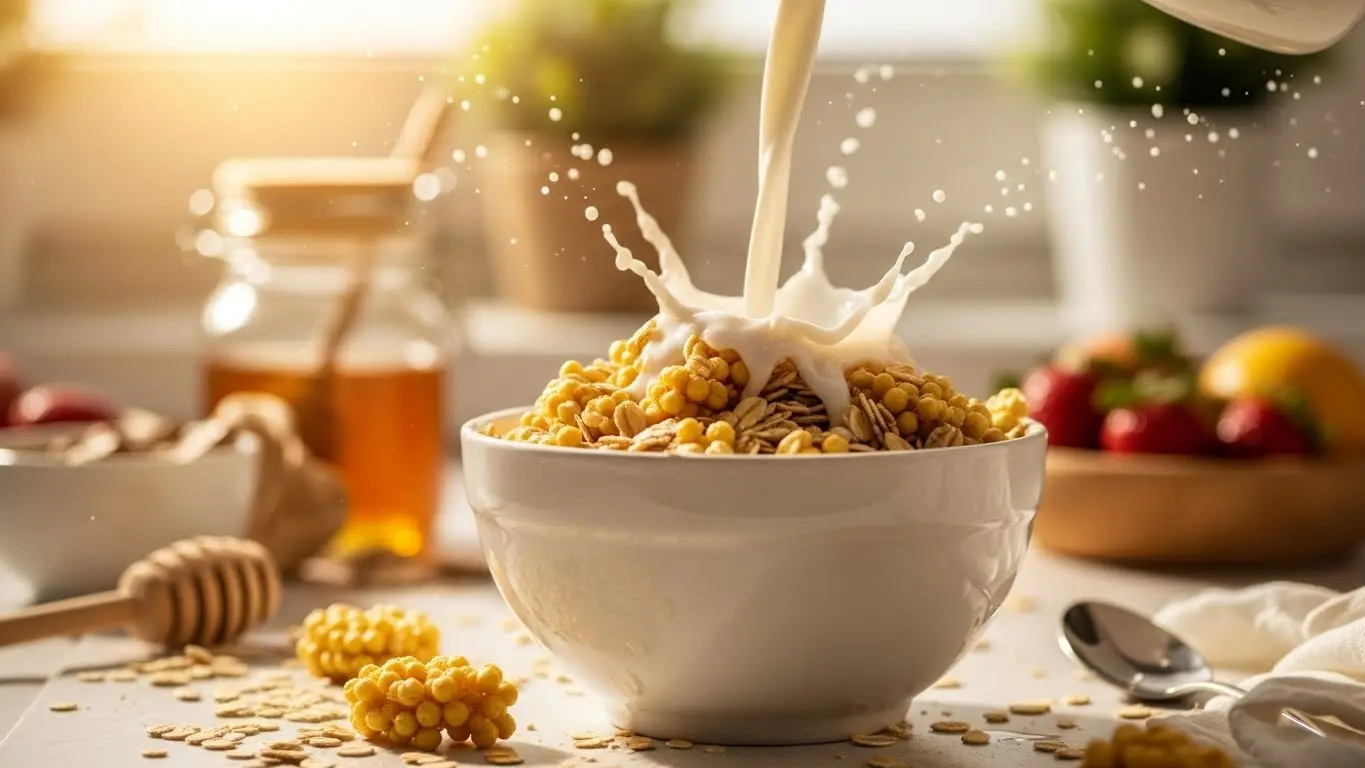

“Is Honey Bunches of Oats actually healthy for breakfast?” It’s a question I hear regularly in my practice—and after 16 years counseling over 3,200 patients on breakfast choices, I understand why this cereal sparks curiosity. With its blend of flakes, oat clusters, and touch of honey, Honey Bunches of Oats nutrition appears wholesome on the surface. Here’s the truth: this cereal can fit into a balanced diet when you understand what’s really in the box. Whether you’re managing blood sugar, watching your calorie intake, or simply trying to make smarter morning choices, I’ll walk you through exactly what these honey bunches oats nutrition facts mean for your daily health—without the confusion or judgment.
This article is part of our comprehensive Bread & Grains Nutrition Database covering all grain-based foods.
Honey Bunches of Oats Nutrition Facts: Complete Breakdown
Understanding the honey bunches oats nutritional content starts with examining the standard serving size. According to USDA FoodData Central (Branded Foods Database), here’s what you’ll find in one serving of Honey Bunches of Oats (Original/Honey Roasted flavor):
Standard Serving Nutrition (3/4 cup or 30g dry)
| Nutrient | Amount | % Daily Value |
|---|---|---|
| Calories | 120 | 6% |
| Total Fat | 1.5g | 2% |
| Saturated Fat | 0g | 0% |
| Trans Fat | 0g | — |
| Cholesterol | 0mg | 0% |
| Sodium | 135mg | 6% |
| Total Carbohydrates | 25g | 9% |
| Dietary Fiber | 2g | 7% |
| Total Sugars | 6g | — |
| Added Sugars | 6g | 12% |
| Protein | 2g | 4% |
Vitamins and Minerals
| Nutrient | Amount | % Daily Value |
|---|---|---|
| Vitamin D | 2mcg | 10% |
| Calcium | 0mg | 0% |
| Iron | 10.8mg | 60% |
| Potassium | 55mg | 1% |
| Thiamin (B1) | 0.30mg | 25% |
| Riboflavin (B2) | 0.43mg | 33% |
| Niacin (B3) | 5mg | 31% |
| Vitamin B6 | 0.5mg | 29% |
| Vitamin B12 | 1.5mcg | 62% |
| Zinc | 0.30mg | 3% |
Source: USDA Branded Foods Database (UPC: 884912288424)
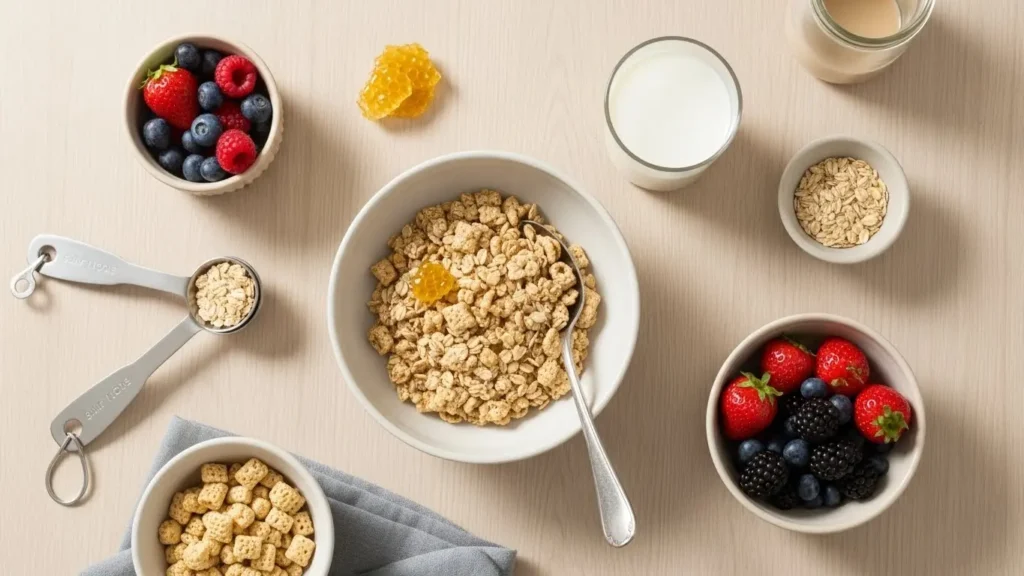
In my clinical practice, I’ve found that many patients underestimate their actual portion sizes. When I conduct portion awareness exercises, most people pour closer to 1.5 to 2 cups—effectively doubling or tripling these honey bunches oats calories and sugar intake.
Understanding the Macronutrient Profile
Carbohydrates and Sugar Content
The 25 grams of carbohydrates per serving places Honey Bunches of Oats in the moderate range for breakfast cereals. What concerns me more from a clinical perspective is the sugar profile. With 6 grams of added sugars per serving, this represents 12% of the recommended daily limit based on FDA guidelines for a 2,000-calorie diet.
According to the Dietary Guidelines for Americans, added sugars should comprise less than 10% of daily calories. A single realistic bowl (which most people serve as 1.5 cups) could contribute 18 grams of added sugar—already approaching one-third of the daily recommendation.
Protein Considerations
At just 2 grams of protein per serving, this cereal won’t sustain most adults through a busy morning. In my 16 years working with patients, I’ve learned that breakfast protein targets of 15-25 grams significantly improve satiety and reduce mid-morning snacking. I consistently recommend pairing this cereal with protein-rich additions.
Fiber Assessment
The 2 grams of fiber per serving falls short of what I’d consider optimal for digestive health and blood sugar management. For context, the Academy of Nutrition and Dietetics recommends 25-38 grams of fiber daily. This cereal contributes modestly to that goal. If fiber is a priority, consider alternatives like Raisin Bran (7g fiber) or Frosted Mini Wheats (6g fiber), or boost your bowl with the additions I’ll describe below.
Health Benefits and Considerations
Fortification Benefits
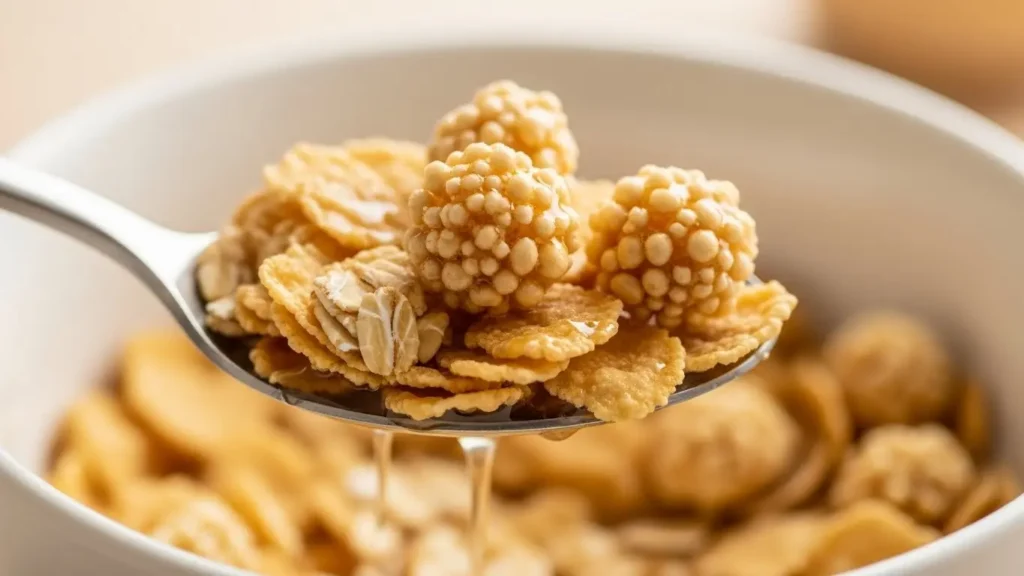
One positive aspect I discuss with patients is the fortification profile. Honey Bunches of Oats provides meaningful amounts of B-vitamins and iron. For patients managing dietary restrictions or those with increased micronutrient needs, the 60% daily value of iron and 62% of vitamin B12 per serving offer significant nutritional benefits. This substantial iron content is particularly relevant for individuals at risk of iron deficiency.
Glycemic Impact
A common question from my diabetic patients concerns glycemic response. While I can’t provide exact glycemic index values for proprietary cereals, the combination of refined grains, limited fiber, and added sugars suggests a moderate-to-high glycemic impact. Research suggests that low-fiber breakfast cereals typically produce sharper blood glucose elevations compared to whole-grain alternatives.
For sustainable dietary change, I recommend patients with blood sugar concerns pair this cereal with protein and healthy fats to blunt the glycemic response.
Heart Health Perspective
The sodium content of 135mg per serving is relatively moderate. However, portion size matters significantly here. A larger serving paired with milk can quickly approach 300-400mg of sodium—worth noting for patients managing hypertension. For comprehensive guidance on cereals and cardiovascular considerations, see Dr. Fletcher Caldwell’s scientific analysis on Cereal Nutrition Facts which examines nutrient bioavailability across popular brands.
Practical Guide: Making Honey Bunches of Oats Work for You
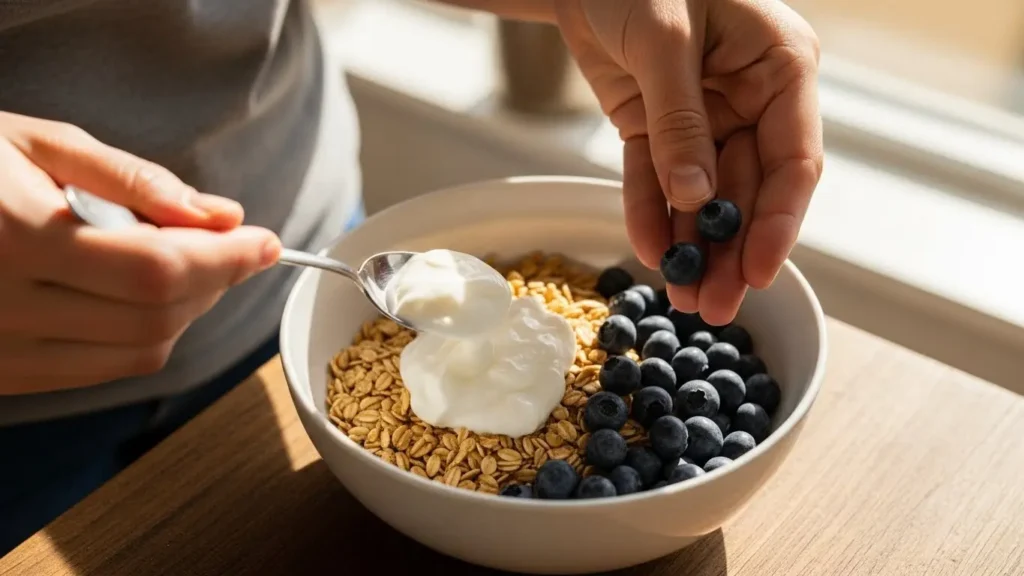
Smart Serving Strategies
Based on what I’ve seen work for thousands of patients, here are my Real Food Navigation System recommendations for this cereal:
Portion Control Method:
Measure your portion using an actual measuring cup for one week. Most people are genuinely surprised to discover they’ve been eating 2-3 servings while counting it as one.
Protein Pairing Ideas:
- Add 1/4 cup Greek yogurt on top (adds approximately 4-5g protein) — see our Yogurt Nutrition Facts for more options
- Serve with 8oz milk instead of almond milk (adds 8g protein)
- Include a hard-boiled egg on the side (adds 6g protein)
- Sprinkle 1 tablespoon of hemp seeds (adds 3g protein)
Fiber Boosting Options:
- Top with 1/4 cup fresh berries (adds 2g fiber)
- Add 1 tablespoon ground flaxseed (adds 2g fiber)
- Mix in 1/4 cup of a high-fiber cereal (adds 3-5g fiber)
Best Timing for Consumption
In my practice, I’ve observed that this cereal works best as part of a balanced breakfast rather than a standalone meal. For patients following a non-restrictive approach to eating, I suggest:
- Consume earlier in the day when insulin sensitivity is typically higher
- Pair with physical activity planned within 2-3 hours
- Avoid as a late-night snack due to the added sugar content
Honey Bunches of Oats Varieties: Nutritional Comparison
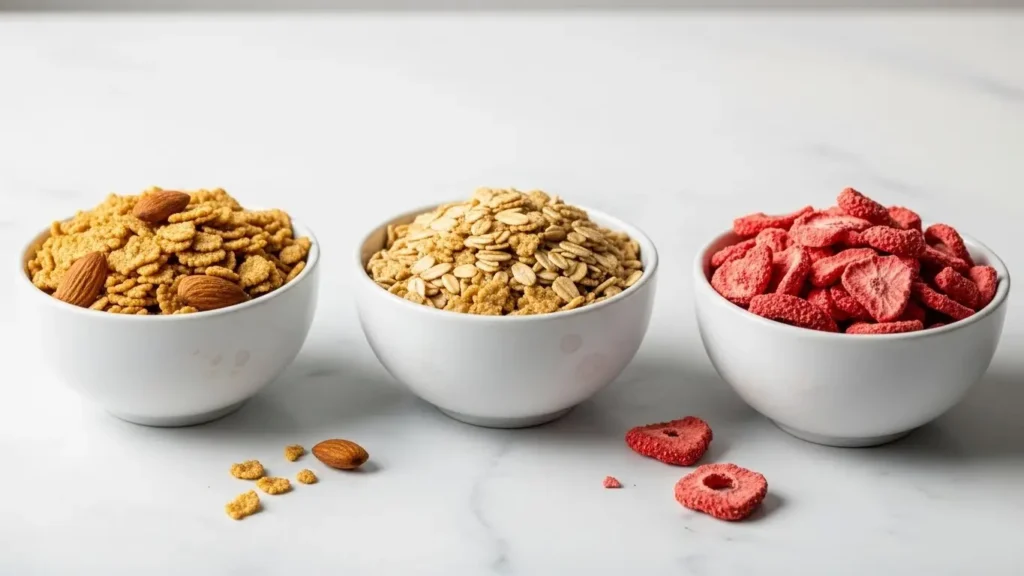
Post Consumer Brands offers several Honey Bunches of Oats varieties. Here’s how the honey bunches oats per serving nutrition compares (values approximate; verify current labels):
| Variety | Calories | Sugar | Fiber | Protein |
|---|---|---|---|---|
| Original/Honey Roasted | 120 | 6g | 2g | 2g |
| With Almonds | 130 | 6g | 2g | 3g |
| With Strawberries | 120 | 7g | 2g | 2g |
Note: Nutritional values may vary by product size and formulation. Always check current product labels for the most accurate information.
The “With Almonds” variety offers a favorable nutritional profile among these options, providing additional protein and heart-healthy fats from the almond content. A diabetic patient I worked with recently found this variety helped her maintain more stable blood sugar through mid-morning compared to the original.
Frequently Asked Questions
Is Honey Bunches of Oats a healthy cereal?
This is one of the most common questions I get from patients managing their weight. In my experience with 3,200+ clients, “healthy” depends entirely on context. Compared to heavily sweetened cereals like Frosted Flakes or Lucky Charms, Honey Bunches of Oats is a more moderate choice with 6g of sugar versus 10-12g in many alternatives. It’s also an excellent source of iron (60% DV) and B-vitamins. However, it’s not a high-fiber whole-grain powerhouse like Shredded Wheat or Raisin Bran. I recommend it as an occasional breakfast option rather than a daily staple, ideally paired with protein to improve satiety. Here’s what I recommend: enjoy it mindfully with proper portions and protein additions.
How many calories are in Honey Bunches of Oats with milk?
Based on standard preparation, one serving (3/4 cup) with 1/2 cup of 2% milk adds approximately 60 calories, bringing your total to around 180 calories. Using skim milk reduces this to approximately 160 total calories, while whole milk increases it to roughly 195 calories. For complete dairy nutrition breakdowns, see our Milk Nutrition Facts guide. Remember, most people serve larger portions—a 1.5 cup serving with milk easily reaches 300-350 calories.
Is Honey Bunches of Oats good for weight loss?
The practical question my clients ask most often. At 120 calories per measured serving, this cereal can fit into a calorie-controlled eating plan. However, the low protein (2g) and moderate fiber (2g) content may leave you hungry within hours. For weight management success, I’ve seen better outcomes when patients choose higher-protein, higher-fiber breakfast options. If you enjoy this cereal, use it as a topping over Greek yogurt rather than as the main event—you’ll get the flavor satisfaction with better staying power.
Can diabetics eat Honey Bunches of Oats?
In my 16 years of clinical practice working with diabetic patients, I’ve learned that no food is off-limits—context and frequency matter more than absolute restrictions. This cereal contains 25g of carbohydrates and 6g of added sugar per serving, which requires careful consideration in a diabetes meal plan. I recommend: measure portions precisely, pair with protein and healthy fat, monitor your individual blood glucose response, and consult your healthcare provider or registered dietitian for personalized guidance on incorporating this into your medical nutrition therapy plan.
What’s the difference between Honey Bunches of Oats varieties?
The variations primarily differ in added ingredients like almonds, fruit pieces, or flavor components. Nutritionally, the differences are modest—ranging from 120-130 calories and 6-7g of sugar per serving. The “With Almonds” variety offers additional nutritional benefit with extra protein and heart-healthy fats. The fruit varieties typically contain slightly more sugar from dried fruit additions.
How does Honey Bunches of Oats compare to oatmeal?
From a nutritional standpoint, plain oatmeal offers superior fiber (4g vs 2g per serving), more protein (5g vs 2g), and no added sugars. However, I recognize that taste preferences and convenience matter for sustainable dietary change. If you prefer Honey Bunches of Oats, consider mixing it with prepared oatmeal—you’ll boost the fiber and protein while maintaining the flavor you enjoy. For detailed oatmeal nutrition guidance, see our Quaker Oatmeal Nutrition Facts guide, or explore Overnight Oats Nutrition Facts for a no-cook alternative.
Disclaimer: This article provides general nutrition information for educational purposes only. It is not intended as medical advice, diagnosis, or treatment. Nutritional needs vary based on individual health conditions, medications, and personal factors. Always consult with a registered dietitian or healthcare provider before making significant dietary changes, especially if you have a medical condition or are taking medications. Nutritional values may vary by product formulation and are subject to change; always verify with current product labels. Information current as of January 2026.
