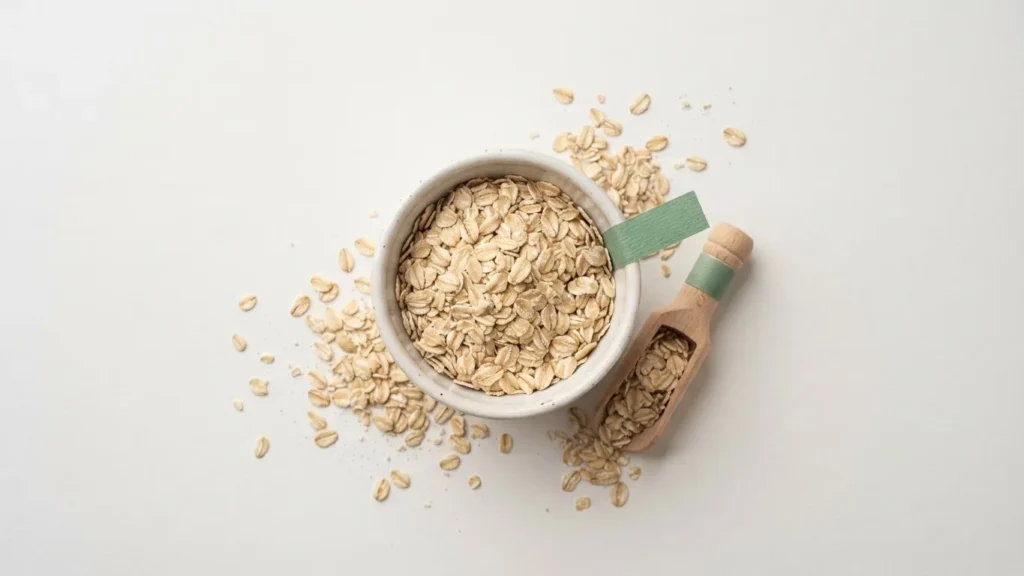
Two sources, one product, and they do not agree on the calorie count. The retail label read off the 18-oz can lists a half-cup dry serving of old-fashioned rolled oats at 150 calories, while a widely used tracking database logs the same volume at 134 calories. That 16-calorie spread is the first thing worth understanding in any honest look at Quaker Oats nutrition facts, because it decides which number you enter when you weigh your breakfast. This desk aggregates the manufacturer declaration, the official brand product page, and a public food database, then lays the figures side by side so the gap is visible rather than hidden.
Everything below reflects dry oats as sold. Once you add water or milk, the plate changes, and we cover that separately.
The Answer: 150 Calories Per Half-Cup Dry Serving
A standard serving of Quaker Oats is a half cup of dry oats. That serving carries 150 calories, 27 grams of carbohydrates, 5 grams of protein, and 3 grams of fat. Dietary fiber comes in at 4 grams, and the food is sodium-free at 0 mg per serving. Iron sits at 2 milligrams. Sugar is not broken out in the figures available here. A public tracker weighing the same half-cup reports a lower 134 calories, so your logged number depends on which source you trust.
Serving Size: Half a Cup Dry, Not Cooked
The number that anchors every other figure is the serving size, and it is measured before any liquid touches the oats. Martin’s, the grocery retailer whose product listing carries the Quaker panel for the 18-oz can of 100% whole grain old-fashioned rolled oats, defines that serving as half a cup of dry oats.
This matters at the counter. A half cup of dry oats swells substantially once cooked, so the bowl in front of you looks like far more than a half cup. The calorie figure did not change; only the volume did. If you scoop your oats after cooking and call it a half-cup serving, you are eating well under one labeled serving. Weighing or measuring dry, before the pot, is the only way to match the panel.
One gap is worth naming: the manufacturer figures available here do not state the exact gram weight behind that half cup. That missing number is exactly what makes the calorie discrepancy hard to close, and it is the reason the next section exists.
Why a Tracker Says 134 Calories and the Can Says 150
Volume measures for a light, flaky food like rolled oats are imprecise. A half cup packed loosely weighs less than a half cup pressed down, and calorie math follows the gram weight, not the cup. That is the mechanism behind the disagreement.
Eat This Much, a meal-tracking database, arrives at 134 calories for its half-cup measure of rolled oats. You can see the half-cup rolled oats entry for the underlying figures. The retail panel from Martin’s, for the same nominal half cup, lists 150 calories and 27 grams of carbohydrates. So the tracker reports fewer calories for its stated weight.
Which do you use? If you own a kitchen scale, weigh your oats and match the source whose gram basis matches your scoop. If you measure by cup and never weigh, the 150-calorie panel is the conservative choice and the one printed on the package you bought. The resolution is not to average them. It is to pick the source that matches your measuring method and stay consistent. Cereal panels behave this same way; the same volume-versus-weight problem shows up on the Fruity Pebbles nutrition label.
The Full Macro Line: Carbs, Protein, Fat, Fiber, Sodium
Here is the complete panel for one dry serving, as declared on the retail listing.
| Item | Value |
|---|---|
| Serving size | Half cup dry |
| Calories | 150 calories (retail panel); 134 calories per a tracker |
| Total carbohydrates | 27 grams (retail) |
| Protein | 5 grams |
| Total fat | 3 grams |
| Dietary fiber | 4 grams |
| Sodium | 0 mg |
| Iron | 2 mg |
| Sugar | not broken out in the figures available |
The sodium line is the standout. At 0 mg, plain rolled oats are a sodium-free food, which sets them apart from most boxed breakfast cereals, where sodium is a routine line item. Compare that to a sweetened cereal like the one on the Lucky Charms nutrition label, where added sugar and sodium both appear. The 5 grams of protein and 3 grams of fat are modest but real, and the 27 grams of carbohydrates is the dominant macro, as you would expect from a whole grain.
The Fiber Breakdown: 4 Grams Total, Half of It Soluble
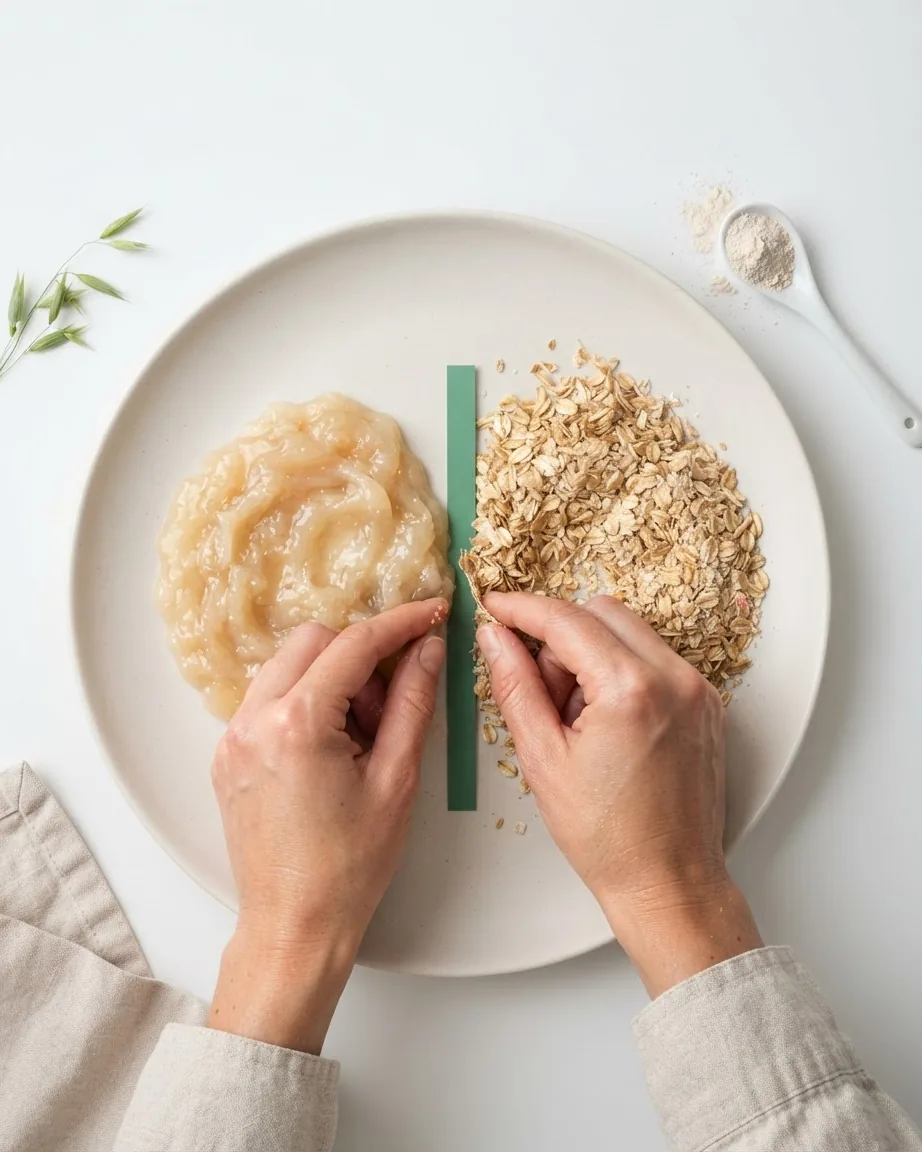
The 4 grams of dietary fiber is the number most closely tied to the health messaging on oats, and the split inside that number is what matters. According to the Quaker Oats Company product page for old-fashioned oats, half of the dietary fiber in a serving is soluble fiber. So of the 4 grams, roughly 2 grams is the soluble type.
Soluble fiber is the fraction connected to the heart-health claim, because it is the component studied for its effect on cholesterol. The Quaker Oats Company states the product is 100% whole grains for lasting energy that helps keep you feeling full for up to 4 hours and may help reduce the risk of heart disease. Note the exact wording: may help, not does. That is a qualified structure claim tied to the soluble fiber content, not a promise of a medical outcome. This desk reports the claim as the manufacturer states it and makes no health recommendation of its own.
The 4-Hour Fullness and Whole-Grain Energy Claims, Read Plainly
The satiety line does real work in the marketing, so it is worth pinning down what it says and what it does not. The claim is that the oats help keep you feeling full for up to 4 hours. “Up to” is a ceiling, not a guarantee, and the figure is tied to the whole-grain, high-fiber composition rather than to any single ingredient added for the effect.
The “100% whole grains” language is verifiable on the panel: this is the plain rolled-oats product, not a flavored or sweetened variety, so the grain is the whole story of the ingredient list. That is also why sugar is not a prominent line here the way it is on ready-to-eat cereals. If you want the wider category context on how these panels are structured, the pantry basics section collects the staples read the same way. For a drink comparison where a headline calorie number hides similar fine print, see the Starbucks nutrition information breakdown.
Dry vs. Cooked: How the 2:1 Liquid Ratio Rewrites the Plate
Every figure above is for dry oats. The moment you cook them, the consumed profile can shift, and the shift depends entirely on your liquid. The Quaker Oats Company basic stovetop or microwave recipe calls for double the amount of liquid to oats, a 2:1 ratio.
Here is the make-or-break distinction: water adds nothing nutritionally, so a bowl cooked in water keeps the same 150 calories, 27 grams of carbohydrates, 5 grams of protein, and 3 grams of fat as the dry serving. Cook the same half cup in milk instead, and you stack the milk’s calories, protein, fat, and sugar on top of the oat figures. The panel cannot tell you that total, because it only measures the oats. Water is what preserves the label numbers; milk is what makes them incomplete. If you track your intake, log the milk as a separate line.
This dry-versus-cooked problem is not unique to oats. The same reconciliation trips people up on rice cream nutrition, where the cooked and dry numbers rarely line up cleanly.
Quaker Oats vs. Two Common Breakfast Alternatives
Numbers mean more against a neighbor. Set the plain half-cup dry serving beside two familiar breakfasts and the shape of the food becomes clear.
Against a sweetened boxed cereal, the standout differences are sodium and sugar. Plain rolled oats log 0 mg of sodium and carry no called-out sugar line, while cereals like those covered on the Raisin Bran nutrition facts page build sodium and added sugar into every bowl. Against a yogurt breakfast such as the one on the nutritional value for Activia yogurt page, the oats bring more fiber per serving, while yogurt typically brings more protein. Neither is universally better; the right pick depends on whether your morning target is fiber, protein, or a low-sodium start. The 27 grams of carbohydrates and 4 grams of fiber are what oats do well; they do not compete on protein.
Quaker Oats Nutrition Facts at a Glance
A clean reference table for one dry serving, sourced from the retail panel with the tracker’s competing figure noted.
| Item | Value |
|---|---|
| Serving size | Half cup dry |
| Calories | 150 (retail) / 134 (tracker) |
| Carbohydrates | 27 g (retail) |
| Protein | 5 g |
| Fat | 3 g |
| Dietary fiber | 4 g (about 2 g soluble) |
| Sodium | 0 mg |
| Iron | 2 mg |
Published nutritional data can change without notice if a brand adjusts its recipe or manufacturing, so treat the figures as current to the sources read and confirm against your own package. If you cook or bake with oats and need a wheat-free swap elsewhere in the kitchen, the gluten free flour guide covers how those substitutes behave.
One 18-oz Can, Fully Counted: Servings and Whole-Package Totals
The panel stops at one half-cup serving, but the can does not. If you eat one measured half-cup every morning, a single 18-oz can stretches across a run of breakfasts, and you can multiply the per-serving panel figures across those servings to see how much fiber and protein the container delivers over that stretch. On a per-serving basis, the panel figures read like this:
- Calories: 150 per half-cup serving.
- Carbohydrates: 27 g per serving.
- Protein: 5 g per serving.
- Dietary fiber: 4 g per serving, of which roughly half (about 2 g) is soluble fiber.
The point is practical: if you eat one measured half-cup every morning, a single 18-oz can lasts you across many breakfasts, and you can see exactly how much fiber and protein each serving delivers over that stretch. Weigh at the mark that matches the tracker and you would swap 150 for the tracker’s 134 calories per serving instead.
FAQ
How many calories are in a serving of Quaker Oats?
The retail panel lists 150 calories for a half-cup dry serving. A public tracker weighing that half cup reports 134 calories instead. The gap comes from volume-versus-weight measurement, not a different product. Weigh your oats to know which figure fits your scoop.
Do Quaker Oats have any sodium?
No. Plain old-fashioned rolled oats are a sodium-free food at 0 mg per serving, which separates them from most boxed cereals. Anything you add during cooking or serving, such as a salted topping or a milk splash, can change that total, so the 0 mg applies to the dry oats alone.
How much of the fiber in oats is soluble?
Of the 4 grams of dietary fiber per serving, half is soluble fiber, roughly 2 grams. The Quaker Oats Company ties its qualified heart-health language to that soluble fraction. The claim is worded as “may help reduce the risk of heart disease,” a structure claim rather than a guaranteed medical result.
Do the numbers change when I cook the oats?
Cooked in water, no; the 150 calories, 27 grams of carbohydrates, 5 grams of protein, and 3 grams of fat stay put, since water adds nothing. Cooked in milk, yes; the milk’s calories, fat, protein, and sugar stack on top and are not counted on the oat panel. Log milk separately. Why does my tracker show a different carb count than the package? The same volume-versus-weight issue that moves the calorie figure moves the carbohydrate figure too. The retail panel lists 27 grams of carbohydrates for its half-cup serving. Match the source to how you actually measure, by cup or by scale, and stay with it rather than switching between the two. How much liquid do I use for Quaker Oats? The Quaker Oats Company basic stovetop or microwave recipe calls for double the liquid to oats, a 2:1 ratio. That ratio governs texture, not the oat panel numbers. Water keeps the dry figures intact; milk adds its own calories, fat, protein, and sugar on top, which the oat label does not account for. Is there iron in Quaker Oats? Yes. One dry serving provides 2 milligrams of iron. Beyond iron, the figures available here do not list other micronutrients such as potassium, magnesium, or calcium, and sugar is not broken out, so those lines cannot be reported from the sources read. The Bottom Line Quaker Oats nutrition facts come down to one dry half-cup serving: 150 calories on the retail panel, 27 grams of carbohydrates, 5 grams of protein, 3 grams of fat, 4 grams of fiber with about half of it soluble, 0 mg of sodium, and 2 milligrams of iron. The 134-calorie tracker figure is not a contradiction to explain away but a measurement choice to match; weigh dry, pick the source whose gram basis fits your scoop, and log any milk on its own line. The satiety and heart-health lines are the manufacturer’s own qualified claims tied to the soluble fiber, reported here as stated. Confirm against your own package, since panels can change without notice.