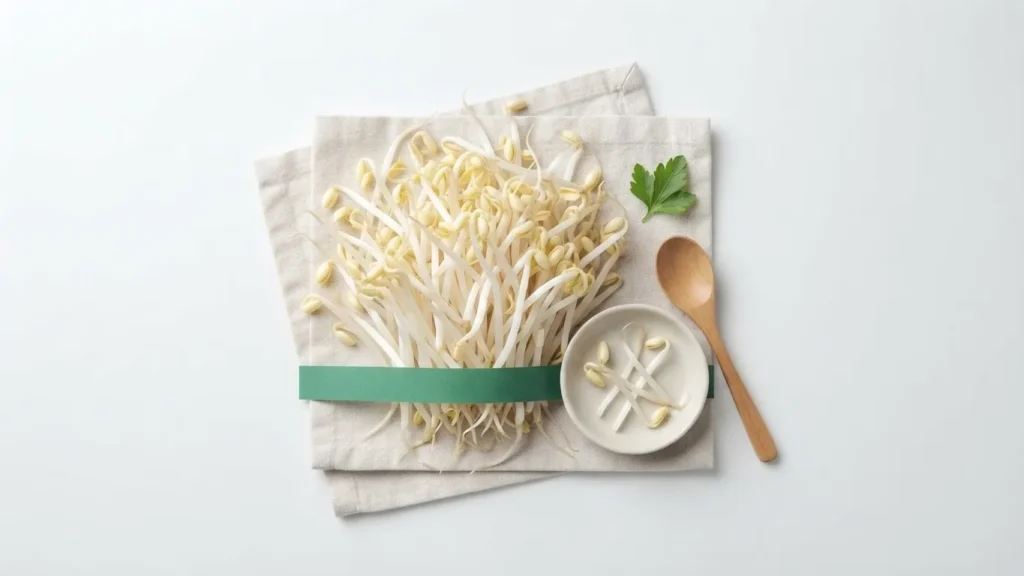
Raw mung bean sprouts run low in calories, and most of that weight is water. Most people reading a bean sprouts nutrition figure for the first time arrive expecting a protein food and leave surprised: the sprout carries far less protein than that, nowhere near the number stamped on a bag of dry beans. This desk pulls the panel apart line by line – serving weight, macros, the minerals worth counting, and the raw-versus-cooked safety split that plain nutrition tables tend to skip. The figures below are drawn from public food databases into a single reference table.
Bean sprouts nutrition, per 100 grams of raw mung bean sprouts: low in calories and light on protein. The standardized culinary serving is 1 cup, roughly 104 grams or 3.7 ounces. Notable micronutrients include vitamin K, vitamin C, folate, and iron. These are standard reference values for the raw sprout. Raw sprouts also carry a documented foodborne-illness history, which is why cooking gets recommended for some eaters.
Reading bean sprouts nutrition off the 100-gram USDA line
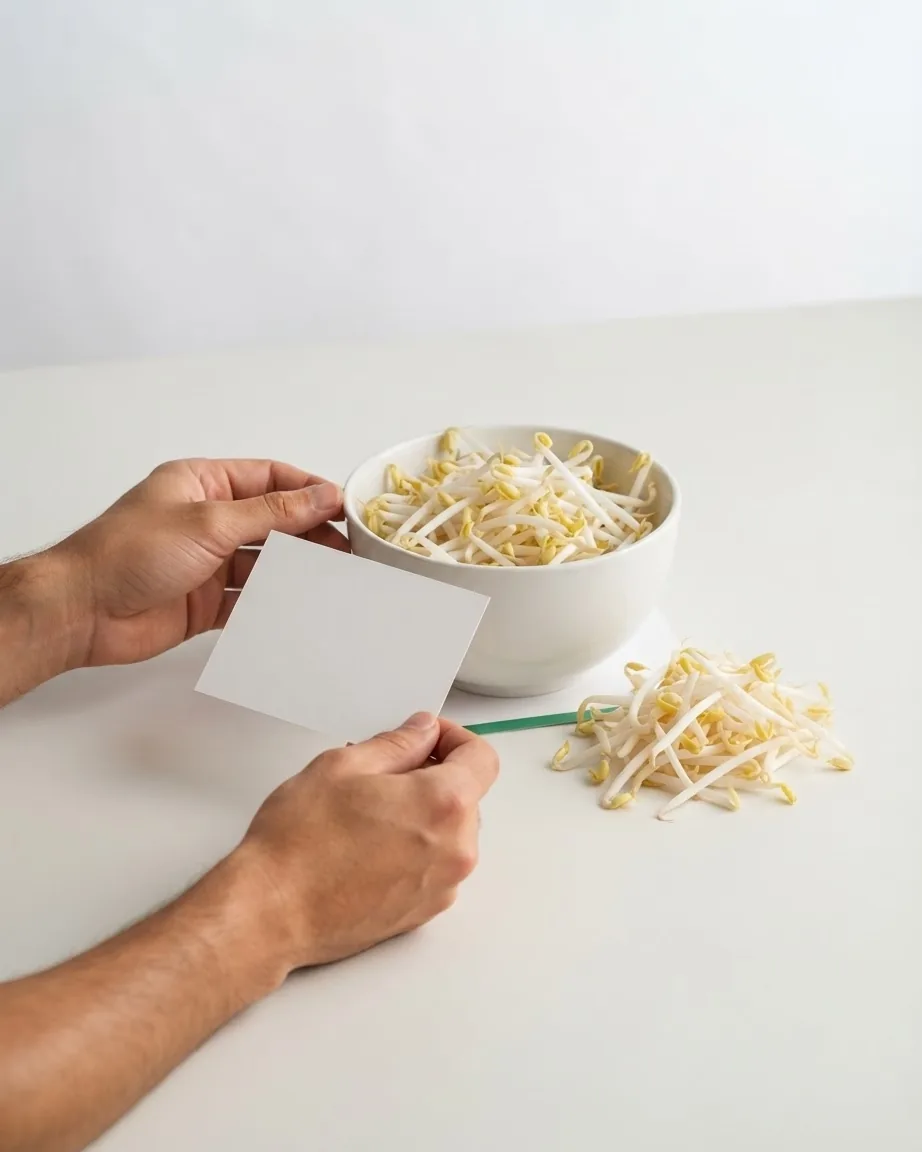
The panel here reports against 100 grams of raw sprouted mung beans, the basis the underlying dataset uses. For anyone measuring at the counter, Nutrivore standardizes a serving to 1 cup, about 104 grams or 3.7 ounces – so a heaping cup lands close to the 100-gram column, not double it. That single conversion keeps the math honest when you scale a recipe.
The values come from FoodStruct’s entry for raw sprouted mung beans, which draws on the FoodData Central record (FDC 169957). Here is the line as the reference table carries it:
| Nutrient (per 100 g raw) | Amount |
|---|---|
| Net carbohydrate | 4.14 g |
| Dietary fiber | 1.8 g |
| Water | 90.4 g |
Sodium never dominates this panel the way it does on a cracker sleeve, where the salt line drives the whole read – see the breakdown in Club Crackers Nutrition Facts for that contrast. Sprouts sit in the near-zero-calorie tier alongside other pantry basics, with vitamin K, vitamin C, and folate doing most of the work on the micronutrient side.
Why the calorie count is so low, and why it’s mostly water

Two databases put the calorie count within a point of each other. FoodStruct and Food Nutrify report slightly different totals per 100 grams. Both trace back to USDA-derived data, and the split is a rounding artifact between aggregators, not a real disagreement about the food. Anywhere it matters, treat raw mung bean sprouts as a low-calorie food and move on.
The reason that figure sits so low is the water. Water makes up the bulk of the sprout, leaving very little dry matter to carry energy. That water content is also what makes sprouts look so different from the beans they came from. Food Nutrify frames the gap directly: at 31 calories per 100 grams, the raw sprout runs roughly 70 percent fewer calories than cooked whole beans (105 kcal) and about 91 percent fewer than the dry form (347 kcal). Same plant, three very different columns depending on how much water is in the picture.
The protein number people get wrong
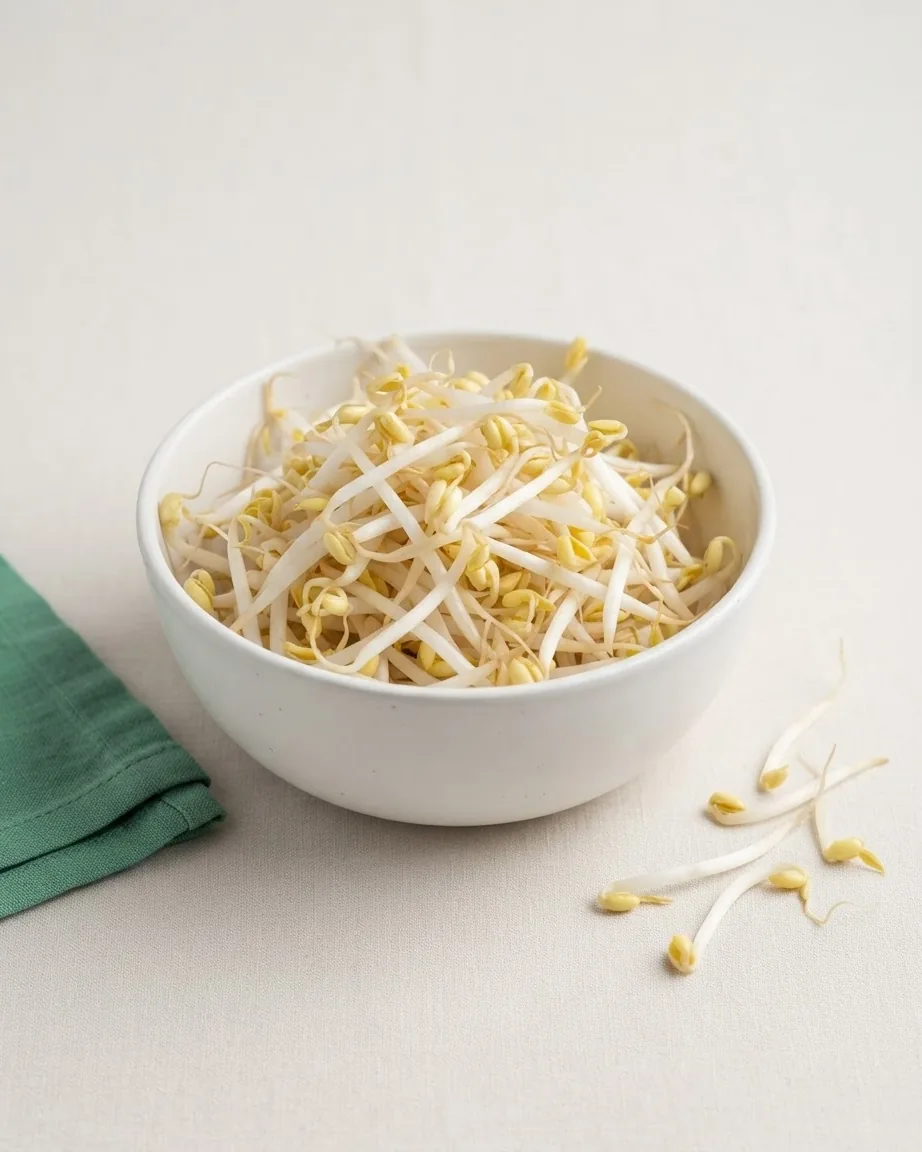
This is where sprout nutrition gets mis-sold. The sprout carries far less protein per 100 grams than most people assume. The often-quoted “high-protein legume” figure, per Food Nutrify’s green gram data, describes the dry whole bean, not the sprout. Germination and soaking flood the seed with water, and that dilution drops the protein density along with the calories.
So a cup of raw sprouts is a low-calorie, high-volume vegetable that happens to come from a legume, not a meaningful protein source on its own. If protein is the goal for a given meal, a dense cut earns its place faster – a 3-ounce serving of beef, laid out in Beef Filet Mignon Nutrition, sits in a different tier entirely. Sprouts contribute crunch, water, and micronutrients; expecting them to carry a plate’s protein sets up disappointment when the panel comes back low.
Raw bean sprouts and the food-safety flag: 52 outbreaks on record
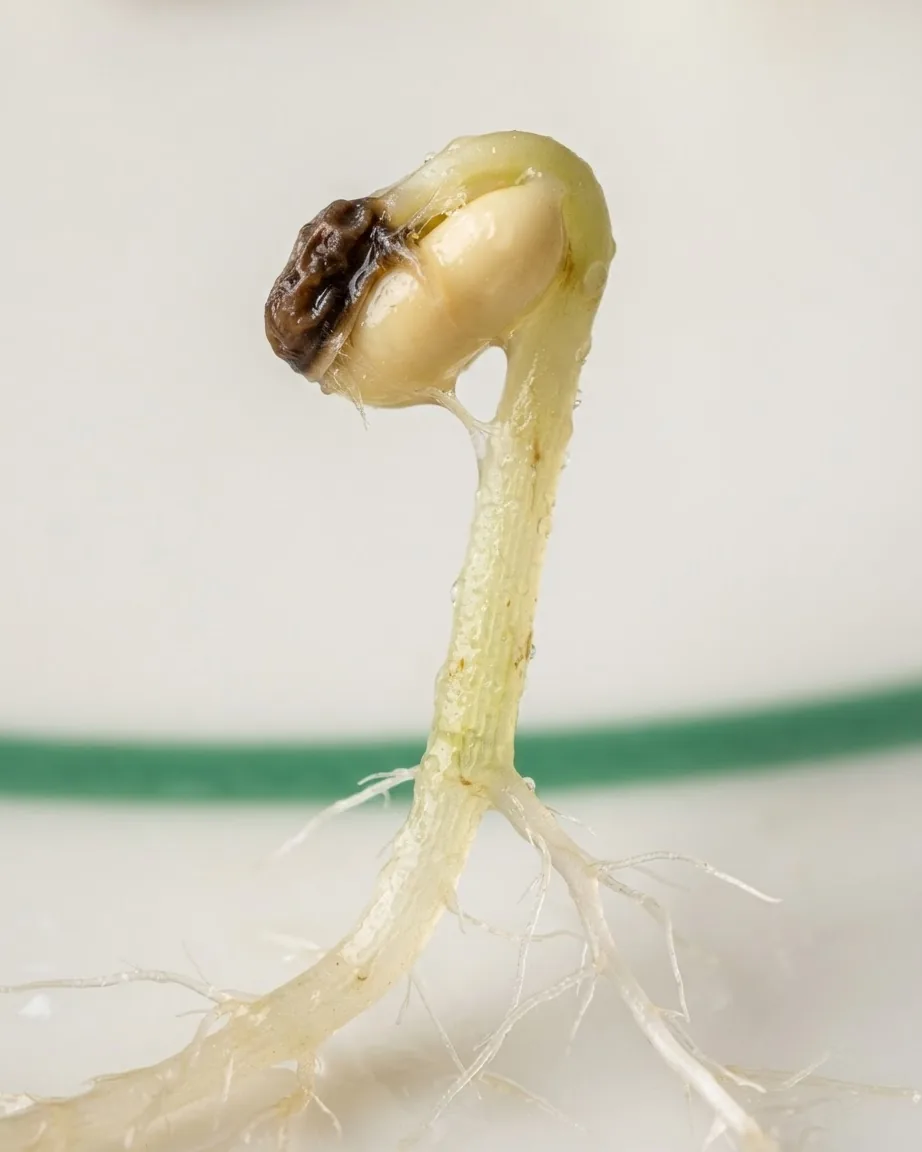
Sprouts get grown warm and damp, the same conditions bacteria favor, which is why they draw more safety attention than most produce. The FDA’s guidance for sprout growers records 52 reported outbreaks of foodborne illness tied to sprouts in the United States between 1996 and 2020. That is a specific, documented count, not a general caution.
Public-health advice follows from it. During a 2020 E. coli investigation, the CDC stated that people “should avoid eating raw sprouts of any kind (including alfalfa, clover, radish, and mung bean sprouts).” That wording is blunt on purpose. The reliable mitigation is heat: cooking sprouts through knocks down the pathogen risk that raw eating leaves on the table. Stir-frying until the sprouts wilt and lose their squeak is enough to change the risk profile, even if it also changes the texture people buy sprouts for. Anyone cooking for young children, older adults, pregnant eaters, or immune-compromised household members has the strongest reason to skip the raw pile and cook them instead.
What germination does to iron and zinc
Sprouting is a trade, and the trade cuts both ways. Density goes down as water goes up – that is the calorie and protein story above. But mineral availability goes the other direction. Raw beans hold phytic acid, an anti-nutrient that binds minerals and blocks the body from absorbing them. Germination breaks a lot of it down.
A peer-reviewed study indexed at NCBI PMC quantifies the effect. After germination, phytic acid content in mung beans fell by 76 percent, and the bioavailability of zinc and iron rose to 3.0 and 2.4 times that of raw mung beans, respectively. So the iron on the sprout panel comes in a form the body reaches more easily than the same mineral locked inside an un-sprouted bean. Read the finding for what it is: a measured research result on germination, not a number printed on any retail package. “Healthier when sprouted” holds up for mineral access even as calorie and protein density drop.
From a raw cup to cooked: the volume shrink
Recipes that call for sprouts by the cup hide a conversion. Per Nutrivore, 1 cup of raw mung bean sprouts is equivalent to a little more than three-quarters of a cup once the beans are cooked. Heat collapses the airy raw volume, so a cup measured raw does not equal a cup measured after cooking, and the two are not the same food nutritionally either – the cooked whole bean sits back up at 105 calories, a different column from the raw sprout. Measure raw when the recipe says raw, and expect the pile to shrink on the heat.
Pairing bean sprouts into a complete protein
The modest protein sprouts do carry still counts for something once you handle it correctly. Mung bean sprouts are relatively rich in lysine, the amino acid grains tend to lack, while running lower in methionine and cysteine, which grains supply. Food Nutrify’s amino-acid profile lays out that complementarity plainly.
The practical move at the counter: pair sprouts with a grain and the two cover each other’s gaps. Sprouts folded into a rice bowl, tucked into a noodle dish, or piled onto a grain salad build a more complete amino-acid line than either component alone. This is standard legume-plus-grain logic, and sprouts slot into it the same way whole beans do – just with far more water and far fewer calories along for the ride. For meal-building, that makes them a texture and micronutrient contributor that also quietly rounds out a grain’s protein, rather than a protein anchor in their own right.
Frequently Asked Questions
Are mung bean sprouts and soybean sprouts nutritionally the same?
The figures here describe raw sprouted mung beans specifically, drawn from USDA-based data. Soybean sprouts are a separate food entry with their own profile and are not reflected in these numbers. Treat the two as distinct when a recipe or label calls out one by name.
Do the raw sprout calorie and protein figures apply to sprouts in a stir-fry?
Those are raw, per-100-gram values for the sprout by itself. Once you cook the sprouts, add oil or sauce, and combine them with other ingredients, the plate’s numbers shift with everything you added. Cooked whole mung beans are a different entry entirely, at 105 calories per 100 grams, so a bowl of those is not comparable to raw sprouts cup for cup.
Are bagged store sprouts the same as these USDA figures?
These values describe generic raw mung bean sprouts pulled from public food databases. A specific store brand can differ from the reference line, and producers can adjust growing or packing without announcing it. Use the panel here as a baseline for the food category, then check an individual package’s own label when the exact grams matter to you.