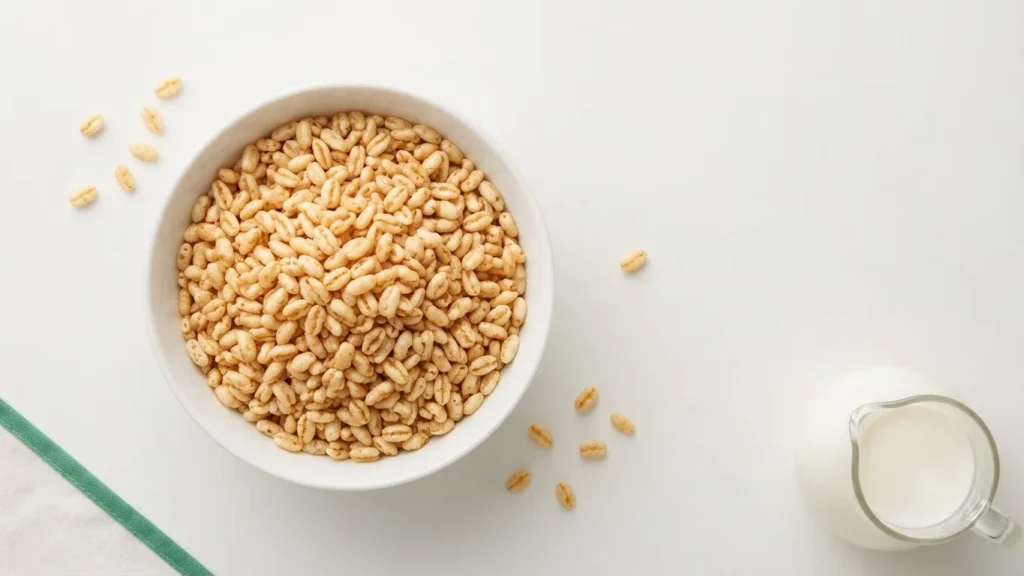
Every gram of sugar in a bowl of Rice Krispies is added sugar. The current panel lists 4 g total sugars per 40 g serving, and the whole 4 g sits on the “Includes Added Sugars” line underneath it. That single detail reorders how the box compares to sweeter cereals, and it is the kind of thing the rice krispies cereal nutrition label reports plainly once you know where to look. This guide reads the WK Kellogg Co panel line by line, then explains why the calorie and sodium figures you find elsewhere do not match it.
The reason they diverge is almost never a reformulation. It is the serving base. Below, each figure is tied to the panel or database it comes from, with its serving size stated so the comparison holds.
Quick answer: One 40 g serving (1½ cups) of Rice Krispies supplies 150 calories, 0 g total fat, 200 mg sodium (9% DV), 36 g total carbohydrate (13% DV), 0 g dietary fiber, 4 g total sugars (all added, 8% DV), and 3 g protein, per the manufacturer’s current US Nutrition Facts panel. The box holds about 29 servings. Adding ¾ cup skim milk raises the serving to 220 calories and 280 mg sodium. Iron comes in at 11.2 mg (60% DV) and folate at 200 mcg (50% DV), both from fortification rather than the rice itself.
What the current 40 g panel reports, line by line
The authoritative full breakdown comes from the WK Kellogg Co SmartLabel panel, which states a serving size of 1½ cups (40 g) and about 29 servings per container on the referenced box. That serving is the base for every number in this section.
Calories land at 150. Total fat is 0 g (0% DV), which is unusual enough among breakfast foods to be worth stating: the fat line is genuinely a flat zero. Sodium is 200 mg, carrying a 9% Daily Value. Total carbohydrate is 36 g (13% DV), with 0 g dietary fiber reported. Total sugars are 4 g, and the panel marks all 4 g as added sugars (8% DV). Protein is 3 g.
The fortification lines are where a puffed-rice cereal does its heaviest lifting on paper. Iron is listed at 11.2 mg, or 60% of the Daily Value. Vitamin D comes in at 3 mcg (15% DV). Folate is 200 mcg, half the Daily Value, and the panel specifies that 115 mcg of that is folic acid. None of those levels are intrinsic to white rice; they are added during manufacture, which is why the ingredient and vitamin statement matters as much as the numbers.
| Nutrient | Per 40 g (1½ cups), cereal only | % Daily Value |
|---|---|---|
| Calories | 150 | – |
| Total Fat | 0 g | 0% |
| Sodium | 200 mg | 9% |
| Total Carbohydrate | 36 g | 13% |
| Dietary Fiber | 0 g | – |
| Total Sugars | 4 g | – |
| Added Sugars | 4 g | 8% |
| Protein | 3 g | – |
| Iron | 11.2 mg | 60% |
| Vitamin D | 3 mcg | 15% |
| Folate (incl. 115 mcg folic acid) | 200 mcg | 50% |
Why 150, 130, and 102 calories all describe the same cereal
Search for this cereal’s calories and you get three different answers, and all three are correct for their own serving. The spread is a serving-size problem, not a recipe problem, so the trick is to check the gram weight before you trust the number.
The manufacturer panel reports 150 calories per 40 g. The Environmental Working Group, which captures labels independently and adds its own ingredient and processing notes, records the same 40 g serving at 150 calories with 200 mg sodium on its food scores entry – agreement, because the serving base matches.
CalorieKing lists the cereal at 130 calories with 160 mg sodium and 29 g total carbohydrate. That is a smaller portion than 40 g, which pulls every number down proportionally. The captured page does not state its serving gram weight in text, so back-calculating it would invent a figure; the honest read is simply that 130 calories reflects a lighter serving than the panel’s 40 g.
Kansas State University Housing and Dining, running an institutional per-cup analysis, logs 102 calories and 251 mg sodium for one cup of cereal only. One cup weighs less than 1½ cups, so the calorie figure drops below the panel; the sodium runs higher because that analysis predates and differs from the current label format. The practical rule: do not compare these numbers side by side until they share a gram weight.
| Source | Serving base | Calories | Sodium |
|---|---|---|---|
| WK Kellogg Co panel | 40 g (1½ cups) | 150 | 200 mg |
| Environmental Working Group | 40 g | 150 | 200 mg |
| CalorieKing | house serving (weight not stated) | 130 | 160 mg |
| K-State Housing & Dining | 1 cup, cereal only | 102 | 251 mg |
One footnote worth carrying: CalorieKing’s percent Daily Values on that page are figured against a reference person described as a 35-year-old female who is 5’7″ tall and weighs 144 lb. That is a specific profile, not a universal one, so its %DV column will not match the panel’s, which uses the standard 2,000-calorie reference. If you are reading percentages, know which yardstick you are reading against.
The “4 g sugars” line and why all of it is added
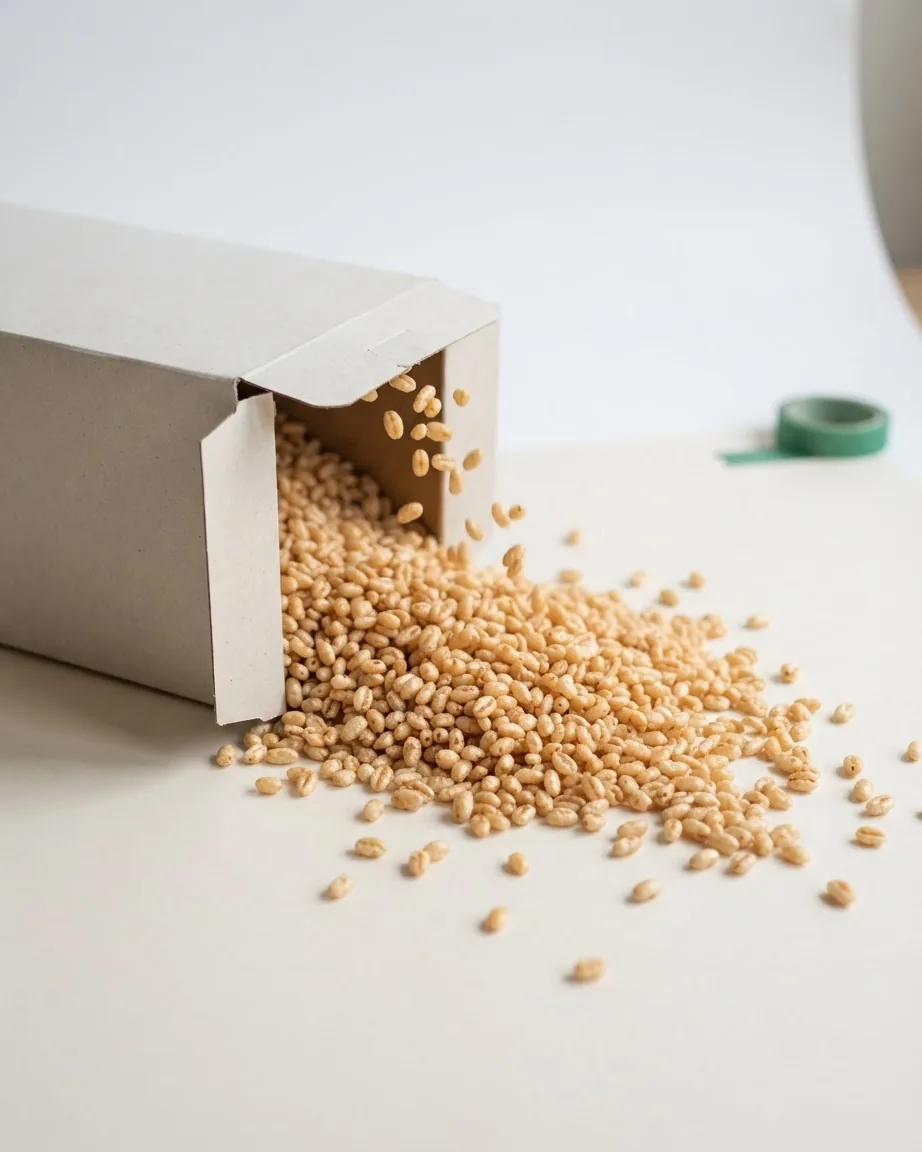
Plenty of people assume a plain rice cereal is close to sugar-free. The panel does not support that read and does not contradict it either – it reports 4 g total sugars per 40 g, and then flags the entire 4 g on the added-sugars line at 8% DV. White rice contributes essentially no free sugar on its own, so the 4 g is sweetener added in production.
This is where an older dataset can mislead. The K-State per-cup analysis lists 2.40 g of sugars with no added-sugars line at all. That is not a lower-sugar version of the cereal; it reflects a smaller serving and a labeling era before “Added Sugars” became a required line. If you want the current, regulated figure, the 4 g added-sugars value on the manufacturer panel is the one to use.
For context against sweeter breakfast cereals, 4 g of added sugar per serving is modest – the point of noting it is that “lightly sweetened” and “unsweetened” are not the same category, and this cereal sits in the former. For how added-sugar lines read across other boxes, see our Honey Bunches of Oats label breakdown.
What adding ¾ cup of skim milk does to the serving
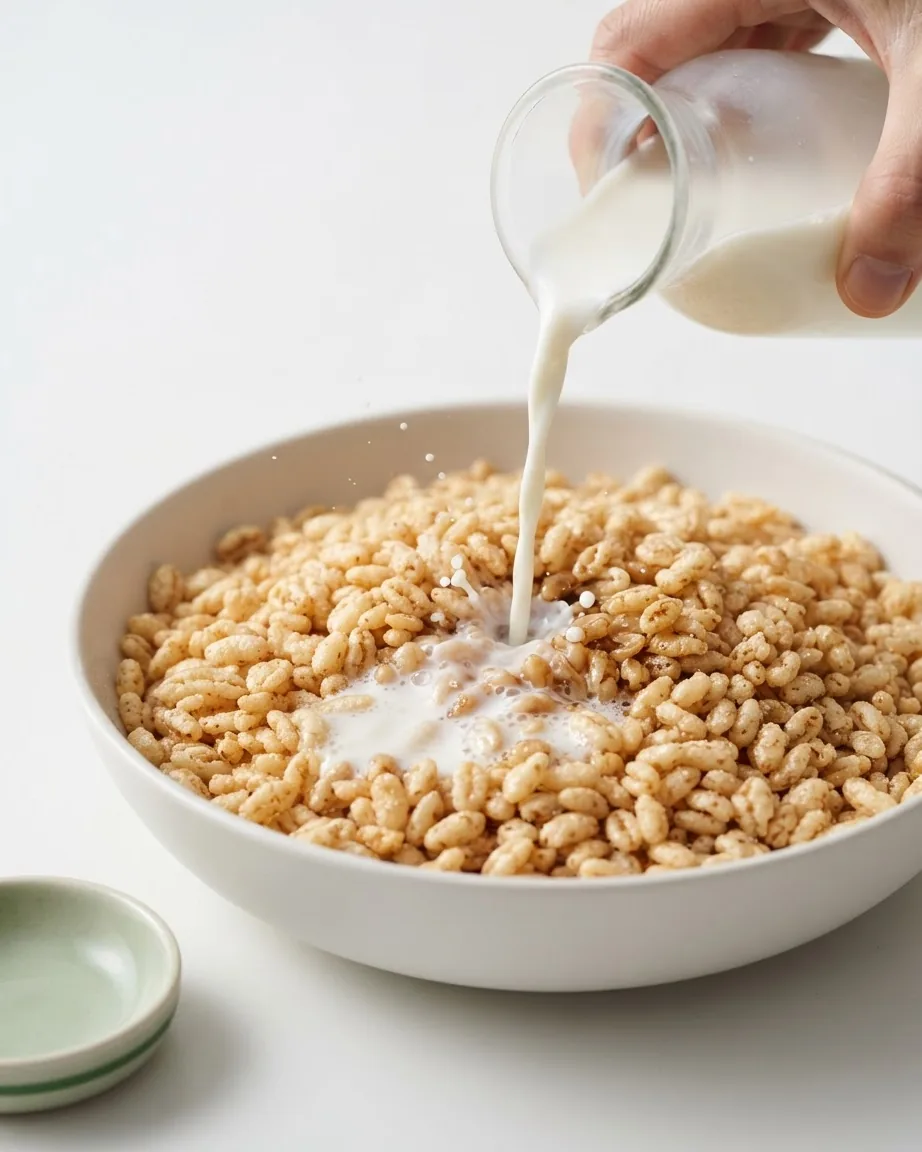
The panel’s second column accounts for the bowl as most people actually eat it. With ¾ cup of skim milk, the serving moves from 150 to 220 calories and sodium climbs from 200 mg to 280 mg (12% DV). Vitamin D also rises, from 3 mcg to 5.2 mcg (25% DV), because fat-free milk is itself fortified.
Two takeaways for someone watching a specific number. And if the dry-cereal 150 calories is the figure you have been budgeting with, the real bowl is closer to 220. The with-milk column exists precisely so you are not guessing at that gap.
What is actually in it: fortification, wheat, and the arsenic question
Allergen warning
Rice Krispies is built on rice, which leads to a common mistake: assuming rice-based means gluten-free. It does not here. The cereal carries malt flavoring, which is barley-derived, and the Environmental Working Group flags a wheat allergen association in its ingredient assessment on the same food scores entry linked above. Anyone avoiding gluten for medical reasons should treat this as a product to check, not assume.
The vitamins and minerals on the panel – the 60% DV iron, the 50% DV folate with its 115 mcg of folic acid, the vitamin D – are added, not inherent. That fortification is the nutritional case for the cereal, and it comes bundled with the 4 g added sugars and the 0 g fiber. The tradeoff is real: a strong micronutrient line on a refined-grain base with no fiber to speak of.
EWG also raises arsenic as a concern general to rice-based products, a flag tied to the grain rather than to this brand specifically. It is a reason some readers vary their breakfast grains rather than eating rice cereal daily; it is not a figure on the Nutrition Facts panel. For how these panels fit the broader shelf, browse our pantry basics section. If you are comparing crunchy snacks on sugar grounds, our Reese’s Peanut Butter Cups breakdown sits in the same aisle of label-reading.
How these figures were assembled
The Tastybend Nutrition Desk sources values directly from manufacturer declarations and established public food databases, structured into standardized reference tables for comparison. For this cereal, the core panel – 150 calories, 200 mg sodium, 36 g carbohydrate, 4 g added sugars, 3 g protein, 0 g fat per 40 g – comes from the WK Kellogg Co SmartLabel declaration. Independent and institutional readings from the Environmental Working Group, Kansas State University Housing and Dining, and CalorieKing are reported alongside, each with its own serving base stated so none is silently blended into another.
Where those readings disagree, the disagreement is preserved rather than averaged: a 102-calorie cup, a 130-calorie house serving, and a 150-calorie 40 g serving are three serving sizes, not three cereals. Manufacturers can change recipes without notice, so a panel read today may shift; the figures here reflect the current published declarations, not a permanent guarantee.
What the whole box adds up to: 29 servings of Rice Krispies
The panel prices everything per 40 g serving, but the box holds about 29 of those servings. Multiplying the per-serving figures out shows what the full container actually delivers – a view no single source page states, and a useful reality check if a box tends to disappear over a week.
- Calories: 150 × 29 = 4,350 calories across the whole box (cereal only, before milk).
- Sodium: 200 mg × 29 = 5,800 mg – the dry cereal in one box carries nearly six grams of sodium.
- Added sugars: 4 g × 29 = 116 g, and because every gram here is added sugar, that is 116 g of sweetener per box.
- Total carbohydrate: 36 g × 29 = 1,044 g over the full container.
- Iron: 11.2 mg × 29 = 324.8 mg of fortification iron across the box.
These totals assume the cereal is eaten exactly at the 40 g serving the panel uses; pour heavier bowls and the box empties in fewer servings, which raises the per-serving numbers rather than the box totals.
Frequently asked questions
How many servings are in a box of Rice Krispies?
The referenced package lists about 29 servings per container at the 40 g serving size. Larger or smaller boxes will state their own count, so check the top of the panel on your package. At roughly 150 calories each, that works out to a box carrying a substantial calorie total before any milk is poured.
Is there any fiber in Rice Krispies?
No. The current panel reports 0 g of dietary fiber per 40 g serving. The cereal is built on refined rice, which strips most fiber during milling, and nothing in the recipe restores it. If fiber is a priority at breakfast, this is a cereal to pair with fruit rather than lean on alone.
Why does CalorieKing show fewer calories than the box?
CalorieKing lists 130 calories because it reports a lighter serving than the manufacturer’s 40 g. Its percent Daily Values are also calculated against a specific reference person – a 35-year-old woman, 5’7″, weighing 144 lb – so its percentage column will not line up with the standard panel’s 2,000-calorie basis.
Does Rice Krispies count as a good iron source?
On paper, yes: the panel supplies 11.2 mg of iron, or 60% of the Daily Value, per serving. That comes entirely from fortification, not the rice. The same serving also delivers 50% DV folate and 15% DV vitamin D, which is the main nutritional argument for a cereal otherwise low in fiber and protein.
Is Rice Krispies safe for a gluten-free diet?
Treat it as not gluten-free. Although it is rice-based, it contains malt flavoring derived from barley, and independent ingredient assessments flag a wheat allergen association. People with celiac disease or gluten sensitivity should look for a product specifically labeled gluten-free rather than assuming rice content makes this one safe.