The current wrapper on a standard 1.5 oz pack splits into two servings, so the 210 calories printed on it account for one of the two cups rather than the pair. That single detail reorders most of the numbers people look up, because almost every figure online is stated per serving, not per package. This guide to Reese’s Peanut Butter Cups nutrition facts logs the full macro line for the standard pack, lays the snack size, King Size Big Cup and foil minis next to it, and separates the manufacturer panel from the USDA per-100 g record so each number sits with the basis it was measured against.
Reese’s Peanut Butter Cups nutrition facts depend on which pack and which label version you read. On the current standard 1.5 oz pack, one 2-piece (40 g) serving lists 210 calories, 135 mg sodium, 19 g total sugars, 17 g added sugars (34% DV), and 4 g protein. That pack holds two servings, so a printed 210-calorie figure covers a single cup. Total fat is 12 g, saturated fat 4.5 g, total carbohydrate 22 g, dietary fiber 1 g, and cholesterol 0 mg. These values carry a label update stamped 21-Dec-2023.
Reese’s Peanut Butter Cups Nutrition Facts on the Current 1.5 oz Panel
The Hershey Company publishes the standard pack’s panel through its SmartLabel digital label, keyed to a 2-piece 40 g serving. Here is the full per-serving line as that label states it:
| Item | Value |
|---|---|
| Calories | 210 |
| Total fat | 12 g (15% DV) |
| Saturated fat | 4.5 g (23% DV) |
| Cholesterol | 0 mg (0% DV) |
| Sodium | 135 mg (6% DV) |
| Total carbohydrate | 22 g (8% DV) |
| Dietary fiber | 1 g |
| Total sugars | 19 g |
| Added sugars | 17 g (34% DV) |
| Protein | 4 g |
The saturated fat line is the one worth a second look: at 4.5 g it reaches 23% of a day’s Daily Value from a single cup pair’s serving. Added sugars land at 34% DV in the same serving. Those two percentages, not the calorie count, are what move the pack from a small treat toward a meaningful share of a daily budget.
Two Servings, Not One: Why 210 Calories Covers Half the Pack
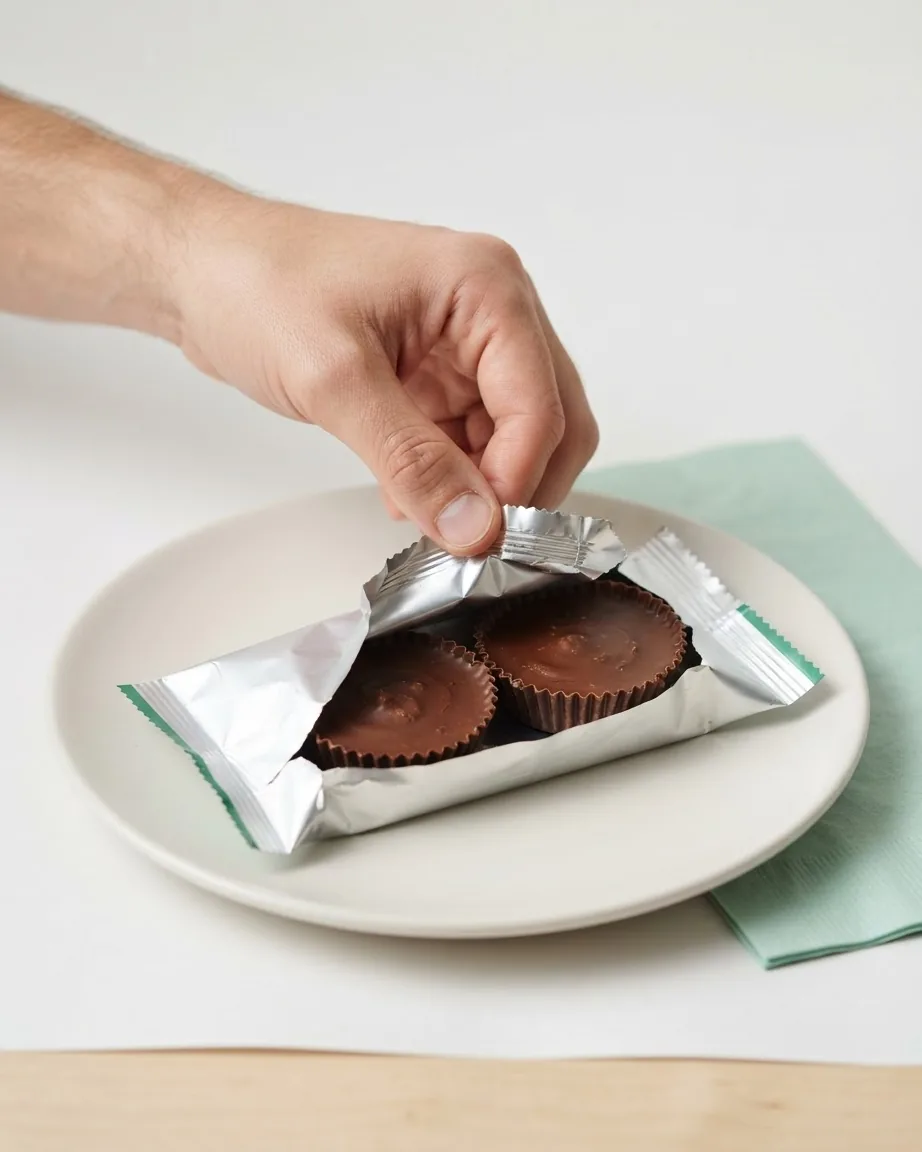
SmartLabel defines the 1.5 oz pack as two servings of two pieces each. Read literally, the 210-calorie figure, the 19 g of total sugars, and the 17 g of added sugars each describe one cup, with a second identical cup sitting beside it in the same wrapper. Nothing on the panel sums the pair for you. If you eat both cups in one sitting, which is the common way a two-cup pack gets opened, you are taking in two of every number on that label. The practical move: when you copy a figure off this pack, check whether you want the per-serving value or the whole-pack load, because the printed numbers answer only the first question.
Why Older Listings Show 22 g Sugar and the Current One Shows 19 g
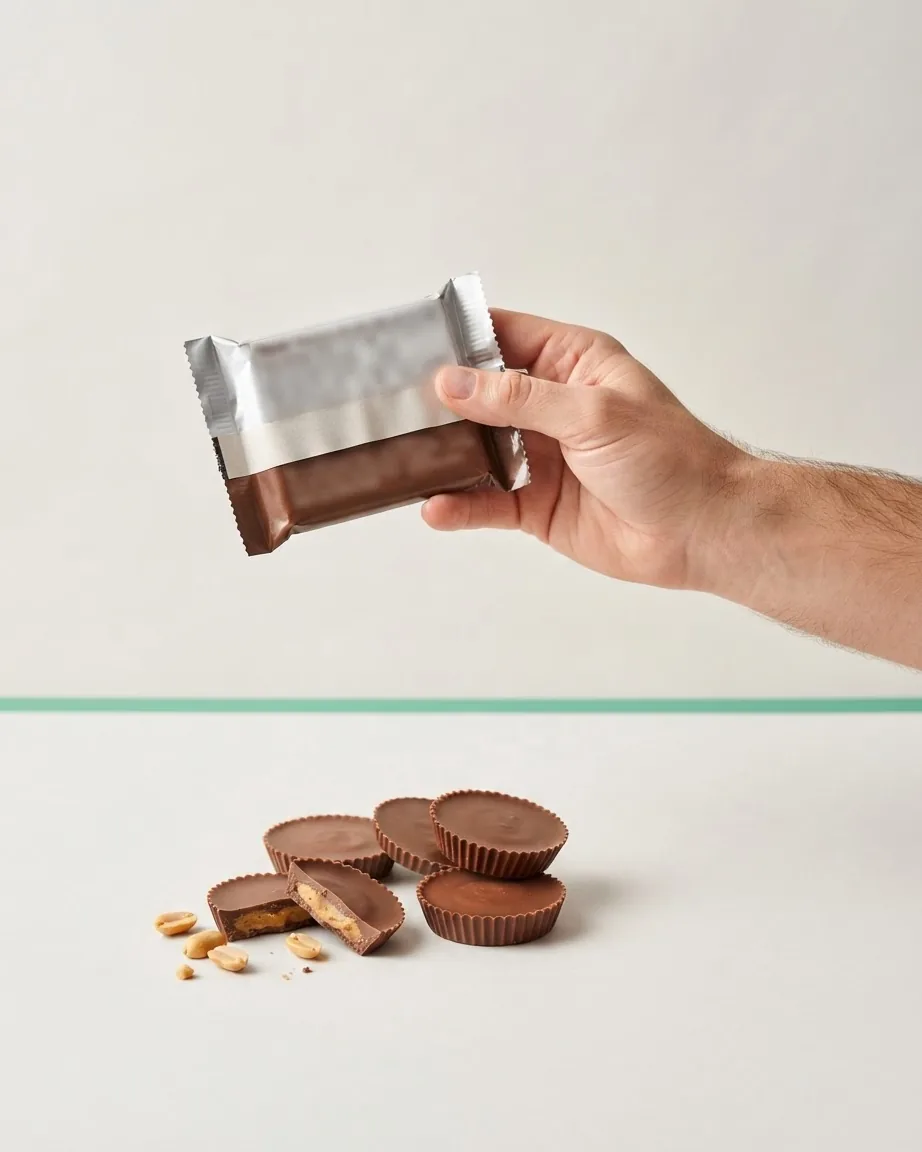
Numbers for the same 1.5 oz pack disagree across pages, and the split is a label-version difference rather than an error on either side. The current SmartLabel, updated 21-Dec-2023, uses a 40 g serving and lists 19 g total sugars with 17 g added. An earlier retail reproduction kept by Price Rite Marketplace treats the pack as a single 42 g serving and lists 22 g total sugars, 21 g added (42% DV), 24 g total carbohydrate, and 5 mg cholesterol.
So the gap comes from two things at once: a heavier serving basis (42 g versus 40 g) and a revised recipe or rounding on the newer label. Which to trust depends on the wrapper in your hand. If your pack’s panel reads a 40 g serving, use the 19 g and 17 g figures; if it reads a 42 g single-serving pack, the 22 g and 21 g line matches it. The current manufacturer label is the more recent of the two.
Snack Size, King Size Big Cup, and 1.6 oz Foil Minis Compared
Each format states its own serving, and no two share a serving weight, which is why a straight per-piece comparison across them is not printed anywhere. The reliable per-serving values, each from the retailer or manufacturer panel that carries it:
| Item | Value |
|---|---|
| Snack size (per Giant Food ) | 2 pieces (31 g) serving, 160 calories, 3 g saturated fat (15% DV), 100 mg sodium (4% DV), 16 g total sugars. |
| Standard 1.5 oz (SmartLabel) | 2 pieces (40 g) serving, 210 calories, 4.5 g saturated fat, 135 mg sodium, 19 g total sugars. |
| King Size Big Cup (per Lowes Foods ) | 1 piece serving, 200 calories, 12 g total fat (15% DV), 140 mg sodium, 20 g total sugars. |
| Foil-wrapped minis (per Nuts To You ) | 1.6 oz serving, 220 calories, 13 g total fat, 25 g total carbohydrate, 22 g sugars, 4 g protein. |
One caution on the King Size reproduction: its retailer panel shows an added-sugars value and several Daily Value cells that read as a data-mapping artifact, so the 200 calories, 12 g total fat, 140 mg sodium, and 20 g total sugars are the figures to use from it, and the added-sugar cell is not. The Big Cup serving is a single piece, while the snack and standard servings are two pieces, so the King Size “piece” carries more per unit than the lower piece-count servings suggest at a glance. For a smaller single candy’s macros, see also our Snickers Fun Size guide.
Sugar by Weight: What 52% and 17 g Added Mean on This Candy
The added-sugar line is the headline number on this product. The Environmental Working Group calculates the milk-chocolate cup at 52% sugar by weight and roughly 6 teaspoons of added and natural sugar per serving. On the current manufacturer label, the 17 g of added sugars equals 34% of a day’s Daily Value, and the earlier 42 g listing pushes that to 42% DV. For context against other sweets, candy and chocolate concentrate sugar far more by weight than most frozen desserts; our Ice Cream Nutrition Facts guide logs the comparison figures. The sugar, not the fat, is what most reorders a daily total here.
Ingredients and Allergens: Milk, Peanut, Soy Lecithin
EWG’s label capture lists the standard milk-chocolate cup as milk chocolate (sugar, cocoa butter, chocolate, skim milk, milk fat, lactose, soy lecithin, PGPR), peanuts, sugar, dextrose, salt, and TBHQ with citric acid. Sugar leads the ingredient order, which lines up with the 52%-by-weight figure above. The snack size and standard packs are stated by Giant Food to be gluten free and kosher, and individually wrapped.
The USDA Per-100 g Record: Fatty Acids and Minerals
For comparing this candy against other foods on a single ruler, the U.S. Department of Agriculture FoodData Central record (SR Legacy, FDC ID 168763) states everything per 100 g rather than per labelled serving:
| Item | Value |
|---|---|
| Energy | 515 kcal |
| Total fat | 30.5 g |
| Carbohydrate, by difference | 55.4 g |
| Total sugars | 47.2 g |
| Protein | 10.2 g |
| Dietary fiber | 3.6 g |
| Sodium | 357 mg |
| Saturated fatty acids | 10.7 g |
| Monounsaturated fatty acids | 13.1 g |
| Polyunsaturated fatty acids | 5.5 g |
| Phosphorus | 161 mg |
| Potassium | 343 mg |
| Water | 1.44 g |
The fatty-acid split is the detail no manufacturer serving panel breaks out: more monounsaturated (13.1 g) than saturated (10.7 g) per 100 g, with 5.5 g polyunsaturated, a profile that reflects the peanut content. Two warnings on this record. Second, per-100 g and per-serving numbers are not interchangeable without the serving weight; the 515 kcal per 100 g and the 210 calories per 40 g serving describe the same candy on different bases, and this guide performs no conversion between them.
Whole-Pack Totals: What Both Cups Add Up To
The current panel lists everything per 2-piece serving and defines the 1.5 oz pack as two servings, so nothing on the wrapper sums the pair. Opening the pack and eating both cups, the common way it gets used, doubles every line. Here is the full whole-pack load, each value calculated as the printed per-serving figure times 2:
- Calories: 210 × 2 = 420 kcal
- Total fat: 12 g × 2 = 24 g
- )
- Sodium: 135 mg × 2 = 270 mg
- Total carbohydrate: 22 g × 2 = 44 g
- Total sugars: 19 g × 2 = 38 g
- )
- Protein: 4 g × 2 = 8 g
Frequently Asked Questions
Are Reese’s Peanut Butter Cups gluten free and kosher?
Giant Food’s listing describes the snack size and standard packs as gluten free and kosher, and individually wrapped in an 8-pack for the snack format. That covers the milk-chocolate cup as labelled; flavored or seasonal variants carry their own panels and claims, so a reader avoiding gluten should still read the specific wrapper rather than assume every Reese’s line matches the standard cup.
How much does a 1.6 oz foil mini pack add compared with the standard cup?
The foil-wrapped 1.6 oz format logged by Nuts To You lists 220 calories, 13 g total fat, 25 g total carbohydrate, 22 g sugars, and 4 g protein per 1.6 oz. That sits a step above the standard 40 g serving’s 210 calories and 12 g fat, mostly because the serving weight itself is larger. Match the serving size before comparing any two formats.
Why does the USDA say 515 kcal when the wrapper says 210?
They use different reference amounts. The FoodData Central figure of 515 kcal is stated per 100 g, while the manufacturer panel’s 210 calories is stated per a 40 g serving. Neither is wrong; they measure against different weights.
Does a snack-size cup carry less sugar per serving?
Per its 2-piece 31 g serving, the snack size lists 16 g total sugars and 100 mg sodium against the standard pack’s 19 g total sugars and 135 mg sodium per 40 g. The snack serving is lighter, so the lower numbers track the smaller weight rather than a different recipe. Eating several snack cups can meet or pass one standard serving quickly.