
On a tub of ice cream, the listed serving comes to 2/3 cup – a figure that is neither 1/2 cup nor anything close to what a person really spoons out. That single figure governs every other number on the panel, because the Food and Drug Administration sets a reference amount (the RACC) of 2/3 cup for ice cream and frozen desserts, as documented in the Food Label Maker ice-cream labeling guide. When you read ice cream nutrition facts, the calories, fat, sugar, and sodium on the label are all quoted against that 2/3-cup portion. Dig out a bigger helping, and each figure rises right along with the portion. This guide works through the panel line by line, flags where published calorie counts disagree, and explains what “light,” “lowfat,” and “French” legally require. Data here is drawn from manufacturer declarations and public food databases, organized into reference tables.
Quick answer: One serving of regular vanilla ice cream runs about 140 calories and 7 g total fat per 1/2-cup portion. Premium versions climb to roughly 210 calories and 13 g fat; low-fat sits near 130, and no-added-sugar near 115. The panel’s serving size is the FDA RACC of 2/3 cup, so numbers quoted per 1/2 cup are a smaller base. A pint holds three servings. Added sugars on many ice creams reach 12 to 24 grams per serving, measured against a Daily Value of 50 grams. To compare two tubs, match the cup fraction and the gram weight before trusting any calorie figure.
The 2/3-Cup Serving Size and Why Your Scoop Doubles It

The number that throws people is the serving. The FDA reference amount for ice cream and frozen desserts is 2/3 cup, which means the panel reports against a portion most households overshoot in a single scoop. Serving size on a Nutrition Facts panel reflects what people typically eat in one sitting – it is a measuring stick for reading the label, not a recommendation to stop there.
That distinction matters because of how pints are sold. A pint holds 2 cups, which works out to exactly 3 servings – 300 percent of the RACC. At that threshold, a product has to carry a dual-column label: one column for a single 2/3-cup serving, one for the whole container. Polish off the whole pint while glancing only at the per-serving column, and whatever that column lists has actually been tripled on your plate. The Food Label Maker guide lays out this mechanics plainly, and it is the detail that separates a careful reader from someone who trusts the big number on the front.
For a line-by-line read of how serving weight and volume diverge on a different frozen or boxed food, see our cereal nutrition facts guide.
Overrun: Why Two Pints at the Same Volume Weigh Different Amounts
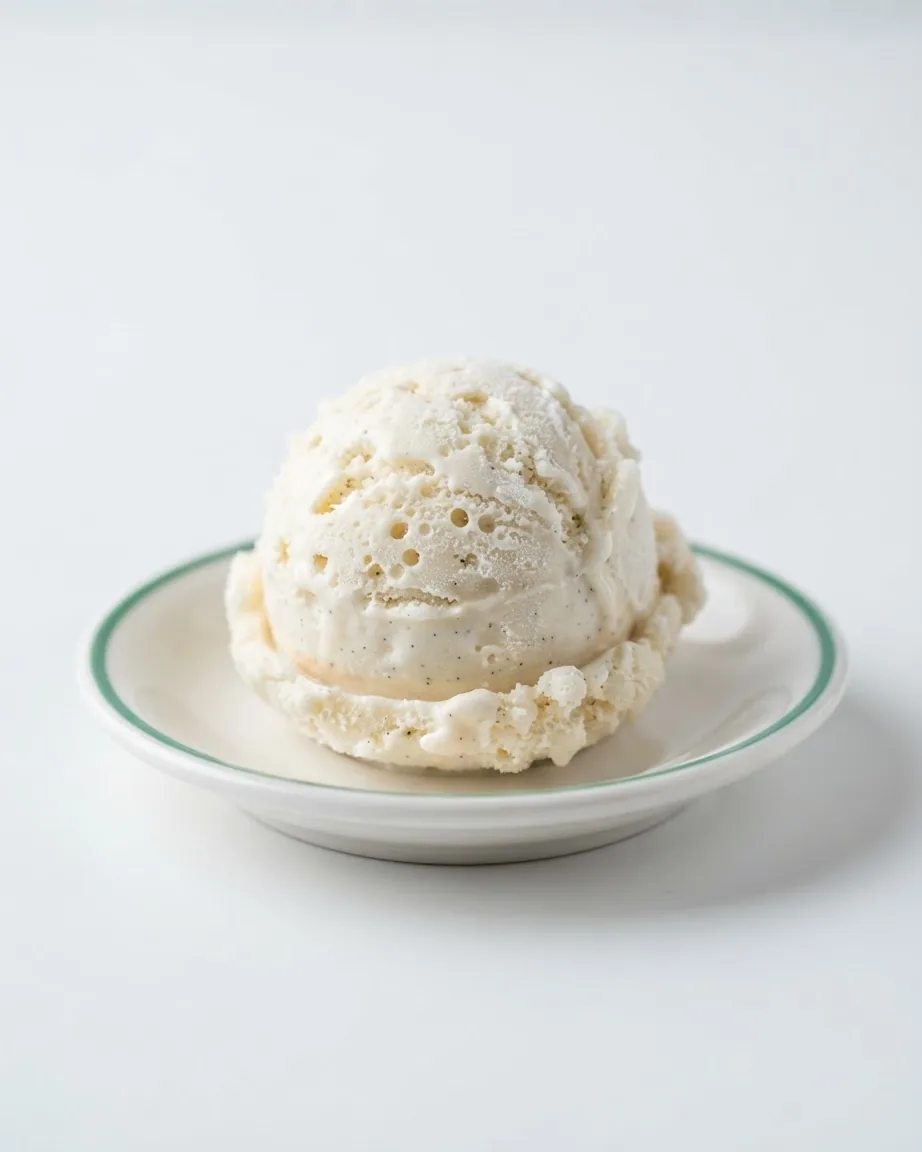
Ice cream is whipped with air during freezing. That incorporated air is called overrun, and it is the reason a fixed-volume serving carries no fixed weight. A 2/3-cup scoop of a dense premium pint and a 2/3-cup scoop of an airy budget tub occupy the same space but hold different grams of actual food – and therefore different calories.
This conditions every volume-based number on the panel. When a label quotes calories per 2/3 cup, it is quoting calories per 2/3 cup of that specific product at that specific density. A denser churn packs more cream and sugar into the same cup, which is part of why premium ice cream runs about 210 calories per 1/2 cup against 140 for a regular vanilla. The volume stayed constant; the mass inside it did not.
Calories, Fat, and Sugar Across Regular, Premium, Low-Fat, and No-Sugar-Added
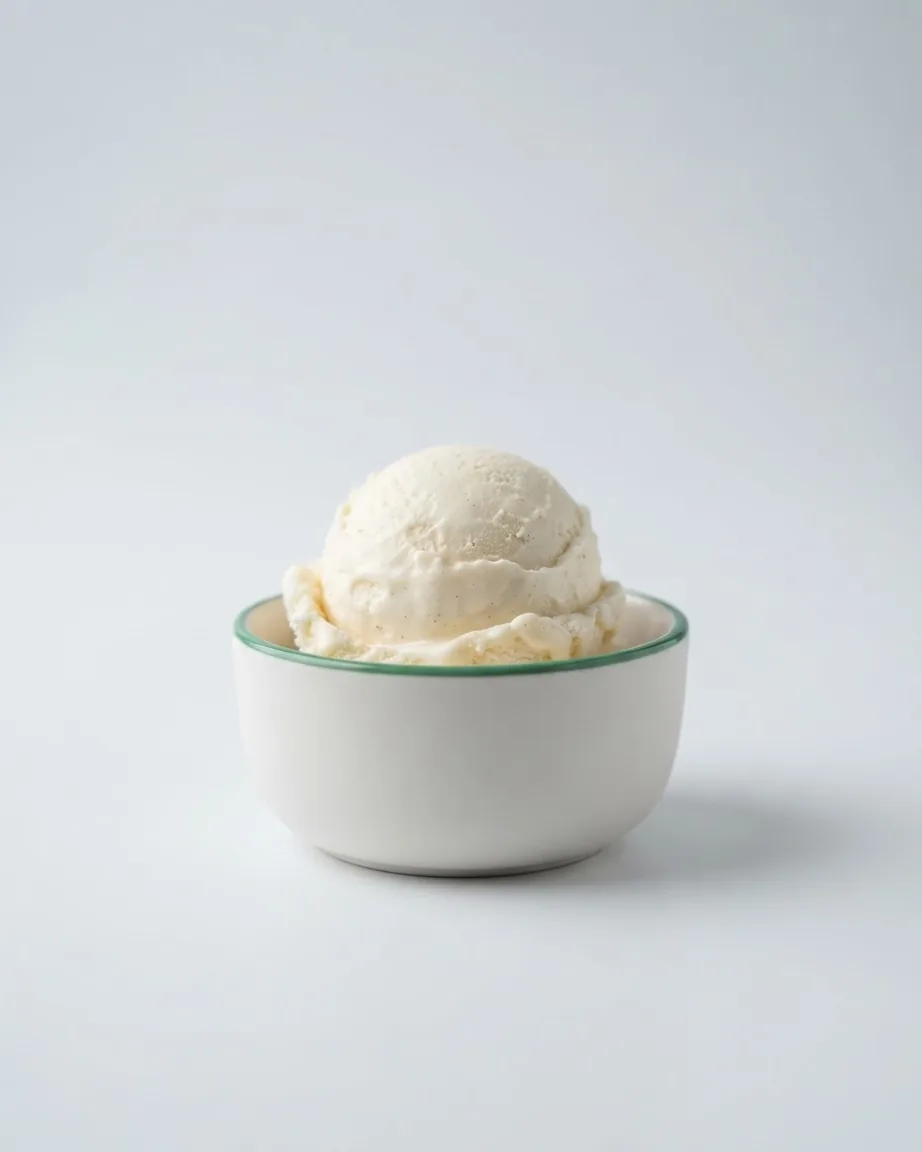
Healthline, drawing on USDA FoodData Central, puts regular vanilla ice cream at about 140 calories and 7 g total fat per 1/2-cup serving. The same consumer overview from Healthline reports premium at about 210 calories and 13 g fat per 1/2 cup, low-fat at about 130 calories, and no-added-sugar at about 115. Those four numbers share one base – the 1/2 cup – so they are comparable to each other, even though 1/2 cup is smaller than the 2/3-cup RACC on the printed label.
Per-100-gram data tells a parallel story. Foodstruct lists vanilla ice cream at about 207 calories per 100 grams, and 137 calories in a 1/2-cup (66 g) serving. The same database spreads the lighter variants across a wide band per 100g: light soft-serve at 126, fat free at 138, light no sugar added at 169, and rich at 249. The jump from 126 to 249 inside the same category is why “ice cream” as a single calorie figure is close to meaningless without the variant and the portion attached.
| Variant | Calories | Fat | Basis | Source |
|---|---|---|---|---|
| Regular vanilla | 140 cal | 7 g | 1/2 cup | Healthline |
| Premium | 210 cal | 13 g | 1/2 cup | Healthline |
| Low-fat | 130 cal | – | 1/2 cup | Healthline |
| No-added-sugar | 115 cal | – | 1/2 cup | Healthline |
| Vanilla | 207 cal | – | 100 g | Foodstruct |
| Vanilla | 137 cal | – | 1/2 cup (66 g) | Foodstruct |
| Light soft-serve | 126 cal | – | 100 g | Foodstruct |
| Fat free | 138 cal | – | 100 g | Foodstruct |
| Light no sugar added | 169 cal | – | 100 g | Foodstruct |
| Rich | 249 cal | – | 100 g | Foodstruct |
Why “Light,” “Lowfat,” and “Reduced Fat” Don’t Promise Fewer Calories
Here is the trap. The label terms on frozen dairy are defined by fat or by a relative comparison – not by an absolute calorie ceiling. The International Dairy Foods Association publishes the governing definitions, and reading them closely changes which tub you reach for.
- Lowfat ice cream contains a maximum of 3 grams of total fat per serving. That caps fat, not sugar or calories.
- Reduced fat ice cream contains at least 25 percent less total fat than the product it is compared to – a relative figure, so it depends entirely on what the reference is.
- Light or lite ice cream contains at least 50 percent less total fat or 33 percent fewer calories than the referenced product.
Note the “or” in the light definition, documented by the International Dairy Foods Association. A light ice cream can qualify by cutting fat alone, with its calorie count largely intact. “Reduced fat” promises nothing about the total energy in the cup – a manufacturer can pull out fat and add sugar to hold the texture. When your concern is the calorie count, don’t lean on any of these terms – they won’t tell you what you need. The per-serving calorie line is.
Added Sugars vs Total Sugars: The Lactose Gap on the Panel
Ice cream carries two sugar lines, and the difference between them is where the real information lives. One worked FoodLabelMaker sample panel shows 26 g of total sugars and 17 g of added sugars – the latter at 33 percent of the Daily Value. That 9-gram difference is lactose – a sugar occurring on its own within the milk, cream, and dry milk solids that make up the blend. That lactose was never added by anyone; it is inherent to dairy.
Many ice creams carry 12 to 24 grams of added sugar in a single 1/2-cup serving. Against the FDA Daily Value of 50 grams per day – set for a 2,000 calorie daily diet – a serving at the high end spends almost half the day’s budget before you count anything else. The FDA’s own worked example on its label page shows a product where 7 g of added sugars represents 14 percent of the Daily Value, which lets you back into the arithmetic for any figure in between.
The FDA also fixes the context thresholds: on the label, 5 percent DV or less of added sugars is a LOW source, and 20 percent DV or more is HIGH. The broader guidance from the U.S. Food and Drug Administration added-sugars page is to keep calories from added sugars under 10 percent of total daily calories. On a 2,000-calorie day, that is the same ceiling the 50-gram Daily Value represents. A no-added-sugar tub targets exactly this line – it removes the added sweetener while the lactose stays, which is why its total-sugar figure is never zero.
What Legally Makes It “Ice Cream”: The USDA Standard of Identity
The word “ice cream” is regulated. Ice cream is a frozen food made from a mixture of dairy products containing at least 10 percent milkfat – below that threshold, a product cannot carry the name. The full U.S. Standard, published by the USDA Agricultural Marketing Service, goes deeper than the milkfat line.
- Ice cream shall contain at least 1.6 pounds of total solids to the gallon.
- It shall weigh not less than 4.5 pounds to the gallon – a direct limit on overrun, since too much whipped-in air would push the weight below the floor.
- Total milk solids must reach a minimum of 20 percent, of which at least 10 percent has to be milkfat.
- In no case shall the content of milk solids not fat be less than 6 percent.
- Whey shall not, by weight, be more than 25 percent of the milk solids not fat.
The 4.5-pounds-per-gallon weight floor is the one that connects back to overrun. It is the legal reason a product cannot be whipped into pure foam and still call itself ice cream. Body and texture are what the caps on whey and milk-solids-not-fat control, which is why any ice cream that meets the law starts from a floor of dairy density that no low-overrun trick can get around.
French Ice Cream, Frozen Custard, and the Cholesterol Line
Where the path splits is at the egg yolk. Once egg yolk solids hit 1.4 percent or climb higher, the label is required to read frozen custard, French ice cream, or French custard ice cream – so the name alone flags the yolk content. Those styles run higher in cholesterol as a result. One FoodLabelMaker example logs 160 mg of cholesterol per serving, or 54 percent of the Daily Value – a figure driven by the yolks, not the cream.
That same FoodLabelMaker guide also records saturated fat at 11 g per serving, or 53 percent of the Daily Value, on an ice-cream sample panel. If you watch dietary cholesterol specifically, the custard-style label is the one to read closely; a standard vanilla without the yolk solids sits well below it. For a measured vanilla portion, University Hospitals lists 4.89 g total saturated fat and 31.68 mg cholesterol – a fraction of the custard-style figure, which tells you the yolk is doing the heavy lifting in that 160 mg number.
Calcium, Phosphorus, and the Glycemic Numbers
Ice cream is a dairy food, so it carries dairy minerals. A 1/2-cup serving provides about 10 percent of the Daily Value for calcium and about 6 percent for phosphorus, per the Healthline overview. Those are not trivial, though they arrive packaged with the sugar and fat already covered above.
On blood-sugar response, Foodstruct assigns vanilla ice cream a glycemic index of 62 (medium) and a glycemic load of 9 (low). The low load reflects the modest carbohydrate in a realistic portion – the fat and protein in the dairy blunt the rise that the sugar alone would produce. For a frozen or sweet item where the calorie count itself varies across databases, our Starbucks cake pop nutrition guide sits in the same snacks sweets section.
Why Published “Per Serving” Calorie Counts Disagree
Look up vanilla ice cream across three sources and you get three close-but-distinct numbers: Healthline reports 140 calories per 1/2 cup, Foodstruct reports 137 for a 1/2-cup (66 g) portion, and University Hospitals lists 144.72 kcal for a measured vanilla portion. None is wrong. Each is tied to a different food record and a different portion weight.
The University Hospitals entry carries a wrinkle worth knowing: the page is titled for a 1-cup portion, but the listed values – 144.72 kcal among them – correspond to a smaller measured serving. The title is unreliable for portion; the numeric values are what to read. That mismatch is the exact mechanism behind inconsistent online counts. A “per serving” calorie figure means nothing until you pin down its cup fraction and its gram weight, because the serving basis moves underneath the number. Match the base first, then compare.
Finish the Pint: What the Panel’s Sugar Really Adds Up To
Two sugar lines sit on an ice cream panel, and the gap between them tells you how much work the manufacturer did. On the FoodLabelMaker worked panel, total sugars read 26 g and added sugars read 17 g per serving. Subtract one from the other and 9 g is lactose – the sugar that was always in the milk and cream, never added by anyone. The remaining 17 g is the part a label-reader is actually deciding about.
Now apply the rule the panel itself sets up: a pint is 2 cups, which is exactly 3 servings, so a pint must carry a dual-column label. The per-serving column is the small number; the container is what you eat if you finish the tub. Run the arithmetic on this panel and the picture changes:
- Added sugar, whole pint: 17 g × 3 = 51 g.
- Natural lactose, whole pint: 9 g × 3 = 27 g, which rides along from the dairy and is not part of the added-sugars figure at all.
- The split that matters: of this pint’s roughly 78 g total sugars, 51 g was added and 27 g is inherent to milk – so the per-serving line showing 17 g understates the real exposure threefold if you treat one scoop as one serving.
The lesson the dual-column panel is trying to teach: the headline per-serving sugar figure is built on a 2/3-cup measuring stick, not on how much ends up in your bowl. Multiply by 3 before you trust it, and separate the lactose out before you blame the dairy.
Frequently Asked Questions
If the panel says 2/3 cup but I scoop a full cup, how do I adjust?
A full cup is more than the 2/3-cup reference portion, so the printed figures scale up accordingly. On a pint’s dual-column label, the right-hand “per container” column already does this at triple scale for the whole 2-cup tub.
Does “no sugar added” mean the ice cream has zero sugar?
No. The claim only tells you that nothing was sweetened in during manufacturing; since the milk and cream still bring their own lactose along, the total-sugars count can never fall all the way to zero. No-added-sugar versions sit near 115 calories per 1/2 cup. The total-sugar line on that label still shows a figure – read it alongside the added-sugar line to see how much is dairy and how much was poured in.
Which single calorie number should I trust for vanilla ice cream?
None in isolation. Figures of 137, 140, and 144.72 kcal all describe vanilla but rest on different portion weights and food records. Pick the one whose gram weight and cup fraction match your actual scoop, or convert using the 100-gram value of about 207 calories. The density difference from overrun means two vanillas at equal volume can still diverge.
Is “light” ice cream always lower in calories than regular?
Not necessarily. The light definition allows a product to qualify by cutting at least 50 percent of total fat alone, without the 33 percent calorie reduction. A manufacturer can remove fat and lean on sugar for body, leaving calories closer to regular than the word suggests. Check the stated calories per serving rather than relying on the front-of-pack term.
Why does frozen custard list so much more cholesterol than plain ice cream?
Egg yolk. Products at 1.4 percent or more yolk solids must be labeled frozen custard, French ice cream, or French custard, and the yolks push cholesterol up – one example reaches 160 mg per serving, 54 percent of the Daily Value. A standard vanilla without added yolk sits far lower, around 31.68 mg in a measured portion.