Rice cream nutrition confuses shoppers for one boring reason: “rice cream” is a search-box rendering of cream of rice, the finely milled white-rice hot cereal, not rice pudding or ice cream. Get that straight and the numbers fall into place. Cream of rice is granulated white rice cooked into a smooth porridge, and its nutrition swings wildly depending on whether you read the dry weight, the cooked bowl, or the brand in your cupboard. B&G Foods sells the fortified US version; supplement brands sell an unfortified one. Same name, different food.
Below is the number that trips up nearly every lookup: one cup of dry cereal reads as 681 kcal on Eat This Much, but a cup cooked with water lands near 127 kcal per FatSecret. You eat the cooked bowl. Almost every database quotes the dry figure by default, and that single mismatch is why five different calorie counts show up for one grain.
Quick answer: Rice cream nutrition splits by preparation and brand. Fortified US Cream of Rice runs 150 kcal per 45 g dry serving with 35 g carbs, 2 g protein, 0 g fiber, and 12.6 mg added iron (70 percent DV). Cooked with water, a full cup is roughly 127 kcal. It is naturally gluten-free, very low in fiber and protein, high on the glycemic scale, and heavily fortified. That profile is excellent for athletes chasing fast carbs and for low-residue diets, but weak as a standalone breakfast for satiety.
Cream of Rice Calories: Dry Versus Cooked, Settled
The dry-versus-cooked gap is the single biggest source of rice cream nutrition confusion, and it is easy to resolve. A retail serving of fortified US Cream of Rice is a quarter cup dry, 45 g, at 150 kcal with 35 g total carbohydrate. On a USDA reference basis, cream of rice cooked with water and no salt is only 52 kcal per 100 g. A full cup cooked with water, 244 g, comes to about 127 kcal. That cooked cup is roughly one-fifth of the 681 kcal a dry cup shows on Eat This Much, because cooking swells the grain with water and dilutes the calories by volume.
Here is the reconciliation table people actually need at the stove:
- Dry, 45 g (retail serving): 150 kcal, 35 g carbohydrate, 2 g protein, 0 g fat, 0 g fiber.
- Dry, 100 g: roughly 82.6 percent carbohydrate, 6.3 percent protein, 0.5 percent fat, 10.5 percent water, per Foodstruct’s USDA-derived figures.
- Cooked with water, 100 g: 52 kcal, 11.4 g carbohydrate, 0.9 g protein, 0.1 g fat.
- Cooked with water, 1 cup (244 g): about 127 kcal.
Stir in milk and both columns move. Whole milk at 240 ml adds roughly 8 g protein and 12 g carbohydrate to the bowl, which is the honest way to hit a protein target this cereal cannot reach alone. If you track calories, log the cooked figure, not the dry one, unless you measure the dry cereal before it hits the pot.
The Fortification Label: What Is Added, Not Grown
Fortified Cream of Rice looks like a multivitamin because almost all of its micronutrients are added during milling, not native to rice. The B&G Foods label for a 45 g serving lists 12.6 mg iron at 70 percent DV, 340 mg calcium at 25 percent DV, and 5.2 mcg vitamin D at 25 percent DV. It also carries thiamin, riboflavin, niacin, vitamin B6, and folate, each at 25 percent DV, alongside just 30 mg potassium, which rounds to 0 percent DV. Those percentages use the FDA Daily Values: iron 18 mg, calcium 1300 mg, vitamin D 20 mcg. Do the iron math and 12.6 divided by 18 is 70 percent, exactly as printed.
Read the ingredient list and the story is clear. After granulated rice come calcium carbonate, ferric orthophosphate, niacinamide, thiamine mononitrate, pyridoxine hydrochloride, riboflavin, folic acid, and cholecalciferol. Those are the fortificants doing the heavy lifting.
Two caveats matter. The iron is ferric orthophosphate, a non-heme form that the body absorbs less efficiently than heme iron from meat, so the 70 percent DV overstates what you actually retain. And 70 percent DV in one bowl is a large single-food iron dose. People with hemochromatosis, men, and post-menopausal women who also take an iron supplement should count this bowl, not ignore it. For a protein-forward contrast, our breakdown of filet mignon calories, protein, and fat shows what a heme-iron food looks like on the same label logic.
Glycemic Index: Why Athletes Love What Diabetics Should Watch
Cream of rice hits blood sugar fast, and that is the same trait two very different readers care about. In the 2021 international glycemic index tables published in the American Journal of Clinical Nutrition by Atkinson, Brand-Miller and colleagues, white rice averages a glycemic index of 73 and brown rice 65. The whole rice category averages 67 with wide scatter, and 38 percent of entries land in the high-GI band. Grinding rice into fine granules and simmering it into porridge increases surface area and gelatinizes the starch, both of which push a food toward the top of that range rather than the bottom.
For a lifter or endurance athlete, that is the feature, not the bug. Fast gastric emptying and rapid glucose delivery make cream of rice a clean pre-workout, intra-workout, or post-workout carb that sits lightly in the gut. Athletes who want the protein side handled too often pair it with the strategies in these high-protein recipes.
For someone managing insulin resistance or type 2 diabetes, the same speed is a liability. The fix is not avoidance but pairing. Add protein, fat, or fiber to blunt the glucose curve: a scoop of protein powder stirred in off the heat, a spoon of nut butter, or Greek yogurt on the side. None of that changes the cereal’s own numbers, but it changes how the meal behaves.
Arsenic and Regulation: The Section Databases Cannot Publish
Rice is the one grain with a formal arsenic action level attached, and that is the missing piece in most rice cream nutrition writeups. The U.S. Food and Drug Administration finalized a 100 micrograms per kilogram, or 100 parts per billion, action level for inorganic arsenic in infant rice cereal in August 2020. Rice draws more arsenic from groundwater than other grains, and inorganic arsenic is linked to neurodevelopmental effects, which is why the FDA acted specifically on the products infants eat most.
Compliance has climbed. FDA sampling found 76 percent of infant rice cereal samples at or below 100 ppb in 2018, up from 47 percent in 2014 and 36 percent between 2011 and 2013. The FDA guidance on inorganic arsenic in infant rice cereals documents that trend.
Two facts reframe the adult worry. First, the type of rice matters: FDA modelling showed white-rice infant cereal already averaging 103.9 ppb against brown-rice cereal at 119.0 ppb, and cream of rice is a white-rice product. Second, exposure scales with body weight. Relative to size, infants eat about three times as much rice as adults, with intake peaking around 8 months of age.
The American Academy of Pediatrics reflects this in its parent guidance: iron-fortified rice cereal is a good source of nutrients but need not be a baby’s first or only grain, and oat, barley, and multigrain are sound alternatives. The HealthyChildren.org guidance on reducing arsenic lays out the practical steps. Internationally, the European Commission sets binding inorganic-arsenic maxima for rice and rice products in Regulation (EU) 2023/915, and the Codex Alimentarius maximum for polished rice is 0.20 mg/kg. An adult eating one bowl sits in a very different exposure position than an 8-month-old fed rice cereal daily.
Is cream of rice gluten-free and safe for celiacs?
Rice is naturally gluten-free, and B&G markets the product as such. Under FDA rules a “gluten-free” claim legally requires less than 20 ppm gluten, which equals 20 mg gluten per kilogram of food. Reliability is high: FDA analyzed 702 samples from more than 250 gluten-free-labeled products and only one failed, per its gluten and food labeling data.
Who Cream of Rice Actually Suits: Three Verdicts
The same rice cream nutrition profile is excellent for one reader and poor for another, so a single “is it healthy” answer is useless. The profile to hold in mind: 150 kcal per 45 g dry, 35 g carbohydrate, 2 g protein, 0 g fiber, high glycemic response, heavy fortification. That mix scores very differently across three audiences, and each has a specific engineering fix rather than a vague hedge.
Athletes and bulkers: strong fit. Fast-digesting carbs, low residue, and easy calorie stacking make it ideal for carb timing and pre-competition meals. The weakness is protein at 2 g, so stir in whey off the heat, or fold in egg whites, to convert it from pure fuel into a recovery meal.
Low-fiber, bland, and recovery diets: strong fit. Zero fiber and near-zero fat make cream of rice a textbook low-residue food for post-surgical eating, gastroparesis, prep diets, and BRAT-style recovery. Here the 0 g fiber is the point, not the flaw. Keep mix-ins gentle and skip high-fat toppings until cleared.
General weight management: weak fit as-is. With 0 g fiber and 2 g protein, a plain bowl does little for satiety and spikes glucose. Engineer around it: add fruit for fiber, protein powder or yogurt for staying power, and a little fat to slow digestion. For a lower-carb dessert swap on the same logic, this keto tofu cheesecake that fits a carb ceiling is a useful contrast.

Cream of Rice Versus Oatmeal, Cream of Wheat, and Rice Flour
Head-to-head, cream of rice trades fiber and protein for speed and a gluten-free guarantee. Against oatmeal, the gap is stark: oats bring soluble fiber and a lower glycemic response, while cream of rice offers 0 g fiber and a faster glucose curve but no gluten risk and a gentler gut load. Against cream of wheat, the defining split is gluten, since cream of wheat is a wheat product and off-limits for celiacs, whereas cream of rice is naturally gluten-free.
The brand comparison is the sneaky one. Fortified US Cream of Rice is 150 kcal per 45 g with 2 g protein and heavy fortification. Unfortified supplement-brand cream of rice, per MyNetDiary, is a different food entirely: 344 kcal, 78 g carbs, 0.5 g fat, and 7 g protein per 100 g, with none of the added iron, calcium, or vitamin D.
- Versus oatmeal: lower fiber, higher GI, no gluten, gentler on digestion.
- Versus cream of wheat: similar texture, but cream of rice is gluten-free and cream of wheat is not.
- Versus plain rice flour porridge: the retail box adds iron, calcium, and vitamins the flour lacks.
- Fortified versus unfortified: 7 g protein per 100 g unfortified versus about 4.4 g per 100 g fortified, but no added micronutrients.
If you want the crispy, savory side of rice instead of porridge, a batch of crispy air fryer fried rice covers the opposite end of the texture spectrum. And for a dessert cousin that leans creamy and cold, a peppermint brownie ice cream cake shows where the “cream” confusion started.
How to Cook It Smooth and Do the Mix-In Math
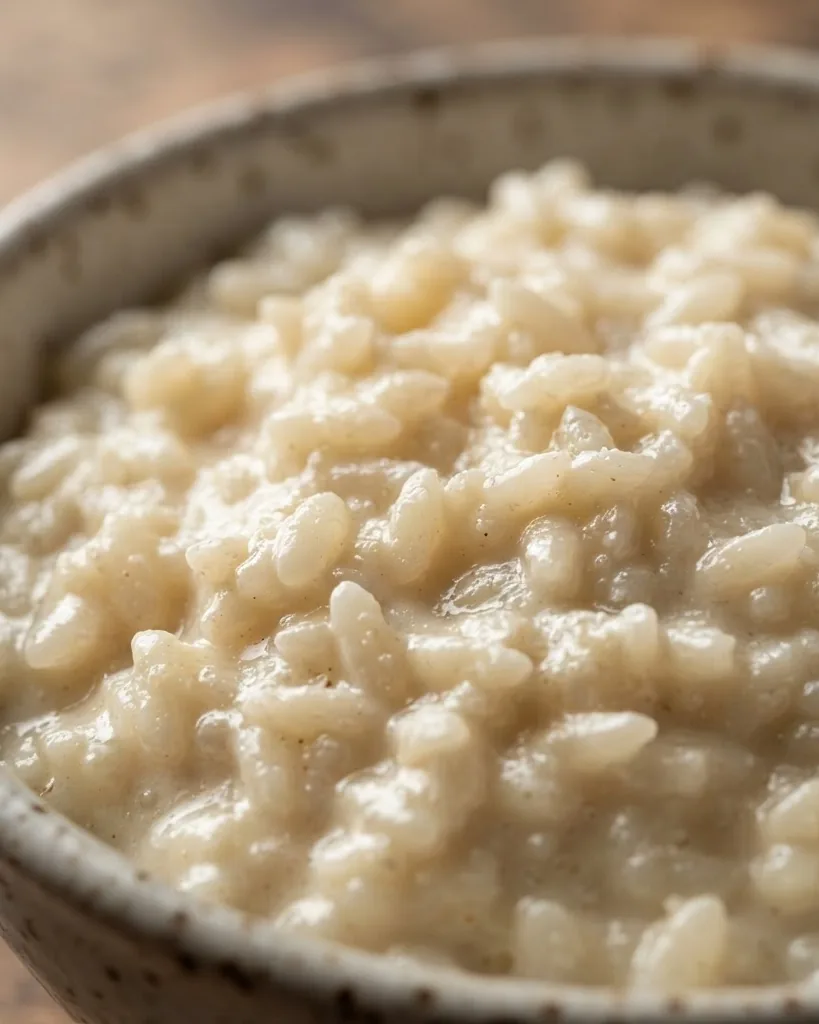
Lumps are the only real failure mode, and they come from dumping dry cereal into hot liquid. Whisk the granules into cold water or milk first, then bring the pot up to heat while stirring, and the porridge stays silky. Milk versus water is the biggest nutrition lever you control: 240 ml of whole milk adds roughly 8 g protein and 12 g carbohydrate, turning a 2 g protein bowl into something closer to a balanced meal.
The mix-in math is simple and worth doing before you eat, not after. A scoop of protein powder stirred in off the heat is the standard fix for the protein gap. Fruit adds the fiber the cereal lacks. A spoon of nut butter or a drizzle of honey shifts calories up for a bulk. For the cream-forward, dairy-free direction, a batch of silky dairy-free cashew cream folds in richness without milk.
Batch prep holds well. Cook a larger pot, cool it, and refrigerate portions, reheating with a splash of liquid to loosen the texture. For plating dessert versions cold and creamy, the ice-cream-and-dessert techniques in this dessert and frozen treats guide transfer directly. If you are building a savory sauce to serve alongside a rice dish rather than a sweet bowl, the ratios in this collection of classic cream sauces pair cleanly.
Cost, Convenience, and the Everyday Verdict
As a pantry staple, cream of rice earns its shelf space on speed and gentleness rather than nutritional density. It cooks in minutes, keeps indefinitely dry, sits easily in a queasy stomach, and delivers a fortified dose of iron and B-vitamins in a naturally gluten-free base. Those are real, specific strengths for the right eater.
The everyday verdict is that this is a carb source with a fortification bonus, not a complete meal. With 0 g fiber and 2 g protein per serving, a plain bowl leaves the satiety and protein work to whatever you add. Treat it like a blank canvas: fast fuel for training, gentle calories for recovery, and a flexible base you upgrade with milk, fruit, and protein. For readers who like seeing the full label logic on other pantry items, our writeup on Ritz crackers applies the same serving-size scrutiny.
Frequently Asked Questions
Is cream of rice healthy to eat every day?
It can be, but not as a standalone breakfast. A plain bowl gives you 0 g fiber and 2 g protein, so daily use works best when you add protein and fruit. The fortified iron at 70 percent DV per serving is a genuine plus, though people taking iron supplements should count it toward their total.
How many calories are in cooked cream of rice?
Cooked with water, cream of rice is about 52 kcal per 100 g, and a full cup at 244 g comes to roughly 127 kcal. That is far below the 681 kcal a dry cup shows, because cooking swells the grain with water. Always log the cooked figure unless you measured the dry cereal first.
Is cream of rice good for bulking?
Yes, it is a favorite bulking carb. It digests fast, sits lightly in the gut, and stacks calories easily with milk, nut butter, and honey. The one gap is protein at 2 g per serving, so stir whey in off the heat or add egg whites to turn fuel into a recovery meal.
Does cream of rice contain arsenic?
All rice carries some inorganic arsenic. The FDA action level for infant rice cereal is 100 ppb, and white-rice cereal, which cream of rice is, already averaged 103.9 ppb in FDA modelling versus 119.0 ppb for brown rice. Adults eating one bowl sit in a far lower exposure position than an 8-month-old fed rice daily.
Is cream of rice gluten-free?
Yes. Rice is naturally gluten-free, and the labeled product must contain less than 20 ppm gluten to make that claim. FDA testing of 702 samples across more than 250 gluten-free products found only one failure, so the label is reliable for most people with celiac disease when it carries the claim.
Cream of rice versus oatmeal, which is better?
It depends on the goal. Oatmeal brings soluble fiber and a lower glycemic response, better for satiety and steady energy. Cream of rice offers 0 g fiber and a faster glucose curve, but it is gluten-free and gentler on the gut, which makes it the better pick for training fuel and low-residue diets.