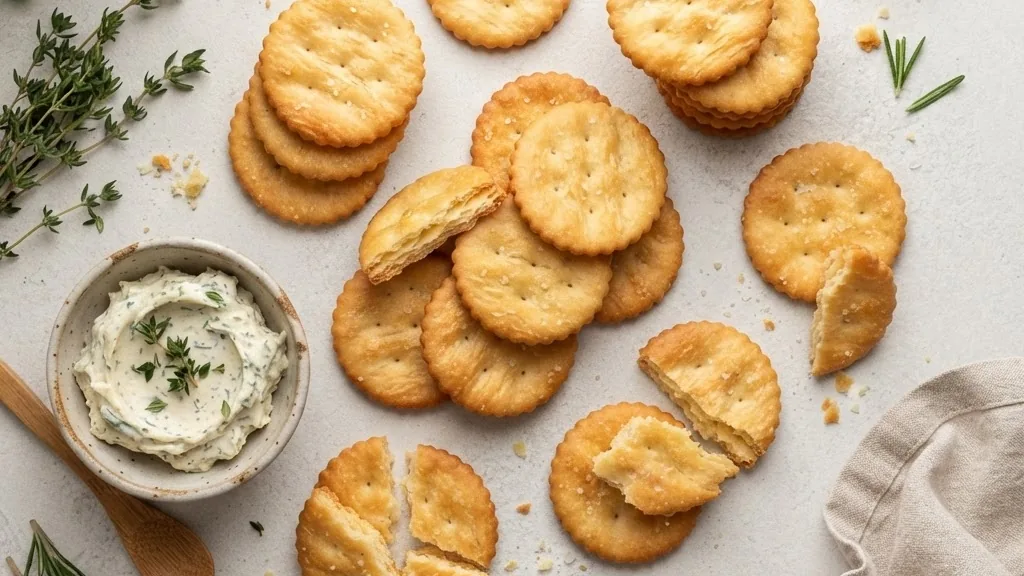
Ritz crackers nutrition facts start simple: 80 calories, 4.5 grams of fat, and 130 milligrams of sodium in a 5-cracker serving of Nabisco Ritz Original, straight off the printed panel. That short stack is 16 grams by weight, which almost nobody measures, and it hides the two numbers that actually matter once you eat more than a handful. Whether Ritz belong in a recipe or just in a snack bowl, the panel rewards a slow read.
By Tastybend Nutrition Desk. Last reviewed July 7, 2026.
Here is the fast version for the people who came for a single number. One serving of Ritz Original is 5 crackers (16 g): 80 calories, 4.5 g total fat, 1 g saturated fat, 0 g trans fat, 130 mg sodium, 10 g total carbohydrate, less than 1 g fiber, 1 g total sugars, 1 g added sugars, and 1 g protein. Fat supplies close to half the calories. Sugar is almost a rounding error. Sodium is the figure to watch, because it climbs faster than anyone expects.
| Nutrient | Per 5 crackers (16 g) | Percent Daily Value |
|---|---|---|
| Calories | 80 | – |
| Total fat | 4.5 g | 6% |
| Saturated fat | 1 g | 5% |
| Trans fat | 0 g | – |
| Cholesterol | 0 mg | 0% |
| Sodium | 130 mg | 6% |
| Total carbohydrate | 10 g | 4% |
| Dietary fiber | less than 1 g | 0% |
| Total sugars | 1 g | – |
| Added sugars | 1 g | 2% |
| Protein | 1 g | – |
Where the 80 calories actually come from
When people picture a cracker, they picture starch, so they assume the calories are all carbohydrate. Ritz break that assumption. Do the arithmetic the way the FDA teaches it: fat carries 9 calories per gram, carbohydrate and protein carry 4. The 4.5 grams of fat in a serving is roughly 40 calories on its own, which is about half of the 80. The 10 grams of carbohydrate account for the other 40, and the single gram of protein barely registers. That tends to surprise the low-fat crowd more than anything else on the panel.
The fat is there by design. Ritz get their snap and their buttery mouthfeel from vegetable oil worked into enriched wheat flour, and that oil is what makes them taste like more than a plain flour disc. It also means Ritz behave more like a fat-forward snack than a bread substitute, calorie for calorie. Compare crackers gram for gram and the ones that feel richest on the tongue almost always carry the most fat, and Ritz sit near the top of that group.
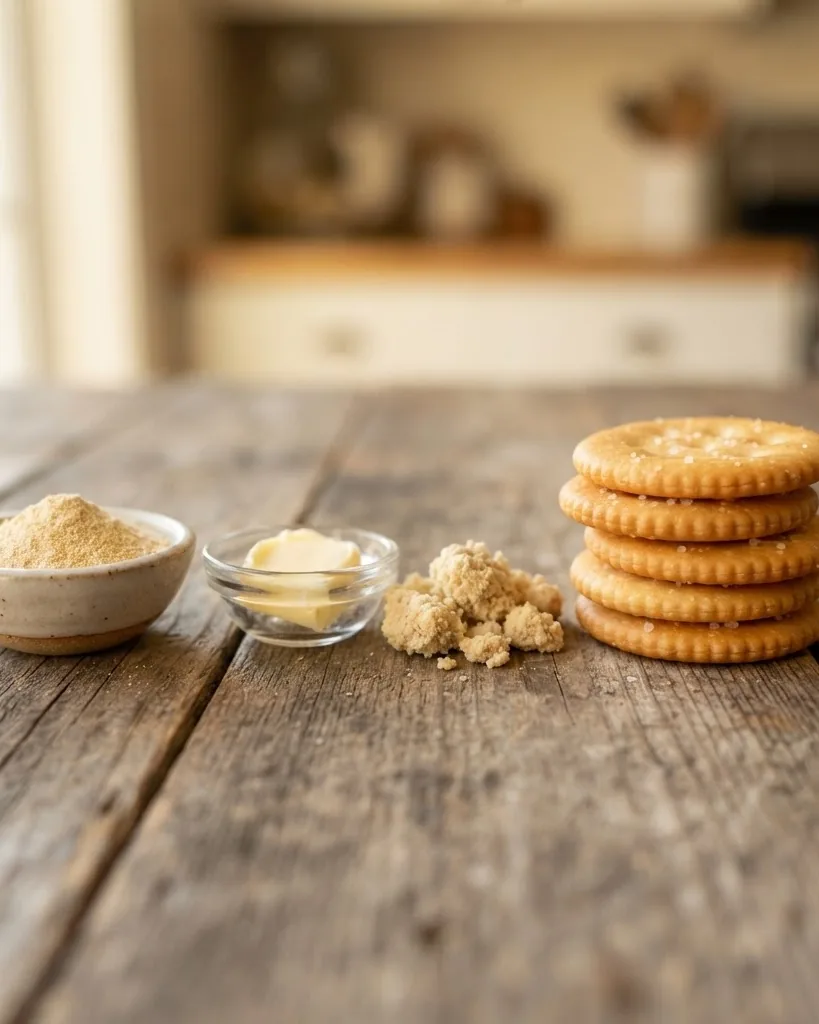
The 5-cracker serving versus how people really eat them
A serving of 5 crackers is one honest short stack. Few people stop at five. A single sleeve, the paper-wrapped column inside the box, holds somewhere around 30 to 34 crackers, which is close to 6 servings. Run the multiplication and a sleeve is near 480 calories, 27 grams of fat, and around 780 milligrams of sodium. That is the real portion for a movie night, and it is a very different food than the tidy 80-calorie panel implies.
This is the trap in almost every snack label, and it is legal and honest at the same time. The serving size is small so the headline numbers look small. Nobody is lying here. The panel simply describes a portion most of us blow past in ninety seconds. For a real accounting, count what you actually pull out of the box, not what the box wishes you would eat.
If you would rather weigh than count, the per-100-gram math is useful. Scaled up from the 16-gram serving, 100 grams of Ritz runs roughly 500 calories, about 28 grams of fat, near 62 grams of carbohydrate, and around 810 milligrams of sodium. That conversion is worth keeping in mind because recipes and European labels use grams, and it lets you drop Ritz into a meal plan without guessing.
Sodium: the number that scales the fastest
Here is the figure to circle every time. One serving delivers 130 milligrams of sodium, about 6 percent of the Daily Value the FDA sets at 2,300 milligrams. Six percent sounds harmless. The problem is that sodium scales with every cracker, and Ritz are easy to eat by the dozen. Twenty crackers is around 520 milligrams. A full sleeve pushes near 780 milligrams, which is roughly a third of the entire day in one sitting, before you have touched the dip.
The CDC has spent years pointing out that most of the sodium in an American diet does not come from the salt shaker. It comes from packaged and prepared foods exactly like this one, where the salt is baked in and you never see it. Ritz are not unusually salty for a butter cracker, but they are salty enough that pairing them with cheese, cured meat, or a salty spread turns a snack plate into a sodium event. On a board, treat Ritz as the salt source and keep the toppings mild.
None of this makes Ritz a problem food. It makes portion the whole game. If sodium is something you track, for blood pressure or just general habit, the move is not to swear off Ritz. It is to count them out onto a plate and leave the box in the pantry, because the open box is what does the damage.
Carbs, sugar, and whether Ritz fit keto or low-carb
Ten grams of total carbohydrate per serving, with less than a gram of fiber, means the net carbohydrate is close to the full 10 grams. For a strict keto plan capped near 20 to 30 grams of carbohydrate a day, a single serving of Ritz spends a third to half of that budget on five crackers that will not keep you full. Ritz are one of the easiest ways to blow a keto day without feeling like you ate anything.
The sugar is genuinely low. One gram of total sugars and one gram of added sugars per serving is not why Ritz add up. These are salty, fatty crackers, not sweet ones. That surprises people who assume every processed snack is loaded with sugar. The added-gram comes from a touch of sugar and high fructose corn syrup in the dough, and it is there for browning and flavor balance, not sweetness you would notice.
So the honest read for a low-carb eater is that Ritz are a fat-and-starch cracker with trivial sugar and no fiber. They will not spike you the way candy does, but the starch is refined and quick, and without fiber or much protein there is nothing to slow it down. They work best as an occasional vehicle for something more substantial, not as a base carbohydrate.
Protein and fiber: why Ritz do not fill you up
One gram of protein and under a gram of fiber per serving is the quiet reason a sleeve disappears. Protein and fiber are the two nutrients that tell your body a meal happened, and Ritz carry almost none of either. That is not a flaw in the product. It is just what a light, crisp butter cracker is. But it explains the mechanics of the empty sleeve better than any willpower lecture.
To make Ritz actually hold you over, stop treating them as the snack and start treating them as the plate. Five crackers with a tablespoon of peanut butter, or with two slices of turkey and a wedge of cheese, turns 80 hollow calories into a small meal with real protein. The crackers stay the same. What goes on them decides whether you stop at five.
Ritz vs Cheez-Its vs saltines
The clearest way to understand a cracker is to stand it next to its neighbors. Here are the real panels for three pantry staples, lined up. Note that each brand prints its own serving size, so the list shows the labeled serving and then flags how they compare gram for gram. For the full breakdown on the cheese one, the Cheez-Its nutrition label gets its own piece.
| Cracker | Serving | Calories | Fat | Sat fat | Sodium | Carbs | Protein |
|---|---|---|---|---|---|---|---|
| Ritz Original | 5 crackers (16 g) | 80 | 4.5 g | 1 g | 130 mg | 10 g | 1 g |
| Cheez-It Original | 27 crackers (30 g) | 150 | 8 g | 1.5 g | 230 mg | 17 g | 3 g |
| Saltines (Premium) | 5 crackers (16 g) | 70 | 1.5 g | 0 g | 135 mg | 11 g | 1 g |
Read gram for gram and the personalities separate cleanly. Ritz carry the most fat per gram of the three, which is the butter-cracker signature and the reason they taste the richest. Saltines are the lean one, with barely any fat and no saturated fat, but they trade that for a flatter, drier bite. Cheez-Its pack the most sodium and the most protein per gram because they are built on real cheese, which is also why a Cheez-It serving is a bigger pile for a bigger calorie hit.
The takeaway from the line-up is that there is no villain here, only tradeoffs. If you want the least fat, saltines win. If you want cheese flavor and a little protein, Cheez-Its earn their calories. If you want the buttery snap that makes a cracker feel like a treat, Ritz are doing exactly what they were engineered to do, and the fat on the panel is the price of that snap.
How to read the Ritz label line by line
The panel is a small document, and reading it in the right order keeps you from being fooled by the headline calorie count. This is the sequence to use every time, and it takes about ten seconds once it is a habit.
- Start at the serving size, not the calories. Ritz is 5 crackers, 16 grams. Every other number on the panel is anchored to that portion, so decide first how it compares to what you plan to eat.
- Multiply to your real portion. If you know you will eat fifteen, triple every line before you read further. The panel is per serving, and your hand is not.
- Check total fat and saturated fat next, because in Ritz that is where the calories live. Four and a half grams of fat is the calorie engine here.
- Read the sodium and hold it against 2,300 milligrams, the FDA Daily Value. Then multiply by your real portion. This is the line that gets people.
- Glance at sugar and added sugar. On Ritz both are low, one gram each, so you can move on quickly, but the habit matters on other snacks.
- Finish with protein and fiber. Low numbers, one gram and under, tell you this food will not keep you full on its own, which is the fact that decides your portion.
Federal resources make this easier if you want to go deeper. The FDA publishes plain-language guidance on how to use the Nutrition Facts label, USDA FoodData Central holds the underlying nutrient data for tens of thousands of foods, and nutrition.gov gathers that federal guidance in one consumer-facing place. All three are worth leaning on when a label leaves you guessing.
Smarter ways to eat Ritz, and a few swaps
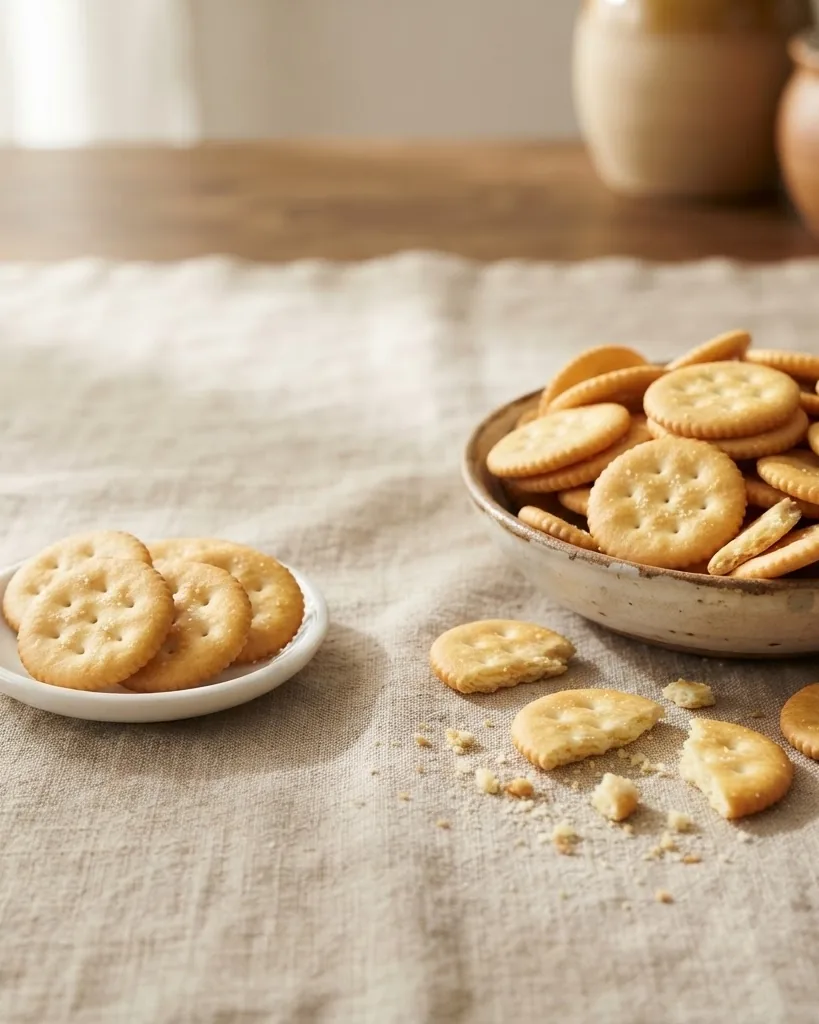
Nobody has to stop eating Ritz. They can stay in the pantry. The trick is changing how they show up on the plate so the numbers work for you instead of against you. These are the moves that work.
- Count out one or two servings onto a plate and put the box away. The open sleeve is the single biggest driver of overeating, and this one habit changes the whole math.
- Give every cracker a job. Top Ritz with protein, a slice of turkey, tuna, cottage cheese, or peanut butter, so the fat and starch arrive with something filling.
- Pair with something watery and fibrous. Cucumber, tomato, or a crunchy vegetable next to the crackers adds volume and fiber the crackers lack.
- Mind the topping’s sodium. Ritz already bring 130 milligrams a serving, so choose low-sodium cheese or spreads rather than stacking salt on salt.
- If sodium is your target, try unsalted-top saltines or a whole-grain cracker with fiber for the base, and save Ritz for the times you want the buttery flavor specifically.
- Use Ritz where their richness earns its place, a pie crust, a crumb topping, a mock apple filling, rather than as a mindless graze straight from the box.
What is in the cracker beyond the numbers
The nutrition panel is only half the label. The ingredient list tells the rest. Ritz Original is built on enriched wheat flour, vegetable oil from a blend that can include palm, canola, and soybean, plus sugar, salt, leavening, a little high fructose corn syrup, soy lecithin, and malted barley flour. It contains wheat and soy, which matters if you cook for anyone with those allergies, and the current label notes it contains a bioengineered food ingredient.
The enriched flour means some B vitamins and iron are added back after refining, which is why USDA data shows small amounts of iron and thiamin per serving even though the cracker is not a meaningful source of either. It is worth mentioning because people sometimes assume enriched means healthy. It means the flour was stripped and partially restored, not that the cracker is a vitamin delivery system. Read it as a treat with a little added iron, not as a fortified food.
The Daily Values behind every percent
Every percentage on the Ritz panel is measured against a fixed FDA reference for a 2,000-calorie day, and knowing those denominators makes the panel readable at a glance. Sodium is measured against 2,300 milligrams, total fat against 78 grams, saturated fat against 20 grams, total carbohydrate against 275 grams, and added sugars against 50 grams. So the 130 milligrams of sodium showing 6 percent is 130 divided by 2,300, and the 1 gram of saturated fat showing 5 percent is 1 divided by 20.
The reason this matters is that a single small percentage can hide a fast-scaling number. Sodium at 6 percent per serving looks trivial until you remember you rarely eat one serving, and that the same 6 percent stacks with every other salty food in your day. When reading a label, ignore the calorie headline for a second and read the percentages as a running tally against the day, because that is how the FDA intends them to work.
Frequently asked questions
How many calories are in Ritz crackers?
A serving of 5 Ritz Original crackers (16 grams) has 80 calories, per the Nabisco label. Close to half of those calories, about 40, come from the 4.5 grams of fat rather than from carbohydrate. A full sleeve of roughly 30 crackers is near 480 calories.
How much sodium is in Ritz crackers?
Each 5-cracker serving has 130 milligrams of sodium, about 6 percent of the FDA Daily Value of 2,300 milligrams. That number scales fast, though, so a whole sleeve pushes near 780 milligrams, roughly a third of the day. The CDC notes most dietary sodium comes from packaged foods like this.
Are Ritz crackers healthy?
Ritz are a refined-flour snack with moderate fat, low sugar, little protein, and no meaningful fiber. They are not unhealthy in a normal portion, but they are not filling or nutrient-dense either. They work best as an occasional treat or as a base for protein, not as a staple snack eaten by the sleeve.
Do Ritz crackers have a lot of sugar?
No. A serving has only 1 gram of total sugars and 1 gram of added sugars. Ritz are a salty, buttery cracker, not a sweet one. The trace of sugar and high fructose corn syrup in the dough is there for browning and balance, not for sweetness you would taste.
Can I eat Ritz crackers on keto?
They are difficult to fit. Five crackers carry 10 grams of carbohydrate with under a gram of fiber, so the net carbohydrate is close to the full 10 grams. On a 20 to 30 gram daily keto cap, one serving spends a third to half of it on crackers that will not keep you full. Most keto eaters are better served by a seed or almond-flour cracker.
How many Ritz crackers are in a serving?
Five crackers, weighing 16 grams. That is one short stack. A sleeve holds about 30 to 34 crackers, or roughly 6 servings, which is worth remembering before you read the rest of the panel.
The bottom line on Ritz crackers nutrition facts
Ritz are a well-made butter cracker whose panel holds no dramatic surprises and one quiet lesson. The lesson is that fat, not sugar, drives the calories, and sodium is the number that scales fastest once you eat past the tidy 5-cracker serving. Enjoy them, but count them onto a plate and give them a job, and they fit a normal diet without trouble. For the leaner cousin, the saltine crackers nutrition gets its own breakdown, and the two labels read very differently once you set them side by side. For the source data behind every figure here, USDA FoodData Central and the FDA are the starting points.