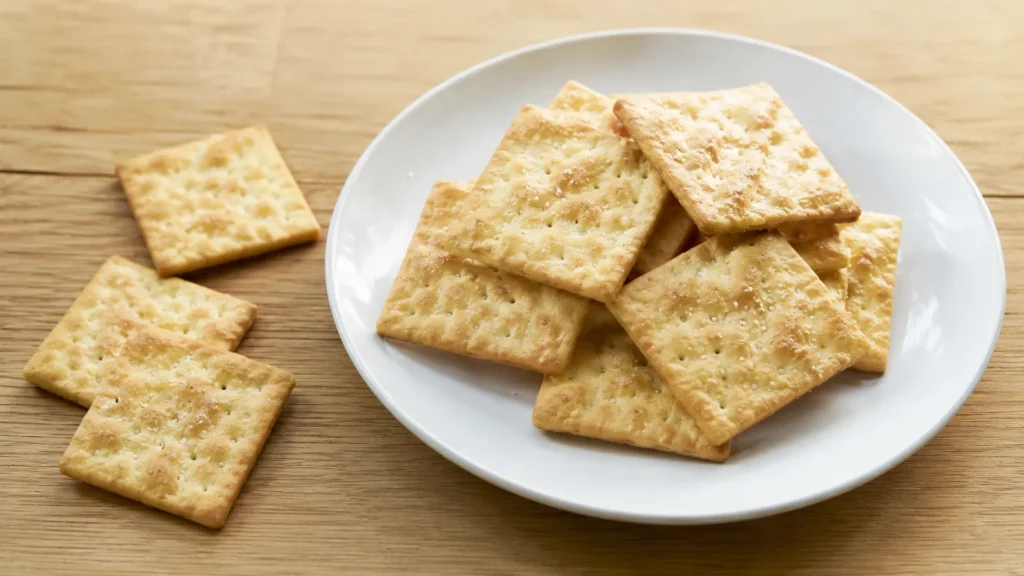
Saltine crackers nutrition is mostly a story about refined starch and salt: a standard 5-cracker serving carries about 60 to 70 calories, 11 to 13 grams of carbohydrate, around 1.5 grams of fat, 1 to 2 grams of protein, and 120 to 160 milligrams of sodium. There is almost no sugar, very little fiber, and only trace amounts of vitamins and minerals beyond the small dose of iron and B vitamins added when the white flour is enriched. Saltines are a light, low-fat, low-sugar cracker, and the number worth watching is sodium, which adds up fast because few people stop at five crackers. Below I walk through the label, decode each macro, and compare saltines to a few common snack crackers.
The values here are typical label figures for plain salted-top saltines sold in the United States. Brands differ, and unsalted-top, whole-wheat, and “multigrain” versions change the sodium and fiber meaningfully. Always read the box in front of you, since recipes and serving sizes get reformulated.
Saltine Crackers Nutrition Facts Table
This is the panel for a standard serving of 5 plain saltine crackers, roughly 15 grams. Percent Daily Values use a 2,000 calorie reference day.
| Nutrient | Per 5 crackers (15 g) | % Daily Value |
|---|---|---|
| Calories | 60 to 70 | – |
| Total Fat | 1.5 g | 2% |
| Saturated Fat | 0 to 0.5 g | 0% to 3% |
| Trans Fat | 0 g | – |
| Cholesterol | 0 mg | 0% |
| Sodium | 120 to 160 mg | 5% to 7% |
| Total Carbohydrate | 11 to 13 g | 4% to 5% |
| Dietary Fiber | less than 1 g | 0% to 2% |
| Total Sugars | 0 to 1 g | – |
| Added Sugars | 0 g | 0% |
| Protein | 1 to 2 g | – |
| Iron | about 0.9 mg | 5% |
| Calcium | about 15 mg | 1% |
| Potassium | about 20 mg | 0% |
The clearest takeaways: low calories, low fat, almost no sugar, and a sodium figure that looks modest at 5 crackers but climbs quickly. The fiber number near zero is the other thing to notice, because it tells you this is refined flour doing the work.
Decoding the Calories
Five saltines give you 60 to 70 calories, and nearly all of that comes from carbohydrate. The cracker is built from white flour, a little fat, salt, and leavening, then baked dry. Because there is almost no sugar and very little fat, the calorie total is small per cracker, roughly 12 to 14 calories each.
The trap is that saltines are easy to eat in large numbers. A sleeve of saltines holds about 40 crackers, so eating a third of a sleeve quietly turns into 13 crackers and around 170 calories before you have noticed. The per-cracker calorie count is low, but the practical serving is often two or three times the label serving. When you log saltines, count the actual crackers rather than assuming you ate the listed five.
For a plain, dry food meant to settle a stomach or carry a topping, that low calorie density is the appeal. Saltines are popular during illness precisely because they are bland, low in fat, and easy to digest in small amounts.
It helps to compare a saltine to other carbohydrate snacks at the same calorie level. Five saltines at about 65 calories give you roughly the same energy as half a slice of standard bread or a small handful of pretzels. The difference is texture and fat. Saltines are drier and lower in fat than most bread, which is why they sit so well when your appetite is off. They are not a high-energy food, so if you are using them to fuel activity rather than to settle a stomach, you will eat a lot of them to get meaningful calories, and the sodium will rise with each one.
The Macros: Carbs, Fat, and Protein
Carbohydrate is the whole story. Each serving carries 11 to 13 grams, and almost all of it is refined starch from enriched white flour with under a gram of fiber and essentially no sugar. Because the fiber is so low, the starch digests quickly, which is part of why saltines are gentle on an upset stomach but not very filling. If you want the broader picture of how carbohydrate quality affects your day, MedlinePlus has a plain-language overview of carbohydrates and Harvard explains why fiber and whole grains matter in its guide to carbohydrates.
Fat is low, about 1.5 grams per serving, and the exact amount depends on the oil used. Most mainstream saltines today use vegetable oils, so saturated fat is small and trans fat is zero. Older formulations sometimes used partially hydrogenated oils, but that practice has largely ended, so a current box should show 0 grams of trans fat. Check the label if that matters to you.
Protein is minor at 1 to 2 grams per serving and comes from the wheat flour. Saltines are not a protein food, and they pair best with something that adds it, such as cheese, peanut butter, tuna, or soup. That pairing is the practical way to turn a low-protein cracker into a more balanced snack.
Because the carbohydrate is refined and the fiber is near zero, saltines digest and raise blood sugar faster than a whole-grain cracker would. For most healthy people eating five crackers, that is a non-issue. For people who track blood sugar, the lack of fiber and fat means saltines on their own offer little to slow the rise, which is another reason the cracker works better as a base for cheese, nut butter, or another food that adds fat or protein. The pairing does not just balance the nutrition, it changes how the snack behaves once you eat it.
The Sodium Question
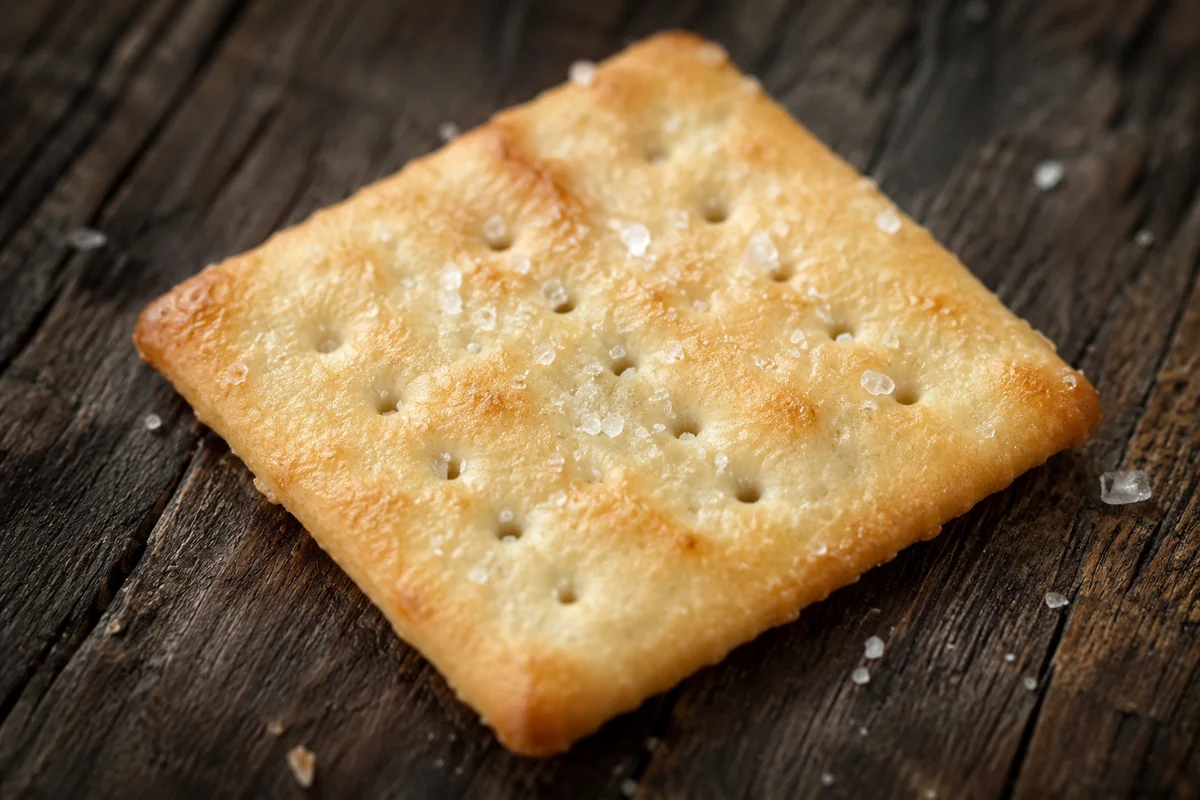
Sodium is the number that earns the most attention on a saltine label, and the name gives it away. A 5-cracker serving carries 120 to 160 milligrams, which looks small against the federal limit of 2,300 milligrams a day. The problem is portion creep. Eat 15 crackers, a common real-world amount, and you are at 360 to 480 milligrams from crackers alone, before any salty topping like cheese, soup, or canned tuna joins them.
Most Americans already exceed the recommended sodium limit, and snack crackers are one of the quiet contributors. The federal guidance caps sodium near 2,300 milligrams per day for adults, and people with high blood pressure are often advised to aim lower. MedlinePlus keeps a clear summary of why sodium matters and how to manage it: sodium in the diet. Harvard’s nutrition team explains the blood-pressure connection in its salt and sodium overview.
There is an easy fix if sodium is your concern. Unsalted-top saltines exist and cut the sodium roughly in half, often down to 50 to 80 milligrams per serving, while keeping nearly the same calories and carbohydrate. If you eat saltines often with already-salty foods, the unsalted-top box is the smarter default.
It helps to put the saltine sodium in the context of a whole snack rather than the cracker alone. The crackers themselves are rarely the main sodium source on a plate. A bowl of canned soup can carry 700 to 900 milligrams of sodium per serving, and a few slices of deli meat or cheese on top of crackers can add several hundred more. The saltines are the quiet base that the salty toppings sit on. That is why the cracker can look modest on its own and still leave you over your target once the meal is built. Watching the toppings is often more effective than swapping the cracker, though doing both is best if blood pressure is a concern.
Reading the Ingredient List
A plain saltine ingredient list is short: enriched flour (wheat flour, niacin, reduced iron, thiamine, riboflavin, folic acid), vegetable oil, salt, leavening such as baking soda, and sometimes a little malted barley flour or yeast. That “enriched” tag is why the label shows a small amount of iron and B vitamins. Enrichment adds back several nutrients lost when the bran and germ are removed from white flour, but it does not add back the fiber, so saltines stay low in fiber even though they carry a little iron and folic acid.
What you will not find is much sugar. Total sugars are typically 0 to 1 gram and added sugars are 0, which makes saltines unusual among packaged snacks. The flavor is salt and baked wheat, not sweetness. The salt sits both in the dough and as the visible coarse crystals on top, which is why removing the top salt cuts the sodium so sharply.
If you choose a whole-wheat or multigrain saltine, the ingredient list will lead with whole wheat flour and the fiber number will climb to 1 to 2 grams or more per serving. That is a small but real upgrade if you want the cracker to do a little more nutritional work.
Serving Size Reality and Portions
The label serving is 5 crackers, and almost nobody stops there. Saltines come in sleeves of about 40, and they are designed to be eaten by the handful with soup or a topping. The honest way to track them is to count crackers and multiply, since the panel figures scale linearly. Ten crackers double everything, fifteen triple it.
Here is the practical math. Fifteen saltines, a realistic snack portion, give you roughly 180 to 210 calories, 33 to 39 grams of carbohydrate, and 360 to 480 milligrams of sodium. That is no longer a trivial snack, especially on the sodium line. The crackers themselves are not the problem so much as the volume people eat and the salty foods they pair with.
If you use saltines as a vehicle for protein and produce, they work well in a balanced snack. A few crackers with cheese and tomato, or with tuna, turns a bland refined-starch base into something more complete. For snack ideas that lean lighter on sodium, our network keeps a library of homemade snack recipes and a set of gluten-free snacks and sides for readers who avoid wheat.
How Saltines Compare to Other Crackers
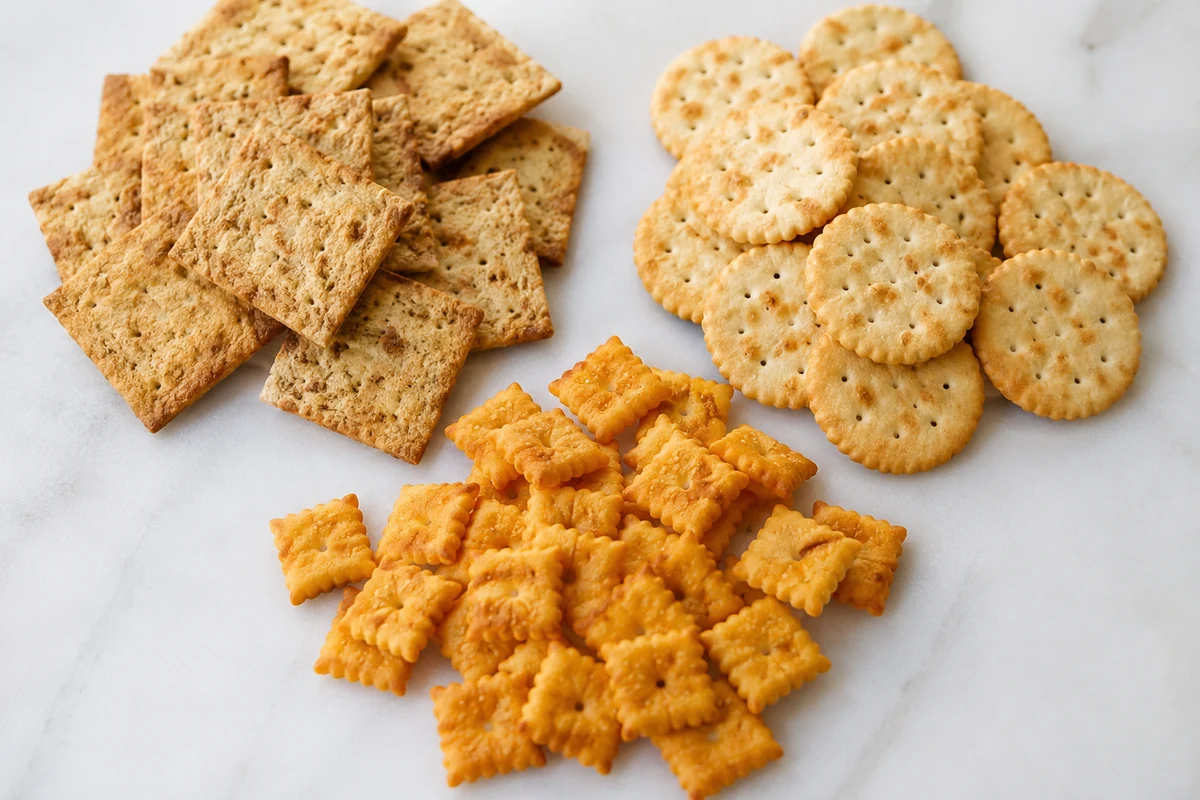
Against other popular crackers, saltines are the plain, low-fat, low-sugar baseline. Here is a per-serving comparison using typical label values. Amounts vary by brand and version.
| Cracker (typical serving) | Calories | Fat | Sodium | Fiber |
|---|---|---|---|---|
| Saltines, salted top (5 crackers, 15 g) | 60 to 70 | 1.5 g | 120 to 160 mg | under 1 g |
| Saltines, unsalted top (5 crackers, 15 g) | 60 to 70 | 1.5 g | 50 to 80 mg | under 1 g |
| Buttery round crackers (about 5, 16 g) | 80 to 85 | 4 to 5 g | 120 to 150 mg | under 1 g |
| Cheese snack crackers (about 27, 30 g) | 150 to 160 | 8 g | 230 to 250 mg | under 1 g |
| Whole-wheat crackers (about 16, 30 g) | 120 to 130 | 3 to 4 g | 200 to 230 mg | 3 to 4 g |
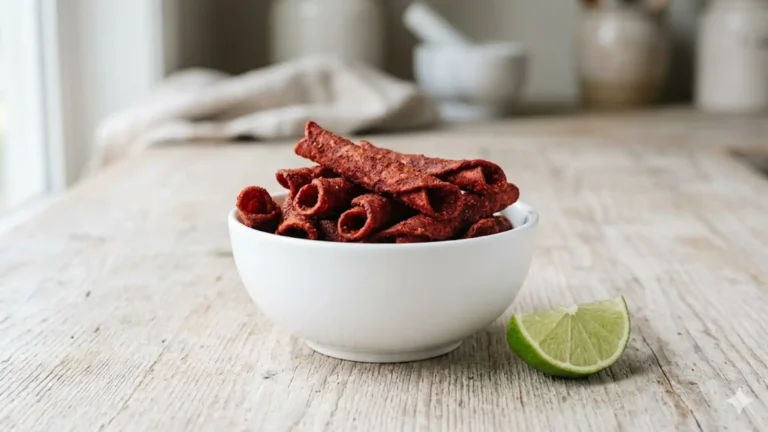
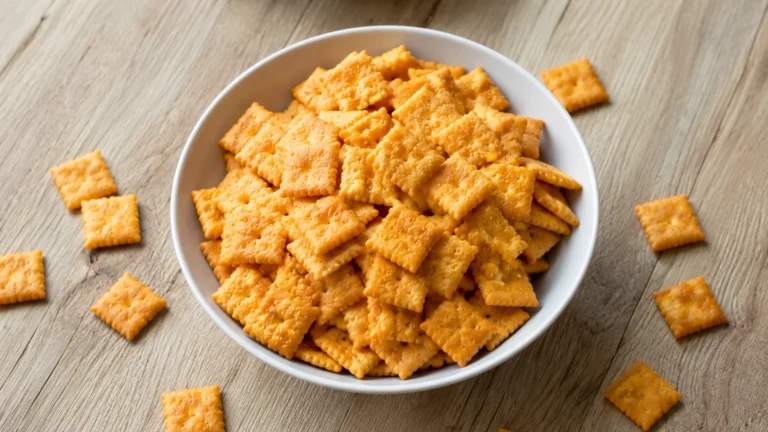
The pattern is clear. Saltines win on lowest fat and lowest calories per cracker, and they tie or beat most options on sodium per serving once you account for serving size. Where they lose is fiber, which whole-wheat crackers deliver and saltines do not. Cheese-flavored crackers like Goldfish carry more fat and sodium because of the added cheese and oil, and intensely seasoned snacks like Takis sit in a different category entirely on sodium and spice. If your goal is a plain, light base with minimal added flavor, saltines are hard to beat.
Who They Suit and the Health Context
Saltines suit a few specific needs. They are a classic choice when you are nauseated or recovering from a stomach bug, because they are bland, low in fat, and easy to digest in small amounts. They work as a neutral base for cheese, nut butter, or soup. And they fit a low-sugar snack slot, since they carry essentially no sugar.
They are a weaker choice if you want fiber, protein, or staying power, because refined white flour delivers little of any. The near-zero fiber means saltines digest fast and will not keep you full long, so they are better as part of a snack than as the whole snack. People managing blood pressure should lean toward the unsalted-top version and watch how many they eat with salty toppings.
This is general nutrition information, not medical advice, and saltines are neither a health food nor a problem food on their own. They are a refined-starch cracker with a sodium count worth respecting. Used as a light base and portioned honestly, they fit most eating patterns. To verify the base figures against an independent reference, USDA FoodData Central holds the standard nutrition data for saltine crackers and enriched wheat flour.
Saltine Varieties and How the Numbers Shift
Not every saltine carries the numbers in the table above, and the version you buy changes the label more than most shoppers expect. The salted-top original is the baseline, but the shelf usually holds several variations, and each one moves a specific line.
Unsalted-top saltines are the biggest swing. They keep nearly the same calories, fat, and carbohydrate but cut sodium roughly in half, often landing at 50 to 80 milligrams per serving instead of 120 to 160. If you eat saltines regularly and pair them with salty foods, this single switch does more for your sodium total than anything else, with no real change to taste beyond the missing crunch of surface salt.
Whole-wheat and multigrain saltines change the fiber line. They lead with whole wheat flour, which pushes fiber up to 1 to 3 grams per serving and adds a small amount of extra protein and minerals. The calories stay close to the original, but the cracker does a bit more nutritional work because the bran and germ stay in the flour. The trade is a denser texture and a slightly heartier flavor that some people prefer and others do not.
Then there are the flavored and topped versions, such as cracked-pepper or olive-oil saltines. These usually add a gram or two of fat and sometimes more sodium, depending on the seasoning. They are still light crackers, but they drift away from the plain, low-fat profile that makes the original saltine useful as a neutral base. Read the panel, because a flavored saltine can carry noticeably more sodium than the plain one.
The practical lesson is that “saltine” is a category, not a single set of numbers. If your priority is sodium, buy unsalted-top. If it is fiber, buy whole-wheat. If you want the classic neutral base for soup or a topping, the plain salted original is the one the table describes. Matching the version to your goal is easier than trying to make one box fit every need.
Frequently Asked Questions
How many calories are in 5 saltine crackers?
A standard serving of 5 saltine crackers contains about 60 to 70 calories, almost all from refined-flour carbohydrate. Each cracker is roughly 12 to 14 calories. The number climbs fast in practice because a typical snack portion is 10 to 15 crackers, which puts you at 120 to 210 calories.
Are saltine crackers high in sodium?
Per 5-cracker serving, saltines carry 120 to 160 milligrams of sodium, which is moderate. The issue is portion size, since eating 15 crackers reaches 360 to 480 milligrams before any salty topping. Unsalted-top saltines cut the sodium roughly in half and are the better choice if you are watching your intake.
Are saltine crackers healthy?
They are low in fat and sugar but also low in fiber and protein, since they are made from refined white flour. They are not unhealthy in small amounts and are gentle on an upset stomach, but they offer little nutrition on their own. Pairing them with cheese, nut butter, or vegetables makes a more balanced snack, and whole-wheat versions add fiber.
Do saltine crackers have sugar?
Almost none. A serving typically lists 0 to 1 gram of total sugars and 0 grams of added sugar, which is unusual for a packaged snack. The flavor comes from salt and baked wheat rather than sweetness, so saltines fit a low-sugar snacking pattern even though they are high in refined starch.