
The oreo nutrition facts most people want come down to this: a standard serving of three original cookies has 160 calories, 7 grams of fat, 25 grams of carbohydrates, 14 grams of sugar, and 160 milligrams of sodium. Work it out per cookie and each one is about 53 calories with roughly 4.5 grams of sugar, which makes them easy to eat well past a single serving without noticing. This guide lays out the full label, does the per-cookie math, walks through the ingredients, compares the main varieties, and answers the question that comes up constantly about whether the cookies are vegan.
Oreo nutrition facts at a glance
Here is the breakdown for the original cookie, shown both per single piece and at the 3-cookie serving printed on the package. Most people reach for more than three, so the per-cookie column is the one to keep in mind when you are actually snacking.
| Nutrient | Per 1 cookie | Per 3-cookie serving (34 g) |
|---|---|---|
| Calories | About 53 | 160 |
| Total fat | About 2.3 g | 7 g |
| Saturated fat | About 0.7 g | 2 g |
| Carbohydrates | About 8.3 g | 25 g |
| Sugar | About 4.7 g | 14 g |
| Sodium | About 53 mg | 160 mg |
| Protein | Under 0.5 g | 1 g |
The defining feature of this label is sugar. Of the 160 calories in a serving, the large majority come from sugar and refined flour, with very little protein or fiber to balance them. The USDA (FoodData Central) lists comparable reference values for sandwich cookies, and they confirm what the package shows: this is a treat built on sugar and starch.
Calories and the serving-size trap
At 160 calories for three cookies, the original is not an extreme snack by itself. The problem is the serving size on the label, which almost nobody actually follows. Three cookies is a modest portion, and a casual handful of six doubles everything to 320 calories and 28 grams of sugar before you have really registered eating them.
That is the single most useful thing to understand about these cookies. The per-serving numbers look reasonable, but they describe a smaller portion than most people pour from the sleeve. Counting by the cookie, at roughly 53 calories each, is the honest way to track them. If you eat them straight from the package without portioning, the calories and sugar climb quietly, and a long evening with the sleeve open can rival a full meal in calories.
Sugar: the number that matters most
A 3-cookie serving carries 14 grams of sugar, which is about 28 percent of the FDA’s 50 gram added-sugar Daily Value. Eaten six at a time, that becomes 28 grams, more than half a day’s allowance from a snack. The American Heart Association (AHA) sets a tighter daily limit, around 25 grams for women and 36 grams for men, and by that yardstick even a single official serving uses up a meaningful chunk of the day.
This is the line on the label that deserves the most attention. The cookies are essentially a sugar-and-flour delivery system, with the creme filling and the chocolate wafers both contributing sweetness. None of this makes them off-limits, but it does mean they should be counted as a real source of added sugar rather than a freebie, especially for anyone watching their intake for blood sugar or weight reasons.
Fat, sodium, and what little else is there
Each serving has 7 grams of fat, including 2 grams of saturated fat, which is roughly 10 percent of a typical daily limit. The fat comes mostly from palm oil, the shortening used in the creme and the wafer. There is no cholesterol, since the recipe contains no animal ingredients, and the sodium sits at 160 milligrams per serving, about 7 percent of the Daily Value, which is moderate for a sweet snack.
What is missing is as telling as what is present. A serving offers only 1 gram of protein and 1 gram of fiber, so there is almost nothing to slow digestion or create fullness. That is why a handful of these can disappear without satisfying hunger; the cookies deliver quick energy from sugar and starch and little of the protein or fiber that makes a snack filling. Pairing them with something that has protein, like a glass of milk, at least adds a bit of staying power. This is also why the cookies are so often eaten as a quick pick-me-up rather than a snack that holds you over until the next meal. The sugar provides a fast, short-lived lift, and without protein or fiber to extend it, the hunger that prompted the snack tends to return before long, which can nudge you toward reaching for a second or even a third serving.
What is actually in an Oreo
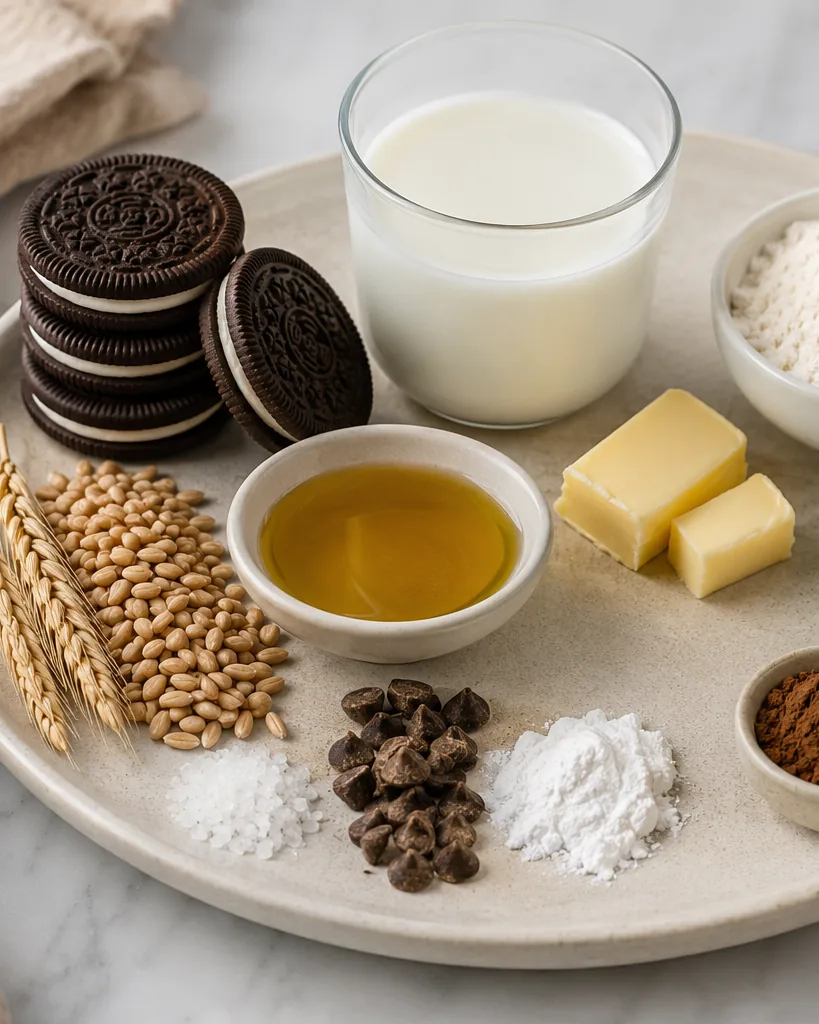
The ingredient list is short for a packaged snack, but a few items stand out. The base is unbleached enriched wheat flour, followed by sugar, palm oil, cocoa processed with alkali, and high fructose corn syrup, plus leavening, salt, soy lecithin, and artificial flavor. The cookies contain wheat and soy, which matters for anyone with those allergies.
Two ingredients draw the most questions. The palm oil is the fat that gives the creme its texture and shelf stability, and it is the source of the saturated fat on the label. The high fructose corn syrup is a second sweetener alongside the sugar, common in shelf-stable baked goods. The cocoa is processed with alkali, also called Dutching, which darkens the wafer and mellows its flavor. None of these are unusual for a mass-market cookie, but they explain the texture, the long shelf life, and why the cookies taste the way they do.
Are Oreos vegan or dairy-free?
This is one of the most common questions about the cookies, and the answer needs a caveat. The original recipe contains no milk, eggs, or other obvious animal ingredients, which is why many people consider them accidentally vegan and dairy-free. For someone avoiding dairy for a preference or a mild sensitivity, the cookies usually work.
The caveat is important for people with serious milk allergies. The maker has long stated that the cookies are produced on equipment shared with milk-containing products, so cross-contact is possible and the cookies are not certified vegan or guaranteed allergen-free. So they are dairy-free by recipe but not by manufacturing guarantee. Anyone with a true milk allergy should treat that shared-line warning seriously, while those simply avoiding dairy by choice can generally enjoy them. Always read the current package, since recipes and warnings can change.
How the varieties compare
The original is only one of many versions, and the numbers shift with the format. The table below compares common types so you can see how the filling and size change the math. Figures are approximate per labeled serving.
| Variety | Calories per serving | Notes |
|---|---|---|
| Original (3 cookies) | 160 | The baseline, 14 g sugar |
| Double Stuf (2 cookies) | About 140 | More creme, fewer cookies per serving |
| Thins (4 cookies) | About 140 | Thinner wafer, less creme |
| Mini (about 9 cookies) | About 130 | Bite-size, easy to over-eat |
The takeaway is that no version is dramatically lighter than another once you account for the serving size. Double Stuf packs more creme into fewer cookies, Thins spread less filling across more wafers, and Minis are easy to pour by the handful. Calorie for calorie they are close cousins, so the real lever is not which variety you pick but how many you eat. Choosing Thins will not save you much if you finish twice as many.
It is also worth noting that the seasonal and limited-edition versions, with extra fillings, coatings, or flavored creme, often carry more sugar and calories than the original. A chocolate-coated or double-creme special can run noticeably higher per cookie, even though it looks like the same treat. If you are tracking carefully, the rule of thumb is that anything beyond the plain original, more creme, a coating, or a flavored filling, generally adds calories rather than removing them. The original is the lean baseline of the family, and most spin-offs move up from there rather than down.

Wafer versus creme: where the numbers come from
It helps to picture where the calories actually sit in each cookie. The two chocolate wafers supply the flour, the cocoa, and a good share of the sugar, while the white creme is essentially sugar and palm oil whipped together. Roughly speaking, the wafers and the filling each contribute a meaningful slice of the calories, but the filling is the more concentrated source of sugar and fat per gram, since it is little more than sweetened shortening.
This is why the Double Stuf version, with extra creme and fewer cookies per serving, does not end up dramatically different on calories: more filling per cookie roughly offsets having fewer of them. It also explains why people who twist the cookies apart and eat the filling first are concentrating the sugar and fat into that first bite. None of this changes the totals on the label, but knowing that the creme is the richest part makes the trade-offs between varieties easier to understand at a glance.
How Oreos affect blood sugar
Because a serving is mostly sugar and refined flour with almost no fiber or protein, it digests quickly and raises blood glucose faster than a more balanced snack would. The 14 grams of sugar hit the bloodstream rapidly, and the refined-flour wafers add more fast-digesting carbohydrate on top. For most healthy people that is simply a quick energy spike followed by a dip, the familiar pattern behind reaching for a second handful soon after the first.
For anyone managing blood sugar, though, that fast rise is worth respecting. The FDA (FDA) requires added sugars to be listed precisely so shoppers can track them, and these cookies put a real dent in a daily budget. The practical fix is not necessarily avoidance but pairing and portioning: eating a small number alongside a food with protein, fat, or fiber slows the whole process down. A couple of cookies with a glass of milk lands very differently than a dozen on an empty stomach, even when the calorie counts are similar.
How Oreos compare to other store cookies
Set against other packaged cookies, the original lands in a fairly ordinary place rather than at any extreme. At about 53 calories apiece, a single one is lighter than a large bakery-style chocolate chip cookie, which can run well over 200 calories on its own, but heavier per bite than a thin wafer or a plain animal cracker. The sugar load per serving is typical for a sweet sandwich cookie, neither unusually high nor notably low.
What sets these apart is less the nutrition than the format. The bite-size, two-part design makes them extremely easy to eat quickly and in quantity, which is the real driver of how many calories people take in. A dense, rich cookie tends to be satisfying after one; a light, crisp sandwich cookie invites a steady stream. So when comparing snacks, the honest question is not just calories per cookie but how many of each you are likely to eat in a sitting. On that measure, the easy-to-stack design matters as much as the label.
How to fit Oreos into your diet
There is room for these cookies in a balanced diet; the key is treating them as the occasional treat they are rather than a daily staple. The most effective habit is portioning. Pulling out three or four cookies and putting the package away beats grazing from an open sleeve, which is where a small snack becomes a few hundred calories of added sugar.
Pairing helps too. Eating them with a source of protein or fiber, such as a glass of milk or alongside fruit, blunts the blood-sugar spike that pure sugar and starch produce. And because the sugar is the headline concern, it makes sense to account for them within your day’s added-sugar budget rather than on top of it. If you enjoy comparing sweet snacks, our breakdowns of chocolate chip cookie nutrition and Ritz crackers nutrition use the same per-serving approach, so you can line them up and see how a few cookies stack against other pantry snacks.
Timing matters as well. A small portion as a planned dessert after a balanced meal tends to do less to your appetite and blood sugar than the same cookies eaten alone as an afternoon grab, because the rest of the meal slows digestion. Many people also find that deciding on a number before they start, rather than eating open-endedly from the sleeve, is the difference between a satisfying treat and a regretted binge. The cookies are designed to be moreish, so a little structure goes a long way.
Finally, it is worth keeping perspective. No single snack makes or breaks a diet, and there is nothing wrong with enjoying a few cookies you like. The numbers in this guide are not an argument against eating them; they are a tool for eating them on purpose. Knowing that three cookies cost 160 calories and 14 grams of sugar lets you decide whether that fits your day, instead of finding out after the sleeve is empty. Used that way, the label is what turns an impulse into an informed choice.
Frequently asked questions
How many calories are in one Oreo?
One original Oreo cookie has about 53 calories, with roughly 2.3 grams of fat and 4.7 grams of sugar. The package serving is three cookies at 160 calories, so counting by the cookie is the easiest way to track what you actually eat.
How much sugar is in Oreos?
A 3-cookie serving has 14 grams of sugar, about 28 percent of the FDA’s 50 gram added-sugar Daily Value. That is roughly 4.7 grams per cookie, so a casual handful of six reaches 28 grams, more than half a day’s recommended added sugar.
Are Oreos vegan?
By recipe, original Oreos contain no milk, eggs, or other obvious animal ingredients, so many people treat them as accidentally vegan and dairy-free. However, they are made on equipment shared with milk products and are not certified vegan, so anyone with a serious milk allergy should be cautious.
Are Oreos bad for you?
They are a treat high in sugar and refined flour with little protein or fiber, so they are not a nutritious snack, but they fit a balanced diet in moderation. The main concern is the 14 grams of sugar per serving and how easy it is to eat several servings at once.
Which Oreo variety has the fewest calories?
Per labeled serving the varieties are close, ranging from about 130 to 160 calories. Minis and Thins come in a little lower per serving, but the serving sizes differ and both are easy to over-eat. How many you actually eat in one sitting matters far more than which version you happen to choose.