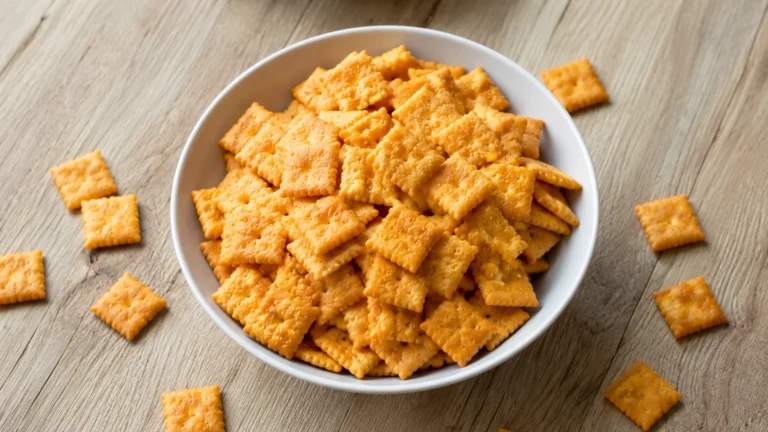
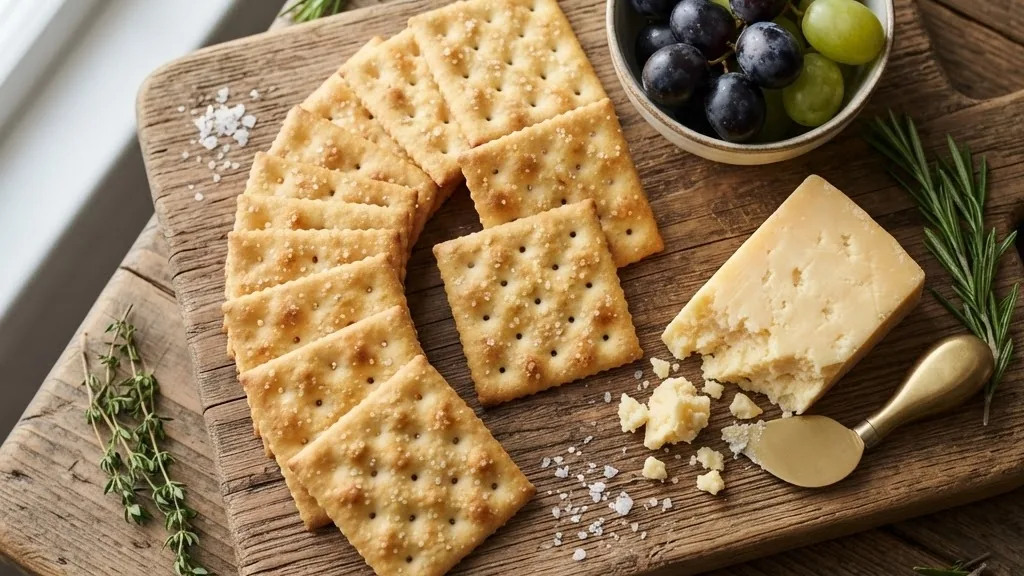
Club crackers nutrition comes down to one small serving that most people quietly double: four crackers, 14 grams, 70 calories. That is the number printed on the Keebler box, and it is the one to check when deciding whether a handful before dinner is worth it. Club crackers are those buttery, faintly sweet rectangles with the scalloped edge, and they taste richer than a plain saltine for a reason you can read straight off the panel.
By Tastybend Nutrition Desk. Last reviewed July 7, 2026.
Here is the short answer. One serving of Club Original is 4 crackers (14 g) and gives you 70 calories, 3.5 g of total fat, 0.5 g of saturated fat, 135 mg of sodium, 10 g of total carbohydrate, 1 g of sugar, and 1 g of protein. That is about 4% of a 2,000-calorie day, 4% of the Daily Value for fat, and 6% of the Daily Value for sodium. Small numbers, but the serving is small too, and that is the whole story.
| Nutrient | Per 4 crackers (14 g) | % Daily Value |
|---|---|---|
| Calories | 70 | 4% |
| Total fat | 3.5 g | 4% |
| Saturated fat | 0.5 g | 3% |
| Trans fat | 0 g | — |
| Sodium | 135 mg | 6% |
| Total carbohydrate | 10 g | 4% |
| Dietary fiber | less than 1 g | 1% |
| Total sugars | 1 g | — |
| Added sugars | 1 g | 2% |
| Protein | 1 g | 2% |
Percent Daily Values are based on a 2,000-calorie diet, the reference the FDA sets for the Nutrition Facts panel. The rest of this page walks through what those numbers mean in a real pantry, how the serving size can mislead you, and how Club stacks up against Ritz and saltines when you put them side by side on a kitchen scale.
The Club Original label, line by line
Read a cracker label from the top and never skip the serving size, because every other number on the panel hangs off it. For Club Original the serving is 4 crackers, which the box lists as 14 grams. A standard 13.7 oz box holds roughly 27 of those servings, which sounds like a lot until you watch how fast a sleeve disappears during a cheese board.
Calories land at 70 per serving. Total fat is 3.5 g, and only 0.5 g of that is saturated, with no trans fat listed. Sodium is 135 mg. Carbohydrate totals 10 g, of which fiber is under a gram and sugar is 1 g. Protein rounds to 1 g. The two lines people react to most are the fat and the sodium, so each gets its own section below. First, the calories, because that is the question people ask before any other.
Where the 70 calories come from
Seventy calories in 14 grams is a dense little snack, and the split tells you why Club tastes the way it does. Roughly 54% of the calories come from carbohydrate, about 40% come from fat, and only around 6% come from protein. That fat fraction is what separates Club from a lean cracker. The soybean oil near the top of the ingredient list is doing the flavor work, and it is why these taste buttery even though there is no butter in them.
The label puts four crackers at around 14 grams, and the portion weight is honest. The thing to remember is that 70 calories assumes you stop at four. Most people eat six to ten crackers in a sitting without noticing, which quietly turns a 70-calorie snack into 105 to 175 calories. The panel is accurate. Our hands are the variable.
There is also a database version of these numbers worth knowing. USDA-style analytic values for the same cracker come in at about 69 calories, 3.2 g of fat, 127 mg of sodium, and 9.3 g of carbohydrate per 14 grams. Those are the unrounded figures behind the tidy label. The FDA lets manufacturers round on the panel, which is why the box shows 70 calories and 135 mg of sodium while the raw lab data sits just underneath. For everyday use the label figures are what matter, but it is reassuring when the two agree within rounding, because that is how you tell a label is trustworthy.
The serving-size trap: four crackers is smaller than you think
The single most useful habit is weighing snack foods once, just to calibrate your eyes. Four Club crackers is a modest stack, roughly what fits in a cupped palm. USDA and FDA set serving sizes on the label using a reference amount meant to reflect what people typically eat in one sitting, but reference amounts are averages, not permission slips. Your actual portion is up to you.
Here is why this matters for club crackers nutrition specifically. Because the base serving is only 70 calories, every doubling feels harmless, yet the sodium and fat scale right along with it. Eat twelve crackers and you are at 210 calories, about 10.5 g of fat, and 405 mg of sodium before anything goes on top of them. Cheese, peanut butter, and deli meat then stack their own numbers on. The cracker is rarely the whole snack, so count what rides on top too.
Sodium: 135 mg per serving, in real context
Sodium is where it pays to slow down. A serving of Club delivers 135 mg, which the FDA counts as 6% of the 2,300 mg Daily Value. On its own that is moderate, not alarming. The catch is that crackers are a vehicle food, almost never eaten alone, and the average American already takes in about 3,400 mg of sodium a day according to the CDC, well above the 2,300 mg limit.
So the honest read is this. One serving of Club is a small sodium contributor. Three servings during a movie, paired with a salty cheese and a cured meat, can push a single snack past 500 mg from the crackers alone. If you are watching blood pressure, nutrition.gov has plain guidance on trimming sodium, and the move is not to fear one cracker but to count the whole plate. Over a day’s running tally, crackers are usually a mid-size line item, not the headline.
- 1 serving (4 crackers): 135 mg sodium, 6% DV
- 2 servings (8 crackers): 270 mg sodium, about 12% DV
- 3 servings (12 crackers): 405 mg sodium, about 18% DV
The sugar and fat picture
Sugar surprises people on this label. Club is faintly sweet, and there is a reason: sugar and high fructose corn syrup both appear in the ingredient list. Even so, the total lands at just 1 g of sugar per serving, with 1 g of that flagged as added sugars, which is 2% of the Daily Value. That is a trace amount. The sweetness you taste is doing a lot of flavor work with very little actual sugar, which is a fair trade.
On fat, 3.5 g total with 0.5 g saturated and no trans fat is a clean profile for a buttery-style cracker. Saturated fat is the number cardiologists care about most, and half a gram is low. Compared with genuinely rich crackers, Club keeps saturated fat modest because the recipe leans on soybean oil rather than palm oil or butter. It is not a health food, but the fat line is not the problem some assume it is.
Club vs Ritz vs saltines: the versus table
This is the most useful comparison, because these three sit next to each other in every grocery aisle and people swap them without checking the panel. One caution before you read the table: the serving sizes are not identical. Club and Ritz both count by their own weights, and saltines use a five-cracker serving, so each product is listed at its own labeled serving rather than forced to match.
| Product | Serving | Calories | Fat | Sat fat | Sodium | Carbs | Protein |
|---|---|---|---|---|---|---|---|
| Club Original | 4 crackers (14 g) | 70 | 3.5 g | 0.5 g | 135 mg | 10 g | 1 g |
| Ritz Original | 5 crackers (16 g) | 80 | 4.5 g | 1 g | 135 mg | 10 g | 1 g |
| Premium saltines | 5 crackers (15 g) | 70 | 1.5 g | 0 g | 135 mg | 12 g | 1 g |
The pattern is clear once it is on one grid. Ritz is the richest of the three, with the most fat and saturated fat per serving, which matches how buttery it tastes. For the full breakdown on that one, see the Ritz crackers nutrition label guide. Saltines are the leanest on fat but carry a touch more carbohydrate and no fat to slow digestion, and their quirks are covered in the saltine crackers nutrition writeup. Club sits in the middle: richer than a saltine, a hair lighter than a Ritz, with the same 135 mg sodium as both.
Gram for gram the numbers converge more than the packaging suggests. All three hover near 5 calories per gram and all three carry similar sodium density. The real difference is texture and fat, not some dramatic nutrition gap. Pick the one you actually enjoy at the portion you plan to eat, and you have made a reasonable call.
Does Club fit keto, low-calorie, or low-sodium eating
People come to a cracker label with a specific diet in mind, so here are answers for the three most common. For keto, Club does not fit well. At 10 g of carbohydrate per 4 crackers and under a gram of fiber, the net carbs are close to the total, and a strict keto day rarely has room for that from a snack that also is not filling. Skip it on keto.
For low-calorie eating, Club is workable if you respect the portion. Seventy calories buys you a satisfying crunch, and paired with a protein like tuna or cottage cheese it becomes a real snack instead of empty crunch. For low-sodium plans, one serving at 135 mg is fine occasionally, but crackers are an easy place for sodium to creep, so treat them as a sometimes food and count every serving. For the crunch with less sodium, an unsalted-top cracker is the better pick.
One more common question is about the whole box. A 13.7 oz box holds roughly 27 servings, so if you finished it you would be looking at about 1,890 calories, close to 95 g of fat, and around 3,645 mg of sodium spread across those servings. Nobody eats a box in one go, but the math is a useful gut check on how a snack you think of as light adds up over a week of grazing. Portioning by the serving and letting the box last keeps the numbers exactly where the label says they should be.
How to read the Club label yourself
If you only remember one skill from this page, make it this one. Reading a Nutrition Facts panel takes about twenty seconds once you know the order, and it works on any packaged food, not just crackers. Here is the exact sequence to use every time.
- Find the serving size first (4 crackers, 14 g) and decide honestly how many you will eat.
- Multiply everything by your real portion. Two servings means doubling calories, fat, and sodium.
- Check calories, then look at fat and saturated fat as separate lines.
- Read sodium in milligrams and glance at its %DV to gauge how much of your day it uses.
- Scan carbohydrate, then subtract fiber to estimate net carbs if you track them.
- Check added sugars, which the FDA now breaks out from total sugars on the panel.
- Note protein last, since crackers are rarely a meaningful protein source.
USDA FoodData Central is a good backstop when a box is missing or smudged, because it lists reference values for crackers that line up closely with the printed label. The FDA sets the format and the %DV math, and nutrition.gov translates all of it into plain steps for anyone who wants the consumer version.
Smarter ways to use Club crackers
Nobody has to stop eating a cracker they enjoy. It can stay in the pantry. What helps are the habits that keep the snack in check, because a cracker is only as good as what you put on it and how many you stack.
- Pair four crackers with a protein (tuna, cottage cheese, turkey) so the snack actually holds you.
- Portion into a small bowl instead of eating from the sleeve, which is the single best guard against doubling.
- Choose an unsalted-top or reduced-sodium cracker on days your other meals are already salty.
- Skip a second salty topping. Cheese plus a cured meat plus the cracker triples the sodium fast.
- Use them as a crunch layer, not the whole snack, so 70 calories does the flavor and the protein does the filling.
Frequently asked questions
How many calories are in Club crackers?
One serving of Club Original is 4 crackers (14 g) and contains 70 calories. If you eat eight crackers, that is 140 calories, and twelve crackers is 210 calories. The per-cracker figure is roughly 17 to 18 calories each.
How much sodium is in a serving of Club crackers?
A serving of 4 crackers has 135 mg of sodium, which is 6% of the FDA Daily Value of 2,300 mg. Two servings brings that to 270 mg, and the number climbs quickly if you add salty toppings.
Are Club crackers healthy?
They are a moderate snack, not a health food. At 70 calories with 3.5 g of fat and only trace sugar, a single serving is reasonable, but the portion is small and the sodium adds up across servings. They are fine as part of a balanced day if you watch how many you eat and what you top them with.
Do Club crackers have sugar?
Yes, but very little. The panel lists 1 g of total sugar per serving, all of it added, which is 2% of the Daily Value. The recipe includes sugar and high fructose corn syrup, which is why the crackers taste faintly sweet despite the low sugar total.
Are Club crackers keto-friendly?
Not really. Four crackers carry 10 g of carbohydrate with under a gram of fiber, so net carbs are close to the full 10 g. That is a large share of a strict keto carb budget for a snack that does not keep you full, so they are best left off a keto plan.
How do Club crackers compare to Ritz?
They are close. Ritz runs slightly higher in calories and fat per serving (80 calories and 4.5 g fat versus Club at 70 calories and 3.5 g fat), while both carry 135 mg of sodium. Club is a touch lighter and less rich, but the two are more alike than the boxes suggest.
Among cracker panels, Club is one of the more honest ones: the serving is small but weighed accurately, the fat is modest, and the sodium is average for the category. The number that trips people up is never on the box. It is the second, third, and fourth handful. Weigh a serving once, keep the sleeve out of arm’s reach, and Club stays the pleasant little crunch it is meant to be.