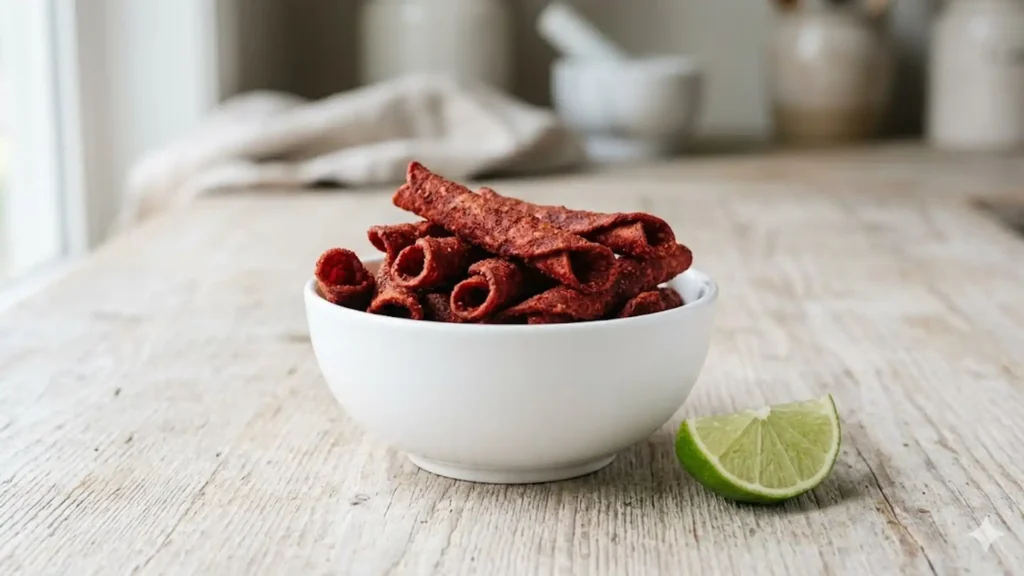
A standard 1-ounce serving of Takis Fuego, which is about 12 rolled chips, has 150 calories, 8 grams of fat, 17 grams of carbohydrate, 2 grams of protein, and 420 milligrams of sodium. That is the number on the side of the bag. The number that actually matters is the one almost nobody eats: a single serving. Most people empty a small bag in one sitting, and that is where the calories and especially the sodium climb fast.
I read a lot of snack labels for this site, and Takis are a clear example of a product whose headline figures look tame until you measure how much you really eat. The per-serving line is reasonable for a fried tortilla chip. The per-bag line is a different story. So let me walk through the full panel, show what happens across the bag sizes you actually buy, compare Takis to the other spicy snacks people weigh them against, and explain what those ingredients are doing.
Takis Fuego Nutrition Facts Per Serving
Here is the complete panel for one labeled serving of Takis Fuego, the original purple-bag hot chili pepper and lime flavor. A serving is 28 grams, roughly 12 pieces.
| Nutrient | Per 1 oz (28 g, ~12 chips) | % Daily Value* |
|---|---|---|
| Calories | 150 kcal | – |
| Total fat | 8 g | 10% |
| Saturated fat | 2.5 g | 13% |
| Trans fat | 0 g | – |
| Cholesterol | 0 mg | 0% |
| Sodium | 420 mg | 18% |
| Total carbohydrate | 17 g | 6% |
| Dietary fiber | 1 g | 4% |
| Total sugars | 1 g | – |
| Protein | 2 g | – |
| Calcium | 15 mg | 2% |
| Potassium | 54 mg | 2% |
*Percent Daily Values are based on a 2,000-calorie diet. Your own numbers may run higher or lower depending on your calorie needs.
The figure that defines Takis is sodium. At 420 milligrams, a single 12-chip serving uses up about 18 percent of the 2,300-milligram daily ceiling that federal guidance recommends, and that ceiling is for the whole day. The fat is moderate for a fried chip at 8 grams, the saturated fat stays modest at 2.5 grams, and there is no cholesterol because the chips are made from corn, not animal fat. Protein is negligible at 2 grams, which is normal for a corn snack. The carbohydrate, 17 grams, is the corn masa itself.
What the panel does not capture is portion behavior. Twelve chips is a small handful, and Takis are engineered to be eaten quickly, so the realistic question is not what one serving costs but what your actual portion costs. That is the next table.
What a Whole Bag Actually Costs
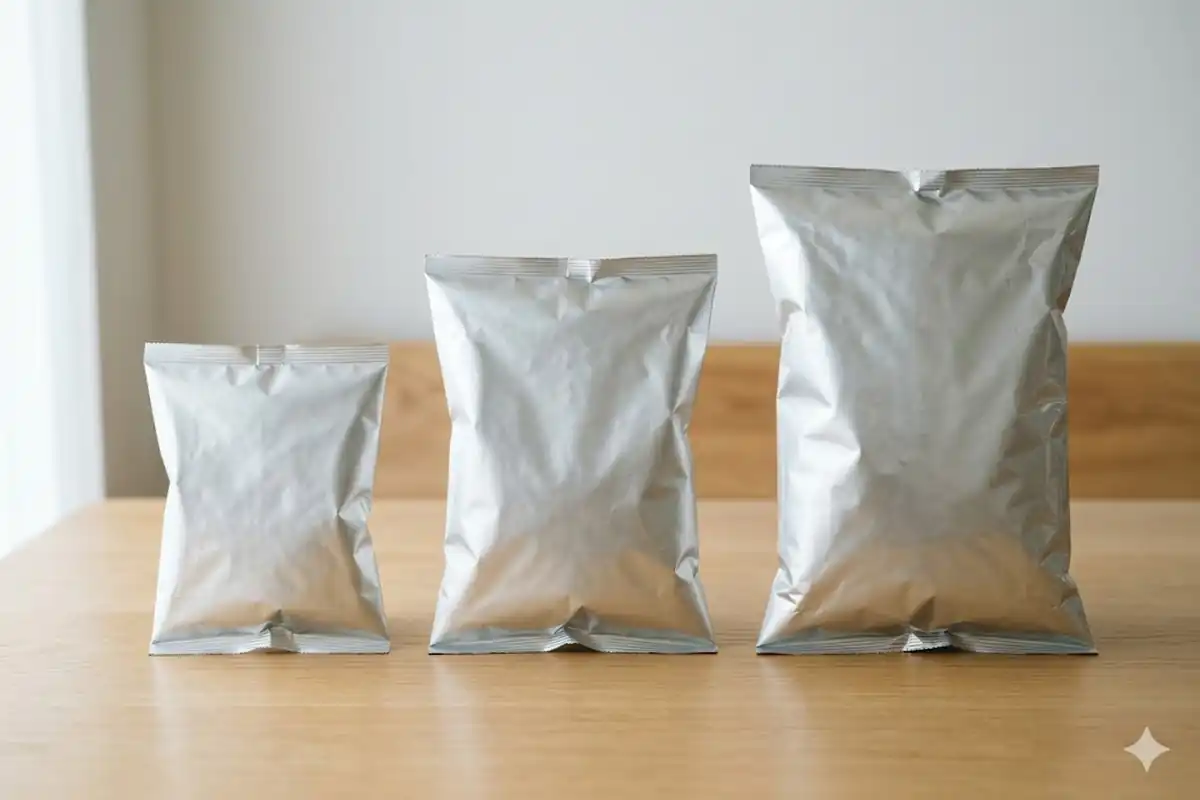
Takis come in several bag sizes, and because every chip is identical, the nutrition scales in a straight line. If you know one serving is 150 calories and 420 milligrams of sodium, you can estimate any portion by counting servings. Here is the ladder across the bags you see on the shelf.
| Takis Fuego bag | Servings | Calories | Sodium |
|---|---|---|---|
| 1 oz (trial) | 1 | 150 kcal | 420 mg |
| 4 oz (snack) | ~4 | 600 kcal | 1,680 mg |
| 9.9 oz (family) | ~10 | 1,500 kcal | 4,200 mg |
The number that should stop you is the sodium in the family-size bag. A 9.9-ounce bag holds roughly ten servings, which adds up to about 1,500 calories and more than 4,000 milligrams of sodium, nearly double the recommended daily limit in a single bag. Even the 4-ounce snack bag, the one that feels like a personal portion, carries about 600 calories and 1,680 milligrams of sodium, which is most of a day’s sodium budget. The little 1-ounce trial bag is the only one that matches the label serving.
This is the practical heart of the Takis question. The chips are not unusually caloric per gram; they are just easy to overeat, and the sodium is concentrated enough that a normal-feeling portion takes a large bite out of the day. The CDC’s overview of sodium and health notes that most Americans already eat well past the recommended amount, and a single shared bag of Takis can supply a full day’s worth on its own.
How Takis Compare to Other Spicy Snacks
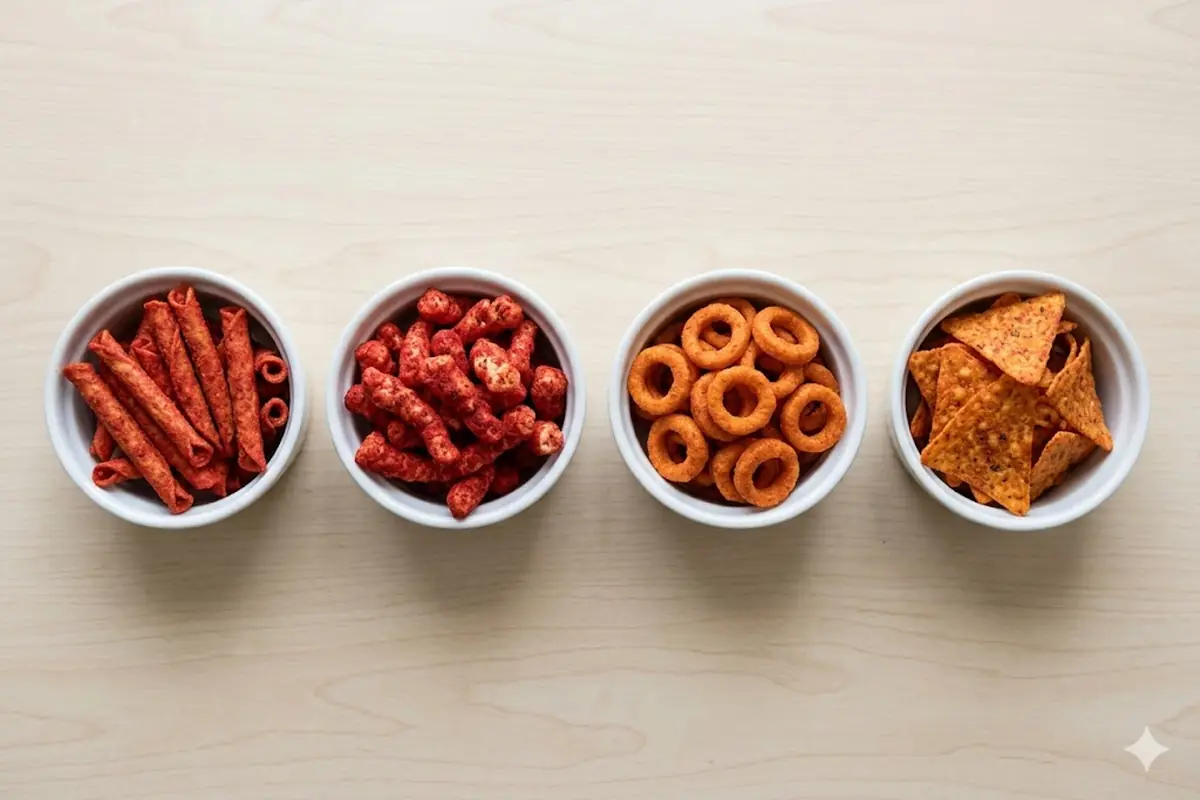
Numbers only mean something next to alternatives, and Takis live in a crowded shelf of hot, crunchy snacks. Here is how one 1-ounce serving stacks up against the chips people most often compare them to.
| Spicy snack (1 oz) | Calories | Total fat | Sodium |
|---|---|---|---|
| Takis Fuego | 150 kcal | 8 g | 420 mg |
| Flamin’ Hot Cheetos | 160 kcal | 10 g | 250 mg |
| Hot Funyuns | 140 kcal | 7 g | 280 mg |
| Doritos Spicy Sweet Chili | 150 kcal | 8 g | 210 mg |
| Baked tortilla chips (plain) | 120 kcal | 2 g | 120 mg |
The comparison most people get wrong is Takis versus Flamin’ Hot Cheetos. They land almost on top of each other, both around 150 to 160 calories and both heavy on sodium, so picking one over the other for nutrition reasons is splitting hairs. The bigger contrast is texture and density: Takis are rolled and fried dense, so a 1-ounce serving is a smaller-looking pile than the same weight of puffed Cheetos, which can make Takis feel easier to overeat. If you want a genuinely lighter spicy crunch, a baked chip or an air-fried homemade version is the only line in the table that moves the calorie and fat numbers down in a meaningful way.
There is also a flavor-by-flavor wrinkle worth knowing. The numbers above are for the purple-bag Fuego, the most popular Takis variety, but the lineup has grown. The Blue Heat, Nitro, and Xplosion flavors sit within a few calories and a few dozen milligrams of sodium of Fuego, because the base chip is the same and only the seasoning differs. The Crunchy Fajita and the newer waffle-shaped and stick formats shift the texture but barely move the nutrition. In practical terms, if you have read the Fuego panel you have read all of them; do not assume a milder-sounding flavor is meaningfully lighter, because it almost never is. The chip body is the calorie and fat source, and that body does not change between flavors.
What Is Actually in a Takis Chip
The panel makes more sense once you know what produces those numbers. A Takis is corn masa flour rolled tight, fried in oil, and dusted with a seasoning blend built around chili pepper and lime. The carbohydrate comes from the corn; the fat comes from the frying oil the masa absorbs; and the sodium and intense flavor come from the seasoning powder, which is where salt, monosodium glutamate, and the chili and lime acids live.
The color is worth a mention because it draws questions. The vivid red coating comes from added dyes, Red 40 Lake and Yellow 6 Lake, the same colorings used across many snack foods. These are approved for use in the United States, though some countries require warning labels on products that contain them. The seasoning also includes the preservative TBHQ to extend shelf life. None of this is unique to Takis; it is the standard formula for a brightly colored, shelf-stable spicy snack. But it does mean Takis are an ultra-processed food rather than a simple corn chip, and that framing matters more than any single ingredient.
For anyone tracking ingredient quality rather than just macros, the takeaway is that the heat and color are doing most of the marketing work while the corn and oil are doing most of the nutritional work. The chips are not poison, and an occasional serving is a normal part of many diets. They are simply a snack to portion deliberately, because the format invites overeating and the sodium adds up quickly.
It also helps to put the corn base in context. Because Takis start from corn masa, they carry a small amount of fiber, about 1 gram per serving, and a trace of plant minerals like potassium and a little calcium from the masa processing. None of that is enough to call them nutritious, but it is worth noting that a corn chip is not nutritionally empty in the way a pure-sugar candy is. The problem is not what the corn brings; it is what the frying and seasoning add on top. The same ounce of plain corn tortilla baked at home would carry roughly half the fat and a fraction of the sodium, which is the cleanest illustration of where the chip’s numbers actually come from.
The Spice, the Stomach, and Common Worries
The most common Takis question after calories is whether the spice itself is harmful. For most people it is not; the burn comes from capsaicin and the seasoning acids, which can irritate the stomach and cause heartburn or stomach ache when eaten in large quantities, especially on an empty stomach. Occasional reports of stomach pain and even red-tinged stool after eating a lot of Takis trace back to the dye and the irritation, not to bleeding, though anyone with persistent symptoms should check with a clinician rather than guess.
For children, the concern is less the spice and more the package behavior: a hot snack that is easy to eat by the handful, high in sodium, and low in anything filling. A serving as an occasional treat is fine; a daily family-size bag is the pattern worth steering away from. Pairing a small portion with something that brings protein or fiber, rather than eating the chips alone, blunts the blood-sugar swing from the refined corn and makes the snack more satisfying for fewer total chips.
The red-stool worry deserves a direct answer because it circulates so widely. The bright dye passes through the digestive tract and can tint stool reddish, which looks alarming but is harmless and temporary. Genuine blood in stool is dark or accompanied by pain and does not clear up the next day. The dye effect does. That said, frequent stomach aches after eating Takis are a real signal that the volume of spice and acid is irritating the stomach lining, and the fix is simply eating less at a time rather than eating them on an empty stomach. People who get heartburn from spicy food will get it from Takis too, and no amount of label-reading changes that; portion size and timing are the only levers.
A Lighter Spicy Crunch at Home
If you like the heat but want to cut the frying oil and control the salt, a homemade version is the single most effective swap. Corn tortillas cut into strips, lightly oiled, and air-fried until crisp, then dusted with chili-lime seasoning, get you most of the texture and almost all of the flavor for a fraction of the fat and a sodium level you set yourself. Our roundup of air fryer snacks walks through the method, and for anyone counting carbs more than calories, the lighter dip and snack ideas in this low-carb snacks collection swap the corn base for something that fits a stricter plan.
None of this is an argument against ever eating Takis. It is an argument for knowing the trade. The drive-through-style convenience of a sealed bag costs you mostly in sodium and overeating, not in any single scary ingredient. Eating a measured serving alongside a glass of water, rather than grazing the whole bag, keeps Takis in the occasional-treat lane where they belong.
If the goal is the rolled shape specifically, that is harder to replicate at home without a press, but the flavor is the easy part. A chili-lime seasoning made from chili powder, a pinch of citric acid or lime zest, paprika for color, garlic powder, and salt covers most of what the Takis dust delivers, and you control exactly how much salt goes on. Toss it on air-fried tortilla strips while they are still warm so it sticks. The result is not identical, but it scratches the same itch for far fewer milligrams of sodium and without the dyes, which is the point for anyone eating spicy snacks more than occasionally.
How a Serving Fits a Daily Plan
If you log your food, a 1-ounce serving of Takis is easy to account for: call it 150 calories, 17 grams of carbohydrate, and 420 milligrams of sodium. The discipline is measuring the portion, because the bag does not portion itself. Twelve chips is the line; everything past that scales up proportionally, and the sodium is the budget that tightens fastest.
For a roughly 2,000-calorie day, one labeled serving leaves plenty of room for the rest of your food. The trouble starts when a snack bag becomes the serving. If you have already eaten salty meals, the 420 milligrams here plus the salt elsewhere can push you past the daily ceiling without a single obviously salty dish. Portioning Takis into a small bowl rather than eating from the bag, and choosing the 1-ounce trial size when you want a controlled amount, keeps a spicy snack from quietly dominating the day’s sodium.
One more practical note for anyone using Takis as part of a deliberate treat: because the chips are low in protein and fiber, they do little to keep you full, so they work best as a flavor accent rather than a hunger fix. Eaten as a small side to a meal that already has protein, they satisfy a craving without leaving you reaching for more an hour later. Eaten alone as a meal replacement, they do the opposite, delivering a fast spike of sodium and refined carbohydrate with almost nothing to anchor your appetite. The same ounce of chips lands very differently depending on what surrounds it, and that context, not the label alone, is what determines whether a serving of Takis fits your day.
Where These Numbers Come From
The figures here reflect the published nutrition data for Takis Fuego sold in the United States. Values can shift slightly when a recipe or supplier changes, so the panel on the bag is always the final word for a specific product. For the underlying nutrient data behind corn snacks and fried foods, the USDA FoodData Central database is the reference standard, and the FDA’s interactive Nutrition Facts label explains how to read every line on the panel above.
For more snack breakdowns in the same format, see our look at the Goldfish nutrition facts and the full saltine cracker panel.
Frequently Asked Questions
How many calories are in a bag of Takis?
A 1-ounce serving of Takis Fuego is about 12 chips and has 150 calories. A 4-ounce snack bag holds roughly four servings, or about 600 calories, and the 9.9-ounce family bag holds around ten servings, close to 1,500 calories. The calorie count depends entirely on how much of the bag you eat.
How much sodium is in Takis?
One 1-ounce serving of Takis Fuego contains 420 milligrams of sodium, about 18 percent of the recommended daily limit of 2,300 milligrams. A full 4-ounce bag carries roughly 1,680 milligrams, and a family-size bag can exceed 4,000 milligrams, which is more than the entire daily ceiling on its own.
Are Takis bad for you?
Eaten as an occasional measured serving, Takis are a normal snack and not harmful for most people. The drawbacks show up with portion size: they are high in sodium, low in protein and fiber, made from refined corn, and contain added dyes and the preservative TBHQ. The spice can irritate the stomach in large amounts. The healthiest approach is a small portion rather than a whole bag.
How many Takis are in a serving?
A labeled serving of Takis Fuego is 28 grams, which works out to about 12 chips. That serving provides 150 calories and 420 milligrams of sodium, so counting roughly a dozen chips is the simplest way to keep a single portion in check.