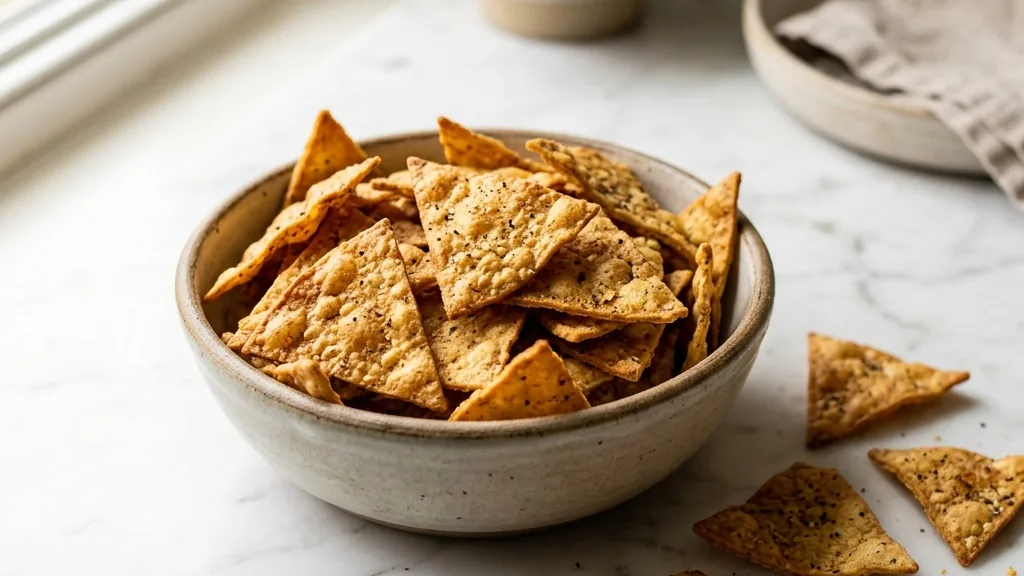
Quick answer: Here is the Quest chips nutrition in one line. One single bag of Quest Tortilla Style Protein Chips (1.1 ounces, about 32 grams) has roughly 140 calories, 19 to 20 grams of protein, about 4 grams of total carbs, and 4.5 grams of fat. That protein number, more than some protein bars, is the whole point: Quest swaps the carbs of a normal chip for protein, while keeping the calories about the same. The catches are the marketing term “net carbs” and the fact that values shift a little by flavor.
Quest chips are one of those products where the front of the bag and the actual panel tell slightly different stories. On the Quest Tortilla Style Protein Chips label, the number that stands out is the protein: about 19 to 20 grams per bag, which is more than some protein bars carry. That is the whole reason this snack exists, so let’s put every number in its place and source it.
Below you’ll find the full macro breakdown, a straight comparison to regular tortilla chips, the ingredient and allergen rundown, and the two or three things the packaging quietly glosses over. Every figure is tied to a source.
Quest chips nutrition facts (per bag)
First, the serving size, because it’s where most chip labels mislead you. With a normal bag of chips, the panel describes a one-ounce serving and the bag holds two or three of them, so the “real” numbers are double or triple what you read. Quest’s single bags are different: the bag is the serving. One 1.1-ounce (about 32-gram) bag is exactly one serving, so the panel is what you actually eat. That honesty makes the math simple.
Here are the core macros for a single bag of the tortilla-style chips, with values cross-checked between the Quest label and USDA FoodData Central:
| Nutrient | Per 1.1 oz bag |
|---|---|
| Calories | about 140 |
| Protein | 19 to 20 g |
| Total fat | about 4.5 g |
| Total carbohydrate | about 4 g |
| “Net carbs” (brand term) | about 3 to 4 g |
| Serving size | 1 bag (1.1 oz / ~32 g) |
Every number here is sourced, and the brand’s published panel and the independent USDA FoodData Central database agree closely, which is reassuring. One caveat worth stating up front: exact numbers move a little between flavors like Nacho Cheese, Ranch, and Hot & Spicy, so always glance at the specific bag in your hand. Quest publishes each one on its product pages.
The protein story
The 19-to-20-gram protein figure is the headline, and it’s worth understanding where it comes from, because it explains everything else about these chips. A regular tortilla chip gets its structure from corn; a Quest chip gets it from a protein blend, mainly milk protein isolate and whey protein isolate. In other words, the “chip” is built out of dairy protein rather than starch.
That single swap is why the carbs are so low and the protein so high. For comparison, you’d need to eat roughly two to three ounces of regular tortilla chips to reach even 5 grams of protein, while a single Quest bag delivers four times that. For anyone tracking protein, whether for fitness, satiety, or a higher-protein diet, that density is the entire appeal. The trade-off is that these are a highly processed, formulated snack, not a whole food, which is a fair thing to keep in mind even when the macros look great.
The net-carb catch
Here’s the catch worth flagging on any label like this. The front of a Quest bag leans on the phrase “net carbs,” advertising something like 3 to 4 net carbs. The important thing to know is that “net carbs” is a marketing term, not a figure the FDA defines or requires on the Nutrition Facts panel. Brands calculate it themselves, usually by taking total carbohydrate and subtracting fiber and certain sweeteners.
That doesn’t make it dishonest, but it does mean you should anchor on the line the FDA does regulate: total carbohydrate, which for these chips is about 4 grams a bag. In this particular case the gap between total and “net” is small, so it barely matters. But it’s a habit worth keeping for every low-carb product you buy, because on some foods the difference between the front-of-bag “net carbs” and the actual total carbohydrate is large. Read the panel, not the billboard.
Quest chips vs. regular chips
So are they actually “better”? It depends entirely on what you’re optimizing for. Calorie-for-calorie, the two are similar; what changes is the makeup of those calories. Here’s the honest side-by-side:
| Per ~1 oz serving | Quest tortilla chips | Regular tortilla chips |
|---|---|---|
| Calories | about 140 | about 140 |
| Protein | 19 to 20 g | about 2 g |
| Total carbs | about 4 g | about 18 to 19 g |
| Fat | about 4.5 g | about 7 g |
| Cooking method | baked | usually fried |
The pattern is clear: same calories, but Quest trades almost all the carbohydrate of a normal chip for protein, and being baked rather than fried trims the fat a little too. That baking detail is the key: it’s why the fat sits around 4.5 grams instead of the 7-plus you’d see in a fried chip. If your goal is more protein and fewer carbs for the same calories, Quest wins decisively. If you just want the taste and texture of a classic fried tortilla chip, or you’re avoiding heavily processed foods, a regular chip is the more natural choice. Neither is “junk” or “health food” in the abstract; they’re built for different jobs. For another protein-forward snack comparison, see our breakdown of Cheez-It nutrition.
Ingredients and allergens
The ingredient list reflects everything above. The protein comes from a blend of milk protein isolate and whey protein isolate, with vegetable oil (sunflower, canola, and/or soybean), a little corn starch and soluble corn fiber for structure, and flavor-specific seasonings. Because the protein is dairy-based, the allergen profile is important:
- Contains milk and soy. Not suitable for anyone with a dairy or soy allergy, and not vegan.
- Gluten-free. They contain no wheat, which makes them an option for gluten-free eaters who still want a crunchy, high-protein snack.
- Baked, not fried. Reflected in the lower fat number.
As always with a formulated snack, the seasonings and additives vary by flavor, so the allergen statement on your specific bag is the final word. If you track sodium, check the panel too, seasoned snack chips can run high, and the exact figure depends on the flavor. For a saltier comparison point, our Takis nutrition facts page shows how a conventional spicy chip stacks up.
Reading the rest of the label
Macros get the attention, but on a seasoned snack chip the next line worth checking is sodium. Quest chips, like most flavored chips, carry a meaningful amount: depending on the flavor, a bag runs roughly 280 to 340 mg of sodium, which is somewhere around 12 to 15 percent of the 2,300 mg daily limit the FDA uses as a reference. That’s not alarming for one bag, but it adds up if you snack on several, and it’s the number low-sodium eaters should watch more closely than the carbs.
A few other lines are worth a glance. Fiber typically lands around 1 to 2 grams, which is part of how the brand arrives at its “net carb” figure. Saturated fat is low, usually about 1 to 1.5 grams of the 4.5 total. The percent Daily Value column is where these chips look most ordinary, strong on protein, unremarkable on everything else, which is exactly what you’d expect from a snack engineered around a single macro. Reading the whole panel, not just the protein, is the habit that keeps you honest about what a food really is.
Is the protein worth the price?
Here’s the angle the label won’t give you, and one of the most common questions. Quest chips aren’t cheap: a single bag typically costs somewhere around $1.75 to $2.50, noticeably more than a comparable serving of regular chips. The question is whether you’re paying for the protein or just the marketing.
Run the math and it’s fair. At roughly $2 for about 20 grams of protein, you’re paying on the order of 10 cents per gram of protein, which is broadly in line with protein bars and cheaper than many ready-to-drink shakes. That’s the honest way to judge a “high-protein” snack: not by the calories, but by the cost and quality of the protein you’re actually buying. By that measure Quest chips are a legitimate, if premium, way to hit a protein target while satisfying a chip craving, just don’t mistake the price for proof that they’re a health food. They’re a well-formulated convenience product, priced like one, and judging them on that basis, rather than the marketing on the front of the bag, is exactly how you decide whether they belong in your cart.
Who they’re actually good for
Strip away the marketing and these chips fit a few specific people well. If you’re chasing a daily protein target, they’re an easy 20 grams in a snack that feels like a treat. If you eat low-carb or keto, the roughly 4 grams of total carbs per bag fit almost any plan, which is why they show up so often in the kind of low-carb eating we cover in our keto diet guide. And if you want a gluten-free crunch, they deliver.
They’re a weaker pick if you’re mainly after a whole, minimally processed food, or if you have a milk or soy allergy, in which case they’re simply off the table. And while the protein is real and useful, a bag is still a processed snack, not a meal; it pairs best alongside whole foods rather than replacing them. Judged honestly, Quest chips are a genuinely useful high-protein, low-carb snack, as long as you read the total-carb line and remember the numbers are per bag, not per handful.
A label-reader’s tips before you buy
Across these panels, a short routine works well for anyone picking up Quest chips, or any “high-protein” snack, for the first time. None of it takes more than a few seconds in the aisle.
- Check the flavor’s own panel. Protein can swing between about 18 and 21 grams and sodium can move by 50 mg or more across Nacho Cheese, Ranch, and Hot & Spicy. The category numbers here are close, but your exact bag is always the final authority, so it pays to flip it over for a two-second check before you commit.
- Read total carbohydrate, not “net carbs.” It’s the one FDA-regulated line, and on low-carb products it’s the only figure you can trust without doing math.
- Glance at sodium if you eat several. One bag near 300 mg is fine; three bags is most of a meal’s worth of salt.
- Judge protein by cost, not hype. Around 10 cents per gram of protein is a useful benchmark; above that, a cheaper protein source usually makes more sense.
The overlooked detail in all of this is consistency: because the bag is a single serving, Quest chips are one of the few snacks where what you read is exactly what you eat, with no per-serving multiplication to trip you up. That alone makes them easier to fit into a tracked diet than almost any chip on the shelf, even before you get to the protein. That’s the kind of small, practical truth a label gives up only if you actually stop and read it, which, again, is the whole job here at TastyBend.
Frequently asked questions
How much protein is in a bag of Quest chips?
About 19 to 20 grams of protein per single 1.1-ounce bag, depending on the flavor. The protein comes from milk and whey protein isolates rather than corn, which is why a chip can carry that much.
How many carbs are in Quest chips?
About 4 grams of total carbohydrate per bag, which the brand markets as roughly 3 to 4 u0022net carbs.u0022 Anchor on the total carbohydrate line, since u0022net carbsu0022 is a marketing term the FDA doesn’t define.
How many calories are in Quest chips?
About 140 calories per single bag, similar to a one-ounce serving of regular tortilla chips. The difference is in the makeup: Quest replaces most of the carbs with protein.
Are Quest chips healthy?
They’re a high-protein, low-carb, gluten-free snack that’s baked rather than fried, which suits protein-focused and low-carb eaters well. But they’re a formulated, processed product, not a whole food, and they contain milk and soy, so they’re best as an occasional snack alongside whole foods, not a replacement for them.
Is the whole bag one serving?
Yes. Quest’s single bags are one serving of 1.1 ounces (about 32 grams), so the numbers on the panel are exactly what you eat, unlike standard chip bags that hold two or three servings.
The bottom line
Quest chips nutrition comes down to one clean trade: about 140 calories a bag, but with the carbs of a normal chip swapped out for roughly 20 grams of protein, plus the bonus of being baked and gluten-free. The numbers check out against both the manufacturer’s label and USDA FoodData Central, the serving size is refreshingly honest at one bag, and the only real catch is the “net carbs” marketing, so read the total-carb line instead. If you want more protein and fewer carbs without changing your calorie budget, they earn their shelf space. Just remember they’re a processed snack doing one job well, not a health food, and check the specific flavor’s panel, since the numbers drift a little from bag to bag.
Sources: Quest Nutrition published product labels, questnutrition.com; USDA FoodData Central; FDA Nutrition Facts labeling standards (note: “net carbs” is not an FDA-defined term). Values vary by flavor; check the specific bag.