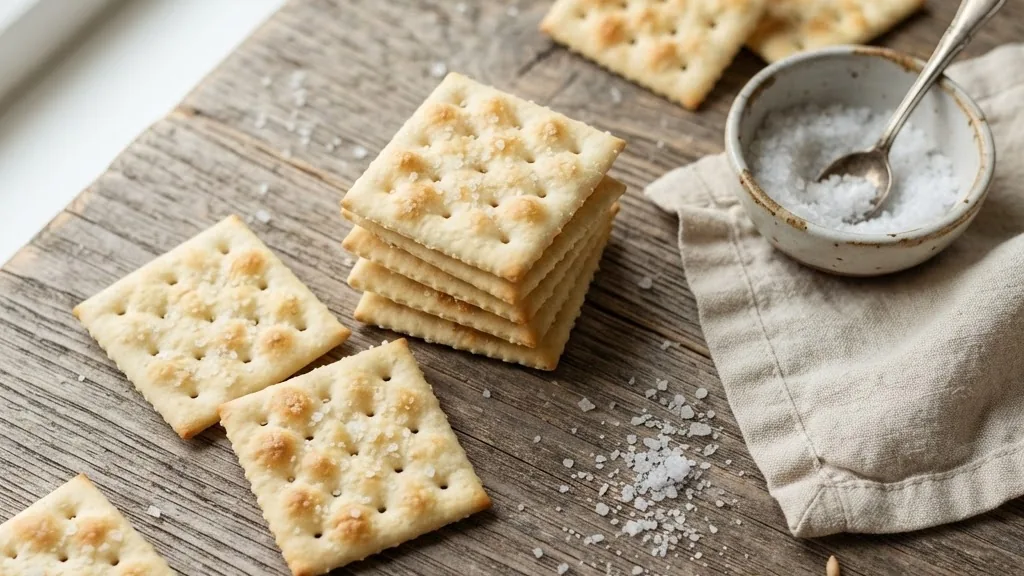
Saltines nutrition comes down to a short, honest label: 70 calories, 135 mg of sodium, and 12 grams of carbohydrate in five crackers. Nabisco Premium Original is a pantry regular, often reached for while a pot of soup is going, and its panel rewards a close read. There is not much to a saltine, which is exactly why people reach for them when they feel off, when a recipe needs a crunchy base, or when they want a snack that will not blow up an afternoon. The catch is that the numbers per serving look tiny, and the numbers per sleeve do not.
By Tastybend Nutrition Desk. Last reviewed July 7, 2026.
Here is the fast answer. One standard serving of saltines is five crackers, about 16 grams. That serving gives you 70 calories, 1.5 g total fat, 0 g saturated fat, 135 mg sodium, 12 g total carbohydrate, 0 g sugar, and 1 g protein. The macros lean almost entirely on refined carbohydrate, with a small amount of oil and a whisper of protein. Figures below come from the Nabisco Premium label, cross-checked against USDA FoodData Central and the FDA Nutrition Facts standards, cited in place.
What is in a serving of saltines
A saltine is close to the simplest cracker you can buy. Enriched flour, a little soybean oil, salt, yeast, and baking soda. No cheese powder, no butter blend, no seasoning. That plain build is why the label reads so clean, and it is why saltines work as a baseline when comparing snackier crackers against each other. On a kitchen scale, five Premium crackers should land right around that 16 gram serving, give or take a crumb.
The one number that does real work here is sodium. Salt is in the name, salt is on the top of each cracker, and salt is most of what makes a saltine taste like a saltine. Everything else on the panel is either small or zero. There is no sugar, no saturated fat to speak of, and no cholesterol. That combination is what makes people assume saltines are a free food. They are not free, but they are close to it if you actually stop at one serving.
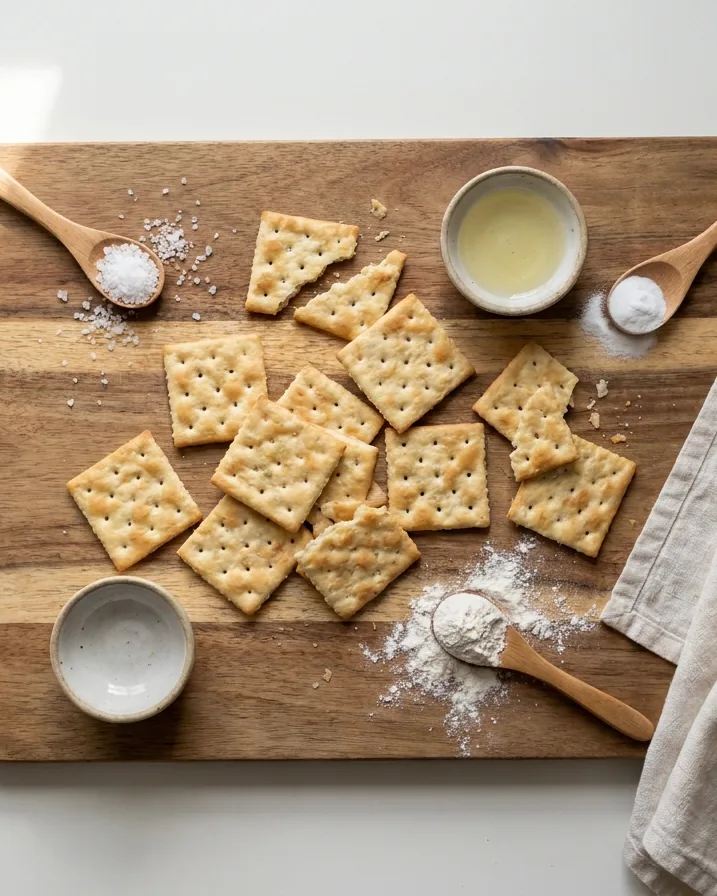
Saltines nutrition facts table (per 5 crackers)
This is the Nabisco Premium Original label, per the 5 cracker (16 g) serving. Percent Daily Value follows the FDA reference amounts for a 2,000 calorie diet.
| Nutrient | Per 5 crackers (16 g) | % Daily Value |
|---|---|---|
| Calories | 70 | – |
| Total fat | 1.5 g | 2% |
| Saturated fat | 0 g | 0% |
| Trans fat | 0 g | – |
| Cholesterol | 0 mg | 0% |
| Sodium | 135 mg | 6% |
| Total carbohydrate | 12 g | 4% |
| Dietary fiber | less than 1 g | 2% |
| Total sugars | 0 g | – |
| Protein | 1 g | – |
If your box is Zesta instead of Premium, the panel shifts a little. Zesta Original lists 60 calories and 220 mg sodium for its 5 cracker serving, with the same 12 g of carbohydrate and 0 g of sugar. Same idea, more salt per bite. When swapping one brand for the other, the sodium gap is the first thing to check.
Where the 70 calories come from
Almost all of a saltine is starch. Of the 70 calories in a serving, roughly 48 come from the 12 grams of carbohydrate, a handful come from the 1.5 g of fat, and only about 4 come from the single gram of protein. That is why saltines register as a fast, light carb rather than a filling snack. There is no fiber to slow digestion and no fat or protein to speak of to keep you full.
USDA FoodData Central backs this up on its generic saltine entry. Per 100 grams, plain saltines run about 421 calories, which sounds high until you remember a single cracker weighs only about 3 grams. Scaled down, one cracker is roughly 13 calories. That per-100-gram view is useful when a recipe calls for a cup of cracker crumbs, because the number climbs quickly once you are measuring by weight instead of by the handful.
Serving size reality: nobody eats just five
Here is the part the label will not say out loud. Five crackers is a polite number. When someone is under the weather, or standing over a bowl of chili, the real count is closer to ten or fifteen. Double the serving and you are at 140 calories, 24 g of carbohydrate, and 270 mg of sodium. Triple it, which is easy with a soup, and you are past 400 mg of sodium before you have touched the soup itself.
This is not a reason to fear saltines. It is a reason to read the serving line first, every time, which the FDA specifically redesigned the Nutrition Facts label to make easier. The calories per serving are printed large on purpose. The single most useful habit with any cracker is to count out a portion instead of eating from the sleeve, because the sleeve does not know when to stop.
Sodium: the number that matters most
Sodium is the headline for saltines, full stop. At 135 mg per serving, five crackers cover about 6 percent of the FDA Daily Value, which is 2,300 mg per day. That is modest. The problem is scale. A full sleeve of Premium is roughly four servings, so a sleeve is around 540 mg of sodium, close to a quarter of the day, from crackers alone. With Zesta at 220 mg per serving, a sleeve pushes toward 880 mg.
nutrition.gov and the FDA both flag sodium as a nutrient most Americans overshoot, and refined snack foods are a common reason why. None of this means skipping saltines. It means treating them like the salted food they are. If your soup is already salty, or you are watching blood pressure, the cracker count is a real lever. For the crunch without the salt load, the unsalted-top version drops sodium sharply while keeping the calories and carbs about the same.
Carbs, sugar, and how saltines fit keto or low-cal eating
Saltines are a refined carbohydrate with essentially no sugar, which surprises people who assume anything crunchy and processed must be sweet. Zero grams of sugar on the panel is real. But 12 g of total carbohydrate with under a gram of fiber means the net carbohydrate is still around 11 to 12 g per serving, and that matters if you are counting.
For keto, saltines are a poor fit. A five cracker serving alone can eat a large slice of a strict 20 to 30 g daily carb budget, and nobody stops at five. For general low-calorie eating they are fine in a measured portion, because 70 calories buys you a satisfying crunch. What they do not buy you is staying power. With no fiber and only 1 g of protein, saltines digest fast and leave you looking for the next thing. To make crackers actually hold you over, pair them with protein or fat, covered further down.
Saltines vs Ritz vs Cheez-It
The clearest way to see what a saltine is, and is not, is to line it up against two crackers people compare it to. Below is a per-label look. Note the serving sizes differ, which is exactly the kind of thing worth flagging in these panels, because a straight calorie number lies if the portions are not the same size.
| Cracker | Serving | Calories | Total fat | Sodium | Carbs | Protein |
|---|---|---|---|---|---|---|
| Saltines (Premium) | 5 crackers (16 g) | 70 | 1.5 g | 135 mg | 12 g | 1 g |
| Ritz Original | 5 crackers (16 g) | 80 | 4.5 g | 130 mg | 10 g | 1 g |
| Cheez-It Original | 27 crackers (30 g) | 150 | 8 g | 230 mg | 17 g | 3 g |
Gram for gram, the saltine is the leanest of the three on fat. Ritz carries three times the fat because of the added oil and butter flavor that give it that rich snap, and that panel is broken down in detail in the Ritz crackers nutrition label writeup. Cheez-It looks heavier here mostly because its serving is nearly double the weight, plus it adds real cheese, which is where the 3 g of protein comes from. Side by side on the scale, the saltine wins on simplicity and loses on flavor, which is the trade every plain cracker makes.
Saltines for nausea and a settling stomach
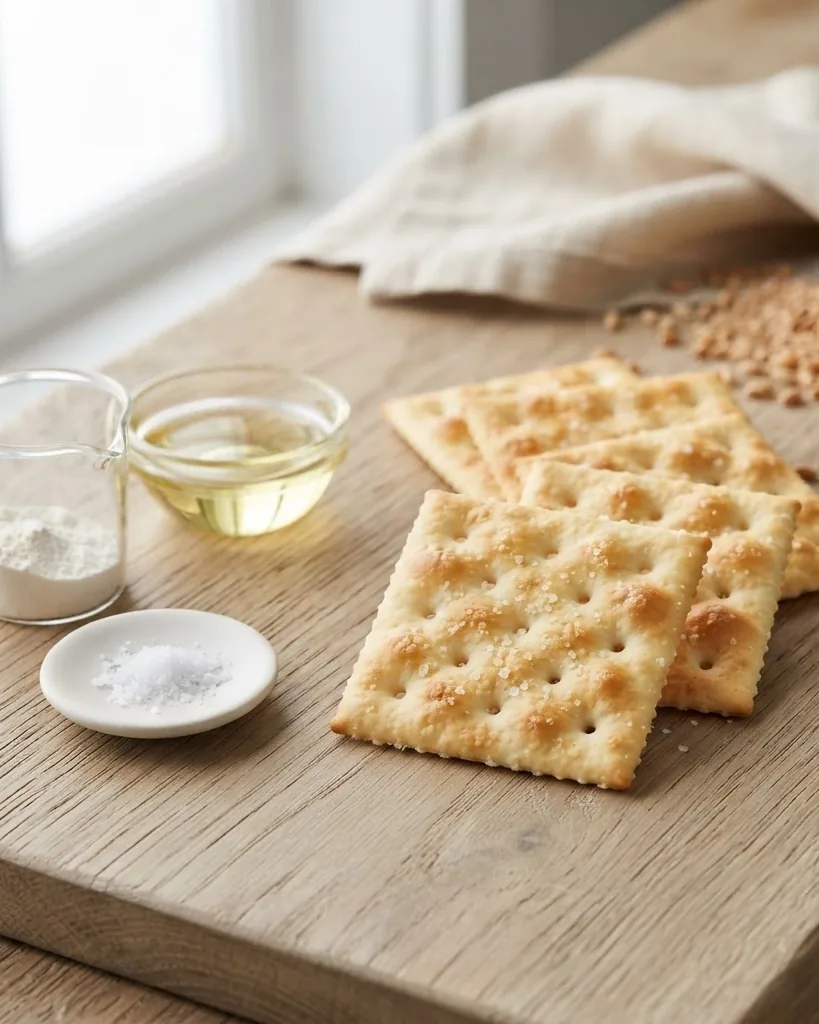
This is the use people ask about most. Saltines are a long-standing go-to for a queasy stomach. The reason they work is not magic. They are bland, low in fat, low in fiber, and mildly salty, which is close to the BRAT-style bland-carb idea that a lot of people fall back on when they cannot face real food.
The low fat matters because fat slows how fast your stomach empties, and a slow, full stomach is the last thing you want when you feel sick. The gentle sodium helps a little if you have lost fluids. And the plain starch is easy to get down when nothing else sounds good. A sleeve in a travel bag covers exactly this. It is not a treatment for anything serious, and it should not be leaned on past a rough morning, but as a first bite back to eating, a few dry saltines have earned their spot in the pantry.
Fiber, enriched grain, and what saltines do not give you
The blank space on a saltine panel is as telling as the numbers. Fiber comes in under 1 gram per serving, which means the carbohydrate hits fast and leaves little behind. Because the flour is enriched, saltines do carry small amounts of added iron and B vitamins, roughly 0.7 mg of iron per serving, but they are not a whole grain food and they will not do the work a whole grain cracker does for fiber or fullness. nutrition.gov encourages making at least half your grains whole, and a plain saltine sits squarely on the refined side of that line.
That is not a strike against them so much as a description of the job they do. Saltines work best as a delivery vehicle: a neutral, crunchy platform for whatever you put on top or dunk them into. Judged as that, they are excellent, because they add so little of their own. Judged as a standalone nutrition source, they are thin, and the label tells you so plainly. Are saltines healthy? The honest answer is that they are neither health food nor junk. They are a plain refined-grain snack that behaves exactly as its short label promises, and the only real risk is eating far more than the serving without noticing.
How a serving fits your day
Put in daily terms, a 5 cracker serving of saltines is a small line item. It is 70 of a typical 2,000 daily calories, about 4 percent of the FDA total carbohydrate Daily Value of 275 g, and about 6 percent of the sodium Daily Value. Eaten once, as a portioned snack or a soup topper, saltines barely move your day. The math only turns unfriendly when the serving turns into a sleeve, which is why the count keeps coming back. Five is a snack. Twenty is a sodium decision.
How to read a saltine label
Reading a cracker panel takes about ten seconds once you know the order to look. Here is the sequence to run every time, using the FDA Nutrition Facts layout.
- Find the serving size first. For saltines it is 5 crackers. Every other number on the panel is tied to that count.
- Check servings per container so you know how fast a box disappears. A 16 oz box holds about 28 servings.
- Read calories per serving, then multiply by how many you will actually eat, not the label serving.
- Go straight to sodium. For saltines this is the number worth watching at 135 mg per serving.
- Scan total carbohydrate and fiber together to estimate net carbs, which land near 12 g here.
- Confirm sugars and saturated fat, both of which read 0 g on a plain saltine.
Smarter ways to eat saltines and healthier swaps
Saltines are a blank canvas, which is their best feature. A few habits turn them from empty crunch into something that actually holds you over, and a couple of swaps help if sodium or refined grain is a concern.
- Top them with protein. A slice of turkey, a smear of nut butter, or a wedge of cheese adds staying power the cracker cannot give you alone.
- Pair with fat and fiber. Avocado or hummus slows digestion so five crackers feel like a snack instead of a tease.
- Choose unsalted-top saltines when watching sodium. Same calories and carbs, far less salt per serving.
- Portion into a bowl. Counting out 5 or 10 crackers beats grazing straight from an open sleeve.
- Swap to a whole grain cracker when you want fiber. Saltines give under 1 g, and a whole grain option can offer several.
- Use them as a crunchy soup topper rather than the meal, so the salted crackers ride along with real food.
If your goal is a cheesier, more filling crunch, the Cheez-It nutrition label breakdown walks through a very different panel, where the fat and protein tell a different story than the plain saltine.
Frequently asked questions
How many calories are in one saltine cracker?
About 13 to 14 calories per cracker, based on USDA FoodData Central. Five crackers, the standard serving, total 70 calories on the Nabisco Premium label.
How much sodium is in saltine crackers?
135 mg per 5 cracker serving for Nabisco Premium, which is about 6 percent of the FDA Daily Value of 2,300 mg. Zesta runs higher at 220 mg per serving. A full sleeve adds up fast, so watch the count.
Are saltines good for an upset stomach?
They can help as a first bite back to eating because they are bland, low in fat, and low in fiber, which is gentle on a queasy stomach. They are not a medical treatment, and you should see a doctor if symptoms are severe or last more than a day or two.
Are saltine crackers keto friendly?
No. At 12 g of carbohydrate per 5 cracker serving with under 1 g of fiber, saltines use up a large share of a strict keto carb budget, and most people eat more than five at a time.
Do saltines have sugar?
No, a plain saltine lists 0 g of total sugars and 0 g of added sugars on the label. The carbohydrate is starch from enriched flour, not sugar.
Are saltines healthier than Ritz?
On fat, yes. Saltines carry 1.5 g per serving versus about 4.5 g for Ritz, and fewer calories at the same 16 g weight. Both are refined grain, so neither is a fiber or protein source. The right pick depends on whether you want lean crunch or richer flavor.
Saltines earn their pantry spot by being simple and predictable: 70 calories, 12 g of carbohydrate, and 135 mg of sodium per five crackers, with nothing hidden. Read the serving line, count your portion, and keep half an eye on the salt, and a plain saltine stays exactly what it is meant to be, a light crunch that plays well with soup and settles a rough morning.