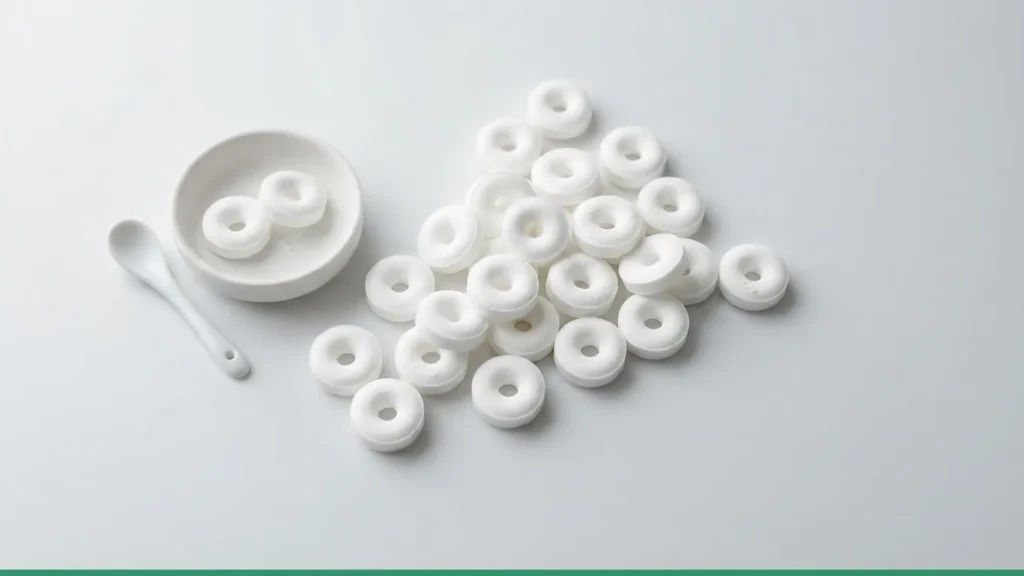
One mint is the whole serving. On the current panel for regular Pep-O-Mint, the serving size is 1 piece, and that piece carries 15 calories, 3 g total carbohydrate, 3 g total sugars, and 3 g added sugars, with 0 g fat and 0 mg sodium (Giant Food Stores). That single detail resolves most of the confusion around lifesaver mints nutrition facts: when one website prints 15 calories and another prints 60, they are usually counting a different number of mints, not measuring a different candy. Below, the Tastybend Nutrition Desk sets each variant against its own label, keeps the sugar-free formulation separate from the sugared one, and ties the per-mint sugar to the official reference figure.
Quick answer: One regular Life Savers mint (Pep-O-Mint or Wint-O-Green) lists 15 calories, 3 g carbohydrate, 3 g total sugars, and 3 g added sugars against a 1-piece serving. One Sugar Free mint of either flavor lists 10 calories, 3 g carbohydrate, 0 g sugars, and 3 g sugar alcohol. The serving weight is 3.5 g per mint. Sugar Free versions are sweetened with sorbitol and aspartame and carry phenylketonuria wording for lifesaver mints nutrition facts shoppers to check.
Regular Pep-O-Mint and Wint-O-Green: 15 Calories per Piece
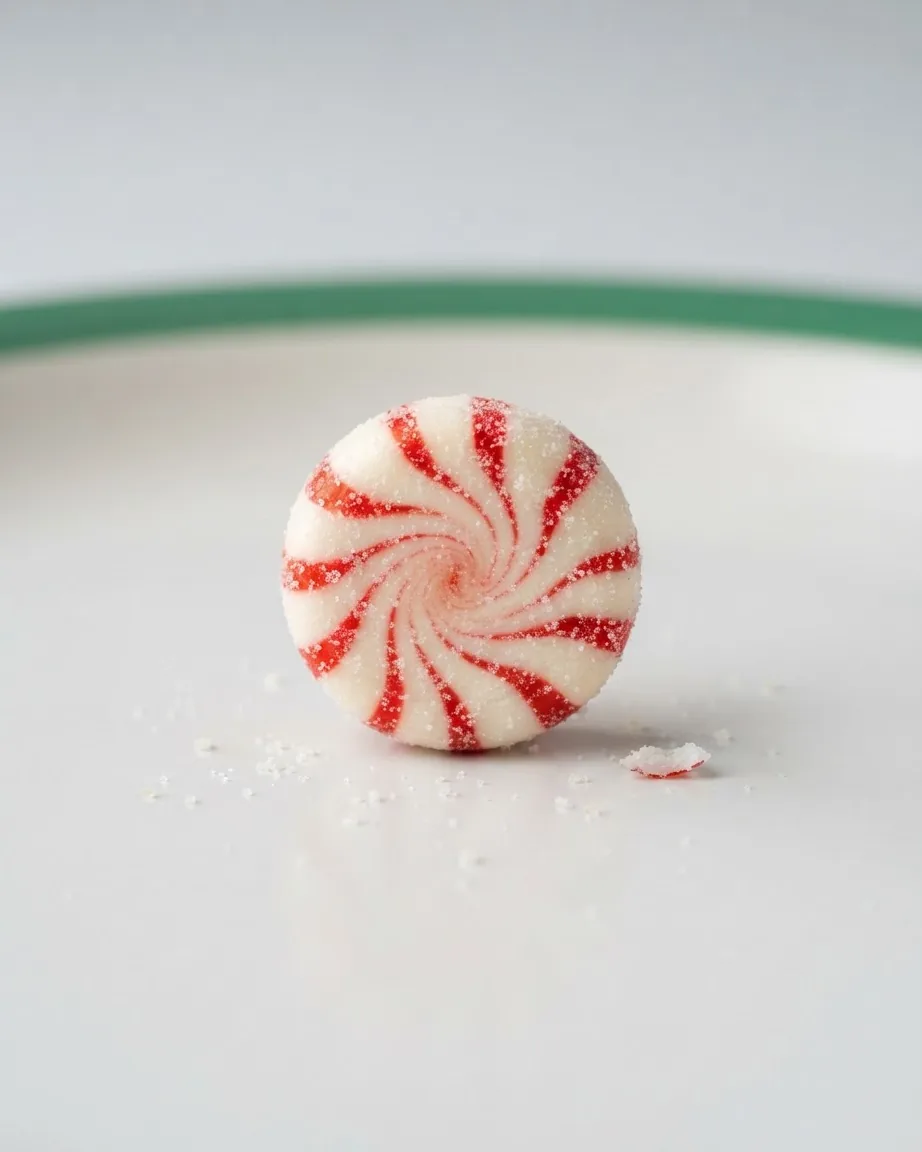
The two sugared classics run identical on the macro line. Regular Pep-O-Mint posts 15 calories, 0 g fat, 0 mg sodium, 3 g total carbohydrate, 3 g total sugar, and 3 g added sugar per 1 piece (Giant Food Stores). Regular Wint-O-Green reports the same 15 calories, 3 g carbohydrate, and 3 g total sugars, with 3 g added sugars flagged at 6% of the Daily Value (Giant Food Stores).
Where they part is the flavoring. The Wint-O-Green ingredient line reads sugar, corn syrup, artificial flavor, stearic acid, as logged by Lowes Foods (Lowes Foods). Pep-O-Mint begins with sugar and corn syrup as well. Protein is 0 g for both. Neither carries fiber on the panel.
The 6.25 oz bag of Pep-O-Mint lists about 50 servings per container at 1 piece each. Wint-O-Green in the same bag size lists about 51 servings.
Sugar Free Mints: 10 Calories and a Different Sweetener System
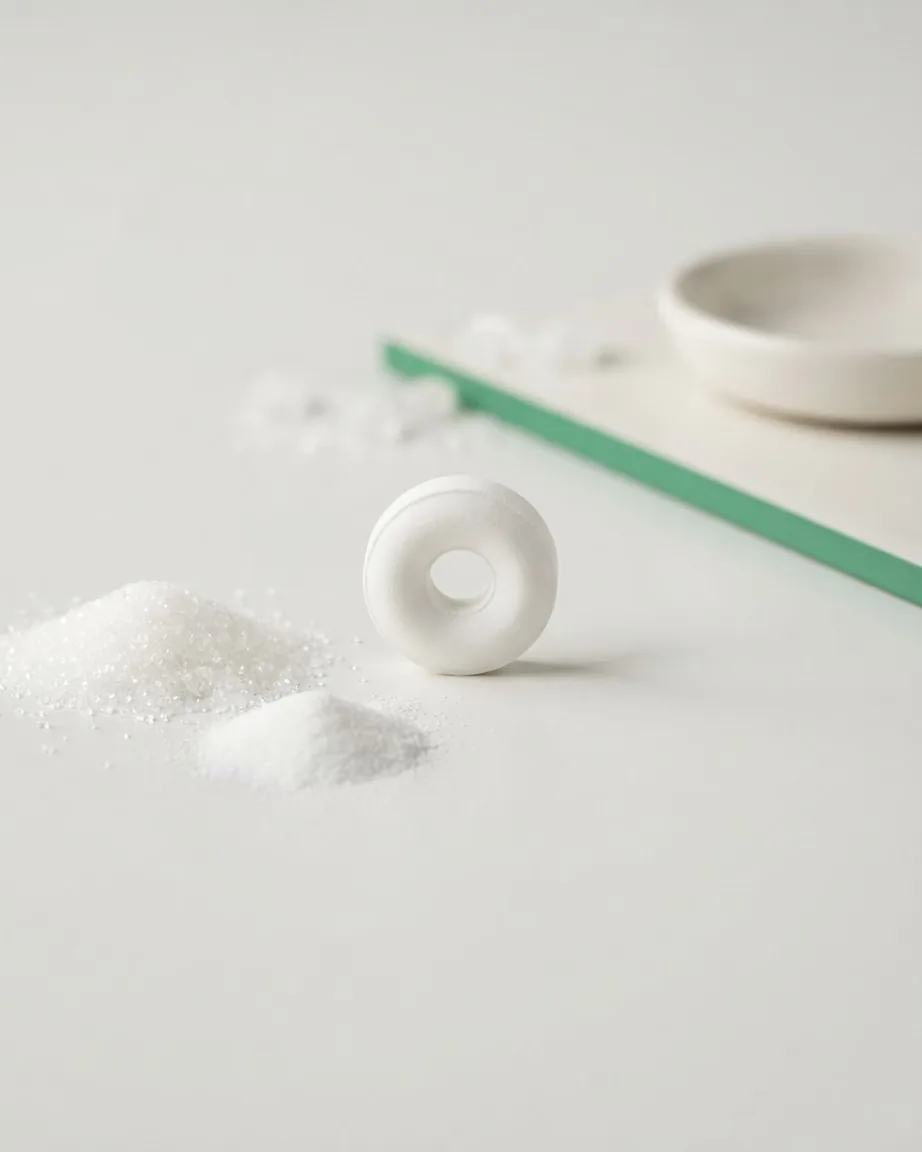
“Sugar Free” on a Life Savers bag is a reformulation, not a trimmed version of the sugared recipe. Sugar Free Pep-O-Mint lists 10 calories, 3 g total carbohydrate, 0 g total sugars, and 0 g added sugars per piece (Stop & Shop). Sugar Free Wint-O-Green matches at 10 calories and 3 g carbohydrate with 0 g sugars, and its ingredient line is sorbitol, magnesium stearate, artificial flavor, aspartame (Lowes Foods).
That 3 g of carbohydrate is not sugar. The brand bag reports it as 3 g sugar alcohol per 1-mint (3.5 g) serving for both Sugar Free Wint-O-Green and Sugar Free Pep-O-Mint in the 2.75 oz size (LIFE SAVERS). The sorbitol supplies the bulk and sweetness; aspartame boosts it. Stop & Shop markets the Sugar Free Pep-O-Mint as having 33% fewer calories than regular Pep-O-Mint, which lines up with 10 calories against 15 (Stop & Shop).
Two warnings travel with the sugar-free line and should decide a purchase for some households. Because aspartame is present, the label carries phenylketonuria wording, so anyone managing PKU needs to count the phenylalanine. And sorbitol is a sugar alcohol with a known laxative effect in quantity, which is why eating the bag like candy differs from popping one mint.
Orange Mints: Sugared, Yet Carrying an Aspartame Warning
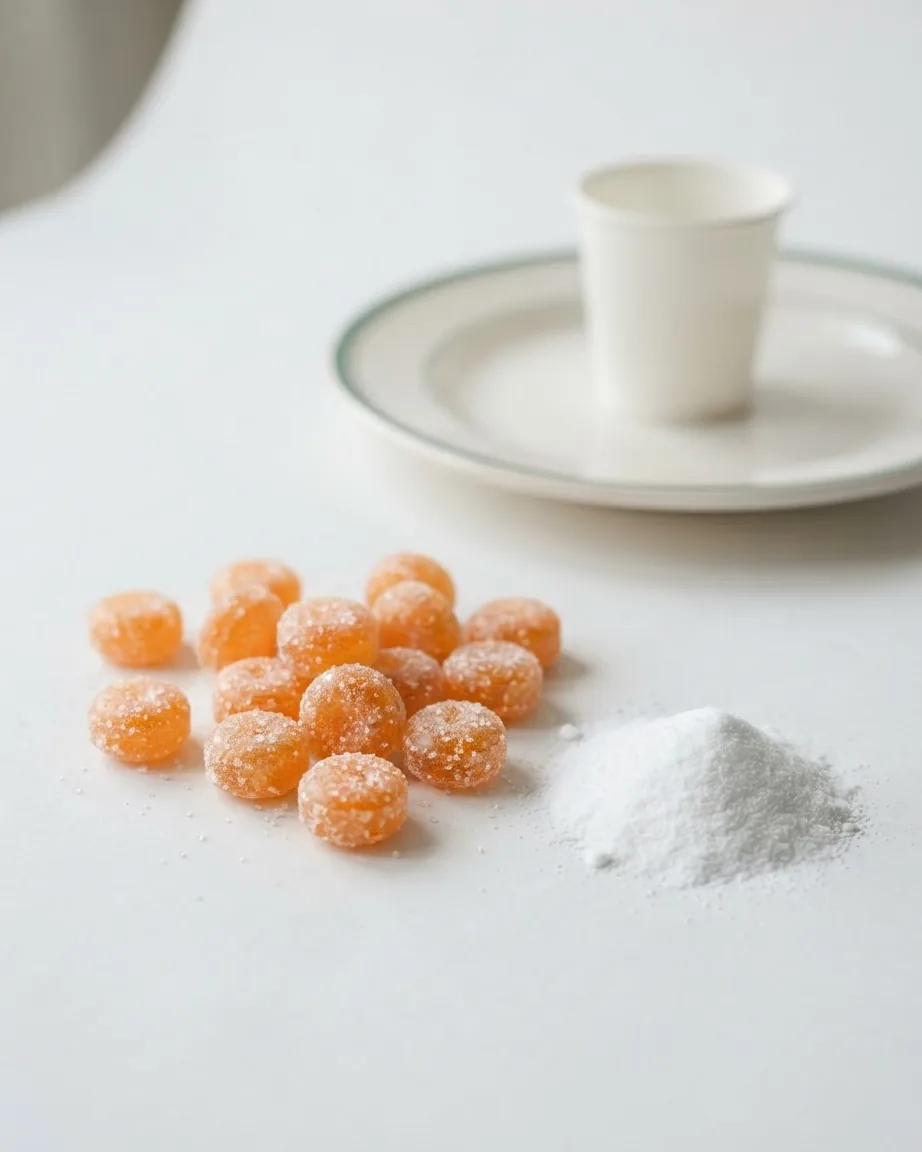
Orange Mints look like a straightforward sugared variety and mostly are: 3 g total sugars per 1-mint (3.5 g) serving on the brand bag (LIFE SAVERS). The twist is that the formulation also includes aspartame and carries a phenylalanine warning despite the sugar content. A sugared mint and an aspartame warning are not mutually exclusive, and the Orange Mints bag is the case where both appear together. If you screen labels for phenylalanine, this one needs the same check as the Sugar Free line, even though it logs real sugar.
Why One Site Says 15 Calories and Another Says 60
This is the number to trust and the mistake to avoid. The retailer, brand, and manufacturer-supplied panels all use a serving of 1 piece: 15 calories, 3 g sugar for the regular mints. Nothing changed about the candy. Sixty divided by four is fifteen; the per-piece value is consistent across both. The denominator moved, not the recipe.
So when you compare lifesaver mints nutrition facts across pages, read the serving line first. The 1-piece panel is the one the brand and retailers print, and it is the cleaner reference for counting.
A related wrinkle: an archived third-party entry once listed regular Wint-O-Green at 0 g sugar per 4 pieces, which is outdated. Current labels show 3 g sugar per piece. When an old database row and a current store label disagree, the live retailer panel is the one to use. For the same label-reading discipline on cereal, see our Rice Krispies cereal breakdown.
Per-Mint Weight: 3.5 g on the Brand Bag, With a Third-Party Caveat
The serving weight on the brand bags is 1 piece (3.5 g), stated for Wint-O-Green, Pep-O-Mint, the Sugar Free pair, and Orange Mints alike (LIFE SAVERS). MyFoodDiary agrees, listing 1 mint = 3.5 g (MyFoodDiary).
There is one unreconciled gap among third-party databases. The 4-mint serving some sites use implies 4 g per mint (16 g divided by 4), which does not match the 3.5 g the brand prints. Both figures come from outside the Mars label in that comparison, so the discrepancy sits between databases rather than inside the official panel. For counting purposes, 3.5 g per mint is the brand-stated weight.
Keto and Net Carbs: The 3 g That Is Sorbitol, Not Sugar
For low-carb shoppers, the Sugar Free line behaves differently from its on-pack carbohydrate figure. The label reports 3 g total carbohydrate and 0 g sugars per piece, with that carbohydrate coming from sorbitol. Keto-oriented coverage treats the sugar-free mints as effectively 0 g net carbs because the carb is a sugar alcohol; The Donut Whole states that most sugar-free Life Savers mints contain 0 to 1 grams of net carbs per serving (The Donut Whole).
Two figures are in play and both are correct in their frame. The retailer and brand labels report 3 g total carbohydrate (3 g sugar alcohol, 0 g sugar), and the net-carb reading subtracts the sorbitol toward roughly 0 g net. H-E-B lists the Sugar Free Wint-O-Green at 3 g total carbohydrate with 0 g sugars per piece, matching the retailer panel. Treat the 3 g as the label total and the ~0 g net as the low-carb working number, not as a conflict to pick a winner in.
One Mint Against the FDA’s 50 g Added-Sugar Reference
A single regular mint’s 3 g of added sugars is small against the daily reference, but the panel does not spell that out, so here is the arithmetic the label skips. The Daily Value for added sugars is 50 grams per day on a 2,000-calorie diet (FDA). The Dietary Guidelines recommend keeping calories from added sugars under 10 percent of total calories (FDA).
To read any added-sugar line as a percentage, the FDA gives a worked example: 7 g of added sugars is 14% of the Daily Value (FDA). The regular mint’s own panel already prints its 3 g at 6% of the Daily Value, consistent with the 50 g reference. The Sugar Free mint posts 0 g added sugars, so it contributes nothing to that daily figure. The practical read: one sugared mint is a rounding error against the day’s budget; a steady habit of a dozen is a fifth of it.
The Nutrition Table: Every Variant, per 1-Piece (3.5 g) Serving
All values below are per 1 piece, read off the manufacturer-supplied retailer panels and the brand bags. Fat is 0 g and sodium is 0 mg across every variant.
- Regular Pep-O-Mint – 15 calories; 3 g carbohydrate; 3 g total sugars; 3 g added sugars; 0 g sugar alcohol.
- Regular Wint-O-Green – 15 calories; 3 g carbohydrate; 3 g total sugars; 3 g added sugars; artificial flavor.
- Sugar Free Pep-O-Mint – 10 calories; 3 g carbohydrate; 0 g total sugars; 0 g added sugars; 3 g sugar alcohol.
- Sugar Free Wint-O-Green – 10 calories; 3 g carbohydrate; 0 g total sugars; 0 g added sugars; 3 g sugar alcohol.
- Orange Mints – 3 g total sugars per piece; includes aspartame and a phenylalanine warning.
Source pages for these rows: the per-piece calorie and sugar figures come from Giant Food Stores, Stop & Shop, Lowes Foods, and the LIFE SAVERS brand bags; the 3.5 g serving weight and net-carb framing draw on MyFoodDiary and The Donut Whole. For another candy where the pack serving splits the printed number, see our Reese’s peanut butter cups guide, and browse the wider snacks sweets section for more panels.
Off-Label Context: Dogs, Sorbitol, and the Wintergreen Spark
Safety warning
Two things come up around these mints that the nutrition panel never addresses. First, dogs. The generic warning that mints are toxic to dogs centers on xylitol, but the Sugar Free Life Savers are sweetened with sorbitol and aspartame, not xylitol. That distinction matters because xylitol is the dangerous sugar alcohol for dogs; the veterinary authority on these cases is the Pet Poison Helpline, which tracks xylitol exposures. Checking the ingredient line, rather than assuming “sugar free equals xylitol,” is the correct move for a worried pet owner.
Second, the “spark in the dark.” Crushing a Wint-O-Green mint in a dark room produces a faint flash, an effect called triboluminescence, explained by the Maryland Department of Natural Resources and by The Takeout, which also addresses the methyl salicylate (wintergreen oil) dose as safe at candy levels. It is a party trick, not a nutrition concern. Neither of these points changes the macro line, but both answer questions the label leaves blank.
One Mint, Four Mints, and the FDA 50 g Added-Sugar Reference
The per-piece panel is easy to shrug off, so here is what each level of snacking actually spends against the FDA Daily Value for added sugars, which is 50 g per day. Every figure below is arithmetic on the label numbers already on this page – nothing measured, nothing imported.
- One regular mint → 6% of the day’s added sugars. The 3 g of added sugars in one Pep-O-Mint or Wint-O-Green is 3 ÷ 50, or 6% of the FDA Daily Value – which is exactly the 6% DV the Wint-O-Green panel already prints, now shown against the full day.
- A 4-mint handful → 12 g and 24% of the day. The 4-mint serving that aggregator sites use is 3 g × 4 = 12 g of added sugars (and 15 cal × 4 = 60 calories). Against the 50 g reference that is 24% of a full day’s added-sugar allowance from candy alone.
- A finished 6.25 oz bag → three days’ worth. At about 50 servings per Pep-O-Mint bag, eating the bag means 3 g × 50 = 150 g of added sugars – 150 ÷ 50 = 3 times the entire FDA Daily Value, concentrated in one sitting.
The takeaway for label readers: a single mint is a trivial 6% of the day, but the “handful during a meeting” habit the panel count implies crosses a quarter of the day’s added sugars fast, and the bag is a multi-day budget. The Sugar Free line sidesteps this entirely, logging 0 g added sugars per piece, so none of the above applies to it.
Frequently Asked Questions
Is Sugar Free Wint-O-Green safe for someone with PKU?
Its ingredient list includes aspartame, and the package carries phenylketonuria wording. Anyone managing PKU must account for the phenylalanine before eating it. Orange Mints also list aspartame and a phenylalanine warning despite being sugared, so screen that bag the same way. When in doubt, the printed warning on the specific package is the authority to follow.
How many regular mints would reach the FDA added-sugar Daily Value?
Each sugared piece contributes 3 g of added sugars, shown as 6% of the 50 g daily reference. At that rate, about seventeen mints would approach the full day’s figure on their own, before any other sweetened food is counted. The sugar-free versions add 0 g, so they do not move that total at all regardless of how many you eat.
Why does the sugar-free bag list 3 g carbohydrate if it has no sugar?
The carbohydrate is sorbitol, a sugar alcohol, logged separately from sugars on the panel. The label records 3 g sugar alcohol and 0 g sugars per piece. Low-carb coverage subtracts the sorbitol and treats each mint as roughly 0 to 1 g net carbs, which is why keto readers and the on-pack total can both be right.
Do Pep-O-Mint and Wint-O-Green differ nutritionally?
On calories, carbohydrate, and sugar they match piece for piece in both the regular and sugar-free formats. The meaningful split is flavoring: Wint-O-Green’s regular recipe uses artificial flavor, while the mint systems differ by variety. Pick by taste and ingredient preference rather than by the macro numbers, which land in the same place.