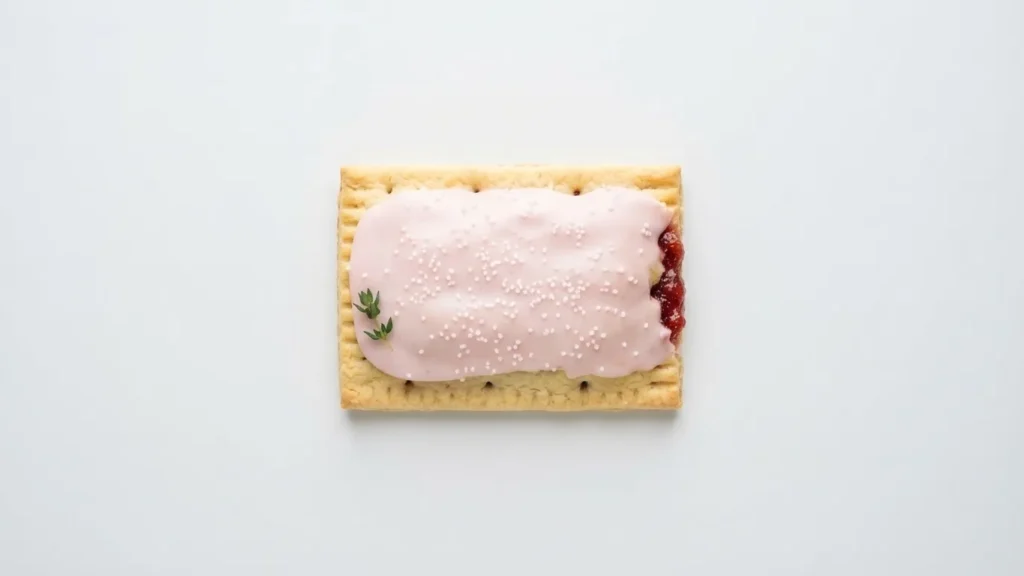
The number stamped on the front of a Frosted Strawberry box, 370 calories, is not the cost of one pastry. It is the cost of two. That single detail changes how nearly every figure on the panel should be read, because the foil pouch inside holds a matched pair and the label counts both. This breakdown of pop tart nutrition facts works from the manufacturer’s own declared panel and one widely cited nutrition publisher, structured into standardized reference tables so each figure can be traced to the body that publishes it.
The desk works from declared data only. No pastry went through toasting, weighing, or tasting here; the numbers below come from brand SmartLabel panels and a public nutrition reference, extracted and lined up for comparison.
The standard serving is 2 pastries (96 g), not one
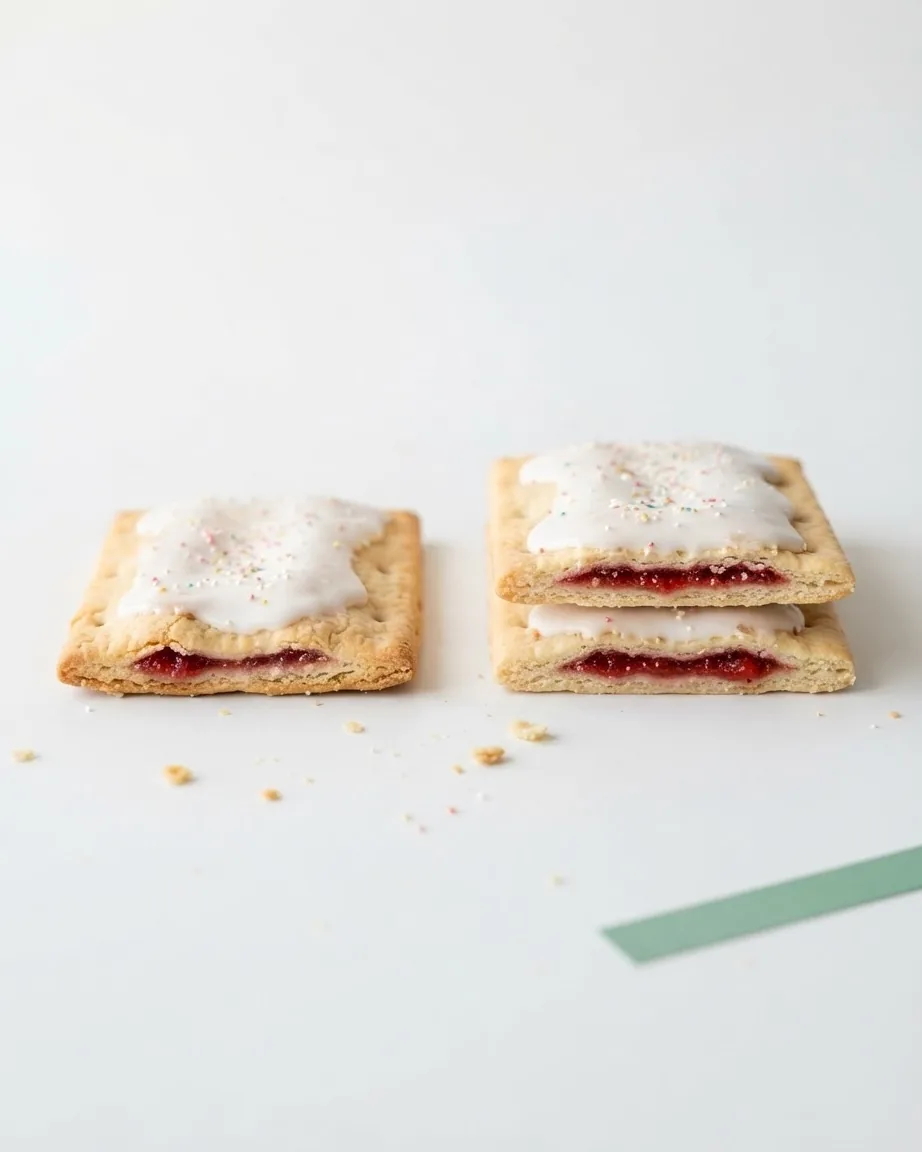
Everything downstream depends on this. The Kellogg Company panel defines the Frosted Strawberry serving as 2 pastries totaling 96 grams, delivering 370 calories. That definition matters because the pastries ship two to a foil pouch, so the printed panel describes the pouch, not a single tart.
According to the Kellogg Company (Canada) SmartLabel panel, the entry reads plainly: per 2 pastries (96 g), 370 calories. A widely referenced nutrition publisher, Healthline, lists the same 370 calories under the phrase “one serving” without spelling out the count, which is where confusion starts. The Canadian label removes the ambiguity: one serving equals two pastries.
Standalone answer
A standard pop tart serving is 2 pastries (96 grams), carrying 370 calories, 71 grams of carbohydrates, 31 grams of total sugar, 8 grams of fat, and 310 mg of sodium. Of that 31 grams of sugar, 30 grams are added sugars, equal to 60 percent of the FDA Daily Value. The fruit filling supplies almost none of it. Eating a single pastry roughly halves those figures to about 185 calories and 15.5 grams of sugar. A whole grain Frosted Strawberry version cuts added sugar to 12 grams (24 percent DV) per serving, the direct lower-sugar swap within the same brand.
The strawberry filling is not the sugar source: 30 of 31 grams are added
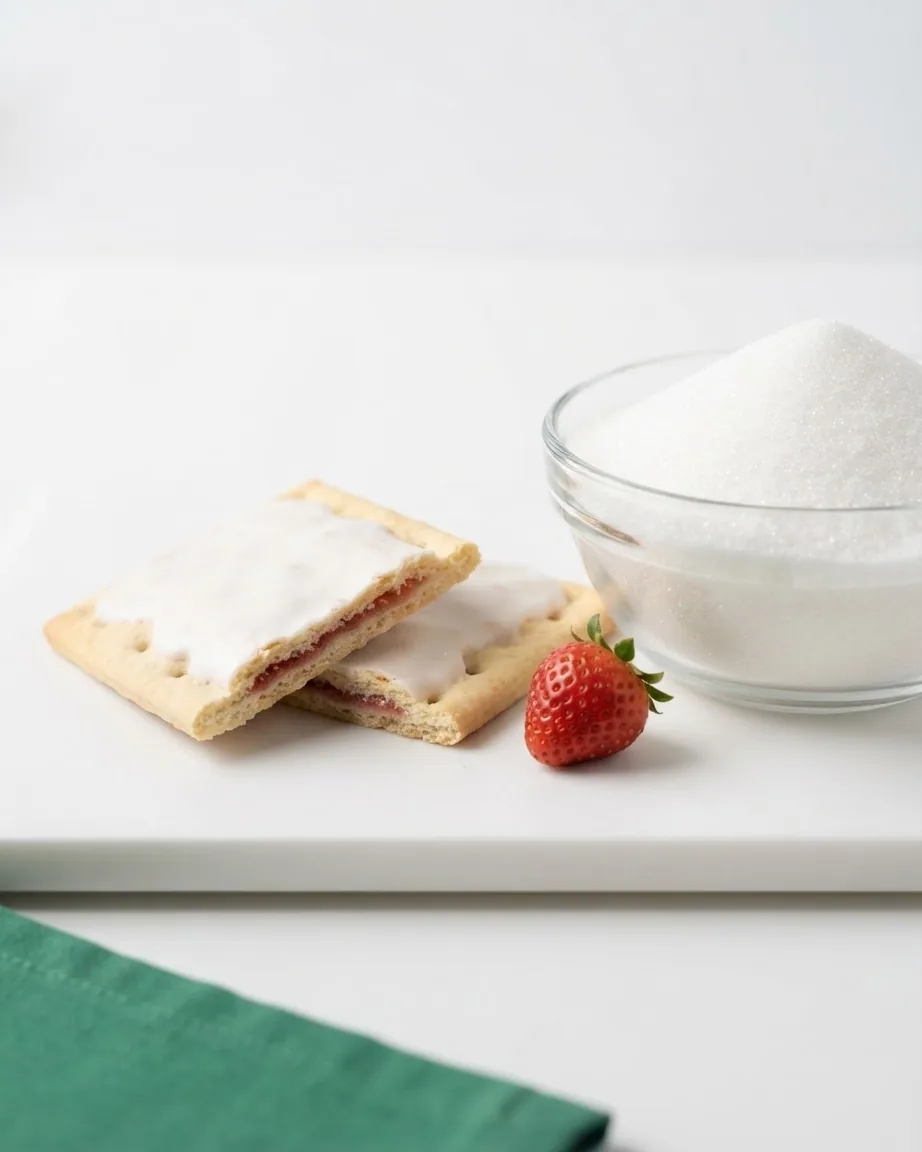
The flavor name and the red filling suggest fruit is doing the sweetening. The panel says otherwise. Of the 31 grams of total sugar in a 2-pastry serving, 30 grams are added sugars. The strawberry component contributes almost nothing measurable to that total.
The Kellogg Company SmartLabel panel lists it directly: Total Sugars 31 g, Includes 30g Added Sugars, 60% Daily Value. That leaves a single gram unaccounted for by the added-sugar line, not a fruit-driven number by any reading.
The ingredient statement explains where the 30 grams originate. Three separate refined sweeteners appear: corn syrup, high fructose corn syrup, and dextrose, alongside the sugar in the frosting and filling. Healthline, reviewing the product in its roundup of heavily processed snacks, counts them the same way, describing the pastry as loaded with three types of sugar: refined white sugar, corn syrup, and high fructose corn syrup. When a food carries three distinct industrial syrups on one label, the fruit is flavoring, not the sugar source.
Can you eat one pastry to halve the numbers? Yes, the math splits cleanly
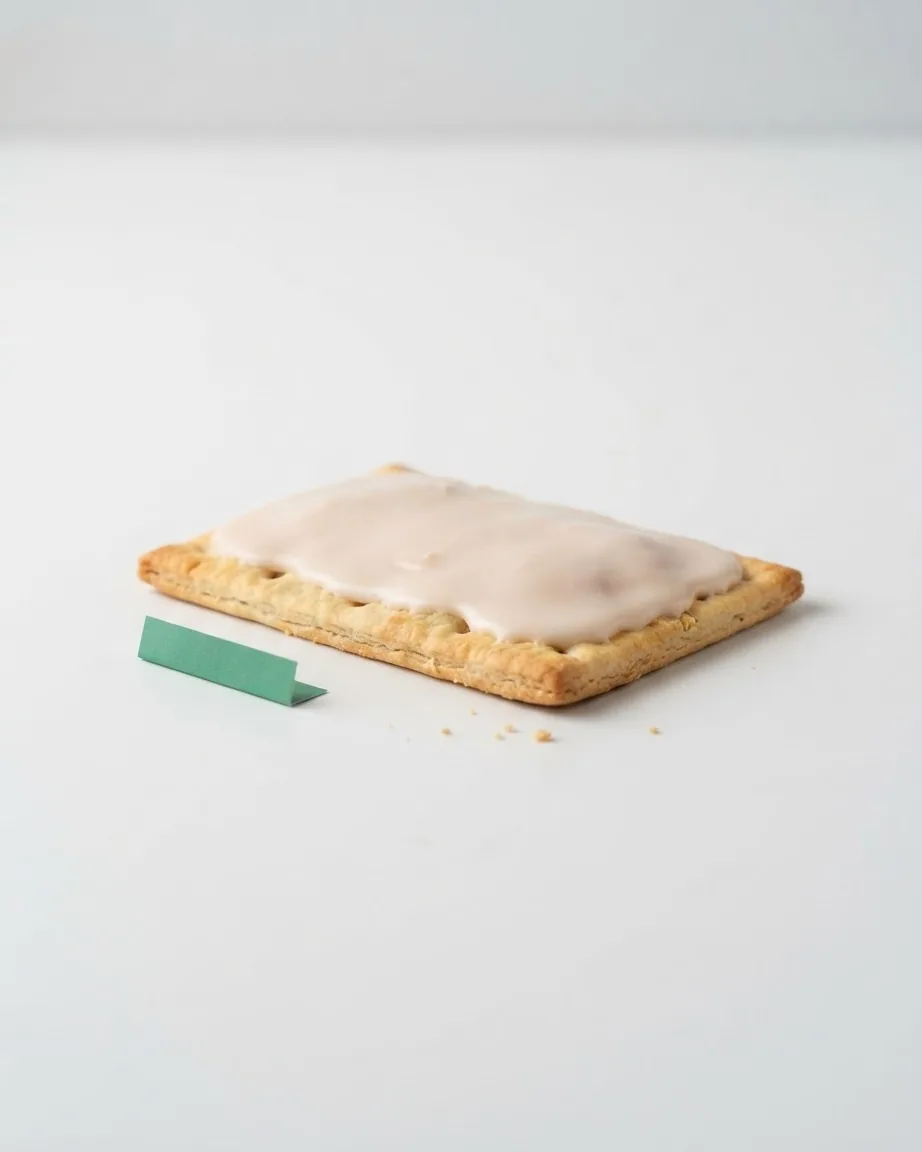
Because the panel is built on a 96-gram, two-pastry serving, splitting the pouch splits the figures. Eat one pastry and the 370 calories become roughly 185; the 31 grams of sugar become about 15.5; the 71 grams of carbohydrate drop to around 35.5. This is the one lever a reader controls without changing products at all.
The reason it works is structural, not nutritional trickery. Two identical pastries share the panel evenly, so dividing by two is legitimate here in a way it would not be for a food where the serving is a single unit. The 8 grams of fat and 310 mg of sodium halve the same way.
The practical friction is the pouch itself. It holds two, and once it is open the second pastry does not reseal well, which is why the full 370-calorie serving tends to get eaten in one sitting. Anyone treating one pastry as the portion needs a plan for the other. For a deeper walk through why the doubled panel misleads casual readers, the desk’s companion breakdown, Reading the 2-Pastry Panel Without Doubling Your Math, covers the same split in more detail.
The added-sugar line: 60 percent of a full day in one pouch
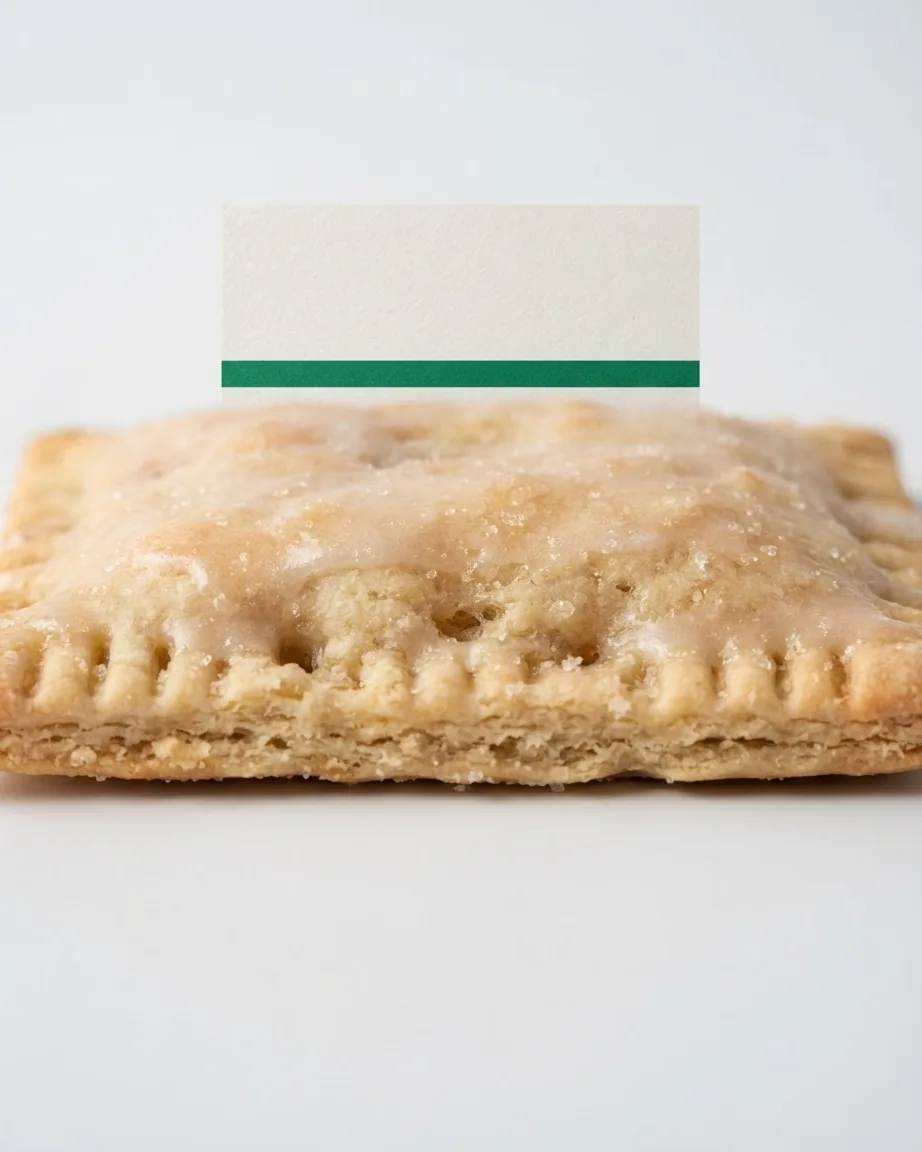
The most consequential figure on the panel is not calories. It is the added-sugar percentage. One 2-pastry serving delivers 30 grams of added sugar, which the label marks as 60 percent of the Daily Value. That means a single pouch supplies more than half of the added-sugar Daily Value before any other food in the day is counted.
The regulator itself has cited this product’s sugar content. In a document from the FDA New Era of Smarter Food Safety Summit on E-Commerce, the agency notes that Frosted Strawberry Pop-Tarts contain 30 grams of sugars per serving. There is a small wording gap worth resolving: the FDA document says “30 grams of sugars,” while the manufacturer panel distinguishes 31 grams of total sugars from 30 grams of added sugars. The manufacturer figure is the precise one. The FDA reference rounds to the added-sugar number and does not separate the categories, but both point at the same 30-gram added load.
The whole grain version drops added sugar from 30 g to 12 g
For a reader who wants the same brand and flavor with less sugar, Kellogg’s makes a direct swap. The Whole Grain Frosted Strawberry Pop-Tart carries 170 calories per serving and 12 grams of added sugar, marked at 24 percent Daily Value on its panel.
Set against the standard product, the contrast is the point of the swap. The Kellogg Company Whole Grain SmartLabel panel lists Total Sugars 12 g, Includes 12g Added Sugars, 24% DV. It moves the Daily Value contribution from 60 percent down to 24 percent. No brand change is required to make that cut.
The desk does not weigh in on whether that swap is right for any individual diet; it reports the two declared panels side by side. The category, if you want to browse related breakdowns, sits under snacks sweets.
The full macro line, sourced from the brand panel
The complete per-serving profile, drawn from the manufacturer declaration and cross-checked against Healthline’s published figures, sits in the table below. Every value describes the 2-pastry, 96-gram serving unless the row notes otherwise.
| Nutrient | Per 2 pastries (96 g) | Approx. per 1 pastry |
|---|---|---|
| Calories | 370 | 185 |
| Total fat | 8 g | 4 g |
| Saturated fat | 2.5 g | 1.25 g |
| Total carbohydrate | 71 g | 35.5 g |
| Total sugars | 31 g | 15.5 g |
| Added sugars | 30 g (60% DV) | 15 g |
| Sodium | 310 mg |
The macro figures, 370 calories, 8 grams of fat, 2.5 grams of saturated fat, 71 grams of carbohydrate, 31 grams of sugar, and 310 mg of sodium, appear identically in Healthline’s snack review and on the Kellogg Company panel. Fiber and protein are not among the figures the source pack carries for this product, so the desk does not state them rather than pull a number from memory. The single-pastry column is a clean division of the two-pastry serving by two, valid only because the pouch holds two matched units.
How pop tart nutrition facts compare to other panel-heavy snacks
A 30-gram added-sugar hit reads differently once you place it next to snacks built on salt rather than sugar. The desk keeps standardized panels for several of these, and the contrast sharpens what the Pop-Tart actually is: a sugar-forward pastry, not a savory snack. Sodium runs 310 mg here, moderate for a sweet item, while the sugar load dominates the panel in a way it never does on a cracker.
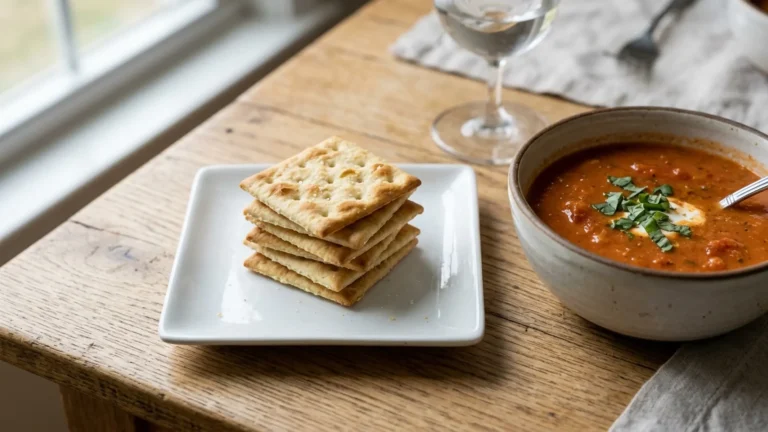
Reference panels for the salt-driven end of the shelf show the reverse balance, where sodium is the headline and added sugar is negligible: Goldfish crackers and Club crackers and their 150 mg sodium line. Reading the Pop-Tart against those makes the design of the product obvious from the numbers alone.
The whole grain swap in numbers: 18 g of added sugar removed per serving
Both panels list added sugar, but neither does the subtraction for you. The standard Frosted Strawberry serving carries 30 g of added sugar at 60% Daily Value; the whole grain version carries 12 g at 24% DV. Line those two figures up and the swap is a fixed, per-serving reduction you can bank without changing brand or flavor.
- 18 g of added sugar removed per serving: 30 g − 12 g = 18 g gone, straight off the label.
- 36 Daily Value points removed: 60% DV − 24% DV = a 36-point drop toward your day’s added-sugar budget.
- 2.5× the added sugar in the standard product: 30 g ÷ 12 g = 2.5, so the regular tart packs two and a half times the added sugar of the whole grain one.
The 18 g figure is the one that actually changes a shopping decision, and it appears on neither box – it only exists once you subtract one declared panel from the other.
Frequently asked questions
Does one Pop-Tart really have half the calories of the box figure?
Close to it. The printed 370 calories cover two pastries totaling 96 grams, so one pastry lands near 185 calories with roughly 15.5 grams of sugar. The split is legitimate because the two pastries are identical and share the panel evenly, unlike foods whose serving is already a single unit.
Is the whole grain version actually lower in sugar?
Yes, substantially. The Whole Grain Frosted Strawberry panel lists 12 grams of added sugar at 24 percent Daily Value and 170 calories per serving, against 30 grams of added sugar at 60 percent Daily Value in the standard Frosted Strawberry. That is a meaningful reduction in added sugar without leaving the Pop-Tarts brand.
Why does the FDA say 30 grams and the box say 31?
They are measuring different lines. The manufacturer panel separates 31 grams of total sugars from 30 grams of added sugars. An FDA e-commerce labeling document cites “30 grams of sugars per serving,” rounding to the added-sugar figure without splitting the categories. The manufacturer’s two-line breakdown is the precise version.
Do the strawberries add much sugar?
Almost none that the panel can attribute to fruit. Of 31 grams of total sugar, 30 grams are declared as added, and the ingredient list names corn syrup, high fructose corn syrup, and dextrose. The fruit filling supplies flavor and color; the industrial sweeteners supply the sugar.
Can these figures change without notice?
Yes. Every number here reflects the manufacturer declarations and public reference data available to the desk at compilation. Brands can reformulate or adjust panels at any time, so the current physical package label always overrides an aggregated figure if the two disagree. Sugar content is a topic some readers approach for personal dietary reasons; the figures above are reported for reference and are not dietary or medical guidance. Anyone managing intake for a specific condition should work from the current package label and a qualified professional. Every figure and where it comes from Four bodies supply the numbers on this page, and each carries authority for a different slice of the panel. Keeping them separate is what lets a reader trace any single figure back to its origin rather than to an aggregator. The Kellogg Company is the product manufacturer and the official label data provider, publishing the SmartLabel panels for both the standard Frosted Strawberry and the Whole Grain version. The Canadian arm of the same company publishes the panel that spells out the 2-pastry, 96-gram serving definition. Healthline is a health and nutritional information publisher, and its snack review is where the three-syrup description and the matching macro figures appear. The Food and Drug Administration is the US government regulatory body for food labeling, and its e-commerce summit document is the source for the regulator’s own reference to the product’s sugar content. Where the manufacturer panel and any secondary figure disagree, the declared brand label is the one this desk treats as precise. That closes the panel. The headline 370 covers two pastries, 30 of the 31 sugar grams are added rather than fruit-derived, splitting the pouch halves every line, and the whole grain version is the one in-brand lever that cuts added sugar from 30 grams to 12. Read in that order, the front-of-box number stops being a single-pastry figure and becomes what it always was: the cost of the pair.