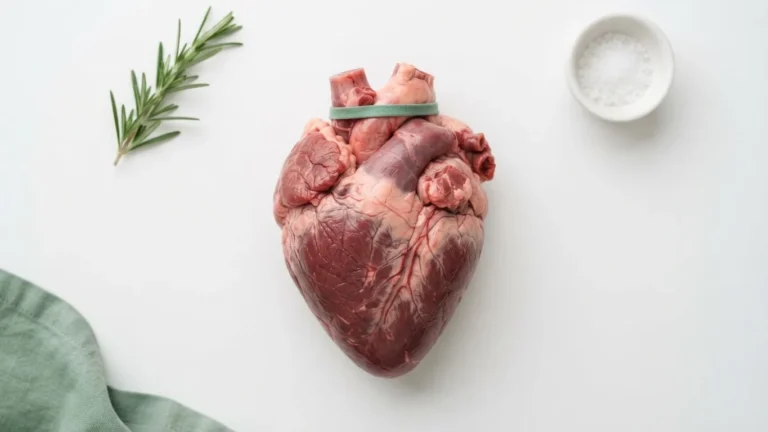
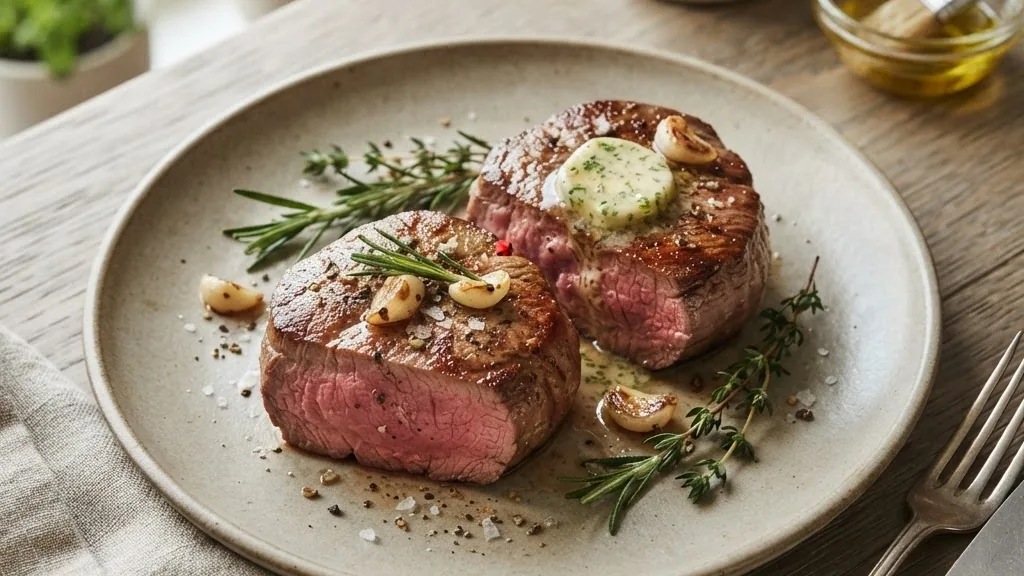
Filet mignon nutrition surprises people the first time they see it on paper, because a 3 oz cooked serving lands at about 220 calories with 22 grams of protein and zero carbs. The tenderloin is one of the cuts where the numbers actually match the reputation. It is lean for a steak, it is dense with protein, and once you strip away the butter and the plating, the base panel is short and clean.
By Tastybend Nutrition Desk. Last reviewed July 7, 2026.
Here is the quick version. A 3 oz cooked filet mignon (the tenderloin cut, trimmed) gives you roughly 220 calories, 22 g of protein, 14.5 g of total fat, 6 g of saturated fat, 0 g of carbohydrate, and 0 g of sugar. It carries about 46 mg of sodium before you season it, 82 mg of cholesterol, and a strong dose of zinc, selenium, and vitamin B12. Scale that to a 6 oz restaurant filet and you are near 440 calories and 44 g of protein.
Filet mignon nutrition at a glance
The table below is the core panel. It uses USDA FoodData Central figures for beef tenderloin, separable lean and fat, cooked and broiled, which is the correct source entry because filet mignon is cut from the tenderloin. Percent Daily Values follow the FDA reference for a 2000-calorie diet. Real plates move around a little depending on grade and trim, but this is the honest baseline.
| Nutrient | Per 3 oz (85 g) cooked | % Daily Value |
|---|---|---|
| Calories | 220 kcal | 11% |
| Total fat | 14.5 g | 19% |
| Saturated fat | 6 g | 30% |
| Cholesterol | 82 mg | 27% |
| Sodium | 46 mg | 2% |
| Total carbohydrate | 0 g | 0% |
| Sugar | 0 g | 0% |
| Protein | 22 g | 44% |
| Iron | 1.4 mg | 8% |
| Zinc | 4.1 mg | 37% |
| Vitamin B12 | 1.4 mcg | 58% |
| Selenium | 24 mcg | 44% |
| Potassium | 280 mg | 6% |
On meat panels, the line that stands out here is the sodium: 46 mg is almost nothing. That single number tells you most of the salt on a steak comes from your own hand, not the beef. Keep that in mind when reaching for the salt cellar. If you want a broader sense of how sodium adds up across snack foods, the low base here is a nice contrast with something like this breakdown of Spam nutrition facts, where the sodium does most of the talking.
Calories in a filet mignon: 3 oz vs 6 oz vs 8 oz
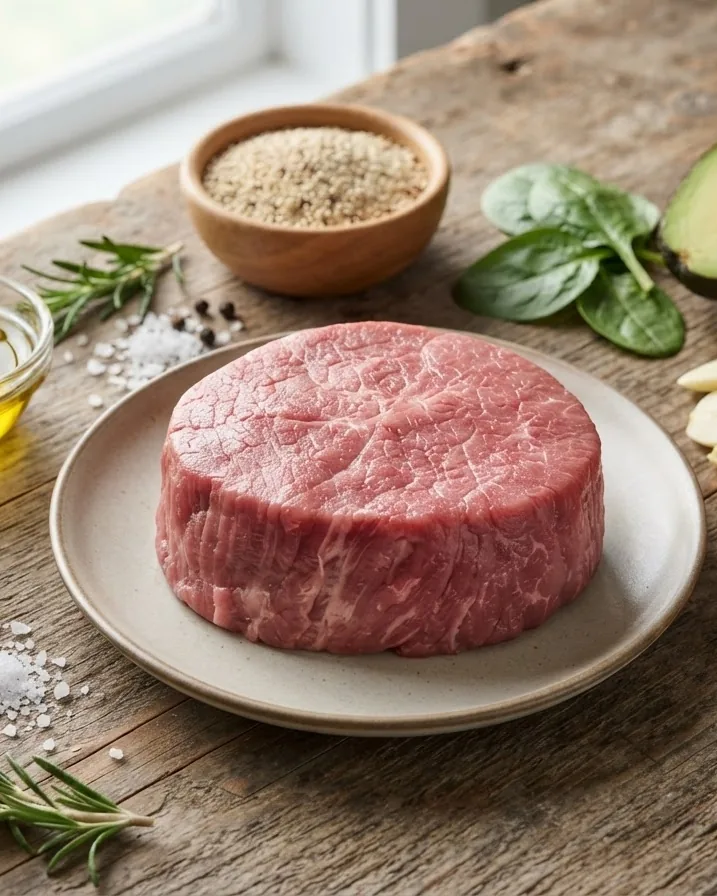
Portion size is where filet mignon numbers get slippery, because the cut is usually served as a thick medallion rather than a thin slice. A deck-of-cards portion is 3 oz cooked. A common steakhouse filet is 6 oz, and the larger plates run 8 oz or more. People badly underestimate their portion, so weighing raw and cooked is worth it when tracking closely.
- 3 oz cooked: about 220 calories, 22 g protein, 14.5 g fat.
- 6 oz cooked: about 440 calories, 44 g protein, 29 g fat.
- 8 oz cooked: about 585 calories, 58 g protein, 39 g fat.
Those are the naked numbers. The moment a filet hits a hot pan with a knob of butter, the picture changes. One tablespoon of butter adds roughly 100 calories and 11 g of fat, most of it saturated. A finishing drizzle of oil, a compound butter, or a pan sauce can add 100 to 200 calories on its own. When cooking a recipe like this, log the fat you cook in separately from the meat, because the beef is not what is moving the calorie total the most. The pan is.
Protein: why the filet punches above its size
Protein is the reason filet mignon earns its place in a high-protein kitchen. At 22 g per 3 oz and 44 g per 6 oz, a single steakhouse filet covers most of a day’s protein target for many adults in one sitting. The USDA and nutrition.gov both frame lean beef as a complete protein, meaning it delivers all nine essential amino acids your body cannot make on its own.
The filet is easy to eat quickly because it is so tender, which is a small trap when you are counting. A 6 oz filet feels lighter in the mouth than a 6 oz chuck steak, but the protein and calorie load is real. Plating it with a slow side, something with fiber and volume like roasted vegetables, helps the meal pace itself. For a grab-and-go protein comparison, the notes on string cheese nutrition facts show how a small dairy snack stacks up gram for gram against a cut like this.
Fat and saturated fat, and what the butter changes
Filet mignon carries about 14.5 g of total fat and 6 g of saturated fat per 3 oz cooked. That saturated fat number is worth a second look, because at 30 percent of the Daily Value it is the line most likely to matter on a filet, more than the calories or the cholesterol. The FDA lists saturated fat as a nutrient to limit on the Nutrition Facts label, and a 6 oz filet already brings you to 60 percent of the day’s reference before any butter.
Here is the practical read. The beef itself is moderate on fat. What tips a lean filet into a heavy meal is the finish: a butter baste, a blue cheese crust, a bacon wrap, or a cream sauce. None of those are off the table, but measuring keeps them honest. Compared with a plain seared filet, a butter-basted one can carry about 90 extra calories and 10 extra grams of fat per serving, and nearly all of that fat is saturated.
Carbs and sugar: the zero-zero line
Plain filet mignon has 0 g of carbohydrate and 0 g of sugar. That is not a rounding trick; muscle meat contains essentially no carbohydrate at all. For anyone tracking net carbs, a seasoned and seared filet is a free square on the board, which is why it shows up on so many keto and low-carb plates.
The carbs sneak in around the steak, not in it. A sweet marinade, a bottled steak sauce, a brown-sugar rub, or a glaze can add several grams fast. A useful rule: if a filet recipe lists sugar in the ingredients, the zero-carb claim on the plate is gone. Steak sauces in particular can run 3 to 5 g of sugar per tablespoon, so read that label the same way you read the meat.
Sodium and cholesterol in context
Two numbers on the panel tend to get misread, so here they are in turn. Sodium first: raw filet mignon is naturally very low, around 46 mg per 3 oz. That is a rounding error compared with processed meats. Every meaningful milligram of salt on your steak came from your seasoning, your finishing salt, or a brine. That is reassuring, because it means the salt is fully in your control.
Cholesterol is the other one. A 3 oz filet has about 82 mg, and a 6 oz filet about 165 mg. For years dietary cholesterol was treated as the villain, but the FDA removed the strict 300 mg daily cap from its guidance and current advice from nutrition.gov puts more weight on saturated fat and overall dietary pattern than on dietary cholesterol alone. It is still worth tracking, but the cholesterol line need not be the deciding factor on whether a steak fits your week.
Micronutrients: zinc, selenium, iron, and B12
The part of filet mignon nutrition that gets the least attention is the micronutrient column, and it may be the most useful part. A 3 oz cooked filet delivers meaningful amounts of the minerals that are hard to get from plants in the same form.
- Zinc: about 4.1 mg, or 37 percent of the Daily Value, important for immune function and wound healing.
- Selenium: about 24 mcg, or 44 percent of the Daily Value, an antioxidant mineral.
- Vitamin B12: about 1.4 mcg, or 58 percent of the Daily Value, needed for nerve and blood cell health.
- Iron: about 1.4 mg as heme iron, the form the body absorbs most readily.
Scale to a 6 oz filet and the zinc clears 70 percent of the Daily Value, the selenium approaches 90 percent, and the B12 tops the full daily reference on its own. The USDA classifies lean beef as a good source of these nutrients for a reason. When people ask why red meat keeps its place in a balanced diet, this column is the honest answer, not the protein everybody already knows about.
Filet mignon vs ribeye vs sirloin vs chicken
The most common question is how the filet compares to other cuts and to chicken. This table is built from USDA figures for typical 3 oz cooked portions so you can see where the filet actually lands. It is leaner than a ribeye, richer than a top sirloin, and, like any steak, higher in fat than skinless chicken breast.
| Protein source (3 oz cooked) | Calories | Protein | Total fat | Saturated fat |
|---|---|---|---|---|
| Filet mignon (tenderloin) | 220 kcal | 22 g | 14.5 g | 6 g |
| Ribeye | 250 kcal | 20 g | 18 g | 8 g |
| Top sirloin | 160 kcal | 26 g | 5 g | 2 g |
| Skinless chicken breast | 128 kcal | 26 g | 2.7 g | 0.8 g |
What this table shows is that the filet is not the leanest steak on the shelf. Top sirloin gives you more protein for fewer calories and a fraction of the fat. What you pay extra calories for with a filet is tenderness, not a nutrition edge over sirloin. For the biggest protein-per-calorie return, sirloin or chicken is the better pick. For the most tender bite of the week, and a willingness to spend the fat budget on it, the filet wins.
How filet mignon fits keto, low-cal, and high-protein plans
Because the base cut is zero-carb and protein-dense, filet mignon slots into several eating styles cleanly. Here is how it plays out depending on the goal.
For keto and low-carb: the filet is close to ideal. Zero carbs, a healthy dose of fat, and enough protein to anchor the plate. The only caution is that very high protein is not the point of keto, so pair a modest filet with a fatty side rather than stacking a huge steak. For high-protein or muscle-building plans: filet works, but sirloin and chicken give you more protein per calorie, so the filet fits best as a treat inside the plan rather than the daily driver. For calorie control: watch the cooking fat and the portion, because the meat is fine but the butter and the 8 oz plate are where the deficit disappears.
Across all of these, the filet is easiest to keep honest when you cook it dry and season with salt, pepper, and a little acid rather than a rich sauce. That keeps you near the panel numbers above instead of doubling the fat in the pan.
How to read a steak’s nutrition label
Loose steaks from the butcher counter rarely carry a printed panel, so you have to reconstruct one. This is the order to walk through, and it takes about a minute once it is a habit.
- Weigh the raw steak, then weigh it cooked; meat loses roughly 25 percent of its weight to cooking, so 4 oz raw lands near 3 oz cooked.
- Match the cut to a USDA FoodData Central entry (tenderloin for filet mignon) rather than a generic beef line.
- Read the numbers as cooked values, since that is what you eat; raw and cooked figures differ.
- Add your cooking fat separately: log the butter or oil you actually put in the pan.
- Add sauces, rubs, and marinades on their own line, because that is where carbs and sugar enter.
- Check the saturated fat and portion size first; on a filet those two lines matter more than calories alone.
A laminated version of that checklist by the scale makes it easy to follow. It is the fastest way to turn an unlabeled cut into a real panel you can trust, and it keeps you from guessing high or low.
Leaner ways to cook and serve it
If you love the filet but want to keep the meal light, small changes do most of the work. None of these ask you to give up the steak.
- Sear in a dry cast-iron pan and finish with a light spritz of oil instead of a butter baste.
- Choose a 3 to 4 oz medallion and build volume with vegetables rather than a bigger steak.
- Trim any visible fat cap before cooking to shave saturated fat.
- Skip the bacon wrap and the cream sauce; use herbs, garlic, lemon, or a dry rub for flavor.
- Cook to a safe internal temperature, then let it rest; FSIS lists 145 F with a 3 minute rest for whole cuts of beef.
- Pair with a high-fiber, high-water side so a smaller portion still feels like a full plate.
On a filet, the swap that changes the most is the cooking fat, not the meat. Get that under control and a filet mignon is a lean, mineral-rich, zero-carb centerpiece that fits far more diets than its steakhouse reputation suggests.
Frequently asked questions
How many calories are in a filet mignon?
A 3 oz cooked filet mignon has about 220 calories. A 6 oz steakhouse filet runs around 440 calories, and an 8 oz cut around 585 calories, before any butter or sauce. Cooking fat can add 100 or more calories per serving, so the plated number is usually higher than the panel.
How much protein is in filet mignon?
About 22 g of protein per 3 oz cooked and 44 g per 6 oz. That makes a single restaurant filet a large share of a day’s protein for most adults. USDA figures classify lean beef as a complete protein with all nine essential amino acids.
Is filet mignon keto friendly?
Yes. Plain filet mignon has 0 g of carbohydrate and 0 g of sugar, so it fits keto and low-carb plans cleanly. Watch the sauces and rubs, since a sweet marinade or bottled steak sauce is where the carbs and sugar enter the meal.
Is filet mignon healthy?
It can fit a balanced diet well. Filet mignon is lean for a steak, high in protein, and rich in zinc, selenium, iron, and vitamin B12. The line to watch is saturated fat at about 6 g per 3 oz, plus whatever fat you cook it in. Portion size and cooking method matter more than the cut itself.
Is filet mignon leaner than ribeye?
Yes, a filet mignon is leaner than a ribeye. Per 3 oz cooked, a filet has about 14.5 g of fat versus roughly 18 g in a ribeye, and fewer calories. A top sirloin is leaner still, with about 5 g of fat and more protein per calorie than either.
How much sodium and cholesterol does filet mignon have?
Raw filet mignon is very low in sodium, about 46 mg per 3 oz, so nearly all the salt on your plate comes from seasoning. Cholesterol is about 82 mg per 3 oz. Current FDA and nutrition.gov guidance puts more weight on saturated fat and overall diet than on dietary cholesterol alone.
Filet mignon is one of the cleaner panels around: high protein, real minerals, zero carbs, and a salt line you set yourself. Weigh your portion, log the cooking fat honestly, and the tenderloin fits far more of your week than its price tag suggests.