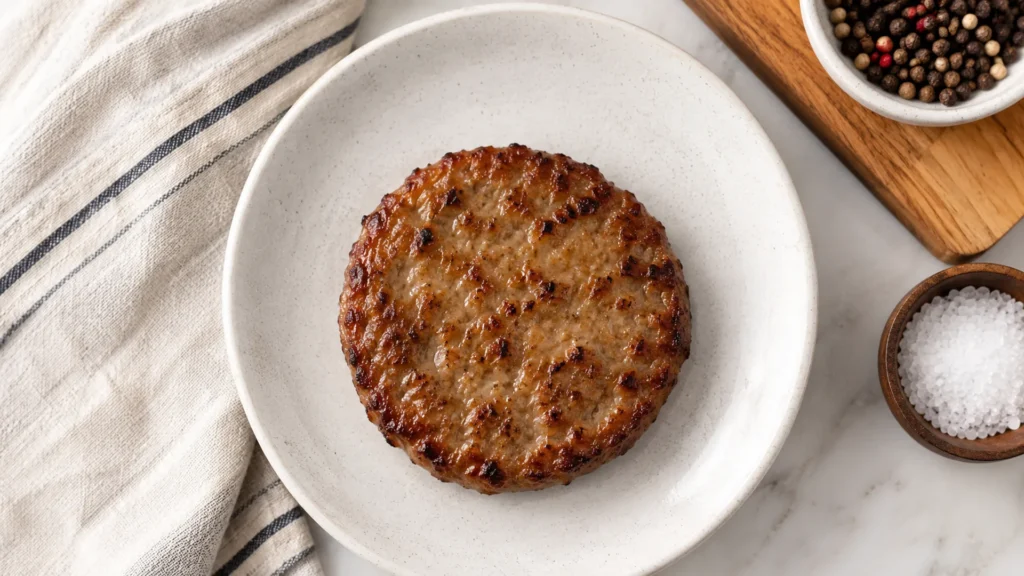
The sausage patty nutritional info most people want comes down to a handful of numbers, and the honest answer is that they move around a lot. A typical 2-ounce cooked pork breakfast sausage patty runs about 170 to 200 calories, with roughly 15 to 18 grams of fat, 6 to 8 grams of protein, and 300 to 600 milligrams of sodium. A turkey patty of the same size can drop to 90 to 130 calories, and a chain-restaurant patty like the one McDonald’s serves sits near 170 calories. The reason the range is so wide is that a sausage patty is not one fixed food. The size, the meat, the fat content, and how it is cooked all change the totals.
If you eat sausage at breakfast, track macros, or just want to know what you are putting on the plate next to your eggs, this guide breaks down the real numbers. We will cover a standard patty, why pork and turkey differ so much, how the major brands stack up, what the sodium and saturated fat actually mean for your day, and how to read the label without getting fooled by serving sizes. The goal is not to scare you off sausage but to let you order and shop with clear eyes.
Sausage patty nutrition facts at a glance
The values below are for one standard cooked pork breakfast sausage patty, about 2 ounces or 57 grams, which is the size most national brands use as a serving. These figures are a representative average drawn from brand labels and USDA reference data. Treat them as a solid baseline rather than an exact match for any single product, because a thicker patty, a leaner blend, or a drained pan all shift the numbers.
| Nutrient | Amount per patty (2 oz) | Percent Daily Value* |
|---|---|---|
| Calories | 190 | — |
| Total fat | 17 g | 22% |
| Saturated fat | 6 g | 30% |
| Trans fat | 0 g | — |
| Cholesterol | 40 mg | 13% |
| Sodium | 400 mg | 17% |
| Total carbohydrates | 1 g | 0% |
| Dietary fiber | 0 g | 0% |
| Total sugars | 0 g | — |
| Protein | 7 g | — |
*Percent Daily Values are based on a 2,000-calorie diet. Your own needs may be higher or lower. For pork handling and safe cooking temperatures the USDA Food Safety and Inspection Service is the standard reference, and you can confirm reference values against the USDA FoodData Central database.
Calories in a sausage patty
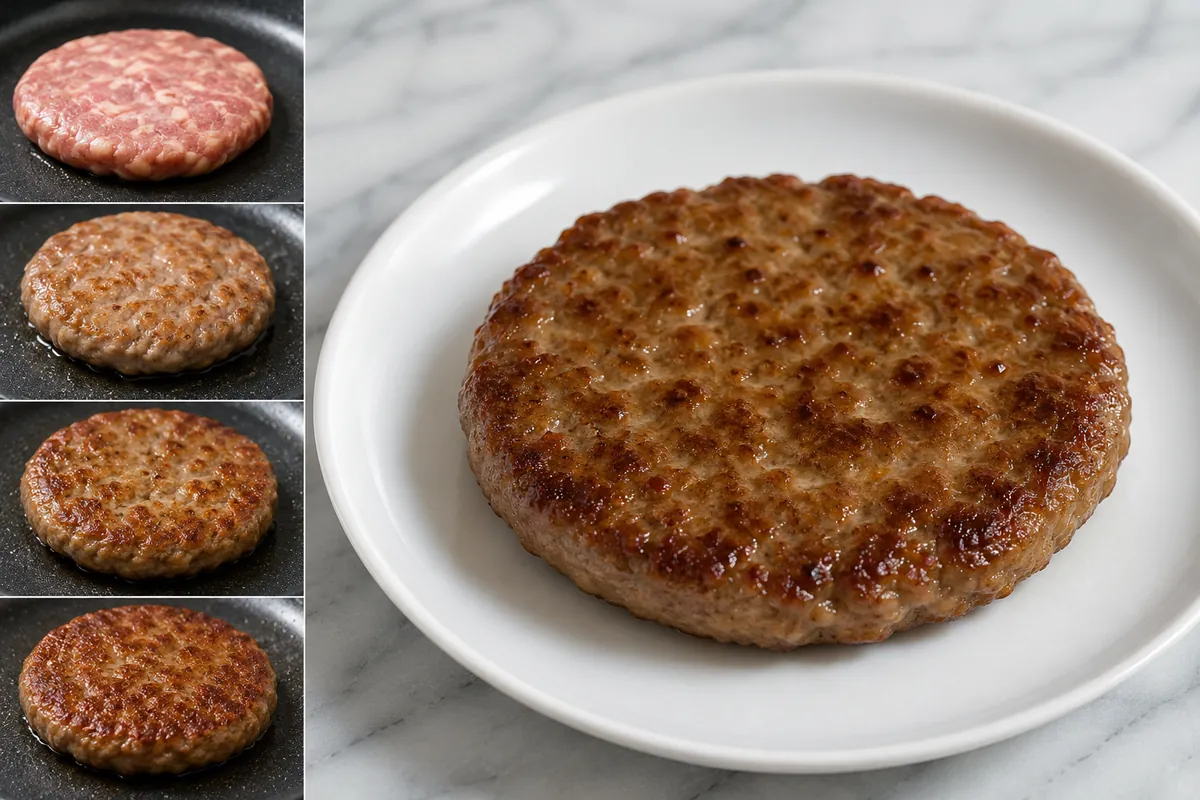
A standard 2-ounce pork sausage patty carries about 190 calories. That is a lot of energy for a small piece of food, and the reason is fat. Breakfast sausage is built to be rich, and most of its calories come from the fat in the meat rather than from protein or carbohydrate. There is almost no carbohydrate in a plain patty, so the calorie count tracks the fat content almost directly.
Because the patty is so calorie-dense, the size of the one you actually eat matters more than with most foods. A small 1-ounce patty, the kind that comes in a value box, might be only 90 to 100 calories. A thick diner-style patty can push past 250. When a label says 170 calories, check whether that is for one patty or for a serving of two, because some packages list two small patties as a single serving and the number on the front can be misleading.
Cooking method changes the total too. Pan-frying without draining keeps all the rendered fat in play, while baking on a rack or blotting the patty with a paper towel removes a measurable amount of fat and a few calories with it. You will not turn sausage into a diet food this way, but draining a fatty patty can trim 20 to 30 calories without changing the flavor much.
Where the calories come from
In a pork patty, roughly 80 percent of the calories come from fat. The protein contributes a modest share and the carbohydrate is negligible. This fat-forward profile is why a single small patty can match the calories of a much larger portion of lean meat. It is also why turkey and chicken versions, which start with leaner meat, can cut the calorie count nearly in half.
The macros: fat, protein, and almost no carbs
A pork sausage patty delivers about 17 grams of fat, 7 grams of protein, and roughly 1 gram of carbohydrate. Each of those tells a different story, and the fat is the one worth your attention.
Fat: the number that defines the patty
The 17 grams of total fat is the headline, and within it the 6 grams of saturated fat is the part that matters most for health. That single patty covers close to a third of a typical daily saturated fat ceiling. Most breakfast sausage has no added trans fat today, which is good, but the saturated load is real. If you eat two patties with breakfast, you are at or past two-thirds of the saturated fat many guidelines suggest as a daily maximum before you have touched the rest of your meals.
Protein: present but not the main event
At about 7 grams per patty, the protein is decent but not the reason to eat sausage. For comparison, a single egg has roughly 6 grams of protein for a fraction of the fat and calories. A sausage patty gives you protein, but you are paying for it in saturated fat, which is the opposite trade-off from a lean protein like chicken breast or eggs. If protein is your goal, sausage is an inefficient way to get it.
Carbohydrate: essentially zero
A plain meat patty has almost no carbohydrate, usually under 2 grams, which comes from seasonings and any binders. That makes sausage naturally low-carb and a common choice on keto and Atkins-style plans, where the fat is a feature rather than a flaw. The carbohydrate only climbs if the patty has added sugar in the seasoning, which some maple-flavored brands do, so it is worth a glance at the label if you are counting carbs closely.
How much sodium is in a sausage patty?
One pork sausage patty contains roughly 400 milligrams of sodium, and some brands run as high as 500 to 600 milligrams for a single patty. Sausage is a cured, seasoned meat, and salt is doing real work in both flavor and preservation, so the sodium is high by design. That 400 milligrams is close to a fifth of the 2,300 milligram daily limit the American Heart Association sets as an upper boundary for most adults. The organization suggests an ideal target nearer 1,500 milligrams, and you can read the full guidance on how much sodium to eat per day for the details.
The number adds up fast at breakfast. Two patties, a couple of slices of bacon, and a cheese-topped biscuit can deliver well over 1,200 milligrams of sodium before lunch. For anyone watching blood pressure, the sodium in sausage is often a bigger concern than the calories. This is the single number most database listings mention without ever telling you what it means, and it is the one worth tracking.
Pork vs turkey vs chicken sausage patties
The biggest lever on a sausage patty’s nutrition is the meat it starts with. The table below compares a standard 2-ounce cooked patty across the common types, using representative brand averages.
| Patty type | Calories | Fat | Protein | Sodium |
|---|---|---|---|---|
| Pork (standard) | 190 | 17 g | 7 g | 400 mg |
| McDonald’s pork patty | 170 | 15 g | 7 g | 340 mg |
| Turkey | 110 | 7 g | 10 g | 350 mg |
| Chicken | 120 | 8 g | 11 g | 380 mg |
| Plant-based | 100 | 6 g | 9 g | 320 mg |
The pattern is clear. Turkey and chicken patties cut the calories and fat by roughly 40 percent while actually raising the protein, because they start from leaner meat. The trade-off is flavor and juiciness, since the fat in pork is part of what makes it taste like breakfast sausage. Sodium stays high across all of them, because the seasoning and curing do not change much when you swap the meat. If you want the sausage flavor with a better macro profile, turkey or chicken is the most effective single switch you can make, but do not expect the sodium to drop.
Why brand numbers differ so much
Even within pork patties, you will see calorie counts from 90 to 290 on different packages. The spread comes down to patty size, the fat percentage of the blend, and whether the brand lists cooked or raw weight. A premium brand using a fattier blend in a larger patty lands high, while a value brand pressing thin patties from a leaner mix lands low. This is why you should always read the actual package rather than trusting a remembered number, and it is exactly the kind of context most nutrition pages skip.
How to read a sausage patty label without getting fooled
Sausage labels are easy to misread, and a few habits keep you honest. First, check the serving size in both patties and grams. A panel that reads 170 calories might be for two small patties, so a stack of four on your plate is double what you think. Second, note whether the weight is cooked or raw, since sausage loses fat and water as it cooks and a raw-weight panel overstates what ends up in your mouth.
Third, scan the sodium and saturated fat lines before the calorie line, because those are the two numbers most likely to matter for your health over time. Fourth, watch for added sugar in flavored varieties, especially maple and brown-sugar styles, which can carry several grams of sugar per patty. None of this is complicated, but it is the difference between guessing and knowing, and it is where the generic database listings leave you on your own.
What is a sausage patty actually made of?
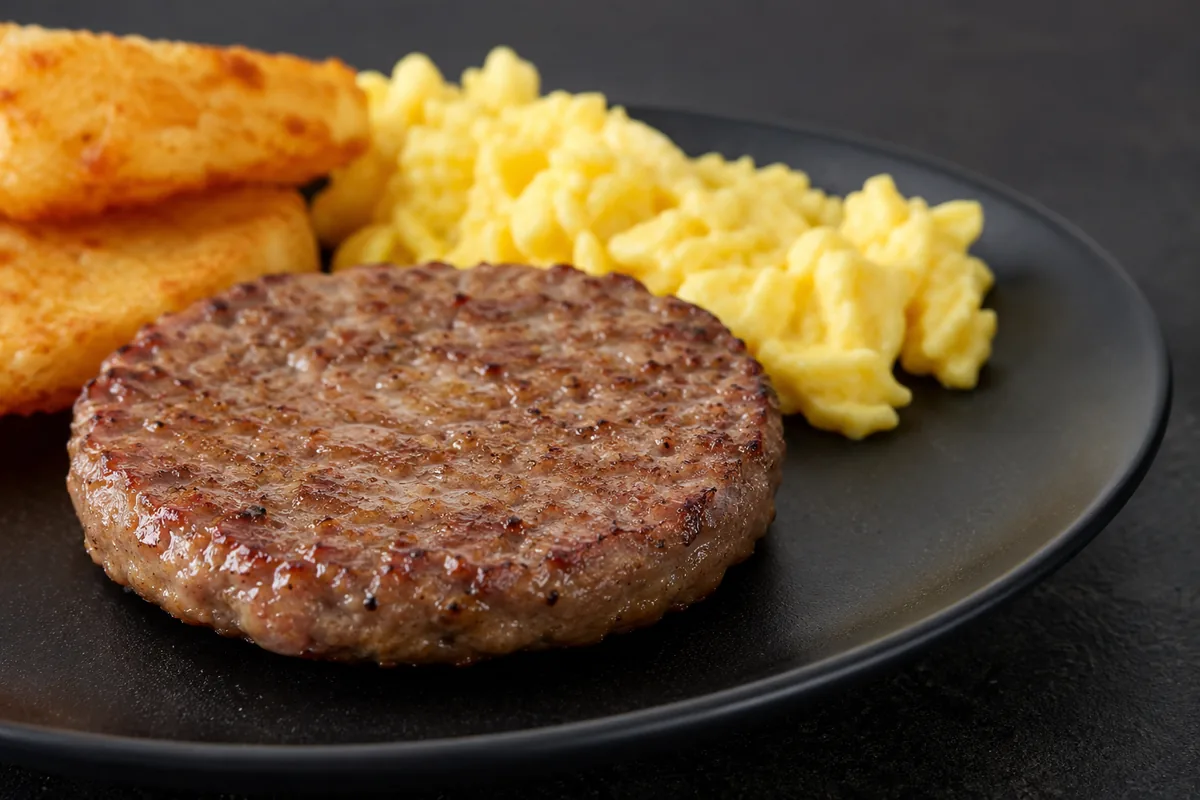
A classic breakfast sausage patty is ground pork seasoned with salt, pepper, sage, and often a little sugar, thyme, or red pepper. The pork is usually a blend that includes a meaningful share of fat, often around 30 percent, which is what gives the patty its juiciness and most of its calories. Turkey and chicken patties swap the base meat and sometimes add a little oil to compensate for the lower natural fat, but the seasoning profile stays similar.
Commercial patties may also include binders, preservatives, and flavorings, and some add fillers like breadcrumbs that nudge the carbohydrate up slightly. For safe cooking, pork sausage should reach an internal temperature of 160 degrees Fahrenheit, a guideline the USDA Food Safety and Inspection Service publishes for ground pork. The fully cooked patty is firm and no longer pink in the center, and getting to that temperature matters more for food safety than for nutrition.
Allergens and dietary notes
Plain pork, turkey, and chicken sausage patties are naturally gluten-free and dairy-free, but versions with breadcrumb fillers can contain wheat, so anyone with celiac disease or a wheat allergy should read the label. Patties are not vegetarian or vegan unless they are specifically plant-based products. The plant-based versions are usually soy or pea protein based, which can matter for soy allergies.
Sausage patty in a breakfast context
A sausage patty rarely shows up alone. It usually sits next to eggs, toast, or inside a sandwich, and that is where the numbers really climb. A sausage, egg, and cheese biscuit can run 450 to 550 calories with well over 1,000 milligrams of sodium, much of it from the patty and the biscuit together. Our breakdown of the Sausage Egg McMuffin nutrition facts shows exactly how a single patty drives the totals once it is built into a full sandwich, and it is a useful comparison if you eat breakfast sandwiches often.
If you are eating sausage as part of a larger fast-food order, the same logic applies as with any rich menu item. Our look at the Big Mac nutrition facts walks through how the sides and extras, not just the headline item, decide whether a meal is reasonable or heavy. The patty itself is manageable, but what surrounds it is usually what tips the meal over.
How to make a sausage patty fit your day
Sausage is fine in moderation, and a few practical moves keep it in a reasonable place. The most effective single change is to swap pork for turkey or chicken when you can, which cuts the calories and fat by roughly 40 percent while keeping the breakfast flavor close enough for most people. If you want to keep pork, eat one patty instead of two and pair it with eggs and vegetables rather than a second meat and a refined-carb side.
Draining the patty after cooking, either on a rack or with a quick blot, removes some of the rendered fat. Watching the sodium across the rest of the day helps too, since one patty already carries a fifth of the recommended ceiling. And because sausage is so calorie-dense for its size, treating it as a flavor accent rather than the main protein, alongside eggs or a serving of beans, gives you a more balanced plate without giving up the taste you actually want.
Is a sausage patty healthy?
A sausage patty is not a health food, but a single patty fits into most eating patterns without much trouble. The drawbacks are the saturated fat and the sodium, both of which are high for the small size, and the protein is not impressive enough to justify them on its own. The plus side is that sausage is naturally low in carbohydrate and genuinely satisfying, which is why it has a place on low-carb plans and why a little goes a long way at breakfast. As with most processed meats, the issue is rarely one patty. It is the pattern over weeks and months, so an occasional sausage patty eaten with awareness is perfectly reasonable, while a daily double habit is worth rethinking.
Frequently Asked Questions
How many calories are in a sausage patty?
A standard 2-ounce cooked pork breakfast sausage patty has about 190 calories. Smaller value-box patties can be 90 to 100 calories, while thick diner-style patties can exceed 250.
How much protein does a sausage patty have?
About 7 grams for a standard pork patty, and 10 to 11 grams for a turkey or chicken patty. Sausage gives you protein, but you pay for it in saturated fat, so it is not an efficient protein source compared with eggs or lean meat.
Is a sausage patty high in sodium?
Yes. One pork patty carries roughly 400 milligrams of sodium, and some brands reach 500 to 600 milligrams. That is close to a fifth of the recommended daily limit from a single small piece of food.
Is sausage keto-friendly?
Plain pork, turkey, and chicken sausage patties are naturally very low in carbohydrate, usually under 2 grams, which makes them a common choice on keto and low-carb plans. Watch flavored varieties, since maple and brown-sugar styles can add a few grams of sugar.
Is turkey sausage healthier than pork sausage?
For calories and fat, yes. A turkey patty cuts both by roughly 40 percent while raising the protein. The sodium stays high in both, so turkey is the better macro choice but not a low-sodium one.
How much fat is in a sausage patty?
A standard pork patty has about 17 grams of total fat, including 6 grams of saturated fat. Turkey and chicken patties drop to around 7 to 8 grams of fat for the same size.