Honey Bunches of Oats Nutrition Label: What Each Line Reports
The number on the box front and the number you find online rarely match, and that single mismatch drives most of the confusion around the Honey Bunches of Oats nutrition label. Post Consumer Brands prints 160 calories for the Honey Roasted variety, but the figure is tied to a serving the brand defines as 1 cup (41g). Change the serving weight or the variety and the calorie count moves with it. This page reports each line exactly as the manufacturer panel states it, flags where a second source uses a different basis, and sets the three official varieties beside one another so the differences are visible rather than assumed.
The Tastybend Nutrition Desk sources these figures from manufacturer declarations, retailer package statements, and public food databases, structured into standardized reference tables. Where two authorities disagree, the disagreement is named, not smoothed over.
The Answer: What 1 Cup of Honey Bunches of Oats Reports
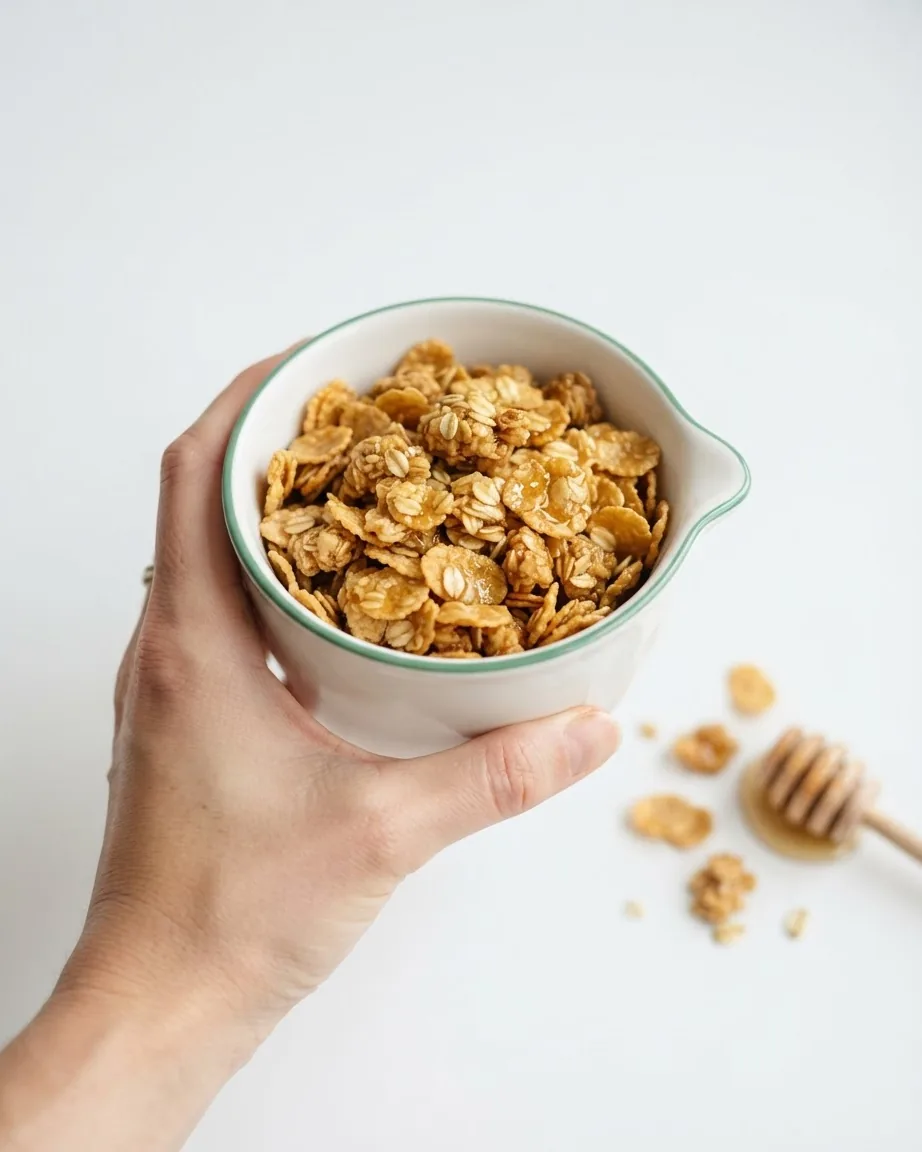
One 1-cup (41g) serving of the Honey Bunches of Oats Honey Roasted variety is the reference serving the manufacturer panel reports, with its total carbohydrate, total sugars, added sugars, sodium, dietary fiber, and 3g protein all stated on that basis. That fiber figure sits below the 3g mark, and added sugar accounts for most of the total sugars. Online listings showing 120 or 130 calories are not errors: they use a smaller 3/4-cup serving or a different named variety. The Honey Bunches of Oats nutrition label is only comparable to another source when the serving weight matches.
Why Your Box Says 160 but the Internet Says 120 or 130
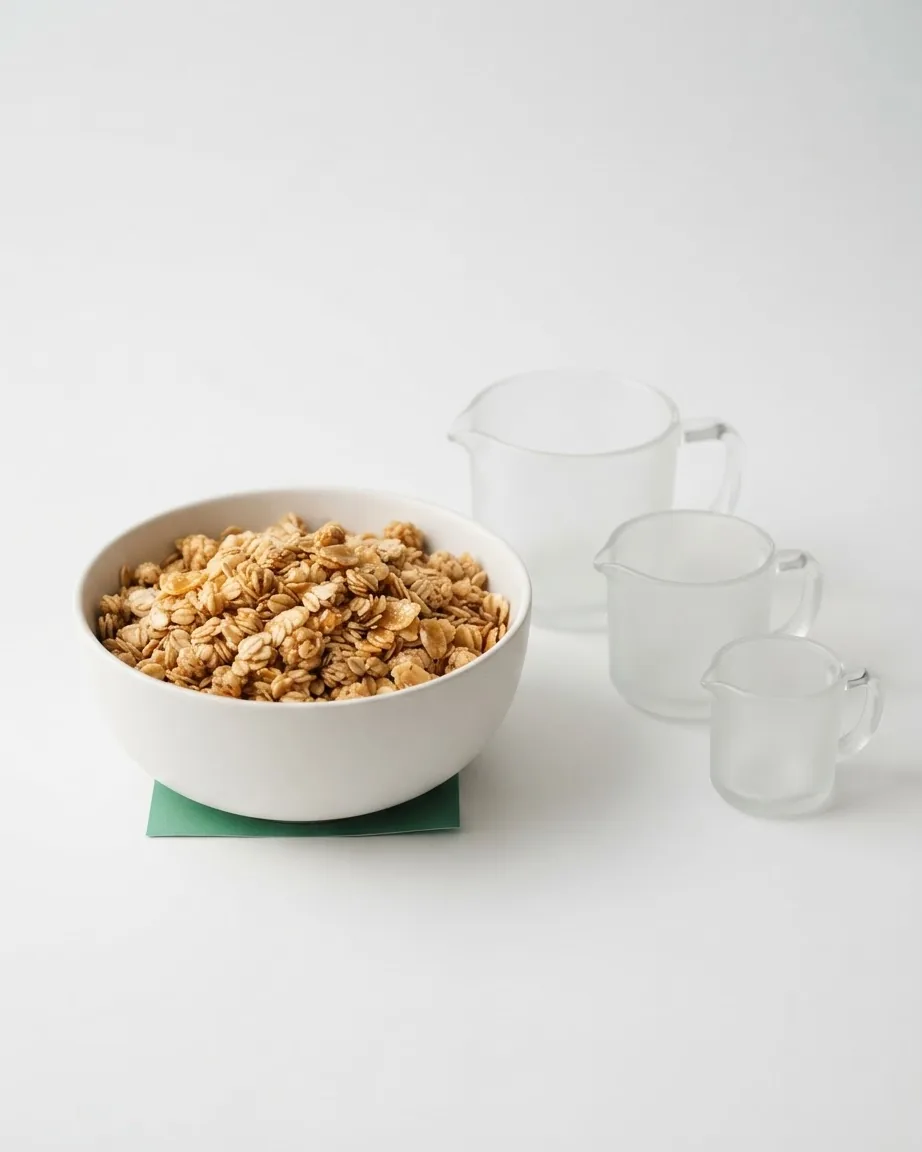
Three numbers circulate for what looks like the same cereal, and each is correct on its own terms. The gap comes from serving basis and variety, not from anyone being wrong.
The manufacturer’s own product page for the Honey Roasted variety states a serving of 1 cup (41g) at 160 calories. Healthline reports the traditional flavor at 120 calories, but measured against a 3/4-cup (30g) serving. Those are two different amounts of cereal in the bowl before any other variable enters. A third figure, 130 calories, comes from myfooddata, whose USDA FoodData Central entry covers the “Crunch!” variety at a 3/4-cup (32g) serving.
So the spread of 160, 120, and 130 calories reflects three serving weights across two cup fractions and at least two named varieties. Before comparing any two figures, check that both list the same gram weight. A 41g cup and a 30g three-quarter cup will never agree, and neither should be treated as the “real” number over the other. This same serving-basis trap turns up whenever a box states cups while a database states grams, a pattern the desk covers across its pantry basics tables.
The Three Official Varieties Side by Side
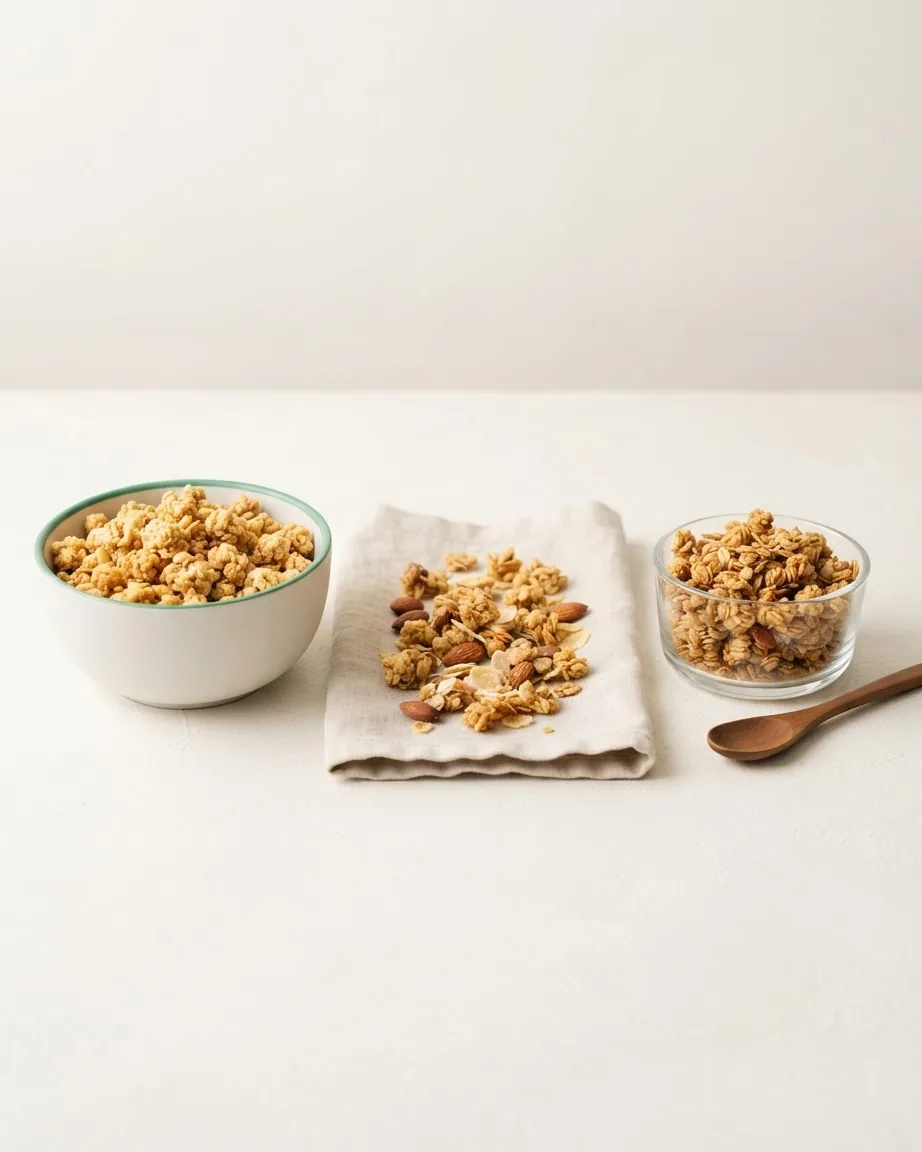
No single listing usually sets Honey Roasted, Almonds, and Strawberries against each other, yet the manufacturer panels differ in ways that matter for a specific bowl. All three use a roughly 1-cup serving, which makes them directly comparable to one another even though they are not comparable to the 3/4-cup online figures.
| Per manufacturer serving | Honey Roasted (1 cup, 41g) | Almonds (1 cup, 42g) | Strawberries (1 cup, 41g) |
|---|---|---|---|
| Calories | 160 | 170 | 160 |
| Total carbohydrate | 34g | 33g | – |
| Total sugars | 9g | 9g | 10g |
| Added sugars | 8g (16%) | 8g (15%) | 9g (17%) |
| Sodium | – | – | – |
| Total fat | – | 3g | – |
| Iron | – | – | – |
| Folate | – | – | – |
The Almonds variety runs highest at 170 calories, carrying the 3g total fat the other two panels don’t foreground. Strawberries leads on sugar with 10g total and 9g added, and lands the highest added-sugar Daily Value at 17 percent. The largest split, though, is in fortification, covered in the next section.
The Strawberries Fortification Gap
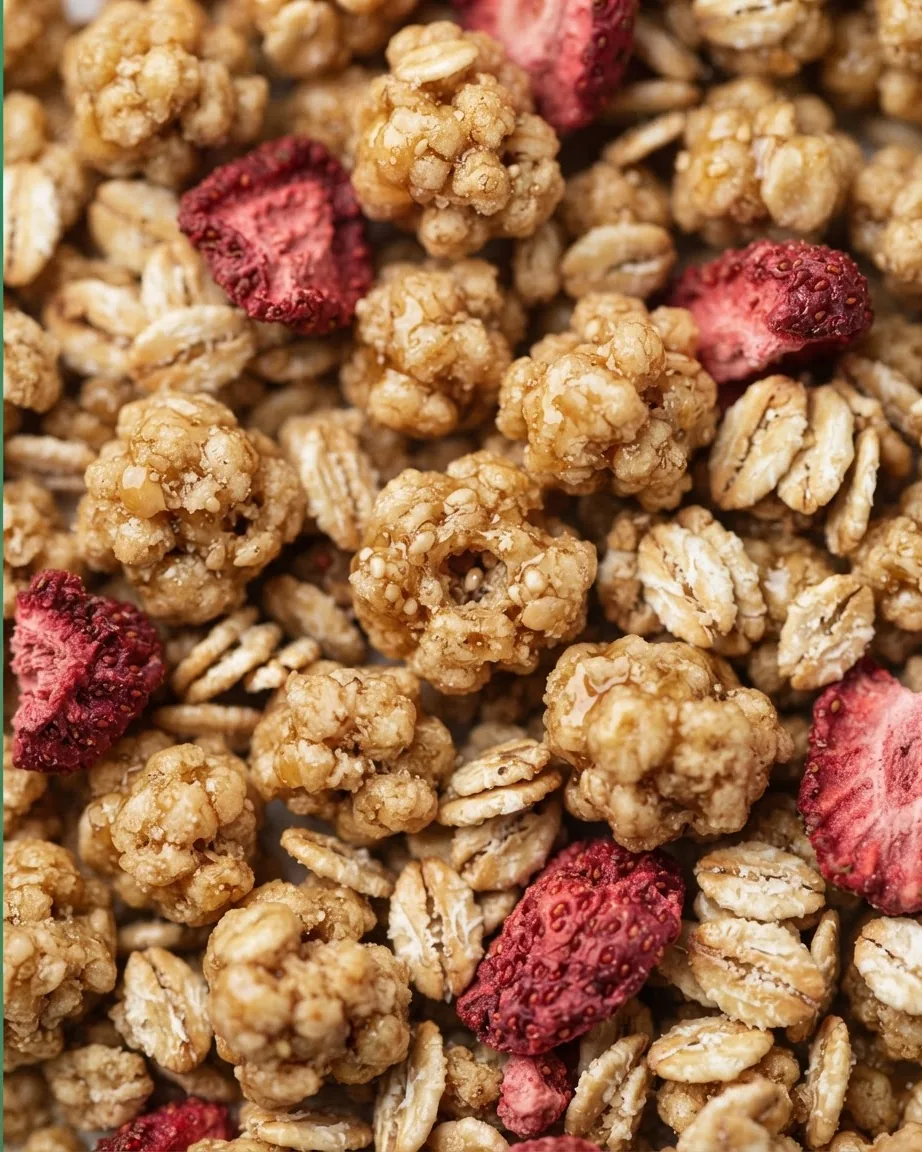
Fortified vitamins and minerals in this cereal are added, not naturally present in meaningful amounts, and the added dose is not identical across the line. The manufacturer panels show the Strawberries variety supplying a lower folate and iron contribution per serving than the other two flavors. The Honey Roasted and Almonds varieties both list higher folate and iron fortification.
For someone choosing this cereal partly for its iron or folate contribution, that is a real difference between varieties that share a shelf and a brand name. Picking Strawberries over Honey Roasted trades a meaningful share of the folate fortification for the strawberry pieces. This is a within-brand difference drawn from the three official panels, not a conflict between sources. A single independent second source confirming the Strawberries fortification numbers was not located, so treat those figures as manufacturer-declared and subject to unannounced recipe changes.
The Marketing Words vs the Fiber and Sugar Lines
“Oats and honey” and “whole grain” on the front of the box suggest a high-fiber, low-sugar breakfast. The panel tells a narrower story.
Fiber lands at 2g per serving. Healthline notes a product is considered a good source of fiber only at 3g per serving and high in fiber at 5g, thresholds the cereal’s 2g does not reach. Sugar sits high enough that the Environmental Working Group flags this cereal as containing about 23 percent more sugar per serving than the average cold cereal. Added sugar comes from sugar, corn syrup, molasses, and honey, and sugar ranks as the third ingredient. The preservative BHT also appears in the ingredient screening.
None of this makes the cereal a health hazard; it means the front-of-box framing outruns what the panel supports. If fiber is the priority, the 2g figure is the one to weigh. A study in 48 people found those eating a high-fiber oatmeal breakfast felt fuller over 4 hours than those eating a low-fiber breakfast cereal, which is the practical reason the 2g matters at all. Post Consumer Brands has kept the product on shelves for over 30 years, so the recipe is well established even as exact values can shift.
The 3g vs 9g Protein Problem on the Label
Here the sources genuinely disagree, and the disagreement is worth stating plainly rather than resolving by guess. The manufacturer’s Nutrition Facts panel for the Honey Roasted variety lists 3g protein per serving. The same manufacturer’s product-page marketing copy – across Honey Roasted, Almonds, and Strawberries pages – states “9g of protein per serving” and calls it a “protein cereal.”
Those two figures, 3g and 9g, come from the same domain for the same variety and are not reconciled anywhere the desk could locate. The most likely reading is that the 9g figure reflects cereal plus milk or a reformulated “protein” line, while the panel’s 3g reflects the dry cereal alone, but that is inference, not a stated fact. Until a single panel confirms which basis the 9g uses, treat the 3g dry-cereal panel figure as the conservative number and the 9g as unverified against the Nutrition Facts label. If protein is your reason for buying, verify the exact box in hand.
What Adding Milk Does to the Label Numbers
Every panel figure above describes dry cereal. The moment milk enters the bowl, the label understates what you actually eat. Healthline puts the increase at about 40 – 60 calories per serving from milk, before counting the milk’s own protein, sugar, and calcium.
That means the 160-calorie Honey Roasted serving eats as a larger bowl once milk is poured, depending on the type and amount. It is a small adjustment, but it explains why a “160-calorie” cereal rarely eats like one. The same dry-vs-prepared gap appears in other pantry staples the desk has logged, including the cooked-vs-dry reconciliation in Rice Cream Nutrition: The Cooked-vs-Dry Numbers Nobody Reconciles.
Whole-Grain Claims: 14g vs 16g per Serving
The whole-grain statement also carries two figures, and both are legitimate because they describe different packages. The Honey Roasted Family Size statement, as reproduced by retailer AF County Market, reads “Whole Grain: 14 g or more per serving. Eat 48 g or more of whole grains daily.” The manufacturer’s Strawberries product page states about 16g whole grains per serving, or at least 48g per day.
So 14g and 16g are not a contradiction; they are two varieties and package statements. Both point to the same daily target of 48g. What the whole-grain line does not tell you is fiber, which stays at 2g regardless of the whole-grain gram count – a reminder that “whole grain” and “high fiber” are not the same claim.
How This Compares to Other Cereals on the Shelf
Context turns a bare number into a decision. Against the EWG benchmark, the average adult cold cereal carries less sugar per serving than this one’s roughly 23 percent surplus. Two close comparisons on the same shelf sharpen the picture. Raisin Bran leans on bran flakes and raisins for a higher fiber count, detailed in Raisin Bran Nutrition Facts, while a heavily sweetened option like the one broken down in Cinnamon Toast Crunch Nutrition Facts: The Numbers Behind the Bowl pushes sugar well past this cereal.
Honey Bunches of Oats sits in the middle: more sugar than a plain bran flake, less than a candy-forward cereal, and low on fiber either way. For a low-carbohydrate eater, the 34g total carbohydrate per serving is the disqualifying line, a point the desk expands on in its Keto Diet: A Home Cook’s Practical Guide to Eating Low-Carb.
Package Sizes and Reading the Label You Actually Have
The cereal ships in several package sizes: 12 oz, 15 oz Large Size, 18 oz Family Size, 23 oz Family Size, 28 oz Giant Size, and a 48 oz Club Pack. Package size does not change the per-serving figures, but the whole-grain and serving statements printed on a Family Size box can differ from a smaller box, as the 14g Family Size figure shows.
The single habit that resolves almost every question here: read the serving weight in grams before trusting any calorie number, yours or one online. A box stating 1 cup (41g) and a database stating 3/4 cup (30g) are describing different amounts of the same food. Match the gram weight first, then compare.
How Much of Each Variety’s Sugar Is Added Sugar
The panels list total sugars and added sugars as separate lines, and dividing one by the other shows how little of the sweetness comes from anything but added sugar. Even the Strawberries variety, which carries real fruit pieces, leaves only 1g of its 10g total sugar unaccounted for by added sugar.
- Honey Roasted: 8g added of 9g total = 88.9% of its sugar is added sugar.
- Almonds: 8g added of 9g total = 88.9% of its sugar is added sugar.
- Strawberries: 9g added of 10g total means most of its sugar is added sugar, with the small remainder attributable to anything other than added sugar despite the fruit on the front of the box.
Across all three official varieties, roughly nine out of every ten grams of sugar in the bowl were added in manufacturing rather than occurring naturally.
Frequently Asked Questions About the Honey Bunches of Oats Label
Is Honey Bunches of Oats high in protein?
The dry-cereal Nutrition Facts panel lists 3g per serving, which is modest for a breakfast. The brand’s marketing copy claims 9g, a figure the panel does not confirm and which may include milk or a reformulated line. If protein drives your choice, read the exact panel on your box rather than the front-of-box wording, and expect the lower number for plain dry cereal.
Which variety has the least sugar?
Honey Roasted and Almonds both list 9g total sugars with 8g added, while Strawberries runs slightly higher at 10g total and 9g added, landing a 17 percent added-sugar Daily Value. If cutting sugar is the goal, the two non-fruit varieties edge ahead by a single gram, though all three carry roughly the same sweetened profile per serving.
Does Honey Bunches of Oats count as a high-fiber cereal?
No. At 2g per serving it falls short of the 3g needed to be labeled a good source of fiber and well under the 5g high-fiber mark. The whole-grain claim of 14g to 16g per serving is separate from fiber and should not be read as one. For more fiber at breakfast, a bran-based cereal delivers noticeably more per bowl.
How many calories with milk instead of dry?
Add roughly 40 to 60 calories to the dry figure for the milk itself. A 160-calorie Honey Roasted serving eats as a larger prepared bowl, plus the milk’s protein and calcium, which the dry panel never accounts for. The exact bump depends on whether you pour whole, reduced-fat, or a plant milk, and how much.
Why does one label list 130 calories?
That figure belongs to the “Crunch!” variety recorded in USDA FoodData Central at a 3/4-cup (32g) serving, a different product and portion than the 1-cup Honey Roasted box. It is not a corrected or updated version of the 160-calorie number; it is a separate line item entirely, which is why matching the variety name and gram weight matters before trusting any single calorie count.