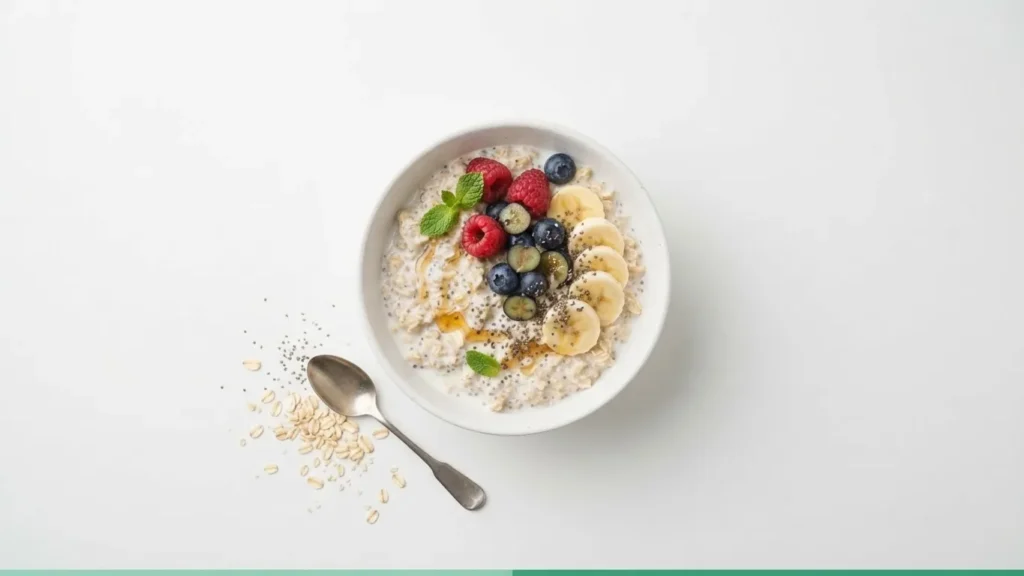
There is no single panel for a jar of overnight oats. The same dish lands anywhere from about 215 calories in a bare version to roughly 470 calories once fruit and nuts go in, and the spread is not a labeling error. It tracks the recipe in front of you. These overnight oats nutrition facts only make sense once you separate the fixed oat base from the add-ins stacked on top of it, because the base barely moves while everything else does. This desk aggregates manufacturer and dietitian-published panels alongside USDA primary data, so the numbers below are read off those panels rather than estimated.
The variability is the whole story. A basic jar and a built-up jar are different foods wearing the same name, and the number you should trust is the one whose recipe matches yours.
Quick answer: Overnight oats nutrition facts depend almost entirely on add-ins. A plain, tested base runs about 229 kcal with 10g protein, 33g carbs, 4g fiber and 15g sugar per serving. A base plus Greek yogurt, chia and sweetener climbs to roughly 319 kcal and 16g protein. A fruit-and-nut flavored jar can reach about 470 calories. The oat portion itself is stable: raw rolled oats carry about 13.5g protein, 10.4g fiber and only 1 mg sodium per 100 g. Protein is the lever that decides whether the jar holds you until lunch.
Why the calorie count ranges from 215 to 470 per jar
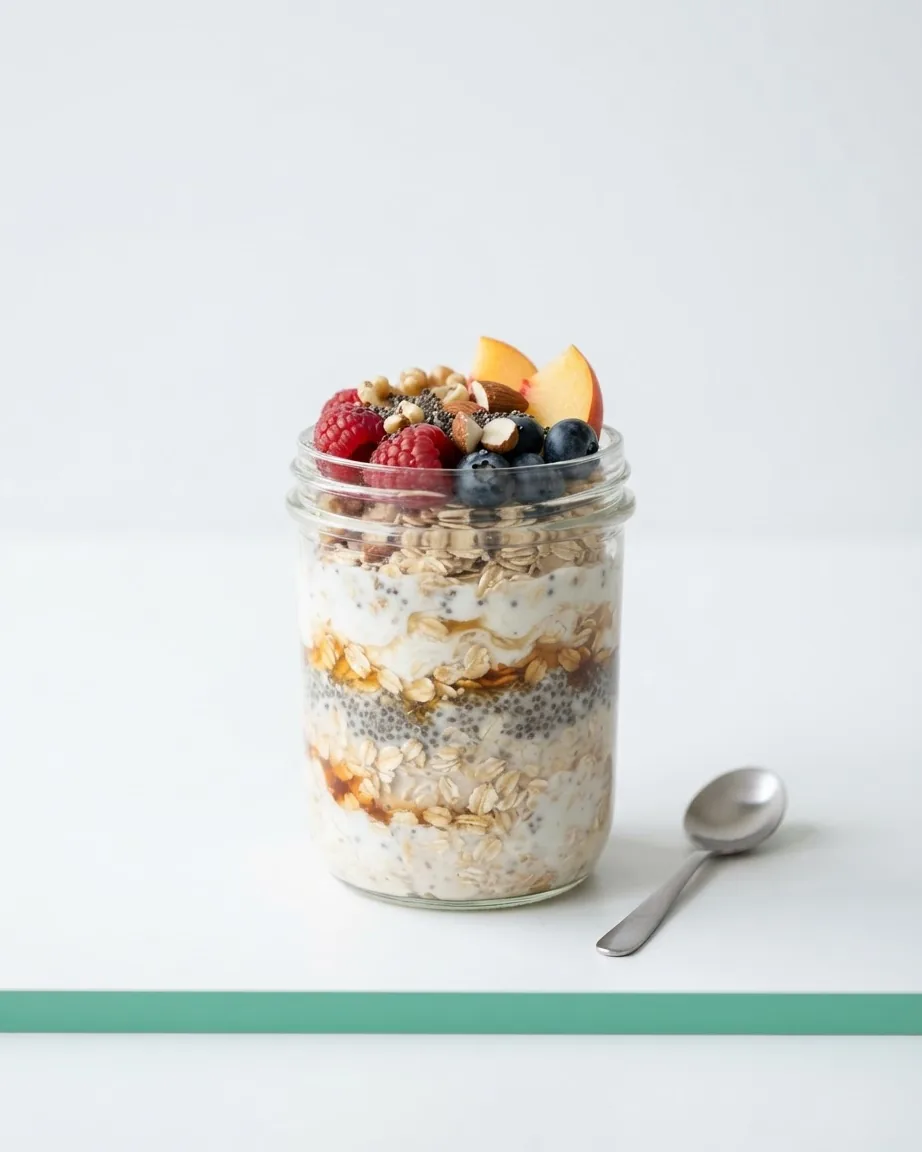
Line up published panels and the numbers fan out, not because anyone measured wrong but because every recipe counts different ingredients into one serving. Fit Foodie Finds lists a tested base of oats, milk, Greek yogurt, chia and maple syrup at 229 kcal, 33g carbs, 10g protein, 6g fat, 4g fiber and 15g sugar per serving (fitfoodiefinds.com). Feel Good Foodie’s base with common add-ins runs higher, at 319 kcal with 50g carbohydrates, 16g protein, 10g fat and 3g saturated fat (feelgoodfoodie.net). On the upper end, a flavored jar with added fruit and nuts reaches 470 calories, 69g total carbohydrate, 27g sugar, 13g fiber and 15g protein (healthy.kaiserpermanente.org).
These are not competing values for one food. They are the same category measured at different builds. A reader asking which calorie figure applies to overnight oats is really asking which recipe they are holding.
| Build | Calories | Protein | Carbs | Fiber | Sugar | Source panel |
|---|---|---|---|---|---|---|
| Tested plain base | 229 kcal | 10 g | 33 g | 4 g | 15 g | Fit Foodie Finds |
| Basic version | ~215 kcal | low | – | – | – | Nutrition to Fit |
| Base + yogurt, chia, sweetener | 319 kcal | 16 g | 50 g | 8 g | 11 g | Feel Good Foodie |
| Protein-forward | – | 37 g | 28 g | 10 g | – | Nutrition to Fit |
| Carrot cake single serving | 395 kcal | 21 g | 55 g | 9 g | – | Mayo Clinic Health System |
| Fruit-and-nut flavored | 470 kcal | 15 g | 69 g | 13 g | 27 g | Kaiser Permanente |
Serving size is reported per finished jar in each case, with milk, yogurt and any mix-ins already counted. Toppings added at the table sit outside these figures.
What the oat base alone contributes before you add anything
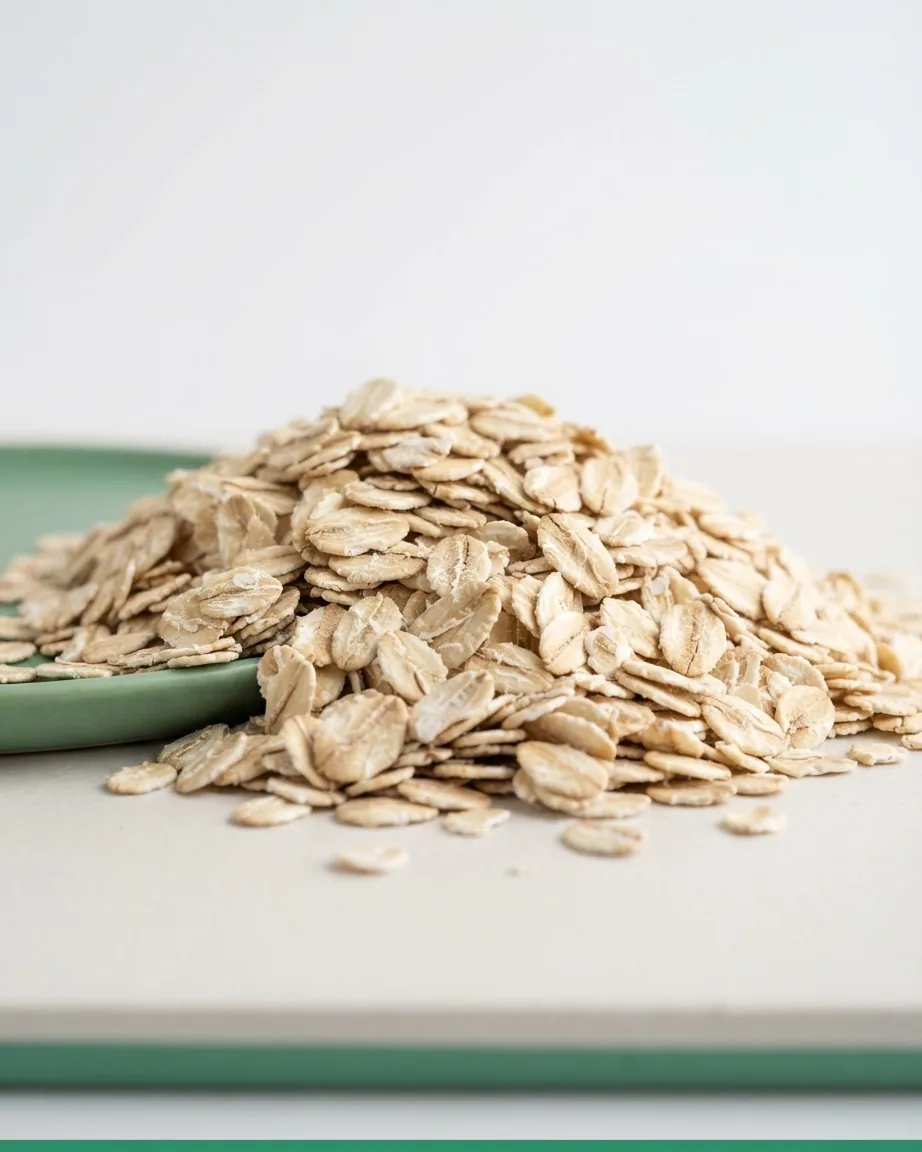
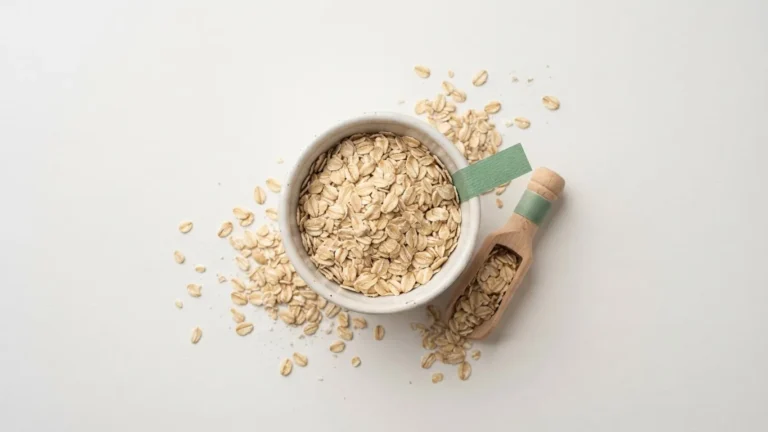
Strip the jar back to dry oats and the numbers stop moving. Raw old-fashioned rolled oats carry about 13.5 g protein, 10.4 g total dietary fiber, 7.52 g beta-glucan, and just 1 mg sodium per 100 g, with 126 mg magnesium and 387 mg phosphorus, measured as USDA Foundation Foods data (fdc.nal.usda.gov). The near-zero sodium is worth flagging: the base is naturally low-sodium, so whatever sodium shows on a finished panel came from milk, yogurt or flavorings, not the grain.
That per-100g figure is dry weight, which is why it reads so dense. Cooked, the portion looks different. Half a cup of rolled oats cooked in a cup of water has 165 calories, 4 grams of fiber and 6 grams of protein, per Mayo Clinic Health System (mayoclinichealthsystem.org). Water is the only thing added there, so that 165 kcal is close to the floor for a true oats-only serving.
Oats also out-protein most grains, at 5g per serving of the oats themselves, which is the share that survives no matter what you stir in. For the wider category of staples measured this way, see our pantry basics coverage.
How Greek yogurt, chia and protein powder move protein and fiber
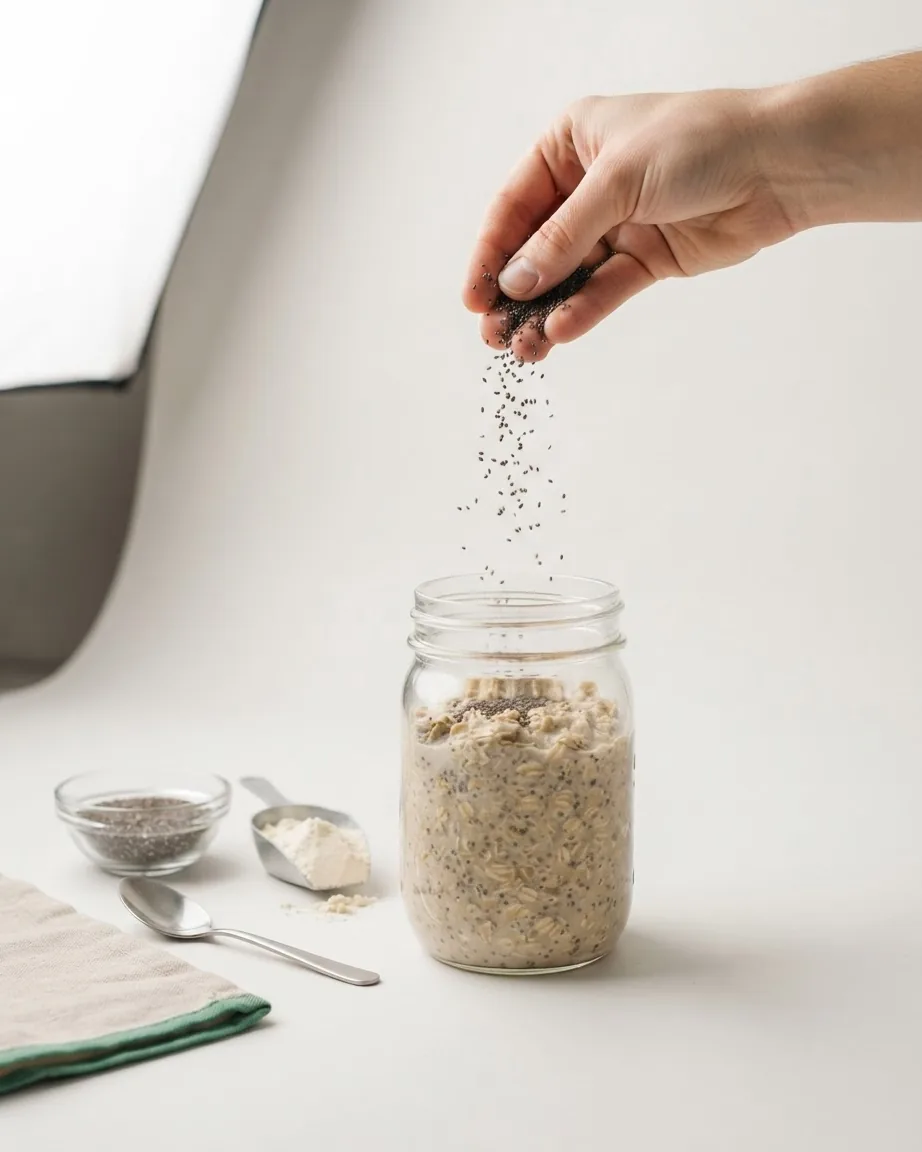
The gap between a 10g-protein jar and a 37g-protein jar is almost entirely add-ins. Plain Greek yogurt is the main reason a base reaches 10g+ protein per serving, since it adds creaminess and protein at once.
Chia is the fiber lever. About 2.5 tablespoons of chia seeds carries 5 grams of protein, 10 grams of fiber and 9 grams of fat, 8 grams of it heart-healthy, per WebMD (webmd.com). One caution on stacking: many base recipes already include a tablespoon of chia, so adding a full 2.5-tablespoon chia figure on top double-counts the seed. Count the chia once, at the amount you actually use.
The practical takeaway: yogurt and protein powder move the protein line, chia moves the fiber and fat lines, and sweeteners move sugar without adding much else. Build toward the number you need rather than toward a generic jar.
Whether these overnight oats nutrition facts differ from cooked oatmeal
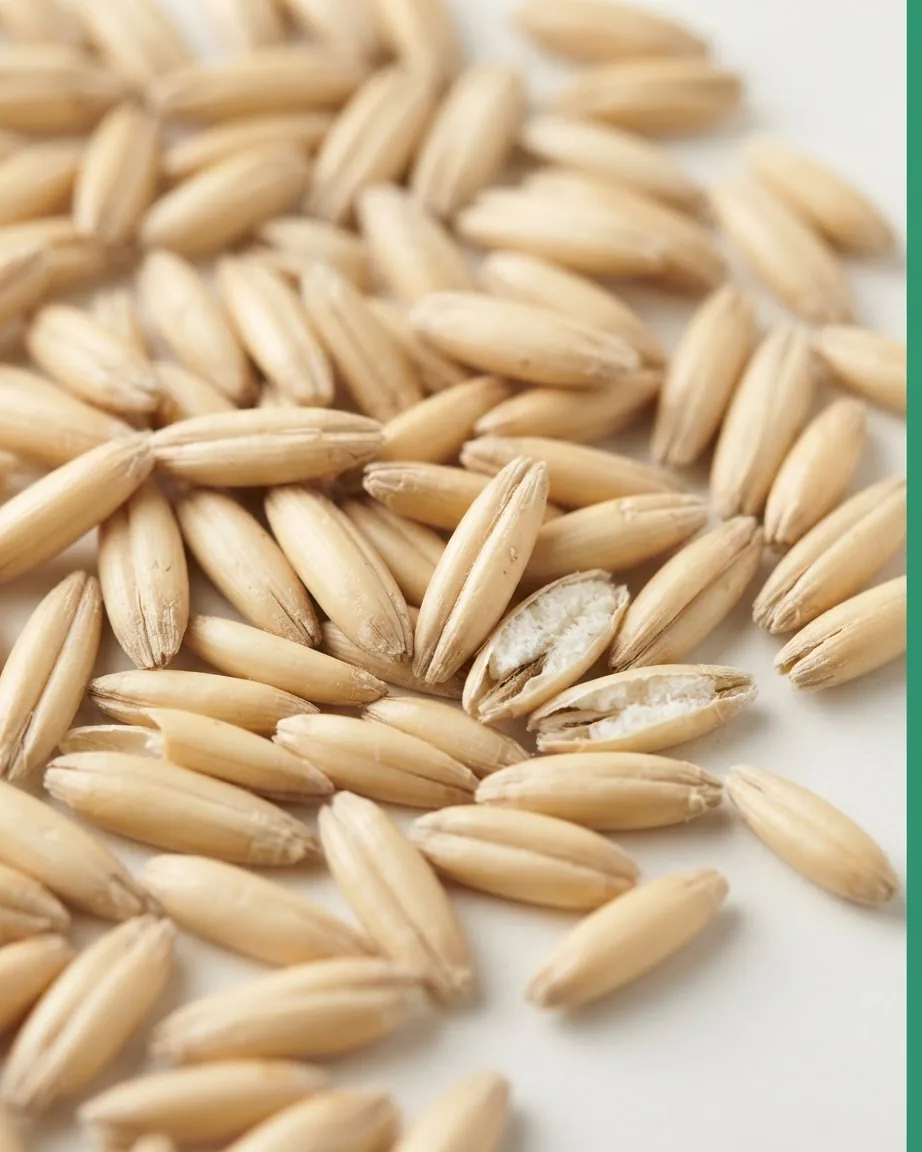
Soaking oats cold overnight and cooking them hot produce near-equivalent nutrition; the real difference is texture, not the panel. A registered dietitian treats the two preparations as nutritionally interchangeable for the same ingredients (nutritiontofit.com). What the soak can do is modestly reduce phytic acid, the compound that binds minerals like iron and zinc, which may slightly improve how much of those minerals the body can take up.
That phytic-acid effect is supported in the peer-reviewed literature. A review of oat composition published in the journal Nutrients notes that soaking lowers phytic acid and can improve mineral availability (pmc.ncbi.nlm.nih.gov). The same review reports that dehulled oat groats run roughly 10 – 12% fiber, of which about 40% is soluble (mainly beta-glucan) and 60% insoluble. So the overnight method does not cost you anything on the panel, and may quietly help on the mineral side.
Why oats earn the heart-healthy label and why oat type changes the numbers
The reputation traces to a specific soluble fiber. Beta-glucan is the fraction behind oats’ cholesterol benefit, and it carries a long-standing FDA health claim tying oat beta-glucan to reduced heart-disease risk, a connection Mayo Clinic Health System ties back to the 1997 authorization. The USDA figure of 7.52 g beta-glucan per 100 g is high for this specific sample; the academic literature treats oat beta-glucan as naturally variable across batches rather than a single fixed value, so expect some spread between brands.
Oat type matters for what rides alongside that fiber. Instant and flavored packet oats often carry added sugar and less fiber than plain rolled oats, which is why two “oatmeal” panels can look so different. Choosing plain rolled or steel-cut oats keeps the sugar line where you control it. Readers tracking the soluble-fiber angle more broadly can see our foods high in fiber guide, and for a different grain-plus-sugar panel, our Honey Bunches of Oats breakdown.
How long overnight oats keep, and the minimum soak that actually works
The nutrition holds across a usable storage window, which matters for anyone batching jars ahead. Oats only need to soak and rest in the fridge for about 2 hours for the liquid to absorb, per Feel Good Foodie; some recipes set the same 2-hour minimum before the oats soften properly. “Overnight” is a convenience, not a requirement.
Once made, overnight oats last 3 to 5 days refrigerated in an airtight container, and they can be frozen up to 3 months in a sealed container, according to Nutrition to Fit. That gives a clean plan: make several jars, refrigerate what you will eat within five days, freeze the rest. None of these timings change the calorie or macro figures; they change how far ahead you can prep without quality loss.
Protein per 100 Calories: Which Overnight Oats Jar Actually Earns Its Calories
Raw calorie counts hide the real question: how much protein is each calorie buying you? Dividing the protein in each published panel by its calories (then scaling to 100 kcal) turns six scattered jars into one comparable ranking. The result reshuffles the order you’d guess from calories alone. The 470-calorie fruit-and-nut jar, the biggest number on the table, is actually the weakest per calorie, while the 340-calorie protein-forward build (37 g protein) delivers more protein density than that flavored jar (15 g protein).
- Carrot cake single serving (395 kcal, 21 g protein): 21 ÷ 395 × 100 = 5.3 g protein per 100 kcal.
- Base + yogurt, chia, sweetener (319 kcal, 16 g protein): 16 ÷ 319 × 100 = 5.0 g protein per 100 kcal.
- Tested plain base (229 kcal, 10 g protein): 10 ÷ 229 × 100 = 4.4 g protein per 100 kcal.
- Fruit-and-nut flavored jar (470 kcal, 15 g protein): 15 ÷ 470 × 100 = 3.2 g protein per 100 kcal – the most calories, the least protein per calorie.
The takeaway: if staying full until lunch is the goal, protein density beats total calories. A jar can be large and still be light on the one macro that drives satiety, so read the ratio, not just the headline number.
Frequently Asked Questions
Are overnight oats enough for a full meal on their own?
Often not, if you make the thin version. A dietitian flags that many jars land near 215 calories with little protein, which falls short as a standalone adult breakfast.
Does freezing overnight oats change the nutrition?
No. Sealing a jar and freezing it for up to three months affects texture and convenience, not the calorie or macro figures, which are fixed by the ingredients you stirred in. Thaw in the fridge overnight. The same holds for refrigerated storage inside the five-day window: the panel you calculated on day one is the panel you eat on day four.
Which sweetener or fruit adds the most sugar to the jar?
Added fruit and syrup drive the sugar line hardest. A fruit-and-nut flavored build reaches 27 grams of sugar per serving, while a leaner base with only maple syrup sits near 11 to 15 grams. Dried fruit concentrates sugar fastest by volume. If you want the sugar low, lean on the oat and yogurt base and treat sweet mix-ins as a measured topping, not the body of the jar.
Is instant oatmeal nutritionally the same as rolled oats soaked overnight?
Not reliably. Instant and flavored packets frequently pack added sugar and trim fiber, so an instant panel can diverge sharply from plain rolled oats even at the same calorie count. Soaked rolled oats keep the sugar under your control and preserve the roughly 10.4 grams of fiber per 100 grams the grain brings. Read the packet label rather than assuming oatmeal equals oatmeal.