Foods high in fiber are not hard to find, but actually eating enough of them every day is where most people fall short, and the lists you see online rarely tell you how to get from a pile of facts to a real plate of food. The average American eats around 15 grams of fiber a day. The target is 25 to 38 grams. That gap is the whole problem, and it is a cooking problem more than a knowledge problem. You already know beans and broccoli have fiber. What you probably do not have is a simple way to stack enough of them across breakfast, lunch, and dinner without overthinking it or upsetting your stomach. That is what this guide is for. I will give you the foods, yes, but also a framework to hit 30 grams a day, the difference between the two kinds of fiber and why it matters at the table, and a plan to ramp up without the gas that scares people off.
I cook for a regular household, not a lab, so everything here is meant to fit into food you would actually make and eat. No supplements required, no joyless choking down of bran. The goal is to make hitting your fiber number feel automatic, the kind of thing that happens because of how you stock your kitchen rather than because you remembered to try. Once the right foods are in the house and a couple of habits are in place, the daily total takes care of itself, and you stop thinking about fiber at all, which is exactly the point.
The Two Kinds of Fiber, and Why the Difference Matters
Fiber comes in two types, and they do different jobs, which is why a good diet includes both. Soluble fiber dissolves in water and forms a gel in your gut. That gel slows digestion, which steadies blood sugar and helps lower LDL cholesterol by binding to it and carrying it out. You find soluble fiber in oats, beans, apples, citrus, barley, and psyllium. Insoluble fiber does not dissolve. It adds bulk and moves things through, which is what keeps you regular and prevents constipation. It lives in the skins of fruits and vegetables, in wheat bran, in nuts and seeds, and in whole grains.
Most plant foods carry a mix of both, so you do not need to count them separately. But if you have a specific goal, it helps to know which lever to pull. Cholesterol concern: lean into oats, beans, and apples. Sluggish digestion: lean into bran, leafy greens, and whole grains with the skin on. Beans are the all-star because they deliver a generous load of both at once.
There is a third category worth a mention, even though it does not show up on most labels: fermentable fiber, sometimes called prebiotic fiber. This is the portion your gut bacteria feast on, and it lives in foods like onions, garlic, leeks, slightly underripe bananas, oats, and beans. You do not need to track it. Eating a variety of the plants above naturally covers it. But it is the reason nutritionists keep pushing variety over a single super-food. Different fibers feed different bacteria, and a diverse plate feeds a diverse, healthier gut. If you eat the same two vegetables every day, you are feeding the same few microbes. Rotate your beans, your grains, and your produce through the week and you do more for your gut than any supplement can.
The Highest-Fiber Foods, Ranked by What You Actually Eat
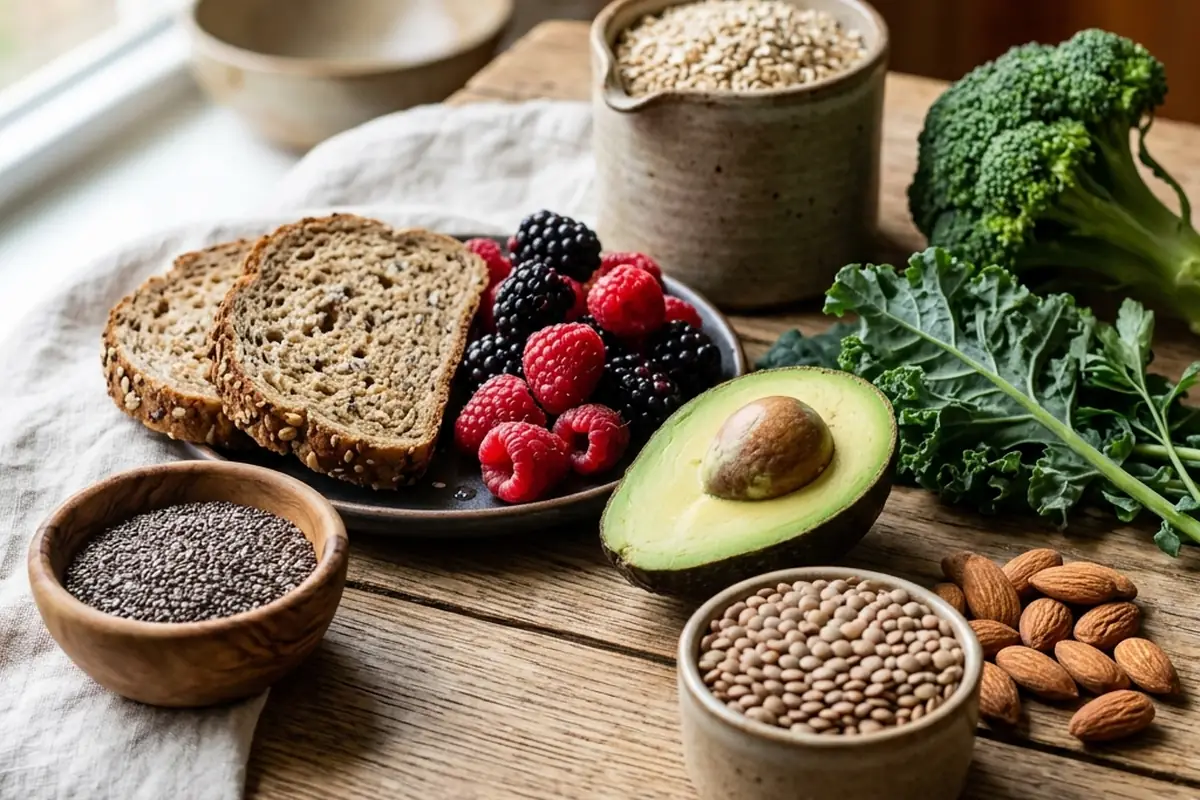
Grams per typical serving, rounded, so you can build a day from them.
| Food | Serving | Fiber (g) |
|---|---|---|
| Split peas, cooked | 1/2 cup | 8 |
| Lentils, cooked | 1/2 cup | 8 |
| Black beans, cooked | 1/2 cup | 7.5 |
| Chickpeas, cooked | 1/2 cup | 6 |
| Artichoke, cooked | 1 medium | 7 |
| Avocado | 1 medium | 10 |
| Raspberries | 1 cup | 8 |
| Pear, with skin | 1 medium | 5.5 |
| Oats, dry | 1/2 cup | 4 |
| Chia seeds | 2 tbsp | 10 |
| Quinoa, cooked | 1 cup | 5 |
| Broccoli, cooked | 1 cup | 5 |
| Almonds | 1 oz | 3.5 |
The pattern jumps out fast. Legumes and a few standout fruits do the heavy lifting. If you anchor your day on beans or lentils plus a couple of fiber-dense fruits, you are most of the way there before you even count the vegetables. Beans are also one of the cheapest ways to add fiber, which is why I keep both dried and canned on hand. Reading the actual numbers on a can teaches you a lot; the label on a tub of refried beans shows just how much fiber a half-cup side really delivers, and it is more than people expect.
How to Build a 30-Gram Fiber Day
Here is the part the medical pages leave out: a worked example. This is a normal day of eating that lands above 30 grams without any special products.
| Meal | What you eat | Fiber (g) |
|---|---|---|
| Breakfast | Oatmeal with raspberries and chia | 12 |
| Lunch | Black bean and quinoa bowl, half avocado | 14 |
| Snack | A pear with the skin on | 5.5 |
| Dinner | Chicken with a cup of broccoli | 5 |
| Total | 36.5 |
Notice that breakfast alone, just oats with berries and a spoon of chia, covers a third of the day. That is the lesson. You do not need fiber at every bite. You need two or three fiber-dense anchor foods placed across the day, and the rest takes care of itself. Build breakfast and lunch around beans, oats, and fruit with skins, and dinner can be whatever you like.
Does Cooking Destroy Fiber?
This worries people more than it should. Cooking does not meaningfully reduce the total fiber in a food. Boiling, roasting, and steaming break down some cell walls and soften the texture, which can shift the balance slightly and make the fiber gentler on your gut, but the grams stay roughly the same. What does cost you fiber is removing parts of the food. Peeling an apple, a pear, or a potato throws away a real chunk of the insoluble fiber that lives in the skin. Juicing strips out nearly all of it, which is why a whole orange beats a glass of orange juice every time for fiber. Straining and refining do the same thing on a larger scale, which is the whole story of white flour versus whole wheat.
One practical note on beans: canned and dried deliver nearly identical fiber. Canned is fine. If gas is your concern, rinse canned beans well, and if you cook dried beans, soak them and discard the soaking water. Both steps wash away some of the indigestible sugars that ferment and cause bloating.
There is one more cooking variable worth understanding, and it is about texture rather than total grams. When you cook and then cool starchy foods like potatoes, rice, and beans, some of their starch turns into what is called resistant starch, which behaves a lot like fiber: your small intestine cannot digest it, so it travels to the colon and feeds your gut bacteria. This is why a cooled potato salad or a cold bean salad is gentler on blood sugar than the same food eaten piping hot. You do not need to chase this effect, but it is a nice bonus reason to keep cooked beans and grains in the fridge for the week. Reheating them keeps much of that resistant starch intact.
The practical takeaway from all of this is reassuring: you cannot really cook the fiber out of a food by accident. The only ways to lose it are deliberate, like peeling, juicing, or buying the refined white version instead of the whole one. As long as you eat the whole food, skins and all, the fiber comes along for the ride no matter how you cook it.
Add Fiber Slowly: A Week-by-Week Plan
If you jump from 15 grams to 35 grams overnight, your gut will protest with gas, cramps, and bloating, and you will quit. The fix is to ramp up over a few weeks and drink more water as you go, because fiber needs water to do its job and to move through comfortably.
| Week | Add | Roughly |
|---|---|---|
| 1 | Switch to oats or whole-grain toast at breakfast | +5 g |
| 2 | Add 1/2 cup beans or lentils to one meal | +8 g |
| 3 | Add a fruit with skin and a cup of vegetables | +7 g |
| 4 | Stir seeds into yogurt or oats; hold steady | +4 g |
By the end of a month you are eating roughly 24 extra grams without ever feeling like you are on a regimen. Add a glass of water to each new fiber habit. That single rule prevents most of the discomfort people blame on fiber itself.
Easy Fiber Swaps for Everyday Cooking
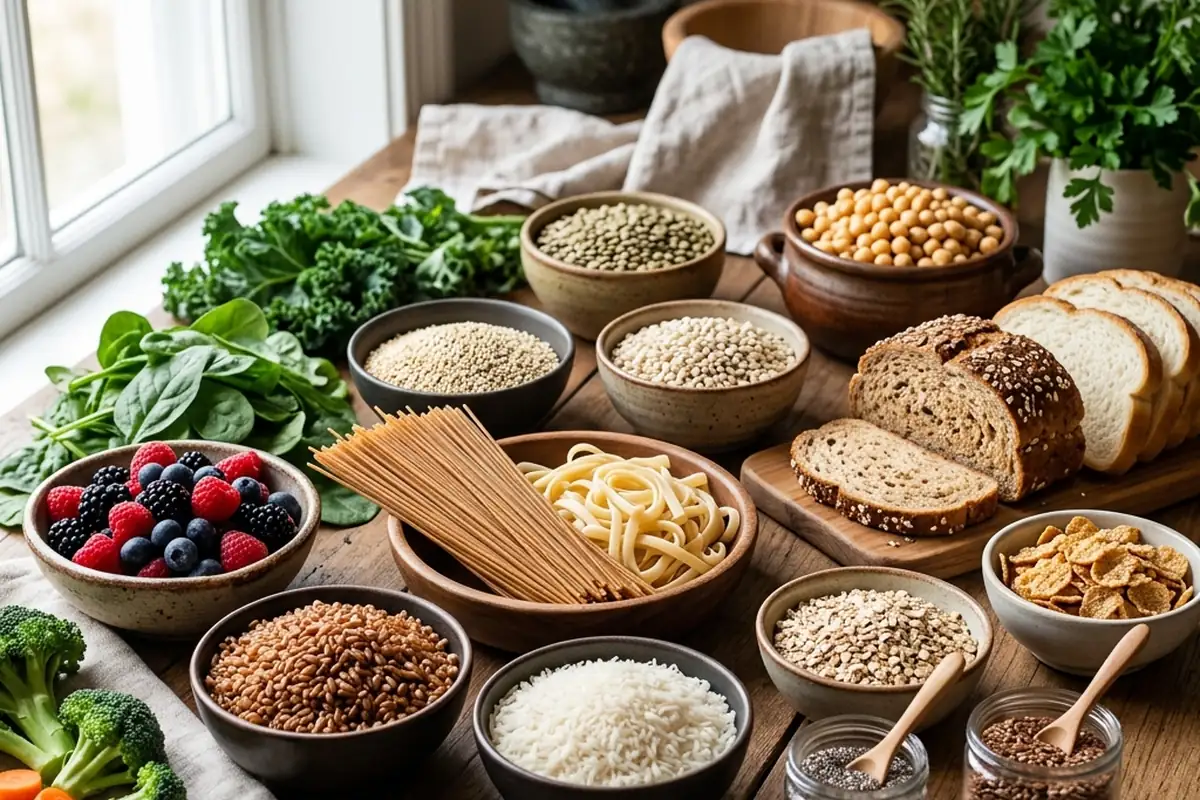
The lowest-effort way to eat more fiber is to swap, not add. Use whole-wheat pasta or a legume-based pasta instead of white. Choose brown rice or quinoa over white rice. Leave the skin on potatoes when you roast or mash them. Stir a half cup of white beans into soup or pasta sauce, where they vanish into the texture and add both fiber and protein. Top yogurt or oatmeal with berries and a spoon of chia or ground flax. Reach for popcorn, which is a whole grain, instead of chips. Each swap costs you nothing in effort and quietly moves your daily total up by a few grams.
A word on legume-based pastas, since they have taken over grocery shelves. Pastas made from chickpeas, lentils, or black beans carry far more fiber and protein than wheat pasta, often double or more, and they let you slip a big fiber boost into a meal a picky eater already accepts. They cook a touch differently, going from firm to mushy faster than wheat pasta, so pull them a minute early and taste often. Used in a baked dish or a saucy bowl, most people cannot tell the difference, and you have turned a low-fiber comfort food into one of the higher-fiber meals of your week.
One honest caveat: not every healthy-seeming food is a fiber food. High-protein items like Greek yogurt are excellent for satiety but carry little to no fiber, as you can see right on the label of a triple-zero Greek yogurt, which is nearly fiber-free. That is not a knock on yogurt. It just means you pair it with berries or seeds when fiber is the goal. Knowing which foods bring fiber and which bring other things is how you build a meal on purpose.
Getting Fiber Into Picky Eaters and Busy Weeks
Knowing the foods is easy. Getting them into a household that did not grow up eating beans is the real work. A few things have worked in my kitchen. Blending beans into familiar foods hides them completely: a can of white beans pureed into tomato sauce, or black beans mashed into a quesadilla, adds grams that nobody tastes. Roasting vegetables instead of boiling them makes them sweeter and far more likely to get eaten, and roasted broccoli or Brussels sprouts disappear fast. For kids, fruit with skins is an easy win because it already tastes like a treat, so pears, apples, and berries do not feel like a health project.
For busy weeks, batch cooking is the answer. Cook a big pot of lentils or a tray of roasted vegetables on the weekend and you have fiber ready to spoon onto anything for the next several days. Keep frozen berries in the freezer for oatmeal and smoothies so you are never out. Stock canned beans deep in the pantry, since they need no planning at all. Fiber falls apart as a goal when it depends on you cooking something special every night. It works when the fiber is already cooked and waiting, and you just add it to whatever you were going to eat anyway.
Why Fiber Is Worth the Effort
Beyond keeping you regular, fiber earns its place for reasons that show up over years. The gel from soluble fiber lowers cholesterol and blunts blood sugar spikes after meals. The bulk from insoluble fiber supports gut health and feeds the beneficial bacteria in your colon, which is an area of active research and one of the better reasons to eat a variety of plants rather than the same two vegetables on repeat. Fiber-rich foods are also more filling per calorie, so they help with appetite and weight without any counting. For the underlying science laid out plainly, the Harvard nutrition source on fiber is a solid read, and when you are ready to put beans at the center of dinner, the tested legume recipes from a serious test kitchen are a reliable place to start.
Frequently Asked Questions
How much fiber do I need per day?
The general target is 25 grams a day for women and up to 38 grams for men, or about 14 grams per 1,000 calories eaten. Most people get only about half that. Anchoring two meals on beans, oats, or fruit with skins closes the gap without much effort.
What is the difference between soluble and insoluble fiber?
Soluble fiber dissolves into a gel that slows digestion, steadies blood sugar, and lowers cholesterol; find it in oats, beans, and apples. Insoluble fiber adds bulk and keeps you regular; find it in whole grains, vegetable skins, and seeds. Most plant foods have both, so a varied diet covers you.
Why does adding fiber make me gassy?
Gut bacteria ferment fiber, and a sudden jump gives them more to work with than they are used to, which produces gas. Increase fiber gradually over a few weeks and drink more water, and your system adjusts. Rinsing canned beans also helps cut the gas-causing sugars.
Does cooking reduce the fiber in food?
Not by much. Cooking softens texture and breaks some cell walls but leaves the total fiber roughly intact. What actually lowers fiber is removing parts of the food, like peeling skins or juicing, which strips out the insoluble fiber concentrated in the outer layers.
Are beans really the best source of fiber?
For most people, yes. A half cup of beans or lentils delivers 6 to 8 grams of both soluble and insoluble fiber at a low cost, plus protein. Building meals around legumes is the single most efficient way to hit your daily target.
Can I just take a fiber supplement instead?
A supplement can help fill a gap, but it does not replace whole foods, which bring vitamins, minerals, and the variety of fibers that feed your gut bacteria. Use food first and treat supplements as a backup, not the main plan.
Bottom Line
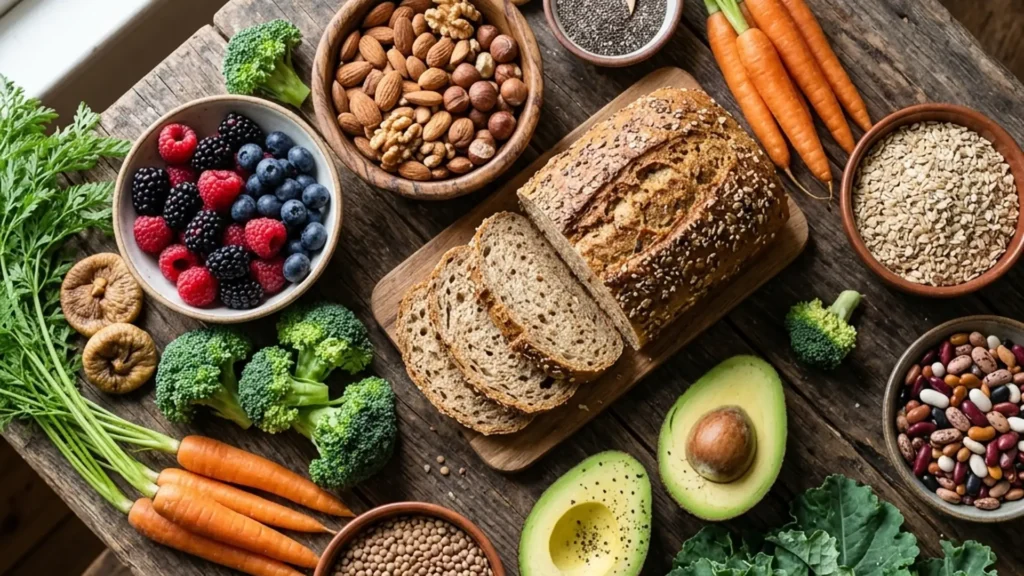
Foods high in fiber are mostly the ones you already recognize: beans, lentils, oats, berries, avocados, and vegetables eaten with their skins. The trick is not knowing them but placing two or three fiber anchors across your day so the grams add up to 30 or more without effort. Ramp up slowly, drink water alongside, swap refined foods for whole versions, and let beans do the heavy lifting. Do that and hitting your fiber target stops being a chore and becomes the natural shape of how you cook.