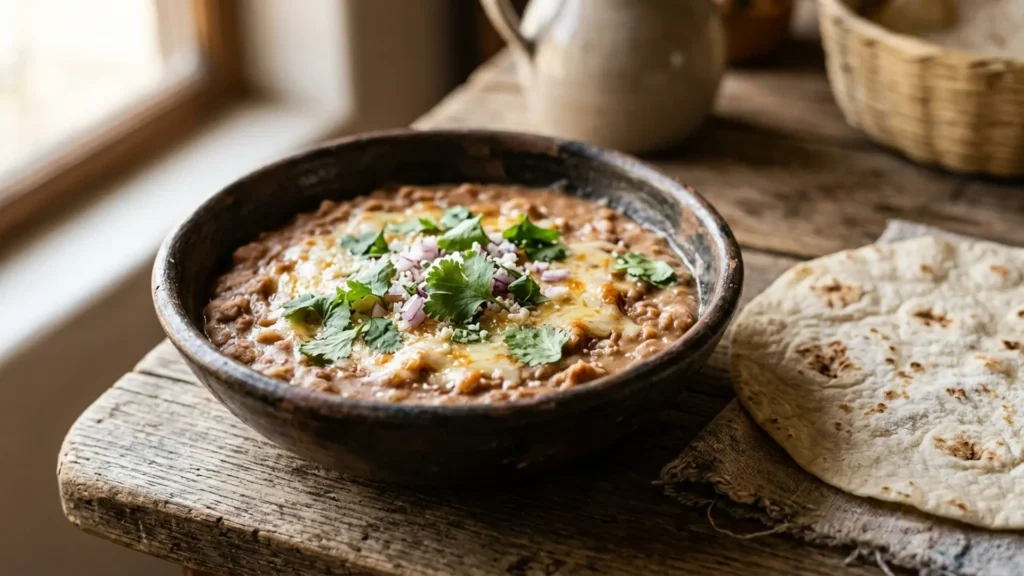
If you want the refried beans nutrition numbers up front, here they are: a half cup of canned refried beans has roughly 130 calories, 20 grams of carbohydrate, 7 grams of protein, 6 grams of fiber, and around 400 milligrams of sodium, with little to no fat in the fat free versions. Those numbers make refried beans one of the better value foods in the Mexican aisle, since the calories come with real fiber and plant protein rather than empty carbohydrate. The rest of this guide breaks down each line and shows how canned, traditional, and homemade versions differ.
Refried beans start as pinto or black beans that are cooked, mashed, and then cooked again with fat and seasoning, which is where the name comes from. How much fat is used, and what kind, is the single biggest factor that changes the nutrition from one can or restaurant to the next.
Refried beans nutrition panel (1/2 cup canned)
The values below are a representative half cup serving of canned refried beans. Brands vary, especially in sodium and fat, so always check the label of the can you buy. A full cup is two servings, so double these numbers for a typical side portion.
| Nutrient | Amount (1/2 cup) | % Daily Value |
|---|---|---|
| Calories | 130 | – |
| Total fat | 2 to 3 g | 4% |
| Sodium | ~400 mg | 17% |
| Total carbohydrate | 20 g | 7% |
| Dietary fiber | 6 g | 21% |
| Total sugars | 1 g | – |
| Protein | 7 g | 14% |
| Iron | ~2 mg | 10% |
The standout lines are fiber and protein. Six grams of fiber in a small side dish is a lot, covering about a fifth of the daily target, and 7 grams of protein is solid for a plant food. The line to watch is sodium, which is high relative to the serving size and is the main reason refried beans can look less healthy than the beans they are made from.
What refried beans are made of
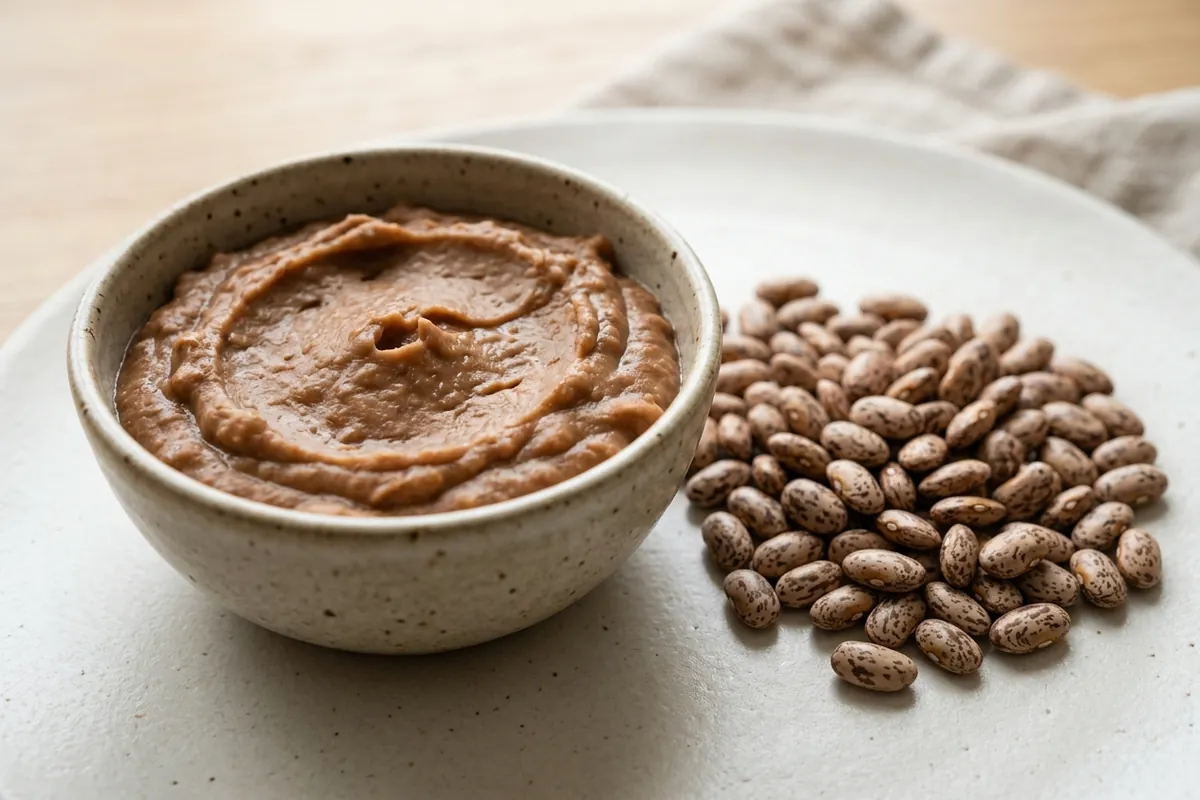
Traditional refried beans are pinto beans cooked and mashed with lard, the rendered pork fat that gives the classic flavor and richness. Many canned versions sold in the United States now use vegetable oil instead of lard, and a growing number are fat free, using no added fat at all. Black bean versions swap pinto for black beans but are nutritionally similar.
This matters for two groups of shoppers. Anyone avoiding animal products needs to read the label, since lard makes a can non vegetarian even though beans themselves are plant based. And anyone watching calories or saturated fat will find that the fat free and vegetable oil versions are lighter than the traditional lard style. The beans underneath are the same healthy starting point in every case.
Fiber and protein: the real value
The reason nutrition guidance tends to favor beans is the fiber. The 6 grams in a half cup is mostly the type that supports digestion and helps you feel full, and it is the nutrient most Americans fall short on. Fiber also slows how quickly the carbohydrate is absorbed, which makes refried beans gentler on blood sugar than a refined starch like white rice or chips of the same calorie count.
The protein adds to that staying power. At 7 grams per half cup, beans are not a complete protein on their own, but paired with rice or a tortilla they form a complete set of the amino acids the body needs. The U.S. USDA FoodData Central database lists beans in both the vegetable and protein food groups for exactly this reason, which is unusual and speaks to how nutrient dense they are.
The sodium question
Sodium is the one number that holds refried beans back. A half cup can carry 400 milligrams or more, and some canned and restaurant versions run higher still, which adds up quickly when beans are a side to an already salty meal. For context, the American Heart Association recommends staying under 2,300 milligrams of sodium a day and ideally closer to 1,500, as explained in its guidance on daily sodium.
The fix is simple if sodium matters to you. Low sodium and no salt added cans exist and can cut the number roughly in half, and rinsing is not an option here the way it is with whole beans since the salt is mixed throughout. The Centers for Disease Control and Prevention also notes in its overview of sodium that most dietary sodium comes from packaged and restaurant foods rather than the salt shaker, which is exactly the category canned refried beans fall into.
Carbs, net carbs, and keto
With 20 grams of carbohydrate and 6 grams of fiber per half cup, refried beans have about 14 grams of net carbohydrate. That makes them a moderate carb food, fine for most balanced and lower carb diets but a poor fit for strict keto, where a single serving would use up much of the daily carb budget.
For people managing blood sugar, the combination of fiber and protein is the redeeming feature. The carbohydrate is absorbed more slowly than the same grams from a refined starch, so a moderate portion of beans tends to have a gentler effect than chips or white rice. Portion size is still the lever that matters most, since the carbs add up if beans become the bulk of the plate.
Canned versus homemade versus restaurant
Where your refried beans come from changes the numbers more than most people expect. Homemade beans give you full control, letting you skip the lard, cut the salt, and keep the fiber, which usually produces the lightest and lowest sodium version. Canned beans are the convenient middle ground, with the fat free and low sodium lines coming closest to homemade.
Restaurant refried beans are the wild card. Many are made with lard and generous salt, and the portion served alongside an entree can be larger than a half cup, so the calories, fat, and sodium can all run higher than the canned numbers suggest. If you eat them out often, treating the side as a meaningful part of the meal rather than a free extra keeps the totals honest.
How refried beans compare to other beans and dips
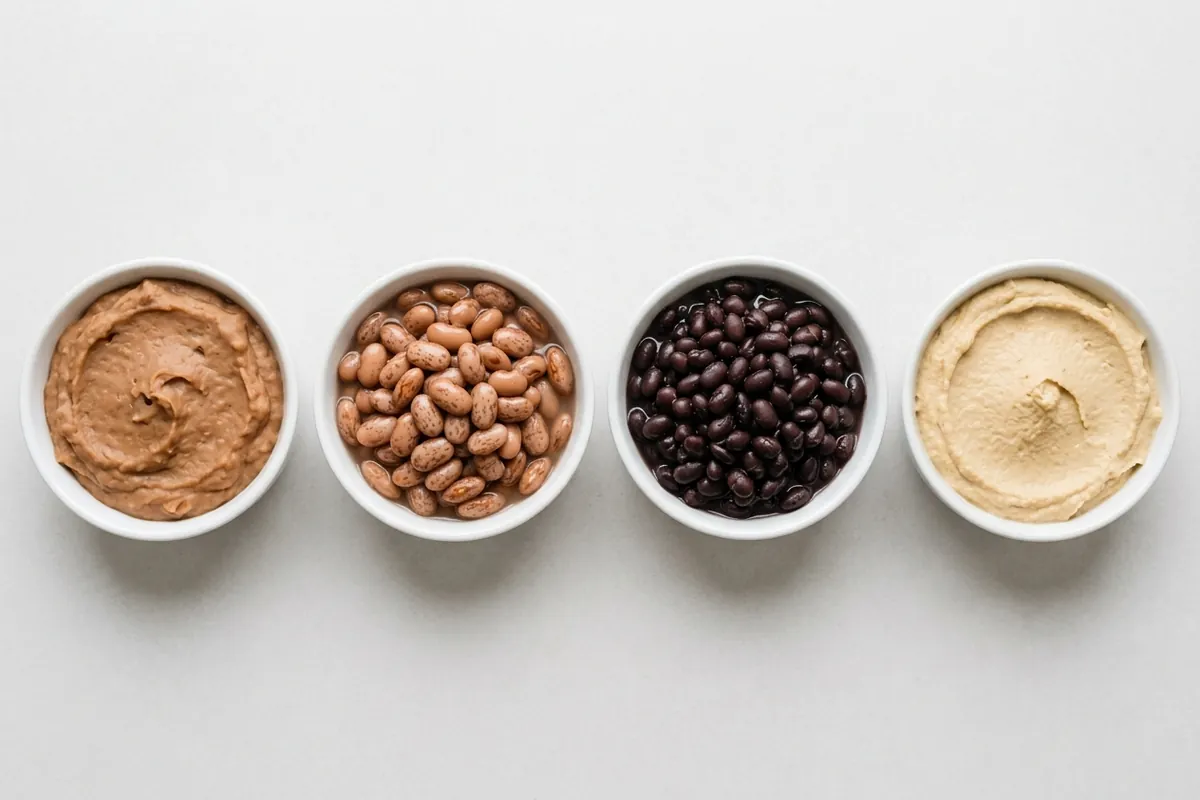
Refried beans sit in a family of bean based foods that people often choose between. The comparison below uses a half cup for the beans and a common serving for hummus.
| Food (about 1/2 cup) | Calories | Protein | Fiber | Sodium |
|---|---|---|---|---|
| Canned refried beans | 130 | 7 g | 6 g | ~400 mg |
| Whole pinto beans | ~120 | ~8 g | ~8 g | ~5 mg (no salt added) |
| Black beans | ~110 | ~7 g | ~7 g | ~5 mg (no salt added) |
| Hummus (1/2 cup) | ~210 | ~6 g | ~6 g | ~400 mg |
The pattern is clear. Refried beans are close to whole pinto and black beans in fiber and protein, with the main difference being the added sodium and any added fat. Whole beans cooked without salt are the lightest option, while hummus is higher in calories because of the added oil and tahini. If you like beans in soups and bowls, our network has plenty of ideas, from hearty bean soups to filling vegan bowls that use the same base ingredient.
Are refried beans healthy?
For most people, yes, refried beans are a healthy choice when the sodium is kept in check. The fiber and plant protein are genuinely useful, the carbohydrate is slow digesting, and the iron is a bonus that whole grains and vegetables do not always provide. They fit vegetarian eating easily as long as the can is made without lard.
The two things to manage are sodium and the type of fat. Choosing a low sodium or fat free can, or making them at home, removes most of the downside while keeping all of the benefit. Eaten that way, refried beans are closer to a vegetable side than to a processed snack, which is not something you can say about most foods in the convenience aisle.
How to use refried beans
Refried beans are most useful as a protein and fiber boost to a meal that would otherwise be heavy on refined carbohydrate. Spread on a tortilla, spooned beside rice, layered into a burrito bowl, or used as a base for a quick bean dip, they add staying power for very few calories. Pairing them with a whole grain and some vegetables turns a snack into a balanced plate.
Because the sodium is the main caveat, the best habit is to build the rest of the meal with that in mind. If the beans are salty, keep the other components low in salt, and lean on fresh toppings like tomato, onion, and cilantro for flavor instead of more salt. Used this way, a half cup of beans is one of the easier upgrades you can make to a casual meal.
Refried beans and weight management
Refried beans are a useful food for anyone watching their weight, mostly because of the fiber and protein. Both nutrients slow digestion and help you feel full, so a modest portion of beans can hold off hunger longer than a larger portion of a refined starch with the same calories. That makes beans a smart way to add volume and satisfaction to a meal without piling on calories.
The thing to watch is what goes on and around them. A half cup of fat free refried beans is light, but cheese, sour cream, and large amounts of added fat can double the calories quickly. Keeping the beans themselves simple and adding flavor with salsa, onion, and spices rather than rich toppings is the easiest way to keep them working in your favor.
Black beans versus pinto refried beans
Most refried beans are made from pinto beans, but black bean versions are increasingly common, and the nutrition is close. Black beans tend to be very slightly higher in fiber and have a denser, earthier flavor, while pinto beans are creamier and milder. Both deliver similar calories, protein, and fiber per serving, so the choice comes down to taste more than nutrition.
If you are choosing between them for a specific meal, pinto refried beans pair naturally with classic Mexican dishes, while black bean versions work well in bowls and with bolder seasonings. Either way, the same advice on sodium and added fat applies, since the differences between brands are larger than the differences between the two beans.
How to lower the sodium and fat at home
Making refried beans at home is the surest way to control the two numbers that hold the canned versions back. Starting from dried or no salt added canned beans, you decide how much salt goes in, which can cut the sodium to a fraction of the canned figure. Using a small amount of olive oil or no added fat at all keeps the fat and saturated fat low while preserving the creamy texture.
A simple method is to mash cooked beans with a little of their cooking liquid, then warm them with garlic, cumin, and a modest pinch of salt. The result has the same fiber and protein as the can with far less sodium, and you can adjust the seasoning to taste. For most people this is the single biggest upgrade available, turning a convenient side into a genuinely healthy one.
Refried beans for vegetarians and high-fiber diets
For vegetarians, refried beans are a convenient source of plant protein and iron, provided the can is made without lard. The protein pairs well with grains like rice or corn tortillas to form a complete set of amino acids, which is why beans and rice is such a common staple. A serving also contributes meaningful iron, a nutrient some vegetarians need to plan for.
On a high fiber diet, beans are one of the easiest ways to hit the daily target. With 6 grams in a half cup, two servings cover a large share of the fiber most adults should aim for, and the type of fiber in beans supports both digestion and steady blood sugar. Increasing beans gradually and drinking enough water helps the body adjust comfortably to the extra fiber.
Common myths about refried beans
The most common myth is that refried beans are fried in a lot of oil. The name suggests it, but the word comes from a Spanish term that means well cooked rather than fried twice, and many versions use little or no added fat. The fat free cans prove the point, since they have almost no fat at all while keeping the same beans.
Another myth is that beans are fattening because of their carbohydrate. In reality the carbohydrate comes bundled with fiber and protein, which makes beans far more filling per calorie than refined carbs. The real thing to watch is not the beans themselves but the sodium and the rich toppings people add, which is a different issue from the beans being unhealthy.
How much should you eat in one sitting?
A reasonable portion of refried beans is a half cup to one cup as a side, which provides 7 to 14 grams of protein and 6 to 12 grams of fiber. That is enough to add real staying power to a meal without overdoing the sodium, especially if you choose a lower sodium can. Larger portions are fine nutritionally but push the sodium higher, so the salt is the practical limit rather than the calories.
If beans are the main protein of the meal, a full cup paired with rice and vegetables makes a balanced plate. If they are a small side to a larger dish, a half cup is plenty. Matching the portion to the role beans play in the meal keeps both the nutrition and the sodium in a sensible range.
Refried beans, blood sugar, and diabetes
For people managing blood sugar, refried beans are one of the friendlier carbohydrate choices. The fiber and protein slow how quickly the carbohydrate is digested, which softens the rise in blood sugar compared with a refined starch of the same size. Beans of all kinds are often recommended within a balanced eating pattern for exactly this reason, since they provide steady energy rather than a quick spike.
The practical advice is to keep the portion moderate and pair the beans with vegetables and a lean protein rather than a pile of refined carbohydrate. A half cup of beans alongside a balanced plate has a gentler effect than a large serving eaten with white rice, chips, and a sugary drink. The beans are an ally here, but the rest of the plate still decides the overall result.
The history and varieties of refried beans
Refried beans come from Mexican and Tex Mex cooking, where cooked beans are mashed and warmed with fat and seasoning into a smooth, spreadable side. The traditional version uses pinto beans and lard, but regional and modern takes use black beans, vegetable oils, or no added fat at all. Spiced versions add chiles, garlic, or cheese, which changes the flavor and sometimes the sodium and fat.
This variety is why two cans labeled refried beans can read quite differently on the nutrition panel. A traditional lard based version is richer and higher in saturated fat, while a fat free vegetarian can is leaner. Knowing the style you are buying explains most of the differences you will see between products and restaurants.
A note on serving sizes and labels
The standard label serving for refried beans is a half cup, but the portion people actually eat is often closer to a full cup, especially as a restaurant side. That matters because doubling the portion doubles the calories, sodium, and protein along with it. When comparing products or tracking your intake, it helps to measure against the half cup on the label rather than eyeballing the scoop.
It is also worth scanning the label for the fat type and the sodium, the two numbers that vary most. A quick check for lard or added oils and for the milligrams of sodium tells you almost everything you need to know about how a given can compares with the representative numbers in this guide.
Frequently Asked Questions
How many calories are in refried beans?
A half cup of canned refried beans has about 130 calories. Fat free versions can be slightly lower, while traditional lard based and restaurant versions can be higher, especially in larger portions.
Are refried beans high in protein and fiber?
Yes. A half cup has about 7 grams of protein and 6 grams of fiber, which is high for a side dish. The fiber covers around a fifth of the daily target and helps with fullness and blood sugar.
Are refried beans healthy?
Refried beans are healthy in moderation thanks to their fiber, protein, and iron. The main drawback is sodium, so choosing a low sodium or fat free can, or making them at home, makes them an even better choice.
Are canned refried beans vegan?
It depends on the can. Many are made with vegetable oil or no added fat and are vegan, but traditional versions use lard, which is animal fat. Always check the ingredient list if you avoid animal products.
Are refried beans keto friendly?
Not really. With about 14 grams of net carbohydrate per half cup, refried beans use up a large share of a strict keto carb budget. They fit moderate and lower carb diets better than keto.