Read the maruchan ramen nutrition facts panel instead of just ripping the pack open, and the numbers are worth a double take. The number that jumps out is friendly: 190 calories. That looks like a light lunch. Then there is the fine print above it, the part almost nobody reads, and the whole picture changes. That one line is the difference between a snack and a sodium bomb, and it is the reason this article exists.
The point is not to scare anyone off a pantry staple. The point is to do the arithmetic the label quietly hopes you will skip. If you have ever wondered whether that block of chicken flavor noodles is a reasonable meal or a salt grenade, the answer lives in a single detail: serving size. Once you see it, you cannot unsee it. For a broader look at how packaged staples stack up, our Spam nutrition facts breakdown uses the same read-the-label approach.
Below are the real numbers for the classic 3 oz chicken flavor pack, per serving and per whole block, then a comparison of that salt load against the limits set by the FDA, the USDA, and the AHA. It also covers why the fat is there, how the flavors differ, and a few grounded ways to make a bowl better without pretending it is health food.
Maruchan Ramen Nutrition Facts at a Glance
Here is the label as printed on a standard Maruchan Chicken Flavor Ramen Noodle Soup pack. These figures are for one serving, which the manufacturer defines as 43 g, or half of the noodle block with half the seasoning. Keep that “half” in your head, because it is doing a lot of quiet work. Per serving you get 190 calories, 7 g total fat, 3.5 g saturated fat, 830 mg sodium, 26 g total carbohydrate, 1 g dietary fiber, 1 g sugars, and 4 g protein. On paper, none of that reads as alarming.
The calorie count is genuinely modest. The carbs are the bulk of it, which makes sense for a wheat noodle. The protein is thin at 4 g, roughly what you would get from a slice of bread, so this is not a food that keeps you full for long. The saturated fat sits at 3.5 g, or 18% of a day’s worth, which is more than you might guess from a bowl of noodles. And the sodium, at 830 mg, already covers 36% of the daily value that the FDA prints the panel against. All of that is for one serving. Now watch what happens to a whole pack.
One more thing worth flagging before we double the numbers. The %DV column on the panel is not a random figure. The FDA calculates every percent daily value against a reference 2,000-calorie diet, so when the label says 36% for sodium, it means one serving uses up 36% of the sodium a typical adult should get in a full day. That framing is useful, but it is built on the serving, not the pack. Read it fast and you carry home a number that is exactly half the truth. The carbohydrate line tells a similar story. Those 26 g per serving are almost all from refined wheat flour, with only 1 g of fiber to slow them down, which is why a plain bowl can spike and then leave you hungry.
Per Serving vs Per Whole Pack: The Number That Doubles
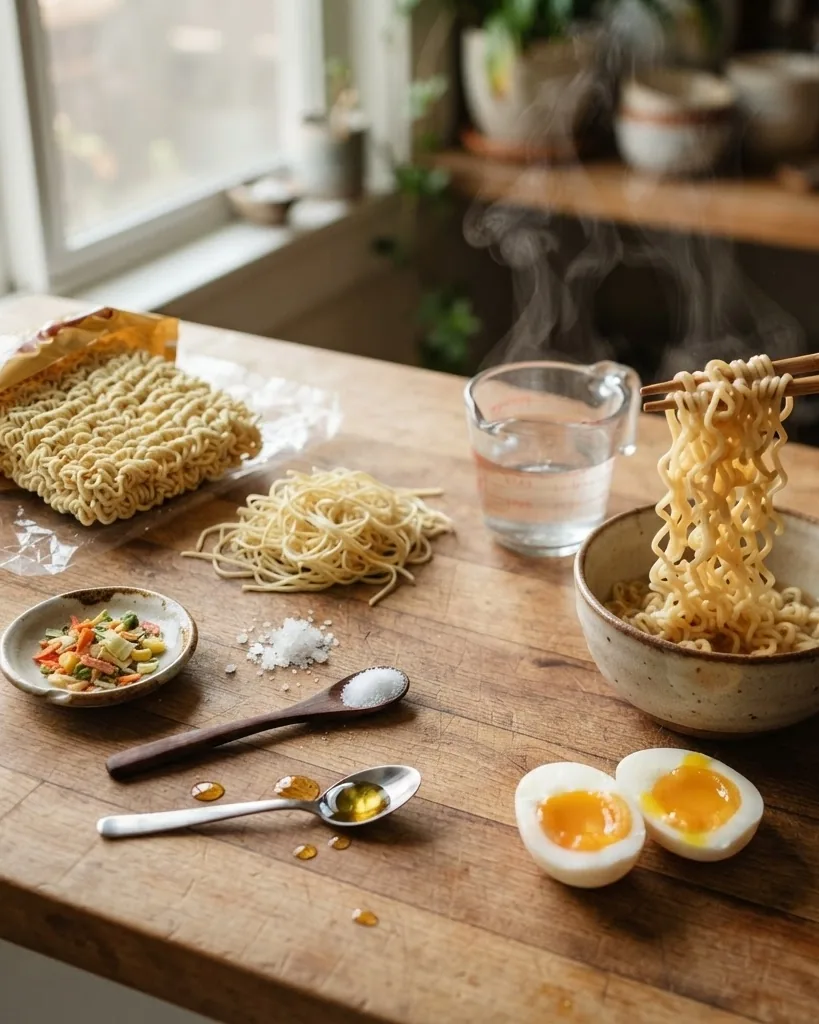
Here is the trap, and it is not a maruchan secret so much as an industry habit. The 3 oz pack weighs 85 g and contains two servings. Hardly anyone splits a single brick of ramen into two lunches. You cook the whole thing, you eat the whole thing, and every number on that panel doubles. The 190 calories become 380. The 830 mg sodium becomes 1,660 mg. That is the meal you actually ate, not the one the headline number described.
It is easiest to see side by side, so here is the full breakdown both ways for the chicken flavor pack.
| Nutrient | Per serving (43 g) | Per whole pack (85 g / 3 oz) | %DV per pack |
|---|---|---|---|
| Calories | 190 calories | 380 calories | – |
| Total fat | 7 g | 14 g | 18% |
| Saturated fat | 3.5 g | 7 g | 36% |
| Sodium | 830 mg | 1,660 mg | 72% |
| Total carbohydrate | 26 g | 52 g | 19% |
| Dietary fiber | 1 g | 2 g | 7% |
| Sugars | 1 g | 2 g | – |
| Protein | 4 g | 8 g | – |
Read the right-hand column and the friendly food gets a lot louder. A whole pack is 380 calories, which is still a fair lunch on its own. But 1,660 mg of sodium and 7 g of saturated fat in one bowl are the figures worth respecting. The 8 g of protein is the real weakness. For a meal, that is low, and it is why a lot of people feel hungry again an hour later. The fiber tells the same story: just 2 g for the whole pack, when a good target sits far higher.
The Sodium Bomb: 1,660 mg in One Bowl
Sodium is the headline problem with instant ramen, and the whole-pack math is where it stops being abstract. The FDA and the USDA both set the general daily sodium limit at 2,300 mg for adults. One 3 oz chicken pack delivers 1,660 mg. That is about 72% of an entire day’s allowance in a single bowl that took three minutes to make. You have not touched breakfast, dinner, or a single snack, and you are already three-quarters of the way to the cap.
It gets tighter if you use a stricter yardstick. The AHA recommends an ideal limit of 1,500 mg of sodium per day for most adults, especially anyone watching blood pressure. By that measure, one pack of chicken ramen has already blown past the ceiling before you count anything else you eat. That is not meant to be dramatic. It matters because the 190-calorie number on the front invites you to treat this as a light choice, and on sodium alone, it simply is not.
The context from public health data makes it sharper still. The CDC reports that the average American already takes in roughly 3,400 mg of sodium a day, well above the limit, and that most of that salt comes from packaged and restaurant food rather than the shaker at the table. Instant ramen is a textbook example of exactly that kind of hidden sodium. The salt is not something you add. It arrives pre-loaded in the seasoning powder, which is where most of the 1,660 mg lives.
- One chicken pack: 1,660 mg sodium
- FDA / USDA daily limit: 2,300 mg (pack = about 72%)
- AHA ideal daily limit: 1,500 mg (pack exceeds it)
- CDC average US intake: about 3,400 mg per day
None of this means you can never eat it. It means the seasoning packet deserves a second look, and ways to handle it come further down.
There is a health angle behind the number that is worth a plain sentence. High sodium intake is one of the main dietary drivers of high blood pressure, which is why the FDA, the USDA, and the AHA all keep hammering the same 2,300 mg and 1,500 mg targets. The concern is not one salty bowl. It is the pattern of eating packaged food that quietly stacks 1,000 mg here and 1,660 mg there until a normal day lands at 3,400 mg without anyone reaching for the salt shaker. Instant ramen is not uniquely evil in that lineup, but it is one of the clearer offenders because the salt is concentrated into a single foil packet you can literally hold in your hand. That is also, oddly, good news, because it means the sodium is easy to control once you know where it lives.
Where the Fat in Maruchan Ramen Comes From
People are often surprised that a bag of dried noodles carries 7 g of fat per serving, or 14 g for the whole pack, with 7 g of that being saturated. Dried pasta from a box has almost none, so why does ramen? The answer is in how the block is made. Before packaging, the noodles are steamed and then flash-fried in oil, which drives out moisture so the block is shelf stable and cooks in minutes. That frying step is what leaves the fat behind, and it is why the saturated fat lands at 36% of the daily value once you eat the full pack.
Saturated fat is the kind the AHA and the USDA both suggest keeping low, so 7 g in one bowl is not trivial. It is not disastrous either, but it is another reason to treat a full pack as a real meal with real numbers rather than a between-things nibble. The frying also explains the texture you like. That springy, slightly rich noodle is a direct result of the oil, so the thing that makes it satisfying is the same thing that puts fat on the label. Fair trade or not, it helps to know it is there.
For comparison, a serving of dry boxed spaghetti of similar weight carries under 1 g of fat and no saturated fat to speak of, because it is simply dried, never fried. That single processing difference is the whole reason ramen and regular pasta read so differently on the panel even though both are essentially wheat and water. If you ever want the noodle without the fried fat, boiling plain pasta and adding your own light broth gets you close for a fraction of the saturated fat, though you lose the three-minute convenience that is the entire point of instant ramen.
The Protein and Fiber Gap Nobody Mentions
Sodium gets all the attention, but the quieter issue with maruchan ramen nutrition facts is what the pack does not give you. A whole block carries just 8 g of protein and 2 g of fiber. Those are the two nutrients that make a meal feel like a meal, and they are both running near empty. Protein and fiber are what slow digestion and keep you satisfied, so a bowl that is mostly refined carbohydrate tends to fill you for an hour and then fade. That is not a knock on the flavor. It is the reason people eat a pack and raid the fridge again before dinner.
To put 8 g of protein in context, most nutrition guidance points adults toward roughly 50 g of protein across a day, and a genuine lunch usually lands somewhere between 20 g and 30 g. A ramen pack at 8 g is well short of that, which is exactly why the fixes later lean so hard on adding an egg or some beans. The fiber gap is just as real. General guidance suggests 25 g to 30 g of fiber a day, and 2 g from a whole pack barely registers. Neither number is a reason to panic. Both are a reason to think of plain ramen as a base to build on rather than a finished meal.
Chicken vs Beef vs Shrimp: Do the Numbers Change?
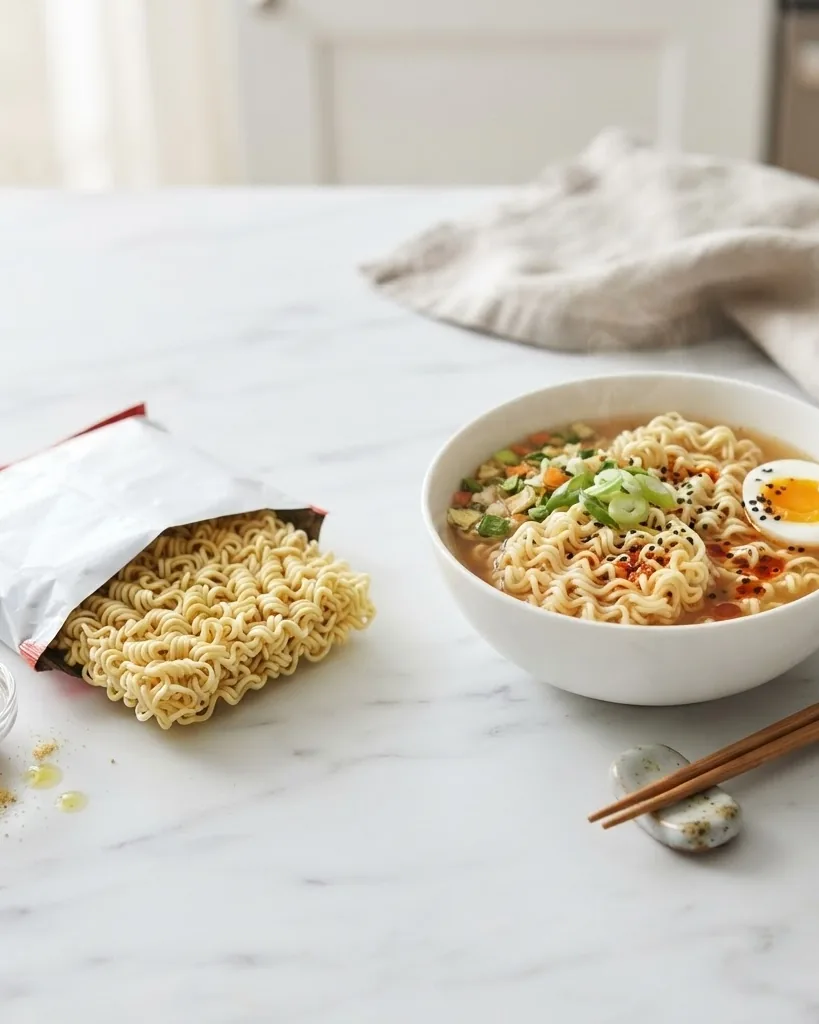
Maruchan sells the same noodle block under several seasoning flavors, and the noodle-driven numbers barely move between them. Chicken, beef, and shrimp all land at about 190 calories, 7 g fat, and 3.5 g saturated fat per serving, because that is the fried noodle talking, not the powder. Where they split is sodium, since each seasoning blend is salted a little differently. The gap is small but real if salt is your main concern.
| Flavor | Calories per serving | Sodium per serving | Sodium per whole pack |
|---|---|---|---|
| Chicken | 190 calories | 830 mg (36% DV) | 1,660 mg |
| Beef | 190 calories | 720 mg (31% DV) | 1,440 mg |
| Shrimp | 190 calories | 790 mg (34% DV) | 1,580 mg |
Beef comes out lowest here at 720 mg per serving, with chicken the saltiest of the three at 830 mg. If you eat ramen often and want to trim sodium without changing much else, switching from chicken to beef quietly saves you about 220 mg per pack. Maruchan also makes a 25% Less Sodium beef version, which drops the number further for anyone tracking it closely. These are not huge swings, but they are free, and they add up over a week of lunches.
How to Make Maruchan Ramen Healthier Without Ruining It
This is not a lecture about quitting. These are practical ways to soften the two weak spots, which are the sodium and the missing protein and fiber. None of it takes real effort, and none of it costs much. The biggest single lever is the seasoning packet, because that little foil pouch is carrying almost all of the 1,660 mg of sodium in the pack.
- Use half the seasoning packet. This is the highest-impact move by far. Since most of the salt lives in the powder, using half roughly halves the sodium, taking a pack from 1,660 mg toward the 800 mg range. The flavor is still plenty present.
- Add a real protein. The pack gives only 8 g, which is low for a meal. One egg adds about 6 g of protein for around 70 calories. Edamame, tofu, or leftover rotisserie chicken work too, and they turn a snack into something that keeps you full.
- Throw in vegetables. A handful of frozen peas, spinach, or chopped scallions adds fiber and volume for very few calories. The pack only has 2 g of fiber, so any real vegetable is an easy upgrade.
- Drain some broth. A meaningful share of the sodium sits dissolved in the liquid. If you eat mostly noodles and leave part of the soup behind, you leave some salt behind with it.
Put two or three of those together and you have a bowl that still tastes like the ramen you wanted, with far less salt and enough protein to call it lunch. If you are chasing fiber specifically, our guide to foods high in fiber pairs well with these noodles, and the same add-a-legume trick shows up in our refried beans nutrition notes. Small stacked changes beat swearing off the food entirely.
How Maruchan Ramen Fits Into a Day of Eating
Zoom out and the honest verdict is simple. As an occasional, cheap, fast lunch, one pack of Maruchan is fine for most people. It is 380 calories, which fits almost any day. The catch is that it is nutritionally lopsided: heavy on refined carbs and sodium, light on protein and fiber, and carrying more saturated fat than its plain appearance suggests. Eaten plain and daily, that pattern is the part worth watching, not any single bowl.
The USDA Dietary Guidelines frame it well: the goal is not to fear one food but to keep sodium and saturated fat modest across the whole day. If ramen is your lunch, that just means going lighter on salt at your other meals, and adding the egg and vegetables so the bowl carries more than empty warmth. Treated that way, a pack of instant noodles is a reasonable member of a varied week rather than a problem. Read the panel, remember the serving is half, and you are already ahead of most shoppers.
The cost angle is part of why this food endures, and it is worth naming plainly. A single pack runs well under a dollar in most stores, cooks in about 3 minutes, and stores for months. For a student, a busy shift worker, or anyone stretching a grocery budget, that math is hard to argue with. The nutrition facts are not a verdict that you should stop buying it. They are a map of where the weak spots are so you can patch them cheaply, since an egg and a handful of frozen spinach cost very little and fix most of what the plain pack is missing. Instant ramen has its place on the nights when nothing else is happening, and reading the label changes how you finish the bowl, not whether you make it.
Frequently Asked Questions
How many calories are in a whole pack of Maruchan ramen?
A full 3 oz (85 g) pack of Maruchan chicken flavor ramen has 380 calories, because the label lists 190 calories per serving and the pack contains two servings. Most people eat the entire block in one sitting, so 380 calories is the realistic figure for one bowl, along with 14 g of fat and 8 g of protein.
How much sodium is in one pack of Maruchan ramen?
One whole chicken flavor pack contains about 1,660 mg of sodium, which is 830 mg per serving times two servings. That is roughly 72% of the 2,300 mg daily limit set by the FDA and the USDA, and it exceeds the 1,500 mg ideal limit the AHA recommends. Using half the seasoning packet is the fastest way to cut it.
Is Maruchan ramen bad for you?
It is not poison, but it is nutritionally unbalanced. A pack is high in sodium at 1,660 mg and low in protein at 8 g and fiber at 2 g, so it works better as an occasional meal than a daily staple. The CDC notes most Americans already eat too much sodium, around 3,400 mg a day, so pairing ramen with lower-salt meals matters. Rounding the bowl out with an egg and a scoop of vegetables, plus some foods high in fiber across the rest of your day, keeps one pack from throwing off the whole picture.
Which Maruchan flavor has the least sodium?
Among the standard flavors, beef is lowest at 720 mg of sodium per serving, compared with 790 mg for shrimp and 830 mg for chicken. Maruchan also offers a 25% Less Sodium beef version for an even lower number. Calories, fat, and saturated fat stay about the same across flavors, since those come from the fried noodle block.