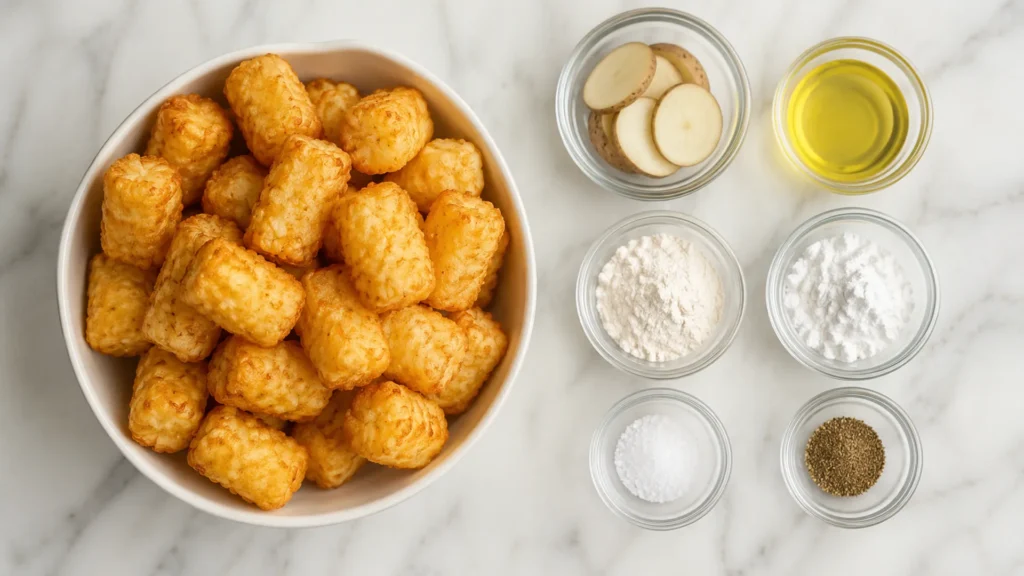
The tater tot nutrition information you actually need starts with the serving size: a standard 9-piece serving of Ore-Ida tater tots, about 3 ounces, has roughly 160 calories, 8 grams of fat, 450 milligrams of sodium, 19 grams of carbohydrate, and 2 grams of protein. That works out to about 16 calories per individual tot, which makes them easy to track once you count by the piece. Tater tots are the bite-sized cylinders of shredded, seasoned potato that show up at breakfast, alongside burgers, and under a casserole, and their nutrition is more about portion and sodium than anything else.
If you bake a tray for the kids, build a tot-chos pile, or just want to know what a side of tots costs you, this guide breaks down the real numbers. We will cover a full per-serving panel, the per-piece math, how the cooking method changes the calories, how the different tot styles compare, and the sodium picture that tends to surprise people. The goal is not to talk you out of tots but to let you portion them with clear eyes.
Tater tot nutrition information at a glance
The values below are for one standard serving of frozen Ore-Ida tater tots prepared by baking, which the package defines as 9 pieces, or about 3 ounces (86 grams). These figures come from the Ore-Ida nutrition label and are representative of most frozen potato tots. Numbers shift a little by brand and by how you cook them, but this is a solid baseline for the category.
| Nutrient | Amount per serving (9 pieces, 3 oz) | Percent Daily Value* |
|---|---|---|
| Calories | 160 | — |
| Total fat | 8 g | 10% |
| Saturated fat | 1.5 g | 8% |
| Trans fat | 0 g | — |
| Cholesterol | 0 mg | 0% |
| Sodium | 450 mg | 20% |
| Total carbohydrates | 19 g | 7% |
| Dietary fiber | 2 g | 7% |
| Total sugars | 0 g | — |
| Protein | 2 g | — |
*Percent Daily Values are based on a 2,000-calorie diet. Your own needs may be higher or lower. For independent reference values you can cross-check against the USDA FoodData Central database, which lists the same frozen-potato-product profile.
Calories in tater tots
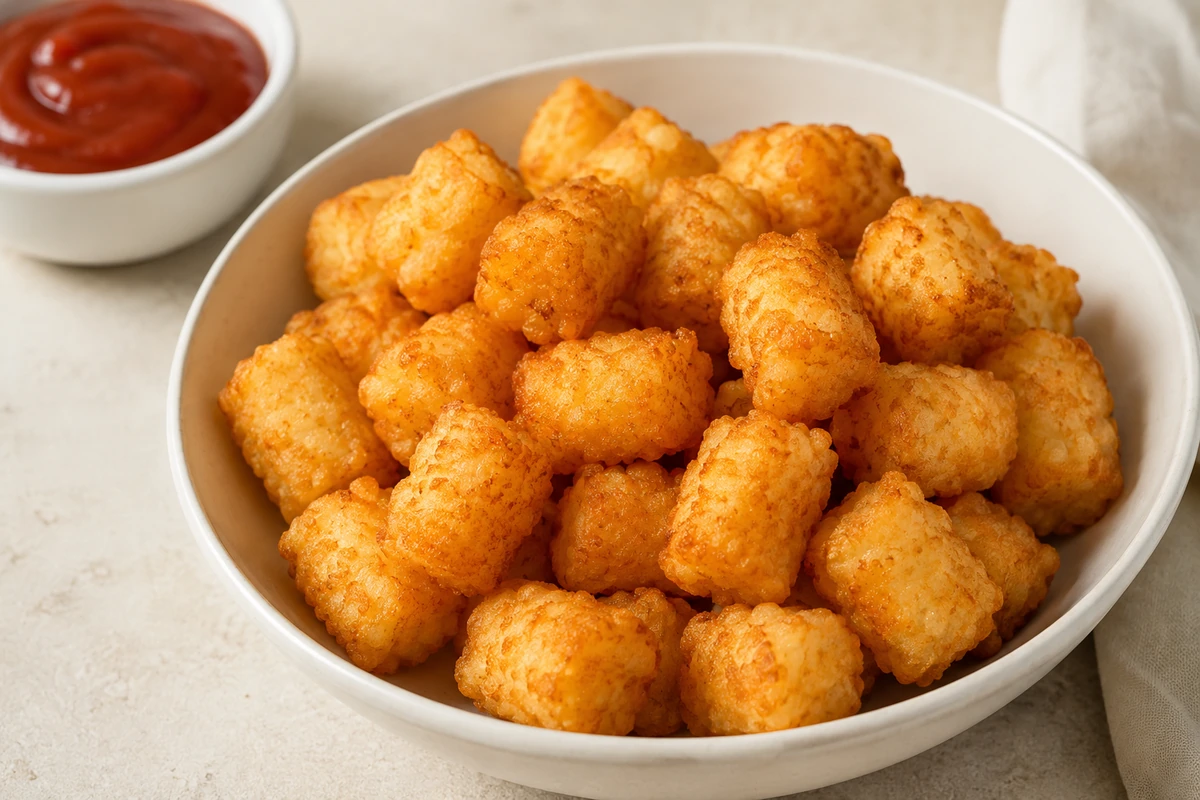
A standard 9-piece serving of tater tots has about 160 calories. On its own that is a modest side, but tater tots are almost never eaten in a measured 9-piece portion. They are poured onto a tray, scooped onto a plate, and grabbed off the table, and the per-piece math is where the total quietly climbs.
Each tot is roughly 16 to 18 calories, so the count matters more than with most sides. A small handful of 5 tots is about 80 calories, the 9-piece label serving is 160, a generous 15-piece plate is around 270, and a loaded 20-tot pile pushes past 350 calories before any toppings. None of those are extreme, but tots are a side that is easy to treat like a bottomless snack, and the calories add up by the dozen.
Where the calories come from
Tater tots are about half carbohydrate and half fat by calories. The potato supplies the starch, and the rest comes from the oil the tots are partially fried in during manufacturing before they are frozen. That par-frying is why a “baked” frozen tot still has 8 grams of fat even though you did not add any oil at home: the fat is already in the product. The protein is minimal, since potatoes carry very little, so tots are a starch-and-fat side rather than anything filling.
Tater tot nutrition by the piece
Because nobody eats exactly 9 tots, it helps to see the numbers scaled to real portions. The table below translates common tot counts into calories and sodium so you can size a serving without doing the math in your head.
| Amount | Approx. calories | Approx. sodium |
|---|---|---|
| 1 tot | 16 | 50 mg |
| 5 tots | 80 | 250 mg |
| 9 tots (label serving) | 160 | 450 mg |
| 15 tots (full plate) | 270 | 750 mg |
| 20 tots (loaded pile) | 355 | 1,000 mg |
The sodium column is the eye-opener. A loaded 20-tot pile carries roughly 1,000 milligrams of sodium, which is close to half a day’s recommended limit from a single side. Tots taste salty for a reason, and the salt scales with the count just like the calories do. Seeing the portions side by side makes it obvious why a “small side of tots” can be a much bigger nutritional commitment than it looks.
Does the cooking method change the nutrition?
This is the most common question about tots, and the answer is reassuring. Baking and air-frying frozen tater tots produce essentially the same nutrition, because neither method adds oil. The tots are already par-fried before freezing, so cooking them in dry oven or air-fryer heat just crisps what is there. An air-fried tot has the same calories and fat as a baked one; the air fryer only changes the texture and the cook time, not the numbers.
Deep-frying is the exception. Dropping frozen tots into hot oil adds fat that soaks into the surface, which can push a serving from 160 to 220 calories or more, depending on how much oil clings. So if you are watching calories, baking or air-frying is the better choice, and the good news is that both give you a crisp tot without the extra fat. The cooking method does not change the high sodium, though, since that is baked into the product regardless of how you heat it.
Tater tot styles compared
Not all tots are the same. The mini versions, the larger Crispy Crowns, and the sweet potato tots all shift the numbers. The table below compares a roughly equal 3-ounce serving of the common styles.
| Tot style | Calories | Fat | Sodium | Carbs |
|---|---|---|---|---|
| Ore-Ida regular | 160 | 8 g | 450 mg | 19 g |
| Ore-Ida mini tots | 160 | 8 g | 420 mg | 20 g |
| Crispy Crowns | 170 | 9 g | 420 mg | 19 g |
| Sweet potato tots | 150 | 7 g | 300 mg | 21 g |
The differences are small. The regular, mini, and Crispy Crowns versions are nearly interchangeable on calories and fat, and the count, not the style, is what drives your total. Sweet potato tots are the one meaningful variation: slightly fewer calories, noticeably less sodium, and a little more fiber and vitamin A from the sweet potato. If you want the lowest-sodium tot, the sweet potato style is the pick, though the difference is modest and the portion still matters most.
How much sodium is in tater tots?
A 9-piece serving of tater tots contains about 450 milligrams of sodium, which is a fifth of the 2,300 milligram daily limit the American Heart Association recommends as an upper boundary for most adults. You can read their full guidance on how much sodium to eat per day. For a side dish, that is a lot of salt, and because tots are easy to eat by the handful, the sodium climbs fast. A plate of 15 or 20 tots can deliver three-quarters of a day’s sodium on its own.
This is the number most nutrition listings mention without context. The calories in tots are moderate, but the sodium is the figure worth watching, especially for anyone managing blood pressure. Tots are also rarely eaten plain; ketchup, ranch, and cheese all pile on more sodium, so the side is often saltier in practice than the label alone suggests.
What are tater tots made of?
Tater tots are made from shredded or chopped potato that is seasoned, bound, formed into small cylinders, and par-fried before being frozen. The main ingredients are potatoes and vegetable oil, with salt and a little flour or starch as a binder, plus seasonings. The par-frying step gives them their golden, crisp exterior and is also the source of most of the fat. They are a processed potato product rather than whole potato, which is why the fiber is low and the sodium is high compared with a plain baked potato of the same weight.
It is worth knowing that the par-frying happens at the factory, not in your kitchen, which is the source of most of the confusion about tot nutrition. People assume that baking the frozen tots keeps them low in fat, but the 8 grams per serving was locked in before the bag was sealed. That is why the cooking method at home changes the texture far more than the numbers, and why the only way to meaningfully cut a tot’s fat is to choose a baked or air-fried preparation over deep-frying rather than to expect baking to remove fat that is already inside.
Allergens and dietary notes
Most frozen tater tots are naturally vegan and dairy-free, since they are just potato and oil, but some brands include wheat-based binders, so anyone with a wheat allergy or celiac disease should check the label for gluten. Many Ore-Ida varieties are labeled gluten-free, but it is not universal across all tot products. Tots contain no cholesterol, since the fat is from vegetable oil, which is one of the few clear pluses on the panel.
Tater tots vs other potato sides
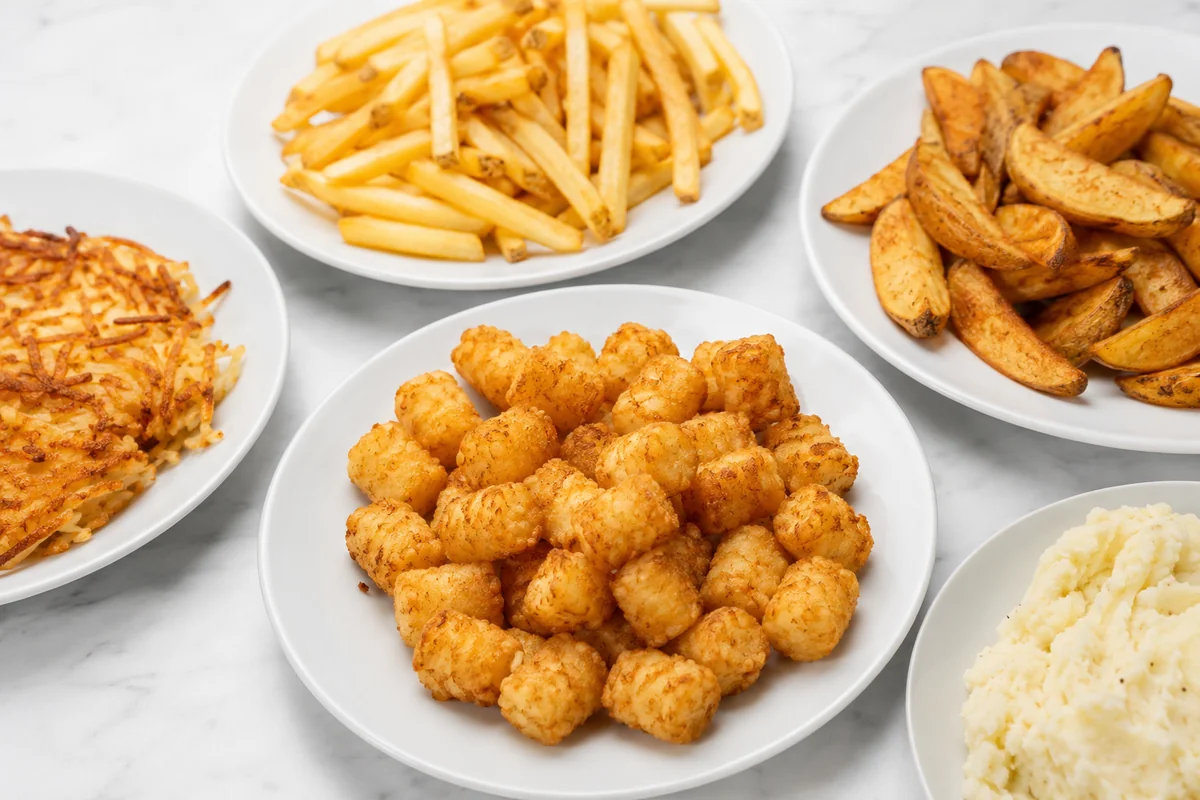
Tots do not exist in isolation, and it helps to see where they land against the other potato sides you might order or cook. The table below compares a roughly equal serving of each common option.
| Potato side | Calories | Fat | Sodium |
|---|---|---|---|
| Tater tots (9 pieces) | 160 | 8 g | 450 mg |
| French fries (medium fast food) | 320 | 15 g | 260 mg |
| Hash browns (1 patty) | 140 | 9 g | 310 mg |
| Baked potato (plain, medium) | 160 | 0 g | 20 mg |
| Mashed potatoes (1/2 cup) | 120 | 4 g | 350 mg |
Two things stand out. A plain baked potato has the same calories as a tot serving but almost no fat and a tiny fraction of the sodium, which makes it the clear winner if salt and fat are your concern. And a medium fast-food fries portion carries roughly double the calories of a label serving of tots, though tots are saltier per calorie. The honest read is that tots are a middle-of-the-pack potato side: better than a big fries order on calories, worse than a plain potato on sodium. For context on how a fast-food side fits into a full order, our breakdown of the Big Mac nutrition facts walks through how the sides, not just the main, decide whether a meal is reasonable.
Tater tots in popular dishes
Most people do not eat tots plain, and the dish they go into changes the nutrition more than the tots themselves. A tater tot casserole, the Midwestern hotdish staple, layers tots over ground beef, cheese, and cream-of-something soup, which turns a 160-calorie side into a 350 to 450-calorie main per serving once the meat, cheese, and sauce are counted. Totchos, the tot-and-nacho mashup, pile on cheese, sour cream, and toppings that can double the calories and push the sodium well past 1,000 milligrams.
The tots are rarely the problem in these dishes; the cheese, sauce, and meat are. If you are building a tot-based meal, the lever that matters is what you add, not the tots themselves. Leaning on a leaner protein and going easy on the cheese keeps a tot casserole reasonable. Pairing a portioned side of tots with a fiber-and-protein dish does the same. A bowl of beans is one of the simplest ways to add both, and our breakdown of refried beans nutrition shows how a single serving brings the fiber and protein that a plate of tots does not.
How to make tater tots fit your day
Tater tots are fine as an occasional side, and a few moves keep them reasonable. The single most effective habit is to portion them, since the per-piece calories and sodium add up by the dozen. Counting out a 9 or 12-piece serving onto a plate, rather than eating from the tray, keeps a side a side. Baking or air-frying instead of deep-frying avoids the extra fat, and going lighter on salty toppings like cheese and ranch keeps the sodium from doubling.
It also helps to pair tots with something that brings the protein and fiber they lack. A serving of tots next to a lean protein and a vegetable is a balanced plate; a giant pile of tots as the meal itself is not. If you cook a lot of frozen sides in an air fryer, our friends at air fryer frozen foods cover the timing and crisping that get tots right without added oil. Treating tots as the fun starch on an otherwise solid plate is the whole trick.
Are tater tots healthy?
Tater tots are a processed potato side, not a health food, but they are not a disaster in a portioned amount. The pluses are that they are cholesterol-free, low in saturated fat, and carry a couple of grams of fiber. The minuses are the high sodium, the refined-starch-and-oil profile, and how easy they are to overeat. In a sensible serving, baked or air-fried rather than deep-fried, tots fit into most eating patterns as an occasional side. As with most frozen convenience foods, the issue is rarely a single 9-piece serving. It is the loaded plate and the unmeasured tray that turn a light side into a heavy, salty one.
Frequently Asked Questions
How many calories are in tater tots?
A standard 9-piece serving of Ore-Ida tater tots, about 3 ounces, has roughly 160 calories. Each individual tot is about 16 calories, so a 15-piece plate is around 270 calories.
How many tater tots are in a serving?
The Ore-Ida label defines a serving as 9 pieces, which is about 3 ounces. Most people eat more than that, so a typical plate of 15 to 20 tots is closer to 270 to 355 calories.
Are tater tots high in sodium?
Yes. A 9-piece serving has about 450 milligrams of sodium, a fifth of the daily limit. Because tots are easy to eat by the handful, a full plate can reach three-quarters of a day’s sodium before toppings.
Do air-fried tater tots have fewer calories than baked?
No, they are the same. Neither air-frying nor baking adds oil to frozen tots, so the calories and fat are identical. Only deep-frying adds calories by soaking the tots in extra oil.
How many carbs are in tater tots?
About 19 grams of carbohydrate per 9-piece serving, with 2 grams of fiber. The carbs come from the potato, and the count scales with how many tots you eat.
Are sweet potato tots healthier?
Slightly. Sweet potato tots have a touch fewer calories, less sodium, and a little more fiber and vitamin A than regular potato tots. The difference is modest, and the portion size still matters most.
How many calories is one tater tot?
About 16 to 18 calories per individual tot. Because they are so small, the count is what drives your total, which is why portioning onto a plate rather than eating from the tray keeps the calories and sodium in check.
Are tater tots gluten-free?
Many are, including several Ore-Ida varieties, since the base is just potato and oil. But some brands use a wheat-based binder, so anyone with celiac disease or a wheat allergy should always check the specific package label rather than assume.