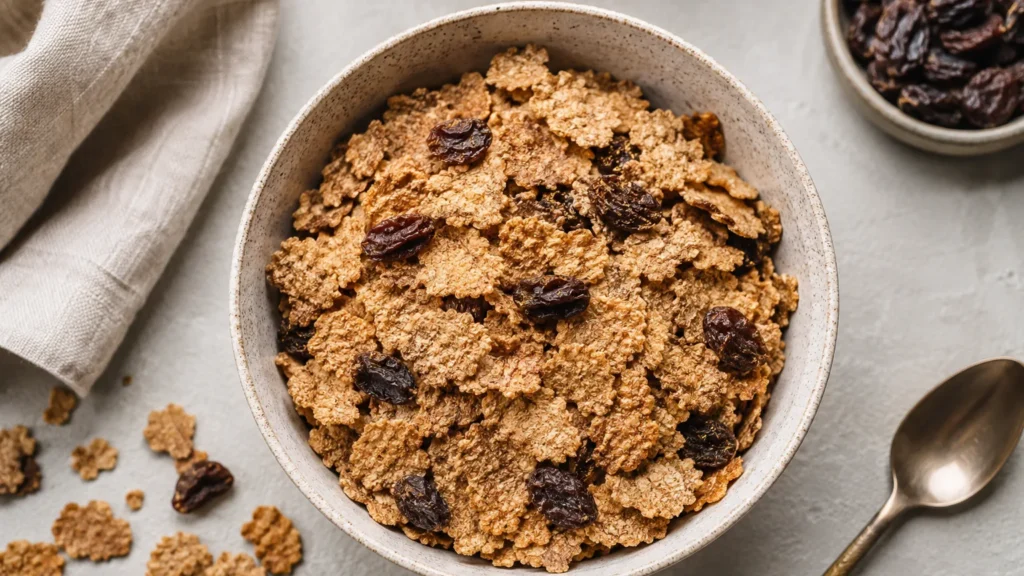
The raisin bran nutrition facts for a standard 1 cup serving come to 190 calories, 7 grams of fiber, 17 grams of sugar, 5 grams of protein, and 200 milligrams of sodium, with just 1 gram of fat. That fiber number is genuinely strong, which is why the cereal has a healthy reputation, but the 17 grams of sugar complicate the picture. The useful detail most labels gloss over is that only part of that sugar is added; the rest comes from the raisins. This guide breaks down the full label, splits the sugar into added and natural, shows how a bowl changes with milk, and gives an honest answer on whether this is a healthy breakfast.
Raisin bran nutrition facts at a glance
Here are the numbers for a 1 cup (59 gram) serving of the cereal on its own, before milk. The standout lines are the fiber, which is high, and the sugar, which is higher than many people expect from a bran cereal.
| Nutrient | Per 1 cup (59 g) |
|---|---|
| Calories | 190 |
| Total fat | 1 g |
| Total carbohydrates | 47 g |
| Dietary fiber | 7 g |
| Total sugar | 17 g (about 9 g added) |
| Protein | 5 g |
| Sodium | 200 mg |
This is a high-carbohydrate, high-fiber cereal with a notable amount of sugar and very little fat. The USDA (FoodData Central) lists comparable values for bran cereals with raisins, and the profile is consistent: plenty of fiber, a real dose of sugar, and a modest amount of protein that climbs once you add milk.
Calories and serving size
A 1 cup serving delivers 190 calories on its own. That is a reasonable breakfast base, though it is worth checking how you measure it, because bran flakes settle and a heaping bowl can run larger than a level cup. Pour a generous bowl and you can easily reach a cup and a half, which pushes the calories toward 285 before any milk.
Most people do not eat this cereal dry, so the realistic calorie count is the cereal plus whatever milk you add, covered below. On its own, though, 190 calories for a cup that brings 7 grams of fiber is a fair trade, and it is the fiber that makes those calories work harder than the sugar number alone might suggest. Measuring the portion rather than free-pouring keeps the total where the label says it is.
Fiber: the cereal’s strongest feature
The headline nutrient here is fiber, at 7 grams per serving. That is about 25 percent of the 28 gram Daily Value the FDA uses, which qualifies the cereal as a good source of fiber under labeling rules. The fiber comes from the wheat bran, the flaky part of the cereal, and it is the single best reason to choose this breakfast over a low-fiber flake or puffed cereal.
Fiber matters because most people fall well short of the daily target, and it supports digestion, helps with fullness, and slows how quickly the meal raises blood sugar. That last point is important here, because the same bowl carries a fair amount of sugar; the fiber partly offsets how fast that sugar hits. Starting the day with 7 grams is a meaningful head start toward the daily goal, and it is the nutrient that earns this cereal its healthier reputation.
Sugar: added versus natural
The 17 grams of sugar is the number that gives people pause, and it deserves a careful look, because not all of it is the same. Of those 17 grams, about 9 grams are added sugar, the kind sprayed or coated onto the bran flakes and the raisins. The remaining roughly 8 grams are the natural sugars in the raisins themselves, which arrive packaged with fiber and nutrients rather than as a standalone sweetener.
That distinction matters for how you judge the cereal. The 9 grams of added sugar is about 18 percent of the FDA’s 50 gram added-sugar Daily Value, a moderate amount for a breakfast. The American Heart Association (AHA) sets tighter daily limits, around 25 grams for women and 36 grams for men, so the added portion uses a meaningful slice of that budget. The natural sugar from the dried fruit is less of a concern, since it comes with the raisins’ own fiber. The honest read is that this is not a low-sugar cereal, but its sugar is not as alarming as the 17 gram total looks at first glance.
Protein, sodium, and fat
The cereal provides 5 grams of protein per cup on its own, which is modest, and almost no fat at just 1 gram with no saturated fat. The protein roughly doubles once you add milk, which turns a light breakfast into a more balanced one. The sodium, at 200 milligrams per serving, surprises some people, since breakfast cereals are not foods most associate with salt, but it is normal for the category and works out to about 9 percent of the Daily Value.
None of these numbers are problems on their own. The takeaway is that the cereal is naturally low in fat, light on protein until you add dairy, and carries a typical amount of sodium for a packaged cereal. The fiber and sugar remain the two lines that define it.
The bowl with milk
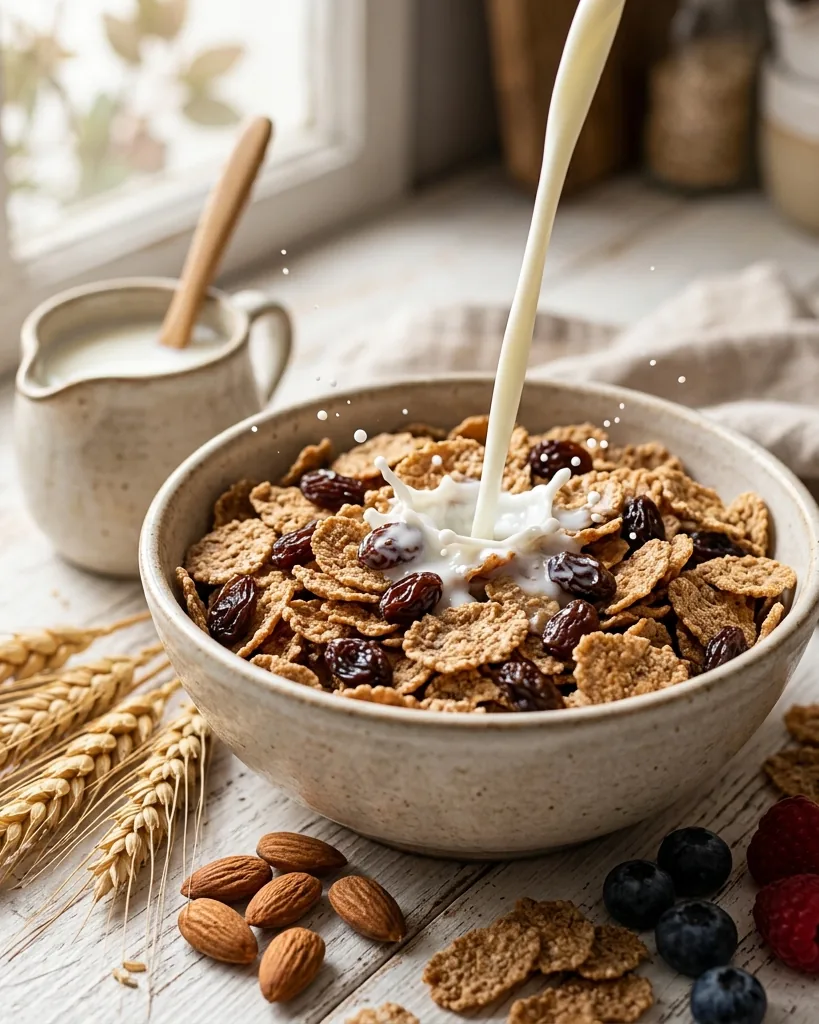
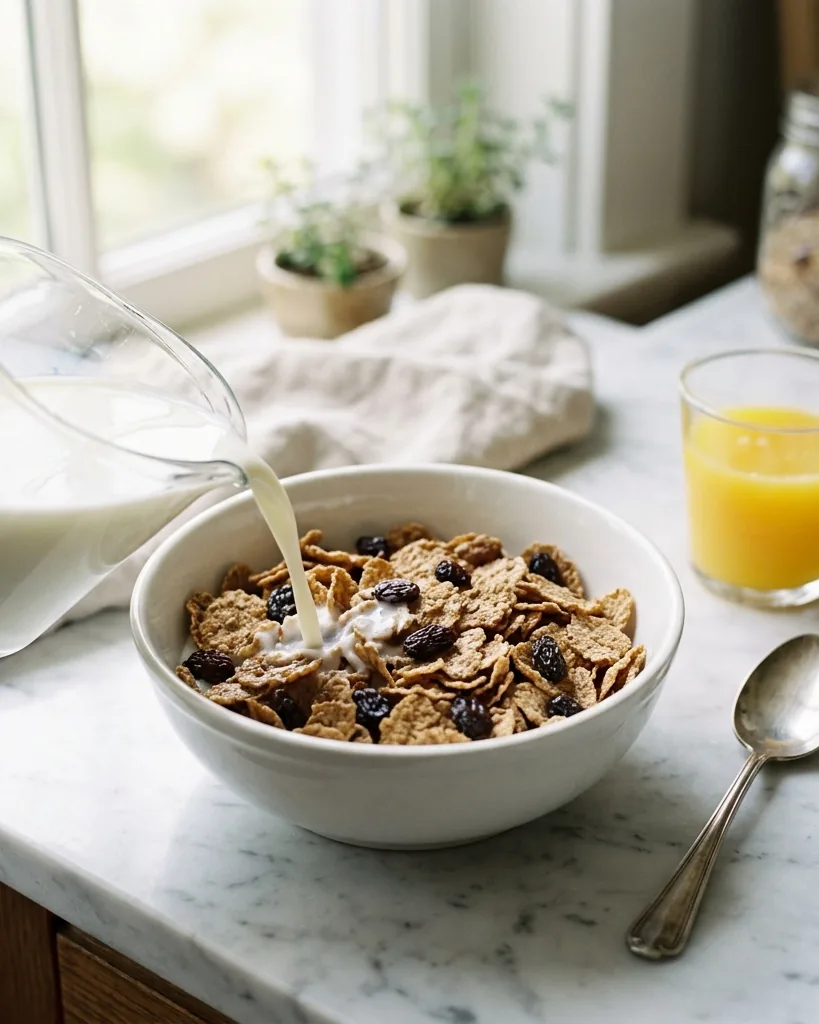
Almost nobody eats this cereal dry, so the real breakfast is the cereal plus milk. Milk changes the numbers in a helpful direction, adding protein and calcium while raising calories and a little sugar. The table shows a 1 cup serving with a half cup of skim milk, a common pairing.
| Component | Calories | Protein |
|---|---|---|
| Raisin bran, 1 cup | 190 | 5 g |
| Skim milk, 1/2 cup | About 40 | About 4 g |
| Full bowl | About 230 | About 9 g |
With skim milk the bowl lands near 230 calories and 9 grams of protein, a more complete breakfast than the cereal alone. Whole milk would add more calories and fat but also a richer texture, while a higher-protein milk would push the protein further. The fiber stays at 7 grams from the cereal, so the bowl combines that fiber head start with the protein and calcium the milk brings, which is a genuinely solid way to start the day.
Is raisin bran actually healthy?
The honest verdict is that it is a reasonably healthy choice with one caveat. On the positive side, 7 grams of fiber is excellent for a breakfast cereal, the fat is negligible, and the cereal is fortified with vitamins and minerals. Paired with milk it delivers fiber, protein, and calcium in a quick, affordable meal. For most people it is a clearly better choice than a sugary low-fiber cereal.
The caveat is the added sugar. With about 9 grams of added sugar per serving, it is not a low-sugar food, and the total of 17 grams can look worse than it is until you separate out the natural raisin sugar. The practical position is that raisin bran is a solid everyday breakfast for the fiber, as long as you account for the added sugar within your day and do not treat it as a sugar-free health food. Eating a measured serving rather than a heaping bowl keeps both the calories and the sugar in check.
Why the added sugar is there at all
It is fair to ask why a bran cereal marketed on fiber needs 9 grams of added sugar. The answer is partly taste and partly texture. Plain wheat bran is bitter and dry, so a sugar coating on the flakes balances that bitterness and makes the cereal palatable to a wide audience. The raisins are also typically coated with a little sugar and oil to keep them soft and prevent them from clumping in the box, which adds to the total.
The FDA (FDA) now requires the added-sugar line to appear separately on the label precisely so shoppers can see this kind of thing, rather than guessing from the total. That transparency is useful here, because it lets you confirm that most of the sweetness is added rather than natural, and decide accordingly. If you want the fiber with less added sugar, a plain bran flake topped with your own fresh or dried fruit gives you more control over how much sweetener ends up in the bowl, at the cost of a little convenience.
Raisin bran, digestion, and who benefits most
The high fiber content makes this cereal especially useful for anyone trying to eat more fiber, which is most of the population. Fiber supports regular digestion, feeds beneficial gut bacteria, and helps with the feeling of fullness that keeps a breakfast satisfying. For people working to increase their intake gradually, a bowl is an easy, familiar way to add 7 grams toward the daily target without much effort or planning.
A couple of groups should keep the sugar in view. Anyone managing blood sugar will want to note that the bowl carries a fair amount of total carbohydrate, even though the fiber and the protein from milk soften its impact. Pairing the cereal with milk, and not over-pouring the portion, helps keep the rise gentle. For everyone else, the fiber benefit generally outweighs the moderate added sugar, especially when the alternative on the shelf is a low-fiber, high-sugar cereal with none of the bran’s advantages.
Simple ways to make the bowl better
A few small habits turn an already-decent breakfast into a stronger one. None require giving up the cereal you like; they just shift the balance toward more nutrition and less excess.
- Measure the portion. Sticking to a level cup keeps the calories and sugar where the label says, rather than creeping up with a heaping bowl.
- Add protein. Milk, a dollop of yogurt, or a spoon of nut butter on the side adds staying power the cereal lacks on its own.
- Top with fresh fruit. Berries or banana add natural sweetness, more fiber, and nutrients without extra added sugar.
- Mix with a plain cereal. Combining it half-and-half with an unsweetened bran or oat cereal lowers the added sugar per bowl while keeping the flavor.
The thread through all of these is that the cereal is a good foundation rather than a finished meal. Built on with protein and fresh fruit, it becomes a genuinely balanced breakfast that leans on its fiber strength while keeping the added sugar in proportion. Used straight from the box in an oversized bowl, it drifts toward more sugar and calories than the label suggests, so a little intention goes a long way.
Vitamins and minerals
Like most breakfast cereals, this one is fortified, meaning vitamins and minerals are added during manufacturing. A serving typically supplies a meaningful share of the daily iron, along with several B vitamins such as folate, niacin, and B6, and often added vitamin D and zinc depending on the formulation. These are part of why fortified cereals contribute to nutrient intake across the population, particularly for iron and folate.
The fiber and the raisins also bring some nutrition that is not just fortification. Wheat bran carries naturally occurring minerals like magnesium, and the raisins add a small amount of potassium and antioxidants. None of this turns the cereal into a superfood, but it does mean a bowl delivers more than just calories and fiber. Checking the specific box is wise, since fortification levels vary by product and country.
The raisins deserve a little credit of their own. Beyond the natural sweetness they bring, dried grapes carry potassium, some iron, and plant antioxidants, and they fold a bit of fruit into a meal where many people would otherwise eat none. They do concentrate sugar, since drying removes the water and leaves the fruit sugars behind, which is why they account for a real share of the bowl’s total. But gram for gram they bring more than empty sweetness, and they are a large part of why this cereal is more interesting, and a touch more nutritious, than a plain bran flake on its own.
How raisin bran compares to other cereals
Set against the cereal aisle, raisin bran sits in the higher-fiber, moderate-sugar tier. Compared with a frosted or honey-coated flake, it has far more fiber and usually similar or slightly less sugar, which makes it the better pick of the two. Compared with a plain bran flake without raisins, it has more sugar but also more flavor and the nutrients the dried fruit adds. Compared with a low-sugar option like plain oats or shredded wheat, it has more sugar but is more convenient and palatable for many people.
The point is that no cereal is perfect, and raisin bran trades a bit of added sugar for strong fiber and easy appeal. If your main goal is fiber, it is one of the better mainstream choices. If your priority is the lowest possible sugar, a plain bran or oat cereal edges it out. For a balanced look at fiber sources beyond cereal, see our guide to foods high in fiber, and if you are weighing which milk to pour, our breakdown of whole milk nutrition shows how the dairy choice changes the bowl.
Frequently asked questions
How many calories are in raisin bran?
A 1 cup (59 gram) serving of raisin bran has 190 calories on its own. With a half cup of skim milk the bowl rises to about 230 calories. A heaping, unmeasured bowl can run noticeably higher, often closer to 285 calories before any milk is added, which is why measuring the portion matters more here than it does with many other lighter cereals.
How much sugar is in raisin bran?
A 1 cup serving has 17 grams of total sugar, of which about 9 grams is added sugar and the rest comes naturally from the raisins. The 9 grams of added sugar is roughly 18 percent of the FDA’s 50 gram daily value, so it is moderate rather than low.
Is raisin bran high in fiber?
Yes. At 7 grams per serving, raisin bran provides about 25 percent of the 28 gram daily value for fiber, which qualifies it as a good source. The fiber comes from the wheat bran flakes and is the cereal’s strongest nutritional feature.
Is raisin bran healthy?
It is a reasonably healthy choice thanks to its high fiber, low fat, and fortification with vitamins and minerals. The main caveat is the roughly 9 grams of added sugar per serving, so it is best treated as a solid everyday breakfast rather than a sugar-free health food.
How much protein does raisin bran have?
The cereal alone has about 5 grams of protein per cup. Adding a half cup of skim milk brings the bowl to roughly 9 grams, making it a more balanced breakfast. Using a higher-protein milk, or stirring in a spoonful of Greek yogurt on the side, pushes that number up further and makes the whole breakfast noticeably more filling and balanced overall.