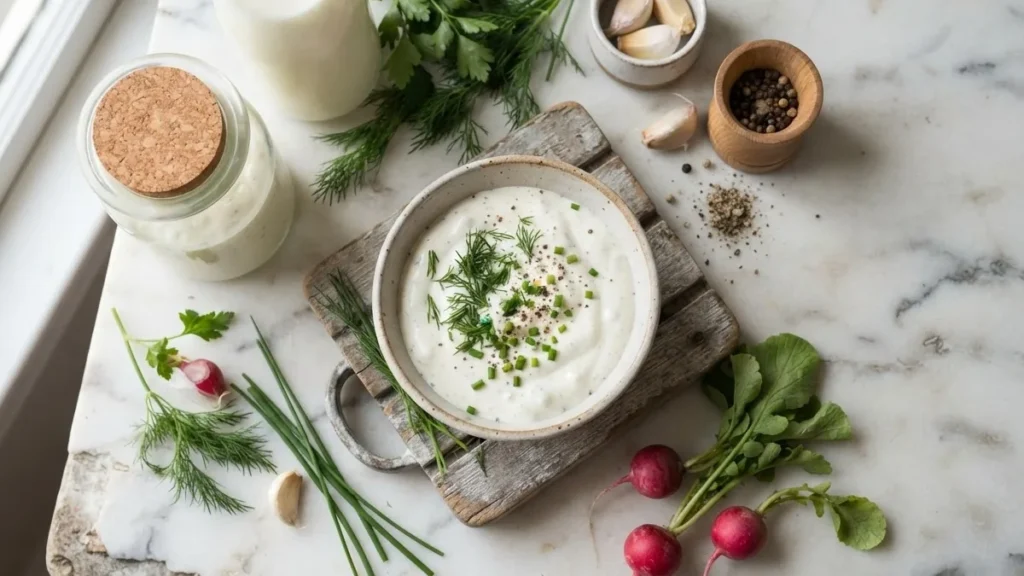
The nutrition facts for ranch start with the number on America’s favorite dressing: 130 calories per 2-tablespoon serving of Hidden Valley Original, carrying 13.9 grams of fat, 2 grams of saturated fat, 260 milligrams of sodium, and only 1 to 2 grams of carbohydrate, per the brand label and USDA FoodData Central. The calories are almost entirely fat, the carbs are nearly absent, and the serving size is a polite fiction nobody’s veggie tray respects. On condiment labels, ranch is where the gap between the printed serving and the poured serving is widest, wider even than the snack-bag gap our Cheez-Its nutrition label breakdown measures.
The reference label, line by line
Here is the Hidden Valley Original Ranch panel for 2 tablespoons, 30 grams (hiddenvalley.com), the de facto reference label for the category, cross-checked against USDA FoodData Central generic ranch (fdc.nal.usda.gov).
| Nutrient | Per 2 tbsp (30 g) | % Daily Value |
|---|---|---|
| Calories | 130 | – |
| Total fat | 13.9 g | 18% |
| Saturated fat | 2 g | 10% |
| Cholesterol | ~10 mg | 3% |
| Sodium | 260 mg | 11% |
| Total carbohydrate | 1-2 g | 1% |
| Sugar | <1 g | – |
| Protein | <1 g | – |
The shape of this label is worth naming: 13.9 grams of fat times 9 calories per gram accounts for about 125 of the 130 calories. Ranch is fat with seasoning, which is neither an insult nor a warning, just the honest composition of an emulsified dressing. Everything else on the panel, the carbs, the sugar, the protein, is a rounding story. The two lines that deserve real attention are the calories and the sodium, and both scale with the portion problem below.
The 2-tablespoon fiction
Two tablespoons is 30 grams, roughly the volume of a golf ball cut in half. A restaurant side cup holds 3 to 6 tablespoons. A generous freehand pour over a dinner salad lands in the same range. The wing-night ramekin, refilled once, can double it again.
The real-portion math: at 65 calories per tablespoon, a 3-tbsp side cup is ~195 calories, a 4-tbsp pour is ~260, and a 6-tbsp dip session is ~390, three times the label serving, from the same bottle that says 130.
Measure a “normal” pour into a tablespoon and it can easily come to 3.5 tablespoons on a salad, about 227 calories, and closer to 5 for veggie-tray dipping. The most common mistake is trusting the wrist, because the wrist was calibrated by the ramekin, not the label. The dressing is not sneaky; the portion is.
What kind of fat ranch carries
The 13.9 grams are mostly soybean or canola oil, the emulsion base, with egg yolk and buttermilk supplying the rest. That composition means ranch fat is predominantly unsaturated: only 2 of the 13.9 grams are saturated, about 10 percent of the daily value per serving. For a dressing this rich, the saturated line is genuinely modest, milder per calorie than the dairy fats covered in our heavy cream nutrition guide.
The practical reading: ranch’s fat profile is closer to mayonnaise than to butter, and the health conversation about it is a calories conversation before it is a fat-type conversation. The oil is not the villain of this label. The volume is.
Sodium: the quiet line
Everyone interrogates the fat; the sodium stacks faster. At 260 milligrams per 2 tablespoons, ranch spends 11 percent of the FDA’s 2,300-milligram daily value in one modest serving, a limit the CDC’s sodium guidance underlines (cdc.gov). Scale to the real portions above and a 4-tablespoon pour is 520 milligrams, nearly a quarter of the day, before the salad’s croutons, cheese, or the wings underneath say a word.
The overlooked detail is that the light version makes this worse, not better: Hidden Valley Light trades fat for salt at about 300 milligrams per serving. Salt is the cheapest flavor replacement in food formulation, and reduced-fat dressings lean on it almost universally. Anyone choosing light ranch for blood-pressure reasons has the trade exactly backwards.
The variant table: original to yogurt-base
Ranch is a category, not a single label, and the spread across versions is nearly five-fold. Per 2 tablespoons, using brand labels, USDA data, and representative recipes:
| Version | Calories | Fat | Sodium | Note |
|---|---|---|---|---|
| Hidden Valley Original | 130 | 13.9 g | 260 mg | the reference |
| Light | ~60 | ~5 g | ~300 mg | more sodium |
| Fat free | ~30-45 | 0 g | ~270-330 mg | more sugar/starch |
| Dry mix + milk/mayo prep | ~110-120 | ~11 g | varies with prep | you control the base |
| Homemade buttermilk | ~60-90 | ~6-9 g | ~150-250 mg | recipe dependent |
| Greek yogurt base | ~40-60 | ~2-4 g | ~150-200 mg | adds protein |
Read down the calorie column and the pattern is the base ingredient: oil-and-egg emulsions sit at the top, dairy bases in the middle, strained yogurt at the bottom. Read across any row and the compensation shows: whatever a version removes, it replaces with salt, sugar, or starch to keep the flavor. There is no free ranch; there are only different trades, and the table is the menu of them.
Ranch vs the other dressings
Per 2 tablespoons, using USDA ranges, the dressing shelf lines up tighter than its reputation suggests.
| Dressing | Calories (2 tbsp) | Character |
|---|---|---|
| Italian (regular) | ~80 | thinner, more vinegar |
| Ranch (original) | ~130 | the reference |
| Blue cheese | ~145 | chunkier, similar base |
| Caesar | ~155 | oil plus cheese |
| Honey mustard | ~130-150 | adds real sugar |
Ranch is mid-pack, not the outlier the jokes make it. Caesar and blue cheese outweigh it; only vinaigrette-style dressings meaningfully undercut it. Switching dressings to save calories usually saves 15 to 25 per serving, while portion habits can cost 130 or more. Switching the pour size beats switching the bottle, every time the math is run.
The comparison also flags what ranch does not have: honey mustard and French dressings carry 3 to 6 grams of real added sugar per serving where ranch carries under 1, and creamy Caesar adds cheese sodium on top of dressing sodium. Anyone trading ranch away for health reasons should check that the replacement actually wins on the line they care about, because the dressing shelf rearranges its sins more often than it removes them.
Carbs, keto, and the fat-free trap
Regular ranch is one of the most keto-compatible condiments in the store: 1 to 2 grams of carbohydrate per 2 tablespoons, nearly all fat, trivial sugar. Wing culture and keto culture agree on ranch for once, and the numbers back both of them. Anyone tracking macros can log a real 3-to-4 tablespoon portion and stay inside a 20-gram carb day with room to spare, which is more than the sweetened dressings can say; a full carb-strategy picture lives in our keto diet guide.
The fat-free trap: fat-free ranch swaps oil for sugar and modified starch, tripling or quadrupling the carbs per serving while keeping the sodium. For carb-counters, fat free is the worst ranch on the shelf, not the best.
The trap generalizes, and it is worth stating as a rule: on any dressing label, the fat line and the sugar line move in opposite directions, because something has to carry the flavor. Read whichever line your diet cares about, but read it on the version you actually buy.
Reading the bottle beyond the panel
The ingredient list explains numbers the panel only reports. Bottled original ranch typically reads: vegetable oil, water, egg yolk, sugar, salt, cultured buttermilk, natural flavors, spices, with modified food starch and gums appearing further down as stabilizers. Oil first means fat first, which the 13.9-gram line already told you. The interesting entries are the quiet ones: sugar appears even in original ranch, under a gram per serving, and the starch-and-gum team is what keeps a shelf-stable emulsion from separating the way a homemade one does within days.
Two bottle claims deserve decoding. “Made with avocado oil” versions usually blend avocado with the cheaper base oils; according to USDA branded-food entries, their calorie counts land within a few calories of the original, because oil is oil at 9 calories per gram whatever fruit or seed it came from. And “no artificial flavors” changes the flavor sourcing, not the nutrition. Neither claim moves a single number on the panel, which is worth remembering any time a bottle’s front label works harder than its back one.
The refrigerated-aisle ranches, sold in the produce section, are a genuinely different product: shorter ingredient lists, real buttermilk percentages, and shelf lives measured in weeks. Their panels typically run 5 to 15 calories higher per serving than shelf-stable original, because fresher formulation usually means more oil and less water and gum. Fresher is a taste upgrade, not a calorie one, and a common mistake in the produce aisle is reading the location of the bottle as a health claim.
Three ways to make ranch lighter
First, change the base. A Greek yogurt ranch, plain yogurt, dry seasoning, splash of buttermilk, lands at 40 to 60 calories per 2 tablespoons with 2 to 3 grams of protein, a quarter of the bottled calories with a better satiety profile. It tastes tangier than bottled; wings forgive this, delicate lettuces notice.
Second, use the dry mix as a control panel. The packet itself is nearly calorie-free seasoning; the calories arrive with whatever you stir it into. Mixed into light mayo and milk it lands near 60 to 70 calories per serving; into full mayonnaise, back near bottled territory. The packet math is the rare case where the label genuinely hands you the steering wheel.
Third, fix the delivery instead of the recipe. Dipping with the tines of a fork, pre-portioning 2 tablespoons into a ramekin instead of pouring at the table, or thinning the dressing with buttermilk to improve coverage per gram all cut the poured amount by a third to half without changing a single ingredient. The thinning trick has a bonus: a salad dressed with less can taste better, because coverage, not quantity, is what the tongue registers.
The dip math: veggie tray vs wing night
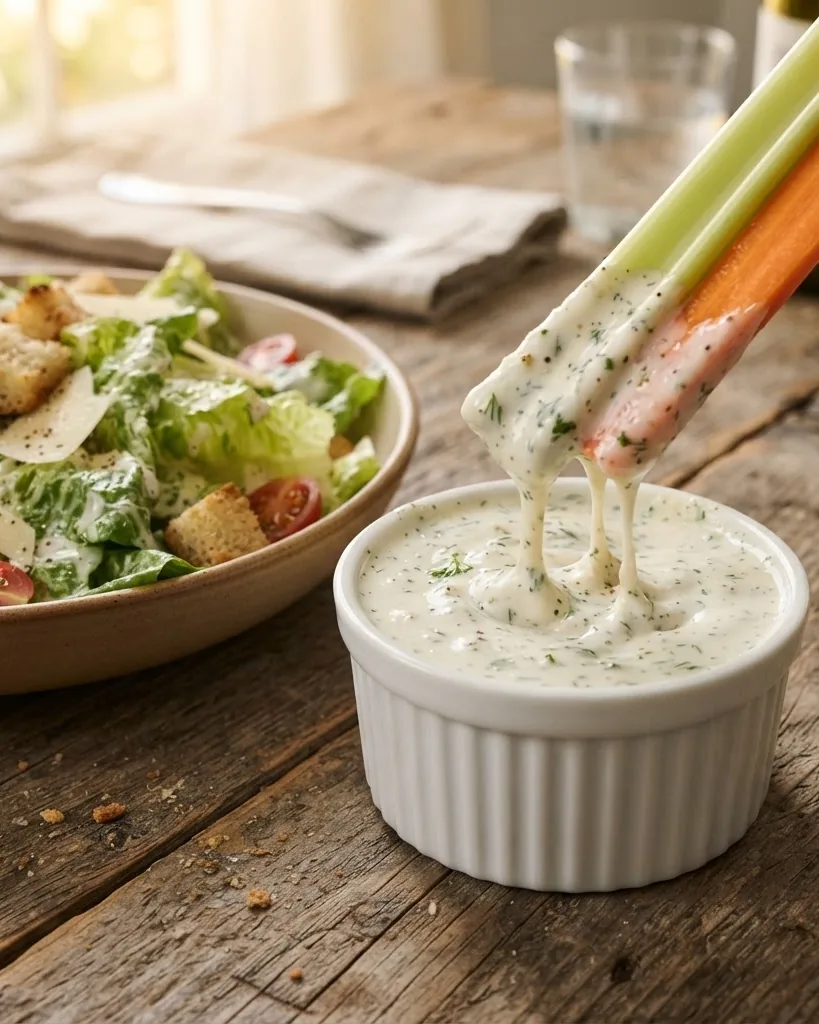
Ranch’s calories depend on the vehicle as much as the pour, because the vehicle decides how much dressing each bite carries. Raw vegetables are efficient dippers: a carrot stick or celery rib picks up roughly a teaspoon per dip, so a genuinely healthy-looking veggie-tray session of fifteen dips moves about 5 tablespoons of ranch, 325 calories, more than the vegetables underneath. The tray reads as a salad; the math reads as a milkshake.
Wings are worse per unit and better per session, oddly. A wing dunk carries more dressing per pass, but wing counts are self-limiting in a way carrot counts are not; a ten-wing plate rarely clears more than 3 to 4 tablespoons of ranch, 195 to 260 calories, before the wings run out. At a game-day spread, the veggie tray tends to out-pour the wing plate, which is exactly backwards from what the two plates look like on a table.
Pizza dipping, the habit the Midwest gave the country, is the heavyweight: a slice-edge drag through a side cup moves close to a tablespoon per slice, so a three-slice night quietly adds around 200 calories of dressing to an already dense meal. None of this is an argument against ranch; it is an argument for knowing which of your plates is the leaky one.
What a serving contributes to a day
Placed against standard daily values, a true 2-tablespoon serving of original ranch spends its budget in two places.
- Calories: 130, about 6.5% of a 2,000-calorie day.
- Total fat: 13.9 g, 18% of the daily value, the label’s biggest line.
- Sodium: 260 mg, 11% of the daily value, the label’s quietest big line.
- Saturated fat: 2 g, 10% of the daily value, modest for the richness.
- Carbs, sugar, protein: 1% or less apiece, effectively empty columns.
Double everything for the realistic 4-tablespoon pour, and ranch becomes a 260-calorie, 520-milligram-sodium side dish that never appears on the menu as one. That is the entire story of this label: honest numbers attached to a dishonest serving size, and a bottle that will pour whatever your wrist decides.
Frequently asked questions
How many calories are in ranch dressing?
About 130 calories per 2 tablespoons for Hidden Valley Original, and about 129 for generic bottled ranch in USDA data. Light versions run near 60, fat free 30 to 45, and Greek yogurt homemade versions 40 to 60.
Is ranch the unhealthiest dressing?
No. At about 130 calories per 2 tablespoons it sits below blue cheese (~145) and Caesar (~155). Its real issues are portion drift and sodium, both of which scale with the pour, not the brand.
How much sodium is in ranch?
About 260 milligrams per 2 tablespoons of original, 11 percent of the FDA daily value, and about 300 milligrams in the light version. A realistic 4-tablespoon portion carries around 520 milligrams.
Is ranch keto friendly?
Regular ranch, yes: 1 to 2 grams of carbs per serving and almost all fat. Avoid fat-free ranch on keto, since the removed oil is replaced with sugar and starch.
Whats in ranch dressing?
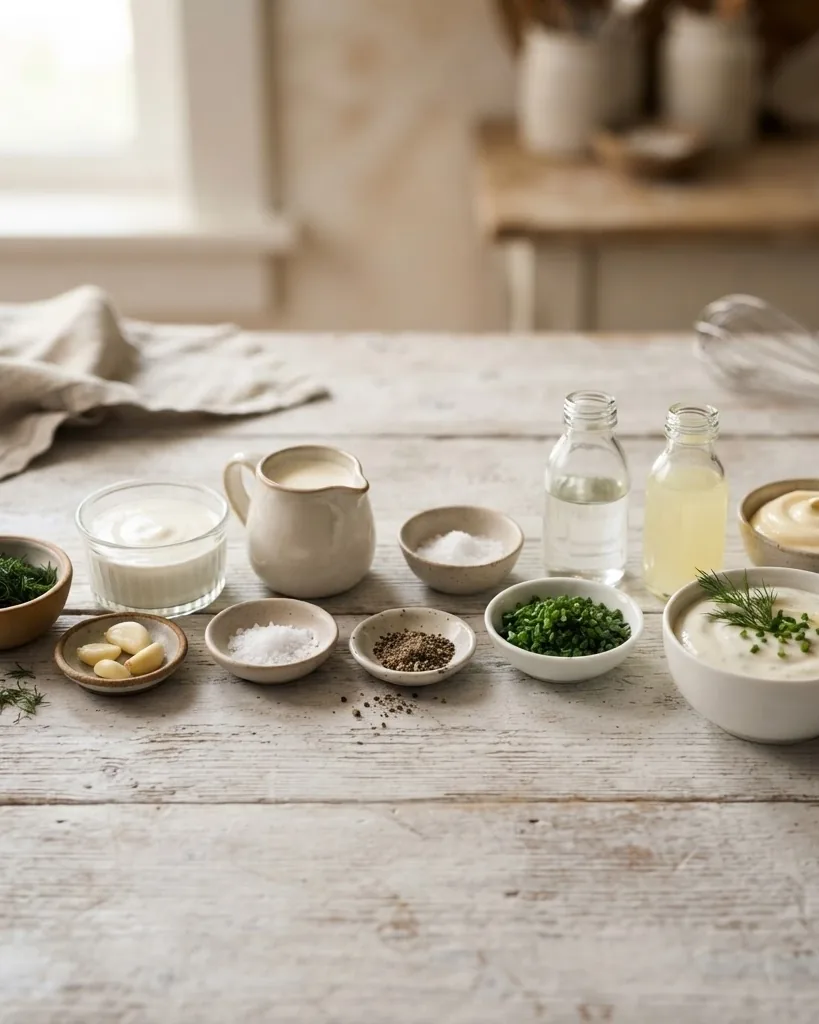
An emulsion of soybean or canola oil, egg yolk, and buttermilk, seasoned with garlic, onion, dill, and salt. The oil supplies most of the calories; the seasoning supplies the identity.
How many calories are in a packet of ranch?
The dry seasoning packet itself is nearly calorie-free, about 5 to 10 calories per tablespoon of mix. The finished dressing depends entirely on what you stir it into: milk and full mayonnaise lands near 110 to 120 calories per 2 tablespoons, light mayo versions near 60 to 70, and a plain Greek yogurt base near 40 to 60. The packet is the one format where the label math is fully in your hands.
About the author and sources
Tastybend Nutrition Desk writes nutrition label breakdowns for TastyBend, working directly from manufacturer panels, USDA FoodData Central entries, and FDA labeling rules. This page draws its figures from the Hidden Valley Original and Light labels, USDA FoodData Central ranch dressing entries, FDA sodium and daily-value references, and representative published recipes for homemade and yogurt-based versions. Where recipes vary, the text shows honest ranges.
This article explains label information and is not medical or dietetic advice. Sodium and calorie targets vary by individual, especially for blood-pressure management; a registered dietitian or physician is the right resource for personal guidance.