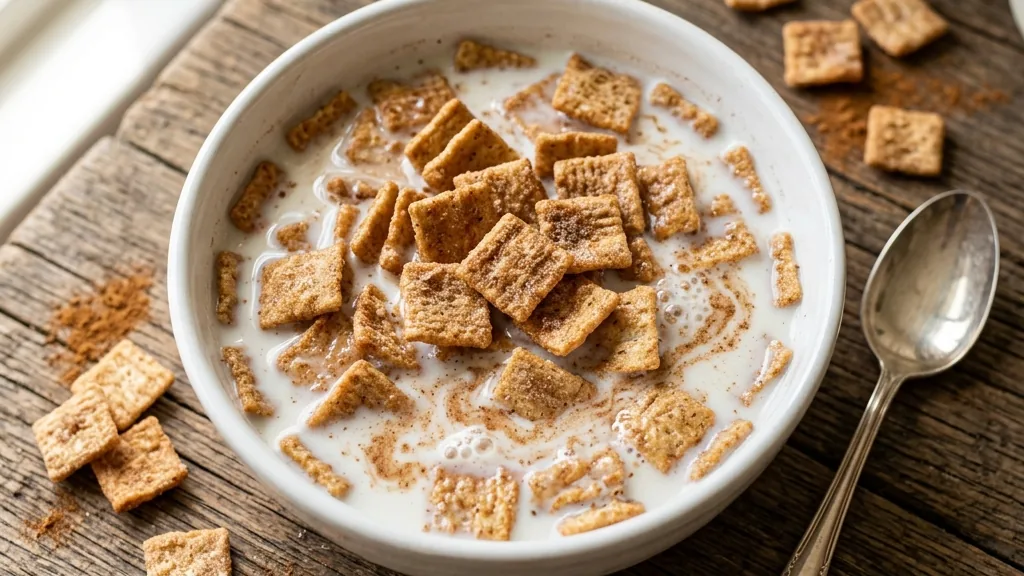
Quick answer: The Cinnamon Toast Crunch nutrition facts on the box are about 170 calories, 33 grams of carbohydrate, 12 grams of sugar, and 2 grams of protein per 3/4-cup serving. The honest catch isn’t any single number, it’s the serving size: a real bowl is often close to double that scoop, which quietly doubles the calories and sugar too. Almost all of that 12 grams of sugar is added sugar, so this is a treat cereal, and reading the serving size is the whole game.
Cinnamon Toast Crunch is the classic example of a label that’s completely honest and still misleads people, not because the numbers are wrong, but because of the small print at the top. A normal-looking bowl, measured against the 3/4-cup serving printed on the box, can easily come to nearly double. So let’s put every number in its place, source it, and then talk about what you actually eat.
Below: the full per-serving panel, what a realistic bowl looks like, the sugar story, what milk adds, and how it stacks up against a more balanced breakfast. Every figure is tied to a source.
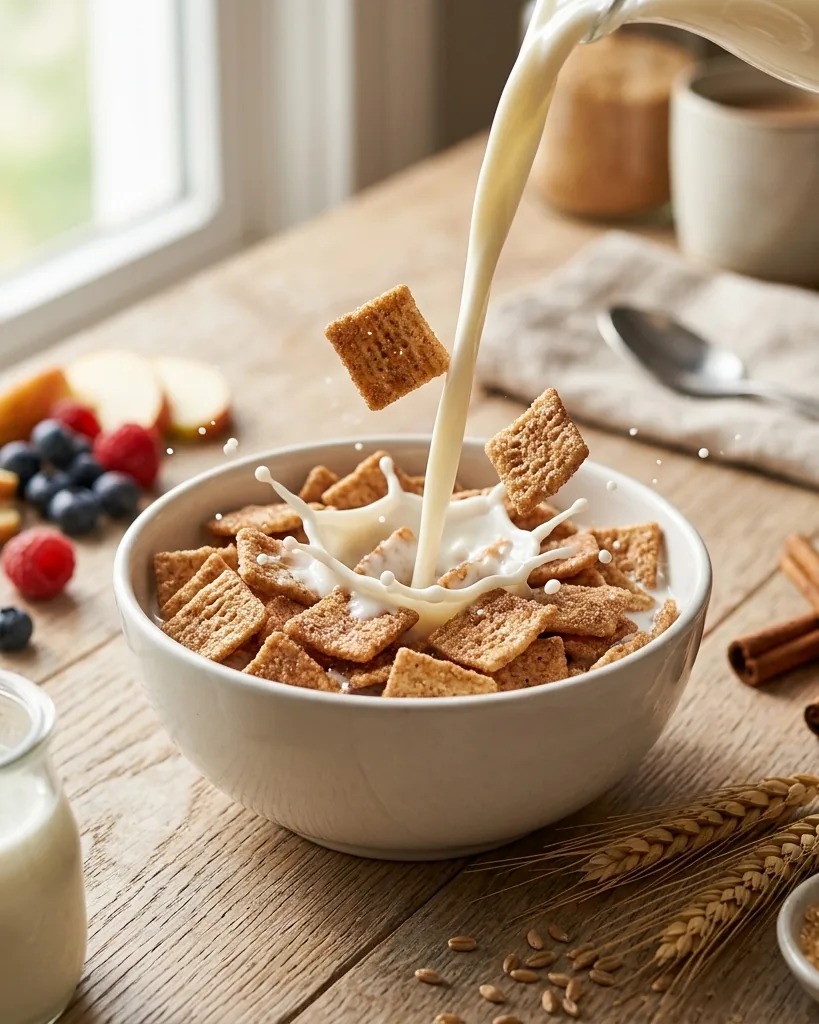
Cinnamon Toast Crunch nutrition facts (per serving)
Here’s the official panel for a single 3/4-cup serving (about 40 grams) of the dry cereal, cross-checked between the General Mills box label and the independent USDA FoodData Central database. The two agree closely, which is what you want to see.
| Nutrient | Per 3/4 cup (~40 g) |
|---|---|
| Calories | about 170 |
| Total fat | about 4 g |
| Sodium | about 230 mg |
| Total carbohydrate | about 33 g |
| Dietary fiber | about 2 g |
| Total sugars | about 12 g |
| Added sugars | about 12 g |
| Protein | about 2 g |
The cereal is also fortified, meaning vitamins and minerals like calcium, iron, and several B vitamins are added during manufacturing. That’s worth knowing, because a chunk of the “good for you” sounding nutrients on a kids’ cereal box come from fortification, not from the grain itself. General Mills publishes the current panel on the product page, and it’s worth a glance, because labels do get updated.
The serving-size reality
This is the part worth remembering, because it changes everything else on the label. The entire panel above describes 3/4 of a cup. Measured against that serving, an ordinary bowl of Cinnamon Toast Crunch can run nearly double, with no greed involved; that’s just what a normal bowl looks like.
So do the simple math. If your real bowl is about 1.5 cups, roughly double the serving, you’re not eating 170 calories and 12 grams of sugar, you’re eating closer to 340 calories and 24 grams of sugar, before you add a drop of milk. The label isn’t lying; it’s just attached to a smaller scoop than almost anyone actually eats. The serving size is the whole trick with sweet cereals, so weigh your real bowl once, compare it to the 40-gram serving, and then multiply the panel by whatever ratio you get. Do it a single time and you’ll never misread a cereal box again.
The sugar story
The number to circle on a cereal like this is the sugar: about 12 grams per serving. The important detail is the line right below it on the modern label, added sugars, which is also about 12 grams. In other words, essentially all of the sugar in Cinnamon Toast Crunch is added during manufacturing, not naturally present in the grain.
To put that in context, the FDA uses a Daily Value of 50 grams of added sugar for a 2,000-calorie diet. So a single 3/4-cup serving delivers about 24 percent of a full day’s added sugar, and the doubled real-world bowl pushes that toward half a day’s worth in one breakfast. That doesn’t make it forbidden, plenty of people enjoy it happily, but it does make it firmly a treat rather than an everyday-foundation breakfast. If you’re comparing it to other sweet foods, our breakdown of chocolate chip cookie nutrition puts the sugar in perspective.
What milk adds
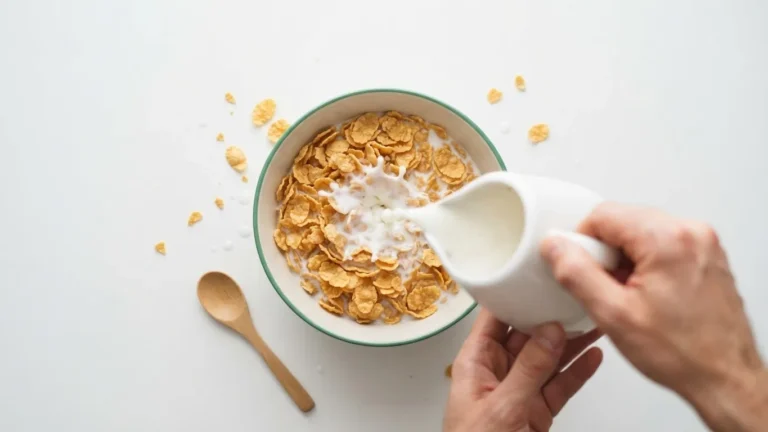
Nobody eats dry cereal, so the bowl in front of you isn’t really the box numbers anyway, it’s the cereal plus milk. What people miss is that the milk cuts both ways. Half a cup of milk adds its own sugar in the form of lactose, around 6 grams, which stacks on top of the cereal’s added sugar. But it also adds something the cereal is badly short on: protein, roughly 4 grams from that same half cup, plus extra calcium.
So a typical bowl, say a doubled portion of cereal with half a cup of low-fat milk, lands somewhere around 380 to 400 calories, close to 30 grams of sugar, and maybe 6 grams of protein. The milk makes the bowl slightly more balanced than the dry cereal looks on its own, but it doesn’t rescue the sugar. If you want the exact milk numbers, see our whole milk nutrition facts and 2% milk pages and add them to the cereal panel.
How it fits a breakfast
Judged as a breakfast, Cinnamon Toast Crunch has a clear profile: high in carbohydrate and added sugar, low in protein and fiber. With only about 2 grams of protein and 2 grams of fiber in the box serving, it’s the kind of meal that tastes great and then leaves many people hungry again within a couple of hours, because there’s little protein or fiber to slow digestion and keep you full.
That’s not a moral failing of the cereal; it’s just what a sugar-forward refined-grain food does. The fix isn’t necessarily to ban it, but to build a more complete breakfast around a smaller portion of it, which is exactly what the smarter-ways section below is about. For the opposite end of the spectrum, our guide to foods high in fiber shows what a more filling breakfast base looks like.
What it’s actually made of
The macros make more sense once you look at the ingredient list, which is worth reading alongside the panel. The first ingredient is whole grain wheat, followed quickly by sugar and rice flour, with oil, more sugar in the form of the cinnamon coating, and the fortification vitamins after that. In plain terms, the base is refined and whole grain together, and the flavor that makes the cereal famous is essentially a sweet cinnamon-sugar coating baked onto each square.
That coating is why two numbers look the way they do. It’s the reason the fat sits around 4 grams, a touch higher than a plain flake, and it’s the reason nearly all 12 grams of sugar are added rather than natural. There’s nothing alarming in the list, it’s a normal sweetened cereal, but reading it tells you immediately what kind of food you’re dealing with: a grain vehicle for a cinnamon-sugar coating, fortified to round out the box. To judge a cereal, read the first three ingredients and the added-sugar line together, and on Cinnamon Toast Crunch those two readings tell the whole story before you ever pour a bowl.
How it compares to other cereals
Numbers mean more with a reference point, so here’s how a 3/4-cup serving of Cinnamon Toast Crunch lines up against a few other common cereals. The comparison uses the box serving for each, since that’s how the labels are written, even though, as covered above, real bowls run larger across the board.
| Cereal (per box serving) | Calories | Sugar | Protein | Fiber |
|---|---|---|---|---|
| Cinnamon Toast Crunch (3/4 cup) | about 170 | about 12 g | about 2 g | about 2 g |
| Frosted Flakes (3/4 cup) | about 130 | about 12 g | about 1 g | about 1 g |
| Honey Nut Cheerios (3/4 cup) | about 140 | about 12 g | about 3 g | about 2 g |
| Plain Cheerios (1 cup) | about 100 | about 1 g | about 3 g | about 3 g |
The pattern is telling. Among the sweet cereals, the sugar is remarkably similar, around 12 grams a serving is almost a category standard, but Cinnamon Toast Crunch sits a little higher on calories and fat because of its coating. The real outlier is plain Cheerios, which shows what dropping the added sugar actually does: a third fewer calories, more fiber, and basically no sugar. That contrast is the clearest argument for the “cut it with a plainer cereal” trick further down, you can keep the cinnamon flavor and claw back most of those numbers by mixing.
The fortification question
One thing that confuses shoppers is the vitamin and mineral list on a sugary cereal box. Cinnamon Toast Crunch is fortified, which means nutrients like calcium, iron, and a range of B vitamins are added during manufacturing, and a serving can supply a meaningful percentage of the Daily Value for several of them. That’s genuinely useful, especially for kids who might otherwise fall short on iron.
One thing deserves a flag, though, because it’s where labels can mislead. Fortification adds isolated vitamins and minerals; it doesn’t change the fundamental profile of the food, which is still refined grain plus added sugar. A fortified sugary cereal is a bit like a multivitamin attached to a dessert, the micronutrients are real, but they don’t offset the added sugar or the missing protein and fiber. Read the fortification as a small bonus, not as evidence that the bowl is a balanced meal. The most reliable lines on the whole panel remain the ones the FDA most tightly regulates: calories, added sugars, and protein.
A note on the varieties
Cinnamon Toast Crunch now comes in several forms, including the original squares, a churros shape, and assorted limited editions, and the numbers drift a little between them. The differences are usually small, a few calories or a gram of sugar here and there, but the shapes with extra coating or filling tend to run slightly higher on sugar and fat. As always, the specific box in front of you is the authority; the values here describe the standard original cereal, which is the one most people mean when they look up the nutrition facts. If you regularly buy a churros or filled variety, take ten seconds to read its own panel, because that small coating difference is exactly the kind of thing that shifts the sugar line a gram or two.
Smarter ways to eat it
You don’t have to give it up to eat it more sensibly. These are the small adjustments that make a difference:
- Measure once. Pour your normal bowl, weigh it, and see your true multiple of the 40-gram serving. Awareness alone tends to shrink the pour.
- Pair it with protein. A side of eggs, Greek yogurt, or even a glass of milk adds the protein the cereal lacks and keeps you fuller longer.
- Cut it with a plainer cereal. Mixing half Cinnamon Toast Crunch with half an unsweetened wheat or oat cereal keeps the flavor while roughly halving the added sugar.
- Make it the treat, not the base. Use a small portion as a topping on plain yogurt or oatmeal, so you get the taste with a fraction of the sugar.
None of these require willpower heroics; they just rebalance the bowl so the sugar and calories match what you actually want from breakfast.
Frequently asked questions
How much sugar is in Cinnamon Toast Crunch?
About 12 grams per 3/4-cup serving, and the label lists roughly 12 grams of added sugar, meaning essentially all of it is added. That’s about 24 percent of the FDA’s 50-gram Daily Value for added sugar, and a typical larger bowl can be closer to double that.
How many calories are in a bowl of Cinnamon Toast Crunch?
The box serving of 3/4 cup is about 170 calories dry. But a realistic bowl is often closer to 1.5 cups, around 340 calories, and adding half a cup of milk brings a typical bowl to roughly 380 to 400 calories.
Is Cinnamon Toast Crunch healthy?
It’s a treat cereal: high in added sugar and refined carbs, low in protein and fiber, though it’s fortified with vitamins and minerals. It’s fine as an occasional food or a small portion paired with protein, but it isn’t a filling, balanced breakfast on its own.
How much protein is in Cinnamon Toast Crunch?
Only about 2 grams per serving, which is low. Adding half a cup of milk contributes roughly another 4 grams, so the bowl has a little more, but protein is the nutrient this cereal is most short on.
What is the serving size of Cinnamon Toast Crunch?
The box serving is 3/4 cup, about 40 grams. The catch is that most people pour close to double that, so the calories and sugar you actually eat are usually higher than the panel suggests. Weigh your real bowl once to know your true numbers.
The bottom line
The Cinnamon Toast Crunch nutrition facts are simple and honest: about 170 calories, 33 grams of carbs, and 12 grams of sugar per 3/4-cup serving, nearly all of it added, with very little protein or fiber. The figures check out against both the box and USDA FoodData Central. The real story is the serving size, because the bowl most people pour is close to double the label, which doubles the sugar and calories before the milk even goes in. Enjoy it as the treat it is, measure your real portion once, and pair it with some protein, and the numbers stop being a trap and start being something you can actually manage. That’s the whole job here at TastyBend: not to tell you what to eat, but to hand you the real figures so the choice is yours, made with eyes open rather than guided by the front of the box.
Sources: General Mills / Cinnamon Toast Crunch published label, cinnamontoastcrunch.com; USDA FoodData Central; FDA Nutrition Facts labeling, including the added-sugars line and the 50-gram Daily Value for added sugar. Values reflect the current box and can change with label updates.