The 2 milk nutrition facts most people are looking for come down to one glass: one cup of 2% reduced-fat milk has about 122 calories, 8 grams of protein, 5 grams of fat, 12 grams of natural sugar, and roughly 300 milligrams of calcium. The “2” on the carton means 2 percent milkfat by weight, which puts it squarely between whole milk and skim. It is the most popular milk in many American kitchens precisely because it sits in that middle ground: richer and more satisfying than skim, but lighter than whole. If you grew up calling it “two percent,” this is the carton you already know.
If you drink it by the glass, pour it on cereal, or splash it into coffee, this guide breaks down the real numbers and what they mean. We will cover a full per-cup panel, explain what “2 percent” actually refers to, lay out the protein, calcium, and vitamin D that make milk worth drinking, clear up the sugar question, and show exactly how 2% compares to whole, 1%, and skim. The goal is to let you choose your milk tier on facts rather than habit or marketing.
2% milk nutrition facts at a glance
The values below are for one cup, 8 fluid ounces or about 244 grams, of standard 2% reduced-fat cow’s milk fortified with vitamins A and D, the way nearly all retail milk in the United States is sold. These figures align with USDA reference data and typical carton labels. Small differences exist between brands, but 2% milk is one of the most standardized foods you can buy, so these numbers are reliable.
| Nutrient | Amount per cup (8 fl oz) | Percent Daily Value* |
|---|---|---|
| Calories | 122 | — |
| Total fat | 5 g | 6% |
| Saturated fat | 3 g | 15% |
| Trans fat | 0 g | — |
| Cholesterol | 20 mg | 7% |
| Sodium | 115 mg | 5% |
| Total carbohydrates | 12 g | 4% |
| Dietary fiber | 0 g | 0% |
| Total sugars | 12 g | — |
| Protein | 8 g | 16% |
| Calcium | 300 mg | 23% |
| Vitamin D | 2.9 mcg | 15% |
*Percent Daily Values are based on a 2,000-calorie diet. Your own needs may be higher or lower. For independent reference values you can cross-check against the USDA FoodData Central database, which lists the same reduced-fat milk profile.
What does “2 percent” actually mean?
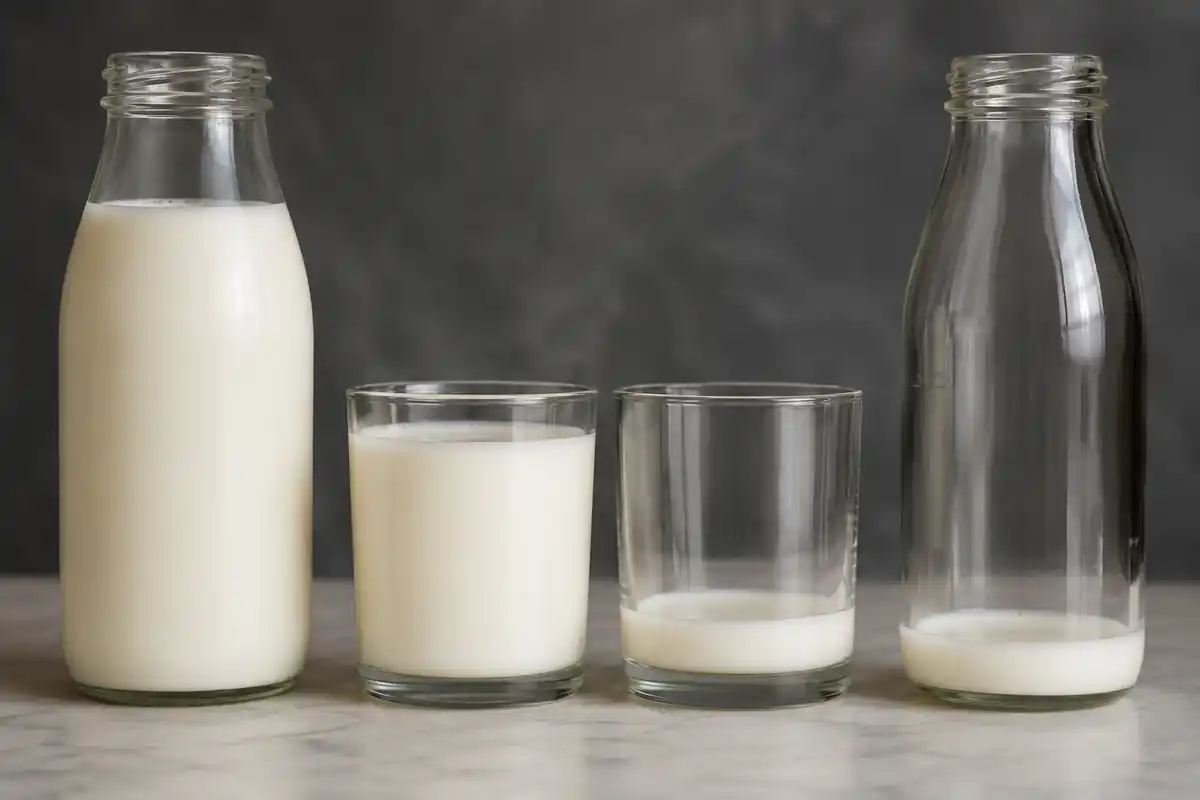
This is the single most misunderstood thing about 2% milk, and clearing it up changes how you read the label. The “2 percent” refers to the milkfat as a share of the milk’s total weight, not as a share of its calories. So 2% milk is milk where fat makes up 2 percent of the weight. Because fat is calorie-dense and water is not, that 2 percent by weight works out to roughly 35 percent of the milk’s calories coming from fat.
That distinction matters because people often assume 2% milk is a low-fat food, when it is really a reduced-fat one. Whole milk is about 3.25 percent fat by weight, skim is near zero, and 1% sits between skim and 2%. The labels describe the fat content of the liquid, not how lean the drink is relative to its calories. Once you know that, the difference between the milk tiers is simply how much cream was left in, and everything else, the protein, calcium, and natural sugar, stays almost identical across all of them.
Calories in 2% milk
One cup of 2% milk has about 122 calories. On a glass-by-glass basis that is moderate, a little more than skim and a little less than whole. The only thing that really separates the milk tiers on calories is the fat, since the protein and the carbohydrate are essentially the same in every type.
Portion is where it adds up. A tall 12-ounce glass is about 180 calories, a cereal bowl with a cup of milk adds the full 122 on top of the cereal, and a large latte built on 2% milk can carry 150 to 200 calories from the milk alone before any syrup. The splash in a single cup of coffee is trivial, maybe 10 to 15 calories, but milk-heavy drinks and big glasses are where the calories become meaningful. For most people, 2% milk is a moderate-calorie food that becomes significant mainly through volume.
Where the calories come from
In a cup of 2% milk, the 122 calories split roughly into a third from fat, a third from the natural sugar, and a third from protein. That balance is unusual for a drink, since most beverages are sugar with little else. Milk’s protein and fat are what make it filling and what set it apart from juice or soda, where the calories are almost all carbohydrate. The fat tier you choose only shifts the fat share of that split; the protein and sugar stay put.
Protein, calcium, and vitamin D: why people drink milk
The reason milk earns a place in most diets is not its calories but its nutrient density. A single cup delivers a meaningful share of three things that are otherwise easy to fall short on.
Protein: a genuine 8 grams
The 8 grams of protein per cup is real, complete protein, meaning it contains all the essential amino acids. That is comparable to a large egg and makes milk a legitimate protein contributor rather than just a beverage. Importantly, this 8 grams is identical in whole, 2%, 1%, and skim milk, because removing fat does not touch the protein. If protein is your reason for drinking milk, the fat tier is irrelevant.
Calcium: about a quarter of your day
One cup provides roughly 300 milligrams of calcium, close to a quarter of the daily target for most adults. Milk is one of the most efficient dietary calcium sources, and again the number does not change with the fat tier. The vitamin D added during fortification helps your body absorb that calcium, which is why the two are paired on the label and why fortified milk is more useful for bone health than the calcium number alone would suggest.
Vitamin D: a fortified bonus
Milk is not naturally high in vitamin D; it is added. A cup of fortified 2% milk supplies about 15 percent of the daily value, which matters because vitamin D is one of the harder nutrients to get from food. The fortification is the same across milk tiers, so skim and whole are fortified to similar levels. This is a real public-health reason milk holds its spot in the American diet despite the rise of plant-based alternatives, many of which are fortified to match it. A clear nutritional comparison of the difference between whole and skim milk lays out how little the protein and calcium change across the fat tiers.
The sugar in 2% milk: is it a problem?
A cup of 2% milk lists 12 grams of total sugar, and that number worries people who are watching added sugar. It should not. All 12 grams are lactose, the natural sugar in milk, and there is zero added sugar in plain white milk. Lactose comes packaged with the protein, fat, calcium, and vitamins, which is a completely different nutritional situation from the added sugar in soda or sweetened drinks.
The only milk where sugar is a real concern is flavored milk, such as chocolate or strawberry, which adds sugar on top of the natural lactose and can double the total. For plain 2% milk, the 12 grams of lactose is not a red flag, and on a nutrition label that distinguishes added sugar, plain milk shows zero in that line. If you are lactose intolerant, lactose-free 2% milk has the lactose pre-broken into simpler sugars, so it tastes slightly sweeter but carries the same overall nutrition.
2% vs whole vs 1% vs skim milk
The whole point of milk tiers is fat, and seeing them side by side makes the choice clear. The table below compares one cup of each, all fortified the same way.
| Milk type | Calories | Total fat | Saturated fat | Protein | Calcium |
|---|---|---|---|---|---|
| Whole (3.25%) | 150 | 8 g | 4.5 g | 8 g | 300 mg |
| 2% (reduced fat) | 122 | 5 g | 3 g | 8 g | 300 mg |
| 1% (low fat) | 105 | 2.5 g | 1.5 g | 8 g | 300 mg |
| Skim (nonfat) | 83 | 0 g | 0 g | 8 g | 300 mg |
The takeaway is striking: the only column that changes meaningfully is fat, and the calories follow it. Protein and calcium are flat across all four tiers. So choosing 2% over skim is purely a choice about fat and the satiety and mouthfeel that come with it, not about protein or calcium. If you want milk to feel more like a food and keep you fuller, the fat in 2% or whole helps; if you want to trim calories without losing the protein and calcium, 1% or skim does it. There is no nutritionally “correct” answer, only the trade-off you prefer.
So which milk should you drink?
For most healthy adults, 2% milk is a sensible default. It keeps enough fat to be satisfying and to help absorb the fat-soluble vitamins A and D, while trimming about a fifth of the calories and nearly half the fat of whole milk. If you drink a lot of milk and want to manage calories, dropping to 1% or skim is an easy way to do it without losing any protein or calcium. If you barely drink milk and mainly use a splash in coffee, the tier hardly matters. Match the tier to how much you actually drink.
What is 2% milk, and how is it made?
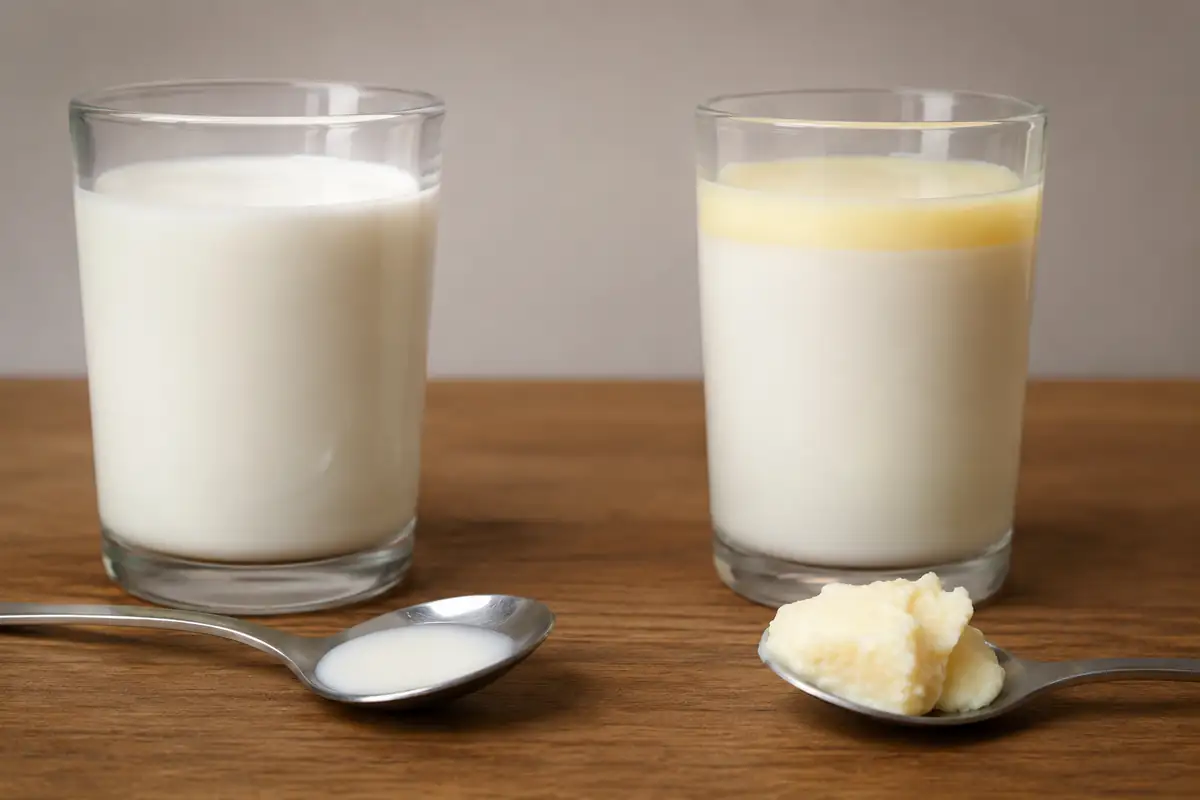
All milk starts as whole milk from the cow, which is naturally around 3.5 to 4 percent fat. To make 2%, the milk is separated into cream and skim, then a measured amount of cream is blended back in until the fat lands at exactly 2 percent by weight. Skim and 1% are made the same way with less cream added back. This is why every tier has the same protein, sugar, and calcium: only the cream, and therefore the fat, is adjusted.
The milk is then pasteurized for safety and usually homogenized so the fat does not separate and rise to the top. Vitamins A and D are added, since some vitamin A is lost when fat is removed and vitamin D is fortified across the board. The result is a standardized, shelf-consistent product, which is why the nutrition numbers barely move from one carton or brand to the next.
Allergens and dietary notes
2% milk is dairy and contains lactose, so it is not suitable for people with a milk allergy or, in large amounts, for those with significant lactose intolerance. Lactose-free versions exist with the same nutrition. Plain 2% milk is naturally gluten-free and vegetarian, but it is not vegan. Anyone avoiding dairy entirely will want a fortified plant-based alternative, though matching milk’s complete protein takes a soy or pea-protein option rather than almond or oat.
2% milk vs plant-based milks
With almond, oat, and soy milk now on every shelf, a fair question is how 2% dairy milk stacks up against them on nutrition. The headline difference is protein. A cup of 2% milk has 8 grams of complete protein, and most almond and oat milks have only 1 to 2 grams, which is the single biggest gap. Soy milk is the exception, landing near 7 to 8 grams and matching dairy fairly closely, which is why it is the plant milk most often recommended as a true nutritional substitute.
On calories, unsweetened almond milk is far lower, often 30 to 40 calories a cup, but that is because it is mostly water with very little of anything, including protein. Oat milk runs closer to 2% milk on calories but is higher in carbohydrate and lower in protein. Most plant milks are fortified with calcium and vitamin D to match dairy, so those numbers are often comparable, but you have to read the label, since fortification is not guaranteed. If you drink milk for protein and calcium, 2% dairy or soy are the two options that actually deliver both; the others are lighter drinks that need protein from elsewhere in your day.
How 2% milk fits into your day
Milk is one of the easier ways to add protein and calcium to a day without much effort, and 2% strikes a practical balance for that job. A glass with breakfast, a cup on cereal, or milk in a smoothie all bring the same 8 grams of protein and quarter-day of calcium while keeping calories moderate. The thing to watch is total volume and what you mix it with, since milk-heavy coffee drinks and flavored milks are where the calories and, for flavored versions, the added sugar climb.
If you are using milk as a protein source, it pairs naturally with other everyday high-protein foods rather than standing alone. Pairing a glass with eggs and a slice of cheese makes a protein-solid breakfast, and our look at the Oikos Triple Zero nutrition facts shows how a cultured-dairy option stacks even more protein into the same dairy category. For a savory protein pairing, our breakdown of the Sausage Egg McMuffin nutrition facts is a reminder of how quickly a full breakfast sandwich adds up next to a simple glass of milk.
Is 2% milk healthy?
For most people, 2% milk is a genuinely useful food. The 8 grams of complete protein, the quarter-day of calcium, and the fortified vitamin D are real nutritional value that is hard to match in a single affordable drink. The main consideration is the saturated fat, since 2% carries about 3 grams per cup, and anyone with a doctor’s reason to limit saturated fat may prefer 1% or skim, which deliver the same protein and calcium with less. There is no single right answer across the milk tiers, only the trade-off between fat-driven satiety and calories. For a healthy adult drinking milk in normal amounts, plain 2% is a sound, nutrient-dense choice.
Frequently Asked Questions
How many calories are in a cup of 2% milk?
One cup, 8 fluid ounces, of 2% reduced-fat milk has about 122 calories. A larger 12-ounce glass is roughly 180 calories.
How much protein is in 2% milk?
About 8 grams per cup, the same as whole, 1%, and skim milk, because removing fat does not change the protein. That is comparable to a large egg and counts as complete protein.
Is the sugar in 2% milk bad for you?
No. The 12 grams of sugar in plain 2% milk is all lactose, the natural sugar in milk, with zero added sugar. It comes packaged with protein, calcium, and vitamins, which is very different from the added sugar in soda.
What is the difference between 2% and whole milk?
Only the fat. Whole milk is about 3.25 percent fat with 150 calories per cup, while 2% is reduced to 5 grams of fat and 122 calories. The protein, calcium, and sugar are identical in both.
How much calcium is in 2% milk?
About 300 milligrams per cup, roughly a quarter of the daily target for most adults. The amount is the same across all milk fat tiers, since calcium is not affected by removing fat.
Is 2% milk good for weight loss?
It can fit a weight-loss plan thanks to its protein, but it carries more calories than 1% or skim. If you drink a lot of milk, switching to 1% or skim trims calories while keeping the same protein and calcium.