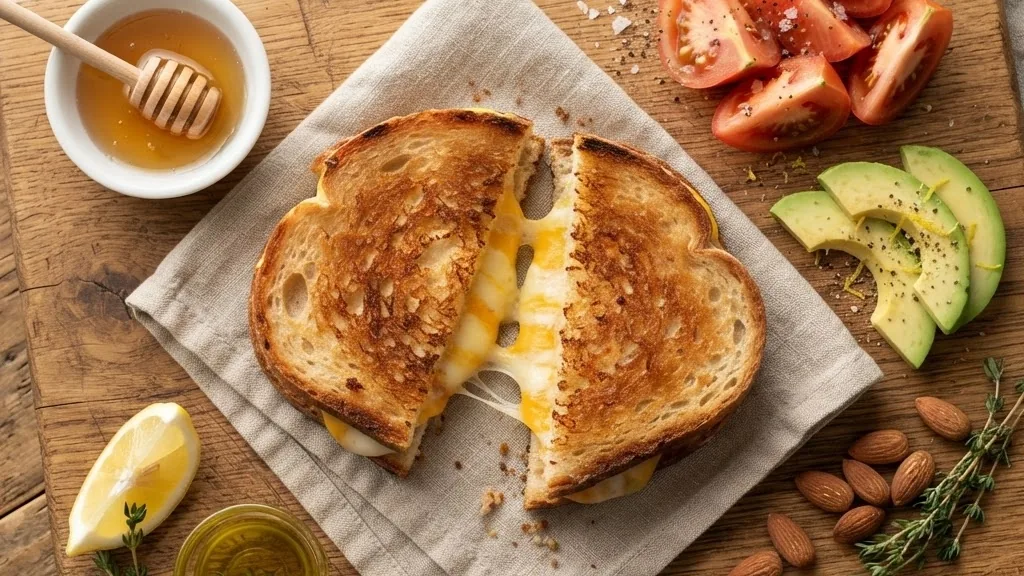
Grilled cheese nutrition info starts with a number most people underestimate: a classic homemade sandwich lands somewhere around 450 calories once you stack two slices of bread, two slices of cheese, and a tablespoon of butter. That figure hides more than it reveals. The same golden sandwich can swing from a lean 350-calorie snack to a 700-calorie sodium bomb depending on the cheese, the bread, and the fat in the pan. This piece breaks the sandwich into its parts, then rebuilds it so you can see exactly where the calories, salt, saturated fat, protein, and calcium come from, and where you can trim the numbers without ruining the crunch or the melt.
The building blocks come straight from USDA FoodData Central, the U.S. government’s nutrient composition database. A one-tablespoon (14 g) serving of salted butter runs about 100 to 102 kcal with roughly 11 to 12 g of total fat, of which around 7 g is saturated. That single spoon does a lot of the heavy lifting in the totals, since most home recipes use roughly this amount split between both sides of the bread to get an even, golden crust.
Quick answer: A standard homemade grilled cheese made with two slices of white bread, two slices of American cheese, and one tablespoon of butter delivers roughly 420 to 500 kcal, according to values from USDA FoodData Central. Expect somewhere near 12 to 17 g of saturated fat and 700 to 1,000 mg of sodium once bread, cheese, and salted butter combine. That sodium alone can equal 30 to 45 percent of the American Heart Association’s ideal daily limit. The upside: two cheese slices can supply close to 40 percent of an adult’s calcium target.
The 450-Calorie Baseline: What Two Bread Slices, Two Cheese Slices, and a Pat of Butter Add Up To
A classic grilled cheese sandwich runs an estimated 420 to 500 kcal, and the math is worth seeing line by line. Using USDA FoodData Central values, two slices of white sandwich bread contribute about 150 kcal, two slices of processed American cheese add roughly 200 kcal, and one tablespoon of salted butter tacks on about 100 kcal. Add those and you get 150 plus 200 plus 100, or about 450 kcal. That is why a single false-precise number lies to you; the honest answer is a range that moves with each ingredient.
Each component carries its own weight. Here is the breakdown that drives the total:
- White bread: about 65 to 75 kcal and 12 to 16 g carbohydrate per slice (25 to 30 g), per USDA FoodData Central.
- American cheese: roughly 90 to 110 kcal, 8 to 9 g fat, and 5 to 6 g saturated fat per 1-ounce (28 g) slice.
- Salted butter: about 100 to 102 kcal per tablespoon, near 7 g of it saturated.
Want the same figures laid out as a formal panel with cholesterol, fiber, and sugar included? Our companion breakdown, Grilled Cheese Nutrition Facts: What One Sandwich Actually Contains, walks the full label line by line.
Why a Single Number Is Never the Full Story
Bread thickness alone can move the baseline more than any other single choice. A thin commercial white slice weighs 25 to 30 g and lands at 65 to 75 kcal, but a hand-cut slice from a bakery sourdough loaf often weighs 40 g or more, which pushes the bread contribution well past the 150 kcal used in the baseline math. Cheese thickness works the same way: a thick deli-cut slice of cheddar can weigh nearly twice as much as a pre-wrapped American slice, which roughly doubles both the calorie and sodium contribution from that one ingredient.
Cooking method matters too. A skillet with a generous pat of butter on each side of the bread uses close to the full tablespoon assumed in the baseline. A panini press, by contrast, often needs only a light brushing of fat because the two heated plates apply pressure from both sides, which can trim several grams of fat from the total. An air fryer with a spray of oil uses even less fat, though it produces a drier, less glossy crust than a buttered skillet.
Where the Salt Hides: Sodium From Bread, Cheese, and Salted Butter Combined
The sodium in a grilled cheese is the number that surprises people most. A single sandwich lands somewhere around 700 to 1,000 mg once you combine the bread, two cheese slices, and salted butter, with the cheese doing most of the damage. USDA FoodData Central puts a single 1-ounce American cheese slice in the 300 to 450 mg range depending on brand, so two slices can push past 600 mg before the bread and butter add their share. That is a lot of salt for something that reads as comfort food rather than fast food.
Broken into pieces, the arithmetic is straightforward. Two slices of American cheese alone can supply 600 to 900 mg of sodium at the higher end of the USDA FoodData Central range, since each slice can carry up to 450 mg. The remaining sodium comes from two slices of bread and a pat of salted butter combined, which lines up with the far smaller sodium contribution those two ingredients carry on their own. The cheese, not the bread or the butter, is almost always the dominant sodium source in a grilled cheese sandwich.
Context turns that raw number into a decision. The Food and Drug Administration sets the Daily Value used on U.S. Nutrition Facts labels at 2,300 mg of sodium, based on a 2,000-calorie reference diet. Against that ceiling, one sandwich is a meaningful chunk. The American Heart Association goes further, recommending an ideal limit of no more than 1,500 mg per day for most adults, with 2,300 mg as the upper edge. Measured against the AHA’s ideal, a single grilled cheese can eat up 30 to 45 percent of a day’s sodium in one sitting.
You can check the FDA reference values yourself on the agency’s Daily Value on the new Nutrition Facts label page. Five practical ways to cut the salt without losing flavor:
- Switch cheeses: Swiss instead of American can lower sodium by roughly 100 to 150 mg per slice.
- Use unsalted butter: it removes the salt the pan otherwise adds.
- Go stronger, use less: a sharp cheese lets you use one slice instead of two.
- Pick low-sodium bread: some artisan and low-sodium loaves cut 50 to 100 mg per slice compared with standard commercial white bread.
- Skip extra salt at the table: since the cheese and bread already supply most of the sodium, added table salt has an outsized effect on the day’s total.
If you want to see how a single slice stacks up before it ever hits the pan, Nutrition Facts for an American Cheese Slice: Calories, Sodium, and What Is Really in It isolates that one ingredient.
Saturated Fat vs the Heart Association Threshold: Why One Sandwich Can Hit Your Daily Ceiling
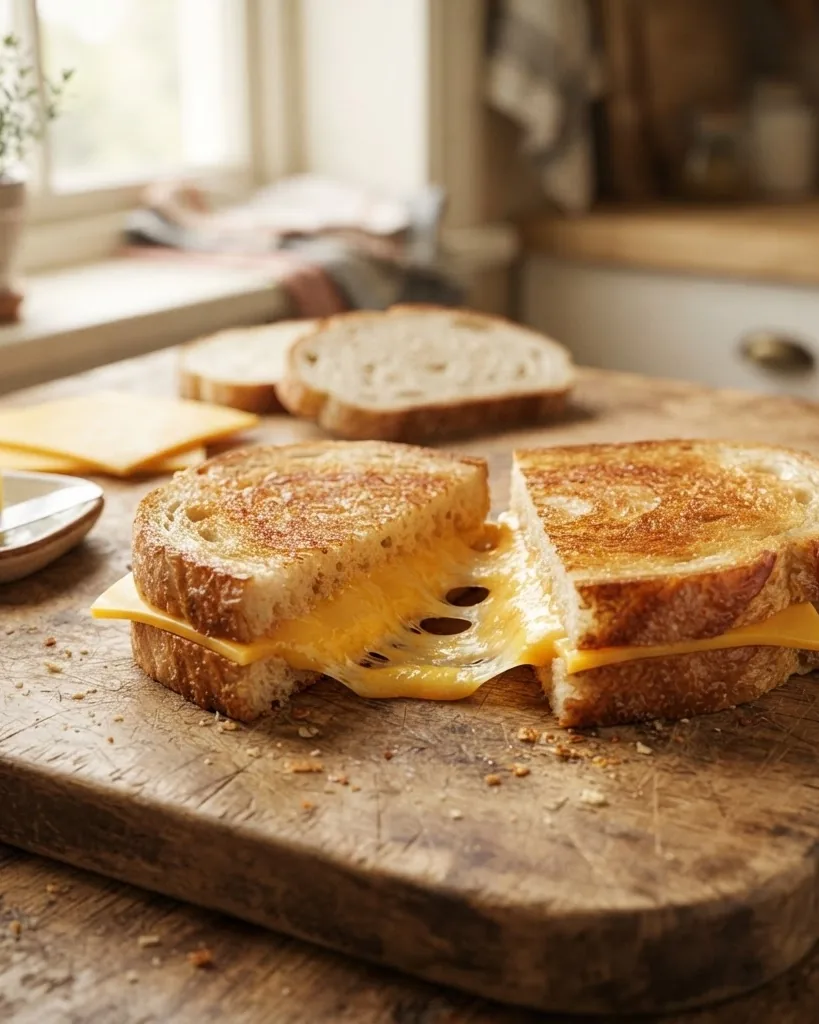
Saturated fat is where a grilled cheese quietly crosses a line. A single buttered, double-cheese sandwich carries an estimated 12 to 17 g of saturated fat, drawing on USDA FoodData Central figures of about 7 g from the butter and 5 to 6 g per cheese slice. The American Heart Association recommends limiting saturated fat to 5 to 6 percent of total daily calories for heart health, which works out to roughly 11 to 13 g per day on a 2,000-calorie diet. Put those side by side and one sandwich can meet or exceed a full day’s recommended saturated fat.
Turning grams into calories makes the stakes clearer. Using the standard energy-conversion math of 9 kcal per gram of fat, the estimated 12 to 17 g of saturated fat in one sandwich works out to roughly 108 to 153 kcal from saturated fat alone. Against a total sandwich of about 450 kcal, that means saturated fat can account for roughly a quarter to a third of the sandwich’s entire calorie count. The AHA’s 5 to 6 percent of daily calories target applies to the whole day, not one meal, which is exactly why a single sandwich can absorb such a large share of it in one sitting.
The FDA frames it differently but arrives near the same place. Its Daily Value for saturated fat is 20 g, again on a 2,000-calorie reference. So even by the more permissive federal benchmark, a 17 g sandwich is most of the day’s allowance. Neither figure means grilled cheese is off-limits; it means the rest of the day should lean lighter on saturated fat if this is your lunch.
The American Heart Association lays out the reasoning on its saturated fats guidance page. The single most effective lever is the pan fat. Butter is the biggest saturated-fat source in the whole build, so swapping it for a light coating of olive oil saves roughly 4 to 5 g of saturated fat per sandwich, per USDA FoodData Central comparisons. That one change alone can pull a sandwich from over the AHA daily target back under it.
For anyone counting saturated fat because they are managing carbs at the same time, our Keto Diet: A Home Cook’s Practical Guide to Eating Low-Carb covers how full-fat cheese fits a low-carb day without tipping into excess.
Comparing Cheese Types Without Inventing Numbers That Are Not There
USDA FoodData Central gives exact figures for processed American cheese: 8 to 9 g of total fat and 5 to 6 g of saturated fat per 1-ounce slice. Cheddar, Swiss, provolone, and mozzarella all sit in a broadly similar fat range because they are all full-fat dairy products, though softer, higher-moisture cheeses like mozzarella tend to run somewhat lower in both fat and sodium per ounce than firmer, aged cheeses like cheddar or Swiss. Reduced-fat versions of any of these cheeses cut saturated fat meaningfully, but often at the cost of melt quality, which is the practical trade-off worth knowing before you swap.
The Calcium Upside: How Two Cheese Slices Deliver 40 Percent of Your Daily Target
Not every number in a grilled cheese is a warning. Cheese is a genuine calcium source, and this is where the sandwich earns some credit. The NIH Office of Dietary Supplements sets the Recommended Dietary Allowance for calcium at 1,000 mg per day for adults aged 19 to 50. One ounce (28 g) of cheddar provides roughly 200 mg of calcium, so the two cheese slices in a standard sandwich can contribute close to 40 percent of that daily target from cheese alone. For a food often filed under indulgence, that is a real nutritional return.
The RDA is not identical for everyone. The NIH Office of Dietary Supplements fact sheet lists different calcium targets for teenagers, adults over 50, and other life stages, since bone-building years and post-menopausal bone loss both change the recommended intake. A sandwich that supplies close to 40 percent of the standard adult RDA might represent a smaller share of the higher target set for a teenager or an older adult, which is worth checking against the NIH’s own tables rather than assuming one number fits everyone.
Calcium matters beyond bone density; it plays a role in muscle function and nerve signaling, which is part of why federal nutrition bodies track intake so closely. You can read the consumer-level detail on the NIH Office of Dietary Supplements calcium fact sheet. Protein rides along with that calcium too, since cheese and bread both contribute, which is why a grilled cheese sits better as a small meal than as a snack.
If you want to understand what that per-slice calorie and calcium value actually buys, Nutrition Cheese Slice: What the Calories on the Label Really Buy digs into exactly what a single processed slice delivers and where it falls short.
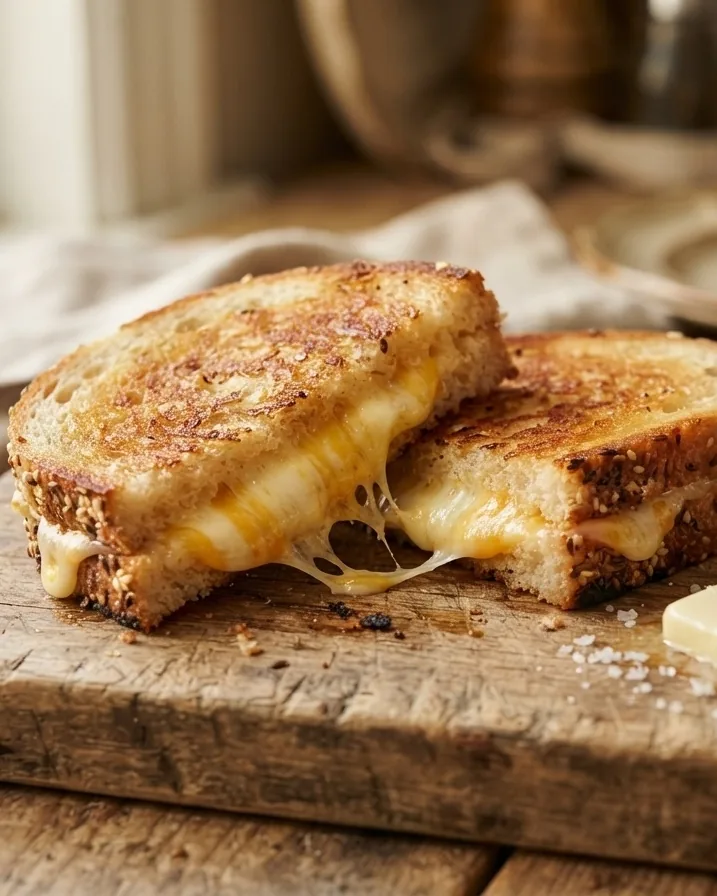
Swap Bread, Cheese, or Fat and Watch the Numbers Move: A Build-Your-Own Comparison
The single most useful thing to know about grilled cheese nutrition info is that the sandwich is a set of dials, not a fixed dish. Change one ingredient and the calories, sodium, saturated fat, and fiber all shift in predictable directions, all traceable to USDA FoodData Central. Whole-wheat bread keeps calories nearly identical to white but adds roughly 2 g of dietary fiber per slice. Swiss over American trims sodium by about 100 to 150 mg per slice. Olive oil in place of butter cuts saturated fat by roughly 4 to 5 g. Stack those choices and you can rebuild the same sandwich into a very different nutritional profile.
Here is how the four main dials move the totals:
- Bread: White and whole wheat sit at a similar calorie count, but whole wheat and rye add fiber; sourdough changes flavor more than macros.
- Cheese: American is saltiest; Swiss lowers sodium; reduced-fat versions cut saturated fat but often melt less smoothly.
- Cooking fat: Butter is highest in saturated fat; olive oil trims it; cooking spray keeps calories lowest of all.
- Portion: two slices of cheese versus three, or a thick versus thin butter layer, changes the totals more than most people expect.
For a build-your-own estimate, nutrition science uses one formula: Total Calories = (Fat g x 9) + (Carbohydrate g x 4) + (Protein g x 4). Plug in the grams for your exact ingredients and you get a defensible number rather than a guess. Serious Eats keeps a helpful primer on how cheese moisture and fat content affect melt behavior at Serious Eats, which matters when a reduced-fat swap changes texture.
A worked example makes the formula concrete. Picture a sandwich build with about 26 g of total fat, 32 g of carbohydrate, and 20 g of protein, drawn from combining bread, cheese, and butter macros. Multiply and add: 26 g of fat times 9 equals 234 kcal, 32 g of carbohydrate times 4 equals 128 kcal, and 20 g of protein times 4 equals 80 kcal. Adding 234, 128, and 80 gives about 442 kcal, which sits neatly inside the 420 to 500 kcal range established from the ingredient-level USDA FoodData Central figures earlier in this article.
| Build | Calories | Saturated Fat | Sodium | Notable Trade-off |
|---|---|---|---|---|
| Classic: white bread, American cheese, butter | 420 to 500 kcal | 12 to 17 g | 700 to 1,000 mg | Baseline; most convenient, saltiest |
| Lighter: whole-wheat bread, Swiss cheese, olive oil | Lower than the classic build | roughly 8 to 12 g | Lower than the classic build | Adds fiber, trims sodium and saturated fat |
| Loaded: extra cheese slice or added bacon | above 500 kcal | above 17 g | above 1,000 mg | Best treated as occasional, not everyday |
| Restaurant benchmark: Starbucks Crispy Grilled Cheese on Sourdough | see current live figures | see current live figures | see current live figures | Larger bread and cheese portion than a typical home build |
This flexibility is why “calories for a grilled cheese sandwich” is best answered as a range: a light build with cooking spray and reduced-fat cheese can dip well below that baseline, while a loaded triple-cheese version climbs well past the upper end.
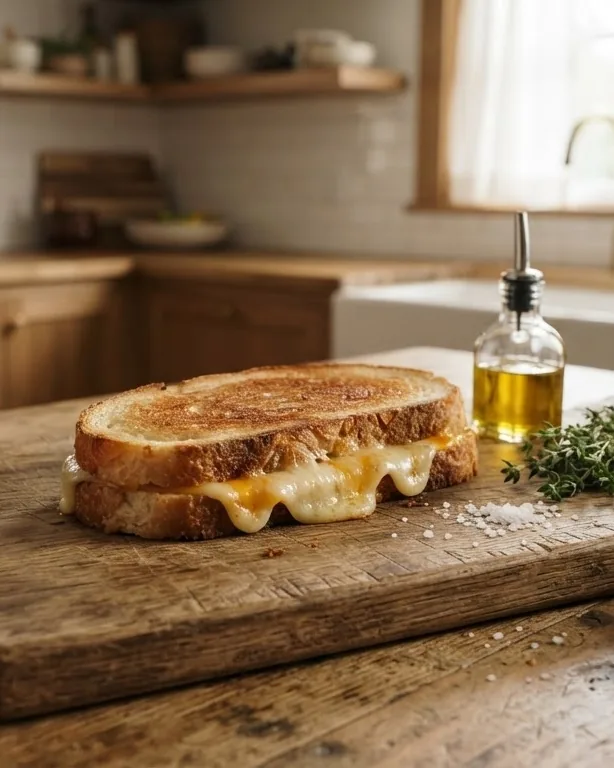
Homemade vs the Starbucks Sourdough: How a Restaurant Grilled Cheese Rewrites the Label
A restaurant grilled cheese is rarely a bigger version of your home sandwich; it is a different animal. Commercial versions tend to use larger bread, more cheese, and more added fat than a home cook would reach for, which pushes calories, sodium, and saturated fat above the roughly 450 kcal homemade baseline from USDA FoodData Central. Portion size is the first driver, added salt is the second. That is the honest frame for any grilled cheese sandwich nutrition info comparison between a home kitchen and a menu board.
The table above illustrates why: a restaurant sandwich commonly uses a thicker-cut artisan bread and often two or more layers of cheese rather than the two standard slices used in the homemade baseline. Extra melted cheese improves the visual and textural appeal on a menu photo, but it also adds sodium and saturated fat before any butter or oil used to crisp the crust is even counted. That is the structural reason a commercial version so often outpaces a home-cooked one on the numbers that matter for heart health.
Take a named benchmark. Starbucks publishes exact figures for its Crispy Grilled Cheese on Sourdough, and the right move is to read those numbers first-party rather than trust a secondhand estimate, because branded menu figures change over time. You can pull the current calories, fat, and sodium straight from the Starbucks nutrition menu. Treat that live figure as the anchor, then compare it against your own build.
The same logic applies to any away-from-home cheese-forward meal. If you are comparing a quick lunch, our Nutritional Value of Big Mac Meal: The Full Label Breakdown shows how a full fast-food combo stacks up against a homemade sandwich once sides enter the picture. The pattern holds across menus: portion control at home is the cheapest way to cut the numbers.
People also search for smaller regional items in the same breath, like aubrees pizzaria and grill nutritional info small cheese pizza, and the principle is identical: pull the operator’s own published panel when it exists, and use USDA FoodData Central component math when it does not.
Diet-Specific Guidance: Fitting Grilled Cheese Into High-Protein, Low-Sodium, Heart-Conscious, Vegetarian, and Lactose-Sensitive Patterns
Grilled cheese nutrition info changes meaning depending on which eating pattern you are following, and the same sandwich can be a good fit for one goal and a poor fit for another. Matching the build to the pattern, rather than eating one fixed version regardless of goal, is the simplest way to make the sandwich work for you instead of against you.
- High-protein: add a fried or scrambled egg, or use a stronger cheese in a slightly thicker cut, to raise the protein contribution beyond what bread and standard cheese slices provide on their own.
- Low-sodium: combine unsalted butter, a lower-sodium cheese like Swiss, and a reduced-sodium bread; together these choices can meaningfully undercut the 700 to 1,000 mg baseline described earlier.
- Heart-conscious: swap butter for olive oil to cut roughly 4 to 5 g of saturated fat, and pair the sandwich with a vegetable side rather than a fried one, consistent with American Heart Association guidance on saturated fat and sodium.
- Vegetarian: standard grilled cheese ingredients are already vegetarian, but check that the cheese uses microbial or vegetable rennet rather than animal-derived rennet if strict vegetarian sourcing matters to you.
- Lactose-sensitive: harder, longer-aged cheeses such as Swiss and sharp cheddar naturally contain less lactose than fresh, high-moisture cheeses like mozzarella, which can make them easier to tolerate in a sandwich.
Fitting Grilled Cheese Into a Real Day: Pairings, Portions, and Frequency
A grilled cheese is a component of a day, not a verdict on it. On its own, one sandwich delivers roughly 450 kcal, a large share of a day’s saturated fat, and a meaningful slice of your sodium ceiling, per USDA FoodData Central and FDA reference values. What decides whether that is fine or a problem is everything around it. Pair it with a green salad or a broth-based vegetable soup and you round out the meal with fiber and volume without adding much saturated fat. Pair it with fries and a shake and you have doubled down on the sandwich’s weak points.
Consider two lunch scenarios built around the same sandwich. Pair the roughly 450 kcal grilled cheese with a lightly dressed side salad, and the whole meal stays in a moderate range with a meaningful vegetable contribution. Pair the same sandwich with a large order of fries and a milkshake, and the meal’s total calories, sodium, and saturated fat can climb far past what any single component review of the sandwich alone would suggest. The sandwich itself did not change; the meal around it did.
The joint federal Dietary Guidelines for Americans, published by HHS and USDA, frame single foods this way: no one item makes or breaks a pattern, but recurring high-sodium, high-saturated-fat choices add up. That is the useful lens. A grilled cheese once a week, balanced by lower-sodium meals elsewhere, sits comfortably inside a heart-conscious pattern. The same sandwich daily, unmodified, starts to crowd out room for other foods.
Four framing rules that keep it in balance:
- Anchor the plate: add vegetables so the sandwich is not the whole meal.
- Watch the sides: a salty side stacks onto an already salty sandwich.
- Budget the day: if lunch is grilled cheese, lean lighter on saturated fat at dinner.
- Read the room: a homemade version gives you control over every dial listed earlier, while a restaurant version generally does not.
Common Grilled Cheese Nutrition Mistakes and Edge Cases
A few practical mix-ups explain most of the gap between an estimated sandwich and the one actually on the plate. Catching these before you log a meal or plan a menu keeps the numbers honest.
- Buttering only one side of the pan: some cooks butter the bread but not the skillet, or vice versa, which can undercount total fat by close to half a tablespoon compared with the two-sided baseline used in this article.
- Using pre-shredded cheese: a loosely packed handful of shredded cheese often weighs less than a solid 1-ounce slice even when it looks like a generous portion, which can lead to underestimating calories if you assume shredded and sliced cheese are interchangeable by volume.
- Choosing artisan or thick-cut bread: a hand-cut slice from a bakery loaf can weigh 40 g or more against the 25 to 30 g commercial slice used in USDA baseline figures, which quietly raises both calories and carbohydrate.
- Ignoring the cooking spray option: a light spray of oil adds only a few grams of fat compared with a full tablespoon of butter, making it one of the simplest single swaps for cutting saturated fat without changing the cheese or bread at all.
- Assuming all cheeses melt the same: reduced-fat cheeses cut saturated fat but often melt less smoothly, which is worth knowing before swapping for a health goal if texture matters to you.
Frequently Asked Questions
How many calories are in a grilled cheese?
A standard homemade grilled cheese made with two slices of white bread, two slices of cheese, and one tablespoon of butter runs roughly 420 to 500 kcal, drawing on USDA FoodData Central values. A common working estimate is about 450 kcal. Lighter builds using cooking spray and reduced-fat cheese can dip below that range, while loaded versions climb past the upper end.
Is grilled cheese healthy?
It depends on the build and the day around it. One sandwich delivers close to 40 percent of an adult’s daily calcium from two cheese slices, per the NIH Office of Dietary Supplements, but can also carry 12 to 17 g of saturated fat, meeting the American Heart Association’s daily target on its own. Paired with vegetables and eaten in moderation, it fits a balanced pattern.
Is grilled cheese high in protein?
It provides moderate protein rather than high protein. Both the cheese and the bread contribute, which is enough to make a sandwich a small meal rather than a snack. If protein is your priority, a stronger cheese used generously or an added egg raises the count. Grilled cheese nutritional info is stronger on calcium than on protein per calorie.
How does grilled cheese compare to a restaurant version?
Restaurant versions usually run higher in calories, sodium, and added fat than the roughly 450 kcal homemade baseline from USDA FoodData Central, mostly because of larger bread, more cheese, and extra cooking fat. For a specific item like the Starbucks Crispy Grilled Cheese on Sourdough, read the current first-party figures directly, since branded menu numbers change over time.
How much sodium is in a grilled cheese?
A single sandwich carries roughly 700 to 1,000 mg of sodium once bread, cheese, and salted butter combine, per USDA FoodData Central. Measured against the American Heart Association’s ideal limit of 1,500 mg per day, that is 30 to 45 percent of a day’s salt. Choosing Swiss over American cheese can trim sodium by about 100 to 150 mg per slice.
Can I make grilled cheese lower in saturated fat?
Yes, and the pan fat is the biggest lever. Swapping butter for a light coating of olive oil saves roughly 4 to 5 g of saturated fat per sandwich, per USDA FoodData Central comparisons. Using one stronger cheese slice instead of two mild ones cuts more. Those two changes together can pull a sandwich from over the American Heart Association’s daily target back under it.
What is the healthiest cheese for a grilled cheese sandwich?
There is no single best answer, but a lower-sodium option like Swiss combined with using only one slice instead of two is a practical starting point, since it can trim both sodium and saturated fat while still providing a meaningful share of the calcium found in a standard two-slice build. USDA FoodData Central is the best source for comparing exact figures across specific cheese types and brands.
Does the cooking method change the calorie count?
Yes. A buttered skillet uses close to the full tablespoon of fat assumed in the standard 420 to 500 kcal baseline, while a panini press or a light spray of oil in an air fryer can use noticeably less fat, which lowers the total calorie and saturated fat count without changing the bread or cheese at all.