Parmesan cheese nutrition facts come down to one unusual line on the label: authentic Parmigiano Reggiano carries less than 1 mg of lactose per 100g, a figure verified by the Consorzio del Formaggio Parmigiano Reggiano. That single number reorders how you should think about this cheese. Most people file it under “salty fat” and move on. The panel tells a different story, one where protein runs high, carbohydrate runs to zero, and the aging process does chemistry that most dairy never gets close to. Below is the whole panel, serving by serving, with the sourcing kept in plain sight so you can check every figure yourself.
The confusion usually starts because two very different products share the same word. The green shaker in the pantry and the wedge cut from a wheel aged two years are not the same food, and their labels do not read the same. We will separate them carefully, because the gap between them decides whether the numbers you are reading even apply to what is in your fridge.
This guide walks through those numbers in the order you actually need them: a quick scannable comparison across serving sizes, the macro and mineral detail behind each figure, the biology that makes aged Parmesan naturally lactose-free, and the practical differences between a wedge cut from a regulated wheel and a shaker jar off a grocery shelf. Two independent sources anchor every claim, the Consortium that regulates production in Italy and the USDA database that catalogs the cheese in the United States, so you can cross-check anything that surprises you.
Quick Answer: The Parmesan Cheese Nutrition Facts in One Glance
Parmesan cheese nutrition facts for authentic Parmigiano Reggiano, per 100g, break down to high protein, virtually no carbohydrate, no sugar, and only a trace of lactose, according to the Parmigiano Reggiano Consortium. The same 100g delivers 1155 mg of calcium. Scale that down to a realistic portion: a 25g serving covers 36 percent of an adult’s daily calcium requirement and 24 percent of phosphorus on a 2000 kcal diet. In short, this is a high-protein, calcium-dense, essentially carb-free food whose main watch-point is sodium, not sugar.
The table below scales the Consortium’s 100g figures down to the sizes people actually use in a kitchen or a tracking app. The 100g and 25g rows come straight from the Consortium’s published data. The 1 oz and 1 tbsp rows are proportional estimates calculated from that same 100g reference, so treat them as close approximations rather than separately measured lab values.
| Serving | Protein | Calcium | Carbohydrate | Lactose |
|---|---|---|---|---|
| 100g (lab reference) | 32.4g | 1155 mg | 0g | under 1 mg |
| 25g (generous grating) | about 8.1g | 36% DV | 0g | under 0.25 mg |
| 1 oz / 28g | about 9.1g | about 323 mg | 0g | under 0.28 mg |
| 1 tbsp / 5g | about 1.6g | small amount | 0g | trace |
Even the smallest row on that table, a single tablespoon, still carries meaningful calcium relative to its size, because the mineral is so concentrated in the cheese to begin with. That is the practical payoff of pairing a dense lab reference with a portion you would actually use.
Protein, Fat, and the Zero You Should Notice on the Carb Line
The macro line most people skip is the one that matters most here: carbohydrate. Authentic Parmigiano Reggiano contains 0g of carbohydrate and 0g of sugar per 100g, a figure published by the Parmigiano Reggiano Consortium. That is not marketing rounding. The sugar that milk starts with, lactose, is a carbohydrate, and by the time this cheese is finished, it is essentially gone. Protein, by contrast, is dense: 32.4g per 100g. For a cheese, that is a striking ratio, and it is why athletes and low-carb eaters reach for it.
Fat sits high too, and a good share of it is saturated, which is the trade-off you accept for the flavor and the calcium. The point is not that the cheese is “clean” or “dirty.” The point is that its energy comes almost entirely from protein and fat, with nothing from sugar.
Put the protein figure next to a familiar reference point. Nutrition labels in the United States commonly use 50g of protein per day as the baseline for calculating Percent Daily Value on a 2000 kcal diet. A 100g portion of authentic Parmesan, at 32.4g, would cover roughly two-thirds of that baseline in one sitting, though almost nobody eats 100g of Parmesan at once. The more common 25g grating still supplies about a quarter of that daily reference, which is a large contribution for something used mainly as a garnish rather than a main protein source.
- Protein: 32.4g per 100g (Parmigiano Reggiano Consortium).
- Carbohydrate: 0g per 100g.
- Sugar: 0g per 100g.
- Lactose: less than 1 mg per 100g.
If you track macros in an app, the zero on the carb line means you can log Parmesan without guessing at hidden sugars. For a contrast in how a carb-heavy label reads, take a look at our breakdown of Ritz Crackers Nutrition.
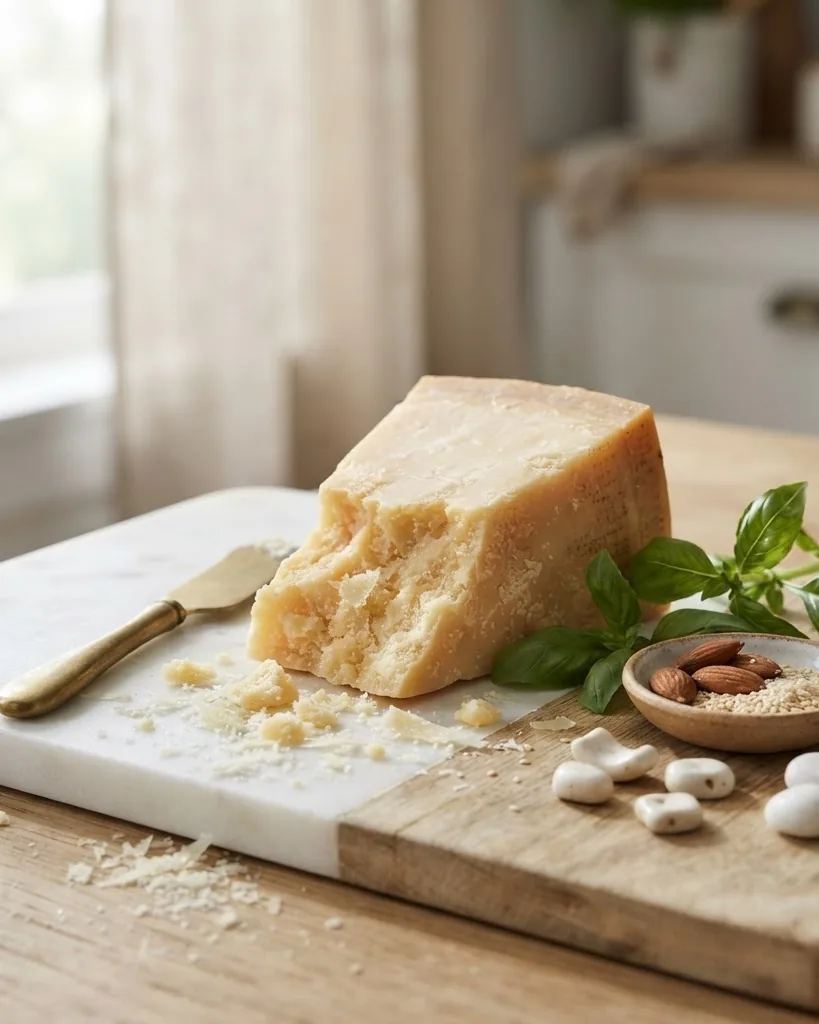
Calcium and Phosphorus: Why 25 Grams Does Real Bone Work
Calcium is the headline mineral, and the number is large. Per 100g, authentic Parmigiano Reggiano supplies 1155 mg of calcium, a figure the Parmigiano Reggiano Consortium describes as highly bioavailable, meaning your body absorbs a strong share of it rather than passing it through. Bioavailability matters as much as the raw milligrams, because a big number that does not absorb is a number on paper only. Here the two line up.
Bring it down to a portion you would actually grate over pasta. A 25g serving covers 36 percent of an adult’s daily calcium requirement and 24 percent of phosphorus, based on a 2000 kcal diet, per the same Consortium data. Calcium and phosphorus work together in bone mineralization, so getting both from one food in one meal is efficient. The U.S. Department of Agriculture’s FoodData Central maintains the comprehensive nutrient profile for cheeses in this category if you want to cross-check absolute values against the Consortium’s figures.
For anyone building meals around bone-supportive foods, that 36 percent from a modest 25g grating is doing quiet, real work. You do not need a huge plate to move the needle.
Micronutrients Beyond Calcium: Phosphorus, Zinc, and Vitamin A
Calcium and phosphorus get the most attention because they arrive in the largest, best documented amounts, but they are not the only minerals worth noting on a Parmesan label. Aged hard cheeses in this family are also recognized as a source of zinc, a mineral involved in immune function, wound healing, and the enzymatic machinery your body uses to build new protein from the amino acids the cheese itself supplies. The Consortium’s headline figures focus on calcium and phosphorus because those two are the most clinically relevant to bone health, which is the benefit most associated with hard aged cheese.
If you want an exact zinc figure for a specific lot, the USDA’s FoodData Central entry is the place to look, since it catalogs a fuller micronutrient panel than most brand pages publish. The same database also lists small amounts of fat-soluble vitamins, including vitamin A, which comes through from the milk fat retained in the wheel. None of these secondary nutrients change the headline story: this is a calcium-forward, protein-forward food, with the other minerals riding along as a bonus rather than the main event.
Is Parmesan Cheese Healthy? Weighing the Benefits Against the Load
Is Parmesan cheese healthy? For most people, in normal grating amounts, the nutrition facts lean favorable, with two honest caveats. On the benefit side, you get 32.4g of protein per 100g, 1155 mg of calcium per 100g, near-zero lactose, and zero sugar, all from the Parmigiano Reggiano Consortium data. That is high nutrient density per calorie. The caveats are the calorie load itself and the saturated fat, both of which come with the fat content, and the sodium, which we cover separately below.
The healthy-or-not question turns on quantity, not on the food being good or bad. A 25g grating that delivers 36 percent of daily calcium is a nutrient bargain. A half-cup melted into a cream sauce is a different calculation, since the fat and calorie totals scale with the amount just as fast as the calcium does. The USDA’s nutrition.gov consumer portal frames this the same way: a food’s role depends on the portion and the rest of the day’s plate, not on a single nutrient in isolation.
Two groups should pay attention. People managing blood pressure watch the sodium. People counting calories watch the fat-driven energy density, since a small volume of hard cheese packs a surprising number of calories for its weight. Everyone else can treat authentic Parmesan as a concentrated source of protein and calcium that also happens to taste like the best part of the meal, provided the portion stays in the grating range rather than the handful range.
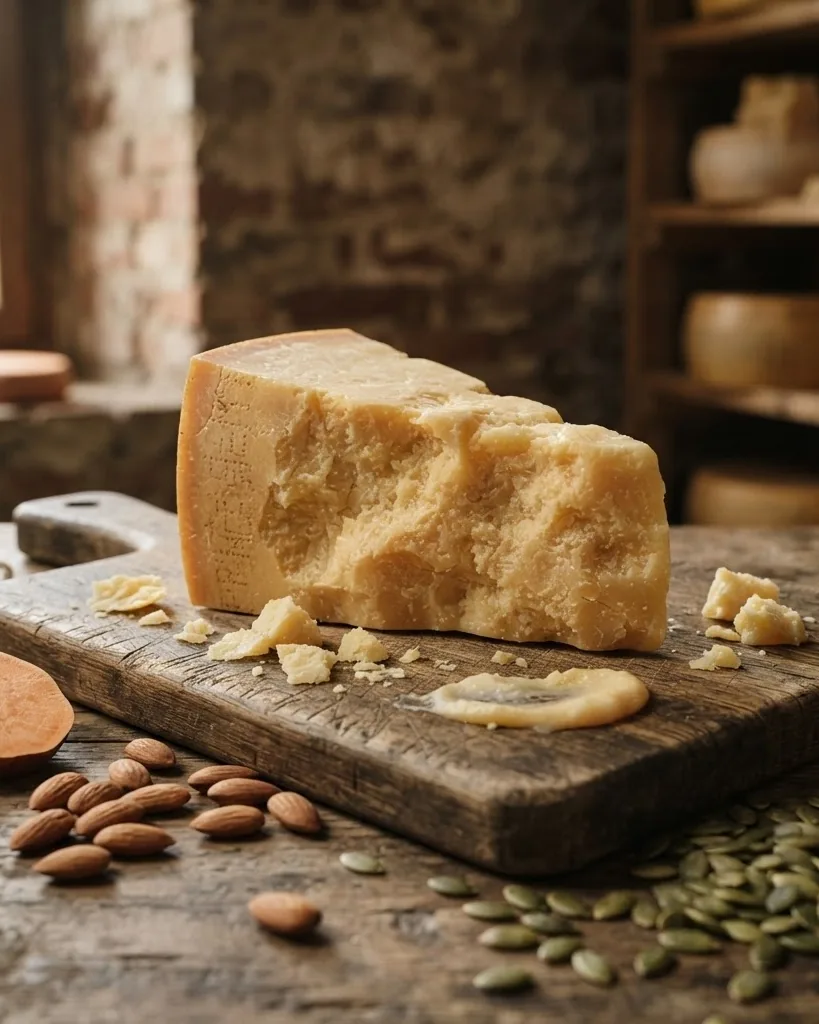
The Sodium Problem Nobody Prints in Big Font
Sodium is the one nutrition fact that turns Parmesan from a nutrient bargain into a food you portion with care. Salt is not an additive here; it is part of the production, drawn into the wheel during brining, so a salty profile is intrinsic to the cheese rather than sprinkled on afterward. That is why the flavor is so intense from so little. The concentration cuts both ways: great for seasoning power, a genuine concern for anyone watching blood pressure.
The U.S. Food and Drug Administration treats sodium as a nutrient to limit on the Nutrition Facts label, and its guidance on reading that panel walks through why the Percent Daily Value column exists in the first place. General U.S. dietary guidance encourages most adults to keep overall sodium intake in check, and hard aged cheeses can add up quickly if portions run large. Exact sodium milligrams vary by wheel and by brand, so the USDA’s FoodData Central entry for the specific product in your fridge is the right place to check the number rather than relying on a single memorized figure.
The practical move with Parmesan is to let the cheese do the seasoning and hold back the added salt in the dish. Because the flavor is so concentrated, a light grating often replaces a heavier hand with the salt shaker, which can leave the total sodium of a plate flatter than you would expect.
If you want to see how sodium stacks up in an everyday comfort food, the numbers in our Grilled Cheese Nutrition Facts: What One Sandwich Actually Contains make a useful side-by-side, since bread and processed cheese push sodium from a different direction.
Why Aged Parmesan Is Naturally Lactose-Free: The 24-Month Chemistry
The lactose-free line is the most misunderstood fact on the panel, and it comes down to what lives in the wheel. Authentic Parmigiano Reggiano contains less than 1 mg of lactose per 100g, according to the Parmigiano Reggiano Consortium, and that is a result of biology, not filtration. During the long aging that authentic wheels undergo, lactic acid bacteria consume the milk sugars. Lactose and galactose are eaten by these microbes over roughly a 24-month aging window, which is why the finished cheese carries essentially none of the sugar the milk started with.
There is a second half to the story that most summaries skip. Enzymes active during aging also break the casein proteins into smaller fragments and free amino acids. That is why aged Parmesan is often described as easy to digest: the protein arrives partly pre-broken-down, and the sugar that triggers lactose intolerance is gone. So the “low lactose” phrasing you see elsewhere undersells it. For authentic PDO cheese, the number is under 1 mg per 100g, which is functionally lactose-free.
The catch, and it is a real one, is that this only holds for cheese aged the traditional way. A young, industrially made grated product has not spent the time for the bacteria to finish the job. If lactose is your reason for reaching for Parmesan, the label word to trust is the aging, not the shape.
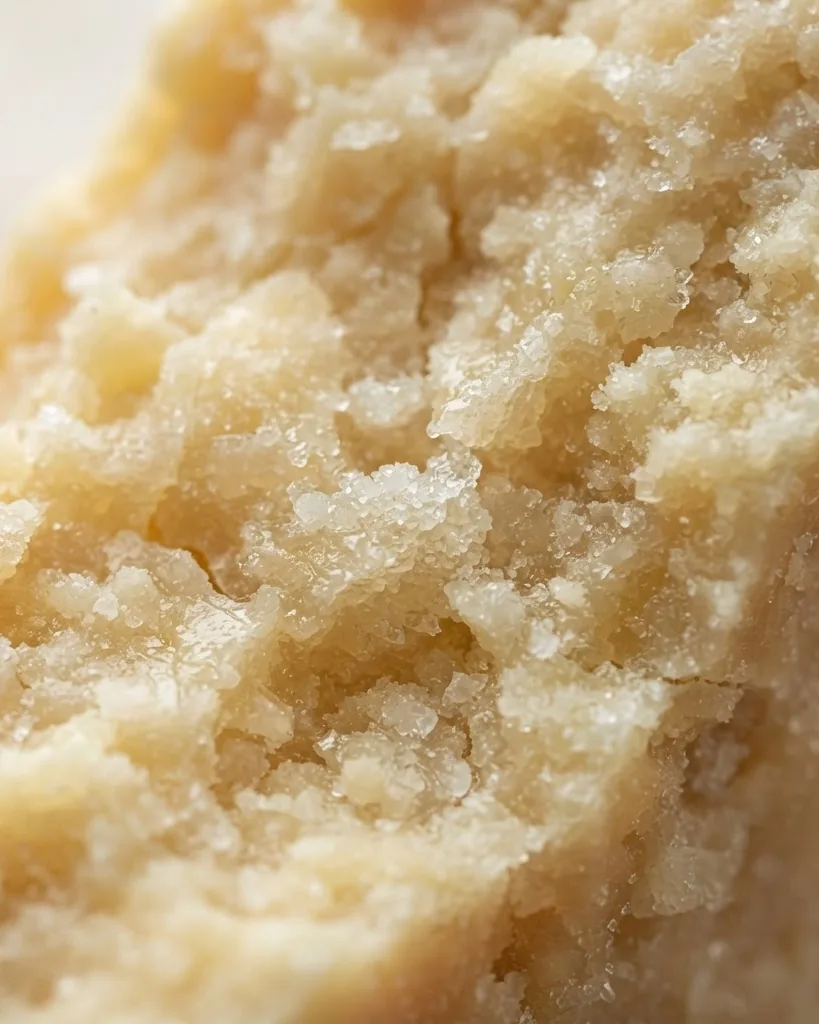
Aging Timeline: 12, 24, and 36-Plus Months, and What Actually Changes
Parmigiano Reggiano is not a single fixed product; it is sold across a range of aging lengths, and each stage changes the texture, flavor intensity, and to some degree the nutrient concentration, even though the basic milk, salt, and rennet recipe never changes. The youngest wheels legally allowed to carry the name taste milder, with a softer, more elastic texture. This stage is where the bacterial consumption of lactose and galactose is already well underway but not yet as thorough as it becomes later.
Wheels aged closer to 24 months, the window the Consortium’s flagship nutritional figures describe, have lost most of their residual moisture and much more of their sugar, which is consistent with the under-1-mg lactose figure and the concentrated 32.4g protein per 100g. As moisture leaves a wheel during aging, the remaining nutrients become more concentrated per gram, which is part of why longer-aged wedges tend to taste sharper and feel grittier, with visible tyrosine crystals forming from the broken-down casein.
Wheels aged 36 months or longer, sometimes labeled Stravecchio or Extra Vecchio by producers, push that concentration and crystal formation further still. The core nutrition story, near-zero lactose and a dense free amino acid profile, holds at every one of these stages, but the intensity of both flavor and that gritty crystalline texture increases the longer the wheel sits. If a recipe calls for a milder melting cheese, a 12-month wheel is more forgiving than a 36-month one, which is better suited to being grated raw over a finished dish.
Grated vs Shredded vs a Wedge: The Same Word, Three Different Panels
The format you buy changes the nutrition facts more than most shoppers realize, because it changes what is legally allowed in the tub. Grated parmesan cheese nutrition facts on a domestic shaker often include ingredients that never touch an authentic wheel. Anti-caking agents such as cellulose, essentially food-grade wood pulp, are commonly added to keep the powder free-flowing, and preservatives such as potassium sorbate can appear to extend shelf life. Shredded parmesan cheese nutrition facts sit in a similar zone, since shreds also need anti-caking treatment to stop them clumping in the bag.
Compare that to the rule for authentic PDO cheese, which is close to austere.
- Authentic Parmigiano Reggiano (PDO): milk, salt, and rennet. That is the permitted list.
- Domestic grated shaker: cheese plus anti-caking cellulose and, in some products, potassium sorbate.
- Pre-shredded: cheese plus anti-caking agents to keep shreds separate.
The nutritional consequence is real. Added cellulose is bulk that dilutes the nutrient density per gram, so a spoon of shaker powder does not carry the same protein or calcium as a spoon grated fresh from a wedge. It also means the tidy figures above, 32.4g protein and 1155 mg calcium per 100g, describe the wedge, not necessarily the powder. When you read parmesan cheese nutrition facts online, check whether the data is for authentic PDO cheese or for a processed shaker, because they are not interchangeable.
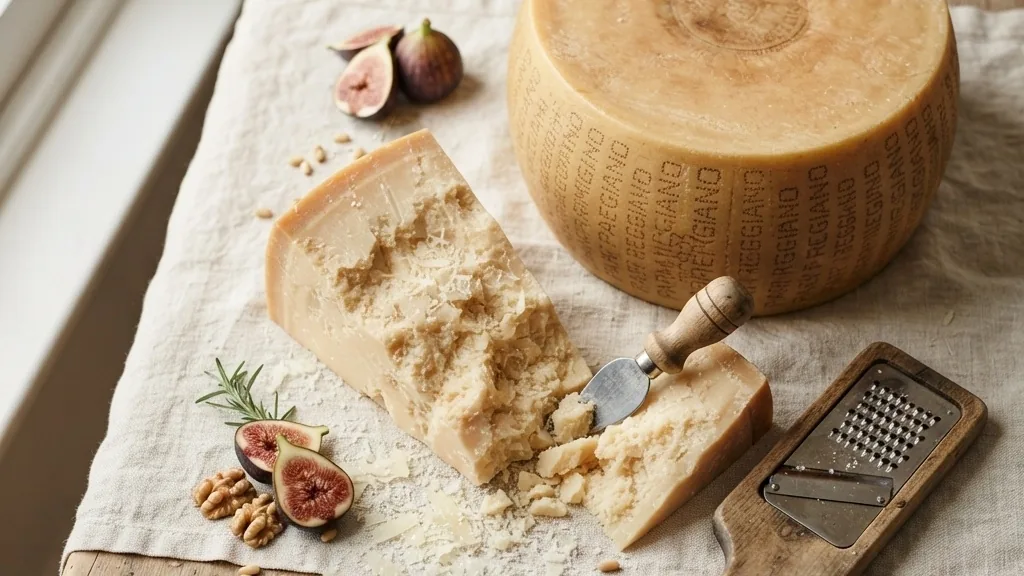
A quick way to sort authentic wheels from imitations at the store: genuine Parmigiano Reggiano rinds carry small pin-dot stenciling spelling the name repeatedly around the wheel, along with an oval PDO stamp and a production date. A wedge cut from that rind will show at least a partial fragment of that stenciling. Pre-grated tubs cannot show a rind at all, which is exactly why checking the ingredient list, rather than the front label claims, is the more reliable way to know what you are actually buying.
What PDO Actually Enforces, and Who Enforces It
PDO is not a flavor claim; it is a legal boundary drawn around production, and it is the reason the ingredient list stays so short. Protected Designation of Origin status, administered for this cheese by the Consorzio del Formaggio Parmigiano Reggiano, fixes where the milk comes from, how the wheel is made, how long it ages, and what may go into it. Under that rule, the only permitted ingredients are milk, salt, and rennet. No additives, no anti-caking agents, no preservatives are allowed inside a wheel carrying the name.
The geographic boundary is specific rather than a loose regional label. Production is restricted to the provinces of Parma, Reggio Emilia, and Modena, plus the part of Bologna east of the Reno river and the part of Mantua on the right bank of the Po. Milk from outside that zone, no matter how similar the process, cannot legally be called Parmigiano Reggiano. That geographic strictness is part of why the nutritional profile stays consistent from wheel to wheel; the herds, feed, and dairy practices are far less variable than they would be across an unregulated national supply chain.
That enforcement is why the nutrition figures for authentic cheese are so stable from wheel to wheel. When the production method is legally fixed, the protein, calcium, and lactose numbers do not drift with a manufacturer’s cost-cutting. The Consortium publishes the nutritional characteristics it stands behind, and because it also polices the label, those figures describe a controlled product rather than a moving target.
For the U.S. side of the ledger, the USDA FoodData Central database serves the same trust function: an independent, government-maintained record of nutrient values you can cite without taking a brand’s word for it. Between the Consortium’s PDO data and the USDA’s dataset, you have two separate authorities describing the same food, which is exactly what you want when a claim is easy to fudge.
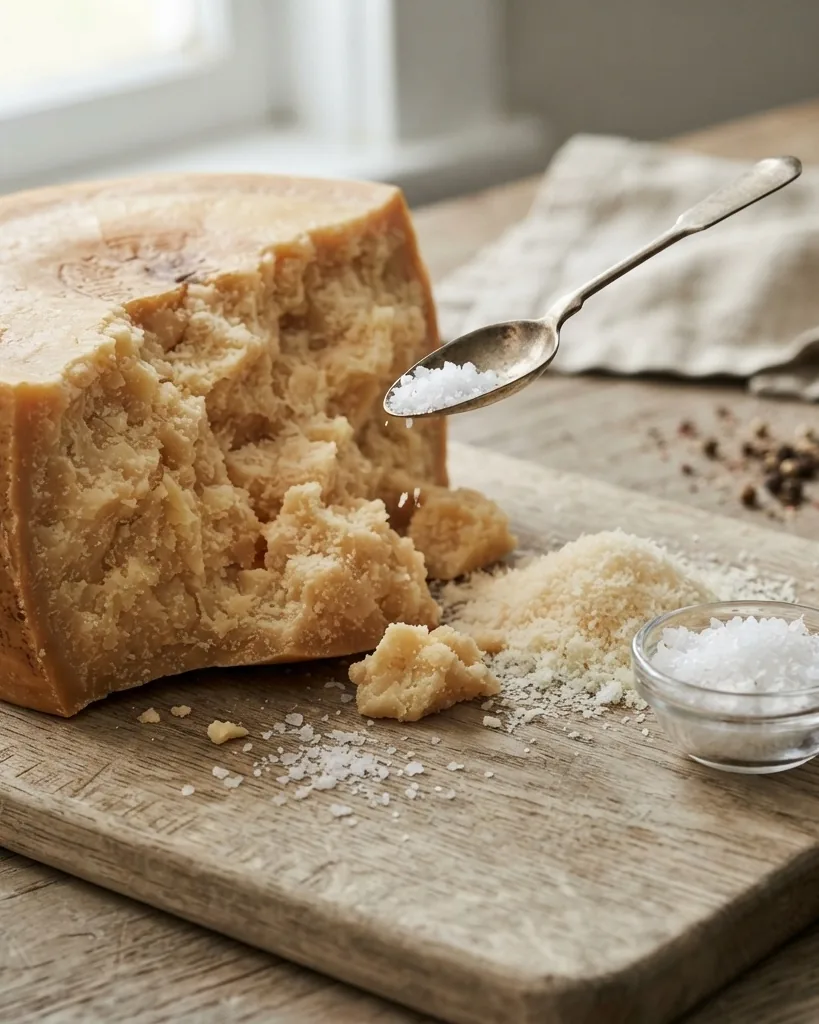
Troubleshooting Label Confusion: Generic Parmesan vs Protected Parmigiano-Reggiano
One source of ongoing confusion is legal rather than nutritional. Inside the European Union, the name Parmigiano Reggiano is tightly protected, and only wheels made under Consortium rules may use it. Outside the EU, and particularly in the United States, the word “Parmesan” on its own has generally been treated as a generic descriptor for a style of hard, aged grating cheese, which is exactly why a domestic shaker jar can legally print “Parmesan” on the front without meeting any of the PDO production rules. That legal gap is the real reason two products on the same shelf can carry such different ingredient lists while sharing a name.
Another edge case worth flagging for anyone checking labels closely is rennet. Traditional Parmigiano Reggiano is typically made with calf rennet, an animal-derived enzyme, which means the classic version is not vegetarian even though its ingredient list looks short and simple. Some producers now offer versions made with microbial or vegetable-based rennet to serve vegetarian buyers, but that is not the default, so anyone avoiding animal-derived ingredients should check specifically for a vegetarian rennet claim rather than assuming a short ingredient list implies plant-based enzymes.
A last troubleshooting note concerns digestion. If someone experiences bloating or discomfort after eating a cheese labeled Parmesan, the lactose story above suggests the cause is unlikely to be lactose if the product is genuinely aged PDO cheese. More often the culprit is either a young, non-authentic grated product that has not finished the bacterial breakdown, or simply the sodium and fat load of a larger-than-intended portion, which can cause its own digestive discomfort unrelated to milk sugar at all.
Serving Sizes That Match How You Actually Cook
Nutrition facts only help if they map to a real spoon, so here is how the three common reference sizes translate at the table. Databases love the 100g figure because it makes math easy, but almost nobody eats 100g of Parmesan in a sitting. A tablespoon grated over pasta, an ounce on an antipasto board, and the 100g lab reference are three very different amounts, and lining them up is the fastest way to sanity-check any panel you read. The anchor to carry with you is the Consortium’s 25g serving, since that portion is close to a generous real-world grating.
From that 25g serving you get 36 percent of daily calcium and 24 percent of phosphorus on a 2000 kcal diet. Scale up or down from there:
- 100g (lab reference): 32.4g protein, 1155 mg calcium, 0g carbohydrate, under 1 mg lactose.
- 25g (generous grating): 36 percent daily calcium, 24 percent daily phosphorus.
- 1 tablespoon / 1 ounce (calorie tracking): smaller fractions of the above; scale from the 100g line, or use the table earlier in this article for the approximate numbers already worked out.
A recipe that calls for a full cup of grated Parmesan, roughly 100g, is delivering the entire 32.4g protein and 1155 mg calcium figure into that dish, split across however many servings the recipe makes. A light finishing grate of 5 to 10g over a single plate moves the calcium and protein needle far less, but it still contributes real flavor and a meaningful pinch of sodium, which is the trade you are making every time you reach for the grater at the table rather than mixing the cheese into the dish during cooking.
The practical takeaway is that Parmesan punishes over-pouring less than you would think on nutrients and more than you would think on sodium. A restrained grating gives you most of the calcium benefit while keeping the salt in check. If you want a companion food that is genuinely carb-free to build a plate around, our guide to How to Cook Quinoa So It Comes Out Fluffy, Not Mushy covers the grain side, since quinoa brings the complex carbohydrate that Parmesan, at 0g, does not.
Frequently Asked Questions
Is authentic Parmesan cheese actually lactose-free?
Functionally, yes. The Parmigiano Reggiano Consortium reports less than 1 mg of lactose per 100g in authentic aged wheels. During aging, lactic acid bacteria consume the lactose and galactose, so the finished cheese carries essentially none of the milk sugar. This applies to traditionally aged PDO cheese, not necessarily to young industrial shaker products that skipped the long aging.
How much calcium is in a normal serving of Parmesan?
A 25g serving of authentic Parmigiano Reggiano covers 36 percent of an adult’s daily calcium requirement on a 2000 kcal diet, per Consortium data. Full strength, 100g supplies 1155 mg of calcium, and the Consortium notes it is highly bioavailable, meaning your body absorbs a strong share rather than passing it through. Even a modest grating does real bone-supportive work.
Why does grated shaker Parmesan have a different label than a wedge?
Format changes what is legally in the tub. Domestic grated shaker often includes anti-caking cellulose and sometimes potassium sorbate, while authentic PDO cheese permits only milk, salt, and rennet. The added cellulose dilutes nutrient density per gram, so a spoon of powder does not carry the same protein or calcium as a spoon grated fresh from a wedge.
Is Parmesan cheese healthy for someone watching blood pressure?
It depends on portion. Parmesan is nutrient-dense, with 32.4g protein and 1155 mg calcium per 100g, but its salt is intrinsic to production, so sodium runs high. The U.S. Food and Drug Administration lists sodium as a nutrient to limit, so it’s worth watching how much a serving contributes. Let the cheese season the dish and hold back added salt, and keep portions modest to manage the sodium load.
Does Parmesan have any carbohydrates or sugar?
Authentic Parmigiano Reggiano contains 0g of carbohydrate and 0g of sugar per 100g, according to the Parmigiano Reggiano Consortium. The sugar milk starts with is lactose, and the aging bacteria consume it, leaving under 1 mg per 100g. That makes authentic Parmesan a reliable choice for low-carb tracking, since there are no hidden sugars to guess at.
Is the protein in Parmesan easy to digest?
Generally, yes. During aging, enzymes break the casein proteins into smaller fragments and free amino acids, which is part of why aged Parmesan is often described as easy on digestion. Combined with the near-total absence of lactose, the finished cheese delivers its 32.4g of protein per 100g in a form the body handles more readily than many fresh dairy proteins.
Is Parmesan cheese vegetarian?
Traditional Parmigiano Reggiano is usually made with calf rennet, an animal-derived enzyme, so the classic version is not vegetarian despite its short milk, salt, and rennet ingredient list. Some producers make a version with microbial or vegetable-based rennet for vegetarian buyers, so check the label specifically for that claim rather than assuming a short ingredient list means the rennet is plant-based.
Does aging the cheese longer, say to 36 months, change the nutrition facts much?
The core figures, near-zero lactose and dense protein, hold across the aging range, but longer aging concentrates nutrients further as moisture leaves the wheel and intensifies both flavor and the gritty tyrosine crystals formed from broken-down casein. A 36-month wedge will taste sharper and feel grittier than a 12-month wedge, even though both are within the same fundamentally lactose-free, carb-free profile described by the Consortium.
[req:3297945]
[req:3635415]