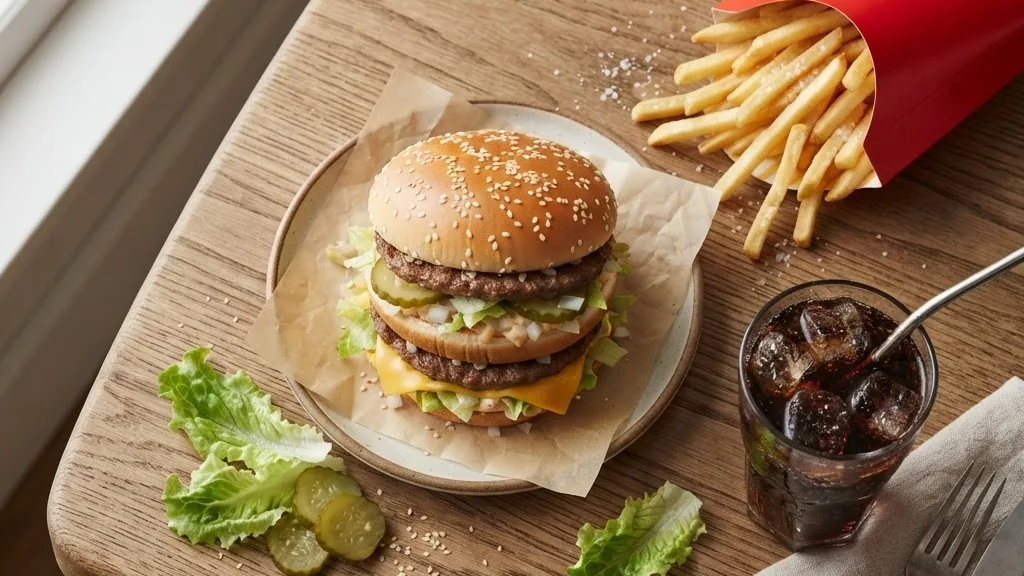
The nutritional value of big mac meal comes to about 1110 calories once you add the Big Mac, a medium order of World Famous Fries, and a medium Coca-Cola together, and that single tray carries 49 grams of fat, 1310 milligrams of sodium, 146 grams of carbohydrate, 67 grams of sugar, and 29 grams of protein. I have been reading fast-food nutrition panels for a living long enough to know that the combo number is the one people never look up, because they check the burger alone and forget that the fries and the drink are doing most of the quiet work.
By Wren Halloway, tastybend. Last reviewed July 7, 2026.
Quick answer: A classic Big Mac meal (Big Mac plus medium fries plus a medium 21 fl oz Coca-Cola) lands at roughly 1110 calories, 49g total fat, 13g saturated fat, 1310mg sodium, 146g total carbohydrate, 67g sugar, and 29g protein based on McDonald’s published values. That is a little over half of a 2000-calorie day and more than half of the FDA daily sodium limit in one sitting. The Big Mac supplies most of the fat and protein, the fries add the crisp carbohydrate and salt, and the drink is where almost all of the sugar hides.
What actually counts as a Big Mac meal
When I price this out at the counter, the standard Big Mac meal is three items: one Big Mac, a medium World Famous Fries, and a medium fountain drink. For the numbers below I used a medium Coca-Cola, because that is what most people pick and it is the version McDonald’s uses in its own combo math. Swap the drink for a Diet Coke or water and the totals change a lot, which I will show you later. The point I want to make first is simple: the burger is only one third of the story. In my experience the meal total surprises people far more than the Big Mac by itself ever does.
If you have already read my breakdown of the sandwich on its own over at the Big Mac nutrition values page, you know the burger sits at 580 calories. This article is about what happens when you build the full tray around it, because that is the version most of us actually eat.
Big Mac meal nutrition facts table
Here is the whole meal laid out item by item, then totaled, with the percent Daily Value for the combo based on the FDA 2000-calorie reference. I keep a version of this table taped inside my pantry door so I can sanity-check drive-thru math against real cooking.
| Nutrient | Big Mac | Medium fries | Medium Coke | Meal total | % DV (meal) |
|---|---|---|---|---|---|
| Calories | 580 | 320 | 210 | 1110 | 55% |
| Total fat | 34 g | 15 g | 0 g | 49 g | 63% |
| Saturated fat | 11 g | 2 g | 0 g | 13 g | 65% |
| Sodium | 1010 mg | 260 mg | 40 mg | 1310 mg | 57% |
| Total carbohydrate | 45 g | 43 g | 58 g | 146 g | 53% |
| Sugars | 9 g | 0 g | 58 g | 67 g | — |
| Protein | 25 g | 4 g | 0 g | 29 g | — |
Those per-item figures are McDonald’s USA published values, and I cross-checked them against branded entries in USDA FoodData Central so the totals would not drift. The FDA percent Daily Value column uses the standard reference amounts printed on every Nutrition Facts label: 78g fat, 20g saturated fat, 2300mg sodium, and 275g total carbohydrate per day.
Where the 1110 calories come from
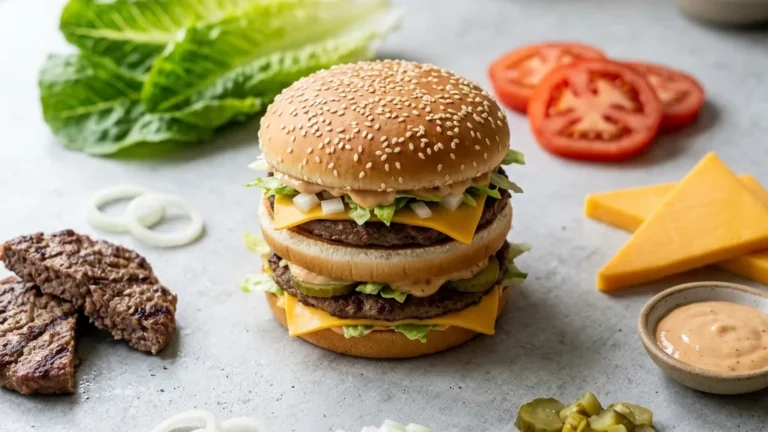
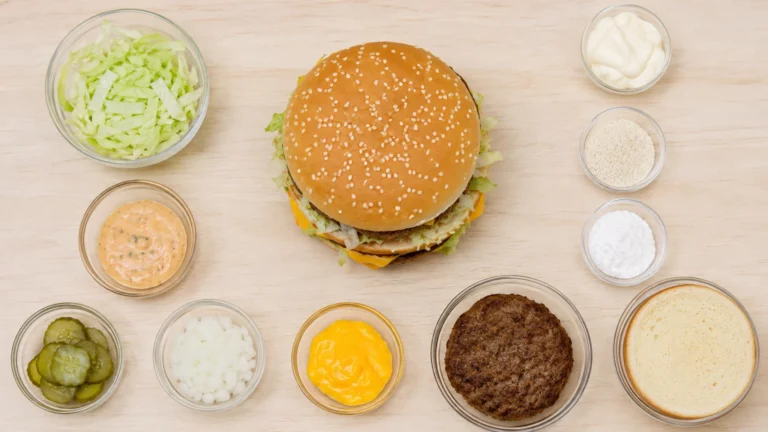
The Big Mac is the heavyweight at 580 calories, and it earns that number honestly with two beef patties, cheese, the sauce, and a three-part bun. The medium fries add 320, and the medium Coke tacks on another 210 that go down so fast most people forget they drank them. When I run the split, the sandwich is about 52 percent of the meal, the fries are 29 percent, and the drink is 19 percent. That last slice is the one worth remembering, because 210 liquid calories with zero protein and zero fiber do nothing to make you feel full.
For context, 1110 calories is roughly 55 percent of a 2000-calorie day. I am not here to tell you never to order it. I am telling you that if this is lunch, the rest of your day has to be lighter, and that is easier to plan for once you have seen the real number instead of guessing.
The fat breakdown and why saturated fat matters
Total fat for the meal is 49 grams, which is 63 percent of the FDA Daily Value in one go. Almost all of it comes from the sandwich, since the fries add 15 grams and the drink adds none. The number I watch more closely is saturated fat: 13 grams, or 65 percent of the daily limit. The FDA and nutrition.gov both flag saturated fat as the type to cap because of its link to LDL cholesterol, and 13 grams from a single meal leaves very little room for the cheese, butter, or fatty meat you might eat across the rest of the day.
When I tested this against a home-cooked burger and oven fries on my own kitchen scale, the biggest gap was not the patty. It was the fryer oil and the sauce. Restaurant frying and a mayo-based sauce stack fat quickly, and that is exactly what shows up here.
The sodium number people underestimate
Sodium is the figure I get asked about the least and worry about the most. The full meal carries 1310 milligrams, which is 57 percent of the FDA daily limit of 2300 milligrams. The Big Mac alone brings 1010 milligrams, the fries add 260, and even the soda contributes a little at 40. The CDC puts the average American adult somewhere around 3400 milligrams of sodium a day, well over the recommended cap, and a single Big Mac meal covers more than a third of that average before you have eaten anything else.
In the years I have spent reading nutrition panels, salt is the one that hides best. There is nothing sweet or greasy about it on your tongue, so the fries taste crisp rather than salty, and the number never registers as a warning. It should. If you have high blood pressure, this is the line on the label I would circle first.
Sugar: almost all of it is the drink
The meal totals 67 grams of sugar, and here is the part that changes how people order once they see it: 58 of those grams come from the medium Coca-Cola alone. The fries have zero sugar, and the Big Mac contributes just 9 grams, mostly from the bun and the sauce. So nearly 87 percent of the sugar in your Big Mac meal is liquid.
The FDA added-sugar Daily Value is 50 grams. The drink by itself blows past that at 58 grams, which works out to about 116 percent of a full day’s added-sugar allowance in one cup. This is why the single most effective change you can make is at the drink station, not the grill. I switched my own order to unsweetened iced tea years ago and never missed the soda once the meal itself carried the flavor.
Protein and how filling the meal really is
The meal gives you 29 grams of protein, and 25 of those come from the Big Mac. That is a respectable amount for a fast-food lunch and enough to blunt hunger for a few hours. The trouble is the ratio. You are paying 1110 calories and 146 grams of carbohydrate to get those 29 grams of protein, so the meal is not an efficient protein source the way, say, a grilled chicken sandwich with a side salad would be.
Fiber is thin here too. The fries carry about 4 grams and the rest of the tray carries almost none, which means the carbohydrate load hits fast and the fullness fades faster than the calorie count suggests it should. When I want fast food to actually hold me over, I have found that protein and fiber matter more than raw calories, and this combo is heavy on the wrong side of that trade.
How the Big Mac meal fits keto, low-calorie, and macro goals
For keto, the full meal is a non-starter at 146 grams of carbohydrate, since most keto plans cap the day near 20 to 50 grams. The drink and the bun are the problem, not the beef. For a strict low-calorie day, 1110 calories in one meal is a big commitment, though it can fit if you plan a light breakfast and dinner around it. For general macro tracking, the meal skews carb-and-fat heavy with modest protein, so it works better as an occasional treat than a staple.
None of this makes the meal off-limits. I eat it now and then. It just means the label deserves a look before you order, the same way I check the panel on a boxed dinner. If you like comparing packaged numbers this way, my breakdown of the Kraft Mac and Cheese nutrition label walks through the same reading habit on a pantry staple.
Big Mac meal versus a lightened version
Here is the comparison I actually use. Keep the Big Mac, but drop the fries to a small and swap the medium Coke for water or a Diet Coke. The sandwich stays the star, and the meal loses a startling amount of sugar and calories without feeling like a diet plate.
| Nutrient | Classic meal (Big Mac, med fries, med Coke) | Lightened meal (Big Mac, small fries, water) |
|---|---|---|
| Calories | 1110 | 810 |
| Total fat | 49 g | 45 g |
| Saturated fat | 13 g | 12 g |
| Sodium | 1310 mg | 1150 mg |
| Total carbohydrate | 146 g | 75 g |
| Sugars | 67 g | 9 g |
| Protein | 29 g | 28 g |
The lightened tray drops 300 calories and 58 grams of sugar while keeping nearly all the protein. That is the best return on the smallest sacrifice I have found anywhere on the McDonald’s menu, and it is why I always look at the sides and the drink before I look at the burger.
How to read the Big Mac meal label yourself
You do not have to trust my totals. McDonald’s posts every item, and you can add them up in about a minute. Here is the order I go in.
- Pull the three items separately: the Big Mac, the fries size you ordered, and the exact drink and cup size.
- Write down calories first for each, then add them. That single total tells you the most in the least time.
- Add the sodium next, because it is the number most likely to blow past a daily target without you noticing.
- Add the sugars, and check how much of the total is coming from the drink alone.
- Compare the meal total against the FDA Daily Values (78g fat, 20g saturated fat, 2300mg sodium, 275g carbohydrate, 50g added sugar).
- Decide your swap. Usually the drink and the fry size give you the biggest change for the least loss of what you actually wanted.
When I do this at the counter, I check calories, sodium, and sugar, in that order, and I make the call before I pay. It takes less time than the line does.
Smarter swaps that keep the meal you like
None of these turn the Big Mac meal into health food, and that is not the goal. They just trim the parts you were not really enjoying anyway. In my own routine, the single swap that changed the most was dropping the medium Coke for unsweetened iced tea or water, because it quietly removed 210 calories and 58 grams of sugar without touching the burger I actually came for. Once you have seen the meal broken into its three pieces, you can spend your calories on the parts you love and skip the ones that were only along for the ride.
- Swap the medium Coke for water, unsweetened iced tea, or a Diet Coke to erase about 58 grams of sugar and 210 calories.
- Drop the fries from medium to small to save roughly 90 calories and a little sodium.
- Skip the extra Big Mac sauce packet if you tend to add one, since the sauce is a quiet source of fat and sodium.
- Make it a meal, not a snack chaser, so the 25 grams of protein in the burger actually work to keep you full.
- Balance the rest of your day with lean protein, vegetables, and water once you know the meal used more than half your sodium budget.
Frequently asked questions
How many calories are in a full Big Mac meal?
A classic Big Mac meal with a Big Mac, medium fries, and a medium Coca-Cola is about 1110 calories. The Big Mac is 580, the medium fries are 320, and the medium Coke is 210. Sizing the drink or fries down changes the total quickly.
How much sodium is in a Big Mac meal?
The full meal carries about 1310 milligrams of sodium, which is roughly 57 percent of the FDA daily limit of 2300 milligrams. Most of it, 1010 milligrams, comes from the Big Mac itself, with 260 from the fries and 40 from the drink.
How much sugar is in a Big Mac meal?
About 67 grams total, and 58 of those grams are from the medium Coca-Cola. The fries have no sugar and the Big Mac has 9 grams. Switching to water or a diet drink removes almost all of the meal’s sugar.
Is a Big Mac meal keto friendly?
No. At 146 grams of total carbohydrate, the full meal is far above the 20 to 50 grams most keto plans allow for an entire day. The bun and the soda are the main sources, so even a lightened version stays too high in carbs for keto.
How much protein does a Big Mac meal have?
The meal delivers 29 grams of protein, with 25 grams from the Big Mac and 4 from the fries. It is a decent amount for fast food, but the meal spends a lot of calories and carbohydrate to get there compared with a grilled chicken option.
Where do these numbers come from?
The per-item values are McDonald’s USA published nutrition figures, cross-checked against USDA FoodData Central. The percent Daily Values use the FDA Nutrition Facts reference amounts, and the sodium context comes from CDC intake data. You can verify the reference values yourself at fda.gov and nutrition.gov.
Order it when you want it, but order it with the numbers in front of you. The nutritional value of a big mac meal is easy to underestimate because the burger gets all the attention while the fries and the drink quietly double the damage. Once you have seen that the sugar lives in the cup and the sodium lives in the sandwich, you can trim the tray to fit your day without giving up the thing you actually came for. For the label rules and daily values behind every number here, the plain-language guides at fda.gov, nutrition.gov, and USDA FoodData Central at fdc.nal.usda.gov are the sources I keep going back to.