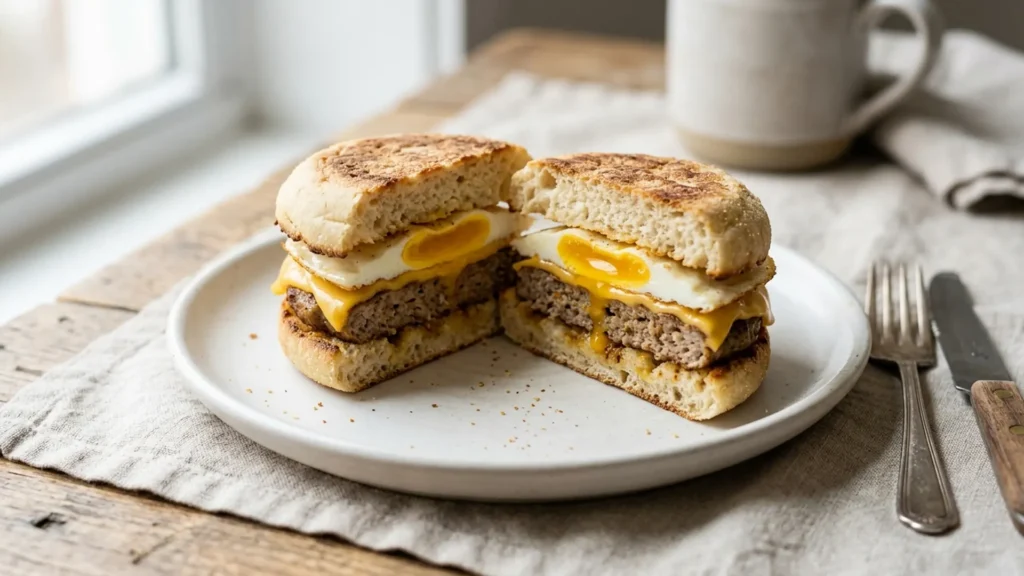
Here are the Sausage Egg McMuffin nutrition facts at a glance: McDonald’s Sausage McMuffin with Egg has about 480 calories, 20 grams of protein, 31 grams of fat including 12 grams of saturated fat, 30 grams of carbohydrate, and roughly 830 milligrams of sodium. It is a high protein, high fat breakfast sandwich, and where it lands for you depends mostly on how the fat and sodium fit the rest of your day. The rest of this guide breaks the sandwich down piece by piece and compares it with the lighter options on the same menu.
The Sausage McMuffin with Egg, often called the Sausage Egg McMuffin, stacks a pork sausage patty, a freshly cracked egg, and a slice of cheese on a toasted English muffin. Each part adds something specific to the panel, and understanding that makes it easy to see where the calories and fat come from.
Sausage Egg McMuffin nutrition panel
The values below are for one McDonald’s Sausage McMuffin with Egg, about 164 grams. Exact figures shift slightly by region and over time, so treat these as the standard United States numbers rather than the last word.
| Nutrient | Amount (1 sandwich) | % Daily Value |
|---|---|---|
| Calories | 480 | – |
| Total fat | 31 g | 40% |
| Saturated fat | 12 g | 60% |
| Cholesterol | ~285 mg | 95% |
| Sodium | 830 mg | 36% |
| Total carbohydrate | 30 g | 11% |
| Dietary fiber | 2 g | 7% |
| Protein | 20 g | 40% |
Two numbers stand out for good reasons and one for concern. The 20 grams of protein is genuinely high for a single sandwich and is the main reason it keeps you full. The fat at 31 grams and especially the saturated fat at 12 grams are the lines to watch, since the saturated fat alone is more than half a day’s worth.
Where the calories come from
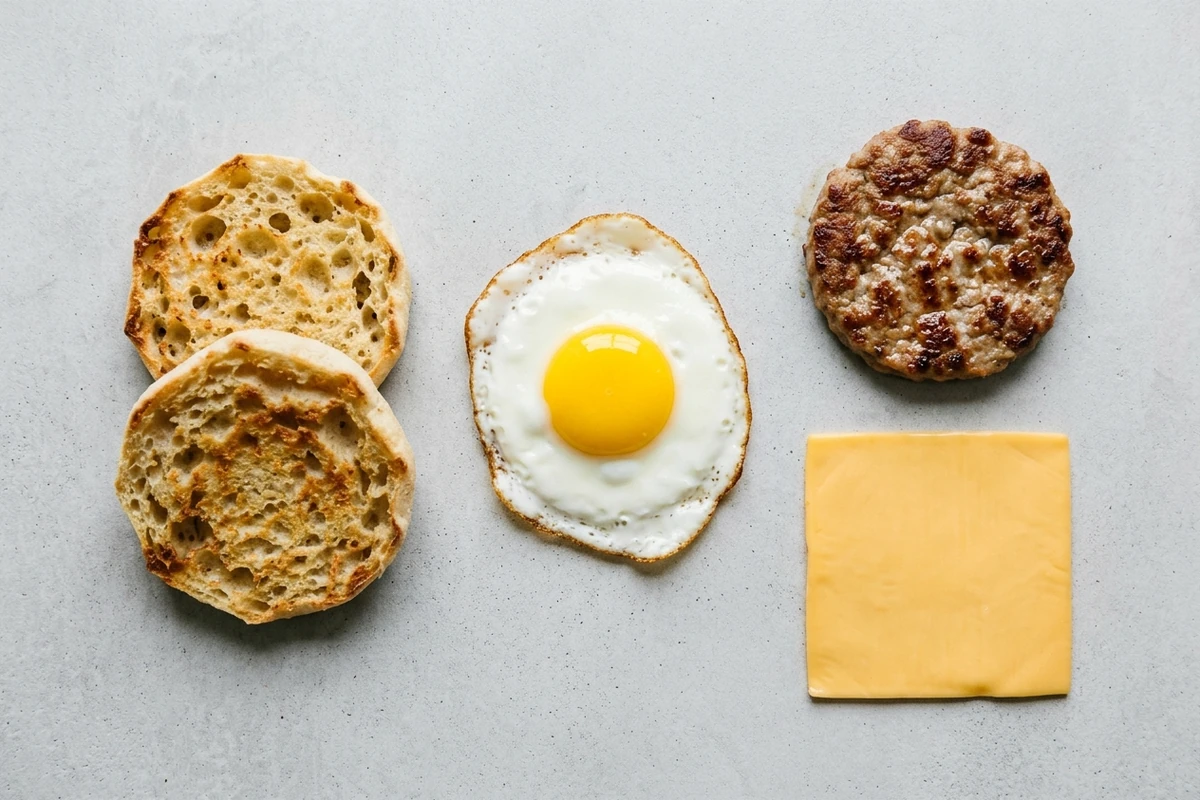
The 480 calories split across three sources. The sausage patty contributes the most, bringing a large share of the fat and saturated fat along with some protein. The egg adds protein and the cholesterol, while the cheese adds fat, sodium, and a little more protein. The English muffin supplies most of the carbohydrate and very little else.
This is why the sandwich is so filling and also why it is calorie dense. The fat from the sausage and cheese carries more than twice the calories per gram of the protein or carbohydrate, so even though the sandwich is not large, it delivers a substantial number of calories. Removing the sausage, as in the plain Egg McMuffin, is the single biggest lever on the total.
The protein: 20 grams
The strongest nutritional point of the Sausage Egg McMuffin is its protein. Twenty grams from the egg, sausage, and cheese is enough to make it a genuinely filling breakfast, which is why many people find it holds off hunger until lunch better than a pastry or a bowl of cereal would. For an on the go breakfast, that protein is the feature worth paying attention to.
The catch is that the protein arrives packaged with a lot of fat. If your goal is high protein with less fat, the plain Egg McMuffin delivers a similar amount of protein for far less fat and fewer calories, which is covered in the comparison below. The protein itself is high quality, coming mostly from the egg and dairy.
Fat, saturated fat, and sodium
The two lines to manage are saturated fat and sodium. At 12 grams, the saturated fat is more than half the amount many guidelines suggest for a whole day, almost all of it from the sausage and cheese. The American Heart Association recommends limiting saturated fat as part of a heart healthy pattern, and a single sandwich uses up a large share of that budget.
Sodium is the other watch point at 830 milligrams, around a third of the daily limit the American Heart Association describes in its daily sodium guidance. Fast food breakfast is a common source of the hidden sodium the Centers for Disease Control and Prevention discusses in its overview of sodium, so if you eat one of these regularly, the sodium is worth keeping in mind across the rest of the day.
How it compares to other McDonald’s breakfast options
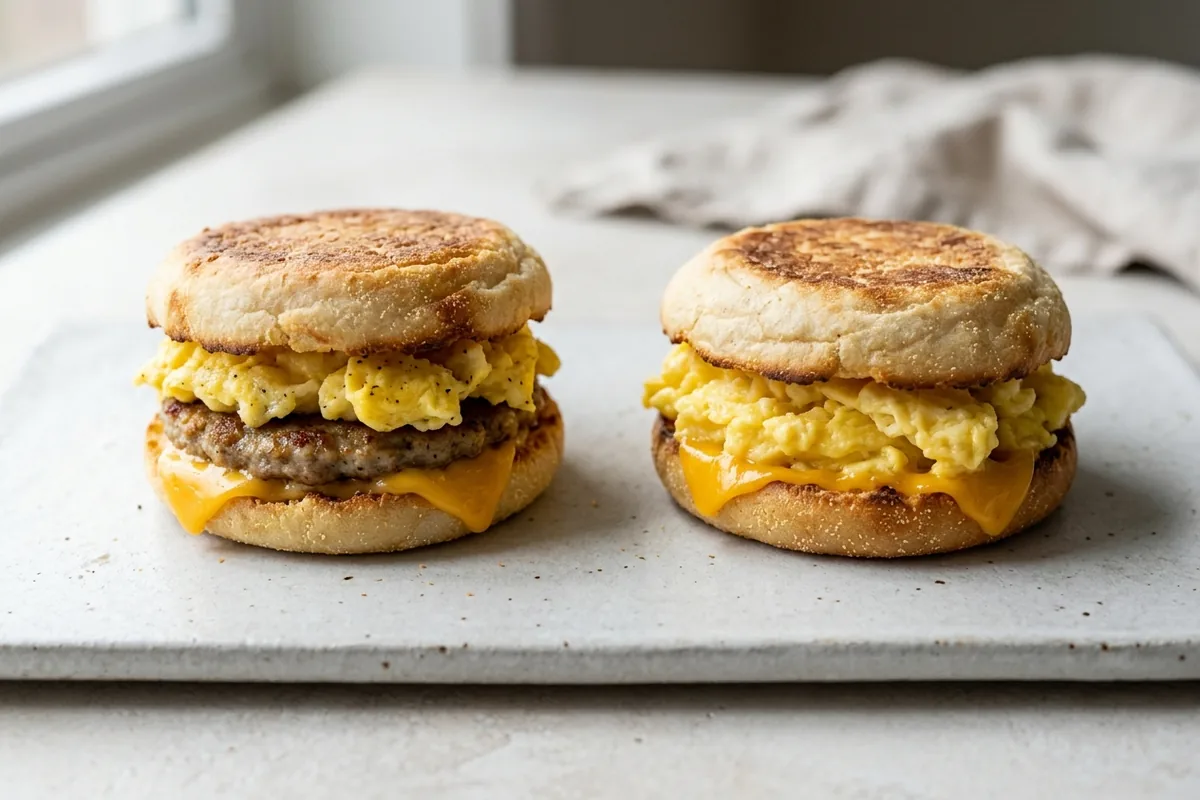
The Sausage Egg McMuffin sits in the middle of the breakfast menu for calories. The comparison below shows how it stacks up against the closest relatives.
| Item | Calories | Protein | Fat | Sodium |
|---|---|---|---|---|
| Sausage McMuffin with Egg | 480 | 20 g | 31 g | 830 mg |
| Egg McMuffin (no sausage) | ~310 | ~17 g | ~13 g | ~770 mg |
| Sausage McMuffin (no egg) | ~400 | ~14 g | ~25 g | ~780 mg |
| Sausage Egg McMuffin, no muffin | ~330 | ~18 g | ~28 g | ~660 mg |
The clearest takeaway is that the plain Egg McMuffin is the lighter choice, with similar protein to the sausage version for around 170 fewer calories and less than half the fat. Dropping the muffin lowers the carbohydrate and sodium but keeps most of the fat, so it helps low carb eaters more than calorie counters. If you would rather make a similar breakfast at home with more control, our network has plenty of ideas, from air fryer breakfast recipes to lower carb keto breakfast recipes.
Is the Sausage Egg McMuffin healthy?
The Sausage Egg McMuffin is a reasonable occasional breakfast rather than an everyday one. The high protein and moderate calorie count are points in its favor, and it is more filling and balanced than many fast food breakfast pastries. The drawbacks are the saturated fat and sodium, which are high enough that eating one daily would crowd a lot of a healthy budget.
As an occasional choice, especially when the rest of the day is lighter, it fits fine. If you want it more often, the plain Egg McMuffin is the smarter default, since it keeps the protein and cuts the fat and calories substantially. Either way, pairing it with water or coffee rather than a sugary drink keeps the total in check.
How to fit it into your day
If you enjoy the Sausage Egg McMuffin, the easiest way to keep it in balance is to plan the rest of the day around its fat and sodium. Because one sandwich uses up a big share of the saturated fat and sodium budgets, lighter, lower salt meals later in the day keep the totals reasonable. Skipping the hash brown and sugary drink that often come with it makes a bigger difference than most people expect.
For a regular breakfast, the plain Egg McMuffin or a homemade version gives you the same satisfying protein with far less fat. Saving the sausage version for an occasional treat, rather than a daily habit, is the simple rule that lets it fit a healthy pattern without much thought.
How to order a lighter Sausage Egg McMuffin
If you like the sandwich but want to trim the numbers, a few simple changes help. Ordering the plain Egg McMuffin instead keeps the protein while cutting roughly 170 calories and more than half the fat. Asking for it without the cheese removes some saturated fat and sodium, and skipping the sausage in favor of just egg is the single biggest lever on the total.
You can also rebuild the sandwich around the muffin. Some people order the egg and cheese on the muffin and add a leaner protein, or drop the top half of the muffin to lower the carbohydrate. None of these turn it into a health food, but they show that the standard sandwich is a starting point you can adjust rather than a fixed choice.
The cholesterol question
The Sausage Egg McMuffin is high in dietary cholesterol, largely from the egg, with a single sandwich providing a large share of what was once the recommended daily limit. Current guidance focuses less on dietary cholesterol in isolation and more on saturated fat, which raises blood cholesterol more directly for most people. That shifts the attention to the sausage and cheese rather than the egg.
For the average person, an occasional Sausage Egg McMuffin is not a cholesterol problem on its own. People who have been advised to watch cholesterol or saturated fat for medical reasons should treat it as an occasional choice and lean toward the plain egg version, which keeps the protein while lowering the saturated fat that matters most.
Making a Sausage Egg McMuffin at home
Recreating the sandwich at home is the best way to keep the taste while controlling the nutrition. A whole grain English muffin adds fiber, a turkey or chicken sausage patty cuts saturated fat, and a fried or poached egg keeps the protein. A thin slice of cheese, or none, brings the sodium and fat down further while preserving most of the flavor.
The homemade version also lets you control the salt, which is where much of the sodium in the fast food sandwich comes from. With a few swaps you can land at a similar protein level for noticeably fewer calories and less sodium. For ready made ideas in this style, our network covers everything from quick air fryer breakfast recipes to lower carb takes among our keto breakfast recipes.
Is it good for high-protein or low-carb eaters?
For high protein eaters, the Sausage Egg McMuffin delivers 20 grams of protein in a portable package, which is genuinely useful on a busy morning. The downside is that the protein comes with a lot of fat, so it is a less efficient protein source than the plain Egg McMuffin or a homemade version built around egg and lean protein.
For low carbohydrate eaters, the sandwich is moderate at 30 grams of carbohydrate, almost all from the English muffin. Ordering it without the muffin drops the carbohydrate sharply while keeping the protein and fat, which is why the no muffin version appeals to that group. As written, though, it is a balanced macro mix rather than a low carb food.
Common myths about the Sausage Egg McMuffin
One common myth is that any fast food breakfast sandwich is equally unhealthy. In fact the menu varies widely, and the plain Egg McMuffin is a genuinely moderate option with strong protein and far less fat than the sausage version. Lumping them together hides a choice that makes a real difference.
Another myth is that the egg is the problem because of its cholesterol. The egg is actually one of the more nutritious parts of the sandwich, supplying high quality protein, while the saturated fat and sodium from the sausage and cheese are the bigger considerations. Blaming the egg leads people to skip the wrong ingredient.
How often is too often?
An occasional Sausage Egg McMuffin fits a healthy pattern without trouble, especially when the rest of the day is lighter and lower in sodium. The concern is frequency. Because one sandwich carries about 60 percent of a day’s saturated fat and a third of the sodium limit, eating one daily would crowd a large share of those budgets before the rest of the day’s meals.
A practical guideline is to treat the sausage version as a once in a while choice and make the plain Egg McMuffin or a homemade sandwich the everyday default. That keeps the satisfying protein in your routine while reserving the heavier sandwich for the mornings when you actually want it, rather than out of habit.
What to drink and pair with it
What you drink alongside the sandwich often matters as much as the sandwich itself. A large sweetened coffee drink or soda can add as many calories and as much sugar as the sandwich, so water, black coffee, or unsweetened tea keeps the meal in check. Skipping the hash brown also removes a chunk of fat, calories, and sodium.
If you want a more balanced breakfast, pairing the sandwich with a piece of fruit adds fiber and nutrients that the sandwich lacks. Small choices around the sandwich, the drink, the side, and any extras, usually make a bigger difference to the overall meal than the sandwich alone, which is worth keeping in mind on a regular order.
A closer look at each ingredient
Breaking the sandwich into its parts makes the panel easy to understand. The egg is the most nutritious component, supplying high quality protein, some vitamins, and the cholesterol. The Canadian style pork sausage patty is the richest part, contributing the bulk of the fat, saturated fat, and a good share of the sodium and calories. The cheese slice adds fat, sodium, and a little protein, while the English muffin provides the carbohydrate and a small amount of fiber.
Seen this way, the sandwich is essentially a protein core wrapped in a refined carbohydrate, with the sausage and cheese driving most of the numbers worth watching. That is why swapping or removing the sausage and cheese changes the panel so dramatically, while the egg and muffin form a relatively moderate base on their own.
The Sausage Egg McMuffin on an active morning
On a morning with a hard workout or a physically demanding day ahead, the sandwich looks better than it does on a sedentary day. The 20 grams of protein support muscle recovery, the carbohydrate from the muffin helps refill energy stores, and the calories are easier to justify when you are burning through them. Context changes how a food fits, and a high output day is where this sandwich makes the most sense.
On a low activity day, the same sandwich is a large share of calories, fat, and sodium for a single meal. The food has not changed, but the way it fits your day has. Matching heavier breakfasts to more active mornings, and lighter ones to quieter days, is a simple way to enjoy it without the numbers piling up.
How regional versions can differ
The exact nutrition of a Sausage McMuffin with Egg can vary by country and over time, since recipes, portion sizes, and ingredients are not identical everywhere. The figures in this guide reflect the standard United States version, which is the most commonly searched. In other markets the calories, fat, and sodium may differ by a modest amount, so the local nutrition information is the right reference if you are outside the United States.
Limited time and regional variations, such as different cheeses or sauces, can also shift the numbers. The core structure of egg, sausage, cheese, and muffin stays the same, so the breakdown in this guide remains a good guide even when a specific figure moves by a little.
Reading the official nutrition information
McDonald’s publishes nutrition information for its menu, and checking it is the surest way to get the current numbers for your location. The figures can update when recipes or suppliers change, so a published panel is more reliable than memory for anyone tracking intake closely. It also lets you compare the full breakfast menu side by side before you order.
When you read it, focus on the same lines this guide highlights: calories, protein, saturated fat, and sodium. Those four tell you most of what you need to know about how a breakfast item fits your day, and comparing them across the menu makes the lighter choices easy to spot before you decide.
The bottom line on the Sausage Egg McMuffin
Taken together, the Sausage Egg McMuffin is a filling, protein rich breakfast that works best as an occasional choice rather than a daily one. The 20 grams of protein and 480 calories are reasonable for a satisfying meal, but the 12 grams of saturated fat and 830 milligrams of sodium are the lines that argue against eating it every morning. None of that makes it a bad food, only one to fit thoughtfully into the week.
If you remember one thing, let it be the comparison with the plain Egg McMuffin, which keeps almost all of the protein for far less fat and around 170 fewer calories. Choosing that as your everyday default and saving the sausage version for when you really want it is the simplest way to enjoy this breakfast without the numbers adding up against you.
Frequently Asked Questions
How many calories are in a Sausage Egg McMuffin?
A McDonald’s Sausage McMuffin with Egg has about 480 calories. The plain Egg McMuffin without sausage has about 310 calories, making it the lighter choice on the menu.
How much protein is in a Sausage Egg McMuffin?
It has about 20 grams of protein, which is high for a single breakfast sandwich. The protein comes mostly from the egg, cheese, and sausage and is the main reason it is filling.
Is the Sausage Egg McMuffin healthy?
It is fine as an occasional breakfast. The protein is a plus, but the 12 grams of saturated fat and 830 milligrams of sodium are high, so it is best not eaten daily. The plain Egg McMuffin is a lighter everyday option.
How much sodium is in a Sausage Egg McMuffin?
It has about 830 milligrams of sodium, roughly a third of the daily limit many guidelines suggest. Fast food breakfast is a common source of sodium, so it is worth accounting for across the day.
What is the lowest calorie McMuffin?
The plain Egg McMuffin is the lowest calorie McMuffin at about 310 calories, with similar protein to the sausage version but less than half the fat. It is the better pick for an everyday breakfast.