Starbucks nutrition information for a Grande Iced Caffe Latte comes down to two numbers most people never see up front: 130 calories and 11 grams of sugar. The official pages have them. They just make you dig.
Every drink hides behind its own click. Calories sit on one page, allergens on another, and the milk you actually order rarely matches the default the number was built on. Sort out the pattern once and you never have to hunt again.
Quick answer: Starbucks nutrition information is published per item on the company’s official menu pages and beverage fact sheets, not in one master chart. The most-ordered drinks are small once you strip the whipped cream and syrup: a Grande Iced Caffe Latte runs 130 calories with 11 grams of sugar, while a Nitro Cold Brew sits at 5 calories and 0 grams of sugar. Milk choice, syrup pumps, and size move every figure. The calorie count on the drive-thru board is there because federal rules force chains to post it, not because the company volunteered it.
How to read starbucks nutrition information without the click maze
There is no master chart. Every Starbucks drink and food item carries its own official page with calories, sugar, fat, protein, and allergen lines, which is why a simple question turns into six clicks. The company posts figures per item and refreshes them when recipes change, so a screenshot from two years ago can be wrong by a full syrup pump. Start with the item, pick the exact size, then set the milk before you trust a single number. The default listing usually assumes 2% milk and a standard number of pumps. Change either and the calories move. Size matters more than most people expect, since a Venti is not simply a scaled-up Grande in every recipe. The board at the register shows calories because the law says it must.
That legal push comes from the U.S. Food and Drug Administration (FDA). Chain restaurants with 20 or more locations have to disclose the number of calories in standard menu items directly on menus and menu boards. That single rule is why the calorie figure follows you into the drive-thru lane.
What the board leaves out is almost everything else. Sugar, sodium, and protein do not have to appear next to the price, so the deeper macros still live online. If you have ever squinted at a can and tried to reverse-engineer what a serving really means, the same skill transfers; the way how the Monster Energy label reads breaks down per-serving math carries straight over to a cup with three pumps of syrup.
The full text of what chains must post sits in the FDA’s menu-labeling requirements, and reading it once tells you exactly what the board is and is not obligated to reveal. For anything the board omits, dietitians cross-check brand claims against the food composition datasets the U.S. Department of Agriculture (USDA) maintains, which is the neutral reference behind most third-party calorie apps. Trust the item page for the recipe. Trust the USDA reference when you want to sanity-check a suspicious number.
The Grande Iced Caffe Latte and the numbers that actually stick
A Grande Iced Caffe Latte is the reference point because its figures are clean and public: 130 calories and 11 grams of sugar in the 16-ounce size, with the sugar coming from the milk rather than added syrup. That makes it a useful yardstick. Order anything sweeter and you are stacking on top of that 11-gram floor; order it plain and cold and you drop well below it. The number traces to the Beverage Health and Wellness Fact Sheet the company publishes, which is the same document behind most of the reliable macros floating around. Two things move it fast. Swap 2% milk for whole and the fat climbs; swap for a plant milk and both fat and sugar shift. Sit with that one drink long enough and the rest of the menu starts to make sense.
The broader starbucks nutritional information people quote online mostly traces back to that fact sheet and to Starbucks’ own food-quality commitments, which together are the closest thing to a primary source you will find. Anchor yourself to those four public figures and the rest follows.

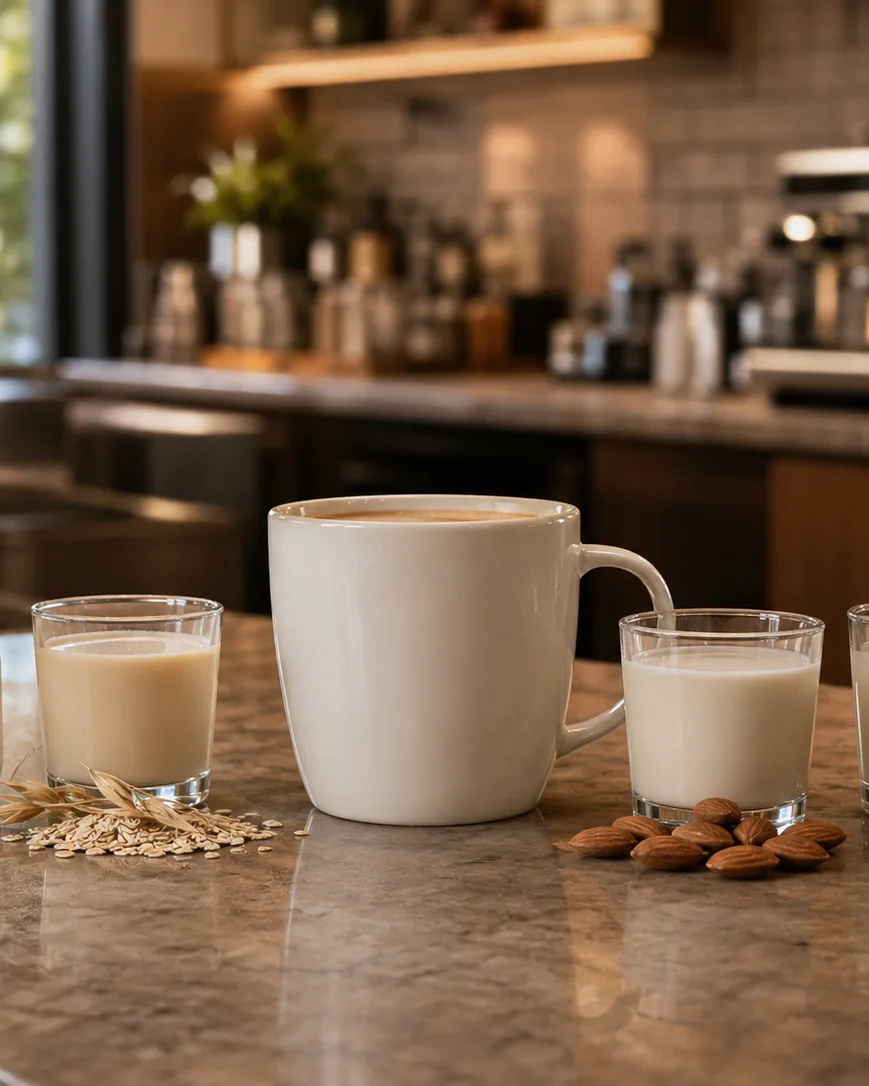
The milk swap: 2%, oat, almond, and soy on the same cup
Milk is the single biggest lever on a Starbucks cup, and it is the one the default number hides. Most listed figures assume 2% milk. Switch it and you are ordering a different drink, nutritionally, even if the cup looks identical. Whole milk pushes fat and calories up. Nonfat strips the fat but keeps the milk sugar. Almond milk usually lands lowest on calories, oat milk tends to carry more carbohydrate and a rounder body, and soy milk sits closest to dairy on protein. The exact deltas depend on the drink, the size, and how many pumps ride along, which is why the honest move is to pull the specific item page and compare milks side by side. One concrete anchor helps: the Caramel Macchiato Inspired Non-Dairy Creamer, a home product built from almond and oat milk, lists 30 calories, 1 gram of total fat, and 0 grams of protein per tablespoon.
Here is the direction each swap pushes, holding everything else steady:
- Whole milk: the most fat and calories of the dairy options, richest body.
- 2% milk: the default that most published numbers already assume.
- Nonfat milk: cuts the fat, keeps the lactose sugar.
- Almond milk: usually the lowest-calorie swap on the board.
- Oat milk: creamier, tends to bring more carbohydrate.
- Soy milk: the plant option closest to dairy on protein.
If you want to see how a milk carton reports its own macros before you compare it to a latte, a closer look at cow milk labels shows what the fat and sugar lines mean per serving. Keep one caveat in mind. That 30-calorie-per-tablespoon creamer figure is a grocery product, not the barista milk poured behind the counter, so it is a directional guide, not a stand-in for the in-store number. When the exact figure matters, the per-drink page wins.
Starbucks syrup nutrition information, pump by pump
Syrup is where the sugar hides, and starbucks syrup nutrition information is the part the headline calorie count rarely spells out on its own. Standard flavor syrups, vanilla and caramel among them, are sweetened, so every pump adds sugar and calories on top of whatever the milk already brings. The Grande Iced Caffe Latte’s 11 grams of sugar is a milk-only baseline; a flavored version stacks syrup sugar above it. Sugar-free syrups exist for exactly this reason. They swap the sweetener, which is how the Sugar-Free Vanilla Protein Latte keeps its sugar down while still tasting sweet. The catch is that pump counts scale with size, so a Venti carries more pumps than a Tall by default, and the sugar climbs with them. If you are watching sugar, the syrup line moves more per pump than the milk line moves per ounce.
For context on why that added-sugar line matters, the Centers for Disease Control and Prevention (CDC) tracks added sugars as a national dietary concern, and cutting pumps is the fastest way to bring a sweet drink back toward the milk-only floor. Ask for half the syrup and you split that added portion cleanly. Ask for sugar-free and you move the sweetness off the sugar line entirely. Neither changes the milk underneath, which is the point worth remembering: syrup and milk are two separate dials, and you can turn one without touching the other.
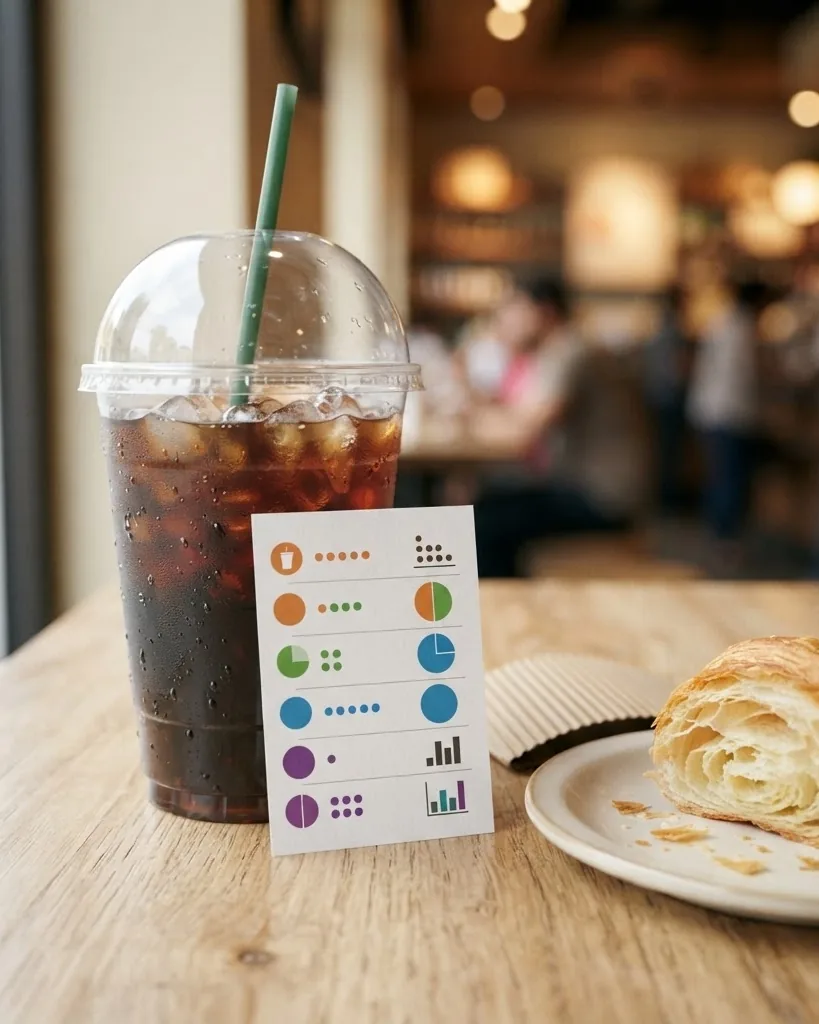
Nitro Cold Brew and the sub-10-calorie orders
Nitro Cold Brew is the counterexample to every high-calorie Frappuccino story. A standard 12 to 16 fl oz pour lists 5 calories and 0 grams of sugar, which puts it beside black drip coffee and unsweetened iced tea in the near-zero tier. Nothing is added; the nitrogen builds a creamy head without cream. That makes it the anchor of any low-calorie order. Keep it black and you are drinking almost nothing but coffee. Add a splash of milk and you add a small, countable amount. Drop in one pump of standard syrup and you have left the sub-10-calorie tier entirely. The pattern holds across the cold-coffee lineup: the base is tiny, and everything requested on top is the real count. Order the base first, then decide, one addition at a time, what earns its calories.
Protein Latte math: where 27 grams of protein comes from
The Sugar-Free Vanilla Protein Latte is built to answer one question: how do you get real protein into a coffee without a sugar spike? The Grande delivers 27 grams of protein, and the source matters. It uses whey protein isolate, a fast-digesting dairy protein fraction, blended with sugar-free vanilla syrup so the sweetness does not drag sugar up with it. That combination is why the drink reads high on protein and low on sugar at the same time, a pairing most coffee-shop orders cannot claim. Twenty-seven grams is a meaningful number; it lands in the range of a small meal’s worth of protein, which is why the fitness-minded corner of the menu leans on it. The trade is that you are relying on an isolate rather than whole-food protein, and the flavor is engineered around the sugar-free syrup rather than sugar.
The full listing, including the exact size and preparation, sits on the official Protein Latte listing, which is where the 27-gram figure is published rather than estimated. Treat that page as the source and the fitness-blog paraphrases as commentary.
For a plain-language reference on how much protein a day actually calls for, nutrition.gov, the federal nutrition portal, aggregates the government’s dietary guidance without the supplement-industry spin. Read it and 27 grams stops feeling abstract. It becomes a fraction of a daily target you can actually plan a morning around, which is more useful than any single drink’s headline.
Starbucks oatmeal nutritional information and the rest of the food case
Starbucks oatmeal nutritional information lives on the same per-item pages as the drinks, and the food case follows the rule the beverages already taught: the base is one thing, and the toppings are another. The oatmeal is sold as a build, so the number you care about depends on whether you add the brown sugar, the dried fruit, or the nut medley served alongside it. Skip the sugar packet and the oats are close to their plain cooked value; empty all three toppings in and you have changed the profile completely. The wider food case runs the same way. Protein boxes, breakfast sandwiches, and bakery items each carry their own listing, and the bakery end is where sugar and saturated fat concentrate. There is no shortcut chart for the food case. The only reliable move is to pull the specific item and read its own line.
The macros are published per item, and the U.S. Department of Agriculture standards behind the base ingredients are what most calorie apps map those items to. That is why two apps can disagree by a few calories on the same sandwich: they are estimating from a database, while the official page is stating the actual build.
One practical habit beats memorizing anything. Before you order food, decide whether you want the base or the loaded version, then read only the line that matches. A protein box eaten as sold is a different number from the same box with the crackers and honey. The listing tells you both; you just have to look at the one you will actually eat.
Allergens and the shared-equipment reality
Allergen information is the part of a Starbucks cup you cannot read off the calorie line, and it deserves its own look. Every official item page carries an allergen statement, but the harder truth is cross-contact: espresso machines, blenders, and steaming wands are shared, so a drink built without a listed allergen can still pick up traces from the cup beside it. The statement tells you what is in the recipe. It cannot promise what the equipment did ten seconds earlier. FoodSafety.gov, the federal food-safety portal run by the Department of Health and Human Services, is the plain-language reference for what cross-contact means and why a shared surface matters for a real allergy. If a reaction is a genuine risk, treat the allergen line as a starting point, flag the allergy to the barista, and approach any shared-equipment drink with caution.
Frequently asked questions about Starbucks nutrition
How many calories are in a Grande Iced Caffe Latte?
A Grande Iced Caffe Latte in the 16-ounce size lists 130 calories and 11 grams of sugar, according to the company’s Beverage Health and Wellness Fact Sheet. The sugar comes from the milk, not added syrup, so a plain version is close to its floor. Any flavor syrup stacks on top of both numbers.
Which Starbucks drink has almost no calories?
A standard Nitro Cold Brew, poured at 12 to 16 fl oz, lists just 5 calories and 0 grams of sugar. Nothing is added; the nitrogen creates a creamy head without cream. That puts it beside black drip coffee and unsweetened iced tea as one of the lowest-calorie orders on the whole board.
How much protein is in the Sugar-Free Vanilla Protein Latte?
The Grande Sugar-Free Vanilla Protein Latte delivers 27 grams of protein. It builds that number from whey protein isolate, a fast-digesting dairy protein, blended with sugar-free vanilla syrup so the sweetness does not raise the sugar count. The official product page publishes the figure directly rather than leaving it to an estimate.
Does switching to almond or oat milk change the numbers?
Yes. Milk is the biggest lever on any drink, and most listed figures assume 2% milk. Almond milk usually lowers calories, oat milk tends to add carbohydrate, and soy milk sits closest to dairy on protein. The company’s home creamer lists 30 calories per tablespoon as a rough anchor, but always check the specific per-drink page for the exact swap.
Why does Starbucks show calories on the menu board?
Because federal rules require it. The U.S. Food and Drug Administration mandates that chain restaurants with 20 or more locations disclose the number of calories in standard menu items directly on menus and menu boards. That rule covers calories only, which is why sugar, sodium, and protein still live on the individual online item pages instead of the board.
Where do I find starbucks oatmeal nutritional information?
On the individual official item page for that build, the same place the drinks list their macros. The oatmeal is sold as a base plus toppings, so the number shifts depending on whether you add the brown sugar, dried fruit, or nut medley. There is no combined food chart; you read the single item’s own line for an accurate figure.
The cheat sheet worth saving
The whole starbucks menu nutrition information puzzle comes down to a short checklist you can run in line. Pick the item. Lock the size. Set the milk. Count the syrup pumps. Everything else is detail. The four numbers worth memorizing are the anchors: a Grande Iced Caffe Latte at 130 calories and 11 grams of sugar, a Nitro Cold Brew at 5 calories and 0 grams of sugar, a Sugar-Free Vanilla Protein Latte at 27 grams of protein, and the home creamer at 30 calories per tablespoon. Those give you a floor, a near-zero option, a protein play, and a feel for how fast add-ons stack. If you want proof that one figure can read two ways depending on the serving you pick, why serving size shifts the Fruit Loops numbers shows the exact trap, and it is the same one that quietly turns a small latte into a large on the sugar line.