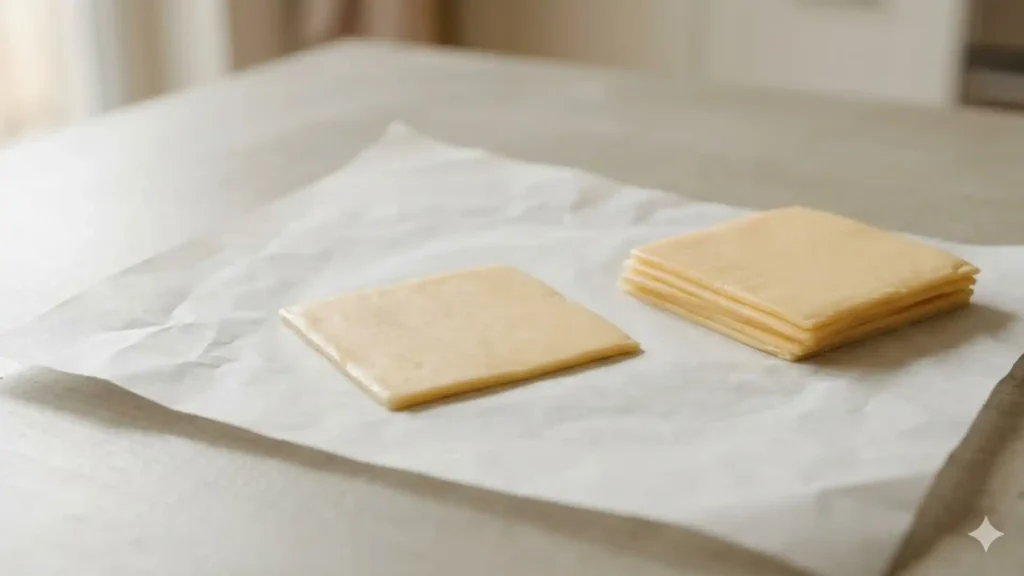
If you have ever stood at the deli counter or stared at a stack of plastic-wrapped singles in the fridge door, you have probably wondered what one slice of American cheese actually does to your day. The short answer is that a single slice of American cheese carries roughly 60 to 70 calories, about 5 to 6 grams of fat (3 to 4 grams of it saturated), close to 4 grams of protein, around 1 gram of carbohydrate, and somewhere between 220 and 280 milligrams of sodium. The exact numbers move around depending on the brand and whether you are eating a thin individually wrapped single or a thick cut from the deli case, but those figures cover the overwhelming majority of what most American households keep on hand.
I have spent a fair amount of time reading the small print on cheese wrappers, and the thing that surprises people most is not the calories. It is the sodium and the gap between a “cheese product” and a true cheese. So this guide does two things. First, it gives you the full nutrition panel for a typical slice and shows how the popular brands compare side by side. Second, it explains why American cheese is built the way it is, where it earns its keep in a balanced diet, and where you may want to pump the brakes. No scare tactics, just the label decoded the way I would explain it to a friend in my own kitchen.
American Cheese Slice Nutrition Facts at a Glance
Let us start with the panel itself. The table below reflects a standard single slice in the 19-gram range, which is what you get from the most common grocery brands. If you cut your slice from a deli block, expect a 1-ounce (28-gram) piece, which runs noticeably higher across the board because it is simply a larger and often richer piece of cheese.
| Nutrient | Amount per slice (19 g) | % Daily Value* |
|---|---|---|
| Calories | 60-70 kcal | – |
| Total fat | 5-6 g | 7-8% |
| Saturated fat | 3-4 g | 18-20% |
| Trans fat | 0 g | – |
| Cholesterol | 15-20 mg | 5-7% |
| Sodium | 220-280 mg | 10-12% |
| Total carbohydrate | 1-2 g | 0-1% |
| Total sugars | 1-2 g | – |
| Protein | 3-4 g | 6-8% |
| Calcium | 100-150 mg | 8-12% |
*Percent Daily Values are based on a 2,000-calorie diet and rounded to typical label ranges. Exact values vary by brand; always read the panel on your package.
A few things jump out. The carbohydrate count is tiny, usually a gram or two, which is why American cheese shows up so often in low-carb and keto snacks rotations. The protein is modest but real, and the calcium contribution is genuinely useful. The number worth circling is sodium: even a single thin slice delivers around a tenth of a full day’s recommended sodium ceiling, and most people do not stop at one slice.
Before going deeper, it helps to know what you are actually holding. American cheese was created in the early twentieth century as a way to make cheese that would not crumble, mold, or separate the way aged cheese does. Manufacturers take real cheese, most often a blend of cheddar and colby, melt it down, and add emulsifying salts so the fat and water stay locked together in a smooth, uniform slab. That process is the whole point: it gives you a cheese that melts into a glossy, even layer every single time, that survives weeks in the fridge, and that costs a fraction of an aged wheel. Everything on the nutrition panel flows from that design choice, including the sodium that makes the emulsification and preservation work.
Calories, Macros, and Micros Broken Down
Numbers in a table are easy to skim past, so here is what each line actually means once it is on your sandwich.
Calories
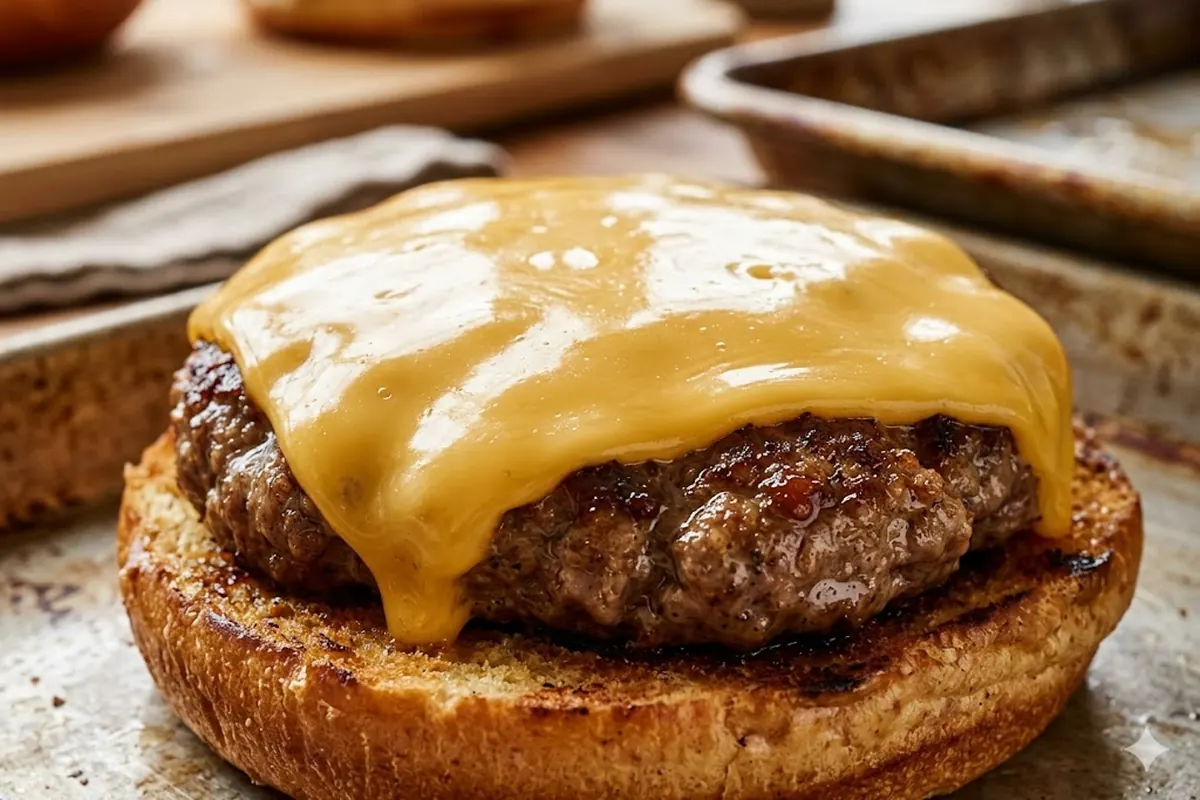
At roughly 60 to 70 calories for a standard single, American cheese is not a calorie bomb on its own. The energy comes almost entirely from fat and a small amount of protein, since there is barely any carbohydrate to speak of. Two slices melted onto a burger add about 120 to 140 calories, which is meaningful but hardly the headline of the meal. A 1-ounce deli slice creeps closer to 100 calories because it is a bigger, fattier piece. If you are tracking intake, the practical rule is simple: count the slices, not the brand hype.
Fat and saturated fat
This is the macro that does the heavy lifting. A single slice carries about 5 to 6 grams of total fat, and 3 to 4 grams of that is saturated. Saturated fat is the type health authorities ask most people to limit, because diets high in it are associated with higher LDL cholesterol over time. One slice is not a problem; the issue is the stack. A grilled cheese with two slices, a cheeseburger with a double layer, and a handful of crackers topped with singles throughout the day add up faster than the label on any one slice would suggest. The dietary guidelines generally recommend keeping saturated fat under about 20 grams a day on a 2,000-calorie pattern, so a couple of slices is a fair-sized chunk of that allowance.
Protein
You get roughly 3 to 4 grams of protein per slice, and it is complete protein, meaning it contains all nine essential amino acids your body cannot make on its own. That is a genuine plus, the same quality of protein you would get from the dairy in a glass of milk. It will not make American cheese a protein powerhouse the way Greek yogurt is, but it is a useful contribution, especially layered into a meal. If you want a far denser dairy protein source, the protein-per-calorie ratio in something like Oikos Triple Zero yogurt is in a different league, but cheese and yogurt are doing different jobs on your plate.
Carbohydrates and sugar
American cheese is nearly carb-free, typically 1 to 2 grams per slice, and the small amount of sugar present is lactose, the natural sugar in milk, not added sweetener. There is no fiber. For anyone counting net carbs, a slice barely moves the needle, which is exactly why it is a fixture in low-carb eating.
Sodium
Here is the line that deserves the most attention. A single slice carries roughly 220 to 280 milligrams of sodium, and deli-cut slices can push past 400 milligrams. The salt is not incidental; it is part of how processed cheese is made and preserved, and it is a big reason the stuff melts and keeps so well. The American Heart Association recommends most adults aim for no more than 2,300 milligrams of sodium a day and ideally move toward 1,500 milligrams. The Centers for Disease Control and Prevention notes that the average American already eats well above that, and that much of it hides in processed and restaurant foods rather than the salt shaker. American cheese is a textbook example of that hidden salt.
Calcium and other micronutrients
The micronutrient story is mostly good. A slice supplies around 100 to 150 milligrams of calcium, which is roughly 8 to 12 percent of the daily target, plus smaller amounts of phosphorus, zinc, vitamin A, and vitamin B12. Calcium matters for bone strength, nerve signaling, and muscle function, and MedlinePlus points out that dairy is one of the most reliable everyday sources of it. So while American cheese is not a health food, it does pull real nutritional weight in the calcium column.
How Brands and Cuts Compare
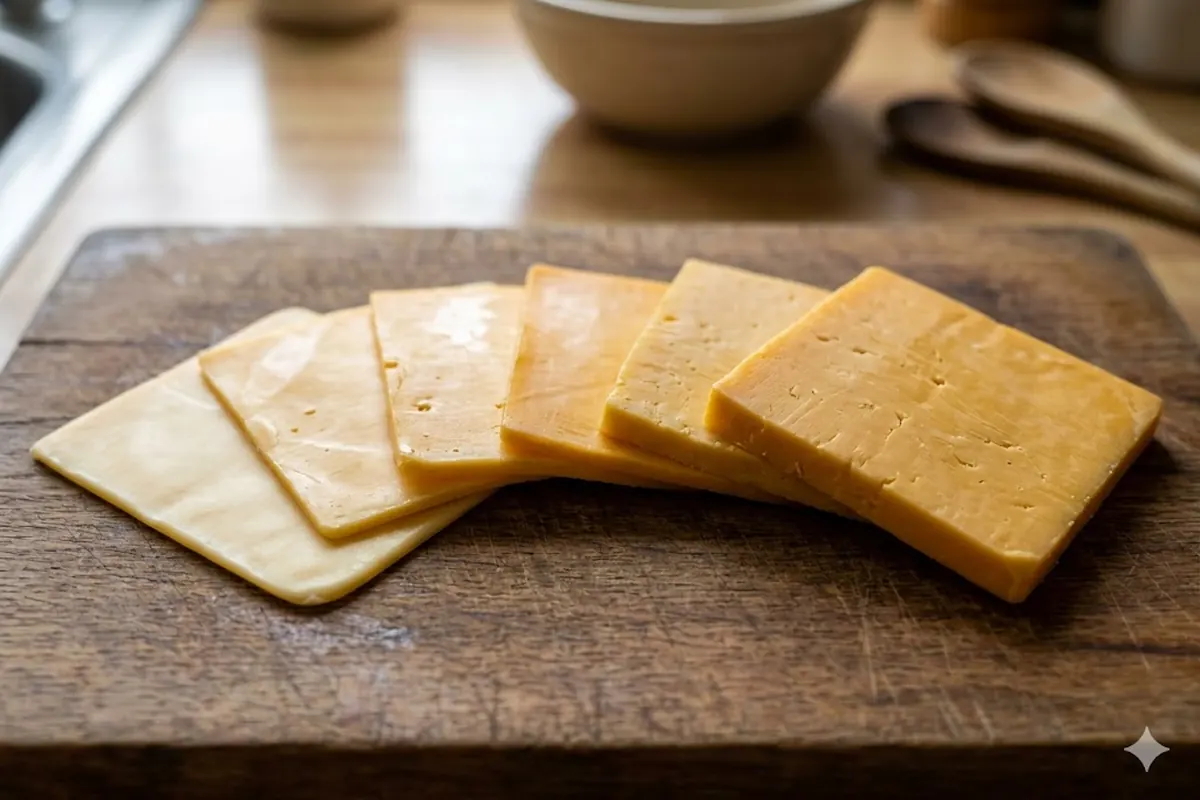
“American cheese” is a category, not a single product, and the differences between brands are larger than most people expect. The biggest split is between a true pasteurized process cheese and a pasteurized process cheese product or cheese food. The first is real cheese that has been melted and blended with emulsifiers so it stays smooth and sliceable. The second contains less actual cheese (sometimes below the legal threshold to be called cheese at all) and leans more on milk derivatives, whey, and emulsifying salts. That single distinction is why a Kraft Single weighs in lighter on fat and calories than a richer deli-style slice, and why the labels read so differently.
| Brand / type | Serving | Calories | Sat fat | Sodium | Protein |
|---|---|---|---|---|---|
| Kraft Singles (process cheese product) | 1 slice (19 g) | 50 | 2 g | 220 mg | 2.5 g |
| Kraft Deli Deluxe (real process cheese) | 1 slice (22 g) | 70 | 4 g | 290 mg | 4 g |
| Land O Lakes White American (deli) | 1 oz (28 g) | 100 | 5 g | 410 mg | 5 g |
| Store-brand American singles | 1 slice (19 g) | 60-70 | 3-4 g | 230-260 mg | 3-4 g |
| Boars Head American (deli) | 1 oz (28 g) | 100 | 5 g | 370 mg | 5 g |
The takeaway is that the thin, individually wrapped singles are the lightest option per slice, largely because they are smaller and contain less fat overall. The deli-counter slices and “deluxe” lines are closer to eating real cheese, with more fat, more protein, and usually more sodium. Neither is wrong; they are just built for different jobs. Singles melt into a uniform, glossy layer that no aged cheese can match, which is exactly why diner-style burgers and the classic American grilled cheese rely on them.
American Cheese Versus Other Common Cheeses
To put a slice in context, it helps to line American cheese up against the other cheeses most people keep around. The values below are per 1-ounce (28-gram) serving so the comparison is apples to apples.
| Cheese (1 oz / 28 g) | Calories | Sat fat | Sodium | Protein | Calcium |
|---|---|---|---|---|---|
| American (process slice) | ~100 | 5 g | ~450 mg | 5 g | ~23% DV |
| Cheddar | ~115 | 6 g | ~185 mg | 7 g | ~20% DV |
| Swiss | ~110 | 5 g | ~55 mg | 8 g | ~22% DV |
| Mozzarella (low-moisture) | ~85 | 5 g | ~180 mg | 6 g | ~15% DV |
| Provolone | ~100 | 5 g | ~250 mg | 7 g | ~21% DV |
Two patterns stand out. First, American cheese is not unusually high in calories or fat compared with cheddar or provolone; on a per-ounce basis it is roughly in the same neighborhood. Second, it is dramatically higher in sodium than Swiss or mozzarella. Swiss in particular is one of the lowest-sodium cheeses you can buy, so if you love the melt of American but want to dial back the salt, a slice of Swiss or low-moisture mozzarella on the same sandwich is a meaningful swap. For the protein-minded, Swiss and cheddar edge out American slightly while delivering far less sodium.
Portions: What One Slice Really Contributes to Your Day
The honest way to judge any food is to set it against your daily totals rather than judging the slice in isolation. Here is how a single standard American slice stacks up against common adult reference points.
| Daily reference | Adult target | One American slice contributes |
|---|---|---|
| Sodium (FDA/AHA limit) | 2,300 mg (ideal 1,500 mg) | ~250 mg (about 11%) |
| Saturated fat | ~20 g (on a 2,000-cal diet) | ~3-4 g (about 18%) |
| Calcium | 1,000-1,200 mg | 100-150 mg (about 8-12%) |
| Protein | 46-56 g | 3-4 g |
Read that table the way I do: one slice is a fine, ordinary part of a meal. It is the cumulative load across a day that decides whether American cheese is helping or hurting. If your sandwich at lunch has two slices, your kid’s grilled cheese borrows two more, and dinner is a cheeseburger, you are well past 1,000 milligrams of sodium from cheese alone before you have touched the bread, condiments, or sides. None of that is a reason to banish American cheese; it is a reason to be honest about the running total. The USDA FoodData Central database is the most reliable place to look up the exact figures for the specific brand in your fridge, because branded entries are submitted straight from the manufacturer.
Where American Cheese Earns Its Place, and Where to Watch It
I am not in the business of demonizing food, and American cheese has genuine virtues. It is an inexpensive, shelf-stable source of complete protein and calcium. It melts more smoothly than almost any natural cheese, which makes it the right tool for a true diner grilled cheese, a smashburger, or a quick cheese sauce that will not break. Because it is nearly carb-free, it slots cleanly into low-carb and keto plans, often as a quick fold-up snack or wrapped around a pickle.
The watch-outs are sodium and saturated fat, especially for anyone managing blood pressure or heart health, and the long ingredient list on the more heavily processed singles. If the back of the package reads more like a chemistry set than a cheese, that is your cue that you are buying a cheese product rather than cheese. For everyday eating, the move is moderation and pairing: enjoy a slice or two, lean on lower-sodium cheeses when you want more, and balance it with whole foods across the day. A slice of American on a turkey sandwich is a perfectly sound lunch; four slices melted over a plate of easy pasta turned into a baked macaroni is a treat, not a Tuesday staple.
A practical way to keep American cheese in your rotation without letting the sodium creep is to think in terms of swaps and stacking. If a recipe calls for two slices and one will carry the flavor, use one. If you are making a sandwich that already includes salty cured meat, pickles, or a salty sauce, that is the moment to reach for a lower-sodium cheese rather than piling on more salt. Pair the cheese with foods that bring something the cheese lacks, such as fresh vegetables, fruit, or a fiber-rich whole grain bread, so the meal is more than fat and salt. And read the panel on the brand you actually buy, because the range across products is wide enough that two slices of one brand can carry nearly twice the sodium of two slices of another. Small habits like these let you keep the convenience and the melt you love while keeping the daily numbers where you want them.
It is also fair to acknowledge what American cheese is not. It is not an aged, complex cheese with the depth of a sharp cheddar or a nutty gruyere, and it was never meant to be. It is a workhorse: dependable, cheap, and engineered for melt. Judged on those terms it does its job better than almost anything else in the dairy case. The trouble only starts when a convenience food quietly becomes a daily default. Used with intention, a slice of American cheese is a reasonable, even useful, part of an ordinary American diet.
It is also worth keeping perspective on where American cheese sits in the broader fast-food landscape. The two slices on a classic quarter-pound burger are a small fraction of that meal’s totals; if you want to see how the full sandwich adds up, our breakdown of the Big Mac nutrition facts shows how the cheese, the patties, the bun, and the sauce stack into the final numbers. And if you are deciding between cheese on a sandwich and a glass of milk for your calcium, the nutrition facts for 2% milk are a useful counterpoint, since milk delivers calcium and protein with far less sodium and saturated fat per serving.
Frequently Asked Questions
Is American cheese real cheese?
It depends on the label. A product labeled “pasteurized process American cheese” is made from real cheese that has been melted and blended with emulsifiers, so it counts as cheese. A “pasteurized process cheese product” or “cheese food,” which describes many of the thin individually wrapped singles, contains less actual cheese plus milk derivatives and emulsifying salts, and legally cannot be called cheese on its own. Reading the exact wording on the front of the package tells you which one you have.
How many calories are in one slice of American cheese?
A standard 19-gram single runs about 60 to 70 calories, while a lighter “cheese product” single like a Kraft Single can be as low as 50 calories. A thicker 1-ounce deli slice climbs to roughly 100 calories. The calories come almost entirely from fat, with a small amount from protein.
Why is American cheese so high in sodium?
Salt is built into how processed cheese is made. Emulsifying salts give it that smooth, even melt, and sodium also acts as a preservative that extends shelf life. That is why a single slice can carry 220 to 280 milligrams of sodium or more. If you are limiting salt, Swiss and low-moisture mozzarella are far lower-sodium alternatives that still melt well.
Is American cheese OK on a keto or low-carb diet?
Yes, in moderation. With only about 1 to 2 grams of carbohydrate per slice and no added sugar, American cheese fits comfortably into keto and low-carb eating, which is why it shows up so often in quick fat-and-protein snacks. The thing to monitor is not carbs but sodium and saturated fat across the whole day, not the slice by itself.