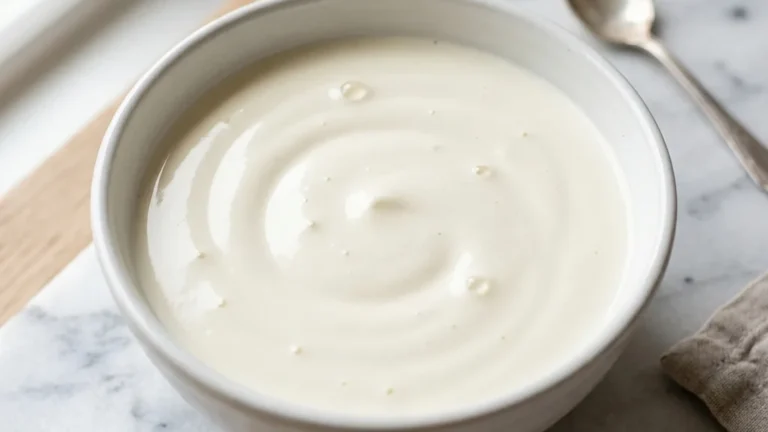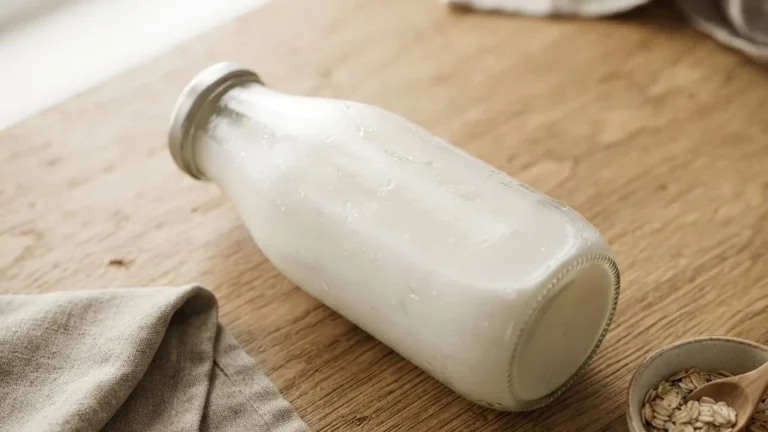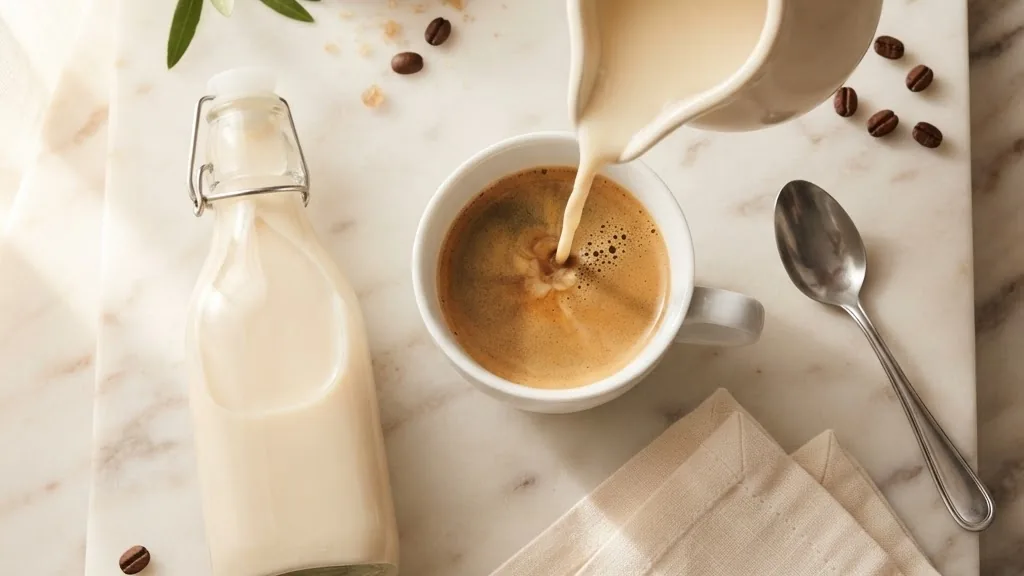
The half and half nutrition facts for a standard 2 tablespoon serving come to about 40 calories, 3.5 grams of fat, 1.3 grams of carbohydrates, and just under 1 gram of protein. That small pour is what most people add to a cup of coffee, and on its own it is a modest amount of calories and fat. The numbers add up quickly, though, if you pour heavily or use it by the cup in cooking. This guide breaks down the full label, converts it from a splash to a cup, compares it with milk and heavy cream, and explains how the fat-free version trades its fat for added carbohydrates.
Half and half nutrition facts at a glance
Here are the numbers for both the regular and fat-free versions, measured at the standard 2 tablespoon (30 milliliter) serving printed on the carton. The difference between the two is larger than most people expect, which is why both are shown side by side.
| Nutrient (per 2 tbsp) | Regular | Fat-free |
|---|---|---|
| Calories | About 40 | About 20 |
| Fat | About 3.5 g | 0 g |
| Saturated fat | About 2 g | 0 g |
| Carbohydrates | About 1.3 g | About 3 g |
| Protein | About 0.9 g | About 1 g |
| Cholesterol | About 11 mg | Very low |
| Sodium | About 20 mg | About 40 mg |
The headline is that regular half and half gets most of its 40 calories from fat, while the fat-free version cuts the calories in half but raises the carbohydrates by swapping fat for thickeners and sweeteners. The USDA (FoodData Central) lists these reference values, and they line up closely with what you will see on a carton label.
What the creamer actually is
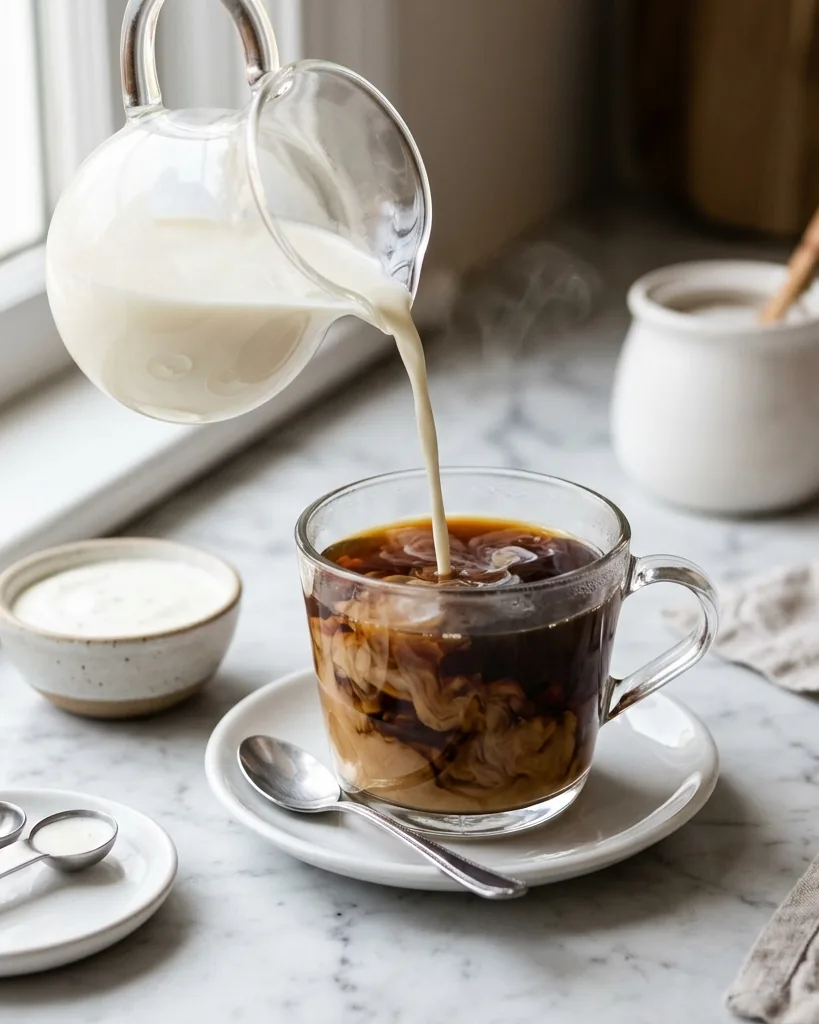
Half and half is exactly what the name says: equal parts whole milk and cream. Equal parts give it a milkfat content of roughly 10 to 12 percent, which sits squarely between whole milk, at around 3.25 percent, and heavy cream, at around 36 percent. The FDA (FDA) defines a standard of identity for the product, which is why cartons labeled this way across brands land in the same fat range.
That middle-of-the-road fat level is the whole point of the product. It is rich enough to soften coffee and add body to a sauce, but lighter than pure cream, so it does not overwhelm. Understanding that it is one part milk and one part cream makes the nutrition numbers intuitive: a splash carries more fat than milk but far less than cream, and the calories track that fat almost exactly.
Serving sizes: from a splash to a cup
The label serving is 2 tablespoons, but few people measure their coffee pour, and recipes often call for it by the cup. The table below scales the regular version across the amounts you are most likely to use, so you can see how a light splash compares to a cooking quantity.
| Amount | Calories | Fat |
|---|---|---|
| 1 tbsp | About 20 | About 1.7 g |
| 2 tbsp (label serving) | About 40 | About 3.5 g |
| 1/4 cup | About 80 | About 7 g |
| 1 cup (16 tbsp) | About 315 | About 28 g |
The single most useful takeaway here is how fast a casual pour adds up. A heavy hand in two cups of coffee can easily reach a quarter cup over a morning, which is about 80 calories and 7 grams of fat from creamer alone. Used by the cup in a soup or sauce, the creamer contributes a few hundred calories to the dish. Neither is alarming, but both are easy to overlook when you are thinking of it as just a splash.
Fat and saturated fat
The 3.5 grams of fat in a 2 tablespoon serving is the defining number, since fat is where nearly all the calories come from. About 2 grams of that is saturated fat, which is roughly 10 percent of the daily limit many guidelines suggest. For a single splash that is minor, but it scales with how much you use, and a cup in a recipe delivers a meaningful amount of saturated fat across the servings of the dish.
The American Heart Association (AHA) recommends limiting saturated fat as part of a heart-healthy pattern, so people watching it should count their creamer rather than assume it is negligible. For most coffee drinkers using a tablespoon or two, the amount is small. The caution applies mainly to heavy pourers and to recipes that call for half and half by the cup, where the saturated fat quietly accumulates.
Carbohydrates and protein
The regular type is low in carbohydrates, at about 1.3 grams per 2 tablespoons, all of it the natural milk sugar lactose. That makes it friendly to low-carbohydrate eating, which is part of why it is a popular coffee addition on keto-style diets. The protein is similarly small, under 1 gram per serving, so half and half is not a meaningful source of either nutrient; it is essentially a fat-and-calorie product with a trace of milk sugar.
This is where the fat-free type flips the script, and it surprises people. Removing the fat takes out the calories that came with it, but to keep the creamy body, manufacturers add thickeners and often a little corn syrup, which pushes the carbohydrate count up to about 3 grams per serving, more than double the regular version. So fat-free is lower in calories but higher in carbs, a trade that matters depending on which number you are watching.
Fat-free version: lower calories, more carbs
The fat-free type is engineered to mimic the texture of the original without the milkfat, and the nutrition reflects that engineering. At about 20 calories per 2 tablespoons with no fat, it roughly halves the calories, which appeals to anyone counting them. The catch is the carbohydrate jump to about 3 grams, because the thickeners and sweeteners that replace the fat are carbohydrate-based.
Which version is better depends entirely on your goal. If you are managing total calories or saturated fat, the fat-free version is the leaner pick. If you are limiting carbohydrates, as on a keto plan, the regular version is the better fit despite its higher calories, because its carbohydrate count is lower and it contains no added sugars. There is no single right answer; the two are built for different priorities, and knowing the trade lets you choose deliberately.
One more point is worth making for label readers. The fat-free version often lists ingredients beyond milk, such as corn syrup, carrageenan, or other stabilizers, which the regular product does not need because its own milkfat provides the body. Neither formulation is unhealthy in a normal splash, but if you prefer a short, recognizable ingredient list, the regular type is the simpler choice. If your priority is shaving calories, the fat-free type does that effectively, as long as you are comfortable with the added thickeners that make it possible.
The creamer versus milk and heavy cream
The creamer makes the most sense when you see it next to its neighbors on the dairy shelf. The table compares a 2 tablespoon serving of each, so you can see exactly where it lands between lighter and richer options.
| Dairy (per 2 tbsp) | Calories | Fat |
|---|---|---|
| Whole milk | About 18 | About 1 g |
| Half and half | About 40 | About 3.5 g |
| Heavy cream | About 100 | About 11 g |
The progression is clean and matches the fat content of each. Whole milk is the lightest, heavy cream is more than double half and half, and half and half sits in the comfortable middle, which is exactly why it is the default coffee pour for so many people. If you want fewer calories, milk is the move; if you want more richness, cream is. It is the balance point between the two.
How the creamer is made
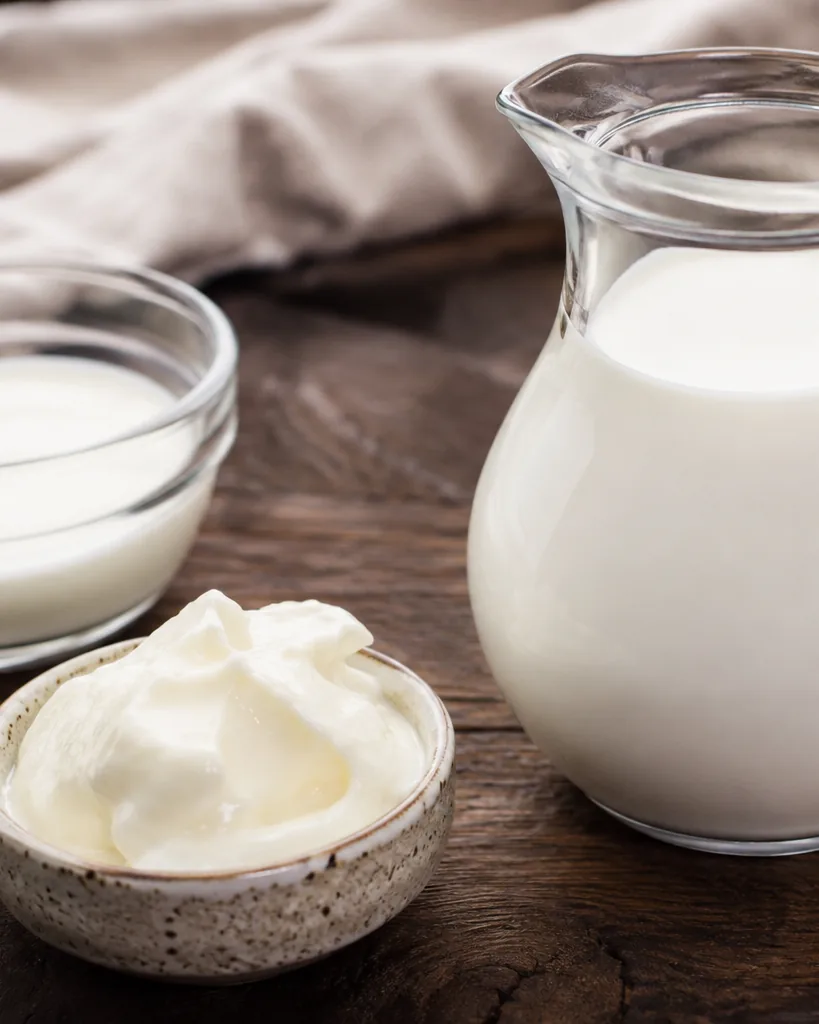
The product comes together by blending two dairy streams that already sit in most kitchens: whole milk and cream. Combined in roughly equal parts, they land at the 10 to 12 percent milkfat that defines the category. Dairies pasteurize and homogenize the mixture so the fat stays evenly distributed and the texture pours smoothly, which is why a carton looks and behaves consistently from the first pour to the last.
Because the recipe is so simple, you can approximate it at home when a carton runs out. Mixing equal parts whole milk and heavy cream produces a close stand-in with a nearly identical fat level and calorie count. A lighter substitute is whole milk with a small spoon of melted butter stirred in, which mimics the richness for cooking, though it will not pour quite the same in coffee. Knowing the blend behind the carton makes these swaps obvious, and it explains why the nutrition lands exactly between milk and cream rather than at either extreme.
Storage, shelf life, and curdling
An opened carton keeps in the refrigerator for about a week to ten days, and like any dairy it should be stored in the coldest part rather than the door, where temperatures swing. Ultra-pasteurized cartons last longer unopened, often several weeks past purchase, because the higher heat treatment kills more spoilage organisms. Always go by the date on the carton and a quick smell test before pouring.
One practical quirk is worth knowing for cooking. Because the milkfat is lower than in pure cream, the creamer is more prone to curdling when it hits high heat or acidic ingredients, such as a tomato or wine sauce. Tempering it first, by warming a little of the hot liquid into it before adding it to the pot, helps it blend smoothly. Adding it toward the end of cooking and keeping the heat gentle also prevents the proteins from seizing into curds. These are small techniques, but they are the difference between a silky sauce and a broken one when you use this lighter dairy in place of cream.
How half and half adds up in coffee and cooking
In a single cup of coffee, a 2 tablespoon pour of half and half adds about 40 calories, which is genuinely modest. The math changes with volume and frequency. Three coffees a day with a generous pour each can quietly add a couple hundred calories, all from creamer, before any food. For people tracking intake, measuring the pour once is a quick way to see what the daily habit actually costs.
In cooking, it is a go-to for adding body to soups, sauces, scrambled eggs, and baked goods without the heaviness of pure cream. Used by the cup, it brings a few hundred calories and a notable amount of saturated fat to a recipe, spread across its servings. It also curdles more easily than cream when boiled, because of its lower fat, so it is best added gently and off high heat. If you are weighing dairy choices for coffee or recipes, our breakdowns of whole milk nutrition and 2 percent milk nutrition use the same format, so you can line them up against half and half and pick the right richness for the job.
Common ways to use it
Most cartons get used a splash at a time, but the blend earns its place in the kitchen well beyond coffee. In hot drinks it softens bitterness and adds a smooth body that skim or low-percentage milk cannot match. Stirred into scrambled eggs or an omelet, a small pour makes them softer and richer. In baking, it lends moisture to custards, quiches, and creamy pies without the heaviness of straight cream.
It also shines in savory cooking. A pour finishes a pan sauce, smooths a tomato soup, or loosens mashed potatoes, giving dishes a velvety texture for fewer calories than pure cream would add. The one limit is high-heat or acidic cooking, where the lower milkfat makes it prone to separating, so it works best added gently and near the end. Used thoughtfully, it is one of the most versatile dairy items in the refrigerator, bridging the gap between the lightness of milk and the richness of cream in almost any recipe that calls for a creamy lift.
Lactose and dietary notes
Because the product is made from real dairy, it contains lactose, though the amount in a typical splash is small. People with lactose intolerance often tolerate a tablespoon or two in coffee without trouble, while those who are more sensitive may prefer a lactose-free carton, which many brands now offer with the same nutrition profile. It is not suitable for a dairy-free or vegan diet, since it is genuine milk and cream.
For plant-based eaters, several non-dairy alternatives aim to replicate the texture using oat, soy, or coconut bases, but their nutrition can differ noticeably, often with more added sugar or different fats, so it is worth checking those labels separately rather than assuming they match. For anyone simply watching calories or saturated fat, the portion is the real lever: a measured tablespoon or two keeps the numbers small, while an unmeasured glug straight from the carton is where the calories quietly climb without you ever noticing the total.
Frequently asked questions
How many calories are in half and half?
The regular type has about 40 calories per 2 tablespoon serving, almost all from fat. The fat-free version has about 20 calories per 2 tablespoons. A full cup of the regular type is roughly 315 calories, so the amount you use matters far more than the per-splash number.
Is half and half keto-friendly?
Regular half and half is reasonably keto-friendly, with only about 1.3 grams of carbohydrates per 2 tablespoons and no added sugar. The fat-free version is higher in carbs, around 3 grams, because thickeners replace the fat, so the regular version is usually the better choice on a low-carb plan.
What is the difference between half and half and heavy cream?
Half and half is equal parts whole milk and cream, with about 10 to 12 percent milkfat and roughly 40 calories per 2 tablespoons. Heavy cream is about 36 percent milkfat and around 100 calories per 2 tablespoons, more than double. Half and half is the lighter, lower-calorie option, while cream is richer and whips.
How much saturated fat is in half and half?
A 2 tablespoon serving of regular half and half has about 2 grams of saturated fat, roughly 10 percent of a typical daily limit. That is small for a single splash but adds up with heavy pours or when a recipe calls for it by the cup, so people watching saturated fat should count it.
Is fat-free half and half healthier?
It depends on your goal. Fat-free half and half has half the calories and no saturated fat, which suits calorie or fat-conscious eaters. But it has more carbohydrates, about 3 grams per serving versus 1.3, because of added thickeners. For low-carb diets the regular version is often the better pick, while calorie counters tend to prefer the fat-free one for the simple calorie saving it offers per cup.