The number that trips up most people is not calories. It is serving size. Fresh mozzarella is commonly reported per 3 oz serving, while low-moisture block and shredded versions are reported per 1 oz. Put those two panels side by side without checking the header and fresh mozzarella looks like a calorie bomb next to a modest low-moisture slice. It is not richer, it is just weighed differently. These mozzarella cheese nutrition facts are pulled straight from manufacturer declarations, an official university dining panel, and public food databases, structured into one reference table so the per-ounce and per-cup figures line up on the same axis. Below, the desk separates what changes with the variety from what changes only with the label rounding.
Quick answer: In a single ounce (28 g) of whole-milk mozzarella you get roughly 85 calories; protein comes in at 6 g, fat at 6 g, and saturated fat at 4 g, alongside 1 g carbohydrate and 0 g sugar, plus 138 mg sodium and 143 mg calcium. Part-skim low-moisture, per 1 oz, runs near 85.62 kcal with 7.36 g protein and slightly less fat. Fresh mozzarella is reported per 3 oz, not per ounce, at 274 calories. Sodium is the widest-swinging line, ranging from 4.48 mg in low-sodium versions to 201 mg in whole-milk low-moisture. These mozzarella cheese nutrition facts shift with formulation, not with how “creamy” the cheese looks.
Whole-Milk vs. Part-Skim Low-Moisture: Where the Ounce Splits
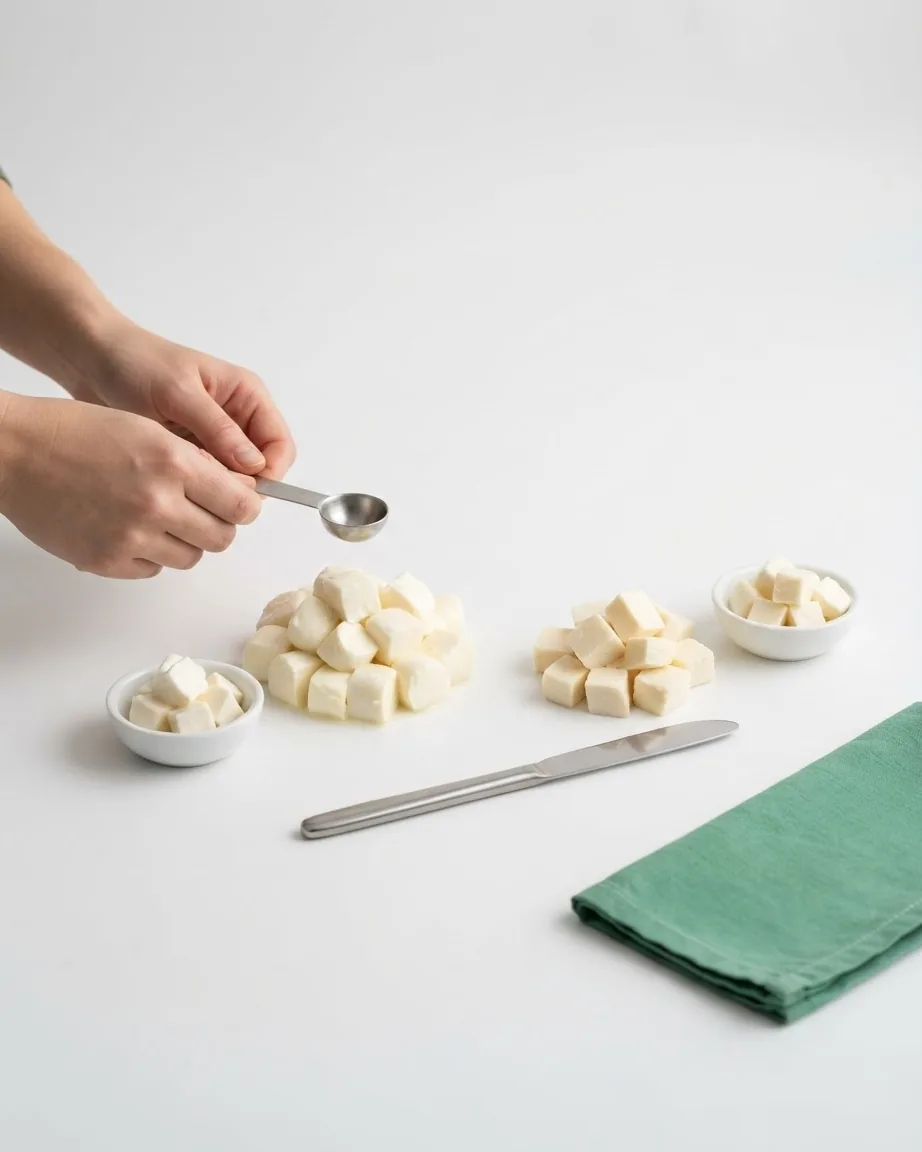
Both varieties sit at roughly the same weight class per ounce, but they diverge on fat and protein in ways that matter if you are counting either one. Whole-milk low-moisture mozzarella, per 1 oz (28 g), lists 90 calories, 7 g total fat, and 4.5 g saturated fat, according to Recipal. Part-skim low-moisture, per the same ounce, comes in lower at 85.62 kcal and 5.68 g fat, with 3.59 g of that saturated, per the encyclopedia panel published by the University of Rochester Medical Center.
The trade you get for dropping the milk fat is more protein. Part-skim delivers 7.36 g protein per ounce against whole-milk’s 6 g. That is the mechanical result of skimming: remove fat and the protein fraction rises per unit weight. For anyone stretching cheese across a pizza or a baked pasta where protein-per-calorie matters, part-skim is the denser pick. For a caprese or a fresh melt where mouthfeel carries the dish, the extra gram of fat in whole-milk is doing visible work.
Why Whole-Milk Mozzarella Shows Two Different Calorie Counts
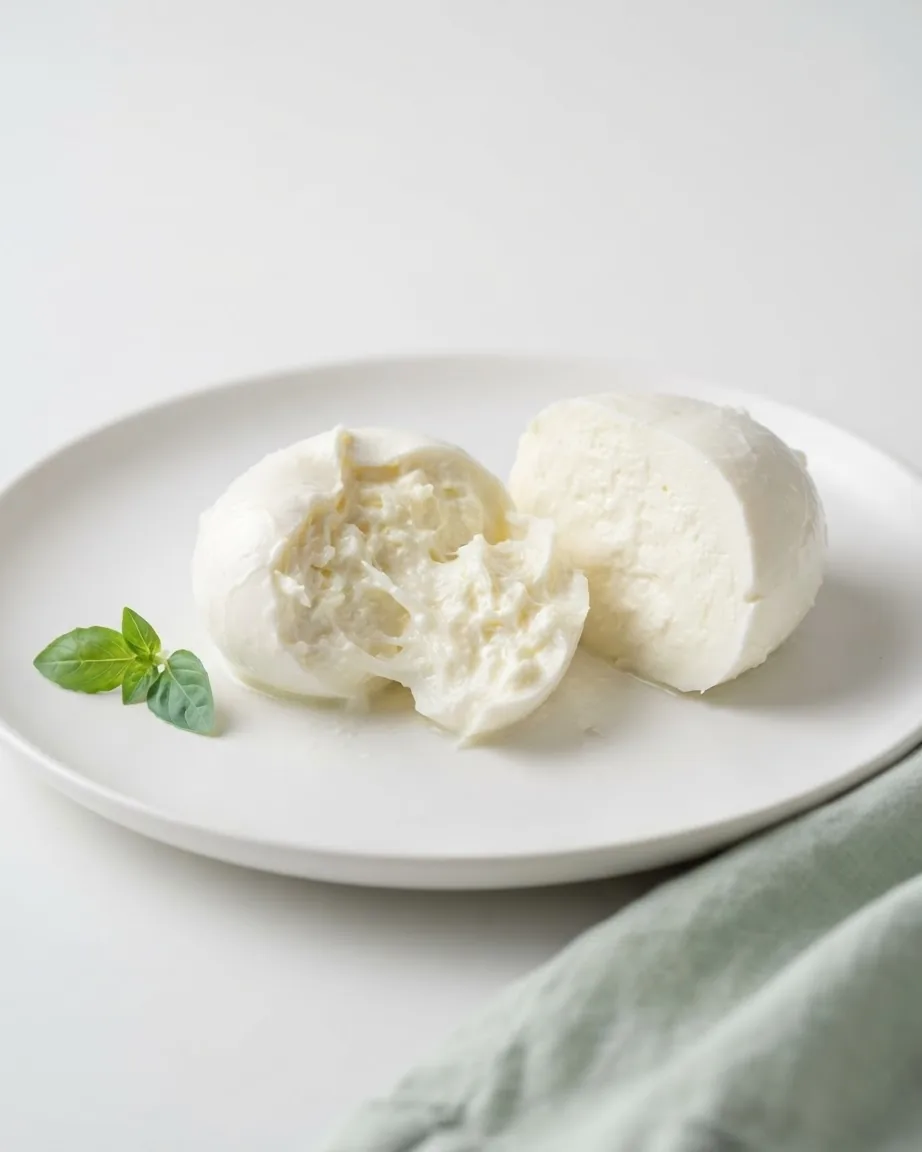
Look up whole-milk mozzarella and you will find 85 calories in one place and 90 in another. Both are correct for what they measured. EatingWell reports 85 calories and 6 g fat per ounce of whole-milk mozzarella; Recipal lists whole-milk low-moisture at 90 calories and 7 g total fat. The gap is real but small, and it comes down to which specific product and moisture level each source profiled, plus label rounding conventions.
The EatingWell figure, published by Dotdash Meredith, also logs 1 g carbohydrate and 0 g sugar per ounce. Treat a 5-calorie spread as noise, not signal. If you need a working number for meal math, either figure lands you within a rounding error, and no kitchen scale in a home cook’s drawer will resolve the difference on a single slice.
Sodium Is the Widest Line: 4.48 mg to 201 mg per Ounce
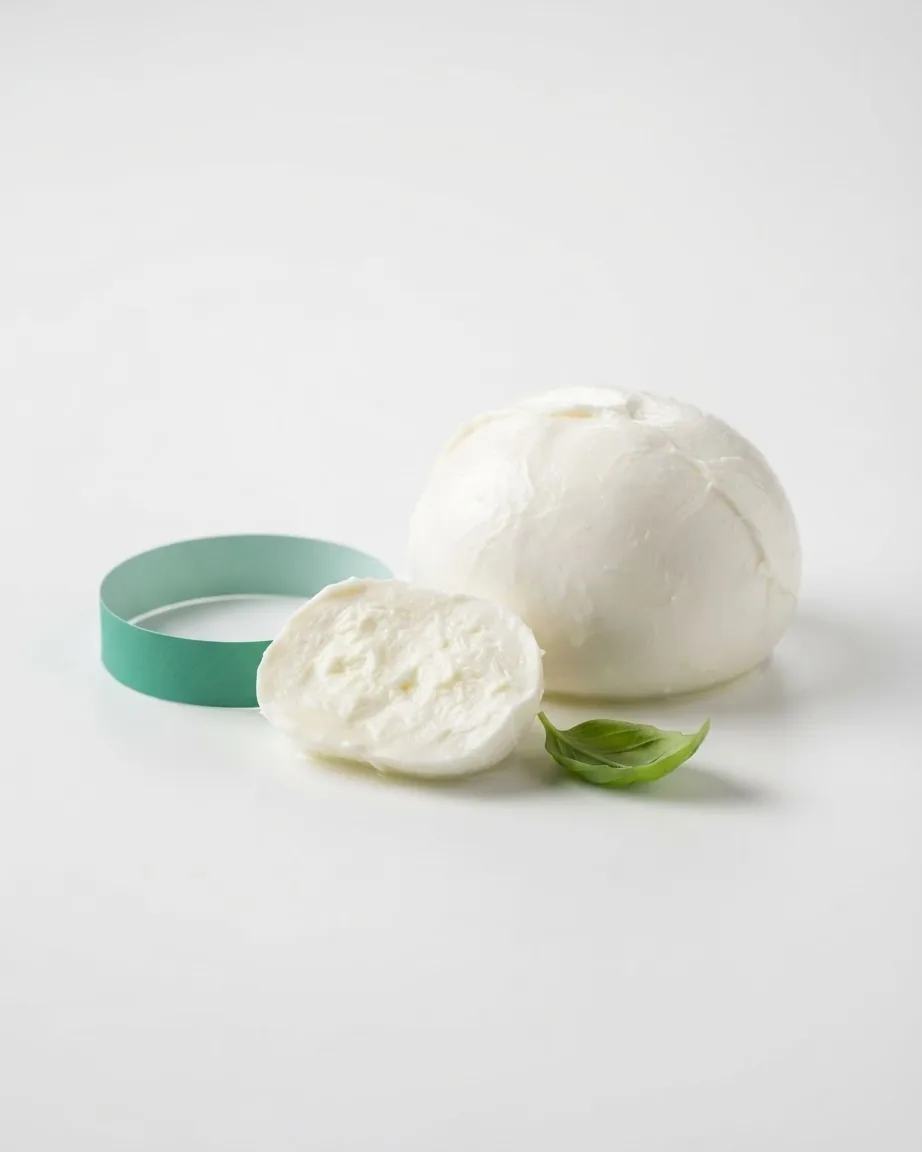
No other nutrient in mozzarella swings as hard as sodium, and it swings with formulation, not with fat. The spread across a single 1 oz serving runs from 4.48 mg in a low-sodium variant up to 201 mg in whole-milk low-moisture. That is a wider ratio than the calorie range, the fat range, or the protein range combined.
- Low-sodium mozzarella: 4.48 mg sodium per 1 oz slice, while still holding 7.7 g protein and 204.68 mg calcium, per the low-sodium panel from the University of Rochester Medical Center.
- Generic whole-milk: 138 mg per ounce.
- Part-skim low-moisture: 149.69 mg per ounce.
- Shredded part-skim (commercial): 150 mg per 28 g serving.
- Whole-milk low-moisture: 201 mg per ounce.
For context on the generic figure, mozzarella’s 138 mg per ounce is roughly less than half the sodium of feta and Parmesan, and about 6% of the 2,300 mg daily sodium limit. If you are watching sodium closely, the choice of variety moves the needle more than portion trimming does: swapping whole-milk low-moisture for a low-sodium version cuts the sodium on that ounce dramatically while barely touching protein or calcium. The low-sodium panel is the one to trust when that is your constraint.
“Low-Moisture,” “Part-Skim,” and “Lite” Are Legal Terms, Not Marketing
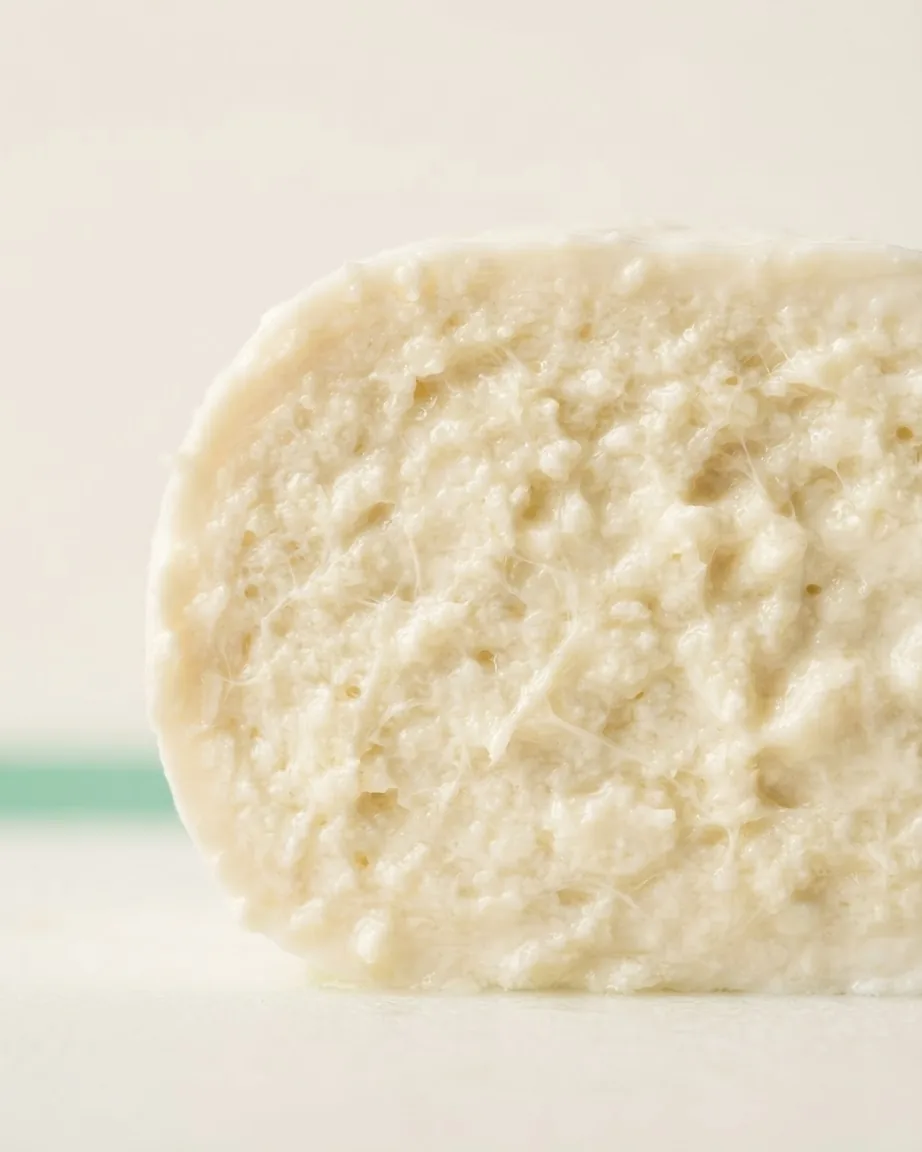
This is the fact a generic cheese article skips: those words on the package are federally defined composition categories, not brand adjectives. The line between them is drawn on milk-fat percentage and moisture range, and it is spelled out in the standard maintained by the USDA Agricultural Marketing Service, Dairy Program.
The fat split works on a dry basis. Mozzarella must carry milk fat of not less than 45 percent on a dry basis; Part-skim Mozzarella has less than 45 percent but not less than 30 percent. So “part-skim” does not mean low-fat in a casual sense – it means the milk fat falls inside a bounded window, no lower than 30 percent dry.
Moisture is where “low-moisture” earns its name. Regular Mozzarella has moisture more than 52 percent but not more than 60 percent. Low-moisture Mozzarella has moisture more than 45 percent but not more than 52 percent. That tighter water range is why low-moisture melts and browns predictably on a pizza – less water to drive off before the cheese sets. “Lite” is its own bracket: milk fat not less than 10.8 percent on a dry basis, with moisture not less than 52 percent and not more than 60 percent. None of these terms signals a processed or inferior cheese; they are dry-basis and moisture specifications.
Fresh Mozzarella per 3 oz: Reading It Against the Ounce
Fresh mozzarella is the variety most likely to be misread, because its published panel uses a 3 oz serving. Fresh mozzarella, per 3 oz, carries 274 calories, 23.6 g protein, 18.2 g fat, 11.5 g saturated fat, 479 mg sodium, 663.2 mg calcium, and 3.5 g carbohydrate, per the dining label from University of Maryland Dining.
Those numbers look enormous only because the serving is triple. The 3 oz panel cannot be compared directly to the 1 oz figures used for every other mozzarella here without normalizing the serving first, and the desk does not manufacture that conversion – it reports each panel as its source published it. The practical takeaway: when a recipe calls for fresh mozzarella and you mentally price it against a slice of low-moisture, you may be comparing panels built on different serving sizes. Read the serving header before the calorie count, every time.
Block vs. Bagged Shredded: What the Anti-Caking Agents Add
Shredding at home and buying a bag are not nutritionally identical, and the difference is on the ingredient line, not the calorie line. On a bagged low-moisture part-skim shredded mozzarella, the ¼-cup (28 g) serving is declared at 80 calories along with 6 g total fat, 3.5 g saturated fat, 15 mg cholesterol, and 150 mg sodium. Those macros track closely with block part-skim.
The divergence is in what keeps the shreds loose. Kraft sells a low-moisture part-skim shredded mozzarella whose ingredient list includes modified cornstarch, added to keep the shreds from caking, along with the mold inhibitor natamycin. The cornstarch is the reason bagged shredded cheese can melt slightly grainier or resist forming a smooth pool the way freshly grated block does – the coating is doing its anti-clump job right up until it hits the pan. If you want the cleanest melt for a sauce, grating from a block sidesteps that coating. If you want convenience and a longer shelf window before mold sets in, the bag’s additives are the trade. Kraft notes it has been making cheese for over 100 years; the additive list reflects shelf-stability engineering, not a change to the cheese’s core protein or calcium.
Carbs and Sugar: Where Label Rounding Hides the Real Number
Consumer panels routinely list mozzarella at 1 g carbohydrate and 0 g sugar per ounce. The analytical values are more precise. The University of Rochester Medical Center panel logs 1.09 g carbohydrate and 0.17 g total sugars per ounce of part-skim low-moisture – small amounts that FDA label rounding rules legitimately collapse to 1 g and 0 g on a package.
For almost every kitchen purpose, the rounded label is fine. The 0.17 g of sugar is lactose, not added sugar, and mozzarella carries no added sugar to call out. The distinction matters only if you are tracking carbohydrates to a tight decimal, in which case the analytical 1.09 g is the honest figure and the 0 g sugar on a bag is a rounding artifact, not proof the cheese is sugar-free at the molecular level. Either way, mozzarella is a low-carbohydrate cheese, and no variety here changes that.
Calcium, Phosphorus, and B12: The Micronutrients That Move With Fat
Calcium is the line where every mozzarella variety pulls its weight, and it tracks loosely inverse to fat because skimming concentrates the non-fat solids. Part-skim low-moisture supplies 207.24 mg calcium per ounce; whole-milk low-moisture supplies 160 mg; generic whole-milk lands at 143 mg; and the low-sodium version holds 204.68 mg. Fresh mozzarella, on its 3 oz serving, reaches 663.2 mg.
Phosphorus and B12 follow the same skimming logic. Recipal lists whole-milk low-moisture at 120 mg phosphorus and vitamin B12 of 0.2 mcg per ounce, while part-skim per ounce supplies 148.55 mg phosphorus and vitamin B-12 of 0.65 mcg. Part-skim wins on all three micronutrients per ounce because removing fat leaves more of the mineral-and-protein matrix in the same 28 g. For a broader look at how these dairy panels compare, the desk keeps a running set of guides under dairy eggs.
The Mozzarella Reference Table (per stated serving)
| Variety | Serving | Calories | Protein | Fat | Sat. Fat | Sodium | Calcium |
|---|---|---|---|---|---|---|---|
| Whole-milk (generic) | 1 oz / 28 g | 85 | 6 g | 6 g | 4 g | 138 mg | 143 mg |
| Whole-milk low-moisture | 1 oz / 28 g | 90 | 6 g | 7 g | 4.5 g | 201 mg | 160 mg |
| Part-skim low-moisture | 1 oz | 85.62 kcal | 7.36 g | 5.68 g | 3.59 g | 149.69 mg | 207.24 mg |
| Low-sodium | 1 oz slice | – | 7.7 g | – | – | 4.48 mg | 204.68 mg |
| Shredded part-skim (Kraft) | ¼ cup / 28 g | 80 | – | 6 g | 3.5 g | 150 mg | – |
| Fresh | 3 oz | 274 | 23.6 g | 18.2 g | 11.5 g | 479 mg | 663.2 mg |
Values are sourced directly from manufacturer declarations, an official university dining panel, and public food databases, and reflect what each source published. Recipe or manufacturing changes made by brands are not always announced, so a current package label overrides any table. For related per-serving breakdowns, the desk has logged string cheese, which is itself low-moisture part-skim mozzarella, and Parmesan, one of the higher-sodium comparisons named above.
Fresh Mozzarella, Renormalized to 1 oz So You Can Actually Compare It
The article keeps warning that fresh mozzarella’s 274-calorie label is a serving-size illusion, but never does the one piece of arithmetic that dissolves it. Divide the published 3 oz panel by 3 and fresh mozzarella lands almost exactly on top of every other variety measured per ounce. It was never richer; it was just weighed in triples.
- Protein: 23.6 ÷ 3 = 7.87 g per oz – essentially the same as part-skim’s 7.36 g, not a protein blowout.
- Total fat: 18.2 ÷ 3 = 6.07 g per oz – right beside whole-milk’s 6 g.
- Saturated fat: 11.5 ÷ 3 = 3.83 g per oz – between part-skim’s 3.59 g and whole-milk’s 4 g.
- Carbohydrate: 3.5 ÷ 3 = 1.17 g per oz – in line with the ~1 g the other panels report.
Normalized to the same ounce, fresh mozzarella is not a calorie bomb. Its per-ounce numbers cluster with whole-milk and part-skim on every line, and it even leads on calcium. Read the serving header first, then divide.
FAQ
Is part-skim mozzarella actually lower in fat than whole-milk?
Yes, but the term is federally bounded, not casual. Part-skim mozzarella carries milk fat under 45 percent but not less than 30 percent on a dry basis. Per ounce, part-skim low-moisture runs about 5.68 g fat versus roughly 6 to 7 g for whole-milk. You also gain protein, since skimming raises the protein fraction per 28 g.
Why does fresh mozzarella have so many more calories?
It usually does not, per ounce – the panel is just measured differently. Fresh mozzarella is reported per 3 oz serving at 274 calories, while low-moisture varieties are reported per 1 oz. Reading the 3 oz figure against a 1 oz slice makes fresh look far heavier than it is. Always check the serving header before the calorie count.
Does bagged shredded mozzarella have additives block cheese lacks?
Yes. Commercial shredded low-moisture part-skim mozzarella contains added modified cornstarch to prevent caking and natamycin as a mold inhibitor. Its macros stay close to block cheese – about 80 calories and 6 g fat per 28 g – but the anti-caking coating can affect melt smoothness. Grating from a block avoids those additives.
How much sodium is really in mozzarella?
It depends entirely on the variety. A generic ounce carries 138 mg, about 6 percent of the 2,300 mg daily limit and roughly less than half of feta or Parmesan. Whole-milk low-moisture climbs to 201 mg, while low-sodium versions drop to just 4.48 mg per ounce while keeping protein and calcium nearly intact.
Is the 0 g sugar on the label accurate?
It is a rounding result. Analytical panels show 0.17 g total sugars and 1.09 g carbohydrate per ounce of part-skim low-moisture, which FDA rounding rules legitimately report as 0 g sugar and 1 g carbohydrate. The sugar present is lactose, not added sugar. Mozzarella carries no added sugar to declare, so the label is honest for practical use. What does “low-moisture” mean on a mozzarella label? It is a federally defined moisture range, not a marketing phrase or a sign of a processed cheese. Low-moisture Mozzarella has moisture more than 45 percent but not more than 52 percent, while regular Mozzarella runs more than 52 percent but not more than 60 percent. The tighter water range is what makes low-moisture cheese melt and brown predictably, since there is less water to drive off before it sets. Which mozzarella has the most protein per ounce? Among the per-ounce panels here, part-skim low-moisture leads at 7.36 g protein, and the low-sodium version holds 7.7 g per 1 oz slice. Both edge out whole-milk mozzarella’s 6 g. The reason is mechanical: removing milk fat concentrates the protein fraction in the same 28 g. If protein-per-calorie is your priority, the skimmed varieties are the denser choice. Does part-skim mozzarella have more calcium than whole-milk? Yes, per ounce. Part-skim low-moisture supplies 207.24 mg calcium against 160 mg for whole-milk low-moisture and 143 mg for generic whole-milk. Skimming concentrates the non-fat solids, so the mineral matrix rises per 28 g. Part-skim also leads on phosphorus at 148.55 mg versus 120 mg, and on B12 at 0.65 mcg versus 0.2 mcg per ounce. The Bottom Line Mozzarella’s numbers move with two things: the serving size on the header and the formulation in the vat. Calories, fat, and protein stay in a narrow band across the low-moisture varieties, so an 85-versus-90-calorie gap is rounding noise. Sodium is the real variable, swinging from 4.48 mg to 201 mg per ounce depending entirely on which product you buy. The federal terms – low-moisture, part-skim, lite – are composition brackets, not quality signals. Read the serving header first, pick the variety that fits your sodium and protein targets, and let a current package label settle any figure the table here cannot.