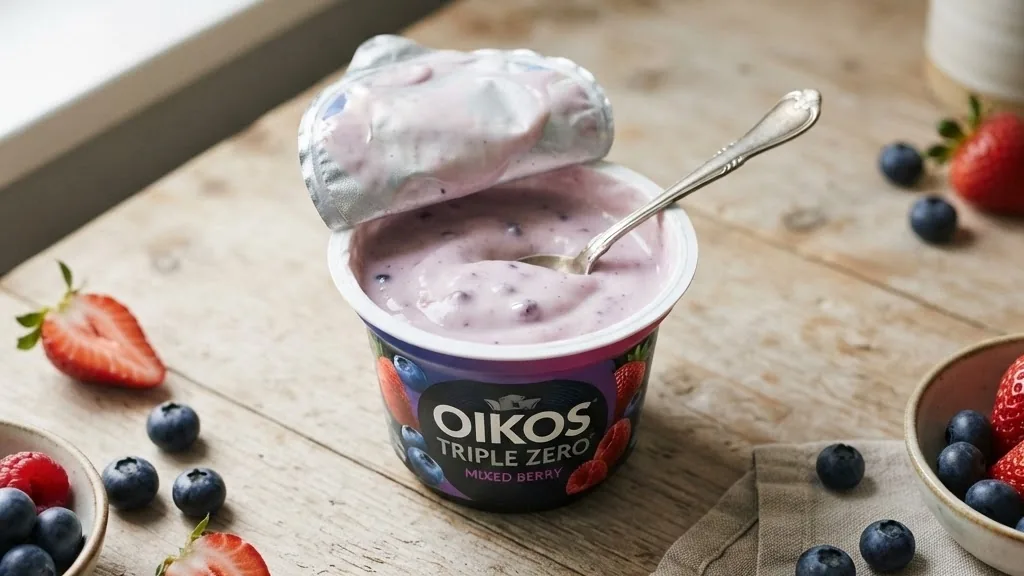
The Oikos Triple Zero nutrition label lists 80 calories, 15 grams of protein, 0 grams of added sugar, 0 grams of fat, and 55 milligrams of sodium in one 5.3 ounce cup of the vanilla blended yogurt. These cups are a fridge-door staple for many people, and each one is worth turning over before you eat it, because the panel is the part people skim past on their way to the word “protein” on the front. Read slowly, that little box tells you almost everything about how this yogurt fits a day of eating.
By Tastybend Nutrition Desk. Last reviewed July 7, 2026.
Here is the short version. One 5.3 ounce (150 gram) cup of Oikos Triple Zero Vanilla gives you 80 calories, 0 grams total fat, 0 grams saturated fat, 6 grams total carbohydrate, 5 grams of naturally occurring sugar, 0 grams added sugar, and 15 grams of protein. That protein number is 30 percent of the Daily Value, which is a genuinely high figure for a single small cup. The numbers below come from the Oikos brand label, cross-checked against USDA FoodData Central and the FDA labeling rules, cited in place.
The Oikos Triple Zero nutrition facts table
This is the full panel for the vanilla cup, one of the most common flavors. It is laid out the way the printed label reads, top to bottom, with the percent Daily Value column so you can see what is high and what is low at a glance.
| Nutrient | Per 5.3 oz (150 g) cup | % Daily Value |
|---|---|---|
| Calories | 80 | – |
| Total fat | 0 g | 0% |
| Saturated fat | 0 g | 0% |
| Trans fat | 0 g | – |
| Cholesterol | 10 mg | 3% |
| Sodium | 55 mg | 2% |
| Total carbohydrate | 6 g | 2% |
| Dietary fiber | 0 g | 0% |
| Total sugars | 5 g | – |
| Added sugars | 0 g | 0% |
| Protein | 15 g | 30% |
| Vitamin D | 2.0 mcg | 10% |
| Calcium | 150 mg | 10% |
| Iron | 0 mg | 0% |
| Potassium | 150 mg | 4% |
Two lines carry most of the weight here. Protein at 30 percent of the Daily Value is the headline. Added sugars at 0 grams is the reason the front of the pack shouts “triple zero.” Everything else is quiet supporting detail, and each part is covered below.
What “triple zero” actually means on the label
The name is not marketing filler pretending to be math. The three zeros are three specific lines the brand is promising you, and each one maps to something you can verify on the panel or the ingredient list.
- Zero added sugar. The Added Sugars line reads 0 grams. The 5 grams of total sugar you do see are lactose, the sugar that lives in milk naturally. Nobody spooned cane sugar into the cup.
- Zero artificial sweeteners. You will not find aspartame, sucralose, or acesulfame potassium in the ingredients. The sweetness comes from steviol glycosides (stevia leaf extract) instead of a lab sweetener.
- Zero fat. Total fat reads 0 grams because the yogurt is made from cultured nonfat milk. That is why the front says “0% fat.”
The third zero is the one people forget to check. Plenty of Greek yogurts are low fat, not nonfat, and 2 to 4 grams of fat per cup is easy to overlook. Here the label genuinely holds at zero. There is also a small footnote worth knowing about: the package says “not a low calorie food,” which sounds odd on an 80 calorie cup until you remember that phrasing is tied to the naturally occurring sugars, not to anything added.
The protein line: 15 grams and why 30% DV matters
Fifteen grams of protein in a cup this size is the main reason to buy Triple Zero in the first place. The FDA sets the protein Daily Value at 50 grams, so 15 grams lands at 30 percent of a full day from one small cup. Swapping a bowl of cereal at breakfast for one cup of this yogurt plus a handful of berries can push morning protein from single digits into the mid teens without adding real bulk to the meal.
The protein comes from the straining that makes Greek yogurt Greek. Regular yogurt is strained to remove watery whey, which concentrates the casein and whey protein left behind. That same straining is why the texture is thick enough to hold a spoon upright. If you are chasing a protein target, this line is the whole point of the product, and it is the number to check first when a new flavor shows up on the shelf.
Sugar on the label: 5 grams total, 0 grams added
This is the line that confuses the most people, so it earns its own section. The panel shows 5 grams of total sugars and, indented right under it, 0 grams of added sugars. Those are not contradicting each other. Total sugars counts every gram of sugar in the cup. The added sugars line, which the FDA required manufacturers to break out under the 2016 label rule, tells you how much was put in during processing. Here that second number is zero.
So the 5 grams you see is lactose from the milk itself. That distinction changes how the yogurt behaves in a diet. Sweetened Greek yogurts offer a useful contrast: the flavored regular cups often carry 15 to 20 grams of total sugar, and a big slice of that is added cane sugar or fruit concentrate. nutrition.gov advises reading the added sugars line specifically rather than the total, and this label is a clean example of why that habit pays off. Fruit flavors like mixed berry or strawberry run a touch higher on calories, around 90 to 100 per cup, but the added sugar line still holds at 0 grams.
Sodium, calcium, and the micronutrients
Sodium sits at 55 milligrams, which is 2 percent of the Daily Value. Per FDA guidance, anything at 5 percent DV or less per serving counts as low, so this cup is firmly in low sodium territory. That matters more than it sounds, because a lot of high protein snacks quietly load up on salt, and this line deserves a glance before you trust a “healthy” claim on any front label.
The cup also brings 150 milligrams of calcium (10 percent DV), 2 micrograms of vitamin D (10 percent DV), and 150 milligrams of potassium (4 percent DV). None of those are blockbuster numbers, but they are real, and they stack up if yogurt is a daily habit. Iron reads 0 milligrams, which is normal for a dairy product. The cholesterol line sits at 10 milligrams, or 3 percent DV, low enough to barely register.
The calcium and vitamin D pairing is worth pausing on, because the two work together in the body and dairy is one of the few foods that delivers both in the same bite. Ten percent DV of each per cup does not sound like much on its own, but two cups across a day, a normal amount during a heavy training week, quietly covers a fifth of both targets without any supplement. That is the kind of quiet nutrition that never makes the front of the package yet shows up on the panel if you look for it. For a broader picture of where dairy calcium comes from, the skim milk nutrition facts breakdown digs into the base ingredient, since nonfat milk is exactly what this yogurt is cultured from.
Serving size reality: the 5.3 ounce cup
The whole panel is built around one 5.3 ounce cup, which is 150 grams and, importantly, one serving. That last part trips people up with larger tubs. If you scoop from a 32 ounce container instead of a single cup, the panel resets to a 3/4 cup (170 gram) serving on many tubs, and every number shifts. The single cups make sense precisely because the label and the portion are the same thing, so there is no mental math at 6 a.m.
Flavor also moves the numbers a little. The vanilla cup detailed above is 80 calories. Fruit-blended flavors tend to run 90 to 100 calories because of the added fruit puree, though protein stays at 15 grams and added sugar stays at 0 grams across the line. The rule worth following: read the specific cup in your hand, not a number you remember from a different flavor.
How the label fits keto, low-calorie, and high-protein eating
Because the panel is so lean, this yogurt slots into several eating styles, and the label tells you exactly how well for each one.
- High protein. This is the obvious fit. 15 grams for 80 calories is a protein-to-calorie ratio most snacks cannot touch.
- Low calorie. At 80 calories a cup, it works as a filling snack, even with the “not a low calorie food” footnote, which is a regulatory phrasing point rather than a warning.
- Keto or low carb. This is the honest caveat. Six grams of carbohydrate with zero fiber means roughly 6 grams of net carbs, and there is almost no fat to hit ketogenic macros. It is not a keto food, though it can fit a low carb day in small amounts.
When planning a day around a protein floor, one cup works as a reliable 15 gram building block that costs next to nothing in calories or sugar. That predictability is the real value of a clean label.
Triple Zero versus regular Greek yogurt and Activia
Numbers make more sense next to a rival. Here is the vanilla Triple Zero cup against a plain nonfat regular Greek yogurt and against Activia, a lowfat probiotic yogurt from the same parent company. The comparison figures come from USDA FoodData Central and each brand’s own label, normalized as closely as serving sizes allow.
| Per cup | Oikos Triple Zero Vanilla (150 g) | Plain nonfat Greek yogurt (150 g) | Activia lowfat (113 g) |
|---|---|---|---|
| Calories | 80 | ~90 | ~70 |
| Total fat | 0 g | 0 g | 1.5 g |
| Total carbs | 6 g | ~6 g | ~13 g |
| Total sugars | 5 g | ~4 g | ~11 g |
| Added sugars | 0 g | 0 g | ~9 g |
| Protein | 15 g | ~15 g | ~4 g |
| Sodium | 55 mg | ~55 mg | ~55 mg |
The story the table tells is clear. Against plain nonfat Greek yogurt, Triple Zero is neck and neck on protein and macros; the difference is that Triple Zero arrives pre-flavored with 0 grams of added sugar, whereas you would flavor the plain tub yourself. Against Activia, the gap is wide: Activia is a probiotic lowfat yogurt built for gut-health messaging, not protein, so it lands around 4 grams of protein and roughly 9 grams of added sugar per small cup. If protein and a zero on the added sugar line are your priorities, the comparison is not close. That probiotic cup gets its own breakdown in the nutritional value for Activia yogurt guide if you want the full Activia panel. For plain-language help on reading any panel, nutrition.gov is the first resource to try.
How to read this label in five steps
Here is the exact order to run through when you flip a cup over, and it works on any yogurt, not just this one.
- Check the serving size first. Confirm the panel is for one 5.3 ounce cup, not a tub portion, so every number below is the number you will actually eat.
- Read the added sugars line, not just total sugars. Zero grams here is the point of the product. Total sugars of 5 grams is lactose you cannot avoid in dairy.
- Find the protein and its % DV. Fifteen grams at 30 percent DV is what makes this a functional protein source rather than a dessert.
- Scan sodium against the 5% rule. At 2 percent DV, this cup is low sodium by the FDA threshold, which is exactly what you want in a daily snack.
- Note the fat line to confirm the third zero. Zero grams total fat is the claim that separates nonfat from merely lowfat yogurts.
Healthier ways to use the cup
The label is clean, but how you dress the yogurt decides whether it stays that way. These pairings keep the added sugar line honest while making the cup more of a meal.
- Top with fresh or frozen berries for fiber and sweetness without adding a gram of added sugar.
- Stir in a tablespoon of chia or ground flax to bring in the fiber the panel is missing.
- Add a small handful of nuts if you want the fat and staying power the nonfat base leaves out.
- Use a cup as a higher-protein swap for sour cream on tacos or baked potatoes.
- Skip the granola clusters that carry 10 or more grams of added sugar, which would quietly undo the zero you bought the yogurt for.
The most common mistake is buying a clean base and then burying it under a topping that reintroduces everything the label removed. The cup gives you a strong starting point; the spoon of honey is on you.
Frequently asked questions
How many calories are in Oikos Triple Zero?
The vanilla cup is 80 calories per 5.3 ounce serving. Fruit-blended flavors such as mixed berry or strawberry run a little higher, around 90 to 100 calories, because of the added fruit puree. Protein stays at 15 grams and added sugar stays at 0 grams across the flavors.
Does Oikos Triple Zero really have no added sugar?
Yes. The added sugars line on the panel reads 0 grams, which under the FDA label rule means nothing was added during processing. The 5 grams of total sugar you see is lactose that occurs naturally in the nonfat milk the yogurt is cultured from.
How much protein is in one cup?
Fifteen grams, which is 30 percent of the FDA Daily Value of 50 grams. That protein comes from straining the yogurt, the same process that gives Greek yogurt its thick texture.
Is Oikos Triple Zero keto friendly?
Not really. Six grams of carbohydrate with zero fiber means about 6 grams of net carbs per cup, and there is almost no fat to support ketogenic macros. It can fit a general low carb day in moderation, but it is not a keto product.
What sweetener does it use if there is no sugar or artificial sweetener?
It uses stevia leaf extract (steviol glycosides), which is why the label can claim zero artificial sweeteners while still tasting sweet. There is no aspartame, sucralose, or acesulfame potassium in the ingredients.
Is the sodium high?
No. At 55 milligrams, or 2 percent of the Daily Value, the cup is low sodium. FDA guidance calls anything at 5 percent DV or less per serving low, so this sits comfortably under that line.
The Oikos Triple Zero panel is one of the tidier ones around: a real 15 grams of protein, a genuine zero on the added sugar line, and a fat line that holds at zero rather than sneaking in a couple of grams. Read the serving size, trust the added sugars line over the total, and the cup does exactly what the front of the pack promises. That is rarer than it should be, and it is why this one earns permanent fridge-door space.