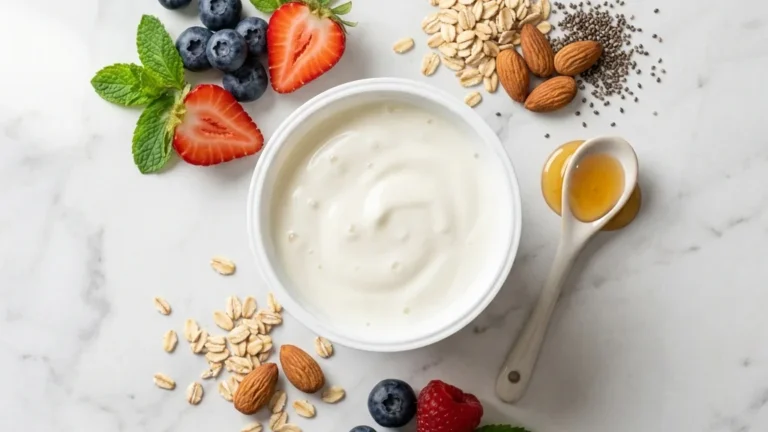

The cream cheese nutrition facts on a standard block are short and honest: one ounce, about 2 tablespoons, carries 100 calories, 10 g of total fat, 6 g of saturated fat, 2 g of protein, and roughly 1 g to 2 g of carbohydrate. That label is worth reading on every brick, mostly because the serving size and the schmear people actually spread rarely match. This page walks the numbers per ounce and per 2 tablespoons, then compares regular, whipped, light, and fat-free so you can see where the calories and the sodium really sit.
Cheesecake bakers and bagel eaters alike benefit from turning the tub around to check the panel before it hits the cart. Cream cheese is a food worth enjoying and worth measuring, and those two things do not fight as much as people think.
Quick answer: a 1 oz serving of regular cream cheese has about 100 calories, 10 g fat, 6 g saturated fat (roughly 29% of the Daily Value), 2 g protein, 1 g to 2 g carbohydrate, and 90 mg to 110 mg sodium. It is calorie-dense at about 3.5 calories per gram, low in carbs, low in protein, and high in fat, which is why it lands on keto diet plates and off high-protein ones. Whipped, light, and fat-free versions trade fat for air, water, or added protein and cut calories accordingly.
Cream cheese nutrition facts at a glance
Most brands, including Philadelphia from Kraft Heinz, print the panel per 1 oz block serving, which the USDA counts as roughly 28 g. That is the number to anchor on. According to the USDA generic entry for regular cream cheese, 100 g holds about 350 calories, 34 g fat, 20 g saturated fat, 6.15 g protein, and 5.5 g carbohydrate. Scale that down to a single ounce and you land near the brand label: about 98 to 100 calories and just under 10 g of fat. The small gaps between a brand block and the USDA generic come from water content and rounding, not from anything dramatic.
Here is the part more pages should say out loud. The label serving is small. One ounce is a thin, even layer, not the pillow of spread most of us build on a bagel. So the honest way to read cream cheese nutrition facts is to know the per-ounce math cold, then multiply by how much you truly use. The numbers are not scary on their own. They just add up quietly.
The full breakdown per ounce and per 2 tablespoons
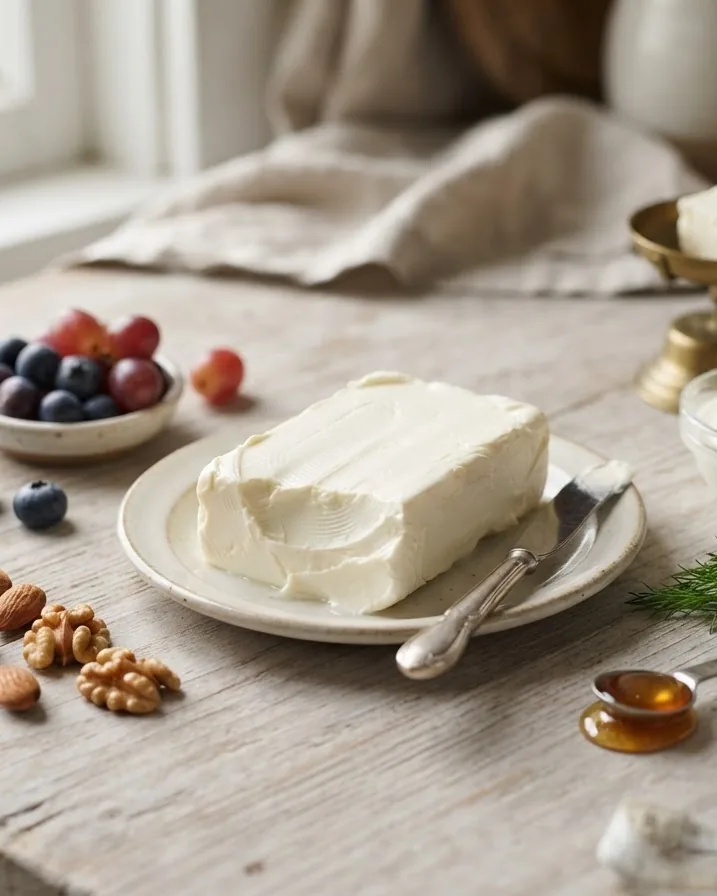
On a block label, 1 oz and 2 tbsp point at the same 28 g to 30 g of product, so the two columns below track closely. This is built from the standard brand panel and cross-checked against USDA FoodData Central, the government database that houses the reference values behind most nutrition labels. If you want to pull the raw entry yourself, it lives at the USDA FoodData Central search page.
| Nutrient | Per 1 oz (28 g) | Per 2 tbsp (about 30 g) | Approx. %DV |
|---|---|---|---|
| Calories | 100 calories | 100 to 105 calories | — |
| Total fat | 10 g | 10 g | 13% |
| Saturated fat | 6 g | 6 g | 29% |
| Protein | 2 g | 2 g | 4% |
| Total carbohydrate | 1 g to 2 g | 1 g to 2 g | 1% |
| Sugars | 1 g | 1 g | — |
| Sodium | 90 mg to 110 mg | 90 mg to 110 mg | 5% |
| Calcium | 27 mg | 27 mg | 2% |
| Vitamin A | 300 to 400 IU | 300 to 400 IU | 6% |
A few reading notes. The %DV column uses the FDA Daily Value basis printed on modern labels: 20 g for saturated fat, 2,300 mg for sodium, 78 g for total fat. That is why 6 g of saturated fat reads as a hefty 29% while 10 g of total fat reads as a modest 13%. The panel is telling you, in its quiet way, that the saturated share is the part worth watching.
Fat and saturated fat: where the calories live
Fat is the whole story of this food. Of the 100 calories in an ounce, roughly 90 come from fat, since each gram of fat carries 9 calories and there are 10 g on the plate. That is what a cheese made from cream and milk is supposed to do. It is also why cream cheese sits at about 3.5 calories per gram, denser than most cheeses people think of as light and far denser than the vegetables it often tops.
The saturated fat number is the one to flag for anyone tracking heart health. Six grams in a single ounce is close to a third of a day’s worth under the FDA framework. The CDC and the 2020 to 2025 Dietary Guidelines, which the USDA co-publishes, suggest keeping saturated fat under about 10% of daily calories, which is roughly 22 g on a 2,000 calorie day. Two ounces of cream cheese uses more than half of that budget before you have eaten anything else. None of this makes cream cheese a villain. It makes portion the lever.
For context on how this food compares with its dairy cousins, the same fat-forward pattern shows up in heavy cream nutrition, which runs even richer per tablespoon. Cream cheese is essentially cream and milk cultured and set, so the family resemblance in the fat column is no accident.
Carbs and protein: why it fits keto but is a weak protein source
Cream cheese is low in carbohydrate. Regular styles land at 1 g to 2 g per ounce, with about 1 g of that as natural milk sugar and zero fiber. Net carbs, then, sit around 1 g to 2 g per ounce. That is why the spread shows up constantly in low-carb kitchens and why it slides into a ketogenic macro split without much fuss. If you are building meals around that framework, the broader ratios matter more than any one food, but the short version is that cream cheese fits: high fat, trivial carbs, and enough richness to make plain foods interesting.
Protein is the weak spot. Two grams per ounce is not much, and it is far below what a comparable weight of firmer cheese delivers. If you are leaning on cream cheese as a protein source, the math will disappoint you. Think of it as a fat and flavor vehicle that happens to carry a little protein, not the other way around. Fat-free versions flip this a bit, pushing protein to 4 g or 5 g per ounce because the cream is stripped out and milk solids do more of the work.
One more comparison worth making. The carbohydrate in cream cheese comes from lactose, the same sugar that dominates whole milk nutrition facts. Because cream cheese is mostly fat and water with very little milk sugar left after culturing, its carb count stays tiny while milk itself carries around 12 g of carbohydrate per cup.
Sodium: the number that sneaks up on you
Sodium is the stealth figure. A single ounce carries 90 mg to 110 mg, which reads as a tame 5% of the Daily Value. On its own, fine. The trouble is that cream cheese rarely travels alone. Pair 2 oz of spread with a bagel that already brings 400 mg to 600 mg of sodium, add cured salmon or a slice of ham, and the sodium tally climbs fast. The FDA sets the sodium Daily Value at 2,300 mg, and the CDC reports most Americans already run well past it.
Here is a quirk worth knowing. Some reduced-fat and fat-free versions carry more sodium than the original, not less, because manufacturers lean on salt to rebuild flavor after pulling the fat. Philadelphia light styles, for example, can hit 120 mg per ounce against the regular block’s 90 mg to 110 mg. Cutting fat does not automatically cut every number. Read the panel; do not assume light means lighter everywhere.
Regular vs whipped vs light vs fat-free
This is the comparison the brand pages tend to scatter across four different tabs. The common serving figures are pulled into one view. Note that whipped cream cheese is aerated, so a 2 tbsp serving weighs less than a 2 tbsp scoop of block, which is a big part of why its calorie count drops. You are partly buying air, which is not an insult; sometimes air is exactly what you want on a warm bagel.
| Type | Calories | Total fat | Saturated fat | Protein | Sodium |
|---|---|---|---|---|---|
| Regular (1 oz) | 100 calories | 10 g | 6 g | 2 g | 90 to 110 mg |
| Whipped (2 tbsp) | 50 calories | 5 g | 3 g | 1 g | 85 mg |
| Light / 1/3 less fat (1 oz) | 60 to 70 calories | 5 g | 4.5 g | 3 g | 120 mg |
| Fat-free (1 oz) | 30 calories | 0 g | 0 g | 4 to 5 g | 150 to 200 mg |
- Whipped cuts calories mostly by cutting weight per scoop. Great for spreadability, easy on the count.
- Light or 1/3 less fat trims total fat to about 5 g and nudges protein up to 3 g, but watch the sodium creep.
- Fat-free drops to about 30 calories with zero fat and the most protein, though the texture turns gummy and the sodium runs highest.
- Regular stays the benchmark for flavor, bake performance, and the cleanest ingredient list.
My own habit sits between regular and whipped. For baking, the block is the right choice every time because fat-free cream cheese weeps and splits in a cheesecake. For a weekday bagel, whipped does the job for half the calories, and the difference is hard to notice under a layer of everything seasoning.
Serving-size reality: what a real bagel schmear adds up to
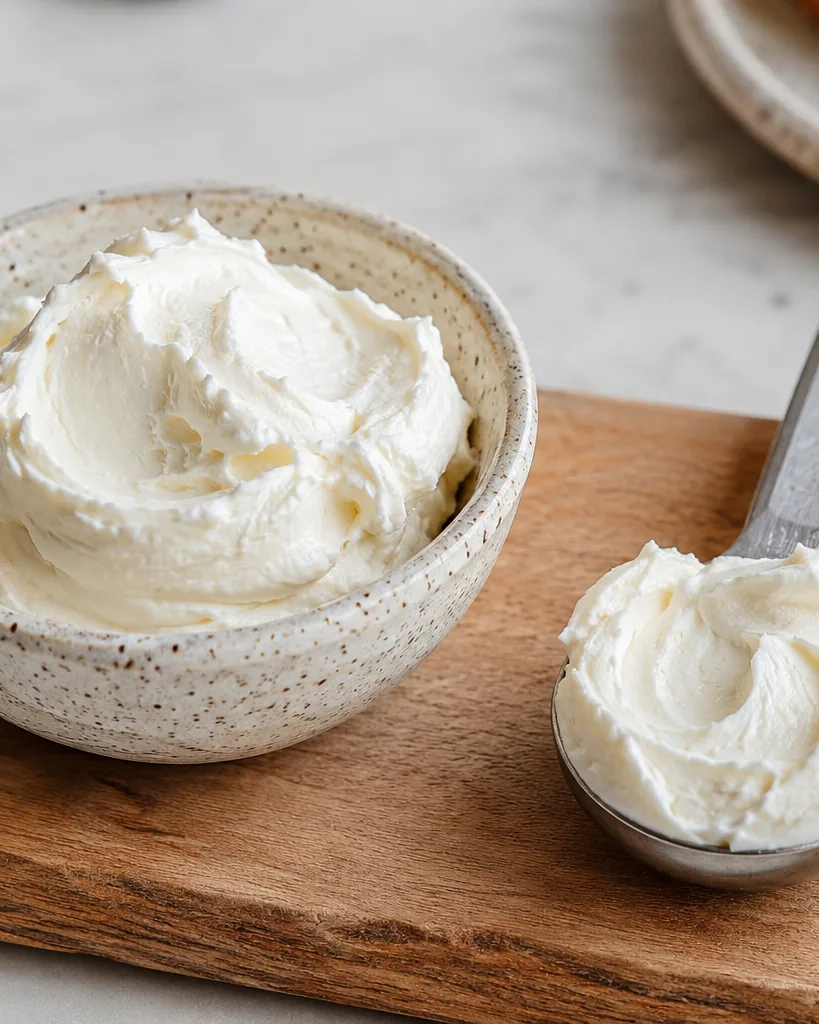
Here is where the label and real life part ways. The panel says 1 oz. A deli schmear is closer to 2 tbsp on the light end and 4 tbsp when someone is being generous, which is 1 oz to 2 oz of product. That means a real bagel spread lands at 100 calories to 200 calories from cream cheese alone, and a heavy hand pushes it toward 200 calories to 400 calories. Add the bagel, and breakfast can clear 500 calories before coffee.
Nobody needs to weigh breakfast. The point is to know the multiplier. Once you have the per-ounce facts memorized, you can eyeball a schmear and know within reason what you spread. That single habit changes how you read every cream cheese label, because the number that matters is not the label serving, it is the serving you actually build.
A quick kitchen rule: a level tablespoon of block cream cheese is about half an ounce, so two rounded tablespoons is a fair 1 oz to 1.5 oz. If you are counting for a plan, scoop with a measuring spoon a few times until your eye calibrates. It takes a week, and then you never need the spoon again.
Calcium, vitamin A, and the micronutrient footnote
Cream cheese is not a micronutrient powerhouse, and the panel shows it. One ounce delivers about 27 mg of calcium, which is only around 2% of the Daily Value the FDA sets near 1,300 mg. That is far less calcium than an equal weight of hard cheese, because the whey, and much of the mineral content with it, drains off during production. If you are eating cheese for bone support, the NIH Office of Dietary Supplements points to firmer aged cheeses and milk as stronger sources.
Vitamin A is the one bright micronutrient. Because cream cheese is fat-rich and made from cream, it carries roughly 300 to 400 IU of vitamin A per ounce, a fat-soluble vitamin that rides along with the dairy fat. That covers a small but real share of the day. The NIH lists dairy fat among everyday contributors of preformed vitamin A, and cream cheese quietly does its part there. It also brings trace phosphorus and a little vitamin B2, though not in amounts worth planning a diet around.
So the honest micronutrient read is simple. Cream cheese earns its place through fat, flavor, and a touch of vitamin A, not through calcium or protein. Treat it as a rich condiment with a good vitamin A footnote, and the facts line up with how it actually eats.
How cream cheese compares to butter and mayo
Spread for spread, cream cheese is lighter than the fats it often shares a fridge shelf with. A tablespoon of butter runs about 100 calories with 11 g of fat and 7 g of saturated fat. A tablespoon of mayonnaise lands near 90 calories and 10 g of fat. A level tablespoon of cream cheese, by contrast, sits around 50 calories and 5 g of fat. So when you swap a schmear of cream cheese for a smear of butter on toast, you tend to save roughly half the calories and fat, gram for gram.
That said, cream cheese carries a little water and a little protein that pure butter does not, so it behaves differently in the pan and on the plate. It will not brown or crisp the way butter does, and it brings a tang butter lacks. Both have a place, and cream cheese is the pick when you want body and moisture rather than sizzle. The nutrition edge is real, but the reason it wins on a bagel is texture, not the calorie count.
One caution on the swap logic: lighter per tablespoon does not mean unlimited. Because cream cheese spreads thick and cool, most people apply more of it than they would butter, which can erase the per-tablespoon savings. The honest comparison holds only when the portions match. Weigh a normal schmear against a normal pat, and cream cheese still comes out ahead, just by less than the raw per-tablespoon numbers suggest.
How cream cheese fits an everyday plate
Put the numbers together and a sensible picture forms. A tablespoon or two adds richness for 50 calories to 100 calories, a gram or two of carbs, and a manageable slice of your saturated fat budget. Where it gets away from people is volume and pairing: a fat schmear on a big bagel with lox is a genuinely calorie-dense meal, and the sodium stacks. The food is not the problem. The autopilot portion is.
For anyone tracking macros, cream cheese is a clean fit on low-carb and ketogenic plans and a poor pick when you need protein density. For heart-focused eaters, the saturated fat is the line to respect, and light or whipped styles give real room without giving up the spread. According to the FDA label framework and the USDA dietary guidance, the move is the same one that works for most rich dairy: enjoy it, count it, and let the per-ounce facts do the deciding rather than the tub.
Frequently asked questions
How many calories are in 1 oz of cream cheese?
Regular cream cheese has about 100 calories per 1 oz (28 g) serving, which is roughly 2 tablespoons. That ounce also brings 10 g of total fat, 6 g of saturated fat, 2 g of protein, and 1 g to 2 g of carbohydrate. Whipped versions run near 50 calories per serving and light styles near 60 to 70 calories per ounce, so the type you choose changes the count more than anything else.
Is cream cheese keto-friendly?
Yes. With only 1 g to 2 g of net carbs and no fiber per ounce, cream cheese fits a ketogenic macro split well, since it is high in fat and low in carbohydrate. The one caution is calorie density at about 3.5 calories per gram, so portions add up quickly. Track the amount you actually spread rather than the small label serving, and it stays an easy low-carb staple.
Does light cream cheese have less sodium than regular?
Not always. Light and reduced-fat cream cheese often carry as much or more sodium than the original, around 120 mg per ounce versus 90 mg to 110 mg for the regular block, because salt helps rebuild flavor after the fat is cut. According to the FDA, the sodium Daily Value is 2,300 mg, and the CDC notes most people already exceed it, so read the panel instead of assuming light means lower on every line.
How much calcium and vitamin A does cream cheese provide?
One ounce of cream cheese provides about 27 mg of calcium, only around 2% of the Daily Value, because most of the calcium drains off with the whey during production. It does better on vitamin A, delivering roughly 300 to 400 IU per ounce thanks to its dairy fat. The NIH Office of Dietary Supplements points to firmer cheeses and milk for stronger calcium, so treat cream cheese as a flavor food with a modest vitamin A bonus.
Where can I verify these cream cheese numbers myself?
The reference values come from USDA FoodData Central and the brand Nutrition Facts panel required by the FDA. You can search the generic and branded entries at the USDA database, cross-check the saturated fat and sodium Daily Values against the FDA label rules, and review the CDC guidance on sodium and saturated fat. Those three sources are linked throughout this page and back every figure in the tables above. For related dairy panels, our heavy cream nutrition breakdown uses the same USDA and FDA references so the numbers stay comparable.