Skim milk nutrition facts are the cleanest argument in the dairy aisle: 83 calories per 8-ounce cup, 8.3 grams of complete protein, 12 grams of carbohydrate, and just 0.2 grams of fat, per USDA FoodData Central. That is nearly half the calories of whole milk with the same protein and slightly more calcium. Skim milk’s label is one of the few where the marketing and the numbers actually agree. Below, the label gets read line by line: why vitamins A and D are added back, how the four milks compare, and where skim genuinely fits and where it does not.
The label, line by line
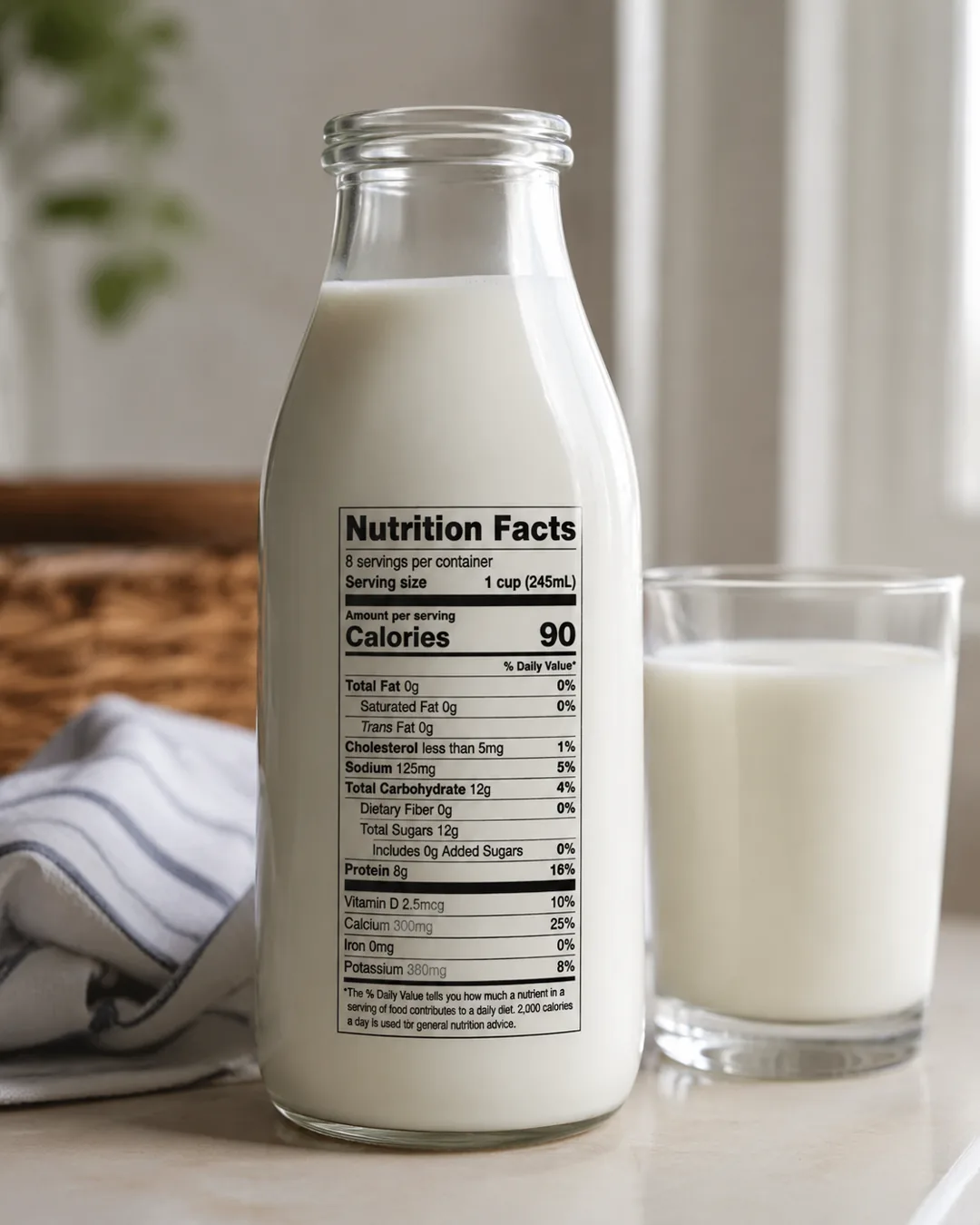
Here is the standard skim milk panel for one cup (240 ml), using USDA FoodData Central figures (fdc.nal.usda.gov) for milk, fat free, with added vitamins A and D.
| Nutrient | Per cup (240 ml) | % Daily Value |
|---|---|---|
| Calories | 83 | – |
| Total fat | 0.2 g | 0% |
| Saturated fat | 0.1 g | 1% |
| Cholesterol | 5 mg | 2% |
| Sodium | 103 mg | 4% |
| Total carbohydrate | 12 g | 4% |
| Total sugars (lactose) | 12 g | – |
| Added sugars | 0 g | 0% |
| Protein | 8.3 g | 17% |
| Calcium | ~300 mg | ~25% |
| Potassium | ~382 mg | ~8% |
| Vitamin D (fortified) | ~2.9 mcg (115 IU) | ~15% |
Three lines deserve a second look. Compare dairy panels side by side and very little changes between fat levels outside the fat line itself, and that observation organizes everything below. The 12 grams of sugar are entirely lactose, milk’s native carbohydrate; the added sugars line reads zero, a distinction the 2016 label redesign finally made visible. The protein is complete, carrying all nine essential amino acids in the casein-and-whey package that makes dairy protein a reference standard. And the fat line, 0.2 grams, is why everything else on the label looks concentrated: take the fat out of whole milk and water does not replace it, the remaining milk does.
Calcium, potassium, and the fortified vitamins
The mineral story is where skim quietly outperforms its reputation. A cup carries roughly 300 milligrams of calcium, about a quarter to 30 percent of the 1,000 milligram daily value the NIH Office of Dietary Supplements lists for most adults (ods.od.nih.gov). Cup for cup, skim edges whole milk on calcium, because calcium travels with the non-fat portion. Potassium comes along too, roughly 382 milligrams, about 8 percent of the daily value, plus phosphorus, riboflavin, and vitamin B12 in meaningful amounts.
The vitamins A and D on the label are a restoration project. Both are fat-soluble: they live in the milkfat, so skimming the fat strips them out. US standards require skim milk to be fortified with vitamin A to replace what the process removed, and vitamin D fortification, typically to about 2.9 micrograms (115 IU) per cup, has been standard American practice since the 1930s campaign against rickets. On many labels, added vitamins are pure decoration, but this particular fortification story stands out because it is corrective rather than cosmetic: the industry removes something and puts it back.
What fat free legally means
Skim, fat free, and nonfat are the same product wearing different labels. Under FDA nutrient content claim rules, codified at 21 CFR 101.62 (ecfr.gov), a serving claiming fat free must contain less than 0.5 grams of fat, and skim milk’s 0.2 grams clears the bar. The trace that remains is real milkfat; commercial skimming separates cream by centrifuge rather than by magic, and a fraction of a gram stays behind.
The naming history explains the aisle confusion. Skim described the process, fat free described the result, and nonfat split the difference; dairy cases still use all three interchangeably. What none of them means is diluted: the standard of identity for milk does not permit adding water, so the difference between skim and whole is only which fraction of the original milk you are holding.
Skim vs 1% vs 2% vs whole: the four-milk table
The percentage on a milk label is milkfat by weight, and the jumps are bigger than the small numbers suggest. According to USDA FoodData Central, the per-cup figures line up like this, and retail labels generally track these reference values closely.
| Milk | Calories | Fat | Saturated fat | Protein | Carbs | Calcium |
|---|---|---|---|---|---|---|
| Skim (fat free) | 83 | 0.2 g | 0.1 g | 8.3 g | 12 g | ~300 mg |
| 1% (low fat) | 102 | 2.4 g | 1.5 g | 8.2 g | 12 g | ~305 mg |
| 2% (reduced fat) | 122 | 4.8 g | 3.1 g | 8.1 g | 12 g | ~295 mg |
| Whole (3.25%) | 149 | 7.9 g | 4.6 g | 7.7 g | 12 g | ~276 mg |
Read the table horizontally and the pattern is clean: protein, carbs, and calcium barely move across the four milks, while calories track fat almost exactly. Each step up the fat ladder adds roughly 20 to 27 calories per cup, nearly all of it from milkfat, about half of that saturated. Whole milk’s 4.6 grams of saturated fat per cup is 23 percent of the FDA’s daily value; skim’s is 1 percent. For the whole-milk side of this comparison in full detail, our whole milk nutrition facts breakdown runs the same exercise from the other end, and the 2% milk nutrition facts page covers the middle step most families actually buy.
The protein-per-calorie math
Here is the calculation the database pages never run, and it is the strongest case skim milk has. Divide protein by calories and multiply by 100:
- Skim: 8.3 g / 83 cal = 10 g protein per 100 calories
- 1%: 8.2 g / 102 cal = 8 g per 100 calories
- 2%: 8.1 g / 122 cal = 6.6 g per 100 calories
- Whole: 7.7 g / 149 cal = 5.2 g per 100 calories
Quick takeaway: skim milk delivers 10 g of complete protein per 100 calories, nearly double whole milk’s 5.2 g. If protein per calorie is your metric, skim is the strongest carton on the shelf.
At 10 grams of complete protein per 100 calories, skim milk sits in the same efficiency neighborhood as plain nonfat Greek yogurt and egg whites, the foods people actually buy for that ratio. Anyone tracking protein inside a calorie budget, which is most of the people reading labels in the first place, gets nearly double the protein efficiency of whole milk from the same carton shelf. That ratio, not the fat panic of the 1990s, is the modern argument for skim.
Reading the carton beyond the panel
The nutrition panel is only half the carton; the rest of the label answers questions the panel cannot. The ingredient list on plain skim milk should read three items long: nonfat milk, vitamin A palmitate, vitamin D3. Anything longer means you are holding a flavored, lactose-free, or protein-fortified variant, each legitimate, each with different numbers than the table above.
Two other stamps matter, and the overlooked detail on most cartons is the first one. The grade A designation is a sanitation standard, not a nutrition claim; effectively all retail milk carries it. And the sell-by date on skim behaves like any milk’s: the fortified vitamins do not degrade meaningfully within normal shelf life, so the date is about freshness and safety, not nutrient loss.
Lactose-free skim deserves its own sentence, because the label trips people. It shows the same 12 grams of total sugar, sometimes slightly higher sweetness perception, because the added lactase enzyme has already split lactose into glucose and galactose, which taste sweeter gram for gram. Nothing was added; the sugar was pre-digested. The calories and protein match regular skim.
What a cup contributes to a day
Numbers on labels only mean something against daily targets, so here is one cup of skim placed against the standard daily values used on US labels.
- Protein: 8.3 g is 17% of the 50 g label reference, from a complete source.
- Calcium: ~300 mg is about 25 to 30% of the 1,000 mg DV, the largest single contribution most drinks make.
- Potassium: ~382 mg is 8% of the 4,700 mg target, a nutrient most American diets underfill.
- Vitamin D: ~2.9 mcg is roughly 15% of the 20 mcg DV, meaningful because few foods carry vitamin D at all.
- Saturated fat and sodium: 1% and 4% DV respectively, effectively negligible contributions to the two lines most eaters watch.
Stack three servings, the classic dairy recommendation, and skim delivers most of a day’s calcium, half its vitamin D, and 25 grams of protein for about 250 calories. The same three servings of whole milk cost 447 calories for the same minerals. That per-day framing, rather than any single glass, is where the choice between cartons actually shows up.
Two myths worth retiring
The first myth: skim milk is watered down. It is not, and the standard of identity does not allow it to be. The table above shows skim matching or beating whole milk on protein and calcium per cup; what was removed is cream, not substance. The thinner mouthfeel is the absence of fat, which is also the absence of most of the calories, that is the trade, stated plainly.
The second myth: the sugar line means skim is sweetened. Every unflavored milk, skim through whole, shows the same 12 grams, all lactose that was in the udder, none added at the plant. The added sugars line on any plain milk reads 0 grams. Chocolate and strawberry milks are different animals, commonly adding 10 to 12 grams of true added sugar on top of the lactose, and the label’s two sugar lines are exactly the tool for telling those situations apart.
Who skim fits, and who it does not
Skim earns its spot for specific eaters, and the better approach is choosing by goal rather than by habit. Calorie-budgeters get milk’s full protein, calcium, and potassium package at 83 calories a cup, the cheapest buy-in dairy offers. Protein-per-calorie trackers get the 10-per-100 ratio above. High-volume milk users, the cereal-plus-coffee-plus-glass households, save 130 to 200 calories a day switching from whole across three servings, which compounds meaningfully over a year.
Worth knowing: children under two are generally steered toward whole milk, not skim, because early brain development needs dietary fat. The calorie savings that help adults work against toddlers.
It fits poorly elsewhere. Strict keto eaters find 12 grams of carbs per cup unaffordable, and skim is the most carb-dense milk per calorie; small amounts of heavy cream are the usual answer there. Toddlers under two are generally steered toward whole milk because early brain development wants dietary fat. And anyone drinking milk primarily for satiety may find the fat-free version less filling per glass, fat slows gastric emptying, which is honest physiology and worth weighing against the calorie savings rather than pretending either side of the trade does not exist.
Skim against the plant milks
The modern shelf puts skim next to almond, oat, and soy rather than next to whole, so the comparison worth running has changed. Per cup, using representative USDA and manufacturer figures: unsweetened almond milk carries about 30 to 40 calories but only 1 gram of protein; unsweetened oat milk runs 90 to 120 calories with 2 to 3 grams of protein and several grams of added-ish maltose from processing; unsweetened soy milk is the closest match at roughly 80 calories and 7 grams of complete protein.
Read against the 83-calorie, 8.3-gram skim line, the pattern is stark, and it is one of the most common mistakes in well-intentioned swaps. Almond milk beats skim on calories and loses the protein entirely, an acceptable trade for coffee whitening, a poor one for a protein source. Oat milk costs more calories for a tenth of the protein. Soy is the genuine nutritional peer, and fortified soy is the only plant milk the Dietary Guidelines treat as a dairy equivalent. Calcium tells a similar story: plant milks match skim’s ~300 milligrams only when fortified, and the added calcium salts settle, which is why the carton says shake well.
None of this makes plant milks wrong; lactose intolerance, dairy allergy, and preference are all real reasons to choose them. It does mean the swap is not nutritionally neutral, and the label, as usual, is where the difference sits in plain sight: protein 8.3 versus 1, complete versus not, for roughly the same calories.
How it behaves in coffee and baking
The kitchen differences come down to fat chemistry, and knowing them up front saves some disappointment. In coffee, skim foams bigger than whole, milk foam is a protein structure and skim’s proteins are undiluted by fat, but the foam is drier and the cup less creamy, because creaminess is literally the cream. Steamed skim cappuccinos trade silk for volume; whether that is a downgrade is a taste question, not a nutrition one.
In baking and cooking, skim substitutes cleanly wherever milk is a liquid and a protein source: pancakes, breads, most batters. It underperforms where recipes borrow milk’s fat, cream soups, custards, bechamel, which turn thinner and less glossy; a teaspoon of butter per cup of skim closely rebuilds whole milk’s fat content when a recipe genuinely needs it. Skim also scorches slightly more easily on the stovetop, since fat buffers heat, so the sauce pot wants a lower flame and an extra stir.
Frequently asked questions
How many calories are in skim milk?
About 83 per 8-ounce cup, per USDA FoodData Central, versus 102 for 1%, 122 for 2%, and 149 for whole. Across a three-serving day, the skim-versus-whole gap is roughly 200 calories.
Does skim milk have as much protein as whole milk?
Slightly more per cup, 8.3 grams versus 7.7, and nearly double per calorie: 10 grams per 100 calories against whole’s 5.2. The protein is complete, with the same casein-whey quality across all milk fat levels.
Why does skim milk contain added vitamins?
Vitamins A and D are fat-soluble and leave with the cream. US standards require vitamin A restoration in skim milk, and vitamin D fortification to about 2.9 micrograms per cup is standard practice, putting back what processing removed.
Is the sugar in skim milk added sugar?
No. The 12 grams per cup are naturally occurring lactose, and the added sugars line reads 0 grams on any plain milk. Only flavored milks carry true added sugar.
Is skim or whole milk better?
Better for what is the only honest framing. Skim wins on calories, saturated fat, and protein per calorie; whole wins on satiety, culinary richness, and toddler nutrition. The label gives you the numbers; the goal decides the carton.
About the author and sources
Tastybend Nutrition Desk writes nutrition label breakdowns for TastyBend, working directly from USDA FoodData Central entries, FDA labeling regulations, and manufacturer panels. This guide draws its figures from USDA FoodData Central records for fat-free, 1%, 2%, and whole milk, FDA nutrient content claim definitions for fat free, and NIH Office of Dietary Supplements daily values for calcium and vitamin D. Where sources give ranges across brands, the table shows the representative USDA value.
This article explains label information and is not medical or dietetic advice. Individual needs vary, especially for children, pregnancy, and medical diets; a registered dietitian or physician is the right resource for personal guidance.