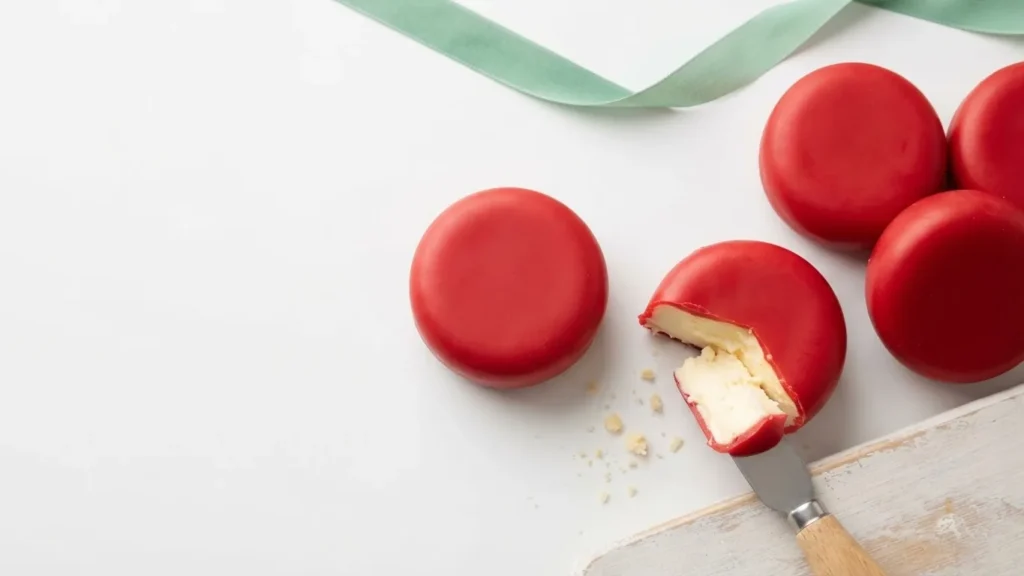
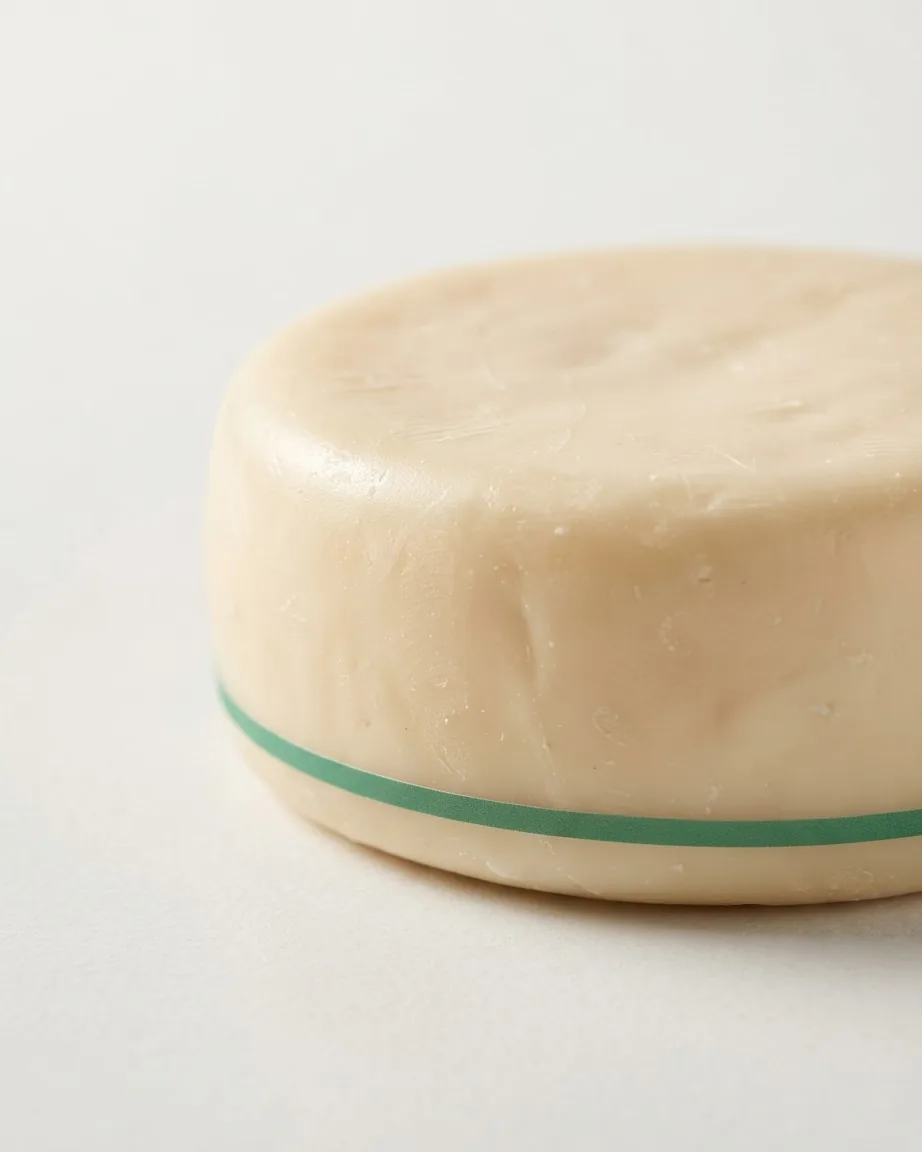
A single Mini Babybel Original wheel weighs 20g, and the U.S. Nutrition Facts panel assigns that wheel 3.5g of saturated fat – 18% of a full day’s Daily Value. The wax shell shrinks the thing in your hand, not the number on the label. That gap is why babybel cheese nutrition facts are worth reading straight off the panel rather than guessed from the size of the portion.
What follows logs the lines Bel Group prints for the U.S. product, sets them against the Reduced Fat version, and marks where overseas labels for the same-named wheel part ways. It sits with the other dairy and eggs panels this desk keeps.
One Mini Babybel Original piece, a 20g serving, lists 5g total fat, 3.5g saturated fat (18% DV), 150mg sodium, 4g protein, 0g total carbohydrate, 0g added sugars, and 140mg calcium (10% DV). The Reduced Fat wheel, at the same 20g piece, lists 3g total fat, 2g saturated fat, and 5g protein. These are U.S. babybel cheese nutrition facts; the UK and Australian pages for the same product name print different values, so the label from your own market is the one to go by rather than a figure borrowed from abroad or from a phone app.
Why a 20g Wheel Still Logs 18% of the Saturated-Fat Daily Value
The small wheel invites a quick assumption: little food, little impact. The saturated-fat line argues otherwise. At 3.5g, one Mini Babybel Original piece carries 18% DV, measured against the current saturated-fat Daily Value of 20g set by the U.S. Food and Drug Administration (FDA).
Context for that 18% comes from the FDA’s own reading of percentages: 5% DV or less of a nutrient per serving counts as low, and 20% DV or more counts as high. One wheel’s saturated fat lands between those two marks – not low by the 5% guide, not quite high by the 20% one. So a reader who treats the wheel as nutritionally negligible on saturated fat is reading the geometry, not the panel.
Two other U.S. lines sit in that same middle band. Sodium at 150mg is 7% DV against the FDA’s 2300mg sodium Daily Value, and calcium at 140mg is 10% DV. Both clear the 5% low mark without reaching the 20% high mark. The takeaway for stacking several wheels is practical: lines that read modest for one piece scale directly with the count, and saturated fat is the one that climbs fastest off its 18% start.
Original vs Reduced Fat: Three Lines That Move
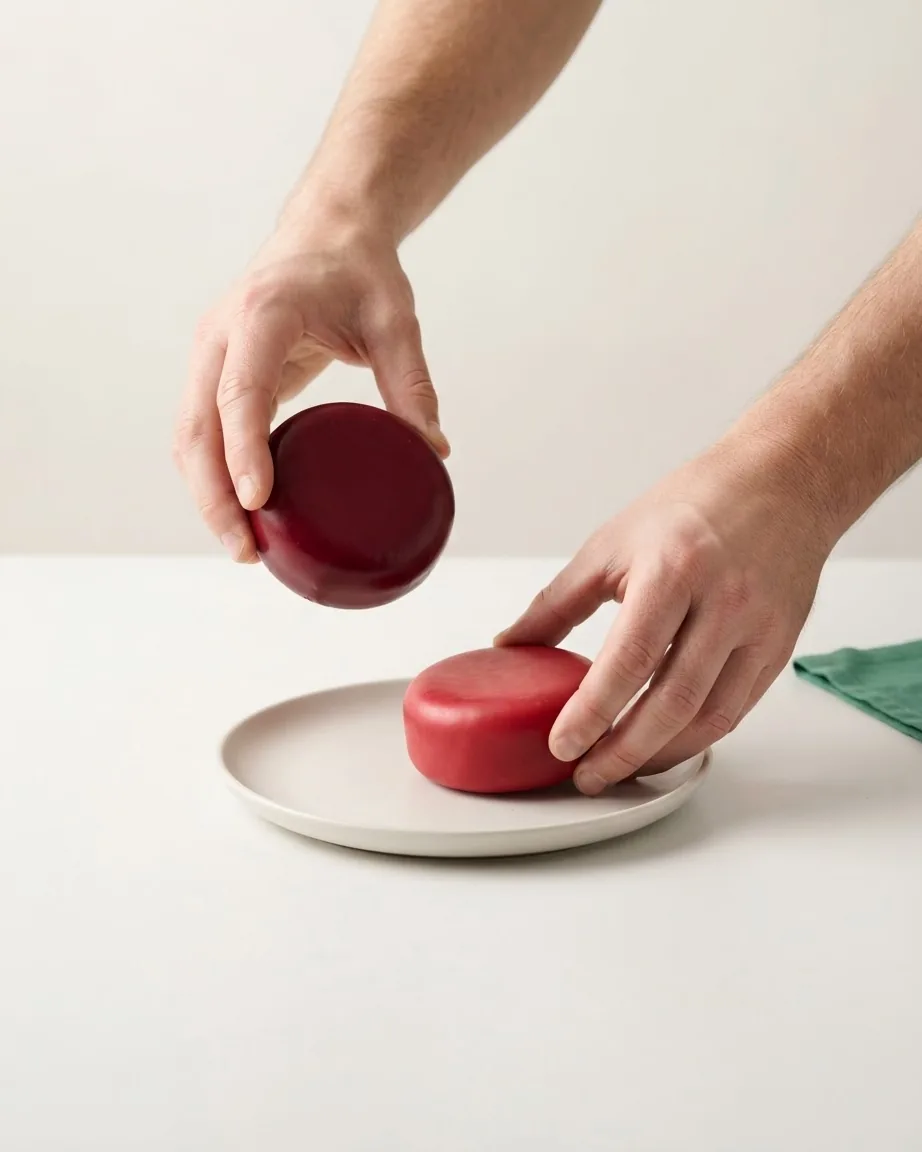
Swapping Original for Reduced Fat changes the panel in a way a shopper can act on. Bel Group labels the Reduced Fat wheel with 40% less fat than Original, cutting total fat from 5g to 3g at the same 20g piece. Saturated fat drops to 2g (10% DV), and protein moves the other way, up to 5g (10% DV) from Original’s 4g.
That makes the choice legible by priority. A shopper watching saturated fat gains the most, since 2g at 10% DV undercuts Original’s 3.5g at 18% DV. A shopper chasing protein per piece also gains, modestly, with the Reduced Fat line reading higher. The one trade is flavor-fat density, which the panel does not score.
| Line (per 20g piece) | Original | Reduced Fat |
|---|---|---|
| Total Fat | 5g (6% DV) | 3g (40% less than Original) |
| Saturated Fat | 3.5g (18% DV) | 2g (10% DV) |
| Total Carbohydrate | 0g (0%) | Not in these figures |
| Added Sugars | 0g (0%) | Not in these figures |
| Protein | 4g (8% DV) | 5g (10% DV) |
| Sodium | 150mg (7% DV) | Not in these figures |
| Calcium | 140mg (10% DV) | Not in these figures |
The blanks in the Reduced Fat column are honest gaps, not zeros: the figures gathered for that wheel cover fat, saturated fat, and protein, so a shopper who needs its sodium or calcium should read those off the wrapper directly. Figures for the Original wheel come from the Bel Group U.S. product panel.
The Reduced Fat option also lines up with broader dairy advice. The U.S. Department of Agriculture (USDA) MyPlate points eaters toward lower-fat or fat-free dairy choices within the dairy group, which puts the Reduced Fat wheel on the side of that guidance – without making it interchangeable with a glass of milk or a cup of yogurt, which carry their own panels.
“1 Piece” Is the Labeling Unit, Not a Serving Suggestion
The Original panel sets its serving size at 1 Piece (20g). It is easy to read that as a cap – one wheel, done. That reads a recommendation into a measuring stick. The FDA is direct on the point: a labeled serving size “is not a recommendation of how much to eat or drink.”
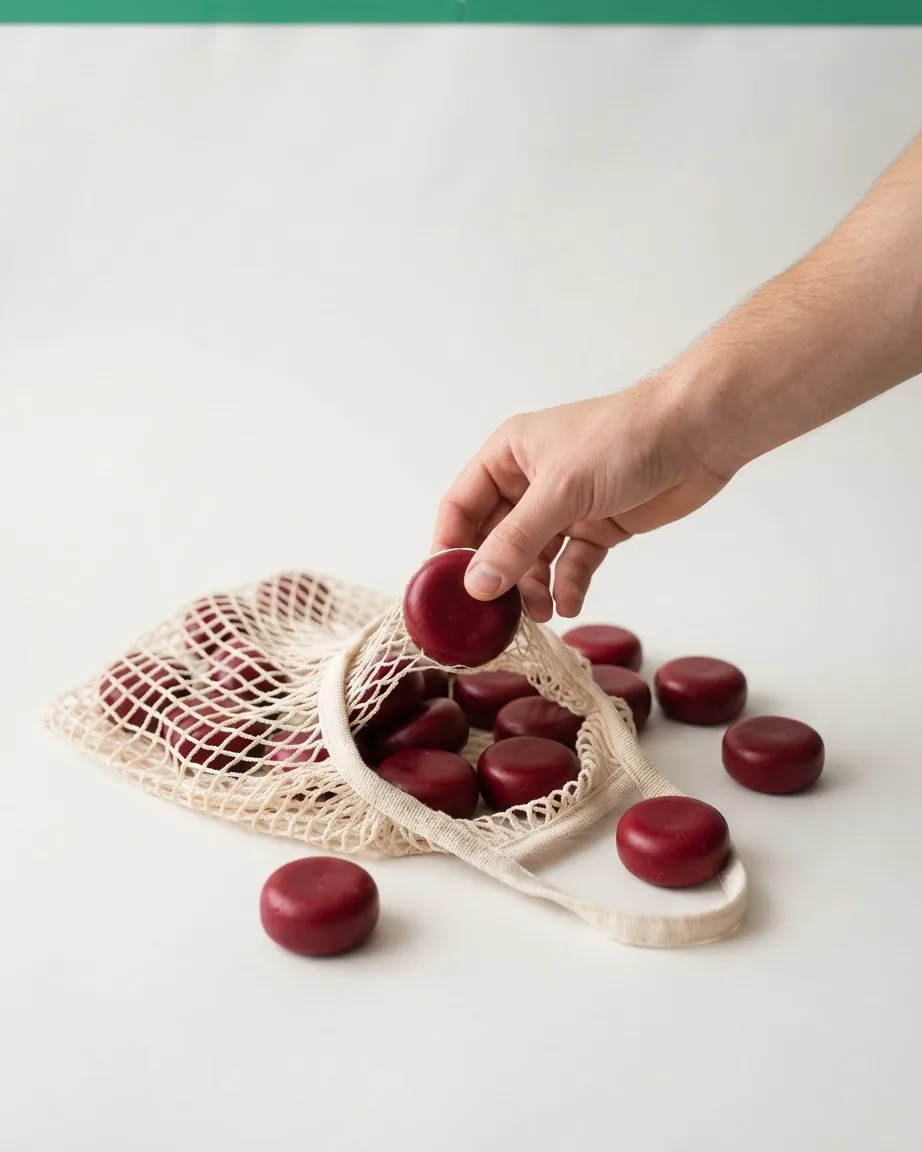
The serving exists so every brand discloses against a comparable unit. What a person actually eats is a separate decision, and the panel does the multiplication honestly: two wheels means twice every line above, including 7g saturated fat and 36% DV. That framing matters most for grab-and-go eating, where a netted bag empties a few wheels at a time and the per-piece numbers quietly compound past the single-serving snapshot on the label.
Where Accurate Babybel Cheese Nutrition Facts Come From for Your Market
The same wheel name does not mean the same panel across borders. Bel Group publishes separate pages by country, and the figures move even when the portion is held at 20g.
- United States (20g piece): 4g protein, 150mg sodium, 3.5g saturated fat.
- United Kingdom (20g portion): the UK Original page reports 4.4g protein, and 22g protein with 295 kcal per 100g as the reference basis.
- Australia (20g serving): the Australian Original page reports 142mg sodium.
Held side by side on a 20g basis, the U.S. 4g protein and the UK 4.4g protein do not match, and the U.S. 150mg sodium and the Australian 142mg sodium do not either. These are distinct national SKUs and labeling regimes, so the spread may reflect formulation, rounding, or market-specific rules. The working rule for a reader: a number is only safe for the wheel in front of you if it came from that wheel’s market page. Mixing a UK protein figure into a U.S. snack log, or an Australian sodium figure into a UK one, imports a mismatch the label never claimed.
This also governs calories. The U.S. lines above do not include a per-piece energy figure, and the UK 295 kcal is published per 100g, not per wheel – so it is a reference basis, not a one-wheel calorie count to drop onto the American product. Related dairy panels on this desk: ricotta cheese and 1% milk.
The Calcium Line Most Snack Rundowns Skip
Babybel gets filed as a protein snack, and the 4g protein line earns that. The U.S. panel also prints 140mg calcium at 10% DV, which most quick writeups leave off. For a 20g piece, a mineral line clearing the FDA’s 5% low mark is worth logging alongside the macro it usually hides behind.
USDA MyPlate places cheese in the dairy group and lists calcium, potassium, vitamin D, and protein among the nutrients dairy-group foods supply. The U.S. Babybel panel confirms two of those four by name – protein and calcium – at the figures above. It does not follow that every dairy nutrient appears in a meaningful amount in this specific wheel; the panel reports what it reports, and the rest is group-level guidance, not a per-piece promise.
The ingredient line explains the clean carbohydrate reading: Original is made from pasteurized cultured milk, salt, and microbial enzymes, which is why both total carbohydrate and added sugars log 0g. For a snack that pairs a 0g sugar line with 4g protein and 140mg calcium, the reasonable read is a small dairy contribution with a saturated-fat cost – 3.5g, 18% DV – that a bagful multiplies.
How Many Wheels Until One Nutrient Hits a Full Day?
The panel says saturated fat is the line that climbs fastest off a bag of wheels. Running the full-day math against the FDA Daily Values the article already cites shows exactly how fast. Divide each DV by the per-wheel amount and you get the wheel count that fills a whole day’s allowance for that nutrient:
- Saturated fat: 20g DV ÷ 3.5g per wheel = 5.7 wheels. Five wheels log 17.5g (87.5% of the day); the 6th wheel pushes you to 21g, past 100%.
- Sodium: 2300mg DV ÷ 150mg per wheel = 15.3 wheels. It takes a 16th wheel to fill the day’s sodium.
So saturated fat maxes out about 2.7× sooner than sodium on this same wheel – roughly 6 pieces versus 16. That is the concrete version of “climbs fastest”: a netted bag that empties a few wheels at a time is spending your saturated-fat budget two to three times quicker than your sodium budget, even though both lines read modest for one piece.
FAQ
Is Mini Babybel Original low-carb or keto-compatible?
On the carbohydrate axis, yes. The U.S. Original panel reads 0g total carbohydrate and 0g added sugars per 20g piece, with the fat coming in at 5g. That profile fits a low-carb or ketogenic pattern on paper. Energy and saturated fat still count toward daily totals, so the fit is about carbs specifically, not an all-clear on the whole panel.
Does the Reduced Fat wheel also cut sodium and calcium?
The published Reduced Fat figures cover fat, saturated fat, and protein – 3g, 2g, and 5g per 20g piece – and stop there. Sodium and calcium for that version are not among those lines, so the swap’s effect on salt or mineral content cannot be stated from them. Read the sodium and calcium rows straight off the Reduced Fat wrapper before assuming either moved.
My tracking app shows different numbers than the wrapper. Which wins?
The wrapper, every time. Third-party apps often blend crowd-sourced entries or pull a figure from a different country’s SKU, which is exactly how a UK or Australian value lands on a U.S. log. Bel Group publishes per-market pages, and the one printed on the wheel you bought is the authoritative source for that purchase. Override the app with the panel.