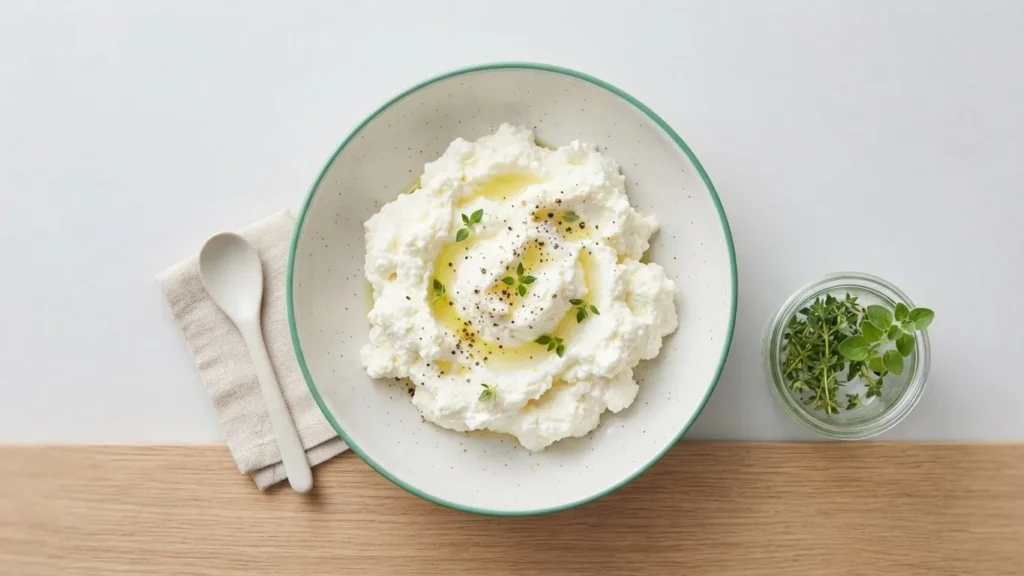
A quarter-cup of whole-milk ricotta carries 93 calories, while the same quarter-cup of fat-free ricotta carries 45 calories and no fat at all, per figures Everyday Health attributes to USDA data. That single gap, more than any other, is why ricotta cheese nutrition facts refuse to collapse into one tidy number. The calorie line moves with the fat level, and the fat level is a choice made at the store. This desk aggregates manufacturer declarations and public food databases into standardized reference tables; below, every figure travels with its serving size, its fat level, and the source that reports it.
That discipline matters here because the same ricotta appears in print with calorie counts roughly two-fold apart, not because anyone is wrong, but because “a serving” means different grams in different places.
The short answer: ricotta by fat level and serving size
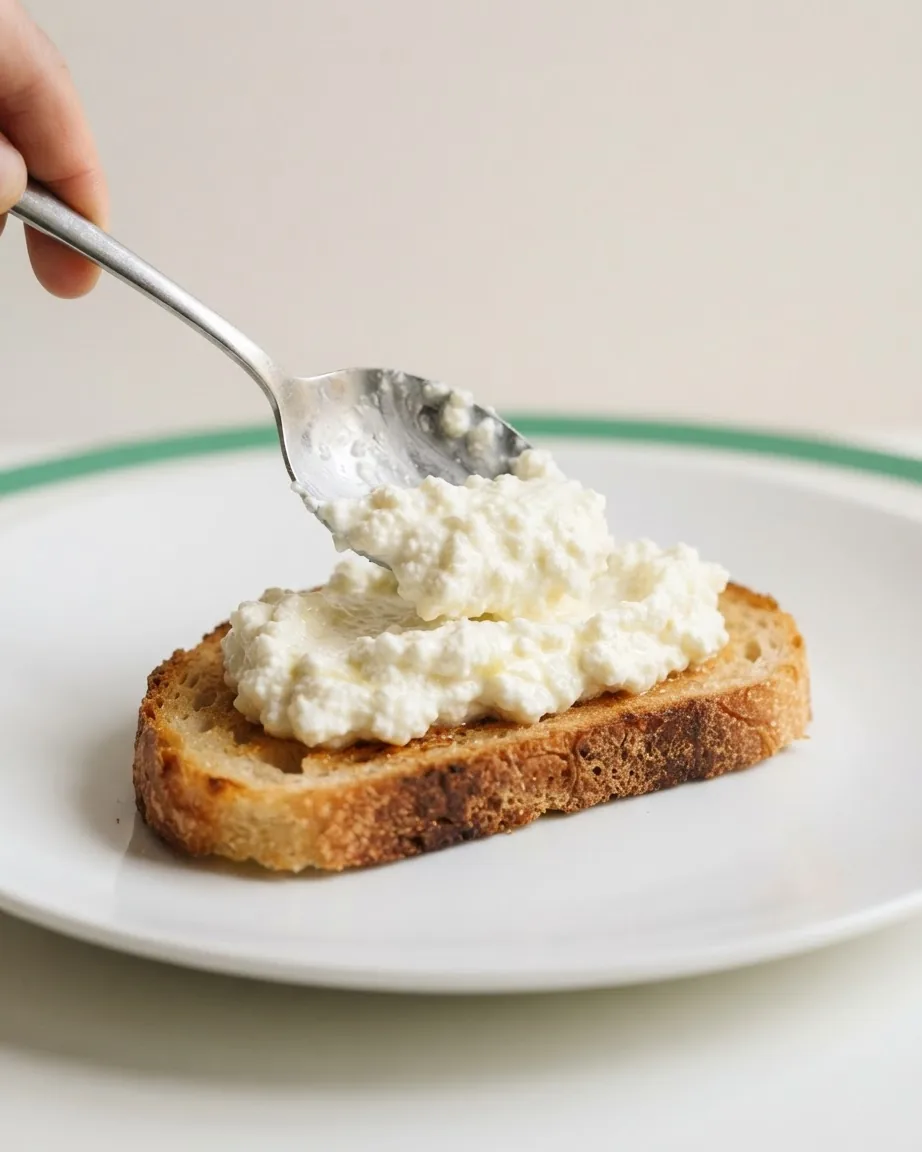
Whole-milk ricotta runs about 204 calories per half-cup (129 g) with 10.1g protein, per Verywell Fit citing USDA data. Part-skim drops to 171 calories per half-cup (124 g) with 14g protein. On a quarter-cup basis, whole-milk comes in at 93 calories, part-skim at 50 calories and 2g fat, and fat-free at 45 calories with no fat. Protein stays high across all three; the richness and calories fall as the milk gets leaner. Ricotta cheese nutrition facts only make sense when the serving size and fat level are both named, because both move the numbers.
Why two cans of ricotta print different calorie counts
Pick up one chart and whole-milk ricotta reads 204 calories per half-cup; pick up another and the same food reads 186 calories for a half-cup. Nobody made an error. Verywell Fit labels its half-cup as 129 g; MyFoodData and MyFoodAnalysis label theirs as 124 g. Five grams of cheese separates the two figures before any other variable enters.
The divergence widens per 100 grams. MyFoodAnalysis, reproducing the USDA SR Legacy record (FDC 170851), reports 150 kcal per 100 g with 7.5g protein, 10.2g fat, and 7.3g carbohydrate for whole-milk ricotta. That is not comparable head-to-head with a half-cup figure, because the gram weight assigned to “half a cup” varies, and the dataset vintages differ too. A number without its serving size and fat level answers nothing. With them, it answers precisely.
So the working rule for reading any ricotta panel: confirm the fat level first, the gram weight of the serving second, then trust the calorie line. Change either input and the output changes with it.
Whole-milk ricotta: the full macro line per half-cup
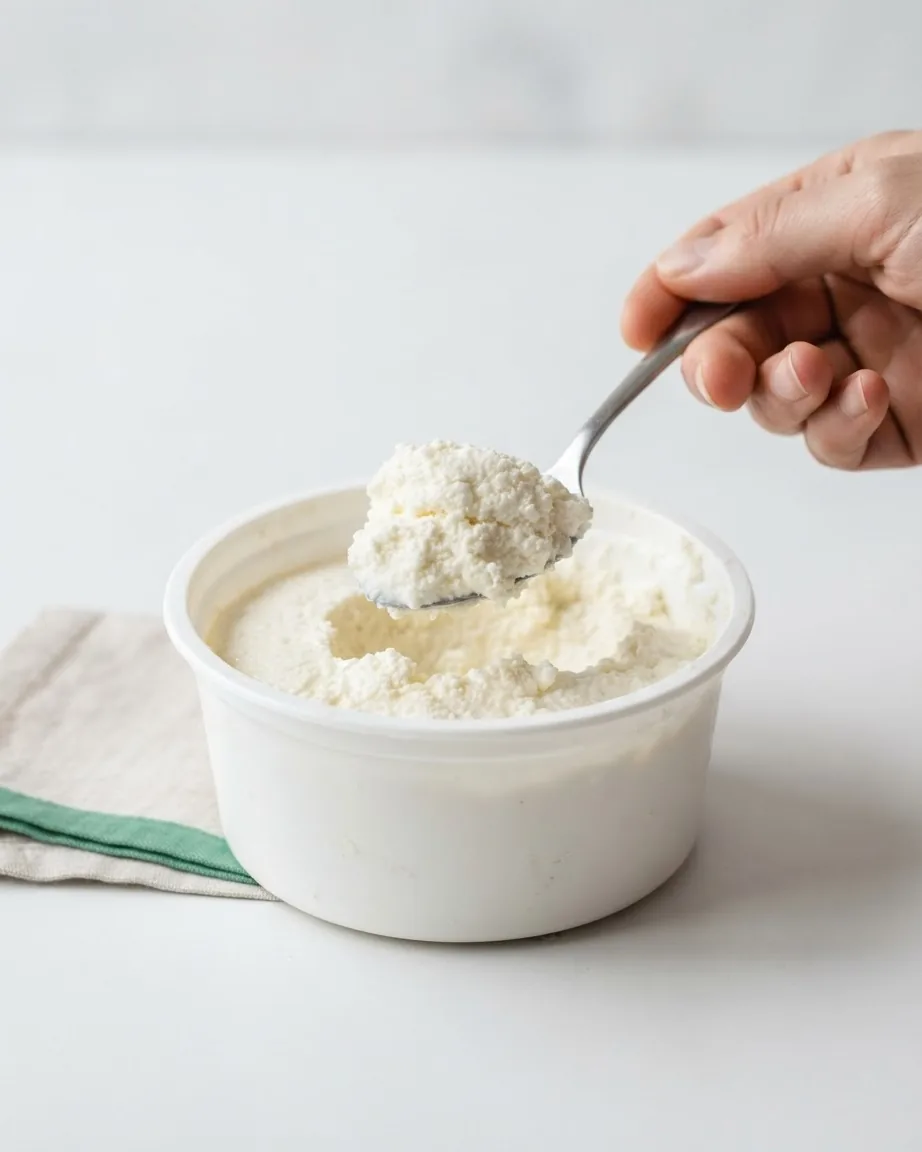
For whole-milk ricotta at a half-cup (129 g), the figures run 204 calories, 10.1g protein, and 14.2g fat, of which 8g is saturated. On a quarter-cup basis, whole-milk ricotta lands at 93 calories, 6.3g fat, 4g saturated fat, and 7g protein, with the majority of that fat, 4 g, coming from saturated fat.
Micronutrients are where whole-milk ricotta earns its place. Per half-cup (124 g), MyFoodData lists 255.4mg calcium (20% DV), 60.8mg cholesterol (20% DV), 136.4mg sodium (6% DV), 191mg phosphorus (15% DV), 7.3mcg selenium (13% DV), and 1.1mcg vitamin B12 (44% DV). The B12 figure is the standout: nearly half a day’s value in a half-cup. Carbohydrate stays low, and the glycemic index of whole-milk ricotta lands at 27, a low glycemic index food.
| Nutrient | Amount | %DV |
|---|---|---|
| Calories (129 g) | 204 kcal | – |
| Protein (129 g) | 10.1g | – |
| Total fat (129 g) | 14.2g | – |
| Saturated fat (129 g) | 8g | – |
| Cholesterol | 60.8mg | 20% |
| Sodium | 136.4mg | 6% |
| Calcium | 255.4mg | 20% |
| Phosphorus | 191mg | 15% |
| Selenium | 7.3mcg | 13% |
| Vitamin B12 | 1.1mcg | 44% |
Part-skim ricotta: where the per-cup figures disagree
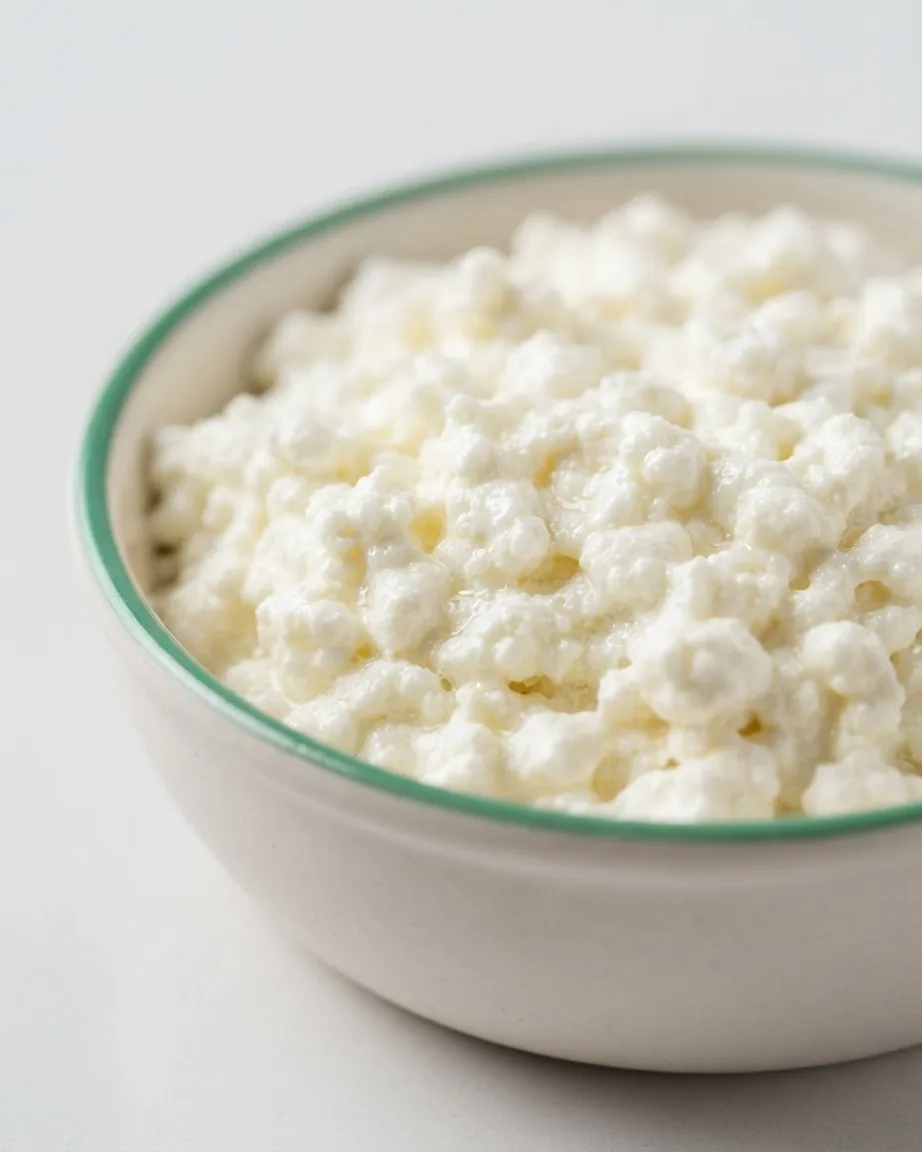
Part-skim is the level most people reach for, and it is also where the sources split hardest. On a quarter-cup basis, part-skim runs 50 calories and 2g fat. At a half-cup (124 g), it reads 171 calories, 14g protein, 6.3g carbohydrate, and 9.8g fat. Per 100g, EatThisMuch, drawing on USDA-derived data, gives part-skim 138 calories, 8g fat, 5g saturated fat, 11g protein, 99mg sodium, and 272mg calcium, and describes it as having a relatively low calorie density, with 138 Calories per 100g.
The per-cup figures are the problem. The University of Rochester Medical Center lists one cup of part-skim ricotta at 339.48 kcal, 28.02 g protein, 19.46 g fat, 12.12g saturated fat, 669.12 mg calcium, and 307.5 mg sodium. Same food, same cup, numbers roughly two-fold apart.
Neither can be dismissed, and the gram weight behind each “cup” is not published, which blocks reconciliation per 100g. The practical move: do not trust a loose per-cup ricotta figure. Weigh the portion, or convert from a per-100g or per-half-cup figure where the gram weight is stated. For whole-milk, URMC separately lists one cup at 428.04 kcal, 27.7 g protein, 31.93 g total fat, 20.41 g saturated fat, 7.48 g carbohydrate, 509.22 mg calcium, and 206.64 mg sodium.
The saturated fat question: is ricotta a heart problem?
This is where the richness earns real weight. A half-cup of whole-milk ricotta holds 8g saturated fat, which amounts to 40% of recommended intake on a 2,000-calorie diet. The FDA Daily Value for saturated fat is 20 g, and under the FDA guidance, 20% DV or more of a nutrient per serving is considered high. Eight grams against a 20 g ceiling clears that line.
On the quarter-cup basis, the majority of the fat, 4 g, comes from saturated fat, the type of fat that can affect blood cholesterol levels. Cholesterol itself tracks with fat level: one serving of whole-milk ricotta carries 30mg cholesterol (10% DV), part-skim has 15 mg per serving (5 percent DV), and fat-free contains 5 mg per serving. For a reader watching saturated fat, part-skim or fat-free is the lever, and it moves the number hard, not cosmetically.
Is ricotta really low-sodium? Two figures, both true
Everyday Health calls ricotta a low-sodium food, citing around 68 mg of sodium per serving, which comes to 3 percent of the DV. On a half-cup (124 g) basis, sodium reads 136.4mg at 6% DV. Those look like a contradiction and are not: the serving sizes differ, so both figures stand.
What settles the “low-sodium” claim is the FDA scale, not the adjective. The FDA Daily Value for sodium is less than 2,300 milligrams per day, and the FDA treats 5% DV or less of sodium per serving as low and 20% DV or more as high. At 3% or 6% DV depending on the serving, ricotta sits at the low end either way. The caveat the panel carries: sodium content varies by brand, so the printed figure on your container is the one that governs, not a database average.
Ricotta vs cottage cheese: the trade that actually differs
These two get swapped in lasagna, dips, and toast, but their panels diverge on exactly the axes a shopper cares about. On a 100g basis, FoodStruct puts them nearly level on protein: ricotta at 11.26g versus cottage cheese at 11.12g. The gaps open elsewhere.
- Sodium: ricotta contains 76.9% less sodium than cottage cheese, per FoodStruct. For a reader managing salt, that is the deciding line.
- Fat: ricotta carries more fat than cottage cheese. If cutting saturated fat is the goal, cottage cheese wins outright.
- Calcium: ricotta is higher in calcium than cottage cheese.
- Protein: effectively a tie, so protein is not the reason to pick one over the other.
So the choice frames cleanly: ricotta for lower sodium and more calcium, cottage cheese for less fat. Protein is a wash. For a fuller side-by-side, see the ricotta vs cottage cheese comparison. See also our mozzarella cheese figures and the baked beans numbers for other pantry staples. The wider dairy eggs section logs the rest of the fridge.
Calcium and B12: what one serving of ricotta actually delivers
Ricotta’s draw beyond protein is its mineral and vitamin density. Everyday Health reports that one serving provides 10 percent of the daily value of calcium, plus 8 percent of the DV of phosphorus, 8 percent of the DV of vitamin A, and 22 percent of the DV of vitamin B12. Organic Valley, on a quarter-cup basis, states that just a quarter cup of ricotta provides 150 milligrams of calcium, which it frames as about 15% of daily value.
The two calcium percentages, 10 percent and 15 percent, sit on different serving bases and different sources, so they are not a contradiction to resolve so much as a reminder to read the serving. The FDA Daily Value for calcium is 1300 mg; against that ceiling, MyFoodData’s 255.4mg per half-cup lands at 20% DV. B12 is the quiet winner here, with that 44% DV from a half-cup on MyFoodData’s figure outrunning most cheeses.
Raw-milk ricotta and who should skip it
Safety warning
Most ricotta on US shelves is made from pasteurized milk. Ricotta made from raw or unpasteurized milk carries a different risk profile: pathogens such as Listeria and Salmonella can survive in unpasteurized dairy. For most healthy adults that risk is low, but pregnant people, older adults, and anyone immunocompromised are the groups usually advised to avoid unpasteurized soft cheeses. This is a label-reading task, not a taste one: the word “pasteurized” on the container is the check.
On storage, ricotta’s shelf life runs around 2 weeks when sealed or 5 to 7 days after opening, stored below 40°F. That window is short for a dairy product, so the open date matters more than the printed best-by.
Fat-free, part-skim, or whole: picking by your goal
Three levels, three different jobs, same quarter-cup frame. Whole-milk ricotta at 93 calories, 6.3g fat, and 7g protein is the richest and the one that drives up saturated fat fastest. Part-skim at 50 calories and 2g fat is the middle lever, trimming fat while holding protein high. Fat-free at 45 calories and no fat is the leanest, with cholesterol down to 5 mg per serving.
If the goal is maximum protein per calorie, the lean versions win, since protein barely moves while fat and calories fall. If the goal is richness in a baked dish, whole-milk carries it, at the cost of that 40% saturated-fat share per half-cup. If the goal is managing blood cholesterol, fat-free’s 5 mg is the floor. The number that should drive the choice is saturated fat, because that is the line that swings most across the three.
All three fat levels are quoted at the same ¼-cup serving, so the difference between them is a clean subtraction – not a guess.
- Whole-milk → part-skim: 93 − 50 = 43 fewer calories and 6.3 − 2 = 4.3 g less fat per ¼ cup.
- Whole-milk → fat-free: 93 − 45 = 48 fewer calories and all 6.3 g of fat gone. That 48 is 48 ÷ 93 ≈ 52% of the calories wiped out while the protein barely moves.
- Across a 2-cup lasagna: whole-milk ricotta runs 93 × 8 = 744 kcal; fat-free runs 45 × 8 = 360 kcal.
The lever is the fat level, and these numbers show it moves the result by roughly half – not cosmetically.
Frequently asked questions about ricotta nutrition
Which figure do I trust when apps disagree on ricotta calories?
Match the serving size and fat level before the calorie count. A half-cup logged at 129 g reads 204 calories; the same half-cup logged at 124 g reads 186. Per 100 g of whole-milk, the USDA SR Legacy record gives 150 kcal. None are wrong. The gram weight and milk type decide which applies to your bowl.
How much protein is in part-skim ricotta?
A half-cup (124 g) of part-skim delivers 14g protein, and per 100g it lists 11g. Against cottage cheese, the gap is tiny: ricotta reads 11.26g and cottage cheese 11.12g per 100g, so protein alone is a poor reason to switch between the two.
Does ricotta count as high in calcium?
One serving supplies 10 percent of the calcium DV, and the half-cup figure reaches 20% DV against the FDA’s 1300 mg reference. It also beats cottage cheese on calcium, which makes it the stronger of the two for that single mineral.
Is the sodium in ricotta a concern for a low-salt diet?
Rarely. Per serving it lands near 68 mg (3% DV) or 136.4mg (6% DV) depending on portion, both under the FDA’s 5% “low” threshold against a 2,300 mg daily ceiling. Brand variation is the wildcard, so read your container’s panel rather than relying on a database average.
What is ricotta’s glycemic index?
Whole-milk ricotta carries a glycemic index of 27, placing it in the low range. Carbohydrate is modest to begin with, around 7.3g per 100 g for whole-milk on the USDA record, which is why the cheese sits low on the scale regardless of fat level.