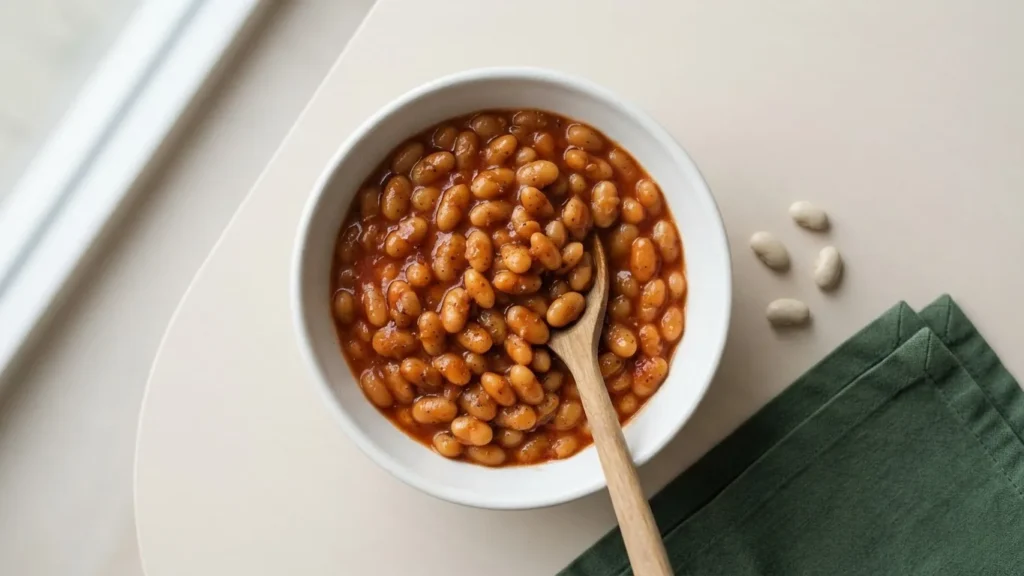
One cup of canned baked beans with pork carries 231 calories, and the split is not balanced across the macros – carbohydrates dominate the profile, which is the first thing to know about baked beans nutrition before any of the marketing on the front of the can gets read. That single figure, logged by Eat This Much, sets the frame for everything below: this is a carb-forward, fiber-rich food that also carries a sodium and sugar load worth measuring against your daily limits. This desk aggregates the declared and database figures into one reference so the trade-offs are visible in numbers, not adjectives.
The complication is that no two cans are the same food. Vegetarian, pork-added, and no-salt-added formulations shift the calorie, saturated fat, sodium, and sugar lines enough that a number pulled from one label can mislead you about another. The tables and comparisons that follow keep each figure tied to the formulation and the body that publishes it.
The Standalone Answer: What a Serving of Baked Beans Actually Delivers
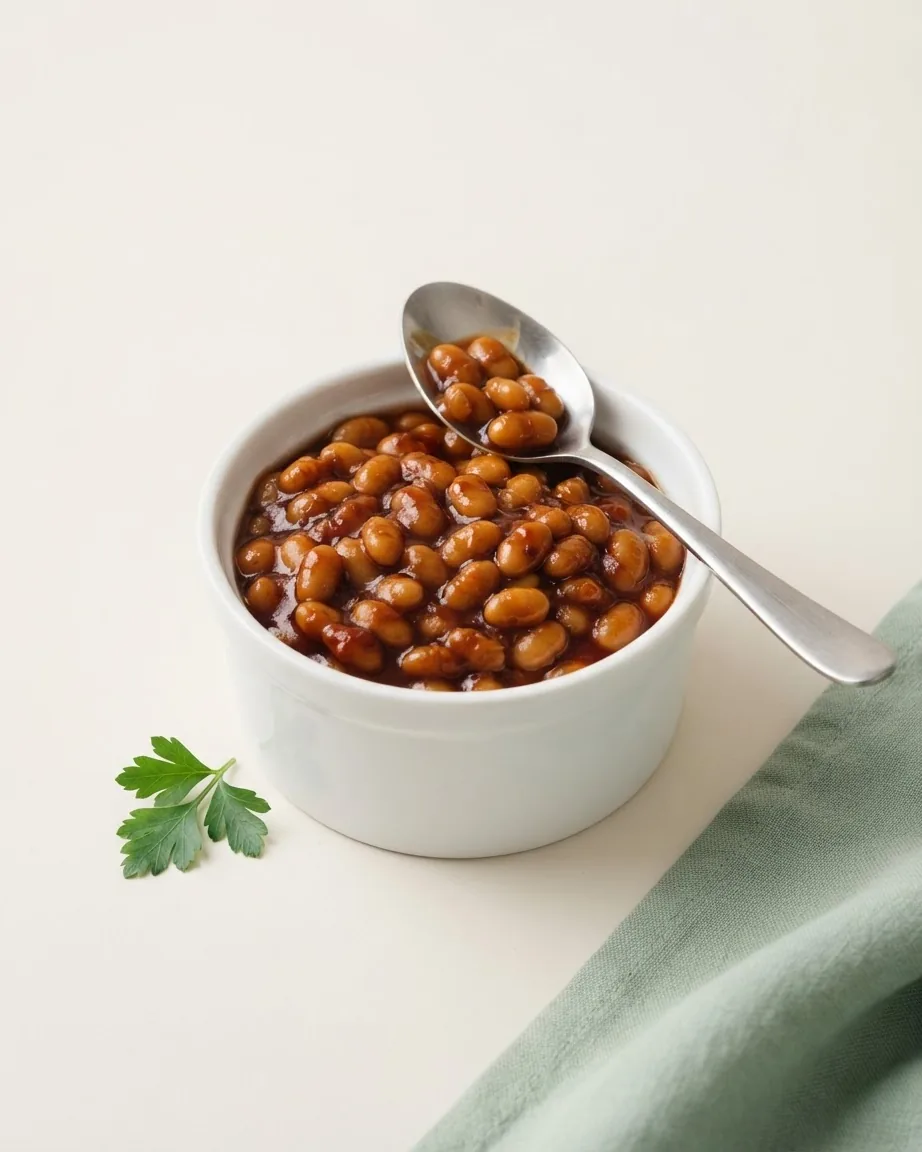
Baked beans nutrition, at a glance: one cup of canned baked beans with pork provides 231 calories, weighted heavily toward carbohydrates. A standard half-cup serving can carry up to 435mg of sodium and up to 10 grams of sugar. Beans made with meat add roughly another 100mg of sodium. The upside is fiber – both soluble and insoluble – with a half-can portion of 207g supplying nearly a third of the 30g of daily fiber. The daily sodium ceiling to measure against is 2,300mg. Choose no-salt-added or low-sugar varieties when the sodium and sugar lines matter more than convenience.
Why 231 Calories Sits on a Carb-Heavy Frame
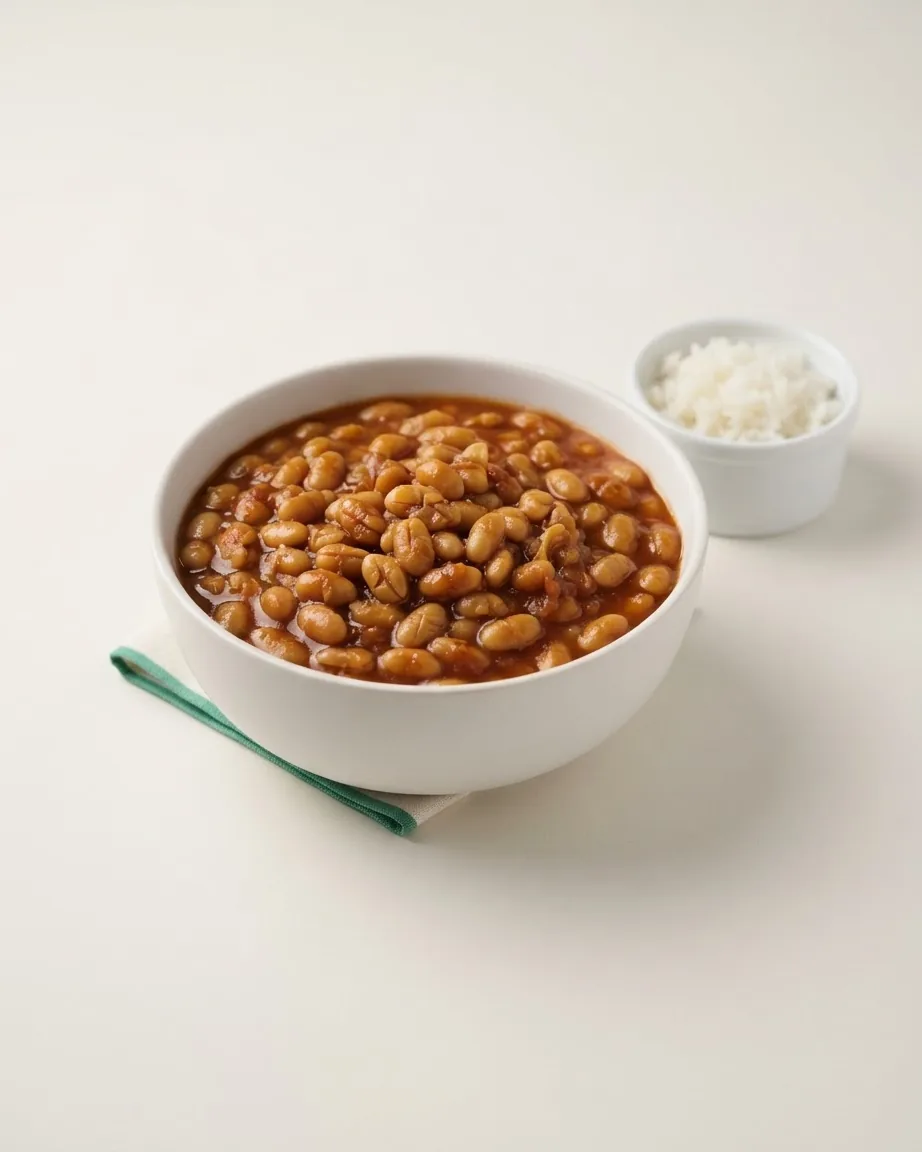
The calorie count for one cup of canned baked beans with pork comes to 231 calories, and the reason it matters is what those calories are made of. Eat This Much logs the macronutrient split as heavily favoring carbohydrates, which tracks with the food itself – navy beans plus a sweetened tomato or molasses-style sauce. The protein and fat contribute, but carbohydrate is the anchor.
That carb weighting is not automatically a negative. A large share of it is fiber rather than sugar, which changes how the body handles it. But it does mean baked beans behave more like a starchy side than a lean protein on the plate, and anyone counting macros should slot them accordingly rather than treating a can as a straight protein source.
Context helps here. Related guide: Mozzarella Cheese Nutrition Facts. Baked beans and cheese are not interchangeable calories; they occupy opposite corners of the macro grid.
Baked Beans Nutrition Table: Serving Size, Macros, and Minerals
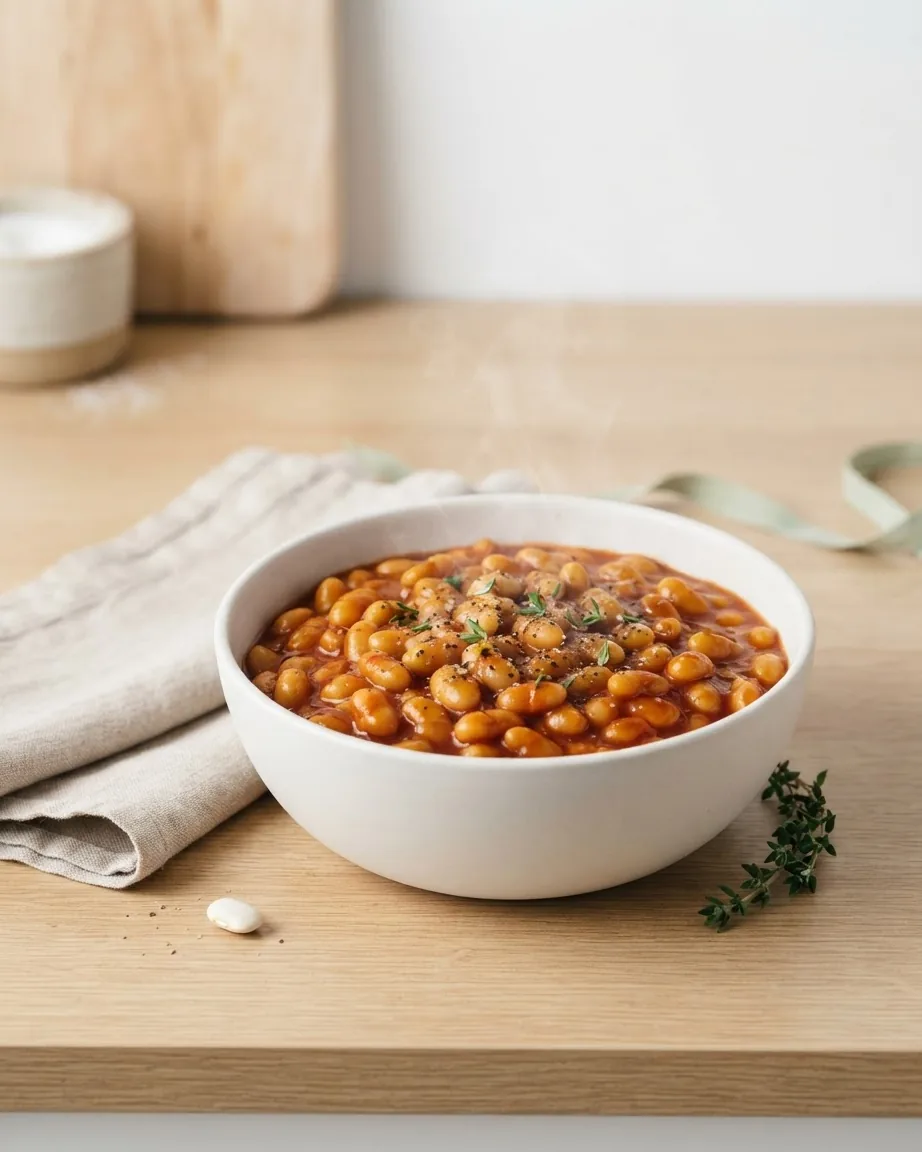
The table below pulls the figures carried by the named sources for a canned baked bean serving. Where a value depends on the formulation, that is noted rather than averaged away. Serving sizes differ across sources – the calorie figure is reported per one cup, the sodium and sugar figures per half-cup, and the fiber figure per 207g half-can – so read each line against its stated portion.
| Item | Value |
|---|---|
| Serving (calories) | 1 cup, canned with pork – 231 calories (Eat This Much) |
| Serving (sodium/sugar) | 1/2 cup – up to 435mg sodium, up to 10g sugar |
| Serving (fiber benchmark) | 207g half-can |
| Carbohydrate | the dominant macro in the 231-calorie cup |
| Fiber | soluble and insoluble; a 207g half-can supplies nearly a third of the 30g daily target |
| Sodium | 435mg per 1/2 cup, +100mg if made with meat; daily ceiling 2,300mg |
| Sugar | up to 10g per 1/2 cup in standard varieties |
| Zinc | 2.9 mg present, with absorption reduced by phytic acid |
The sodium figure of 435mg for a half-cup is the USDA estimate, cited by The Kidney Dietitian. Treating this table as a fixed spec would be a mistake – manufacturers revise recipes without announcement, and each brand’s own panel is the final word for the can in your hand. This desk formats declared and database values; it does not weigh or analyze the beans.
Soluble vs. Insoluble Fiber: What the 30g Daily Target Buys You
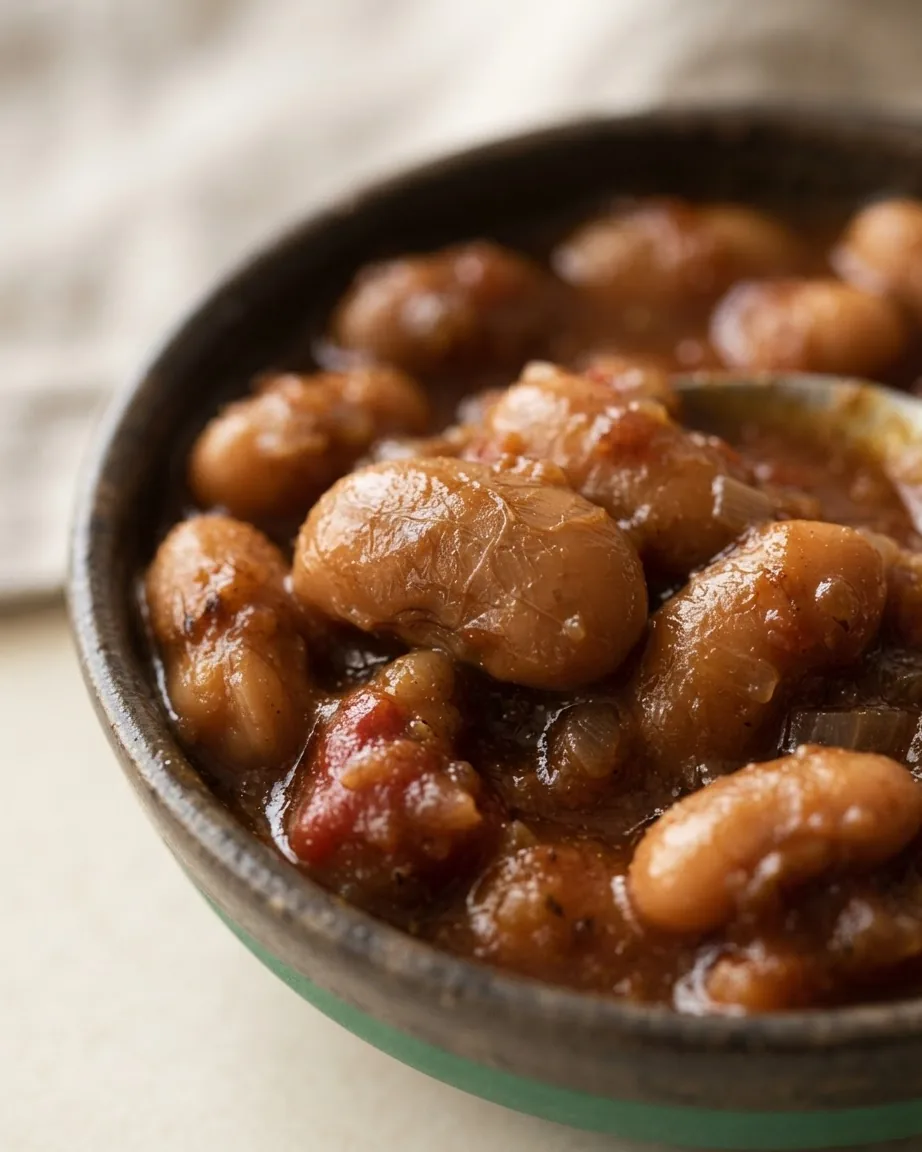
Fiber is where baked beans earn their reputation. According to the British Heart Foundation, baked beans provide both soluble and insoluble fiber, and the two do different jobs. Soluble fiber is tied to lowering cholesterol; insoluble fiber supports digestive movement. Most foods lean toward one type – beans deliver a mix, which is part of why they show up in heart-focused eating patterns.
The quantity is the part generic write-ups skip. The British Heart Foundation notes that a half-can portion of 207g – a realistic amount for one sitting – provides nearly a third of the 30g of fiber needed in a day. That is a meaningful contribution from a single side dish, and it reframes the carb-heavy macro line: much of that carbohydrate is doing fiber’s work, not spiking as free sugar.
Portion language differs by source. The British Heart Foundation also frames a “5-a-day” serving as about 80g of cooked beans, roughly 3 heaped tablespoons – a smaller benchmark aimed at variety across the day rather than a single fiber-maximizing plate. Both figures come from the same authority; which one to use depends on whether you are counting fiber grams or counting toward a produce goal.
The 435mg Sodium and 10g Sugar Problem in Standard Cans
Here is the trade-off no front-label claim resolves. The fiber is real, but standard canned baked beans typically carry high sodium and sugar relative to specialized varieties, as The Kidney Dietitian documents. The USDA estimate puts a half-cup at 435mg of sodium. If the beans are made with meat, add an extra 100mg of sodium on top of that.
Put that against the ceiling. The Dietary Guidelines for Americans recommends no more than 2,300mg of sodium per day. A single half-cup of pork-added baked beans consumes part of the day’s allowance from one side dish – before the main course, the bread, or the condiment jar adds anything. For readers managing blood pressure or kidney load, that math is the whole reason to read the panel rather than the label art.
Sugar runs a parallel course. A standard half-cup can reach up to 10 grams of sugar, a figure noted by Eat This, Not That! in its coverage of everyday foods. Ten grams in a savory-seeming side is added sugar doing the flavor work, and it is easy to overlook precisely because baked beans do not read as dessert. The processed-meat sodium question echoes what shows up on other canned staples – the line-by-line breakdown in our SPAM Nutrition Label guide walks through the same kind of sodium arithmetic on a different can.
Low-Sodium and Low-Sugar Cans: The Benchmark to Beat
The specialized versions exist for exactly this trade-off. Where standard cans carry that up-to-10g sugar load and 435mg of sodium per half-cup, diet-oriented brands are formulated to undercut both – a low-sugar target of 5g or less gives a clean number to hold a label against. When a can advertises reduced sugar, that 5g figure is the kind of benchmark that tells you whether the claim is real or cosmetic.
The Kidney Dietitian’s coverage of low-sodium baked beans exists because the standard 435mg-per-half-cup figure is a genuine obstacle for people on sodium-restricted plans. A no-salt-added can shifts that line down materially, and rinsing regular canned beans before use removes some surface sodium – a counter-level fix that costs nothing and takes seconds. The saturated-fat difference between vegetarian and pork-canned versions is the other axis worth checking; USDA FoodData Central files them under separate entries precisely because that macro shifts with the meat.
For a sense of how brand-to-brand and variety-to-variety numbers move within a single product line, the variety-by-variety approach in our Fairlife Milk Nutrition Facts breakdown shows the same discipline applied to another category: read the specific label, not the category average.
Phytic Acid and the 2.9 mg of Zinc You Don’t Fully Absorb
A nuance the panel never prints: baked beans contain phytic acid, and it changes how much of the beans’ minerals your body can use. Research in the LSU Scholarly Repository from Louisiana State University identifies phytic acid, naturally present in baked beans, as a compound that reduces the bioavailability of minerals like zinc. So the 2.9 mg of zinc a serving reports is not the amount you actually take up – some of it stays bound and passes through.
This matters most for readers leaning on plant foods for minerals. If beans are a primary zinc source rather than a supplement to meat, the gap between the number on paper and the amount absorbed is worth accounting for. It is not a reason to skip beans – it is a reason to not treat the label’s mineral figures as delivered-to-your-cells totals.
How Baked Beans Stack Up Against Other Pantry Staples
Numbers only mean something next to a comparison. Against a canned meat like SPAM, baked beans win decisively on fiber and lose nothing on sodium context – the SPAM sodium load runs high for different reasons. Against a dairy protein such as the Greek yogurt profiled in our Chobani Greek Yogurt breakdown, baked beans trade concentrated protein for fiber and plant minerals. Neither replaces the other; they solve different plate problems.
The practical read: baked beans are a strong fiber vehicle with a real sodium-and-sugar cost that shrinks sharply when you choose no-salt-added or low-sugar cans. For the wider category context – how canned and shelf-stable staples compare across their panels – our pantry basics section keeps the same figures-first approach across dozens of everyday foods.
One voice worth citing on the credentials behind this kind of nutrition coverage: Melissa, a Connecticut-based registered dietitian with over 15 years of experience across clinical and outpatient settings, is among the practitioners whose work informs the everyday-foods guidance this desk aggregates. That experience is the difference between a label read literally and a label read in context.
How Many Servings Hit the Sodium Ceiling
The Dietary Guidelines cap sodium at 2,300mg a day. Divide that ceiling by what a can actually delivers and the room you have shrinks fast – here is where each formulation puts you.
- Standard, 435mg per half-cup: 2,300 ÷ 435 = about 5.3 half-cup servings before you hit the daily ceiling.
- Made with meat, 435 + 100 = 535mg per half-cup: 2,300 ÷ 535 = about 4.3 half-cup servings – the added pork sodium costs you a full serving of headroom.
That is the number to weigh against the fiber before reaching for a second serving.
Frequently Asked Questions About Baked Beans Nutrition
How many calories are in a serving of baked beans?
One cup of canned baked beans with pork provides 231 calories, per Eat This Much, with carbohydrates as the dominant macronutrient. Vegetarian and no-salt-added formulations shift the number, so check the specific can. Calorie counts move with the sauce and any added meat, which is why a single figure never covers every variety on the shelf.
Are baked beans high in sodium?
Standard canned baked beans run high in sodium – the USDA estimate is 435mg per half-cup, and beans made with meat add roughly another 100mg. Against the Dietary Guidelines for Americans ceiling of 2,300mg per day, one half-cup can consume close to a fifth of that. No-salt-added cans and rinsing lower the load considerably.
How much fiber do baked beans provide?
Baked beans supply both soluble and insoluble fiber. The British Heart Foundation notes a 207g half-can portion delivers nearly a third of the 30g of fiber recommended daily. Soluble fiber is linked to lowering cholesterol; insoluble fiber supports digestion. That fiber content is the food’s strongest nutritional argument.
Why doesn’t the zinc in baked beans fully absorb?
Baked beans contain phytic acid, which reduces the bioavailability of minerals like zinc, according to research from Louisiana State University. So the 2.9 mg of zinc a serving reports is not fully absorbed – some stays bound. For plant-based eaters relying on beans for minerals, the delivered amount is lower than the label figure.
How much sugar is in canned baked beans?
A standard half-cup can carry up to 10 grams of sugar, largely added to build the savory-sweet sauce. Eat This, Not That! flags this among everyday foods where sugar hides in plain sight. Specialized low-sugar cans target 5g or less, giving a clear benchmark to check a “reduced sugar” claim against. Which is healthier, vegetarian or pork baked beans? The main split is saturated fat and sodium. Beans made with meat add roughly 100mg of sodium per serving over the base 435mg, and USDA FoodData Central files vegetarian and pork-canned versions as separate entries because the saturated fat line shifts with the meat. Vegetarian cans keep the fiber and zinc while trimming the added-meat sodium and fat, so for a sodium- or saturated-fat-conscious plate, the meatless formulation is the leaner pick. Either way, the specific panel on the can settles it. What counts as one baked bean serving? It depends on which number you are chasing. The calorie figure is reported per one cup, sodium and sugar per half-cup, and the fiber benchmark per 207g half-can. Separately, the British Heart Foundation frames a “5-a-day” portion as about 80g of cooked beans, roughly 3 heaped tablespoons. Use the 80g figure when counting toward a produce goal and the half-can figure when maximizing fiber grams. The Bottom Line on Baked Beans Nutrition Baked beans are a fiber-forward food carrying a real sodium-and-sugar cost. The 231 calories in a cup sit on a carb-heavy frame, but much of that carbohydrate is soluble and insoluble fiber, with a 207g half-can covering nearly a third of the 30g daily target. Set against that, standard cans bring up to 435mg of sodium and up to 10g of sugar per half-cup, plus another 100mg of sodium when meat is added – figures worth weighing against the 2,300mg daily sodium ceiling. The moves that resolve the trade-off are simple: choose no-salt-added or low-sugar cans, rinse regular beans before use, and read the specific panel rather than the front-label claim. Remember too that the 2.9 mg of zinc on paper is not fully absorbed, since phytic acid binds part of it. Handled with those caveats in mind, baked beans stay a strong, low-cost fiber vehicle – provided the number you act on is the one printed on the can in your hand.