
A single Oikos Triple Zero vanilla cup still lists total sugars on the panel even though its name promises three zeros. That gap between the “Triple Zero” name and the actual sugar line is where most readers get the Oikos yogurt nutrition facts wrong. Oikos is not one product with one label; it is at least four distinct lines, and their numbers diverge sharply once you hold the serving weight constant. This desk structures manufacturer declarations and public food-database entries into one reference table so the comparison is apples to apples rather than cup to shot to marketing banner.
Quick answer: Oikos yogurt nutrition facts vary by line. The lines on offer are Triple Zero vanilla, the Pro vanilla cup, Blended Nonfat Plain 0%, and a drinkable Pro Mango Shot, and each carries its own distinct calorie, protein, sugar, and fat profile at its own stated serving weight. Every line lists 0g added sugar, but none is sugar-free, because milk carries natural sugar. Protein and calories range widely depending on the exact product and portion.
What one Oikos Triple Zero cup actually puts on the label
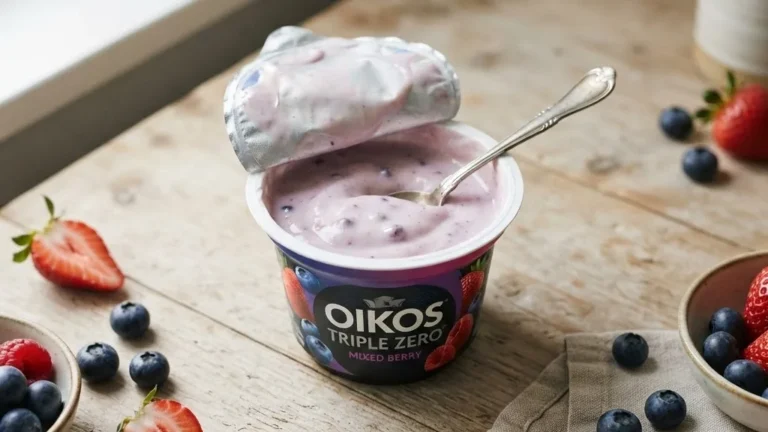
The sugar line is where the name misleads. The panel lists total sugars and, separately, 0g added sugars. Those are two different claims. The total sugar is lactose that lives in the milk itself; the “zero” refers to the fact that no sugar is poured in during production. Oikos itself frames the line as “15g of protein… 30% of the daily value of protein in every” 5.3oz cup, which is the same 150g the panel measures.
The sweetening comes from stevia leaf extract rather than table sugar. The ingredient list runs cultured nonfat milk, water, and minor components under one percent, including natural flavors, lemon juice concentrate, sea salt, and vitamin D3, plus two that do real work on the texture and taste. Stevia leaf extract supplies the sweetness, while the tapioca starch functions purely to thicken, not a sweetener. For a full line-by-line reading of that specific panel, see our Oikos Triple Zero nutrition label guide.
Triple Zero vs Pro: the calorie-for-protein trade
Set both cups at the same 150g and the difference is clean. Triple Zero vanilla sits lower on both calories and protein; Pro vanilla sits higher on both. The Pro line, also documented by Danone Away From Home, costs you additional calories for extra protein in the identical cup size.
Where do those extra calories come from? Fat. Pro vanilla lists total fat and saturated fat on its panel, against Triple Zero’s 0g on both lines. The reason is in the ingredients: Pro is built on cultured ultra-filtered nonfat milk, water, whey protein concentrate, and cream. The whey concentrate pushes protein up; the cream brings the saturated fat. Triple Zero, by contrast, is a nonfat yogurt and sits at 0g saturated fat.
Pro also carries micronutrients Triple Zero’s panel does not emphasize. The Pro vanilla cup reports a Vitamin B12 figure and a calcium figure on its panel. Its sugar line reads total sugars and 0g added sugars. Oikos markets Pro with the phrase “Feed your passion with 20g protein and 0g added sugar” per 5.3oz cup, which matches the 150g panel figure.
The practical read: if you want the leanest number, Triple Zero. If you want more protein and more calcium and can accept the saturated fat, Pro. Neither is “better” in the abstract; the saturated-fat-for-protein swap is the decision.
Protein by line: the spread and the “up to 23g” claim
Protein is the headline number on every Oikos package, and it is not one figure. Across the lines this desk logged, it ranges widely:
- Triple Zero vanilla: 15g protein (30% DV) per 150g.
- Blended Nonfat Plain 0%: protein stated per 170g.
- Pro vanilla cup: protein stated per 150g.
- Pro Mango Shot drink: 10g protein (20% DV) per 93mL bottle.
The Oikos brand site states the Pro ultra-filtered milk line is “packed with up to 23g protein per serving, 0g added sugar.” Read that “up to” carefully: it is a top-of-range figure across flavors and formats, not the number on the vanilla cup. When a brand says “up to,” the cup in your hand is usually below the ceiling.
One caution on serving weight. Triple Zero and the Pro cup are both measured per 150g; the Blended Plain is per 170g. A larger serving naturally carries more of everything, so the protein in Blended Plain is not directly comparable to the protein in Triple Zero without adjusting for the heavier scoop. On a matched 150g cup, read the two cups against each other by their own panel figures rather than across serving sizes.
“0g added sugar” is not the same as sugar-free
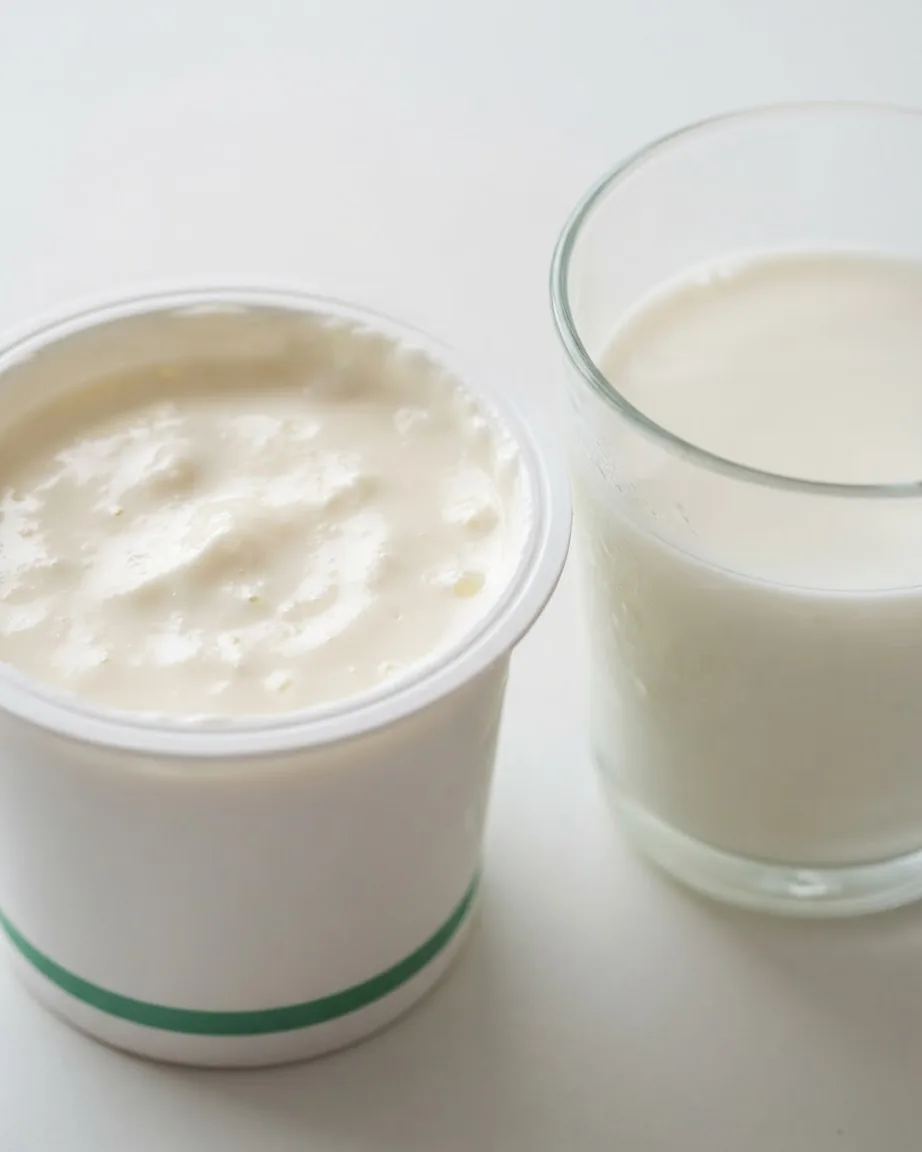
Every Oikos line this desk logged declares 0g added sugars. None of them is sugar-free. Here are the total-sugar figures that sit right above that zero:
- Triple Zero vanilla: 5g total sugars, 0g added.
- Pro vanilla cup: 3g total sugars, 0g added.
- Blended Nonfat Plain 0%: 6g total sugars, 0g added.
- Pro Mango Shot: 2g total sugars, 0g added.
That total sugar is lactose, the sugar naturally present in milk. The “0g added sugars” line, a reporting category the Nutrition Facts panel breaks out by rule, tells you nothing was spooned in during manufacturing. It does not erase the milk sugar already there. If a diet counts total carbohydrate or total sugar rather than added sugar alone, these are the numbers that matter: 5g, 3g, 6g, and 2g respectively, not zero.
The same gap trips people up on other relabeled products, where a redesigned panel changes the story without changing the food much. Our Fruit Loops nutrition facts write-up walks a similar numbers-shifted-under-you situation.
The ingredient ladder: Plain is milk and cultures, Pro adds the most
If a short ingredient list is what you want, the Oikos lines rank cleanly, and the ranking inverts the protein ranking. The Blended Nonfat Greek Yogurt Plain 0%, per Danone Away From Home, lists only cultured Grade A nonfat milk and live yogurt cultures (S. thermophilus and L. bulgaricus). No added sweetener, no starch, no flavor. It is the barest label of the four.
Triple Zero sits one rung up: it adds tapioca starch as a thickener and stevia leaf extract for sweetness on top of the milk base. Pro sits highest in ingredient count, adding whey protein concentrate and cream to the ultra-filtered milk. So the line with the most protein (Pro) also carries the longest ingredient list and the only saturated fat, while the line with the shortest list (Blended Plain) is unflavored and unsweetened. There is no single winner; it depends on whether you are optimizing for a clean label or a protein target.
Blended Plain’s own panel reads 6g total sugars, 0g added sugars, and 0g fat per 170g cup.
Pro Shots drink vs the Pro cup: same name, half the protein
Oikos sells Pro in two formats, and they are not interchangeable. The drinkable Pro Mango Shot, with a Nutrition Facts panel published by retailer Fairway Market (Wakefern), delivers 60 calories and 10g protein (20% DV) per 93mL bottle, with 2g total sugars and 0g added sugars.
The Pro cup, at 150g, carries its own higher protein figure. So the Shot is roughly half the portion and half the protein of the cup, despite sharing the “Pro” name. A reader reaching for a Shot expecting the cup’s protein would come up short. The Shot is a smaller, drinkable serving; the cup is the full spoonable portion. Match the format to the protein target you actually have in mind.
Why a third-party Oikos entry reads 160 calories and 25g protein
Searches often surface a generic “Oikos Greek Yogurt” listing with numbers higher than any cup above. The aggregator MyFoodData lists one such entry at 160 calories and 25g protein (50% DV) per 170g, with 60mg sodium and 270mg calcium (21% DV).
Treat that cautiously. It is a generic entry for an unspecified Oikos SKU at a 170g serving, not the official panel for any one labeled product. The manufacturer’s Pro vanilla cup is measured per 150g on its own panel. The two differ on serving weight (170g vs 150g) and on which exact product they describe, so the 160-calorie, 25g-protein figure should not be read as “the” Oikos profile. It is one database row for an unnamed variant, useful for a rough sense of the high end but not as the number on your specific cup.
This kind of divergence is standard for a nutrition query: exact gram and calorie values shift by flavor, package size, and reformulation, and a generic third-party row can lag or blend SKUs. For any single cup, the panel printed on that package is the figure to trust.
The full Oikos yogurt nutrition facts table, normalized by serving
Here is every line in one place, each with its own stated serving weight so the comparison stays honest. Where two products share the 150g cup, you can read them directly against each other; where the weight differs, the serving column tells you so.
| Line | Serving | Calories | Protein | Total sugar | Added sugar | Total fat | Sat. fat | Sodium |
|---|---|---|---|---|---|---|---|---|
| Triple Zero Vanilla | 150g cup | 80 | 15g (30% DV) | 5g | 0g | 0g | 0g | – |
| Pro Vanilla | 150g cup | 130 | – | 3g | 0g | 3g | – | – |
| Blended Nonfat Plain 0% | 170g cup | 100 | – | 6g | 0g | 0g | 0g | – |
| Pro Mango Shot | 93mL bottle | 60 | 10g (20% DV) | 2g | 0g | – | – | – |
| Generic MyFoodData entry | 170g | 160 | 25g (50% DV) | – | – | – | – | 60mg |
Dashes mark figures not carried on the panel this desk logged, not zeros. Calcium values appear on several panels but differ by product and serving weight, so read each against its own line rather than across them. For the wider category and more labels like this one, see our dairy eggs section. Related picks: our Activia yogurt breakdown and, for higher-fiber add-ins, foods high in fiber.
The protein shortfall: what the Pro Shot costs you versus the Pro cup
Both products carry the “Pro” name, but the math on protein delivery is not close. Here is exactly what you give up by reaching for a drinkable Pro Mango Shot instead of the Pro vanilla cup, and what it takes to make up the difference:
- One Shot delivers less protein than one cup. A reader expecting the cup’s protein from a single Shot comes up well short.
- Matching the cup’s protein takes more than one Shot – and stacking Shots to reach the cup’s protein also stacks their calories, so the protein-matched Shot route is roughly calorie-neutral rather than lighter.
- A single Shot carries fewer calories than the cup, which only saves you calories if you also accept the protein drop.
- The full 6-count pack spreads its protein across six separate small servings rather than fuller ones, so the Shots give you the same brand in a different, more portioned format than the cup.
The practical read: the Shot is not a smaller version of the cup’s nutrition – it is far less protein per container, and “recovering” the cup’s protein means drinking more than one and spending about the same calories.
Frequently asked questions
Is Oikos Triple Zero actually zero sugar?
No. The name points to zero added sugars, zero artificial sweeteners, and zero fat, not zero sugar overall. The vanilla panel still shows 5g of naturally occurring milk sugar per 150g cup. If your plan tracks total carbohydrate rather than added sugar alone, budget for that 5g rather than assuming nothing.
Which Oikos line has the most calcium?
Among panels this desk logged, the Pro vanilla cup and Triple Zero each carry a calcium figure on their 150g panels, with Pro the higher of the two labeled cups. A generic third-party row for an unspecified variant reports 270mg (21% DV) per 170g, but that larger, unnamed entry should not be read as any single package’s figure.
Why does the Pro cup have saturated fat when Triple Zero has none?
Formulation. Pro is built on ultra-filtered milk plus whey protein concentrate and cream, and that cream brings the saturated fat onto its panel. Triple Zero is a nonfat yogurt with no cream, landing at 0g. The extra fat is the price of Pro’s higher protein versus Triple Zero’s 15g.
How much protein is in a Pro Shot versus a Pro cup?
A 93mL Pro Mango Shot carries 10g protein and 60 calories; the 150g Pro cup carries its own higher protein and calorie figures. Same brand name, roughly half the drinkable portion. Grabbing a Shot expecting the cup’s protein leaves you short of that target.
Should I trust the label or an online database for Oikos?
The printed panel on your exact package wins. Gram and calorie values shift by flavor, size, and reformulation, so a generic aggregator row can blend variants or lag a recipe change. Use database entries for a ballpark; confirm the specific SKU against its on-pack Nutrition Facts panel.