The number that decides whether this product belongs in your diet is not calories, and it is not fat. It is sodium, and it swings widely across two tubs sitting on the same shelf. That single figure changes more between products than the calorie count, the protein count, or anything else on the label. Below, the nutritional information low fat cottage cheese panels report is pulled straight from manufacturer panels and public food databases, structured so the numbers that matter for your situation sit side by side instead of scattered across separate product pages.
Quick answer: A standard 1/2 cup (113g) serving of low fat (1%) cottage cheese runs about 80 to 92 calories, 12 to 14g protein, 1 to 1.5g fat, and 3 to 6g carbohydrate. The figure that varies most is sodium: standard versions carry roughly 390mg to 470mg, while a no-salt-added version drops to 60mg. Choosing low fat over full-fat saves only about 20 calories per serving, so the real reason to reach for it is fat reduction, not calorie cutting. Protein stays high across every variety.
The 1/2 Cup (113g) Panel: Calories, Protein, Fat and Carbs
Every mainstream label reports against a 1/2 cup, or 113g, serving. Hold that fixed and the macros still shift by brand, because milkfat percentage and formulation differ.
Mayfield Dairy lists its 1% cottage cheese at 90 calories, 12g protein, 1.5g total fat, 1g saturated fat, 6g carbohydrate, and 4g sugars per 1/2 cup. HP Hood LLC declares its low-fat version for the same 113g. The public database at myfooddata, drawing on USDA FoodData Central, logs a 2% lowfat cottage cheese at 92 calories, 11.8g protein, 2.6g fat, 1.4g saturated fat, and 5.4g carbohydrate.
Healthline, citing USDA data, reports the lowest calorie figure of the group: 81 calories, 14g protein, 3g carbs, and 1g fat for a 113g serving of 1% milkfat. So the honest baseline is a range, not a single number. If you need one figure to plan around, 90 calories and 12 to 14g protein covers most 1% products. The carbohydrate spread from 3g to 6g comes down to added whey and label rounding, not a meaningful difference in what you are eating.
Reference table: low fat cottage cheese per 1/2 cup (113g)
| Item | Value |
|---|---|
| Mayfield 1% | 90 cal, 12g protein, 1.5g fat, 1g sat fat, 6g carb, 4g sugars, 470mg sodium |
| Hood low-fat | |
| Hood no-salt-added | |
| myfooddata 2% (USDA) | 92 cal, 11.8g protein, 2.6g fat, 1.4g sat fat, 5.4g carb, 4.5g sugars, 348mg sodium, 4.4g lactose |
| Healthline 1% (USDA) | 81 cal, 14g protein, 1g fat, 3g carb |
The Sodium Problem: How It Varies Across the Same Category
This is where the buying decision actually happens. Two tubs can carry nearly the same calories and protein while their sodium differs by more than 400mg.
Mayfield’s 1% version lists 470mg sodium per 1/2 cup. According to Penn State Extension, the average low-fat cottage cheese carries upwards of 400mg of sodium per half-cup, measured against a recommended limit of no more than 2,300 mg per day, or 1,500 mg for people with certain chronic conditions. A single 470mg serving is roughly a fifth of that lower 1,500 mg threshold before you have eaten anything else.
The fix is on the shelf. HP Hood LLC also makes a no-salt-added low-fat version, and the calories hold at 90 while protein rises. If sodium is the constraint that brought you to the label, the no-salt-added tub is the one that resolves it, not a switch between fat levels. For a fuller view of how dairy sodium and protein stack up across categories, our dairy eggs desk logs the panels product by product.
Why Low Fat Barely Cuts Calories: The 20-Calorie Trade-off
The intuitive move is to reach for low fat to save calories. The panels do not reward it much. Consumer Reports puts the calorie difference between nonfat and full-fat at about 30 calories per half-cup, with low-fat running about 20 fewer calories than full-fat. That is a small return.
Where the fat level does register is saturated fat. Full-fat carries about 3g saturated fat per half-cup, versus about 1.5g for the 2% version, per Consumer Reports. Mayfield’s 1% label confirms the lower end at 1g saturated fat. So the case for low fat is a saturated-fat case, not a calorie case. If you are watching total calories, the swing between fat varieties is too small to matter; if you are watching saturated fat, halving it from 3g to 1.5g is the reason to choose it.
Casein Protein and the Reason It Keeps You Full
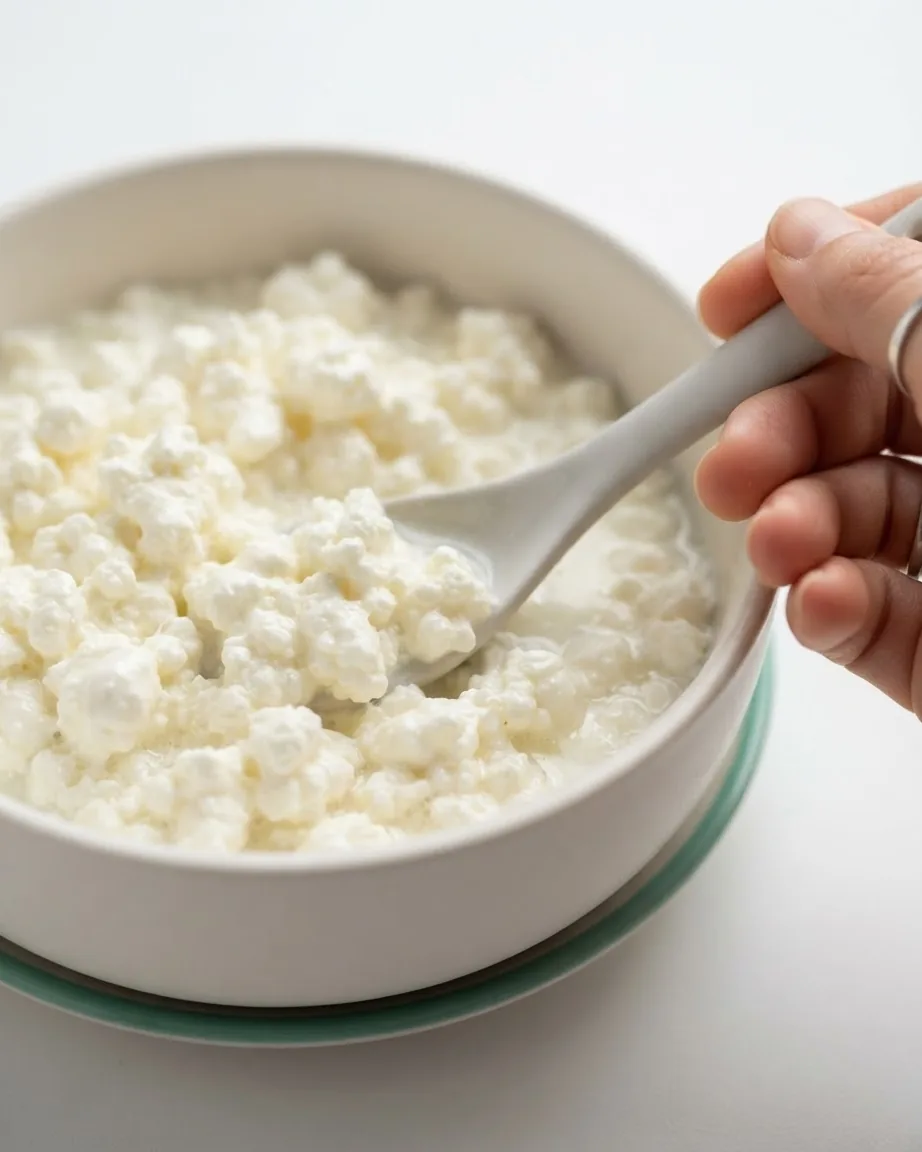
The protein in cottage cheese is doing more than padding a macro line. Healthline reports that protein accounts for over 70% of its calories, and that casein makes up about 80% of that protein and is slowly absorbed. Slow absorption is what stretches the fullness out rather than delivering a quick spike.
The effect has been measured. Consumer Reports points to a small study published in 2015 in the journal Appetite, which found it suppressed hunger as much as eggs, one of the most satiating foods studied. That comparison is the useful takeaway: at 12 to 14g protein per half-cup, it holds appetite on par with eggs while keeping fat at 1 to 1.5g. If your goal is staying full on fewer calories, the protein density does the work, and it is present at every variety, so you lose none of it by choosing the leaner tub.
For how this satiety math compares against a strained dairy at similar protein levels, see our breakdown of the Nutritional Value of Chobani Greek Yogurt: Nonfat, Whole Milk and Strawberry Compared.
Lactose Content: What Fresh Cheese Means for Sensitive Stomachs
It is a fresh, unripened cheese, and that changes its lactose load. Healthline notes it therefore contains more lactose than aged cheeses like Parmesan, Cheddar, or Swiss, where the aging process breaks lactose down. The USDA-based 2% figure at myfooddata puts the amount at 4.4g of lactose per 113g serving.
The practical read: if aged cheeses sit fine with you but cottage cheese does not, the difference is the lactose that never had time to break down. A 4.4g serving is modest, but it is real, and it is higher than what you would get from a hard, aged cheese. No-salt-added and low-fat versions do not remove lactose; they change sodium and milkfat, not the sugar profile.
Micronutrients: B12, Phosphorus, Selenium and Riboflavin
Beyond protein, the panel carries a dense micronutrient line. The USDA-based 2% data at myfooddata reports a range of micronutrients per 113g, including selenium, riboflavin (B2), vitamin B12, and phosphorus, alongside a meaningful share of the daily value for protein.
Consumer Reports frames the standout figures plainly: a half-cup packs 14 percent of the daily value for phosphorus and nearly a third of the body’s need for vitamin B12. Between those two sources, B12 is the micronutrient that most justifies keeping cottage cheese in rotation, landing near or above a fifth of the daily value in a single small serving. These figures track the low fat products specifically, so you are not trading nutrient density for the lower number.
Why 2 Cups Only Counts as 1 in the Dairy Group
Here is a figure most labels never surface. Penn State Extension notes that because of its relatively lower calcium content, 2 cups count as only a 1-cup serving in the dairy food group. It is protein-dense but calcium-light compared with milk or yogurt, so it does not carry the same calcium weight cup for cup.
The takeaway if you are tracking dairy for calcium: do not assume a cup of it equals a cup of milk. It counts for half. For protein it is excellent; for calcium it is a partial contributor, and you would need double the volume to reach the same dairy-group credit. That distinction matters for anyone building a day around calcium targets rather than protein targets.
The 1-Cup Numbers and Why Serving Size Trips People Up
Not every source reports against a half-cup. University Hospitals, drawing on USDA data, lists lowfat 1% milkfat cottage cheese per 1 cup (not packed) at 162.72 kcal, 28g protein, 2.31g fat, 6.15g carbohydrate, 917.56mg sodium, and 302.84mg phosphorus.
That panel is not directly comparable to the half-cup figures above because it doubles the serving. If you glance at 917.56mg sodium next to a competitor’s 470mg without checking the serving column, you would wrongly conclude one product is far saltier when the real gap is the measurement. Always read the serving line first. The lesson generalizes to any packaged food: our walkthrough of the Monster Nutrition Label: Reading the 16 oz Can Against Real Limits shows the same serving-size trap on a very different product.
Small Curd vs Large Curd: A Texture Choice, Not a Nutrition One
Curd size is the first thing shoppers notice and the last thing that changes the numbers. Consumer Reports states that small versus large curd makes generally no nutritional difference; the choice is texture, and the texture can be smoothed by blending if you want a spreadable consistency for a dip or a bowl base. Pick the curd you prefer to eat. Neither shifts the calories, protein, sodium, or milkfat you are logging.
Sodium Per Gram of Protein: Ranking Tubs on the Number That Actually Varies
Dividing each label’s sodium by its protein turns four scattered panels into one ranked figure – milligrams of sodium per gram of protein – so you can see at a glance which tub gives you the most protein for the least salt.
- Mayfield 1%: carries the highest sodium relative to its protein of the group.
- Hood standard low-fat: sits in the middle of the group on this measure.
- myfooddata 2% (USDA): lands close to the salted brand tubs on this measure.
- Hood no-salt-added: the clear winner on this measure, and it carries the most protein of the four.
The gap is not marginal. Switching from Mayfield’s 1% to Hood’s no-salt-added drops your sodium load per gram of protein dramatically. Measured against Hood’s own salted line, the no-salt-added tub cuts sodium sharply while protein actually rises.
Frequently Asked Questions
Is low fat cottage cheese good for weight loss?
The evidence points to satiety rather than low calories doing the work. At 12 to 14g protein per half-cup and roughly 90 calories, the casein content keeps you full. Consumer Reports cites a 2015 study finding it suppressed hunger as much as eggs. Choosing low fat over full-fat saves only about 20 calories, so fullness, not the fat level, is the mechanism.
How much sodium is in low fat cottage cheese?
It varies widely. Mayfield’s 1% lists 470mg per 1/2 cup. Penn State Extension notes the average runs over 400mg, against a daily limit of 2,300 mg, or 1,500 mg for certain chronic conditions. Hood’s no-salt-added version drops substantially lower while keeping calories at 90.
Which has fewer calories, nonfat or 1% cottage cheese?
The gap is small. Consumer Reports puts the difference between nonfat and full-fat at about 30 calories per half-cup, with low-fat running about 20 fewer calories than full-fat. Most 1% products land near 90 calories per 1/2 cup. The more meaningful difference is saturated fat: about 1.5g in 2% versus about 3g in full-fat.
Does low fat cottage cheese have a lot of lactose?
More than aged cheeses. Because it is fresh and unripened, Healthline notes it holds more lactose than Parmesan, Cheddar, or Swiss, where aging breaks lactose down. USDA-based data at myfooddata lists 4.4g of lactose per 113g serving of the 2% version. Low-fat and no-salt-added versions change fat and sodium, not lactose.
How much protein is in a cup of low fat cottage cheese?
University Hospitals, using USDA data, lists 28g protein per 1 cup (not packed) of lowfat 1% cottage cheese, alongside 162.72 kcal and 917.56mg sodium. That is a full cup, double the standard half-cup serving most brand labels report against, so check the serving line before comparing it to a per-half-cup panel. Do small curd and large curd differ nutritionally? No. Consumer Reports states that small versus large curd makes generally no nutritional difference. The distinction is texture alone, and it can be smoothed by blending if you want a spreadable base. Calories, protein, sodium, and fat stay identical, so choose whichever curd you prefer to eat. Why does 2 cups of cottage cheese count as only 1 cup of dairy? Because of calcium. Penn State Extension notes that its relatively lower calcium content means 2 cups of cottage cheese count as only a 1-cup serving in the dairy food group. It is protein-dense but calcium-light compared with milk or yogurt, so if you are tracking dairy for calcium rather than protein, you need double the volume to earn the same credit. The Bottom Line Read the low fat cottage cheese panel in the right order and the picture simplifies fast. Calories sit near 90 per 1/2 cup across brands, protein holds at 12 to 14g, and fat stays at 1 to 1.5g regardless of which 1% or 2% tub you pick. Those numbers barely move, which is why the fat level is not the decision. Sodium is. It ranges widely from the no-salt-added version to Mayfield’s 1%, and that single line changes more than anything else on the label. So the buying rule follows the number that varies: if sodium is your constraint, reach for the no-salt-added tub, which keeps calories at 90 and lifts protein higher. If saturated fat is your target, low fat halves it from about 3g to 1.5g against full-fat. And if fullness on fewer calories is the goal, the casein-heavy protein does that at every variety, on par with eggs. Check the serving size first, read the sodium line second, and the rest of the panel takes care of itself.