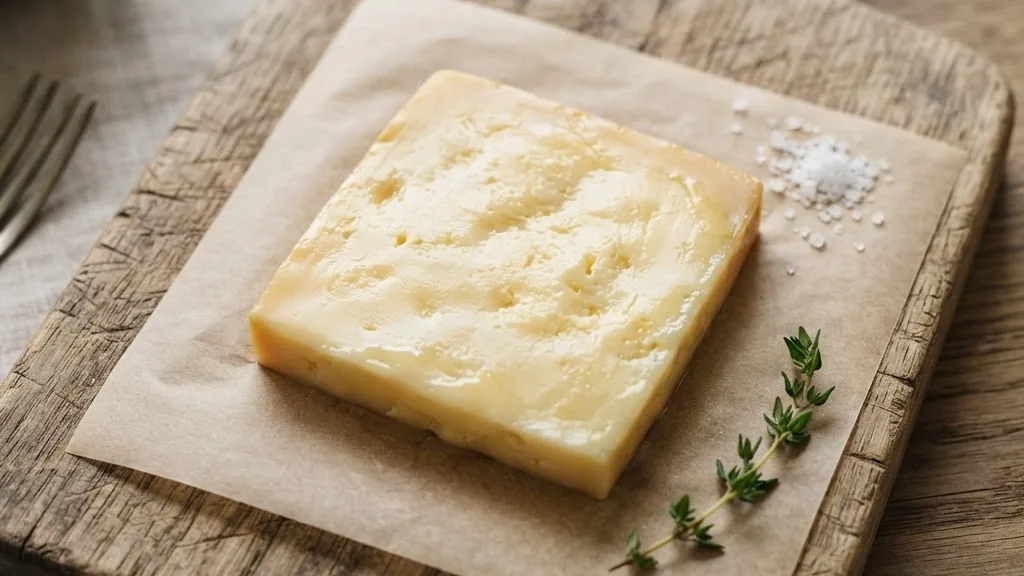
Nutrition cheese slice math falls apart the second you notice that two slices sold as “the same thing” carry completely different numbers. A natural cheddar slice weighing 21 g lists 90 calories, 4 g saturated fat, 180 mg sodium and 5 g protein, according to a USDA Food and Nutrition Service fact sheet. A Kraft Singles American slice lists 60 calories and 230 mg sodium. Same drawer, same sandwich, wildly different label.
Most single-food explainers blur those apart into one rounded “cheese slice” and move on. That averaging is exactly what hides the decision you came here to make: which slice, and how many, before the saturated fat and sodium eat your daily budget. If you have already picked apart a dairy label before, like the way the A2 cow milk label really reads, the same trap applies here. The serving size does the lying.
Quick answer: A single natural cheddar slice at 21 g gives you 90 calories, 4 g saturated fat, 180 mg sodium and 5 g protein. A processed American single runs lighter at 60 calories with more sodium, 230 mg. For nutrition cheese slice planning, the two numbers that gate your day are saturated fat and sodium: one cheddar slice already spends about 30 percent of the American Heart Association’s roughly 13 g daily saturated-fat figure, and 180 mg is about 8 percent of the FDA’s 2,300 mg sodium Daily Value.
What one cheddar slice actually costs: 90 calories, 4 g saturated fat
One natural cheddar slice weighing 21 g carries 90 calories, 7 g total fat, 4 g saturated fat, 20 mg cholesterol, 180 mg sodium, 1 g carbohydrate and 5 g protein. Those figures come straight from a USDA Food and Nutrition Service commodity fact sheet, so they are a defensible baseline rather than a rounded guess. The number that matters most is the 4 g of saturated fat, because that single figure is where a slice quietly spends a large chunk of your day. The carbohydrate line, at 1 g, is close enough to nothing that cheese barely registers on a low-carb plan.
Break the fat down. Of the 7 g total fat, more than half is saturated. That ratio is why cheese lands on cardiology watch-lists even though the calorie count looks modest. You are not eating a high-calorie food. You are eating a concentrated saturated-fat delivery system with protein and calcium riding along.
Where the calories actually sit
Protein and that lone gram of carbohydrate cover the rest. That distribution explains why “just a slice” on a burger adds up faster than a look at the calorie number suggests, and why swapping to a lighter slice changes the fat math more than it changes the calorie math.
The 21-gram versus 28-gram serving trap that scrambles every count
Slice weight is the single reason two honest labels disagree. A packaged cheddar slice is often 21 g, but the USDA reference serving for cheese is 1 ounce, which is 28 g. That 7-gram gap sounds trivial until it moves every number on the label. The 28 g serving of cheddar lists 113 calories, 9.28 g total fat, 5.9 g saturated fat, 174 mg sodium, 6.97 g protein and 202 mg calcium, which USDA data marks as 16 percent of the Daily Value. The 21 g slice lists 90 calories. Same cheese. Different denominator.
So when one source says a cheddar slice is 90 calories and another insists it is 113, neither is wrong. They are weighing different objects. Before you compare any two cheese numbers, check the gram weight in parentheses. If it is missing, the comparison is meaningless.
- 21 g slice: 90 calories, 4 g saturated fat, 180 mg sodium.
- 28 g ounce: 113 calories, 5.9 g saturated fat, 202 mg calcium.
- The heavier serving is roughly a quarter more of everything.
Cheddar slice vs Kraft American single: the side-by-side table
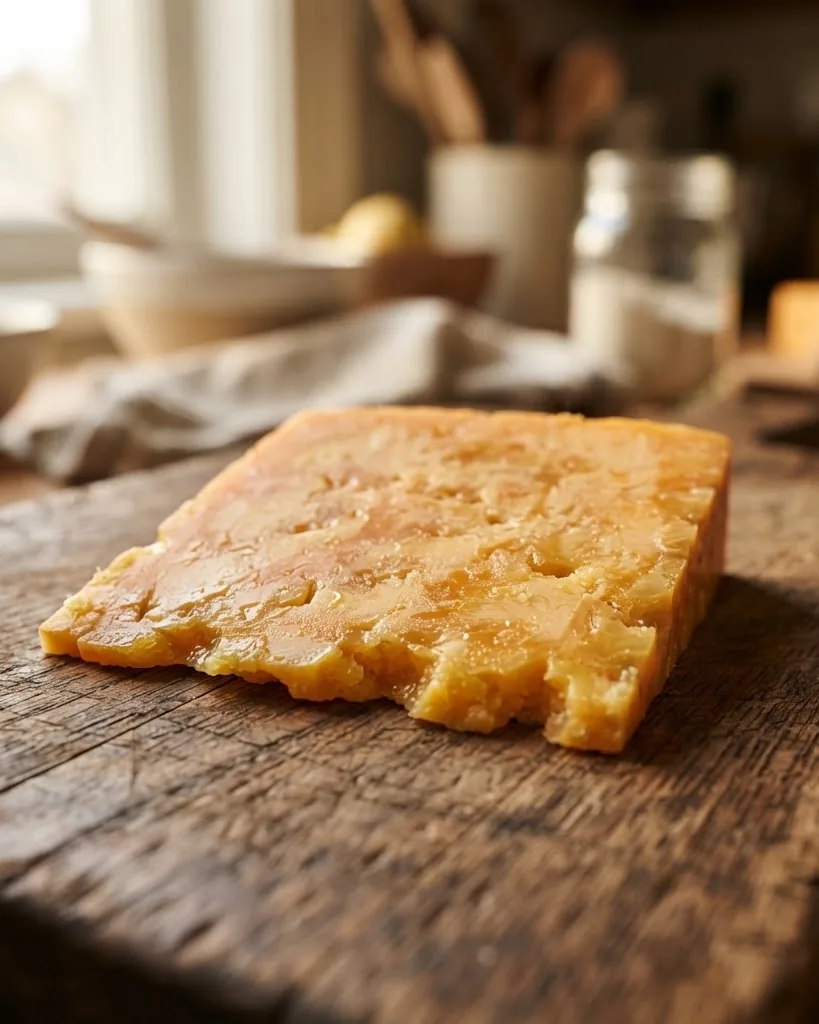
Put the two everyday slices next to each other and the trade becomes obvious. The processed American single is lighter on calories and saturated fat but heavier on sodium, while the natural cheddar slice front-loads fat and protein. This is the comparison the query implies and the one most product pages refuse to build, because each brand page only sells you its own SKU. Here are the sourced rows, drawn from a USDA Food and Nutrition Service sheet for cheddar and a retailer label for Kraft Singles.
| Slice | Calories | Saturated fat | Sodium |
|---|---|---|---|
| Cheddar, 21 g | 90 | 4 g | 180 mg |
| Cheddar, 1 oz (28 g) | 113 | 5.9 g | 174 mg |
| Kraft Singles American | 60 | 2.5 g | 230 mg |
Read the pattern, not just the cells. If you are counting saturated fat, the American single wins at 2.5 g against 4 g. If you are counting sodium, cheddar wins at 180 mg against 230 mg. There is no universally “healthier” slice, only the one that spends less of whichever budget you are guarding that day. The cheddar slice also brings 5 g of protein, and the 28 g ounce brings 202 mg of calcium, both of which the pared-down American single does not match gram for gram.
Reading a nutrition cheese slice label line by line
The nutrition cheese slice label is short, which fools people into skimming it. Three lines carry the whole story: saturated fat, sodium and protein. The FDA’s Daily Value framework tells you how to read the percentages next to them, and its guidance on those reference amounts is worth reading in full through the FDA’s Daily Value on the Nutrition Facts label page. A percent Daily Value shows how much of a day’s allowance one serving uses. Anything at 5 percent or under is low; anything at 20 percent or higher is high. Kraft Singles lists its saturated fat at 12 percent Daily Value and its sodium at 10 percent, both of which land in the middle zone, meaning a couple of slices push you toward the high end fast.
The 51 percent rule behind “pasteurized prepared cheese product”
The phrase on the front of the pack is a legal tell. When a slice reads “pasteurized prepared cheese product” or “pasteurized process cheese food,” it is signaling that it is not required to be all cheese. Federal identity standards let a “pasteurized process cheese food” contain as little as 51 percent real, natural cheese, with the remainder made up of emulsifiers, whey, milk solids and added salts. Sargento draws the contrast on its own packaging, noting that its natural cheddar slices are 100 percent natural cheese by comparison.
This is not a scare story, it is a sorting rule. Processed slices exist for a reason: the emulsifying salts that dilute the cheese content also make it melt into a glossy, uniform layer that natural cheddar cannot match. But those same salts are why the sodium climbs to 230 mg on the American single. You are trading protein density and “real cheese” status for meltability and shelf stability.
How to spot it in three seconds
- “Cheese” alone on the label means it meets a real cheese standard.
- “Cheese product” or “cheese food” means the 51 percent minimum applies.
- The ingredient list ordering tells you where the salt and emulsifiers sit.
How many slices a day before the saturated-fat budget breaks
This is the number no calorie database will do for you, so here is the math laid out. The American Heart Association recommends capping saturated fat at under 6 percent of total calories, which works out to about 13 g a day on a 2,000-calorie diet. The Dietary Guidelines for Americans keep a looser cap, under 10 percent of daily calories for anyone age 2 and up. One 21 g cheddar slice carries 4 g of saturated fat. Stack three slices and you are at 3 times 4 g, which is 12 g of saturated fat, roughly 92 percent of the AHA’s 13 g figure from a single food, before breakfast, cheese on a burger, or anything else.
That is the whole answer to “how many cheese slices per day.” Against the stricter AHA target, two natural cheddar slices spend 8 g of your roughly 13 g, and a third essentially closes the account. Against the more permissive Dietary Guidelines cap of under 10 percent of calories, you have more room, but cheese is rarely the only saturated fat on the plate.
The tolerant read and the strict read
If you follow the AHA target, treat one to two cheddar slices as a real portion and plan the rest of the day’s saturated fat around it. If you follow the broader Dietary Guidelines threshold, the same slices cost you less of your budget, but the sodium ceiling arrives before the fat one on a heavy-cheese day. The independent read from the Harvard T.H. Chan School of Public Health on the guidelines lands in the same place: saturated fat is the line item to watch, and dairy fat is a major source of it.
Processed slices change the arithmetic. Kraft Singles at 2.5 g saturated fat each means three of them total 3 times 2.5 g, which is 7.5 g, well under the AHA’s roughly 13 g figure. The catch is sodium, and that is the next budget to break.
Sodium: 180 mg a slice against the 2,300 mg daily value
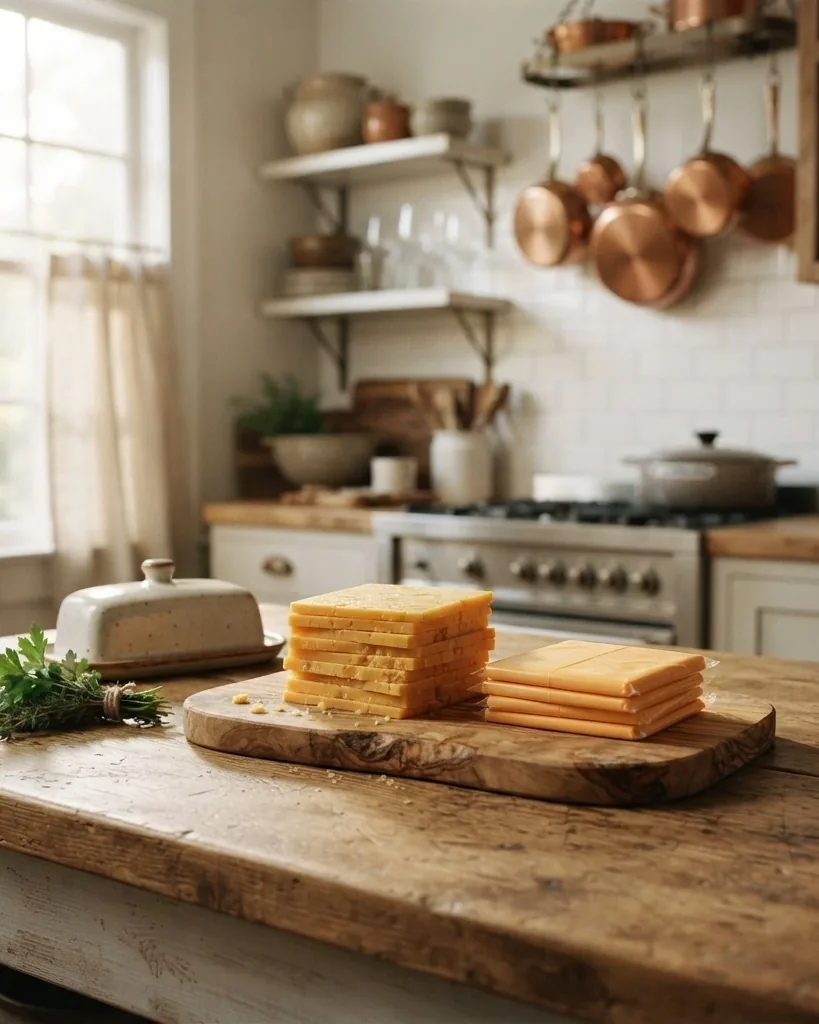
Cheese is a stealth sodium source, and the slice format makes it easy to lose count. The FDA sets the sodium Daily Value at less than 2,300 mg a day, yet Americans average about 3,400 mg, roughly 1,100 mg over the ceiling before anyone reaches for cheese. A single 21 g cheddar slice adds 180 mg, about 8 percent of that 2,300 mg limit. A Kraft Singles slice adds 230 mg, listed as 10 percent Daily Value. The FDA’s own consumer explainer, its guide to sodium in your diet, spells out that 5 percent Daily Value per serving counts as low and 20 percent or more counts as high.
Do the stacking. Two American singles are 2 times 230 mg, which is 460 mg, about 20 percent of the 2,300 mg Daily Value, landing squarely in the “high” band from a single ingredient. Three cheddar slices are 3 times 180 mg, which is 540 mg, roughly 23 percent of the day. That is a meaningful share for something you barely notice eating.
The calcium and B12 payoff a slice actually delivers
Cheese is not only a saturated-fat and sodium tax. A 1 oz (28 g) cheddar serving supplies 202 mg of calcium, which USDA data flags as 16 percent of the Daily Value. Set against the FDA reference Daily Value of 1,300 mg for calcium, that 202 mg works out to roughly 15 to 16 percent from one ounce. Cheese also carries vitamin B12, phosphorus and vitamin A, the fat-soluble kind, plus 5 g of protein in the 21 g slice. For anyone building a plate around satiety or protein, that density is the argument in cheese’s favor.
Choosing a lower-sodium or part-skim slice, and why processed melts smoother
The healthier-slice decision comes down to which single number you are cutting and what you are cooking. If saturated fat is the target, part-skim and reduced-fat slices trim the fat line, and the processed American single already sits lower at 2.5 g. If sodium is the target, natural cheddar at 180 mg beats the processed single at 230 mg, and ultra-thin slices cut the total simply by putting less cheese in the sandwich. There is no free lunch: the emulsifiers that let a processed slice melt into a smooth, even layer are the same salts that push its sodium up.
Match the slice to the job. For a grilled cheese or a burger where you want a glossy, uniform melt, a processed slice earns its sodium because natural aged cheddar can break and weep oil under high heat. For a cold sandwich or a cheese board where melt does not matter, natural cheddar gives you more protein and the “real cheese” status without the emulsifying salts. Reading the fine print pays off the same way it does on any packaged food, which is the through-line behind breaking down the Fruit Loops label and its shifting serving numbers: the serving size and the ingredient order decide the story, not the marketing on the front.
- Cutting saturated fat: reach for part-skim, reduced-fat, or a processed single at 2.5 g.
- Cutting sodium: natural cheddar at 180 mg over the processed single at 230 mg.
- Cutting both: ultra-thin slices, which shrink every number by shrinking the portion.
- Prioritizing melt: processed wins, and you pay for it in sodium.
Frequently asked questions
How many cheese slices per day is okay?
Watch saturated fat first. One 21 g cheddar slice has 4 g, so three slices reach 3 times 4 g, or 12 g, about 92 percent of the American Heart Association’s roughly 13 g daily figure on a 2,000-calorie diet. One to two natural slices is a sensible ceiling if cheese is your main saturated-fat source that day.
Is a processed American single real cheese?
Not fully. A slice labeled “pasteurized process cheese food” is only required to be 51 percent real, natural cheese, with the rest made of emulsifiers, whey and added salts. Sargento notes its natural cheddar slices are 100 percent natural by contrast. The “cheese product” or “cheese food” wording is your legal tell that it falls under that 51 percent minimum.
Why does a cheese slice show different calories on different sites?
Serving weight. A packaged slice is often 21 g and lists 90 calories, while the USDA one-ounce reference serving is 28 g and lists 113 calories. Same cheddar, different denominator. Always check the gram weight in parentheses before comparing two cheese numbers, or the calorie counts will look contradictory when they are not.
Which slice has less sodium, cheddar or American?
Natural cheddar. A 21 g cheddar slice carries 180 mg of sodium, about 8 percent of the FDA’s 2,300 mg Daily Value, while a Kraft Singles American slice carries 230 mg, listed as 10 percent Daily Value. Two American singles reach 460 mg, roughly 20 percent of the daily ceiling, which the FDA classes as high.
Does a cheese slice have enough calcium to matter?
Yes, meaningfully. A 1 oz (28 g) cheddar serving supplies 202 mg of calcium, marked as 16 percent of the Daily Value in USDA data. Against the FDA reference Daily Value of 1,300 mg, that is roughly 15 to 16 percent from one ounce, alongside vitamin B12, phosphorus, vitamin A and 5 g of protein.
Is cheese too high in saturated fat to eat daily?
Not by itself, if you count it. One cheddar slice’s 4 g of saturated fat is about 30 percent of the American Heart Association’s roughly 13 g daily figure. The Dietary Guidelines for Americans set a looser cap, under 10 percent of daily calories for age 2 and up. Cheese fits a daily diet as long as it is not the only saturated fat on the plate.
The bottom line on a single slice
Strip away the marketing and a cheese slice is three numbers doing the deciding: 4 g saturated fat and 180 mg sodium on the cost side, 5 g protein and calcium on the benefit side, for the 21 g natural cheddar slice. The processed American single trades saturated fat down to 2.5 g and pushes sodium up to 230 mg. Neither is the “healthy” choice in isolation. The right slice is the one that spends less of whichever budget, saturated fat or sodium, you are guarding that day, and the right count is whatever keeps you inside the FDA, American Heart Association and Dietary Guidelines caps once everything else on your plate is added in.