Gluten free flour is not one thing, and that single misunderstanding is behind most of the gritty, crumbly, or gummy failures people blame on going gluten-free. There is no flour that behaves exactly like wheat, because the thing that makes wheat special, gluten, is exactly what you are removing. Gluten is the stretchy protein web that traps gas and gives bread its chew and cake its springy crumb. Take it out and you have to rebuild that structure from a team of starches, gentler flours, and a binder. The good news is that this is solved territory. Once you understand what each flour does and how to put them together, gluten-free baking stops being a gamble. This guide covers which flour to reach for, how to build or buy a blend, the binder math, the one resting trick that fixes grittiness, and a troubleshooting table for when a bake goes wrong.
I have baked gluten-free for family members who need it, and I have wasted plenty of expensive almond flour learning the hard way. What follows is the practical version, aimed at a normal home kitchen, with the shortcuts that actually work and the dead ends you can skip. None of it requires special equipment beyond a kitchen scale, which is the one tool I will keep insisting on, because volume measuring is where gluten-free baking quietly goes wrong before you even turn on the oven.
The Two Categories: Single Flours vs. Blends
Gluten-free flours fall into two camps, and knowing which you are holding saves a lot of grief. Single flours, like almond, oat, rice, or buckwheat, each have their own flavor and behavior, and none of them works as a straight one-to-one swap for wheat flour on its own. A blend combines several flours and starches, plus usually a binder, to mimic the all-around performance of all-purpose wheat flour. A good store-bought “measure for measure” or “1 to 1” blend is the easiest on-ramp, because someone has already done the balancing for you. Reach for a single flour when a recipe specifically calls for it or when you want its particular flavor, and reach for a blend when you are converting a standard recipe.
A Flour-by-Flour Comparison
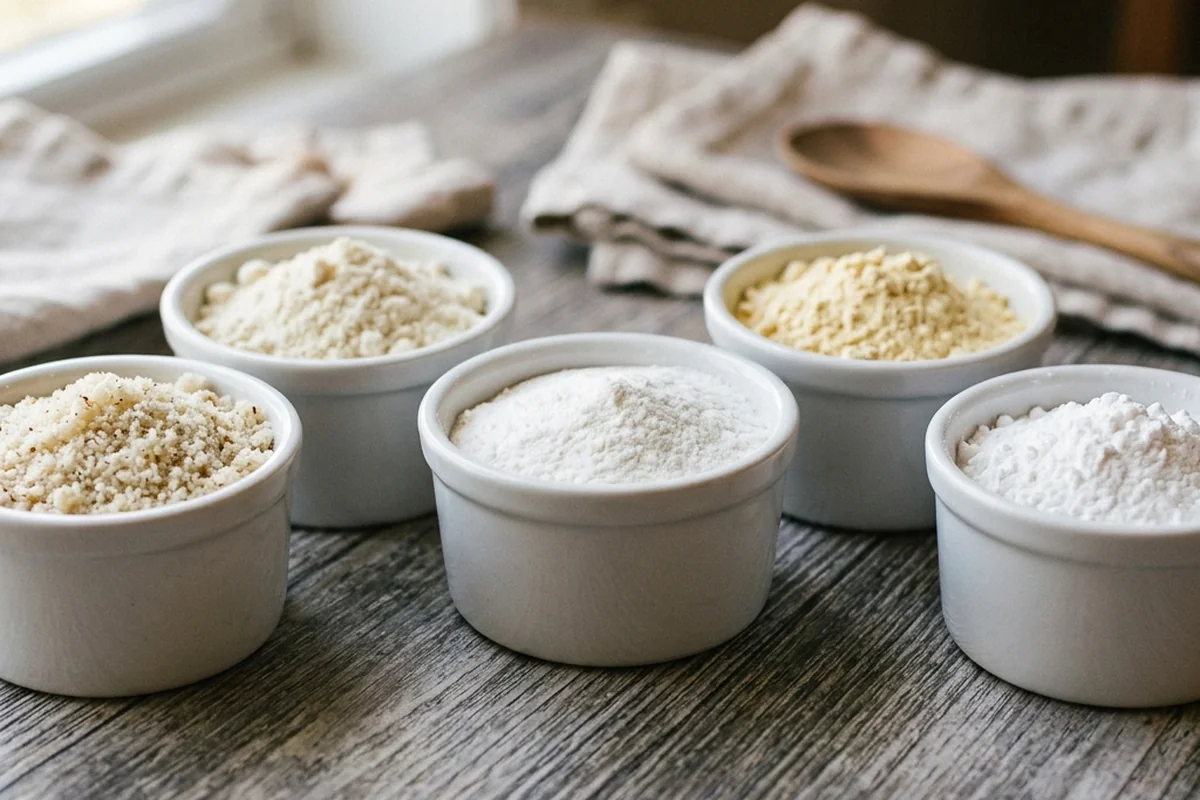
Here is the at-a-glance reference the big guides bury in paragraphs. Use it to pick the right flour for the job.
| Flour | Best for | Behavior |
|---|---|---|
| Almond | Cookies, cakes, crusts | Moist, rich; needs more eggs, browns fast |
| Oat | Cookies, banana bread, muffins | Mild, slightly chewy; near 1:1 in soft bakes |
| White rice | Blend base | Neutral but gritty alone; needs resting |
| Brown rice | Blend base, more nutrition | Nuttier, grittier; same caveat |
| Sorghum | Blends, breads | Mild, soft; good structure builder |
| Buckwheat | Pancakes, hearty breads | Earthy, strong flavor; use in part |
| Coconut | Dense cakes, low-carb bakes | Very absorbent; 2 eggs per 1/4 cup |
| Tapioca starch | Blend component | Adds chew and binding, not used alone |
| Potato starch | Blend component | Lightness and moisture, not used alone |
The two flours that trip people up most are coconut and almond, because they break the normal rules. Coconut flour drinks liquid like a sponge, so you use far less of it and add lots of eggs. Almond flour is fatty and heavy, so it makes tender, moist crumbs but cannot rise on its own. Neither swaps one-to-one for anything. Treat them as their own ingredients with their own recipes.
Build Your Own Blend, by Weight
A store blend is convenient, but a homemade one is cheaper and you control it. This is a balanced all-purpose blend that works for most cakes, cookies, and quick breads. Weigh it, do not scoop it, because the flours vary wildly in density.
| Component | Weight | Role |
|---|---|---|
| Brown or white rice flour | 300 g | Neutral base |
| Sorghum flour | 150 g | Structure and softness |
| Tapioca starch | 100 g | Chew and binding |
| Potato starch | 100 g | Lightness |
| Xanthan gum | 7 g | Binder (replaces gluten) |
Whisk it all together thoroughly and store it airtight. This gives you about 650 grams of blend you can use measure-for-measure in most non-yeast recipes. Bread is its own world and needs higher hydration and more binder, so start with a dedicated bread recipe rather than expecting this blend to carry a loaf.
The Binder Math: Xanthan Gum and Its Alternatives
Without gluten, your batter has nothing holding it together, so you add a binder. The standard is xanthan gum, and the rule of thumb is about 1 teaspoon per cup of flour for cakes and cookies, and a little more, around 1 1/2 teaspoons per cup, for breads and pizza that need more structure. Here is the catch that confuses everyone: most store-bought 1-to-1 blends already contain xanthan gum. If you add more on top, you get a gummy, slimy texture. Check the label first. If the blend lists xanthan or guar gum, add none. If it does not, add it yourself at the rates above.
If xanthan upsets your stomach, which it does for some people, you have options. Ground psyllium husk is the best alternative for breads, giving real elasticity. Ground flax or chia mixed with water makes a gel that binds well in cookies and muffins. They are not perfectly interchangeable, so follow a recipe written for your chosen binder rather than swapping blindly.
The Resting Trick That Fixes Grittiness
This is the single best tip in gluten-free baking and almost nobody mentions it. Rice-flour blends often bake up with a faint sandy or gritty texture, because the rice starch granules have not fully absorbed the liquid. The fix costs you nothing: after mixing, let the batter or dough rest for 30 minutes before baking. During that rest the starches hydrate and swell, and the grit disappears. For cookies, chill the dough. For cakes and muffins, just let the batter sit on the counter. The first time you do this side by side, the difference is obvious, and you will never skip it again.
Adjusting the Bake Itself
Gluten-free batters behave differently in the oven, so a few adjustments help. They tend to brown faster on the outside while the inside is still setting, so drop the oven temperature by about 25 degrees and bake a little longer. This gives the center time to cook through without burning the crust. Gluten-free goods also set up as they cool, so they can seem underdone straight from the oven when they are actually fine; let them cool fully before you judge. And because there is no gluten to trap gas during a long rise, gluten-free batters are usually wetter and more like a thick paste than a kneadable dough. That is normal. Do not add flour to make it look like wheat dough; you will get a dense brick.
A couple of smaller habits help, too. Gluten-free cakes and breads benefit from a slightly longer beating once the wet and dry are combined, the opposite of wheat baking where overmixing toughens things. With no gluten to overdevelop, that extra mixing helps trap air and build what little structure you can. Lining pans with parchment is also worth the trouble, because gluten-free bakes are more delicate and prone to sticking and tearing when you turn them out. And if the top is browning before the inside is done, tent it loosely with foil for the last stretch of baking. These are minor moves, but together they are the difference between a bake you are proud of and one you quietly throw away.
Converting a Wheat Recipe to Gluten-Free
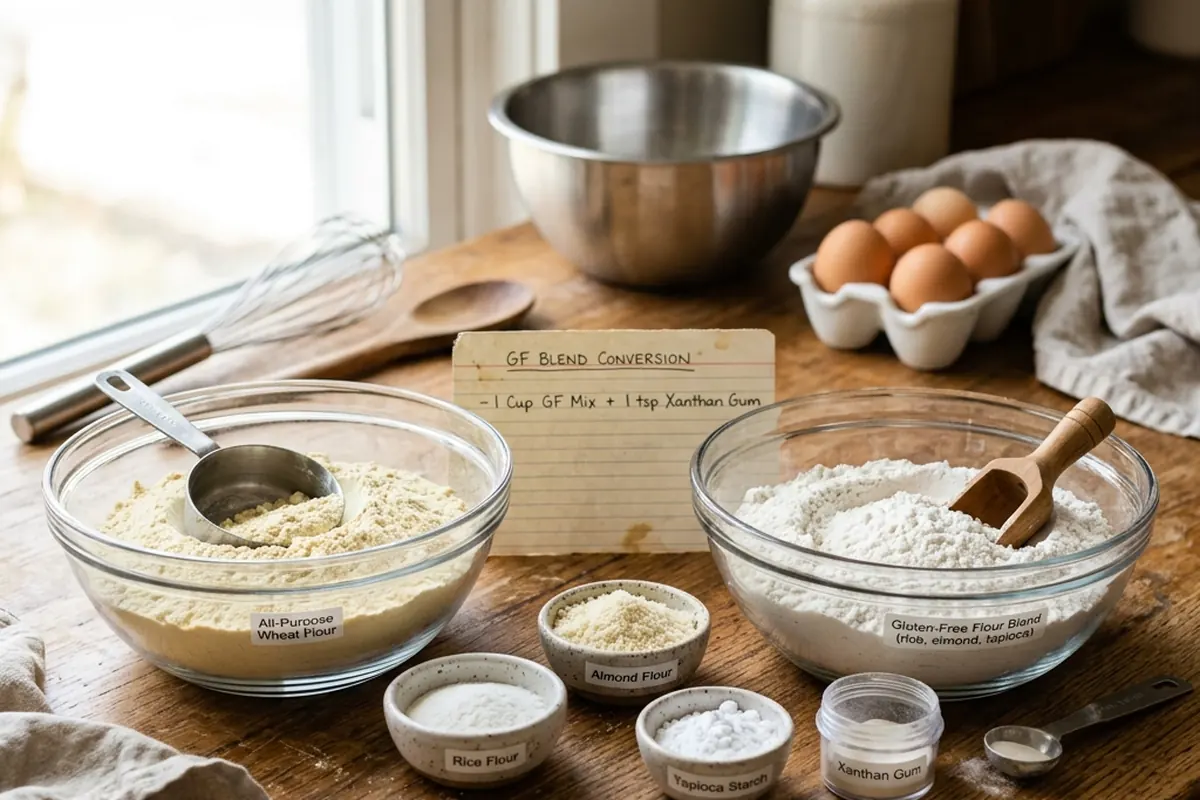
Plenty of your favorite recipes can cross over, some more gracefully than others. The easiest wins are forgiving, moisture-rich bakes: muffins, quick breads, brownies, pancakes, and most drop cookies. These rely less on gluten structure and more on eggs, fat, and sugar, so a good 1-to-1 blend usually slides right in. Swap the flour by weight, check that you are not doubling the xanthan, and rest the batter. That is often the whole job.
The hard cases are the bakes where gluten is the star: airy yeast breads, laminated pastry like croissants, chewy bagels, and anything that depends on a strong, stretchy dough. Do not expect a simple flour swap to carry those. They need recipes written from the ground up for gluten-free ingredients, with different hydration, extra binder, and sometimes added protein from eggs or psyllium. When someone tells you gluten-free bread is impossible, what they really mean is that they tried to swap flour in a wheat bread recipe and got a hockey puck. Use a real gluten-free bread formula and the results are genuinely good.
A useful habit when converting: change one thing at a time. If you swap the flour, keep everything else the same on the first try, then note what went wrong and adjust a single variable next time. Maybe the crumb was dry, so you add an egg. Maybe it spread, so you chill the dough. Gluten-free baking rewards patience and notes more than any other kind, because the variables interact in ways that are hard to predict on paper.
A Closer Look at the Workhorse Flours
Three flours do most of the heavy lifting in a home gluten-free kitchen, and it pays to know them well. Rice flour, white or brown, is the neutral backbone of nearly every blend. It is cheap and mild, but on its own it bakes gritty and dries out, which is why it always travels with starches and a binder. Brown rice flour adds a little nutrition and a faint nuttiness; white rice flour is more neutral and slightly finer. Either works as a base.
Almond flour is the go-to for grain-free baking and for anyone chasing a tender, moist crumb. It shines in cookies, cakes, and crusts, and it adds real flavor and richness. Because it is so high in fat and has no starch to set, it cannot stand alone in anything that needs to rise much, and it browns quickly, so watch the oven. Buy blanched, finely ground almond flour rather than coarse almond meal for smoother results.
Oat flour is the friendliest single flour for beginners. It has a mild, slightly sweet taste and a soft texture that works beautifully in banana bread, muffins, and chewy cookies, often close to a one-to-one swap in those soft bakes. You can even make it yourself by blitzing certified gluten-free rolled oats in a blender until powdery, which is a nice way to control cost. Just remember the certified-gluten-free caveat if celiac safety is the point.
Troubleshooting Gluten-Free Bakes
| Problem | Cause | Fix |
|---|---|---|
| Gritty, sandy texture | Rice starch not hydrated | Rest the batter 30 min before baking |
| Gummy, slimy crumb | Too much xanthan, or doubled up | Check blend label; do not add extra gum |
| Crumbly, falls apart | Not enough binder or egg | Add binder or an extra egg |
| Dense, heavy | Too much flour or added flour to wet dough | Weigh flour; trust the wet batter |
| Sinks in the middle | Underbaked or too much leavening | Lower temp, bake longer, check leavening |
| Spreads into a puddle | Too little binder or warm dough | Chill dough; confirm xanthan present |
Cost, Storage, and Hidden Gluten
Gluten-free flours cost more than wheat, no way around it, and almond and coconut are the priciest. Mixing your own blend from rice flour, sorghum, and starches is the most economical path, and buying those in larger bags brings the price down further. Store gluten-free flours airtight, and keep the high-fat ones, almond and any nut or whole-grain flour, in the fridge or freezer, because their oils go rancid faster than wheat flour does. A flour that smells sharp or like crayons has turned and should go.
One more practical point: gluten hides in places you would not expect, so if you are baking for someone with celiac disease, read every label. Even foods that seem plain can contain wheat, and a sleeve of saltine crackers is a clear example of an everyday item built on wheat flour. On the flip side, plenty of whole foods are naturally gluten-free and make great companions to gluten-free baking, like the beans behind a serving of refried beans, which bring fiber and protein without any wheat at all. Reading labels becomes second nature quickly, and it is the only reliable way to keep a kitchen truly safe.
For deeper, tested guidance once you are comfortable, the King Arthur gluten-free baking guide is thorough and reliable, and the gluten-free recipes from a serious test kitchen are a good source of formulas that already account for these quirks.
Frequently Asked Questions
Can I substitute gluten-free flour one to one for regular flour?
Only if it is a blend specifically labeled “1 to 1” or “measure for measure,” and even then results vary by recipe and brand. Single flours like almond, coconut, or rice do not swap one to one and need recipe adjustments. For converting a standard recipe, always start with a proper blend.
Do I need xanthan gum in gluten-free baking?
Usually yes, because it replaces the structure gluten would provide. But many store blends already include it, so check the label before adding more, or you will get a gummy texture. If you avoid xanthan, psyllium husk works well for breads and ground flax or chia for cookies and muffins.
Why is my gluten-free baking gritty?
The rice flour in most blends has not absorbed enough liquid. Let the mixed batter or dough rest for 30 minutes before baking so the starches hydrate and swell. This one step removes the sandy texture that turns people off gluten-free baking.
Why is my gluten-free batter so wet and loose?
That is normal. Without gluten there is nothing to make a stiff, kneadable dough, so gluten-free batters are wetter, more like a thick paste. Resist the urge to add flour to thicken it, because that gives you a dense, dry result. Trust the recipe and the wet texture.
How should I store gluten-free flour?
Keep it airtight, and refrigerate or freeze the high-fat flours like almond and other nut or whole-grain flours, since their oils go rancid faster than wheat. Neutral starches and rice flour are fine in a cool, dark pantry. Toss any flour that smells sharp or off.
Is oat flour gluten-free?
Oats are naturally gluten-free, but they are frequently cross-contaminated with wheat during growing and processing. If you need it to be safe for celiac disease, buy oat flour specifically labeled certified gluten-free. Otherwise, treat unlabeled oat flour as a possible risk.
Bottom Line
Gluten-free flour works once you stop expecting it to act like wheat. Pick a quality 1-to-1 blend or mix your own by weight, get the binder right by checking whether your blend already has xanthan, rest the batter to kill the grit, and lower your oven temperature so the center cooks before the crust burns. Keep your nut flours cold, read labels for hidden gluten, and lean on tested recipes while you learn. Do those things and gluten-free baking turns from a string of expensive failures into something genuinely dependable.