Switch from Original to Light or Fat-Free to trim calories, and you will pick up sodium, not lose it: Light carries 130mg per tablespoon and Fat-Free carries 125mg, both above Original’s 100mg. Only the 50% Less Sodium & Cholesterol variety drops that number, to 50mg. That reversal is the first thing worth knowing about Miracle Whip nutrition, and it is the kind of detail a single calorie figure hides. This desk aggregates the numbers straight from manufacturer Nutrition Facts panels and public food databases, then lines up all four US varieties so the trade-offs are visible in one place.
The keyword figures below come from retailer-hosted panels (Stop & Shop, Brookshire’s, Fresh by Brookshire’s, Hannaford), the USDA dataset surfaced through myfooddata, and comparison work published by Healthline. Where those sources report different numbers for the same product, we say so rather than pick one.
Answer Block: Miracle Whip Nutrition At A Glance
Miracle Whip nutrition, per 1-tablespoon serving, splits cleanly by variety. Original: 35 calories, 0g saturated fat, 100mg sodium, 2g carbohydrate, 1g added sugar, 0g protein. Light: 20 calories, 1.5g fat, 130mg sodium, 1g sugar. Fat-Free: 15 calories, 0g fat, 125mg sodium, 2g sugars. The 50% Less Sodium & Cholesterol variety: 50 calories, 1g saturated fat, 50mg sodium, 1g added sugar. Protein is 0g across the board. It is legally a dressing, not mayonnaise, because it contains less than 65% oil. Fewer calories than mayo, but with added sugar the panel makes plain.
Calories Per Tablespoon Across All Four US Varieties
The reference serving on every US jar is 1 tablespoon. Against that serving, Original Miracle Whip lists 35 calories on the panel reproduced by Stop & Shop, alongside 0g saturated fat, 100mg sodium and 1g added sugars.
The lower-fat versions run below that. Light comes in at 20 calories per tablespoon with 1.5g total fat. Fat-Free sits at 15 calories, sourced from the USDA values through myfooddata. The one that breaks the pattern is 50% Less Sodium & Cholesterol, which holds 50 calories per tablespoon – higher than Original – because it was built to cut sodium and cholesterol, not calories.
- Original: 35 calories per tablespoon
- Light: 20 calories per tablespoon
- Fat-Free: 15 calories per tablespoon
- 50% Less Sodium & Cholesterol: 50 calories per tablespoon
One caveat the numbers demand. The Light panel published by Fresh by Brookshire’s states its “50% less fat & calories” claim against a regular dressing figure of 5g total fat and 50 calories – not the 35 calories the current Original jar shows. Healthline’s comparison table also cites 50 calories and 5g fat for regular Miracle Whip. These are older or differently-referenced values, not the current on-jar panel, so they are not directly comparable to the 35-calorie figure. We report both and leave the discrepancy visible rather than average it away.
The Sodium Reversal: Light And Fat-Free Carry More Than Original
This is where the “diet” varieties trip people up. Reaching for Light or Fat-Free to lighten a sandwich does nothing for sodium – it moves the wrong way. Light lists 130mg of sodium per tablespoon on the Fresh by Brookshire’s panel. Fat-Free lists 125mg. Original lists 100mg on the panel reproduced by Brookshire’s.
Only one variety actually cuts sodium, and it says so on the label. Hannaford’s summary for the 50% Less Sodium & Cholesterol version states it “contains 50 mg sodium per serving, original miracle whip dressing contains 100 mg sodium per serving.” That is a genuine halving – from 100mg down to 50mg – and it is the only variety in the lineup that delivers it.
- 50% Less Sodium & Cholesterol: 50mg sodium per tablespoon
- Original: 100mg sodium per tablespoon
- Fat-Free: 125mg sodium per tablespoon
- Light: 130mg sodium per tablespoon
These are four different products, so this is not a single formula sliding up and down – it is a variety-by-variety difference. But the practical decision is clean. If sodium is what you are managing, calorie count is a red herring here; the variety named for sodium is the only one that lowers it.
Full Nutrition Table: Every Miracle Whip Variety Per Tablespoon
All figures below are per 1-tablespoon serving, pulled from manufacturer panels via the retailers named above and the USDA dataset for Fat-Free. Protein is 0g in every column, and the panels list no meaningful calcium, iron or potassium – this is a condiment, not a nutrient source.
| Variety | Calories | Total Fat | Sat Fat | Sodium | Carbs | Sugars | Protein |
|---|---|---|---|---|---|---|---|
| Original | 35 cal | – | 0g | 100mg | 2g | 1g (added) | 0g |
| Light | 20 cal | 1.5g | 0g | 130mg | 2g | 1g | 0g |
| Fat-Free | 15 cal | 0g | 0g | 125mg | 3g | 2g | 0g |
| 50% Less Sodium & Cholesterol | 50 cal | – | 1g | 50mg | – | 1g (added) | 0g |
A note on the Total Fat cells left blank. The current on-jar Total Fat line for Original is not confirmed in the panels this desk aggregates, so it is left out rather than guessed. Original also lists 5mg cholesterol per tablespoon per the Brookshire’s panel. Fat-Free’s tablespoon weighs about 16g; Original and the Healthline reference tablespoon run about 15g.
Why Miracle Whip Is Legally A Dressing, Not Mayonnaise
The label reads “dressing” for a regulatory reason, and it connects directly to the calorie count. Under the FDA standard of identity for mayonnaise, at 21 CFR 169.140, “Mayonnaise contains not less than 65 percent by weight of vegetable oil.” Fall below that oil threshold and the product legally cannot be called mayonnaise.
Miracle Whip falls below it. Food & Wine reports that it “contains less than 65% soybean oil (the exact amount is not disclosed), which classifies it as a dressing.” Less oil is exactly why the fat and calorie numbers sit where they do – the legal category and the nutrition profile are the same fact seen from two angles. The same source dates the product to Kraft’s 1933 debut at the World’s Fair in Chicago, positioned as a cheaper alternative to mayonnaise during the Depression.
The FDA rule also governs the acidifiers real mayonnaise may use. Those specifics are what a standardized identity locks in – and what a “dressing” is free to vary.
Miracle Whip Vs Mayonnaise: The Calorie And Fat Gap
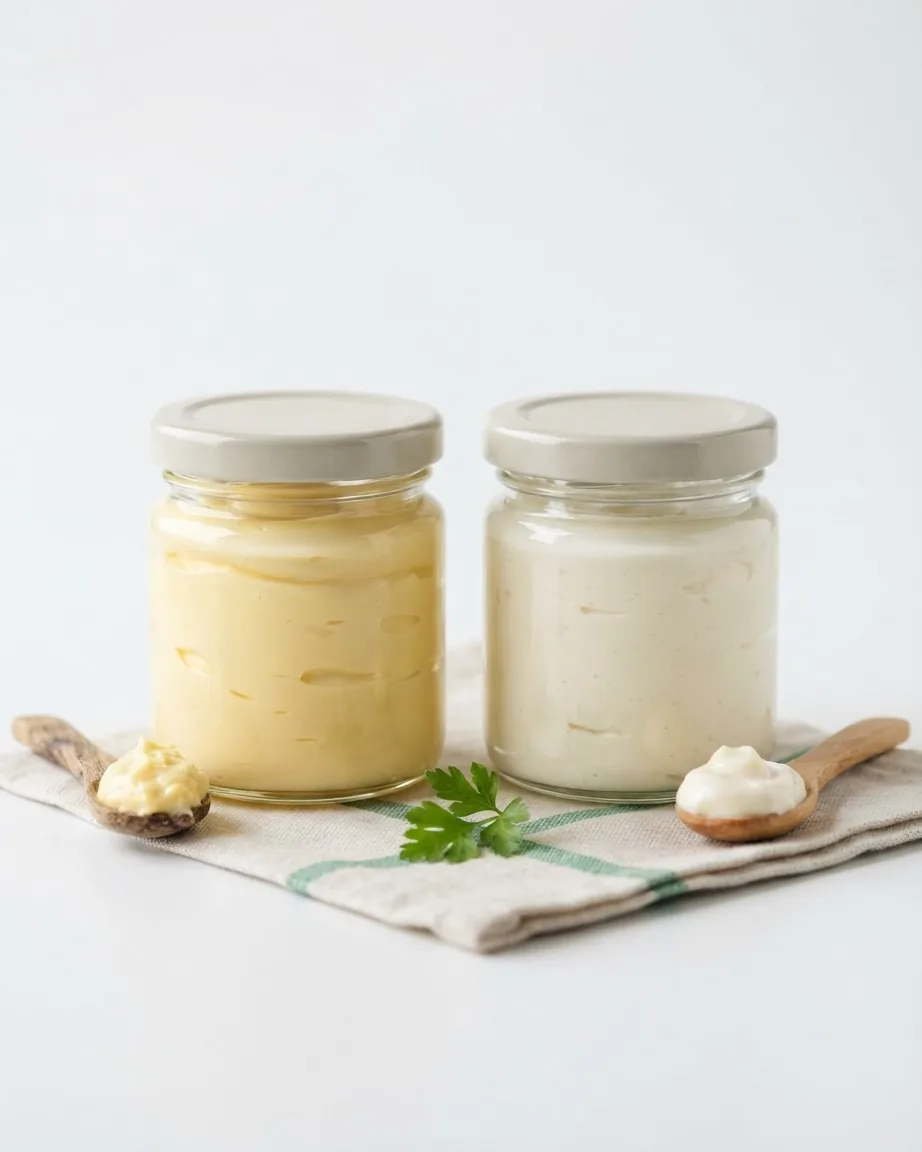
The lower-oil formula shows up plainly against mayo. In the comparison published by Healthline, 1 tablespoon (about 15g) of Original Miracle Whip carries 50 calories, 5g fat, 0g protein and 2g carbs, while the same spoon of mayonnaise carries 94 calories, 10g fat and 0g carbs. Roughly half the calories and half the fat. Healthline notes that “because Miracle Whip contains about half the calories of mayo, it’s a good alternative for those who are counting calories.”
Two things to hold alongside that. First, the 50-calorie figure Healthline uses for Original is the older reference value, not the 35 calories on the current jar – either way, it lands below mayo. Second, mayo shows 0g carbs while Miracle Whip shows 2g, because Miracle Whip adds sugar and mayo does not. The calorie you save comes partly at the cost of a carbohydrate mayo never had. For how this pattern plays out in another spread aisle, the desk has broken down Cool Whip nutrition the same way, variety by variety.
The Sweetener Difference: HFCS In Some Varieties, Sugar In Others
Not every Miracle Whip is sweetened the same way, which matters to anyone avoiding high-fructose corn syrup. Original and Light both list HFCS on their ingredient statements. The 50% Less Sodium & Cholesterol variety lists plain sugar and no HFCS – the exception in the lineup, and the pick for an HFCS-avoider who still wants the tang.
The added sugar is small in absolute terms: 1g per tablespoon in Original, Light and the 50% Less variety, and 2g of sugars in Fat-Free. But it is the reason “fewer calories” does not automatically mean “healthier.” The calorie and fat savings against mayo are real; they are offset by added sugar and the additives that stabilize a lower-oil emulsion. Healthline’s broader piece flags added sugar as a concern in the diet generally, citing research where a low-sugar diet reduced children’s liver fat by nearly 50% in 9 days – context for the sugar line, not a claim about this jar.
Where Miracle Whip Nutrition Leaves You On Protein And Micronutrients
There is nothing to build a meal around here. Every variety lists 0g protein per tablespoon, and the panels show no calcium, iron or potassium worth logging. Fat-Free’s per-tablespoon energy is described by the USDA-sourced myfooddata entry as “coming from 0% protein, 100% carbs, 0% fat” – a spoonful of carbohydrate and salt, essentially.
That places Miracle Whip firmly in the condiment column rather than the nutrition column. If you want the spread to actually contribute protein or calcium to a sandwich, that job belongs to the fillings, not the dressing – the way a scoop of Chobani Greek yogurt or a cup of Yoplait carries protein a condiment never will. For the wider category, the desk keeps its condiment and spread breakdowns under pantry basics.
Which Miracle Whip To Reach For, By What You’re Managing
The four varieties are not interchangeable, and the right one depends on the single number you care about. Reading the panels together makes the decision quick.
- Cutting calories: Fat-Free (15 cal) or Light (20 cal) beat Original’s 35 cal – but both add sodium.
- Cutting sodium: only 50% Less Sodium & Cholesterol (50mg) drops below Original’s 100mg. Light and Fat-Free go up.
- Avoiding HFCS: 50% Less Sodium & Cholesterol uses plain sugar; Original and Light use HFCS.
- Watching cholesterol: Original lists 5mg per tablespoon; the 50% Less variety is built to cut it.
- Fewest calories against mayo: any Miracle Whip, since Original runs roughly half of mayonnaise’s 94 calories.
The trap is assuming one “diet” jar wins on every axis. None does. Light is the low-calorie pick with the highest sodium; the low-sodium pick has the most calories of the four. Match the jar to the number on your own label.
What A Whole 30 fl oz Jar Adds Up To, By Variety
Across an entire jar the sodium reversal that hides behind a single spoonful becomes impossible to miss: because every variety ships in the same size jar, the per-tablespoon ranking carries straight through to the full container, so the “diet” varieties load a jar with more total sodium than Original, while only the 50% Less Sodium & Cholesterol jar cuts it. The takeaway across a real container is the one the panel already shows per spoon: switching to Light to “lighten up” a jar’s worth of sandwiches trims calories but adds sodium, while the variety actually built for sodium is the one that leaves salt on the table compared with Original.
Frequently Asked Questions
Does Light Miracle Whip have less sodium than Original?
No – it has more. Light lists 130mg per tablespoon versus 100mg in Original, so trading down for calories quietly raises the salt. If a doctor has you watching sodium, the 50% Less Sodium & Cholesterol jar at 50mg is the only variety that lowers it below the standard formula.
Why do sources report different calorie counts for Original?
Current retail panels show 35 calories per tablespoon, while Healthline’s comparison and older label references cite 50 calories with 5g fat. The gap comes from differing reference data and jar reformulation over time, not one figure being fake. Both sit well under mayonnaise, so the ranking versus mayo holds regardless.
Is Fat-Free Miracle Whip 13 or 15 calories per tablespoon?
It depends on the source. The USDA dataset lists 15 calories per tablespoon, while Healthline, also citing USDA, states 13 calories per a roughly 15-gram serving. The difference is rounding and reference weight. Either way it is the lowest-calorie variety, and its 2g of sugars is the highest sugar figure in the set.
Can I use Miracle Whip on a keto or low-carb plan?
It carries added sugar that mayonnaise lacks – 2g of carbs per tablespoon in Original versus mayo’s 0g. For strict low-carb eating, real mayonnaise fits the macros better despite its higher fat and its 94 calories. Miracle Whip’s edge is calories, not carbs, so the choice flips depending on which you are restricting.
What makes Miracle Whip a “dressing” instead of mayonnaise?
Federal identity rules reserve the mayonnaise name for products with at least 65 percent vegetable oil by weight. Kraft’s formula, introduced in 1933, sits under that oil line, so it must be labeled a dressing. That same lower oil content is why each spoonful runs lighter on fat and calories than a spoon of true mayonnaise. Nutrition figures are aggregated from manufacturer Nutrition Facts panels, official brand listings and public food databases as published; brands may change recipes or panels without notice, and this reference does not offer medical or dietary advice.